 The Laniakea YWCA: A Building Organised Around Its Courtyard
Kualoa Ranch, Kaneohe: The Problem and Four Ways Out of It
A landscape big enough to swallow two people. Four ways to handle that.
The problem at Kualoa is scale, and it is the opposite of the problem most venues present.
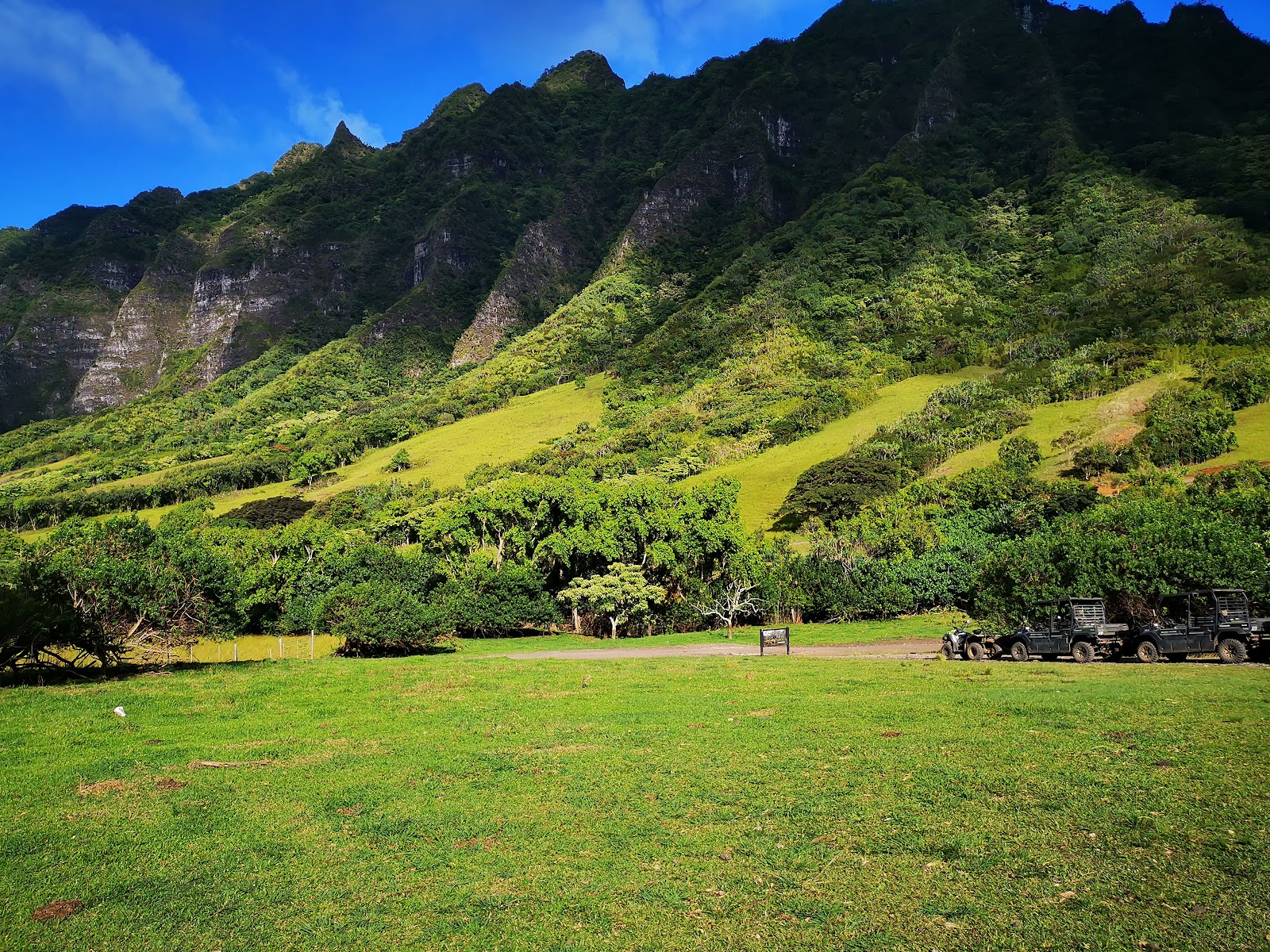
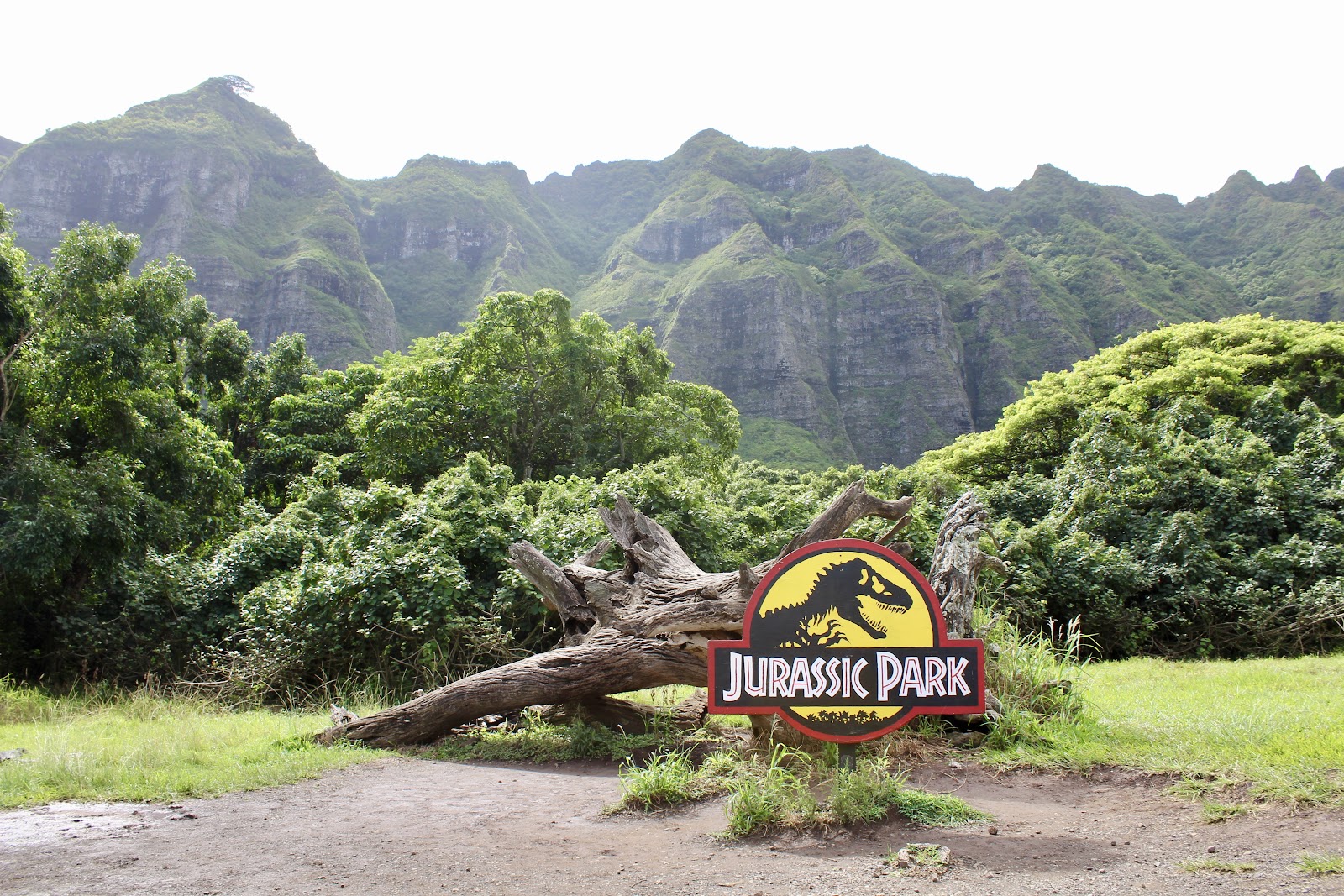
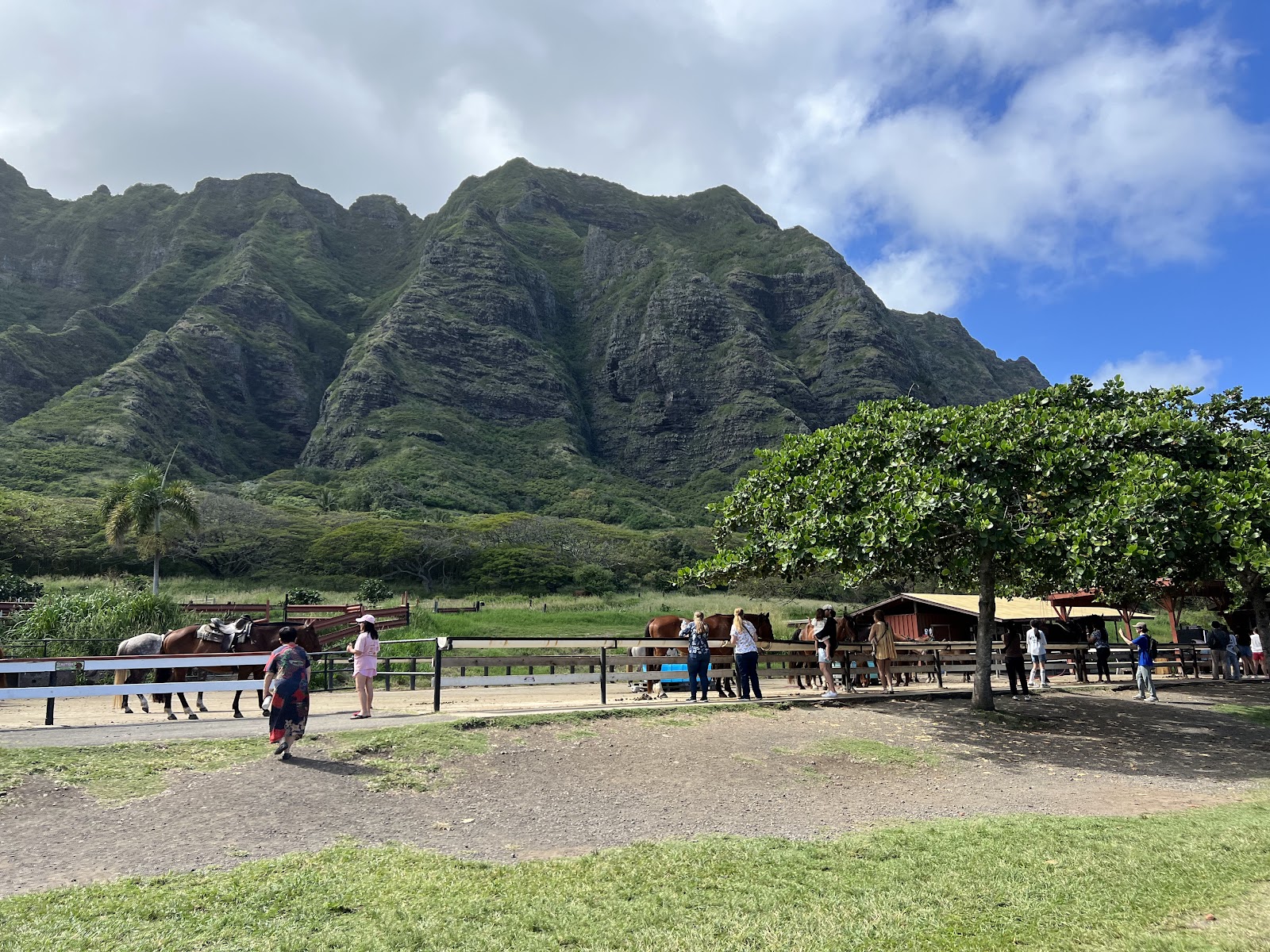
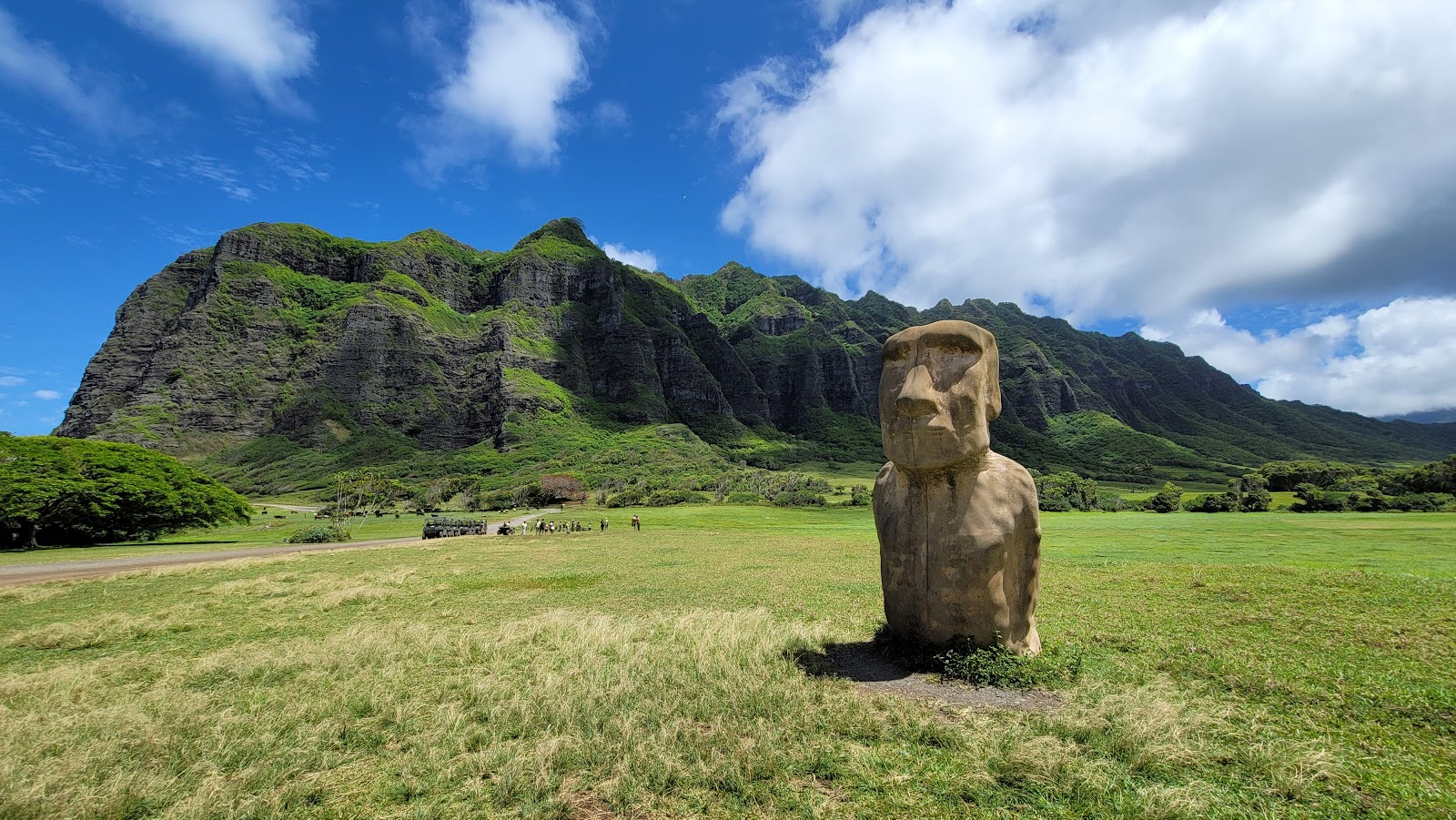
The ranch occupies a valley on the windward side of O’ahu, with the Ko’olau range rising almost vertically along one side — a wall of eroded volcanic rock, deeply fluted into parallel ridges, green to the top, and high enough that a person standing at its base is a mark rather than a figure.
That is a landscape of genuine grandeur and it is also a photographic difficulty. At most venues the problem is finding a background strong enough to hold a portrait; here the background is strong enough to erase one. A wide frame of two people against that wall renders them as specks, and a close frame of two people loses the reason for being there.
There is a second problem stacked on the first, and it is the windward weather. The Ko’olau intercepts the trades from the north-east and forces the moist air upward, which means this coast is among the wetter places in the islands, the cliff tops are in cloud a great deal of the time, and brief showers pass through frequently rather than occasionally.
And a third, which is the ground. A working ranch in a wet valley means pasture, mud, uneven footing and agricultural infrastructure, none of which is arranged for photographs.
Those problems have four solutions between them and each produces a different photograph. Choosing among them deliberately rather than pointing the camera at the cliff and hoping is the whole job.
Kaneohe sits at about twenty-one and a half degrees north. The June noon sun reaches about eighty-eight degrees, the December noon sun about forty-five, days run only from about eleven hours to thirteen and a quarter, and civil twilight is around twenty-two minutes — the shortest in this guide.
We have not photographed a wedding at this ranch. Which areas are included, what access the valley and the ridges allow, what transport is available between locations, what covered alternatives exist and what the permitted hours are, are questions for their team — and the transport question determines what a day can cover on a property of this size.
Kualoa Ranch at a glance
| Where | A working ranch in a valley beneath the Ko’olau wall, windward O’ahu |
| The problem | A landscape strong enough to erase its subjects |
| Four ways out | Make them small on purpose; compress; find the middle scale; use the weather |
| The complications | Frequent showers, cloud on the ridge, and working-ranch ground |
| Ask first | Included areas, valley access, transport between locations, covered alternatives, hours |
The first two ways out
The first way out is to make the subjects small on purpose, which turns the problem into the subject.
A couple occupying a tenth of the frame height, or less, at the foot of a two-thousand-foot wall is not a failed portrait — it is a photograph about scale, and it is the frame this landscape exists to produce. The difference between that and an accident is intent: the subjects have to be placed rather than merely present.
Placed means three things. On a clean patch of ground, so nothing ambiguous is happening around them. With a gap of light between them and their limbs clear of their bodies, because at that size two figures standing together are one shape. And at a point the composition wants a mark — a third of the way across, at the base of a particular gully, on a line the cliff’s flutes lead to.
The instinct at the moment of shooting is always to move closer. The frames that survive are taken from further back than felt right, and one or two of them in a set do more than five middle-distance attempts.
The second way out is compression, and it is the technique that makes the cliff usable as a background rather than as a landscape.
A wide lens renders distant objects at their true angular size, which for a cliff two kilometres away is modest — so a wide frame shows a lot of pasture and a green ridge that looks like a hill. A moderate telephoto brings the wall forward so it fills the space behind the subjects at something closer to the scale the eye perceives, and it narrows the field so the ranch’s infrastructure falls outside the frame.
That requires the camera a long way back from the subjects — twenty or thirty metres, with clean ground between — which on open pasture is easy to arrange and is the reason to plan the position rather than drift into it.
Compression also does something specific to the flutes. A long lens flattens the perspective of a fluted cliff face, which stacks the ridges into a repeating pattern rather than showing them receding — and that pattern is a stronger background than the three-dimensional version, because it reads as texture rather than as topography.
The exposure follows from either approach: expose for the cliff, because that is what the frame is about, and lift the subjects with a close source at about a stop over the ambient falling on them. Metering on the faces renders the wall as a pale green wash and removes the reason for pointing the camera that way.
The gel decision depends on the light. Under cloud the ambient in the valley is cool and green, so a warm gel compensates; in low direct sun the wall is warm and the shade is lit by a blue tropical sky, so a warm gel is right for a different reason. A daylight-balanced source is wrong in both cases.
And the timing: the Ko’olau on this side face broadly east, which means they take the morning light — and a fluted cliff only reads as texture when light crosses it at a shallow angle. Under a high sun the wall is a flat green mass; in the first hours it is hundreds of modelled ridges. The morning is the hour, and by afternoon the wall is in its own shade.
The second two, and the ground
The third way out is to find the middle scale, and on a ranch that means the trees and the built structures rather than the cliff.
A working valley property has elements at human scale: a fence line, a gate, an outbuilding, a stand of trees, a track. Those are what a portrait needs — something large enough to give a frame structure and small enough not to erase a person.
The trees are the best of them and in these islands the species distinction is absolute. Monkeypod has an enormous spreading crown of small dense leaves and gives the best natural shade in Hawai’i; a mature one is a structure in its own right, with a trunk and a canopy at exactly the scale a portrait wants. Ironwood, planted widely as a windbreak, is dense enough to give usable shade and grows in a row, which makes it a line as well as a mass.
Palms are the exception and it has to be said plainly: a frond is a row of stiff parallel blades, and with the sun near vertical its shadow falls straight down a face as hard stripes that no exposure recovers. Broadleaf is cover; palm is background, and never the other way round.
The built elements are the other middle scale. A weathered timber structure on a ranch is dark, textured and low in saturation — a far better background for a white dress than any pale wall — and it is a high-frequency surface, which means it comes alive under light raking across it and reads as a flat brown field under frontal light. That makes each wall a twenty-minute subject once a day and makes checking orientations on arrival worth five minutes.
And the ground has its own frame. A camera below the subjects on any rise puts them against open sky with no horizon behind them — which removes the fences, the vehicles, the buildings and the cliff, and is the cleanest background available in any weather. On a property where the background is usually too strong, a frame with no background at all is a genuine relief in a set.
The fourth way out is the weather, and on the windward side it is a resource rather than an obstacle.
Cloud on the ridge is the normal condition and it is usually the better photograph: it gives the wall depth, scale and movement, where a clear blue sky gives a flat field behind a flat green mass. Cloud down to the valley floor removes the cliff entirely and turns the frame into pasture, trees and mist — which is a genuinely good photograph and one nobody plans.
And rain is the asset. A shower on a windward coast passes rather than settles, and the ten minutes after it does are the best ten minutes of the day: the cliff’s gullies run with water, the green saturates several shades deeper, the air clears briefly, and rainbows are frequent because showers and sun coexist. A rainbow needs sun behind the photographer and rain in front, which on this coast is a regular combination in the morning and the late afternoon.
The practical response is to wait out a shower rather than reschedule around it.
The working-ranch ground is the last practical matter and it is a real constraint. Pasture in a wet valley is muddy, uneven and grazed, which means formal shoes limit where anyone can go — and the usable positions are the tracks, the built surfaces and the drier benches, which have to be walked in advance.
Two further notes. A property this large means transit is a real part of the schedule rather than a detail, and it should be budgeted honestly. And mosquitoes are a genuine consideration in a wet windward valley at any time of year rather than seasonally.
- Make them small on purpose — placed, separated, and further back than felt right
- Compress with a telephoto: it fills the frame and drops the ranch out of it
- The morning is the hour; the Ko’olau face east and the flutes need raking light
- Monkeypod and ironwood are the middle scale a portrait needs
- Wait out a shower: the ten minutes afterwards are the best of the day
The windward year
Hawai’i has two seasons rather than four and the difference is rain rather than temperature — and beneath the Ko’olau, rain is the calendar.
The wetter season runs roughly November to March. The trades still dominate but they are interrupted more often by frontal systems and by Kona weather, a reversal that brings heavier and more widespread rain from the south-west rather than the brief showers the trades give.
For this venue the wetter season is mostly better and the light is the reason. The December noon sun at about forty-five degrees is the lowest of the year, which means the cliff is modelled for a substantially longer period than the hour after dawn that summer allows — so the frames this page is about have a wider window in winter.
The cliffs are also at their greenest, the gullies run, cloud on the ridge is more dramatic, and rainbows are at their most frequent.
The costs are real. A Kona event brings rain that lasts rather than passes, which cannot be waited out and which can put cloud down to the valley floor for a whole day. And the pasture in a wet winter is genuinely muddy, which on a working ranch limits where a party in formal shoes can go more than the weather itself does.
The drier season runs roughly May to September. The trades are steadier, showers are briefer and more localised, and the ground is firm — which on a ranch is a larger advantage than it sounds, because it opens positions that winter closes.
The costs are the sun and the flatness. A near-vertical noon sun is at its worst in these months, which pushes the whole usable day to its ends and makes the middle of it a matter for the monkeypod and the structures. And a summer sun high enough to erase the cliff’s flutes for most of the day means the wall is a green mass rather than a texture except in the first hour.
There is a compensation specific to summer: the windward side stays green when the leeward side browns, because the trades keep delivering moisture even when the rest of the island is dry. A lush windward valley in August is a stronger landscape than a dry leeward one.
There is no autumn colour in these islands and no dormant season. Tropical vegetation holds its leaves year-round, which removes the seasonal cue photographs in the rest of this guide depend on — and it means nothing in an image made here says what month it is except the angle of the light, the state of the cloud and how wet the ground is.
What does change is the pasture, which on a working ranch is worth noting. Grazed grass in a wet winter is deep green and soft; in a drier summer it is lighter and coarser. That is a small change but it is the only one the ground makes.
Two seasonal practicalities. The wetter months bring higher surf to the windward coast, which affects any shoreline frames rather than the valley. And central Pacific hurricane season runs from June to the end of November, though direct strikes on the islands are rare — a planning conversation for a late-summer date rather than a forecast.
The honest summary: the morning is the hour in every month, winter gives the cliff a longer modelling window and a wetter floor, summer gives firm ground and a harder sun, and in both the ten minutes after a shower are the best frame of the day.
More frames from Kualoa Ranch
Kualoa Ranch wedding photography: common questions
What is the problem here?
Scale. The Ko’olau wall is strong enough to erase its subjects — a wide frame renders two people as specks and a close frame loses the reason for being there.
How do I make small subjects work?
Place them rather than merely include them: on clean ground, with a gap of light between them, at a point the composition wants a mark. And stand further back than feels right.
What lens for the cliff?
A moderate telephoto from twenty or thirty metres back. It fills the frame with the wall, stacks the flutes into a pattern, and drops the ranch’s infrastructure out of frame.
Which hour is the cliff modelled?
The morning. The Ko’olau face east, and a fluted cliff only reads as texture when light crosses it at a shallow angle.
What is the middle scale?
Monkeypod trees, ironwood windbreaks and the weathered timber structures — large enough to give a frame structure, small enough not to erase a person.
Is rain a problem?
It is the asset. A windward shower passes, and the ten minutes afterwards give running gullies, saturated green, clear air and frequent rainbows.
More Hawaii venue guides
We are writing a photographer’s guide to every venue we would happily shoot in Hawaii. Here are three more, plus the full index:
- Lumeria Maui, Makawao: How the Light Moves Upcountry
- Maui Tropical Plantation, Waikapu: The Venue’s Own Logic
- Montage Kapalua Bay, Maui: Field Notes, Problem and Solution
Planning a wedding at Kualoa Ranch?
A landscape that needs handling, not just pointing at. Tell us your date.