 The Laniakea YWCA: A Building Organised Around Its Courtyard
Lumeria Maui, Makawao: How the Light Moves Upcountry
High enough that the clouds form below you. That changes everything.
Upcountry Maui is a different photographic climate from the coast and the reason is a layer of air.
Hawai’i sits under a persistent trade-wind inversion — a layer at roughly six to seven thousand feet where the air above is warmer than the air below, which caps rising moist air and prevents cloud from building any higher. The practical consequence is that the islands’ cloud forms in a band beneath that cap, on the mountain slopes, and that above the cap the air is dry and clear.
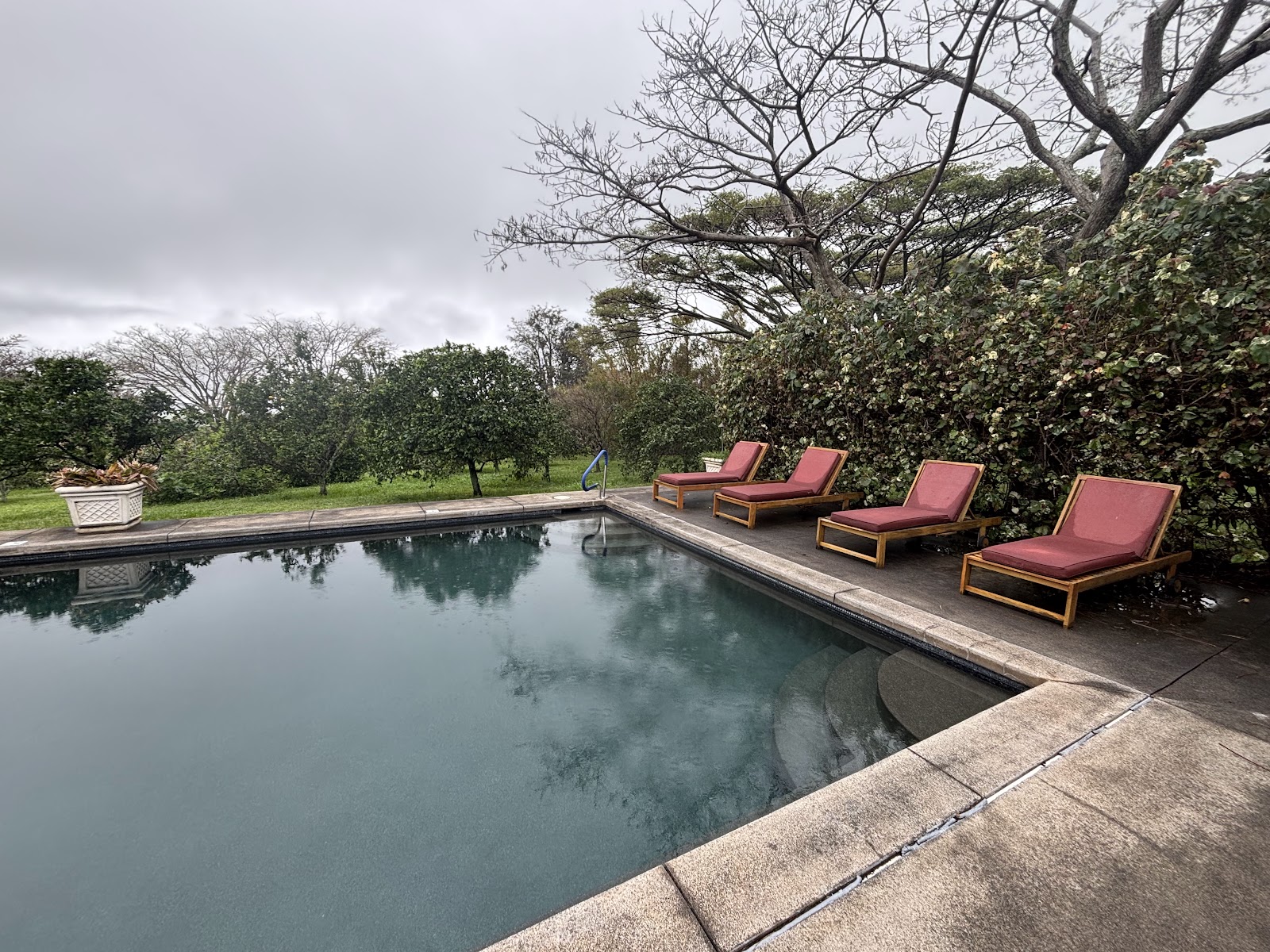
A property on Haleakala’s slopes at one to two thousand feet sits inside the lower part of that system rather than above it — but high enough that the relationship to cloud is completely different from a coastal venue. Cloud forms on the slope above and beside, often at eye level or below when looking down the mountain, and the light arrives through it rather than from an open sky.
What that produces is the most temperate light in these islands. Upcountry is cooler, greener and more frequently overcast than the leeward coast; the sun is diffused more often; the contrast is lower; and the colour is less harsh. For a photographer working in a place whose principal difficulty is a vertical sun, that is a substantial advantage.
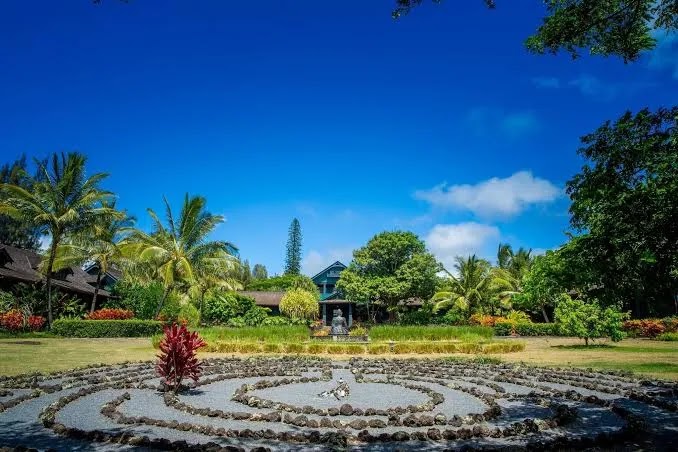
The second consequence is the view. From a slope at that height the land falls away to the isthmus and the coast, with the West Maui mountains across the gap and, on a clear day, other islands beyond — which means the property looks down at a layered landscape rather than out at a horizon.
And the third is the vegetation. Upcountry Maui at this elevation grows eucalyptus, jacaranda, pasture and pine rather than palm and plumeria, which makes it look and photograph like a temperate highland rather than a tropical coast — and which gives it the one thing the rest of Hawai’i lacks: a flowering tree with a proper season.
Makawao sits at about twenty and five-sixths degrees north. The June noon sun reaches about eighty-eight degrees, the December noon sun about forty-six, days run only from about eleven hours to thirteen and a quarter, and civil twilight is around twenty-two minutes.
We have not photographed a wedding at this retreat. Which spaces and grounds are included, what access there is to the wider slope and what the permitted hours are, are questions for their team.
Lumeria Maui at a glance
| Where | A retreat on Haleakala’s slopes in upcountry Maui, at one to two thousand feet |
| The climate | Cooler, greener and more often overcast than the coast — the most temperate light here |
| The cloud | It forms on the slope, often at or below eye level looking downhill |
| The vegetation | Eucalyptus, jacaranda, pasture and pine — temperate rather than tropical |
| Ask first | Included spaces and grounds, slope access, permitted hours |
Morning into midday
The first hour upcountry is the one worth getting up for and the reason is the inversion.
Overnight, cold air drains down the mountain slopes and pools in the low ground — the isthmus and the valleys below — while the slope itself stays clear. What that produces at first light is a sea of cloud or mist beneath the property, with the West Maui mountains rising out of it across the gap, and the sun coming up over Haleakala’s shoulder onto the top of it.
That is the most spectacular condition available anywhere in these islands and it happens most often on clear calm mornings. A subject on a slope above a cloud sea is a frame that a coastal venue cannot produce at any hour.
The sun’s arrival is delayed, and by how much depends on the property’s position. Haleakala rises to over ten thousand feet directly behind an upcountry site, which means the mountain takes the early sun — the sky lightens well before the sun clears the slope, and the first direct light can be an hour or more after the almanac’s sunrise.
That delay is an asset rather than a loss. The period between first light and first sun is long, soft and shadowless — a very large diffuse source with no direction, which is forgiving light for groups and for anyone who does not want to be posed, and it lasts far longer than the twenty-two-minute civil twilight suggests because the mountain extends it.
Mid-morning is the best portrait window before the evening and upcountry it is better than at the coast. With the sun between twenty and forty degrees the pasture is lit from the side rather than from above, faces have modelling, and the cloud that will build later has not yet formed — which means this is the clearest hour for the long views down to the coast and across to West Maui.
The cloud build is the thing to plan around, and orographic lift makes it predictable. As the day heats, moist trade air is forced up the slope, cools and condenses — which means cloud forms on the mountain from mid-morning and frequently caps the property or sits just above it by midday. A summit clear at seven is often gone by ten, and the long views go with it.
The practical response is to take the view frames early. That is the opposite of the advice at most venues and it is the most useful scheduling fact about an upcountry site.
Midday is where upcountry earns its reputation. At twenty and five-sixths degrees north the June noon sun reaches about eighty-eight degrees, which at the coast is unusable — but upcountry it is frequently diffused by the cloud that has built, which turns a near-vertical hard sun into a near-vertical soft one.
That is still top-heavy light and it still leaves eye sockets dark, but it is soft, and softness is most of the problem solved. The positional fix is the same as under any overhead source: move the subject close to a vertical surface, which converts part of the overhead light into side light, or under any roofed structure.
And when the sun is not diffused, the trees are the answer — and upcountry’s are different from the coast’s. Eucalyptus grows tall with a high open crown and sheds bark in strips, which means it dapples rather than blocks and is background material. Cook pine and other planted conifers are dense and dark and give genuine cover. And broadleaf canopy blocks, as it does everywhere in these islands, while palm — which barely grows at this elevation — is not a problem here in the way it is at the coast.
Afternoon to dark, and the jacaranda
Early afternoon is the cloudiest part of an upcountry day and the best time for the interiors and for anything that does not need a view.
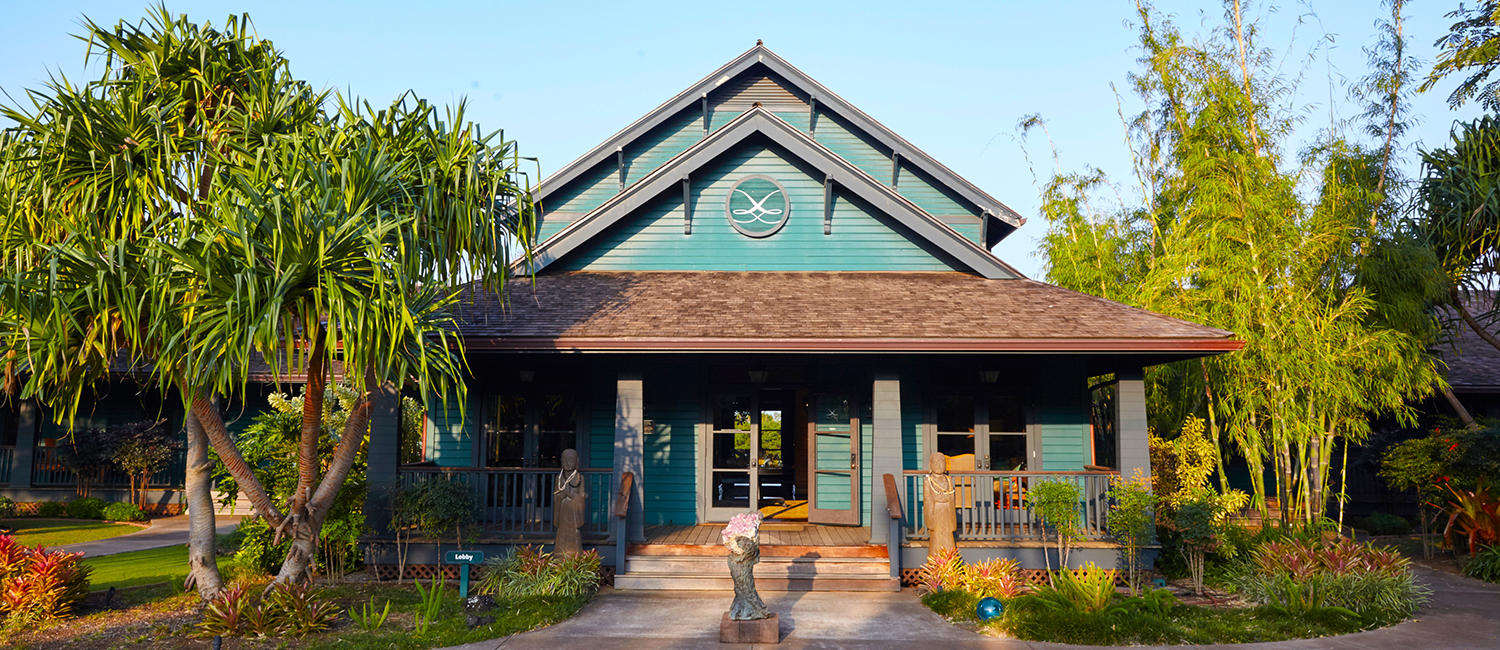
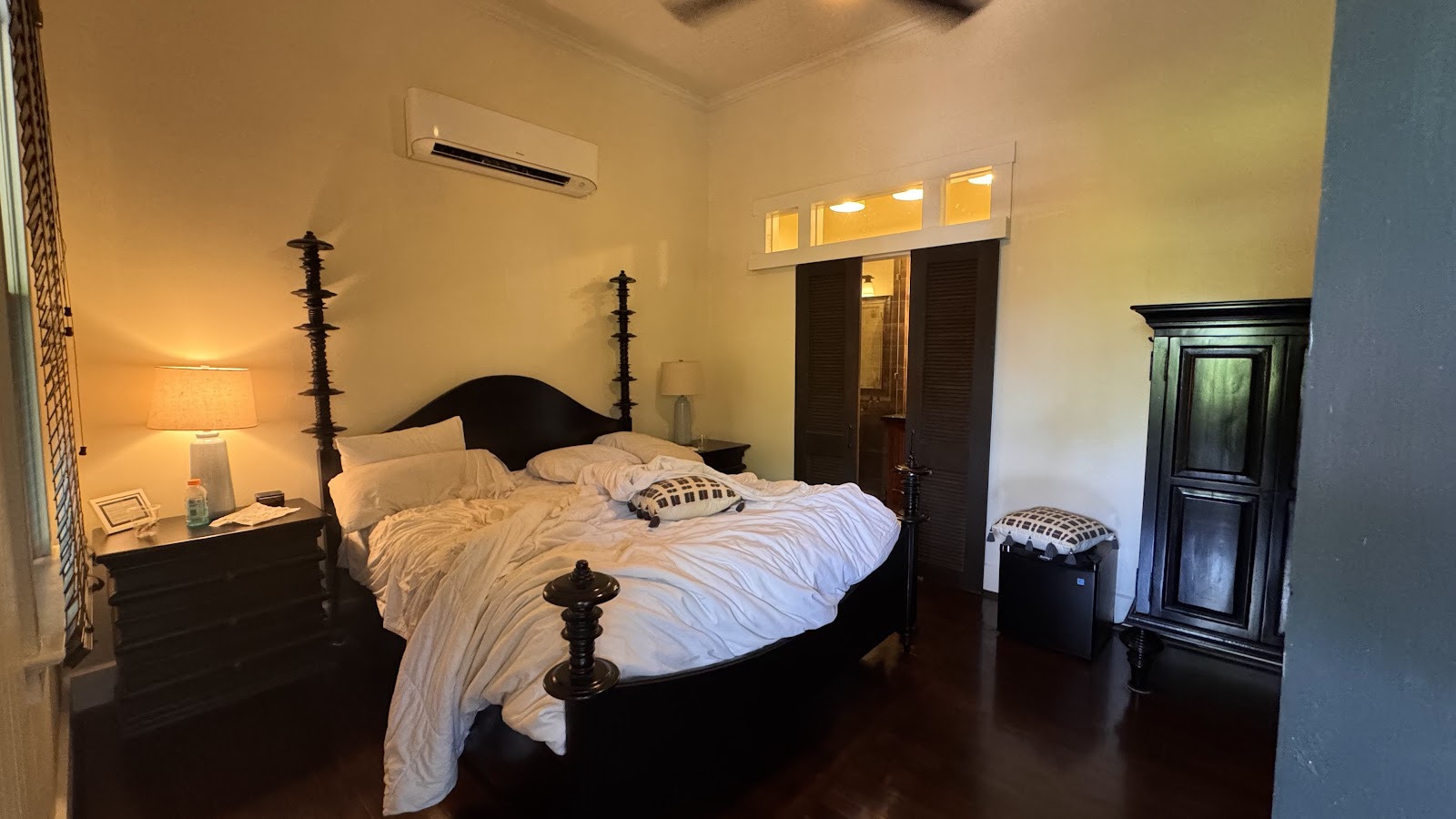
A retreat of this kind is likely to be a historic or converted building with timber finishes, which means the ambient sits a stop or two below what the eye reports and the fall-off from any window is steep — four stops or more from a face at a window to a surface three metres behind it. Meter on skin, use each window at forty-five degrees, and let the room go dark.
The specific advantage of an upcountry window is the quality of the light coming through it. At this elevation, under frequent high cloud, the light outside is soft and relatively neutral rather than hard and warm — which makes a window here closer to a studio softbox than a window at the coast, where the light is harder and the surroundings bounce green or sand-coloured.
Mid-afternoon the cloud often thins as the heating eases and the property comes back. The last ninety minutes are the best of the day and upcountry they are better than at the coast for two reasons.
The first is the view: as the afternoon cloud clears and the sun drops toward the West Maui mountains across the isthmus, the whole layered landscape lights up — the pasture in the foreground, the isthmus below, the eroded West Maui range beyond it catching the low sun on its flutes, and the ocean channels past that.
That is a genuinely layered frame, which a flat coastal site cannot give, and it depends on a moderate telephoto rather than a wide lens. A wide lens renders each layer at its true angular size and the whole thing flattens into thin bands; compression stacks them, which is how the eye perceives it.
The second is the direction. From an east-facing slope looking west, the sun sets across the view rather than behind the photographer — which means the low light comes over the shoulder onto the subjects and onto the landscape at the same time. That is the easiest good frame here and it needs nothing added.
The exposure caution is the standard layered one: expose for the lit range across the gap and lift the subjects with a close warm-gelled source at about a stop over the ambient. And the gel matters more at elevation than at the coast, because the open shade is lit by a deeper blue sky.
Then dusk, and upcountry it is longer than the numbers suggest. Civil twilight at this latitude is about twenty-two minutes, which is the shortest in this guide — but from a slope with an open western horizon the whole of it is usable, and the afterglow over the ocean west of Maui is visible from higher ground for longer than from a coastal site with land in the way.
This is also genuinely dark-sky country by Hawaiian standards, and Haleakala’s summit above is one of the better observing sites in the world — which means an evening running past twilight has a real night sky available.
The jacaranda deserves its own note because it is the one thing in Hawai’i that has a proper flowering season, and upcountry Maui is where it grows. Jacaranda is a planted ornamental with a broad canopy of fine leaves, and in late spring — roughly May and into June — it flowers a saturated blue-violet across the whole crown before the new leaves come.
That produces something no other venue in these islands can offer: a tree in mass flower in a colour that is nowhere else in the landscape, against green pasture and blue sky. It is a two-to-three-week window and it is the single strongest argument for a specific date at an upcountry venue.
Two practical notes. Upcountry is cool at this elevation — genuinely so in the evening, where a coastal party would be comfortable — which matters more for people in light clothing than for a camera. And the ground is pasture, which in the wetter months is soft.
- Take the view frames early: cloud builds on the slope from mid-morning
- The mountain behind delays the first sun and lengthens the soft light before it
- Midday cloud diffuses a near-vertical sun — the reason upcountry is easier than the coast
- Compress the layered view with a telephoto; wide flattens it into bands
- Jacaranda flowers blue-violet in May and June and nothing else here does
The upcountry year
Hawai’i has two seasons rather than four and upcountry Maui experiences both differently from the coast, because elevation changes what the rain does.
The wetter season runs roughly November to March. Upcountry is wetter than the leeward coast in every month and considerably so in these — the slope intercepts moisture that the lowlands never see, which is why this is pasture and eucalyptus country rather than kiawe and lava.
For photographs the wetter season brings more cloud, softer light, greener pasture and a genuinely cool climate. The December noon sun at about forty-six degrees is the lowest of the year, which combined with frequent cloud makes the middle of a winter day here the most usable midday light in these islands.
It also brings the best chance of the dawn cloud sea, because cold air drains more readily on long clear nights — and a chance of snow on Haleakala’s summit above, which from upcountry is a close rather than a distant subject.
The costs are soft pasture, more days when the view is simply gone, and a cool damp climate that a wedding party in tropical clothing will feel.
The drier season runs roughly May to September. The trades are steadiest, the pasture browns slightly, and the cloud builds later in the day and clears more reliably — which means the long views are available more often and for longer.
The costs are the sun and the wind. A near-vertical noon sun is at its worst in these months: at this latitude it passes exactly through the zenith twice a year, in late May and mid-July, and on those dates a vertical object casts essentially no shadow at noon. Upcountry cloud frequently diffuses it, but not reliably.
And the trades at elevation on an exposed slope are persistent, which makes a lightstand a liability and hair and fabric unpredictable.
The jacaranda is the drier season’s great compensation and it is worth repeating because it is genuinely unusual. Late May into June brings mass blue-violet flower across whole crowns, in a colour that exists nowhere else in the Hawaiian landscape, against green pasture and under a blue sky. If a date is movable, that fortnight is the one to move it to.
There is otherwise no autumn colour in these islands and no dormant season. What changes upcountry rather than at the coast is the pasture — deep green and soft in the wet months, lighter and coarser in the dry — and the eucalyptus, which sheds bark in strips year-round and leaves patches of pale fresh trunk that are the brightest natural verticals on the property.
Two further seasonal notes. Whale season runs from roughly December to April and the channels are visible from an upcountry slope, which means the whales are part of a distant view rather than a near subject — worth a long lens rather than a plan. And central Pacific hurricane season runs from June to the end of November, though direct strikes on the islands are rare.
The honest summary: take the views before the cloud builds, work the middle of the day here rather than avoiding it, use the last ninety minutes for the layered frame, and if the date can move at all, move it to the jacaranda.
More frames from Lumeria Maui
Lumeria Maui wedding photography: common questions
What does the elevation change?
Cooler, greener, more frequently overcast light — which makes the middle of the day workable here in a way it is not at the coast.
When should I take the long views?
Early. Orographic lift builds cloud on the slope from mid-morning, and a summit clear at seven is often gone by ten.
What is the dawn condition worth getting up for?
A sea of cloud pooled in the low ground below the property, with the West Maui mountains rising out of it — a frame no coastal venue can produce.
What lens for the view?
A moderate telephoto. A wide lens renders each layer at its true angular size and flattens the whole thing into thin bands.
Which trees give cover here?
Planted conifers and broadleaf canopy. Eucalyptus dapples and is background material — and palm, the coast’s problem, barely grows at this elevation.
What is the one date worth moving for?
Late May into June, when the jacaranda flowers a mass blue-violet that exists nowhere else in the Hawaiian landscape.
More Hawaii venue guides
We are writing a photographer’s guide to every venue we would happily shoot in Hawaii. Here are three more, plus the full index:
- Maui Tropical Plantation, Waikapu: The Venue’s Own Logic
- Montage Kapalua Bay, Maui: Field Notes, Problem and Solution
- Olowalu Plantation House, Lahaina: The Venue’s Own Logic
Planning a wedding at Lumeria Maui?
Cloud below you and jacaranda in May. Tell us your date.