 The Laniakea YWCA: A Building Organised Around Its Courtyard
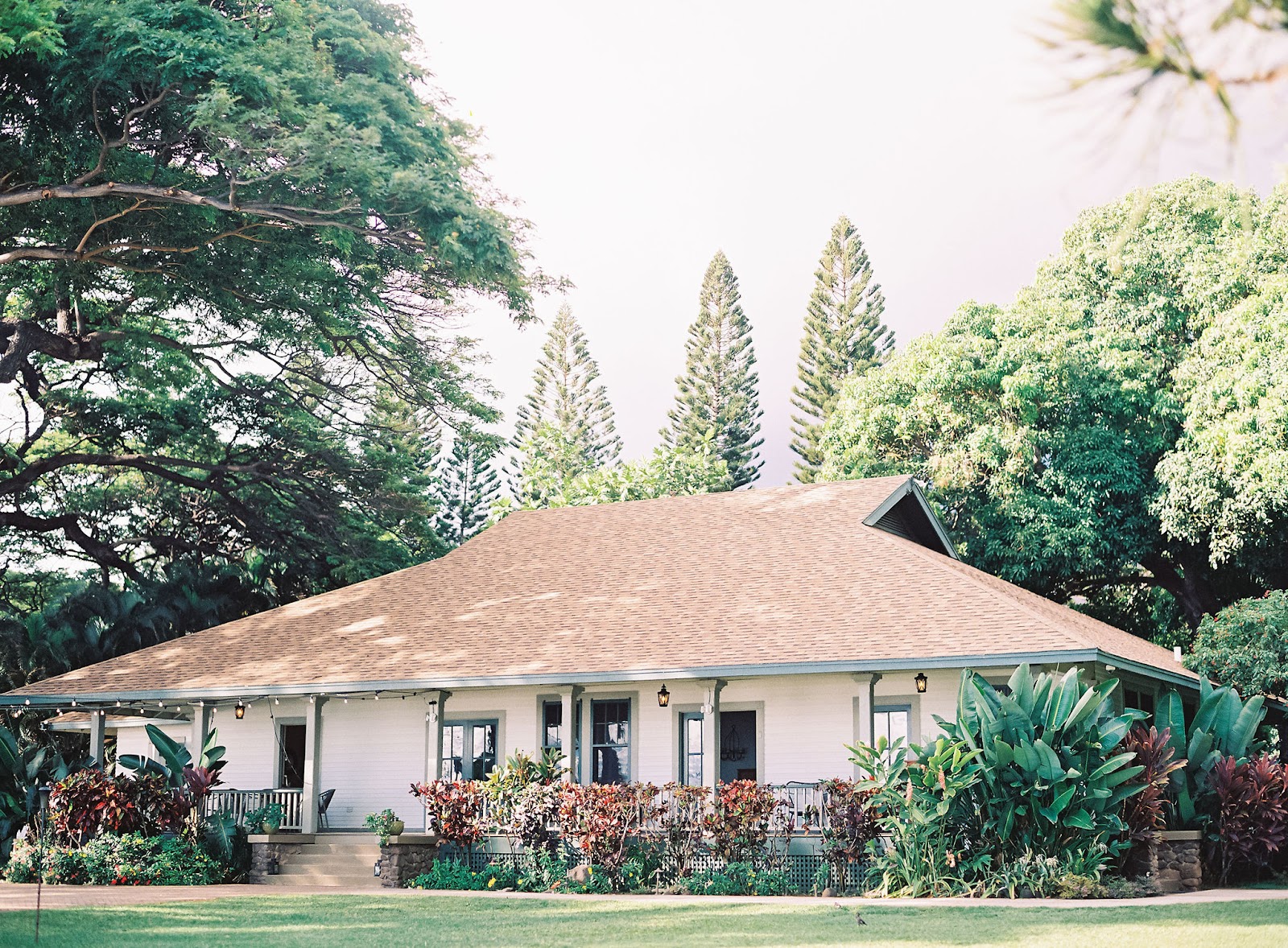
Olowalu Plantation House, Lahaina: The Venue’s Own Logic
Built for the trades and against the sun. Both of those are gifts.
A Hawaiian plantation house has a logic and it is entirely climatic: it was built to be cool in a place where the sun passes nearly overhead and the wind blows steadily from one direction.
The solutions the builders reached are consistent across the type. Deep verandas or lanai on the principal elevations, so that the walls are never in direct sun and there is always a shaded outdoor room. Raised floors, so air passes underneath. Tall windows with louvred shutters, so light and air can be admitted separately. Wide overhanging eaves. High ceilings, so hot air has somewhere to go. And a plan oriented to catch the trade wind rather than a view.
Every one of those decisions was made about light and air, which means every one of them is a decision a photographer inherits.
The lanai is the point. A deep roofed veranda with an open side is, in optical terms, a very large soft source with a hard mask: light arrives from one direction only, wraps because the floor and the ceiling bounce it, and falls off fast toward the back. That is a softbox the width of a building, and on a house of this type there are usually several of them facing different ways.
Why that matters here more than anywhere else is the latitude. Lahaina sits at about twenty and eight-tenths degrees north, which means the June noon sun reaches about eighty-eight degrees — effectively vertical — and even at the December solstice it still reaches about forty-six. There is no season in which the midday sun is genuinely low.
A building designed around shade in that climate is a building designed around the exact problem a photographer has, and it solved it a century before anyone was photographing weddings in it.
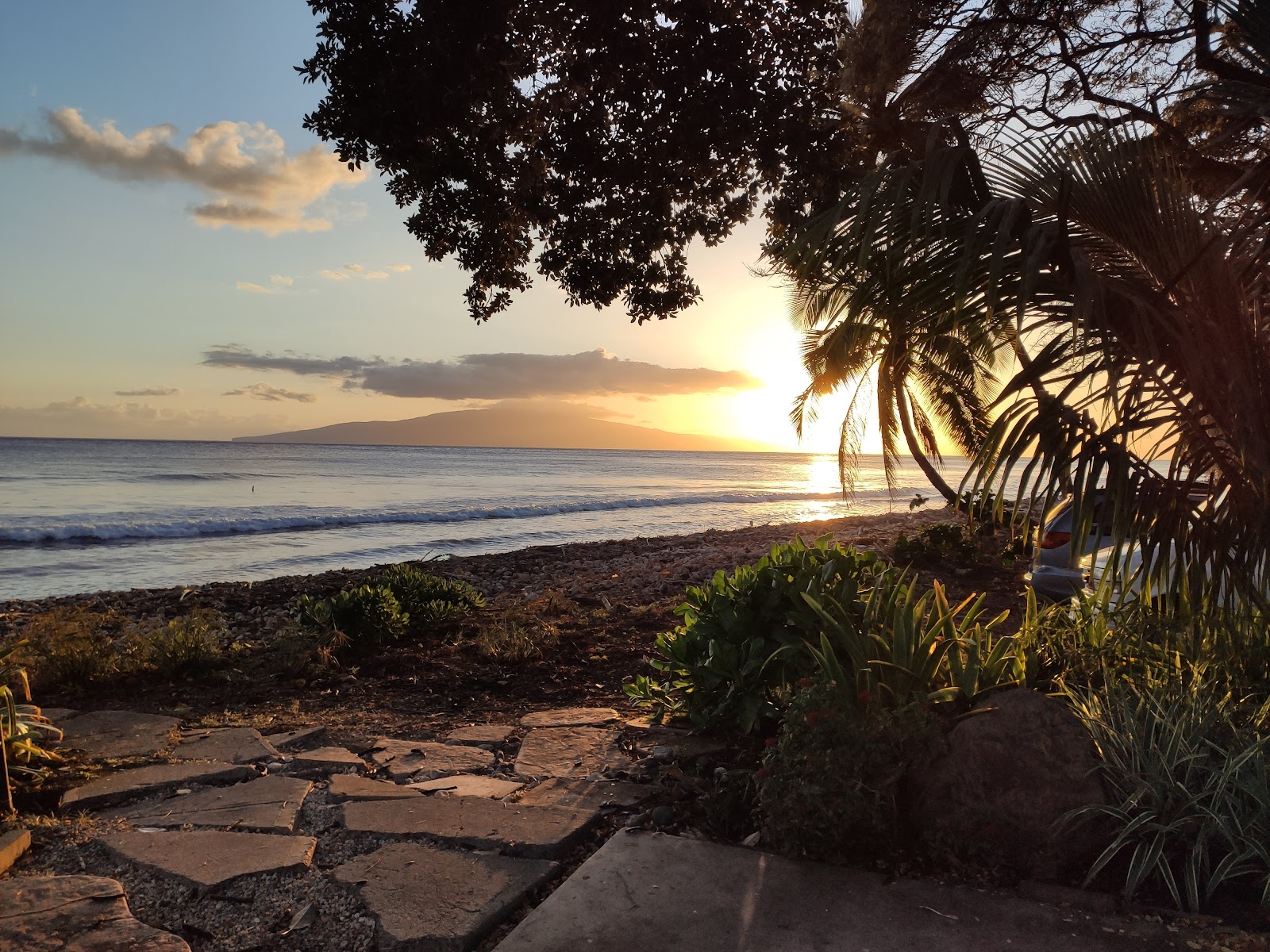
The second half of the logic is the orientation. West Maui’s Lahaina coast is leeward — sheltered from the trades by the West Maui mountains, dry, and facing west, which means the sunset goes down into the ocean. On the windward side of these islands the evening sun is behind the mountains and the ocean frame belongs to dawn; here it is the other way round.
Days run only from about eleven hours to thirteen and a quarter, and civil twilight is around twenty-two minutes — the shortest in this guide, with an abrupt end.
We have not photographed a wedding at this house. Which rooms and grounds are included, what access there is to the lanai and the shoreline, and what the permitted hours are, are questions for their team.
Olowalu Plantation House at a glance
| Where | A plantation-era house on the leeward Lahaina coast of West Maui |
| The logic | Built for the trades and against a vertical sun: lanai, louvres, raised floor, high ceilings |
| The asset | Deep lanai on several elevations — a softbox the width of a building, facing more than one way |
| The orientation | Leeward and west-facing: the sunset goes into the ocean |
| Ask first | Included rooms and grounds, lanai and shoreline access, permitted hours |
Reading the lanai and the louvres
Work the lanai by depth, because depth is the only control it offers and it is a complete one.
At the open edge the light is bright and nearly frontal, the ratio is low, and the result is flat and slightly hot. A metre back the light acquires a direction and the ratio opens to something like three to one. Two or three metres back, against the house wall, the ratio is dramatic, the fall-off behind the subject is total, and the difference between a lit face and the sunlit ground beyond can be four or five stops.
That last position produces the most expensive-looking portrait available on the property with no equipment at all — a lit face against a dark ground, framed by the structure — and it works at any hour of any day, including the middle of one when the sun is within two degrees of vertical and everything outside is unusable.
A house with lanai on more than one elevation gives something a single-aspect building cannot: a choice of light direction at a fixed time. If the western lanai is in hard afternoon sun, the eastern one is in even shade at the same depth and the same ratio, facing the other way. Establishing which elevation faces which way on arrival takes two minutes and saves an hour.
The posts are the rhythm and they reward precision. A veranda is a repeated structure, and a camera moved a few inches decides whether a post bisects a face, frames it, or disappears. One couple per bay, or the pair centred in a single opening with the rhythm receding behind them, turns repetition into composition.
The floor and ceiling matter to the quality of the light. A lanai with a pale painted ceiling bounces a great deal back upward onto faces, which fills under the brow and the chin — precisely where a vertical sun leaves people dark — and makes the deep position softer than the same depth under a dark ceiling. That is worth noticing, because it means a pale-ceilinged lanai is a better portrait position than a dark-ceilinged one at the same depth.
The louvred shutters are the second element and they do something no other window treatment does. A louvre admits light in horizontal bands and blocks it in between, which means light entering a room through partly closed louvres falls as a set of parallel stripes.
That is either a striking effect or an obvious mistake, and the rule is the same as for barn board gaps: keep the pattern off the faces and in the frame. A subject standing in a shadow band with the stripes falling across the wall and floor behind them is a strong photograph; a subject with a hard line across one eye is not.
The louvres are also adjustable, which is unusual — most window light is fixed. Opening them fully gives an ordinary window; closing them partly turns the same window into a striped source; closing them further turns the room dark. That is a genuine lighting control and it is worth asking whether they can be adjusted.
Inside, expect high ceilings, tall openings and timber finishes. Timber absorbs rather than reflects, which means the ambient sits a stop or two below what the eye reports and the fall-off from any opening is steep — four stops or more from a face at a window to a surface three metres behind it.
That is the gift: meter on skin, place the subject at forty-five degrees to an opening, and let the room go dark. And the raised floor means the openings are higher relative to the ground outside than in a modern building, which makes the light entering them more horizontal and better for faces.
Outside, and the leeward coast
The exterior of a plantation house behaves according to its paint. A pale-painted timber building is a substantial neutral reflector, which means the light near it is brighter, softer and more evenly distributed than near a dark building — and standing a subject beside a sunlit pale wall is the most flattering free light available.
It also means the meter is wrong: a frame containing much pale timber reads bright and the camera underexposes, often by a full stop. Compensate deliberately and check on skin. And it means the building has almost no silhouette against a bright tropical sky, which argues for the architectural frames at the ends of the day.
Where the timber is unpainted or weathered, the reverse holds: it is dark, textured and low in saturation, which makes it a far better background for a white dress than any pale wall, and it is a high-frequency surface that comes alive under light raking across it and reads as a flat brown field under frontal light.
The grounds are the second environment and the species distinction governs them, as it governs every venue in these islands. Broadleaf canopy — monkeypod above all, which has an enormous spreading crown of small dense leaves and gives the best natural shade in Hawai’i, plus mango and banyan — blocks almost all light and gives soft reliable cover.
Palms do the opposite. A frond is a row of stiff parallel blades, and with the sun within two degrees of vertical its shadow falls straight down a face as hard stripes that no exposure recovers. On a plantation property there will be many palms, and they are background material only.
Kiawe is the leeward-coast species worth knowing and it comes with a warning. It is a dry-country tree that dominates the drier leeward lowlands, it gives thin mottled shade rather than proper cover, and it has long sharp thorns that drop and lie in the ground litter. That is a genuine hazard to feet and to fabric, and it is a reason to keep a party on cleared ground rather than in the scrub.
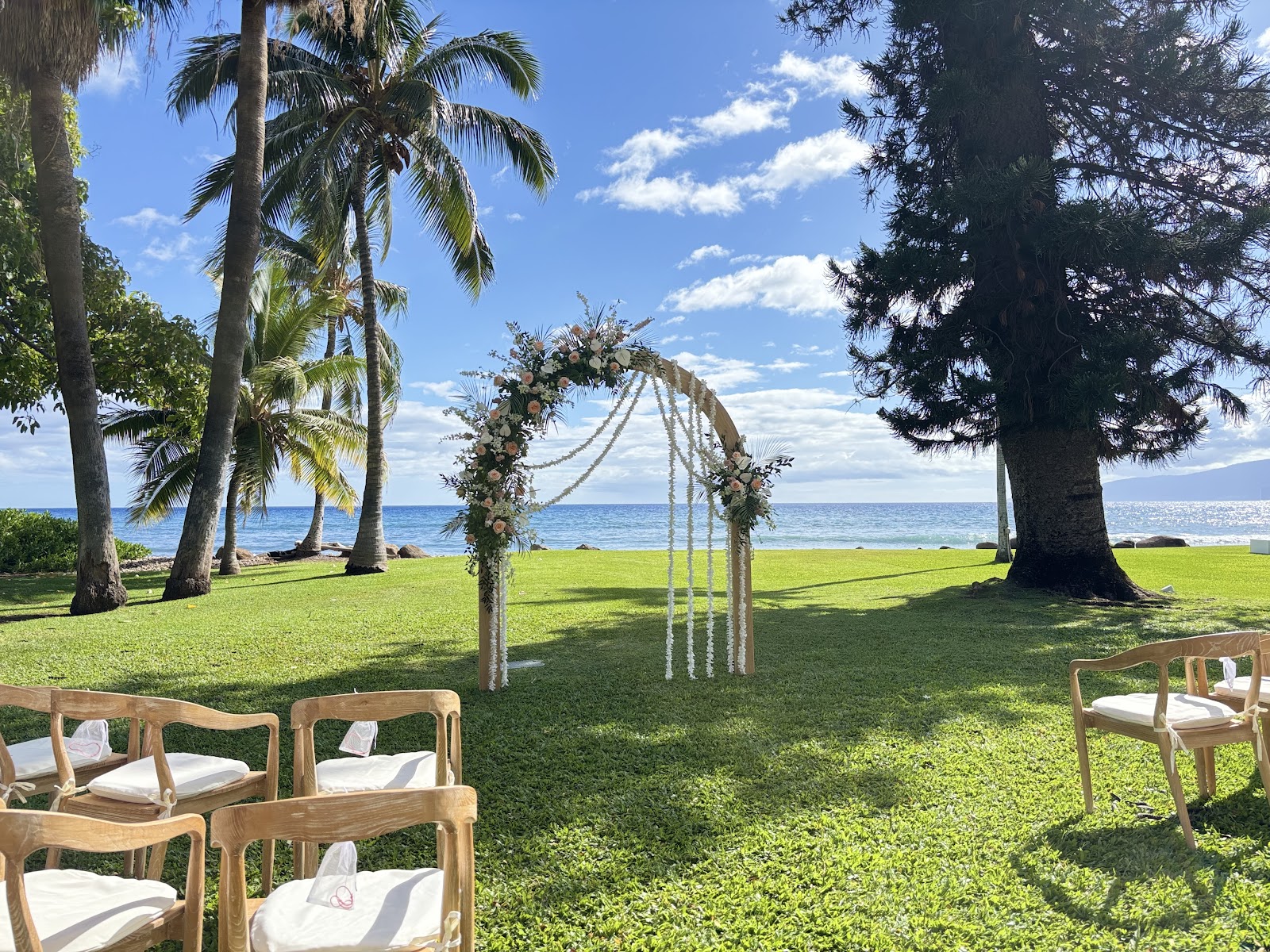
The shoreline is the third environment and the leeward orientation is its advantage. A west-facing coast gets the sun going down into the water every evening, with the reliability that a dry rain-shadowed climate gives — and the backlight problem’s three answers apply: a close warm-gelled source at a stop over the ambient with the exposure set for the sky and water; a silhouette exposed for the sky alone; or turning around and using the low sun frontally with the house or the mountains behind.
The mountains behind are worth a frame in their own right. The West Maui range is old and deeply eroded, which means fluted valleys and ridges rather than smooth slopes — and from a leeward position those take the evening light while the coast is still bright, which gives a lit range behind a subject in even shade at the end of the day.
And the channel water is the specific leeward feature. Because this coast faces the channels between the islands, the water here is deeper and bluer close in than a reef-flat coast, and other islands are visible across it — which puts a layered horizon in a frame rather than a flat one.
Two practical notes for this coast. Vog — volcanic haze from Hawai’i Island’s vents — drifts across the channels onto leeward Maui with some regularity, which softens distance, reddens sunsets and removes the layered-island frames. And salt aerosol on an exposed leeward shore settles on front elements within minutes rather than hours.
- Depth back from the lanai edge sets the ratio — choose it deliberately
- Lanai on more than one elevation gives a choice of direction at any hour
- Louvres are an adjustable source: keep the stripes off faces and in the frame
- Pale timber fools a meter by about a stop; weathered timber is the better background
- Monkeypod is cover; palms and kiawe are not — and kiawe has thorns
The leeward year
Hawai’i has two seasons rather than four and the difference is rain rather than temperature — and on a leeward coast in the rain shadow of a mountain range, the rain barely arrives at all.
That makes this one of the more weather-reliable venues in these guides. The West Maui mountains intercept the trades and wring the moisture out on their windward side, which leaves the Lahaina coast dry, sunny and sheltered for most of the year.
The drier season runs roughly May to September. The trades are steadiest, the rain shadow is at its most effective, and the sunset over water is available on most evenings — which means a plan does not need a wet-weather half.
The costs are the sun and the haze. A near-vertical noon sun is at its worst in these months: at twenty and eight-tenths degrees north the sun passes within two degrees of the zenith at the June solstice, and it passes exactly through it twice a year, in late May and mid-July. On those dates a vertical object casts essentially no shadow at noon, which is the hardest lighting condition in these guides and which makes the lanai not a preference but the only option for hours either side.
And vog is more persistent in the drier months, because the trades carry volcanic emissions from Hawai’i Island north-west across the channels. Vog softens distance, which removes the layered-island frames that make this coast distinctive; warms and reddens the light, particularly at sunset; and produces a genuine haze that no white balance or contrast adjustment restores.
The wetter season runs roughly November to March, and on a leeward coast it is not very wet. What changes is that the trades are interrupted more often by Kona weather — a reversal bringing wind and rain from the south-west, which is the one condition that brings real rain to this side.
For photographs the wetter season is better in three ways and they are substantial. The December noon sun at about forty-six degrees is the lowest of the year, which means the middle of the day is workable rather than hostile and the West Maui mountains behind are modelled for a long period rather than an hour. Cloud is more frequent, which softens the extreme contrast a tropical sun produces. And it is whale season.
That last is worth naming because on this coast it is not incidental. Humpback whales are in Hawaiian waters from roughly December to April and the channels off West Maui are among the places they concentrate most densely — which means a frame looking out over the water in those months can contain something no other venue in this guide offers, visible from the shore.
Winter also brings a chance of snow on Haleakala, the volcano across the isthmus, which is a genuinely surprising thing to have in the distance of a Hawaiian frame.
There is no autumn colour here and no dormant season: tropical vegetation holds its leaves year-round, which removes the seasonal cue photographs in the rest of this guide depend on. Nothing in an image made here says what month it is except the angle of the light, the clarity of the air and whether there are whales in it.
What does change is flowering, and it is worth asking about rather than assuming — plumeria through the warmer months and various tropical flowering trees on their own cycles. And one further note: central Pacific hurricane season runs from June to the end of November, though direct strikes are rare.
More frames from Olowalu Plantation House
Olowalu Plantation House wedding photography: common questions
What is the building's logic?
It was built before air conditioning for a climate with a near-vertical sun and a steady trade wind: deep lanai, louvred shutters, a raised floor and high ceilings.
Where is the best portrait light?
Two or three metres back under the lanai roof, against the wall — a four or five stop fall-off to the sunlit ground beyond, with no equipment, at any hour.
What do louvres give me?
An adjustable source. Fully open they are a window; partly closed they are a striped source — and the stripes belong behind the subject, never across a face.
Which way does the sunset face?
Into the ocean. This is a leeward west-facing coast, the reverse of the windward side where the ocean frame belongs to dawn.
What should I watch for in the grounds?
Kiawe. It gives thin mottled shade and drops long sharp thorns into the ground litter — a genuine hazard to feet and fabric.
When is the light best?
The winter months. A December noon sun at about forty-six degrees is the lowest of the year, cloud softens the contrast, and the whales are in the channel.
More Hawaii venue guides
We are writing a photographer’s guide to every venue we would happily shoot in Hawaii. Here are three more, plus the full index:
- The Ritz-Carlton Maui, Kapalua: The One Decision That Governs Everything
- Sheraton Kaua’i Resort, Poipu: The One Decision That Governs Everything
- The St. Regis Princeville, Kaua’i: One Frame and How It Is Made
Planning a wedding at Olowalu Plantation House?
A house that solved the problem a century early. Tell us your date.