 The Laniakea YWCA: A Building Organised Around Its Courtyard
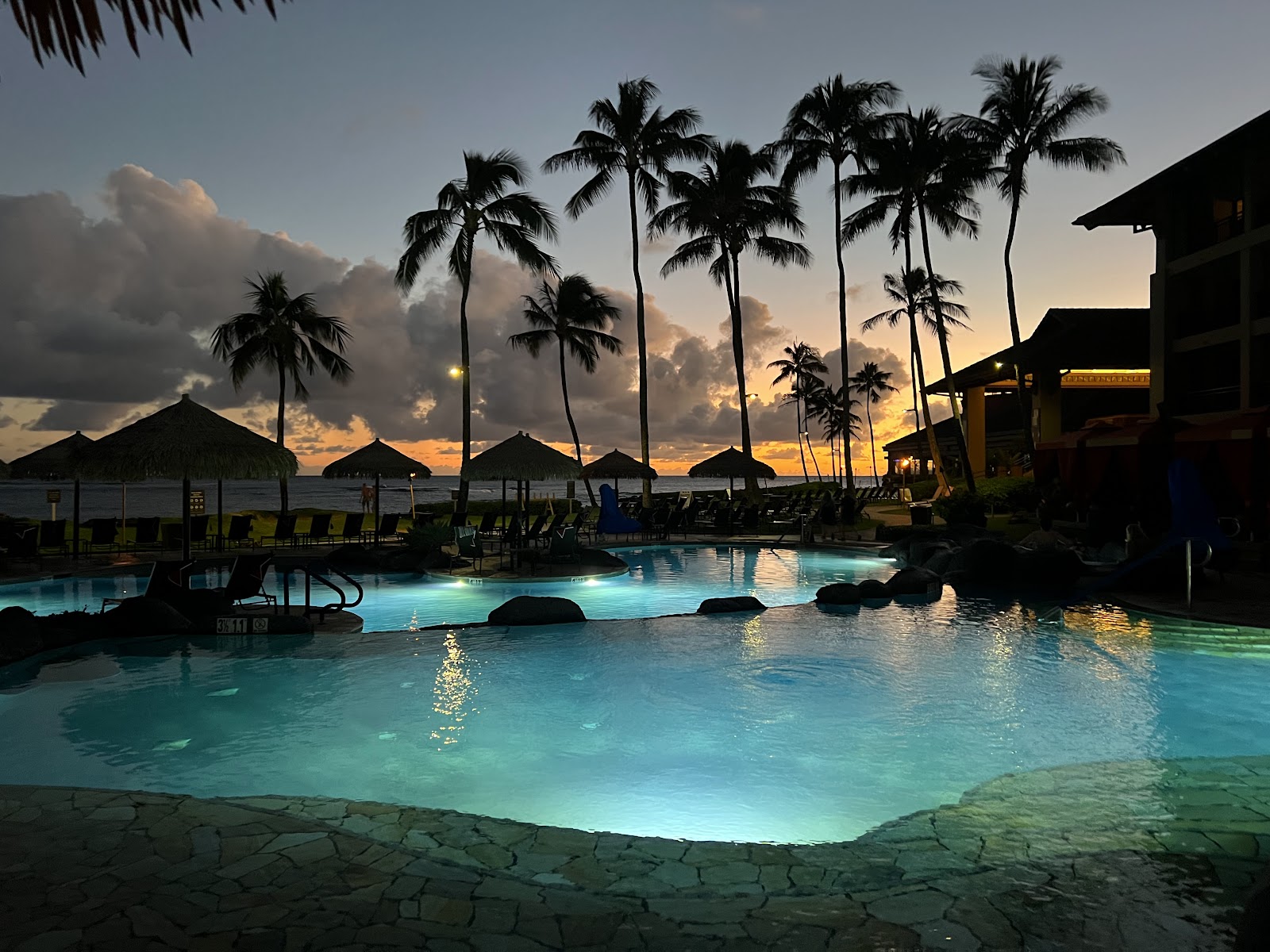
Sheraton Kaua’i Resort, Poipu: The One Decision That Governs Everything
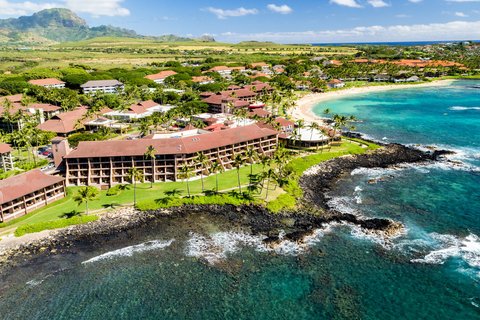
On a south-facing shore the sun crosses the beach. Which way you point is everything.
There is one decision on a south-facing shore and it governs every frame: which way along the beach the camera points.
On an east-facing coast the sun comes out of the water in the morning; on a west-facing one it goes into the water in the evening. Those are simple and they dictate one plan. A south-facing coast does neither — the sun rises to the left along the shore, crosses in front at its height, and sets to the right along the shore.
That means the low sun at both ends of the day travels along the beach rather than out to sea, and every frame is a choice between three orientations rather than a single obvious one.
Pointing west along the shore in the evening gives backlight: the sun in or near the frame, the sand and water lit from behind, and the standard brightness problem. Pointing east along the shore gives frontlight: warm directional light straight onto faces, the beach lit, and a background that is the deeper anti-solar part of the sky. And pointing out to sea gives side light: the sun raking across the subjects from one side, with the water as a bright field behind rather than a backdrop with a sun in it.
All three work. The third is the one most people do not think of and it is the easiest good frame this coast produces, because it gives directional modelling on a face with none of the exposure difficulty backlight brings.
The second fact about Poipu is the rain shadow, and on Kaua’i it is the most extreme in these guides. The island’s interior is among the wettest places on earth; this coast, in its lee, is semi-arid. That makes the south shore the island’s reliable coast — sunny and dry when the north shore is rained out — and reliability is what a beachfront venue needs most.
Poipu sits at about twenty-two degrees north. The June noon sun reaches about eighty-eight degrees, the December noon sun about forty-four, days run only from about eleven hours to thirteen and a third, and civil twilight is around twenty-three minutes.
We have not photographed a wedding at this resort. Which spaces are included, what beach access and setup allow, what covered alternatives exist and what the permitted hours are, are questions for their team.
Sheraton Kaua'i Resort at a glance
| Where | A resort directly on the beach at Poipu, south shore of Kaua’i |
| The decision | Which way along the shore: west for backlight, east for frontlight, seaward for side light |
| The underused one | Seaward. Side light gives modelling with none of the backlight difficulty |
| The rain shadow | The most extreme in these guides — this is the island’s reliable coast |
| Ask first | Included spaces, beach access and setup, covered alternatives, hours |
Working the three orientations
West along the shore is the backlit option and it is the one people attempt first, because a sun in the frame looks like the picture they imagined. It is also the hardest.
The subject is in front of the brightest thing in the frame, and on a bright coast the range can run eight or ten stops. Three answers work. Add a close source, warm-gelled to match the low sun, at about a stop over the ambient on the faces, and expose for the sky and water — which keeps the colour and gets the frame most people want.
Expose for the sky alone and silhouette, which works well on a beach because the sand gives a clean base and the horizon is unbroken; the requirements are a gap of light between the heads and limbs clear of bodies.
Or accept a darker sky than the eye saw, because that is the price of keeping its colour with correctly lit faces. A slightly dark saturated sky with a properly lit couple is the frame; a correct sky with lifted-in-post faces is noise.
East along the shore is the frontlit option and it is the one that cannot fail. With the low sun behind the camera the subjects are lit warmly and directionally, the beach is lit, and the background is the anti-solar part of the sky — which is always deeper in colour and lower in brightness than the part near the sun.
That gives a saturated background, modelled faces, and a brightness range small enough that nothing needs adding. It should be taken first when the window is short, and on a twenty-three-minute twilight the window is always short.
The one caution is squinting, and it has a simple answer: have the subjects look away from the sun and turn back only for the exposure, or work in the last few minutes when the sun’s intensity has dropped sharply.
Seaward is the third and it is the orientation this coast is actually for. With the low sun crossing from the side and the water behind, the subjects get directional light on one side of the face and shadow on the other — proper modelling, which is what a portrait wants — while the ocean fills the background as a bright even field rather than as a backdrop with a sun in it.
That combination is unusual. On an east- or west-facing coast the low sun and the water are in the same direction, so a seaward frame is always backlit; here they are ninety degrees apart, which means a seaward frame can be side-lit. It is the south shore’s specific gift and it is the frame most people at this kind of venue never make.
The exposure is straightforward because the range is small: meter on skin, let the water go bright, and the frame holds without any added light at all.
The sand runs through all three. Poipu’s is pale with a high albedo, which returns a great deal of light upward and fills faces from below — precisely where a near-vertical sun leaves them dark — which means a beach portrait here survives hours that would be unusable on grass or rock. It also means a frame containing much sand underexposes by a stop or more unless the compensation is deliberate and checked on skin, re-checked whenever the framing changes.
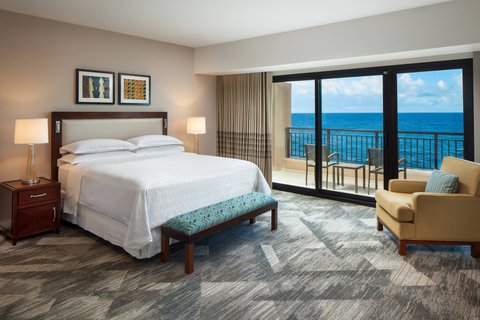
And the low camera is the answer to the resort itself. With the camera below the subjects and sand across the base of the frame, everything behind them is above the horizon — which removes the buildings, the loungers, the palms and every other person in one move. On a public beach in season that is not a refinement but the only way to make a clean frame.
The rest of the site, and the shore
The midday problem is the same as at every venue at this latitude and on a beach there is no natural cover at all. At about eighty-eight degrees of June elevation the sun puts eyes in shadow and foreheads in light, and a dry coast has few clouds to soften it.
The answers are architectural. Depth back from any covered edge — a lanai, a colonnade, a porte-cochère, a doorway — is the whole lighting control: at the edge flat and frontal, two or three metres back dramatic with the sunlit sand beyond four or five stops down. That is the best unassisted portrait on the property at any hour, and it works in wind and rain.
A doorway is the purest version and the best free setup anywhere: the whole sky as a softbox in front and the dark interior as a four or five stop backdrop.
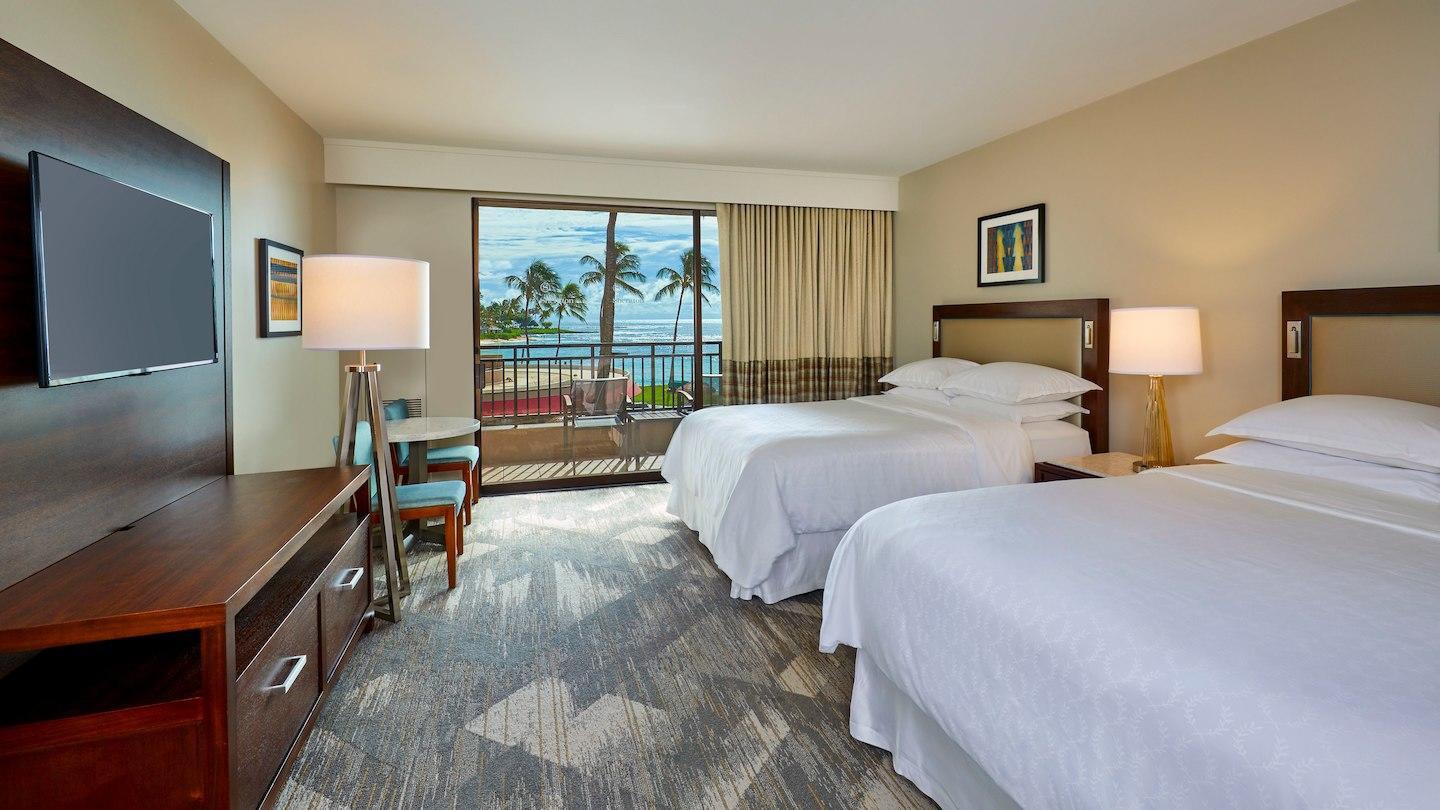
The glazing is the interior equivalent and at a beachfront resort it is unusually good, because the light coming through it has bounced off pale sand and bright water rather than off vegetation — brighter, cleaner and more neutral than any inland window. The caution is colour: sand-and-sea light is noticeably cool, so the white balance goes on a face rather than on a preset.
The planting is the other cover and on a dry coast it is irrigated rather than natural, which means it has to be located. The species distinction in these islands is absolute: broadleaf canopy — monkeypod above all — blocks almost all light and gives soft reliable cover, while palms give hard slatted stripes under a near-vertical sun and are background and silhouette material only.
The shoreline beyond the sand is Kaua’i’s and it is worth knowing because it is unlike the younger islands’. This is the oldest of the main Hawaiian islands, and its coast here is lithified rock — old consolidated dunes weathered into low cliffs and platforms — rather than young black basalt.
That gives tan and ochre rock, bedded and fine-textured, which takes raking light beautifully and shows its horizontal bedding planes under a low sun while flattening into a plain field at noon. It is also a far easier tonal companion to pale sand than black lava would be: the whole coast sits in a warm coherent palette rather than between two extremes.
The red soil is the warning. Kaua’i’s red dirt is famous, it stains fabric permanently, and it is present anywhere off the irrigated ground and the built surfaces. That belongs in the conversation before anyone walks inland rather than after.
The swell season is the last practical matter and it is the reverse of what a north-shore reputation suggests. A south-facing Hawaiian shore is sheltered from the big winter North Pacific swell and exposed to southern-hemisphere swells in summer — which means the water here is calmest from November to March and liveliest between roughly April and October.
For a beach ceremony at the water’s edge that is a genuine scheduling fact, and it is the opposite of the pattern on the famous side of the island.
Two further notes. Salt aerosol on an exposed shore settles on front elements within minutes rather than hours. And the trades reach this coast around the island’s flanks rather than head-on, which makes the wind moderate but persistent — every source handheld or weighted.
- Three orientations: west for backlight, east for frontlight, seaward for side light
- Seaward side light is the south shore’s gift and the frame most people miss
- Pale sand fills from below and fools a meter by a stop or more
- A low camera removes the resort from the background in one move
- Calmest sea November to March — the reverse of the north shore
The Poipu year
Hawai’i has two seasons rather than four and on Kaua’i’s south shore the rain shadow flattens the difference — which is the reason to be here.
The drier season runs roughly May to September. The trades are steadiest, the rain shadow is at its most effective, and the coast is genuinely dry and sunny.
The costs are the sun and the swell. The near-vertical noon sun is at its worst in these months with few clouds to diffuse it, which pushes the whole usable day to its ends and to the architecture. And summer is the south shore’s swell season, which means the water is liveliest and the beach most affected in exactly the months the north shore is flat.
That reversal is worth planning around: a ceremony at the water’s edge is a different proposition in July than in January on this coast, and the sand itself can be narrower when a southern swell is running.
The dry months also brown the inland vegetation, which warms the palette further — golden scrub against tan rock and red soil, with the water as the only cool element. That is the most distinctive state this coast reaches and it is not what a green tropical expectation anticipates.
The wetter season runs roughly November to March. Even here the rain increases, and Kona reversals bring heavy rain from the south-west, which is the one condition that genuinely wets this coast.
For photographs the wetter season is better in four ways. The December noon sun at about forty-four degrees is the lowest of the year, which means the middle of the day is workable rather than hostile and the lithified rock is modelled for far longer than summer allows. Cloud is more frequent, which softens the contrast on pale sand. The sea is at its calmest, because a south-facing shore is sheltered from the winter swell. And the vegetation greens.
And it is whale season. Humpbacks are in Hawaiian waters from roughly December to April and they pass this coast, which means a seaward frame in those months can contain them — and the seaward frame, as this page argues, is the one worth making here anyway.
Winter is also when the island’s wet side is at its best, with the waterfalls running and the green at its most saturated. That matters indirectly but substantially: a winter date on the south shore combines a reliable coast with the possibility of a genuinely spectacular trip to the north or west if travel is possible, which a summer date does not offer to the same degree.
There is no autumn colour in these islands, but the dry-country vegetation here has a real seasonal change and it runs the opposite way to a temperate one: greenest in winter after the rain, golden through the dry summer months. That is the only seasonal cue available in a frame made at this venue.
Central Pacific hurricane season runs from June to the end of November. Direct strikes on the islands are rare but Kaua’i has been struck, and it belongs in a planning conversation for a late-summer date.
The honest summary: this coast is chosen for reliability and it provides it in every month. Winter gives the lower sun, the calmer sea, the greener ground and the whales; summer gives the golden palette and the steadiest trades. And in both, the seaward side-lit frame is the one to plan the evening around.
More frames from Sheraton Kaua'i Resort
Sheraton Kaua'i Resort wedding photography: common questions
What is the one decision?
Which way along the shore the camera points. On a south-facing coast the low sun travels along the beach rather than out to sea, so there are three orientations.
Which one do people miss?
Seaward. The sun crosses from the side, which gives proper modelling on a face with the ocean as a bright even background and none of the backlight difficulty.
Which one cannot fail?
East along the shore, with the sun behind the camera. Warm directional light on faces and the deeper anti-solar sky behind them.
Why is my exposure wrong on the sand?
Pale sand returns a great deal of light. Compensate positively by a stop or more and re-check whenever the proportion of sand in the frame changes.
How do I remove the resort from the background?
A low camera with sand across the base of the frame. Everything behind the subjects becomes sky, including the buildings and the other guests.
When is the sea calmest?
November to March. A south-facing Hawaiian shore is sheltered from the winter North Pacific swell and exposed to summer’s southern swells — the reverse of the north shore.
More Hawaii venue guides
We are writing a photographer’s guide to every venue we would happily shoot in Hawaii. Here are three more, plus the full index:
- The St. Regis Princeville, Kaua’i: One Frame and How It Is Made
- Turtle Bay Resort, O’ahu: A Walk Through the Site
- Waikoloa Beach Marriott: What It Suits and What It Does Not
Planning a wedding at Sheraton Kaua'i Resort?
Three ways to point on a south-facing shore. Tell us your date and we will use all of them.