 The Laniakea YWCA: A Building Organised Around Its Courtyard
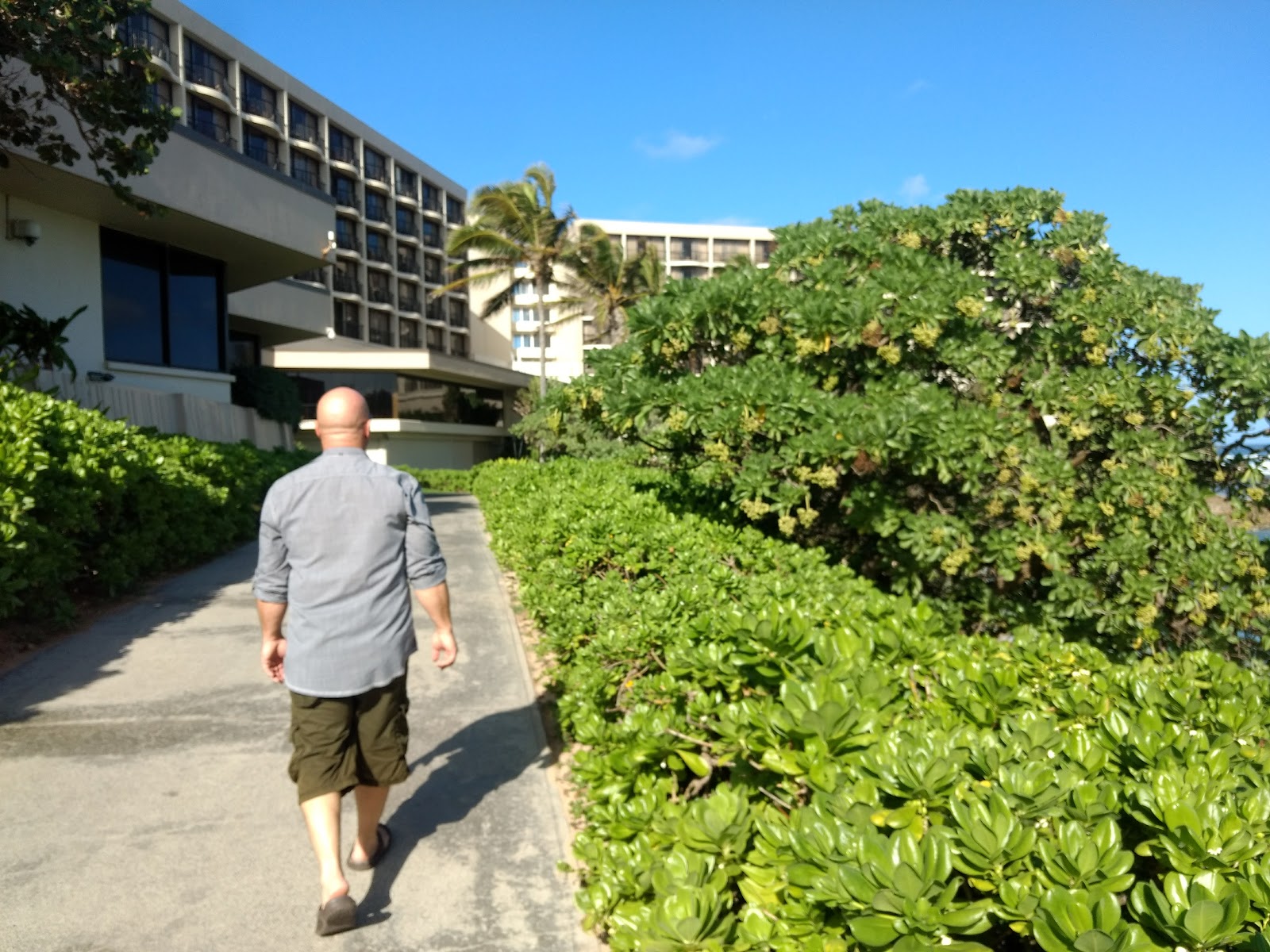
Turtle Bay Resort, O’ahu: A Walk Through the Site
A point at the top of the island. Water on three sides, facing north.
The best way to describe this site is to walk it, because it is a point rather than a stretch of coast — and a point faces more than one way.
The resort occupies a headland at the northern tip of O’ahu, which means water on three sides and a shoreline that changes aspect as you walk around it. That is the single most useful thing about the property and it is worth mapping on arrival with a compass, because it determines where every frame at the ends of the day belongs.
The dominant aspect is north, and that is unusual enough to be worth stating carefully. At twenty-one and three-quarter degrees north, the midsummer sun rises well north of east and sets well north of west — which means a north-facing shore has both the sunrise and the sunset relatively close to over the water. Neither is squarely so, but both are far closer than on an east- or west-facing coast, and the two ends of the day are usable over water from the same property.
Walking round the point, the east-facing side takes the sunrise more squarely and the west-facing side takes the sunset more squarely, which means the extremes are available too. A day here can have the sun coming out of the water in the morning and going into it in the evening, from ground a few hundred metres apart.
The second thing about the site is that it is exposed. A point at the northern tip of an island receives the trade winds without obstruction and the North Pacific swell without any shelter at all — which has photographic consequences at both ends of the year and practical ones every day.
And the third is the ground, which alternates: pockets of pale coral sand between stretches of low black volcanic rock, with ironwood and low coastal vegetation behind. That alternation is the point’s visual signature and it gives the widest tonal range available on any Hawaiian shore.
Days run only from about eleven hours to thirteen and a quarter, and civil twilight is around twenty-two minutes — the shortest in this guide.
We have not photographed a wedding at this resort. Which spaces and grounds are included, what shoreline access and setup allow, what covered alternatives exist and what the permitted hours are, are questions for their team.
Turtle Bay Resort at a glance
| Where | A resort on a point at the northern tip of O’ahu, water on three sides |
| The aspects | North dominant, with east and west sides a short walk apart |
| The gift | Sunrise and sunset both usable over water from one property |
| The exposure | Trades and North Pacific swell arrive unobstructed |
| Ask first | Included spaces, shoreline access and setup, covered alternatives, hours |
The shoreline: rock, sand and the two ends
Start on the rock, because it is the least expected and the most useful material on the property.
Low black volcanic shoreline absorbs almost all the light striking it, which means it is several stops below anything else in a frame and it returns nothing. As a foreground that makes it difficult — a subject standing on it gets no fill from below, which is the reverse of a beach. As a background it is the best dark field available on any Hawaiian shore: genuinely near-black, textured, entirely unsaturated, and a white dress against it separates completely with nothing added.
On a coast where everything else is bright — pale sand, bright water, open sky, pale resort architecture — that near-black field is disproportionately valuable, and here it is the ground itself.
The practical caution is that volcanic rock on a wave-washed shore is sharp, uneven and wet, and the wet zone is genuinely slippery. Nobody in formal shoes goes onto the low rock near the water, and the photographer works from the dry upper rock and the built surfaces.
The sand pockets between the rock are the counterpoint. Pale coral sand has a high albedo, which returns a great deal of light upward and fills faces from below — precisely where a near-vertical sun leaves them dark. That means a beach portrait here survives hours that would be unusable on rock, and it means a meter containing much sand underexposes by a stop or more unless the compensation is deliberate and checked on skin.
Black rock and white sand in the same frame is the point’s signature and it is a range no single exposure holds comfortably. The rule is to compose with two tones and a subject rather than four: rock and water, or sand and water, or rock and sand with nothing else. All three plus a sky and a subject is a frame in which nothing is right.
Then the two ends of the day, and this is what the aspects are for.
The east-facing side takes the sunrise most squarely: a low warm sun coming straight off the water into the subjects’ faces, on an empty shore, in the calmest air of the day. That is the best light on the property and it requires being there early — before half past five at midsummer.
The west-facing side takes the sunset, where the standard backlight problem applies with its three answers: a close warm-gelled source at about a stop over the ambient with the exposure set for the sky and water; a silhouette exposed for the sky alone, which works unusually well here because black rock gives a hard base and a clean graphic shape; or turning around and using the low sun frontally with the rock behind, which is the frame that cannot fail and is stronger here than on a sand coast because the background is genuinely dark.
And the north-facing side, which is most of the property, takes both at an angle — which is the useful middle. A low sun coming across a north-facing shore rather than straight down it gives side light rather than backlight, which means faces are modelled without any of the exposure difficulty that a sun in the frame produces.
That is the easiest good frame on the site and it is available at both ends of the day. It is also the one most people miss, because they walk to whichever side has the sun in it.
The point, the trees and the swell
Walking inland from the shore, the second environment is the coastal vegetation and it is dominated by one species.
Ironwood is planted widely along Hawaiian shorelines as a windbreak, and on an exposed point it is the only substantial tree that thrives. Its foliage is fine and needle-like rather than broad, which means individual branches do not block much — but a mature stand is dense enough to give usable, slightly mottled shade, and it grows in rows, which makes it a line as well as a mass.
That matters because on an exposed point it is frequently the only cover, and it is the only shelter from the wind outside the buildings. The lee side of an ironwood row is genuinely calmer, which on a site where the trades arrive unobstructed is worth as much as the shade.
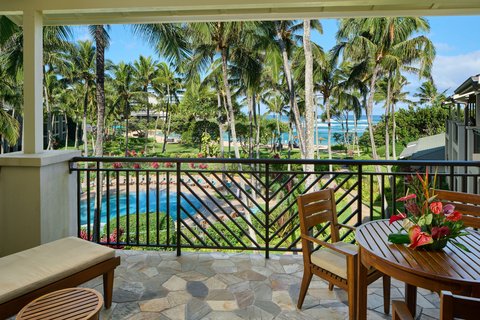
Where broadleaf grows — monkeypod in sheltered pockets, and the resort’s planting — it blocks far better and gives soft reliable cover. And palms, which are everywhere on a coastal resort, are background material only: a frond is a row of stiff parallel blades, and with the sun near vertical its shadow falls straight down a face as hard stripes that no exposure recovers.
The architecture is the other cover and on an exposed point it is the more reliable one. Depth back from any covered edge — a lanai, a colonnade, a porte-cochère, a doorway — is the whole lighting control: at the edge flat and frontal, two or three metres back dramatic with the sunlit ground beyond four or five stops down.
That deep position is the best unassisted portrait on the property at any hour, and on a point it works in wind and rain, which is worth as much as the light.
The glazing is the interior equivalent and at a coastal resort it is unusually good: a large ocean-facing window receives light that has bounced off pale sand and bright water rather than off vegetation — brighter, cleaner and more neutral than any inland window. The caution is colour, because sand-and-sea light is noticeably cool, so the white balance goes on a face.
The swell is the point’s last element and it changes the site more than anything else does.
O’ahu’s North Shore receives the North Pacific swell, and the seasonal difference is extreme rather than gradual. From roughly November to February the surf on this coast is very large — genuinely so, among the largest in the world — and from roughly May to September it is often flat calm.
That means the water in a frame is a completely different subject depending on the month. In winter it is white, broken, loud and dramatic, with spray carrying inland and the rock awash; in summer it is glassy, blue and still, with the reef visible through it and the shoreline dry.
Both are good and they are not interchangeable. A winter frame at the water’s edge is about force and it needs a fast shutter to hold the spray, or a slow one to smooth it into mist — a decision rather than a setting. A summer frame is about clarity and it will hold a reflection.
The winter swell also has a practical dimension that is not negotiable: a big-surf day on the North Shore puts water and spray well beyond the usual line, and the rock shelf is not a place for anybody in wedding clothes. That is a safety matter rather than a preference and it is worth asking the resort about on the day.
Two further practical notes. Salt aerosol on an exposed point settles on front elements within minutes rather than hours, and in big surf the spray is constant. And the trades arrive here without obstruction, which makes a lightstand a liability and means every source is handheld or weighted.
- Map the aspects with a compass: east for sunrise, west for sunset, north for side light
- Compose with two tones and a subject, not four
- Black rock is the best dark background on any Hawaiian shore — and returns no fill
- Ironwood is the only cover and the only windbreak on an exposed point
- Winter surf is a different subject from summer glass, and a safety matter
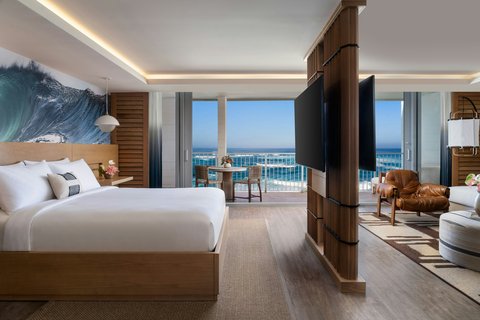
The North Shore year
Hawai’i has two seasons rather than four and on O’ahu’s North Shore the difference is the swell as much as the rain.
The wetter season runs roughly November to March. A north-facing coast is exposed to both the trades and to winter frontal systems, which means rain is frequent — showers pass through rather than settle, and a Kona reversal can bring rain that lasts.
It is also the big-surf season, and that dominates everything. From November to February the North Pacific swell arrives on this coast at a scale that is internationally famous, which makes the water the site’s overwhelming subject and makes the shoreline a genuinely hazardous place.
For photographs the winter is spectacular and constrained. The spectacular part: a huge broken sea behind a subject standing safely back on the dry rock or the sand is a frame no other Hawaiian venue can produce, and the light is at its best because the December noon sun at about forty-five degrees is the lowest of the year — so the middle of the day is workable rather than hostile.
The constrained part: the water’s edge is off limits on a big day, spray reaches inland, and salt on glass is constant. Any shoreline plan needs a same-day check rather than an assumption.
Winter is also when rainbows are most frequent on this coast, because showers and sun coexist — and a rainbow needs the sun behind the photographer and rain in front, which on a north-facing shore in winter is a regular combination.
The drier season runs roughly May to September. The trades are steadier, the showers are briefer, and the swell drops away — often to flat calm, which makes the water glassy, blue and transparent enough that the reef reads through it.
That is a completely different coast and it has its own advantages: the shoreline is dry and walkable, the rock pools are accessible, reflections are possible on the water, and the sand pockets are at their widest because winter’s swell has not removed them.
The costs are the sun and the wind. A near-vertical noon sun is at its worst in these months — at this latitude it passes within two degrees of the zenith at the solstice — which pushes the whole usable day to its ends and to the ironwood and the architecture. And steadier trades mean the wind is persistent on an exposed point.
There is a compensation specific to summer on a north-facing shore: the sun rises and sets at its most northerly, which means both ends of the day are closest to being over the water from the dominant aspect. The property’s geometric advantage is at its strongest in June.
There is no autumn colour in these islands and no dormant season. Tropical vegetation holds its leaves year-round, which removes the seasonal cue photographs elsewhere in this guide depend on — and it means nothing in an image made here says what month it is except the state of the sea, which says it very loudly indeed.
That is unusual and worth ending on. At most venues in this guide the season is written in the trees; here it is written in the water, and the difference between a February frame and a July one at the same spot on this shoreline is as large as any seasonal change in these guides.
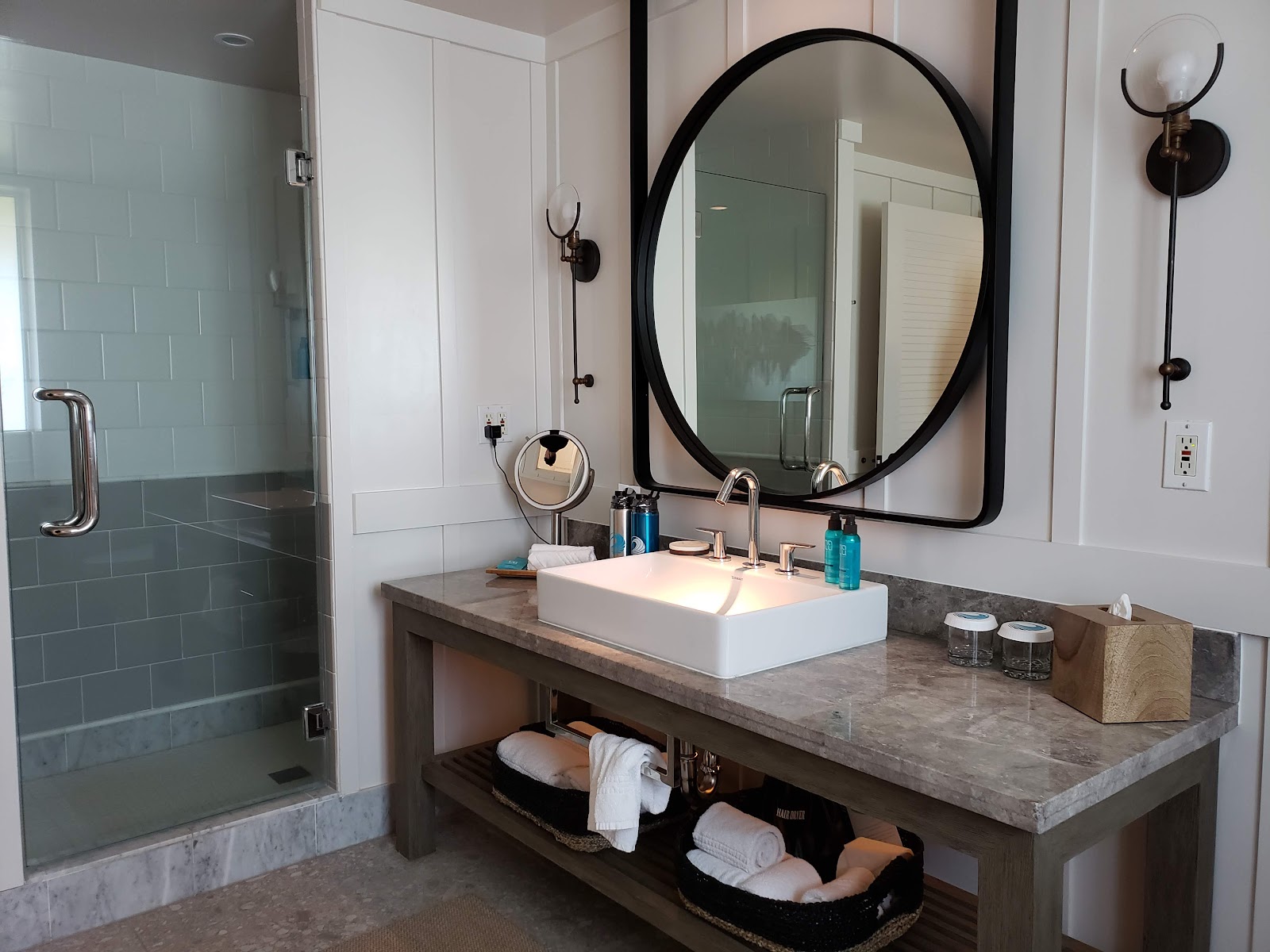
More frames from Turtle Bay Resort
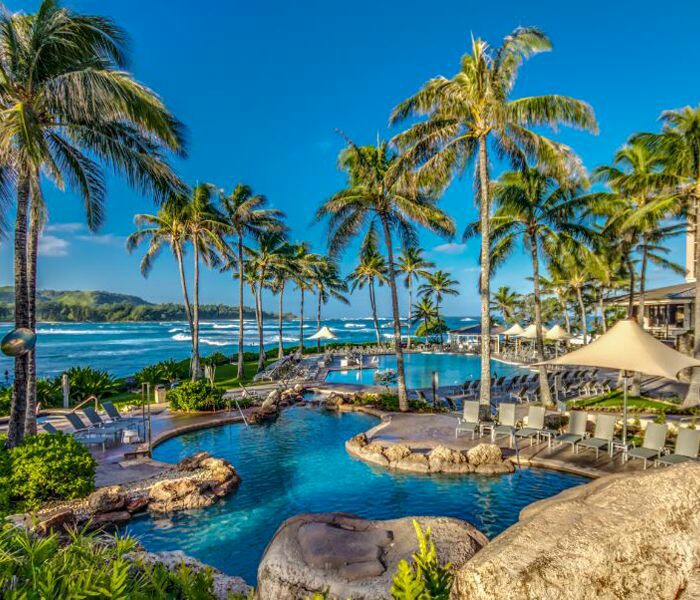
Turtle Bay Resort wedding photography: common questions
What does a point give me?
Water on three sides, so the aspects change as you walk round it — and both the sunrise and the sunset are usable over water from one property.
What is the easiest good frame here?
A low sun coming across the north-facing shore rather than down it, which gives side light on faces with none of the exposure difficulty of backlight.
How do I handle black rock and white sand together?
You do not. Compose with two tones and a subject rather than four, and remember that rock returns no fill from below while sand returns a great deal.
Where is the shade and the shelter?
Ironwood, which is the only substantial tree on an exposed point, and the architecture. Palms are background material only.
How different is winter from summer?
Entirely. From November to February the North Pacific swell makes the sea the overwhelming subject and the water’s edge hazardous; in summer it is often flat calm and glassy.
Which month is the property's geometry best?
June. The sun rises and sets at its most northerly, which brings both ends of the day closest to over the water from a north-facing shore.
More Hawaii venue guides
We are writing a photographer’s guide to every venue we would happily shoot in Hawaii. Here are three more, plus the full index:
- Waikoloa Beach Marriott: What It Suits and What It Does Not
- Waimea Valley, Haleiwa: A Walk Through the Site
- The Bishop Museum: Photographing Basalt, Koa and a Great Hall
Planning a wedding at Turtle Bay Resort?
A point with three aspects and two seas. Tell us your date and we will map it.