 The Laniakea YWCA: A Building Organised Around Its Courtyard
Waimea Valley, Haleiwa: A Walk Through the Site
A narrow valley running inland. The walls decide the light and the hour.
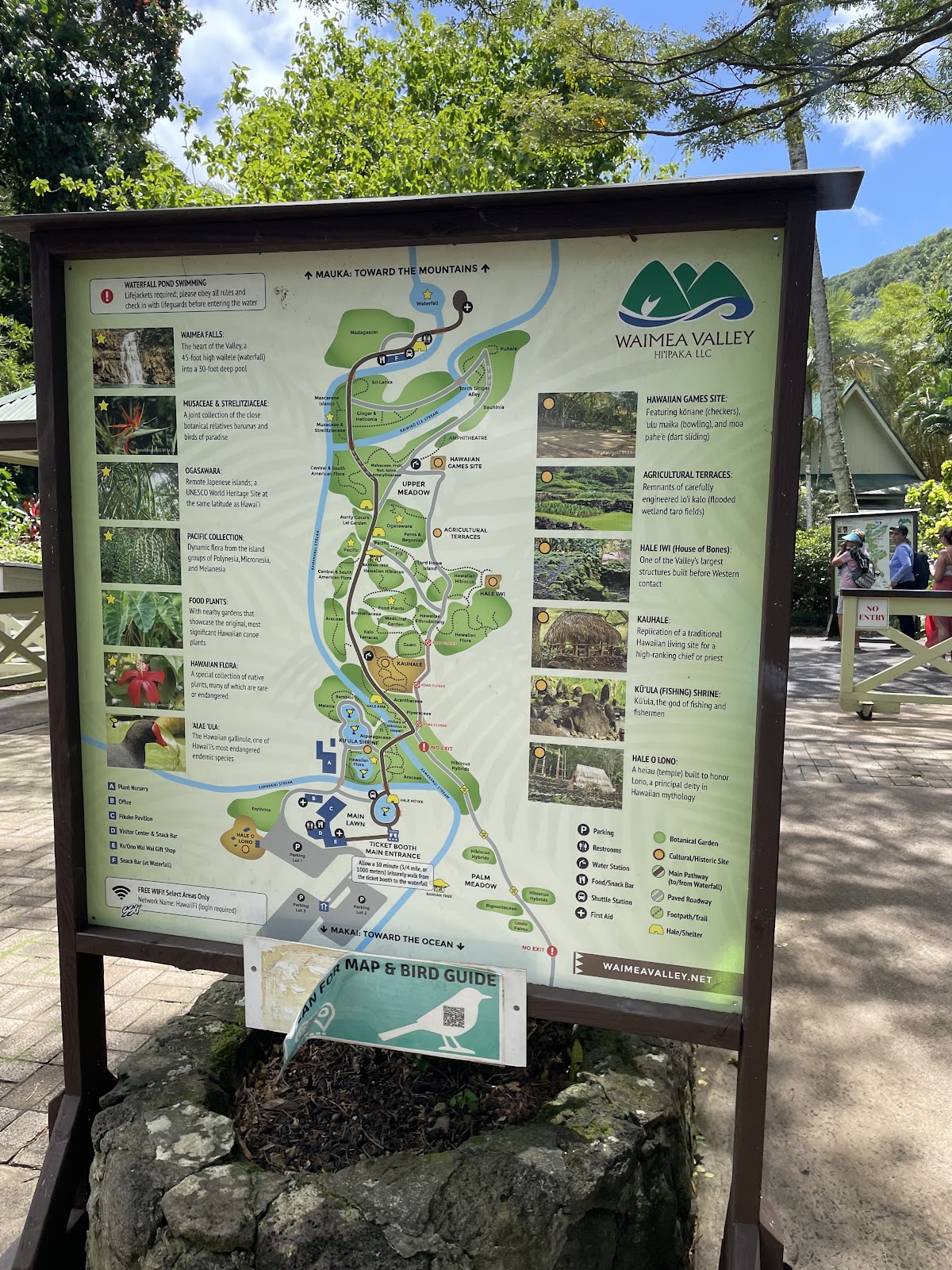
The best way to describe Waimea Valley is to walk it, because it is a linear site rather than a place — a valley running inland from the North Shore to a waterfall at its head, with botanical collections along its length.
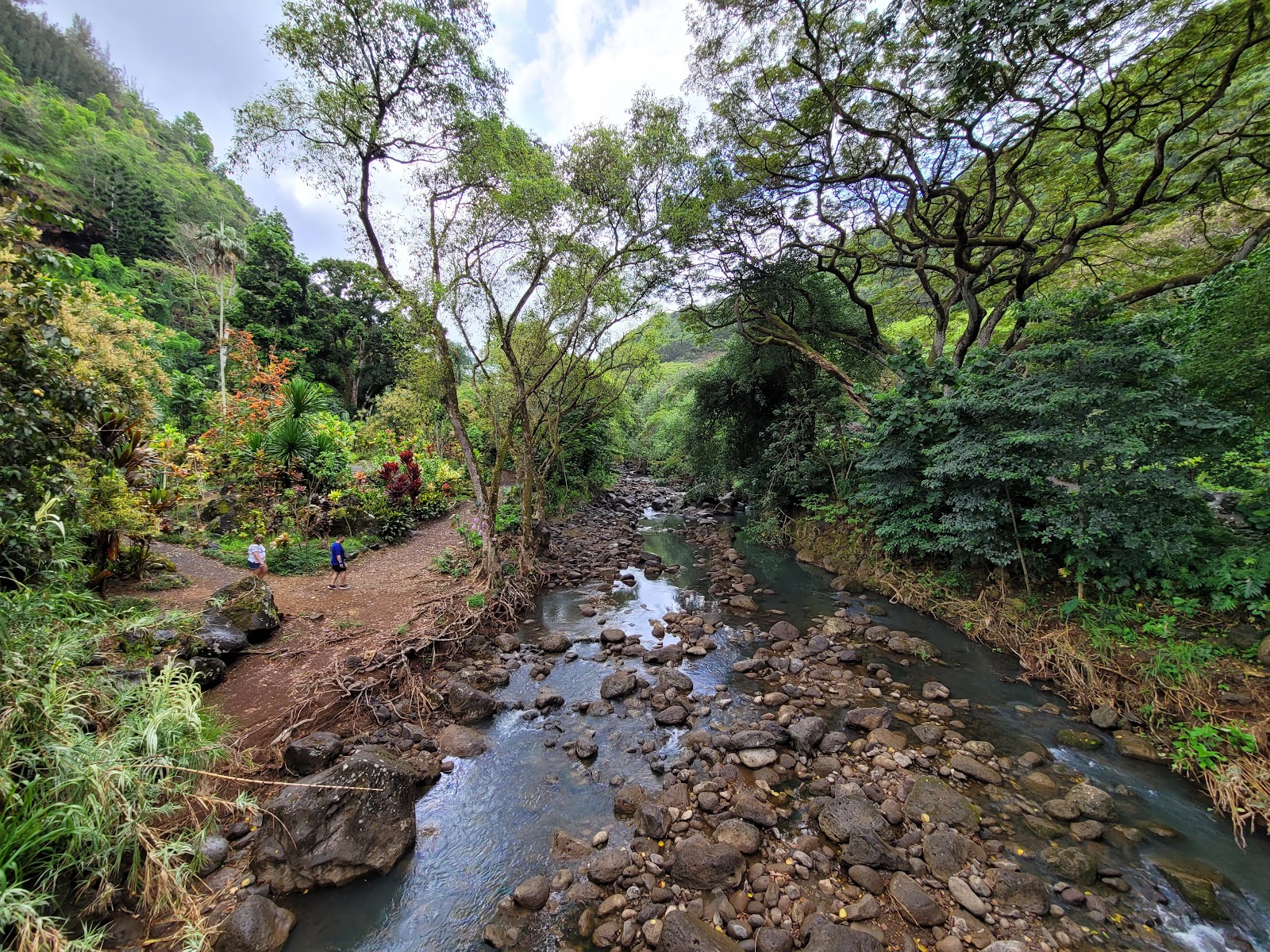
The shape is the whole photographic story. This is a steep-sided valley cut into old volcanic rock, narrow relative to its depth, with a stream along its floor and vegetation from the walls to the water. That shape does three things and each of them decides something about a day here.
It takes the ends of the day. A valley with high ground on both sides loses the first and last hours of direct sun, because the sun has to clear one wall in the morning and drops behind the other well before the almanac’s sunset. The practical consequence is that the low light most outdoor photography is built around does not reach the valley floor, and a plan made on published sunset times will not match the day.
It supplies its own light instead. A deep valley with dark vegetated walls and a bright strip of sky above is, optically, a very large source with a hard mask — light arrives almost entirely from overhead and from the open band along the valley axis, while the walls absorb. That produces soft light with a real direction, and it is better than its reputation.
And it changes along its length. The mouth is open to the sky and the coast; the middle is enclosed; the head, at the waterfall, is the most enclosed of all. Walking from the mouth to the head is walking from bright to dim over perhaps a kilometre, which means the settings that worked at one end are wrong at the other.
Haleiwa sits at about twenty-one and two-thirds degrees north on O’ahu’s North Shore. The June noon sun reaches about eighty-eight degrees, the December noon sun about forty-five, days run only from about eleven hours to thirteen and a quarter, and civil twilight is around twenty-two minutes — the shortest in this guide.
We have not photographed a wedding at Waimea Valley. Whether ceremonies are permitted, what permit is required, which areas may be used, what group sizes are allowed, what the hours are and what cultural protocols apply are questions for the site — and the last of those matters as much as the others.
Waimea Valley at a glance
| Where | A botanical and cultural valley running inland from O’ahu’s North Shore |
| The shape | Steep-sided and narrow: the walls take the day’s ends and supply the light |
| The sequence | Bright at the mouth, enclosed in the middle, dimmest at the waterfall |
| The latitude | 21.7°N: a near-vertical noon sun and a 22-minute dusk |
| Ask first | Permits, permitted areas, group limits, hours, and cultural protocols |
The mouth and the middle
Start at the mouth, because it is the brightest part of the site and because it is the only place with a horizon.
The valley opens onto the North Shore, which means the mouth has sky, the coast and the open ocean in it — and O’ahu’s North Shore faces broadly north, which is worth establishing because at this latitude the midsummer sun rises and sets well north of east and west. A north-facing coast therefore has both a sunrise and a sunset relatively close to over the water, which is unusual.
The mouth is also the only part of the valley with the light and space for a group. Enclosed valley floor further in is narrow, uneven and dim, which means the usable group positions are at the open end and nowhere else — and that is worth establishing on arrival rather than with twenty people waiting.
Walking inland, the walls close in and the character changes. The working method for the enclosed sections is the one that suits any valley: orient subjects along the axis rather than across it. Facing up or down the valley puts the bright sky band in front of them and the dark wall behind, which gives a lit face against a dark ground at landscape scale. Facing across puts a wall in front of the subject and is the one orientation that does not work.
The colour under that condition needs managing. Light arriving from a strip of tropical sky, filtered along a corridor of dense green, is both cool and strongly green — and skin under it reads sallow. A custom white balance on a face in position fixes most of it; a warm-gelled source at about a stop over the ambient fixes the rest while leaving the vegetation as it is. A global correction turns the whole valley grey and is the wrong move.
The twice-daily gift applies here and it is the easiest good frame on the site: when the sun is low but still above one wall, it lights the opposite wall while the floor stays in shade. That gives a brightly lit green wall behind a subject standing in soft even light — the separation of a studio setup with a valley wall as the backdrop, needing nothing at all.
The botanical collections are the middle valley’s content and they need a decision rather than acceptance. A botanical garden is organised by what the plants are rather than for effect, which means the quality of shade changes abruptly between collections rather than gradually along the path.
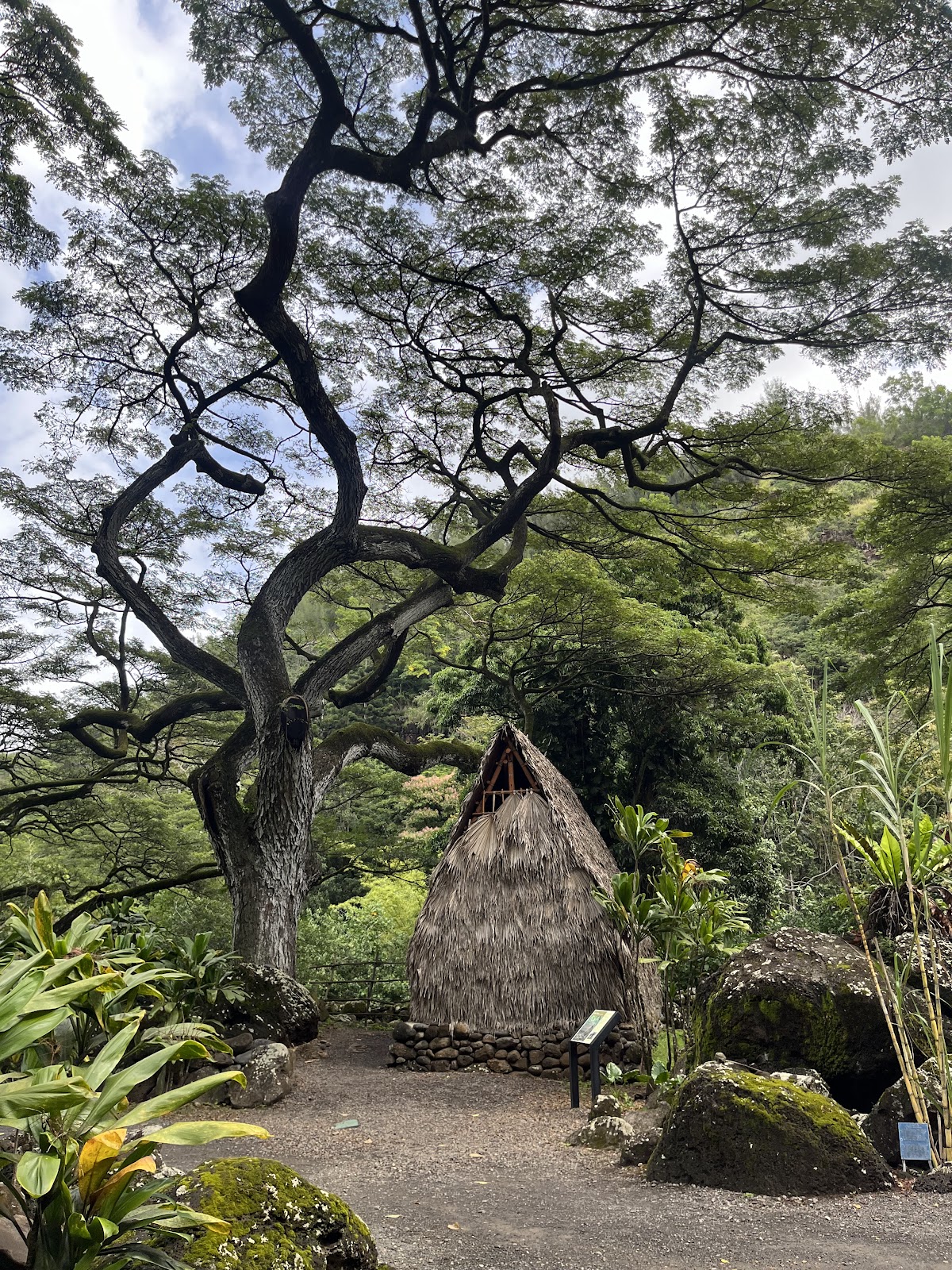
The species distinction is the same absolute one that governs everywhere in these islands. Broadleaf tropical canopy — monkeypod, mango, and the dense understorey — blocks almost all light and gives soft reliable shade. Palms do the opposite: a frond is a row of stiff parallel blades and its shadow is a set of hard stripes, which with a near-vertical sun falls straight down a face and is unrecoverable.
Broadleaf is cover. Palm is background. In a valley with a palm collection that distinction decides where a portrait can be made, and it takes five minutes to establish.
One further note on the enclosed sections. A dense tropical canopy over a narrow valley floor produces overhead light with no direction — soft, which is good, and directionless, which is not, because a face lit from everywhere has no modelling. The canopy edge is the answer: two metres inside it, facing out toward the brighter path, which puts the sky in front rather than above.
The head, the water and the year
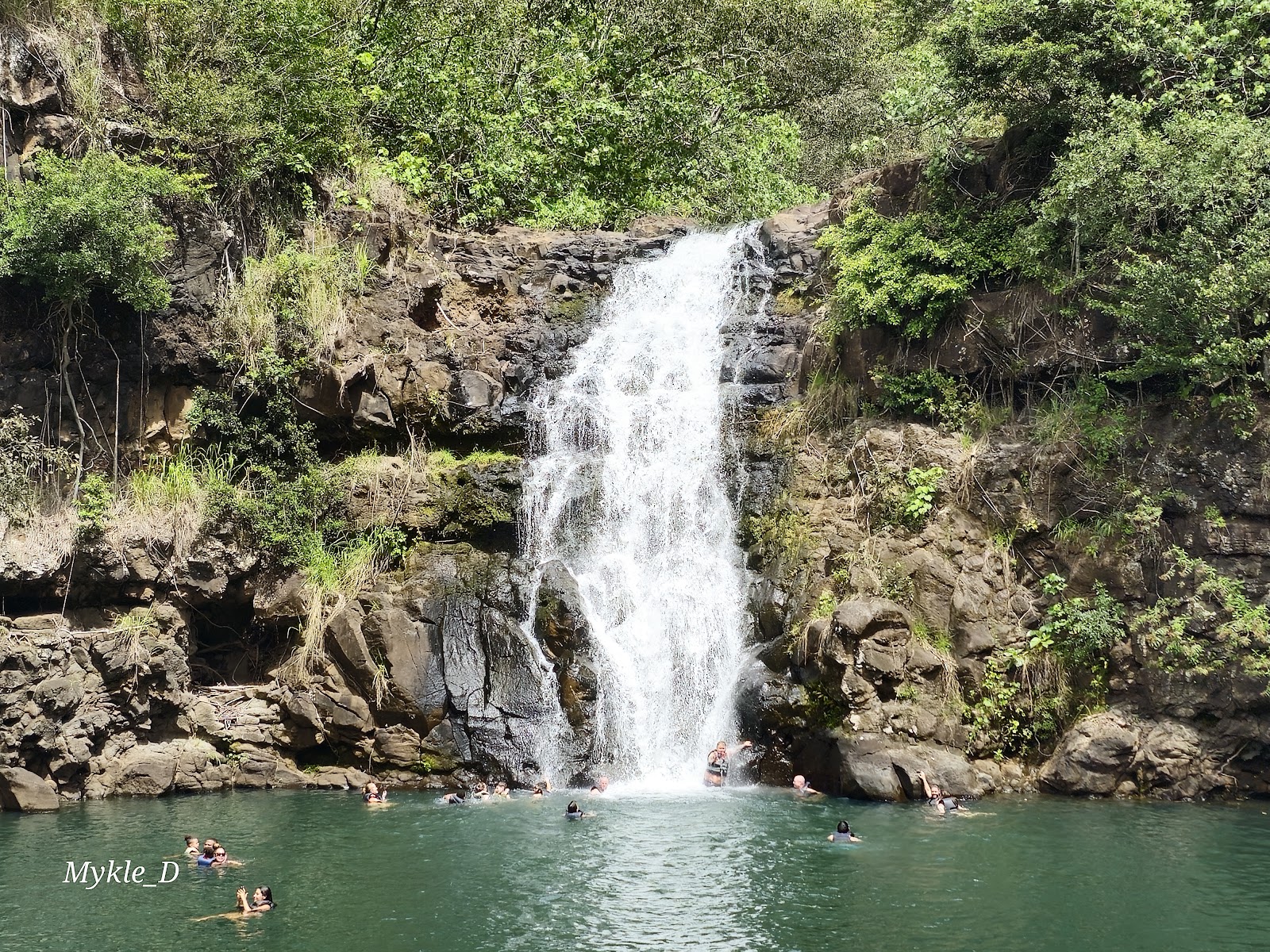
The head of the valley is the waterfall and it is the most enclosed and most demanding part of the site.
A fall at the head of a steep valley sits in a bowl with walls on three sides, which means the light there is the dimmest on the property and arrives from a small patch of sky almost directly overhead. That is top-heavy light in a dark place: eye sockets go dark, the ambient is several stops below the valley mouth, and there is no direction at all.
There is one moment when it works and it is worth knowing. For a limited window around the middle of the day the sun is high enough to reach into the bowl directly, which lights the fall and the pool and briefly gives the place real contrast. At this latitude that window is longer than it would be further north, because the sun climbs so high — which makes the waterfall the one location on the site that is better at noon than at the ends of the day.
That inverts the normal schedule and it is the most useful single fact about the venue: the open mouth wants the morning and the evening, and the enclosed head wants the middle of the day.
The water itself needs a shutter decision rather than a setting. A fall photographed fast freezes into individual strands and droplets, which reads as energy; slow, it smooths into a continuous veil, which reads as calm. Neither is correct and both are available, and in the low light of a valley head a slow shutter is easy while a fast one needs a high sensitivity.
The pool below is a reflector and a mirror. Still water at the foot of a fall — where it is still, which is away from the fall itself — returns light upward onto faces from below, which is precisely where the overhead light leaves them dark. And it reflects, though the reflection rule applies: compose so it is reflecting the dark valley wall rather than the bright patch of sky, and the two sit within a stop of each other.
The stream along the valley floor is the more usable version of the same thing and it runs the whole length of the site. Moving water in shade is one of the most forgiving subjects there is: the shade prevents the blown highlights that ruin a sunlit stream, and a slow shutter is easy when the light is already low — which means the hours the open ground is unusable are exactly the hours the stream works best.
The year here is Hawai’i’s two seasons and on a windward valley the wetter one dominates the calendar.
The wetter season runs roughly November to March. The North Shore is exposed to both the trades and to winter frontal systems, which means rain is frequent — and in a valley that has three consequences. The waterfall runs hardest, which is when it is worth photographing at all. The vegetation is at its most saturated. And the paths and rock are wet, which on volcanic rock is genuinely slippery.
Winter also brings the lowest sun of the year, about forty-five degrees at the December solstice, which is the one time the valley floor gets anything like modelling light for an extended period. On the light alone, the winter months are the best here — with the caveat that the waterfall’s noon window narrows, because a lower sun reaches less far into the bowl.
The drier season runs roughly May to September. The trades are steadier, showers are briefer, and the paths are dry — but the sun is at its most vertical, which makes the open sections hardest, and the fall is at its lowest flow, which is when it is least worth the walk.
Two things are worth noting outside the valley. O’ahu’s North Shore surf reverses seasonally: it is very large from November to February and flat in summer, which changes the coast at the valley mouth completely. And there is no autumn colour and no dormant season here — tropical vegetation holds its leaves year-round, which means nothing in a photograph made in this valley says what month it is except the water level and the angle of the light.
And two practical notes. Mosquitoes are a genuine consideration in a wet windward valley with standing water, at any time of year rather than seasonally. And a linear site a kilometre long means the transit is a real part of the schedule rather than a detail — budget it honestly, because there is no shortcut back.
- The mouth is the only place with light and space for a group
- Orient subjects along the valley, never across it
- The twice-daily gift: a lit wall behind a subject in even shade
- The waterfall is the one location better at noon than at the day’s ends
- Broadleaf is cover; palm is background, and never the other way round
The windward year in detail
Some further seasonal notes, because a valley whose subject is water and vegetation changes more across the year than an architectural venue does.
The rain is the calendar and it is worth understanding why it falls here. Hawai’i’s trade winds come from the north-east and carry moist ocean air; when that air meets a mountain range it is forced upward, cools and condenses. The result is that windward and north-facing slopes receive far more rain than leeward ones — and the difference across a few miles on the same island is extreme, with one side semi-arid and the other among the wetter places on earth.
A north-facing windward valley is firmly on the wet side of that, which means rain is the normal condition rather than an interruption. A photographer who treats a shower as a problem will have a difficult day here; one who treats it as expected will have a good one.
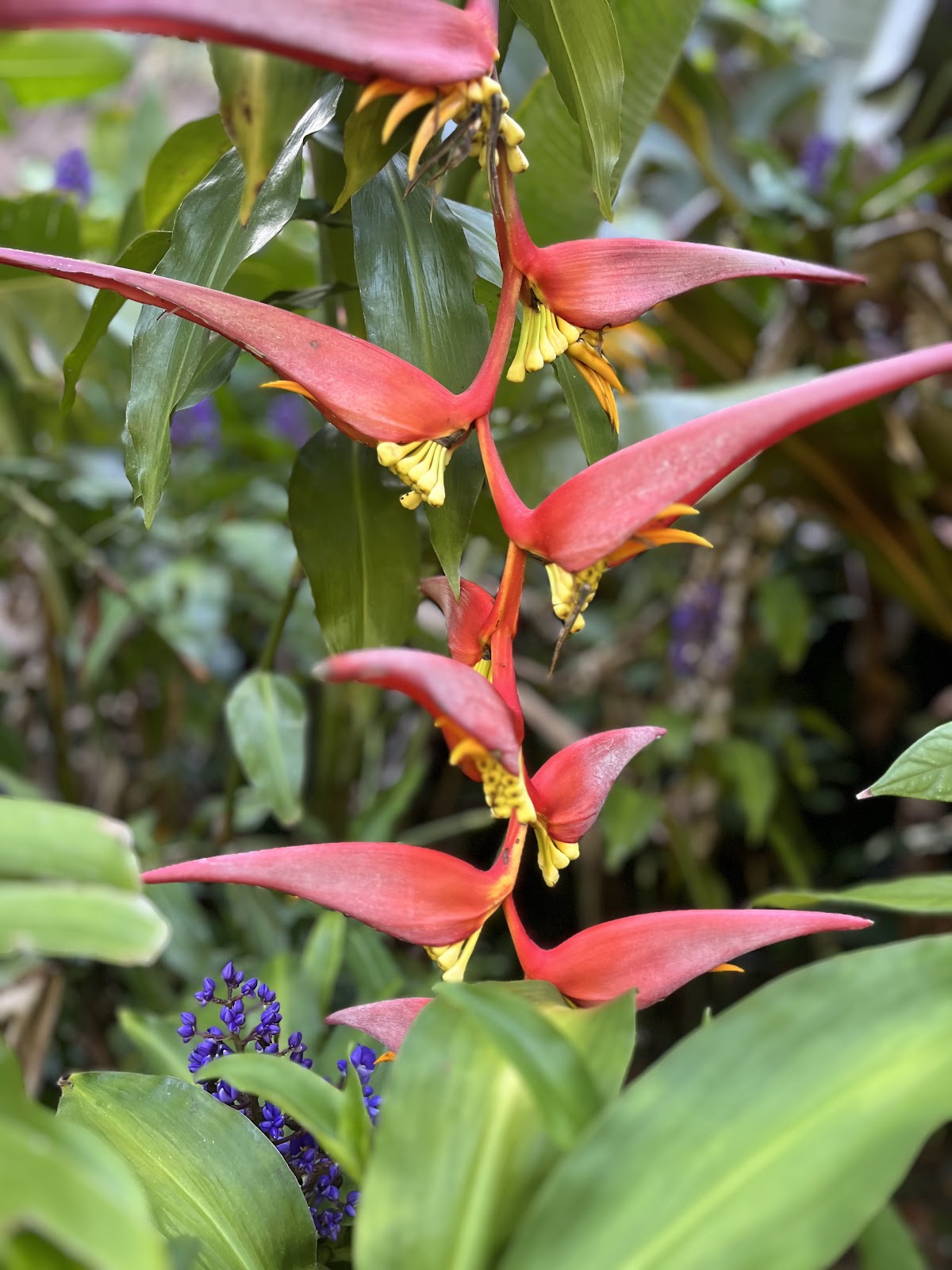
The specific reason is that the ten minutes after a shower passes are the best ten minutes available. The vegetation saturates and goes several shades deeper and more reflective, the rock darkens, the air clears briefly, the fall increases, and rainbows are frequent on windward sides because showers and sun coexist.
That last is worth planning for rather than hoping for: a rainbow requires the sun behind the photographer and rain in front, which on a north-facing windward coast is a regular combination in the morning and the late afternoon.
The wetter months also bring the higher water, and a waterfall at the head of a valley is a substantially different subject at full flow than at low. If the fall is the reason for choosing the venue, the winter half of the year is the answer — with the practical caveats that the rock is slippery, the paths are wet, and heavy rain in the catchment can close access entirely.
The drier months bring their own advantages and they are not trivial. Dry paths make the whole length of the valley walkable in formal shoes, which is not reliably true in winter. The light is more predictable. And the trades are steadier, which matters less in a sheltered valley than on an exposed coast but does keep the air moving.
The costs are the sun, which at eighty-eight degrees is the hardest in this guide, and the flow, which is at its lowest.
Neither season brings any change to the vegetation’s colour. There is no autumn and no dormancy in a tropical valley, which removes the strongest seasonal signal that photographs elsewhere in this guide rely on. What changes instead is flowering, and in a botanical collection that is worth asking about rather than assuming — the site’s staff will know what will be out on a date.
Two closing practicalities. Day length barely varies at this latitude: eleven hours at the winter solstice to thirteen and a quarter in June, which means the low light arrives at roughly the same hour all year. And civil twilight is about twenty-two minutes, the shortest in this guide, with an abrupt end — and in a valley, where the walls take the light before the sky does, the usable end of the day comes earlier still.
The practical summary: winter for the water and the light, summer for the footing, the open mouth for the day’s ends, the waterfall for the middle, and the ten minutes after a shower for the best frame of all.
More frames from Waimea Valley
Waimea Valley wedding photography: common questions
What does the valley's shape do?
The walls take the first and last hours of direct sun, and supply a large soft source from the sky band along the axis instead.
How should subjects be oriented?
Along the valley, facing up or down it, so the bright sky band lights them and the dark wall is behind. Never across it.
When should I photograph the waterfall?
The middle of the day. It sits in a bowl with walls on three sides, so it is the one location on the site that is better at noon than at the day’s ends.
Where can I photograph a group?
At the valley mouth. The enclosed floor further in is narrow, uneven and dim, and there is nowhere else with the light and the space.
Is rain a problem?
It is the normal condition on a windward valley, and the ten minutes after a shower passes are the best of the day: saturated green, a fuller fall, clear air and frequent rainbows.
Which season is better?
Winter for the waterfall’s flow and the lowest sun of the year; summer for dry footing and predictable light. The trade is genuine.
More Hawaii venue guides
We are writing a photographer’s guide to every venue we would happily shoot in Hawaii. Here are three more, plus the full index:
- The Bishop Museum: Photographing Basalt, Koa and a Great Hall
- Foster Botanical Garden: Four Ways Out of the Tall-Canopy Problem
- The Halekulani: Photographing a Deliberately White Hotel
Planning a wedding at Waimea Valley?
A valley with its own schedule. Tell us your date and we will walk it in the right order.