 The Laniakea YWCA: A Building Organised Around Its Courtyard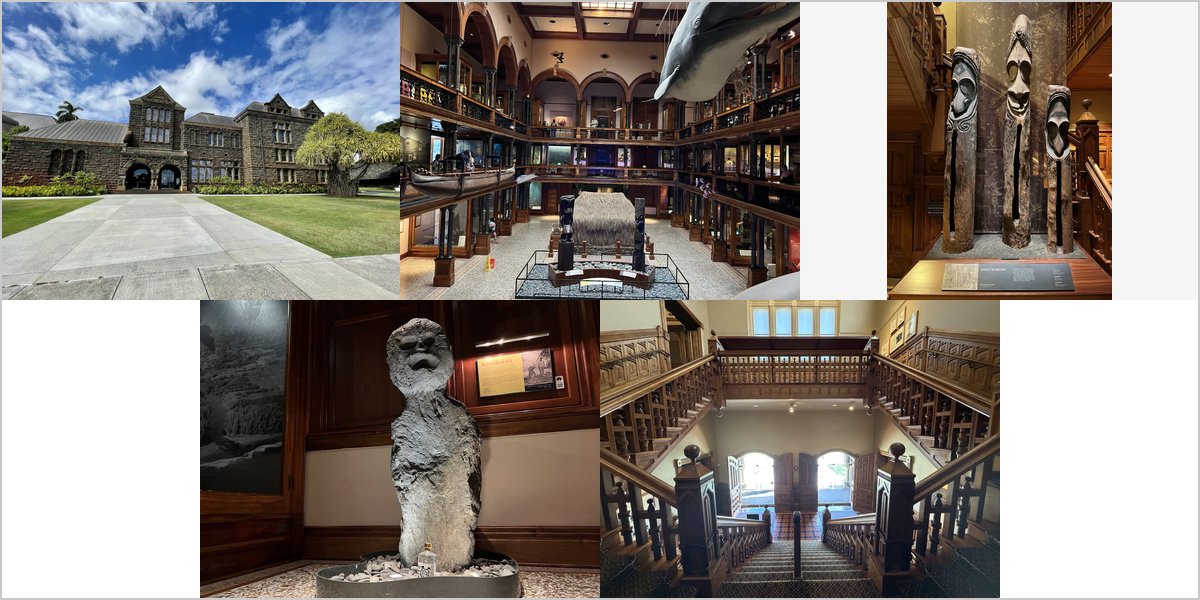
The Bishop Museum: Photographing Basalt, Koa and a Great Hall
Dark stone outside, darker wood inside, and a bright lawn between them. Three very different problems, one address.
The Bishop Museum stands in the Kalihi area of Honolulu, its older buildings constructed in the late nineteenth century from dark local basalt, with a galleried great hall panelled and detailed in koa, and open lawns on the grounds.
The materials are the story here, and they are unusual. Most historic venues are pale — limestone, marble, white plaster, painted timber — which means they bounce light and forgive a photographer. This one is dark on the outside and darker inside: basalt is a near-black volcanic stone that absorbs almost everything that lands on it, and koa is a rich dark hardwood that does the same. That makes the interiors among the most light-hungry a wedding photographer will work in, and it makes the bright lawn outside a very large contrast problem.
So this is a walk through the site in the order a day would use it. We have not photographed a wedding at the Bishop Museum; dark stone, hardwood galleries and open tropical lawns behave the same wherever they occur. Which halls and lawns host events, and what the photography rules are in the collection galleries, are questions for their events team.
The Bishop Museum at a glance
| Where | Kalihi, Honolulu, Hawaii |
| Character | Late-1800s basalt buildings with a koa-panelled galleried hall |
| The materials | Basalt and koa both absorb light rather than returning it |
| Consequence | Bounce flash barely works; everything must be lit directly |
| Outside | Open lawns, bright and exposed, with little continuous shade |
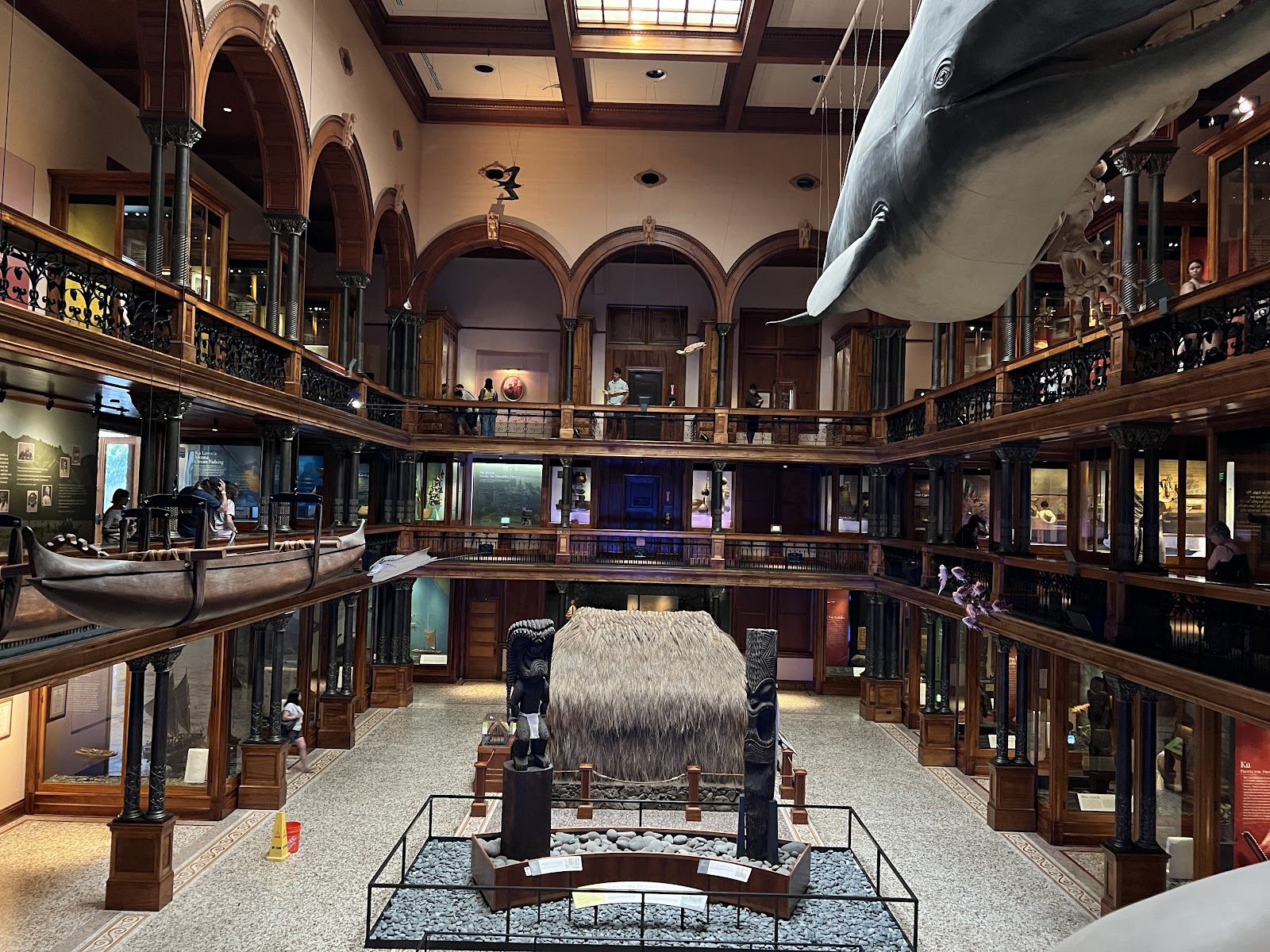
The great hall: a dark room with galleries
A tall hall panelled in dark hardwood, with galleried levels running round it, is a distinctive and demanding space. The demand is straightforward: dark wood absorbs light instead of returning it, so the ambient is low, the fall-off from any source is steep, and a flash aimed at the ceiling or the panelling sends almost nothing back. Bounce, the usual indoor default, is close to useless.
So light directly. A modifier you brought, pointed where you want light, at a power that suits a room which will not help you distribute it. And place people near whatever daylight openings exist, because with fall-off that steep a metre of position is worth more than a stop of ISO.
The compensation is considerable and worth stating: because the ambient is so low, a single well-placed light has enormous relative effect, and the frames that result are deep, warm and enveloping in a way no pale room produces. A modest kit goes further here than in a bright venue, which is the opposite of what most photographers expect walking in.
The galleries are the compositional asset. Levels running round a hall mean you can shoot down into the space from above, which places a couple against the hall as a background rather than inside it as a component — a much easier exposure, because the background becomes a distant tone you can let fall dark. It also gives the repeating rhythm of balustrades and posts, which is a strong pattern.
Colour: koa is a rich red-brown and it tints what little light bounces off it, so a custom white balance in the hall rather than a carried-over one. The warmth is the character of the room and should be kept rather than corrected to grey.
Basalt outside: a dark building in bright light
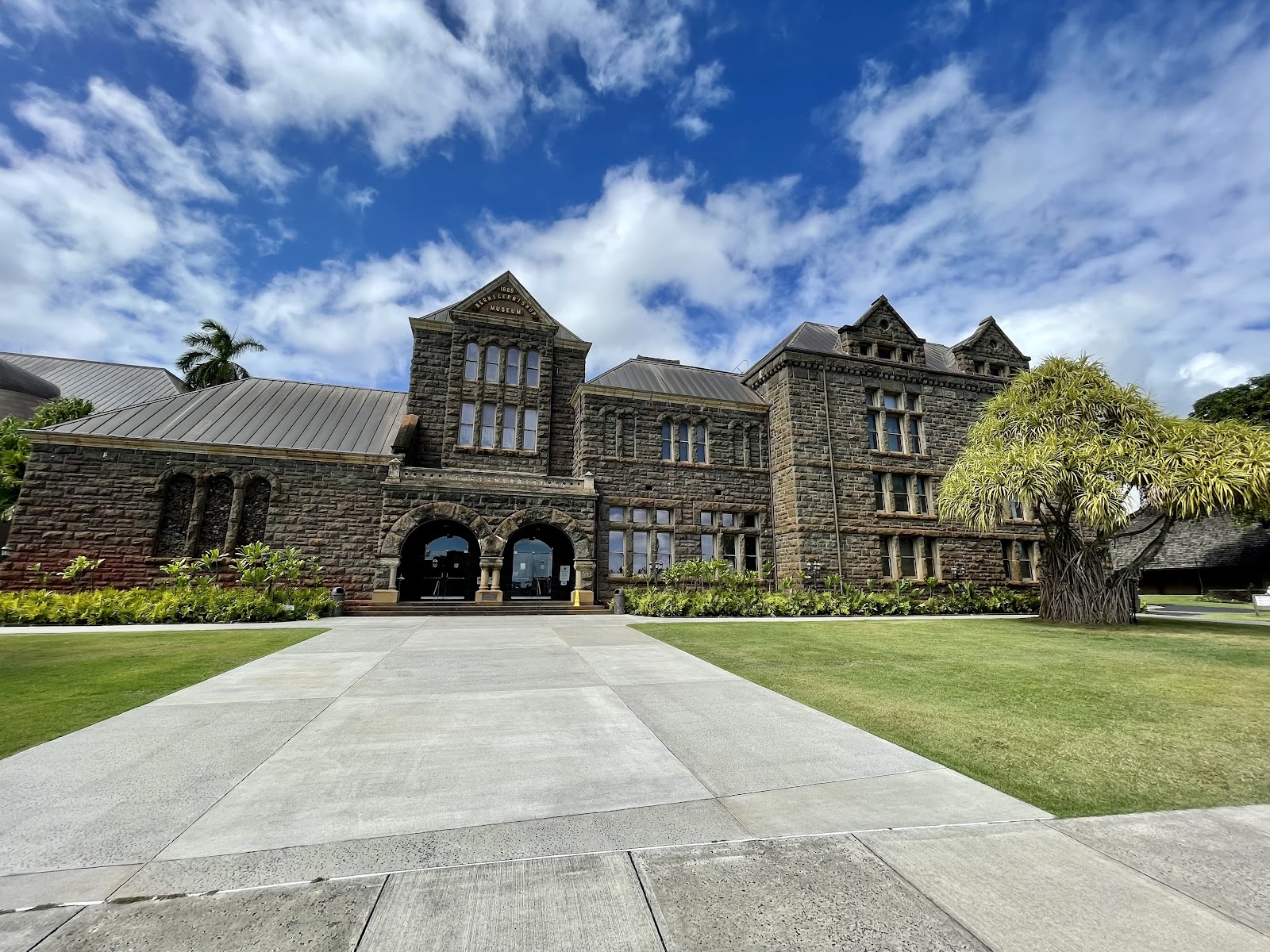
Dark volcanic stone is the inverse of the white-painted problem that most historic venues present. Instead of an elevation that clips, you have one that reads as near-black — and a camera metering a frame that is mostly dark stone will want to brighten it, which overexposes any face in the same frame.
The working method is to expose for the faces and let the stone go dark, which is how it actually looks. Basalt with detail pulled up out of it looks wrong: grey, flat and washed. The material’s character is that it is very dark, and a photograph should say so.
It also means the stone is a poor reflector, so unlike a pale building it gives you no free fill. Standing a couple beside a basalt wall in open sun produces hard unmodified light on one side and nothing at all on the other — the shadow side gets no bounce back. That is a case for either a reflector, a fill source, or turning the couple so the open sky rather than the wall is doing the filling.
What basalt does give is texture, and texture needs raking light. Rough volcanic stone in low side light is full of relief and shadow; in flat midday light it is a dark uniform field. So the building photographs well at the ends of the day and poorly in the middle, which coincides with when faces work best anyway.
What works in your favour
- A koa-panelled galleried hall unlike any other venue interior
- Gallery levels allow shooting down, turning the hall into a background
- Very low ambient means one light has enormous relative effect
- Rough basalt with real texture in raking light
- Open lawns with room for large groups and unobstructed sky
What to plan around
- Basalt and koa both absorb light, so bounce flash barely functions
- Dark stone gives no free fill; the shadow side gets nothing back
- A meter will overexpose faces in a frame dominated by dark stone
- Little continuous shade on the lawns at midday
- Collection galleries commonly restrict flash and tripods
The lawns, the contrast between spaces, and the hours
Open lawns are the third condition and they are the simplest: bright, exposed, governed by the sun’s position, and short of shade. At this latitude the midday sun is close to overhead for long stretches, which shadows eye sockets and makes open ground unworkable for faces without either shade or real fill. The building’s own shadow is the best shade available, and it is worth finding where that falls at the ceremony hour on a site visit.
The lawns come into their own in the last ninety minutes, when low sun rakes across grass, backlights any planting and puts a rim on everyone. They also give unobstructed sky, which means post-sunset colour is available here in a way it is not in a courtyard or under canopy — a genuine extra block of usable time twenty minutes after the sun has gone.
The contrast between the dark interiors and the bright lawns is the venue’s real character, and it should be used deliberately rather than smoothed over. A gallery that moves from a deep, warm, enveloping hall to open tropical light has range that neither gives alone. The way to keep it coherent is to shoot each in its own register — warm and dark inside, bright and clean outside — rather than trying to make one look like the other.
Collection galleries carry the usual museum caveats and they matter here: flash and tripods are commonly restricted around collections, and in a museum holding culturally significant material there may be areas where photography is limited or not permitted at all. Establish that in writing beforehand, and treat the answers as the authority rather than as obstacles to work around.
The practical sequencing: interiors through the middle of the day when outside is harsh, the building’s shadow for any midday exterior, lawns in the last ninety minutes, and a short block twenty minutes after sunset for the open sky. Interiors are the block that can absorb a delay, since nothing in them depends on the sun.
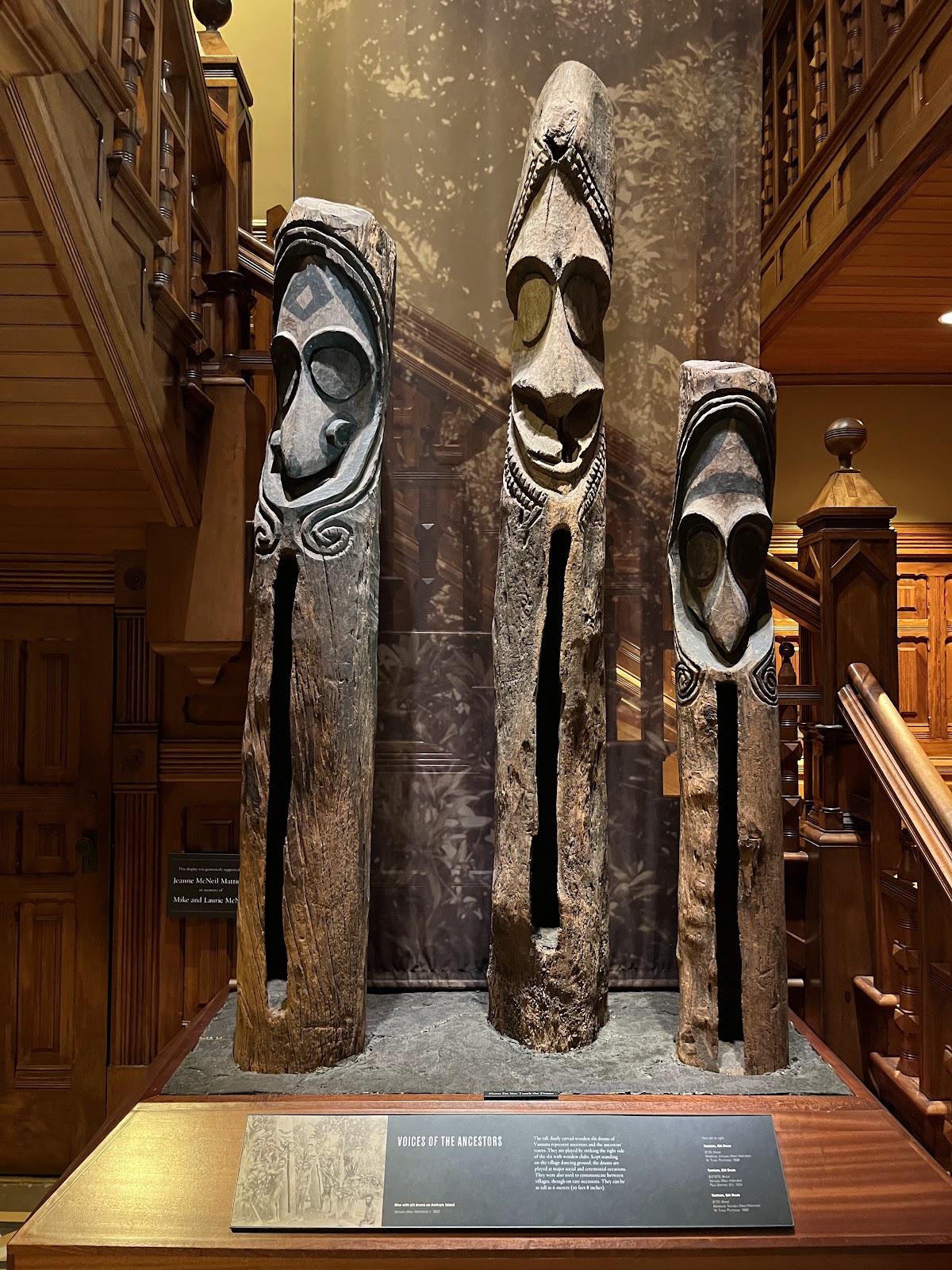
More frames from The Bishop Museum
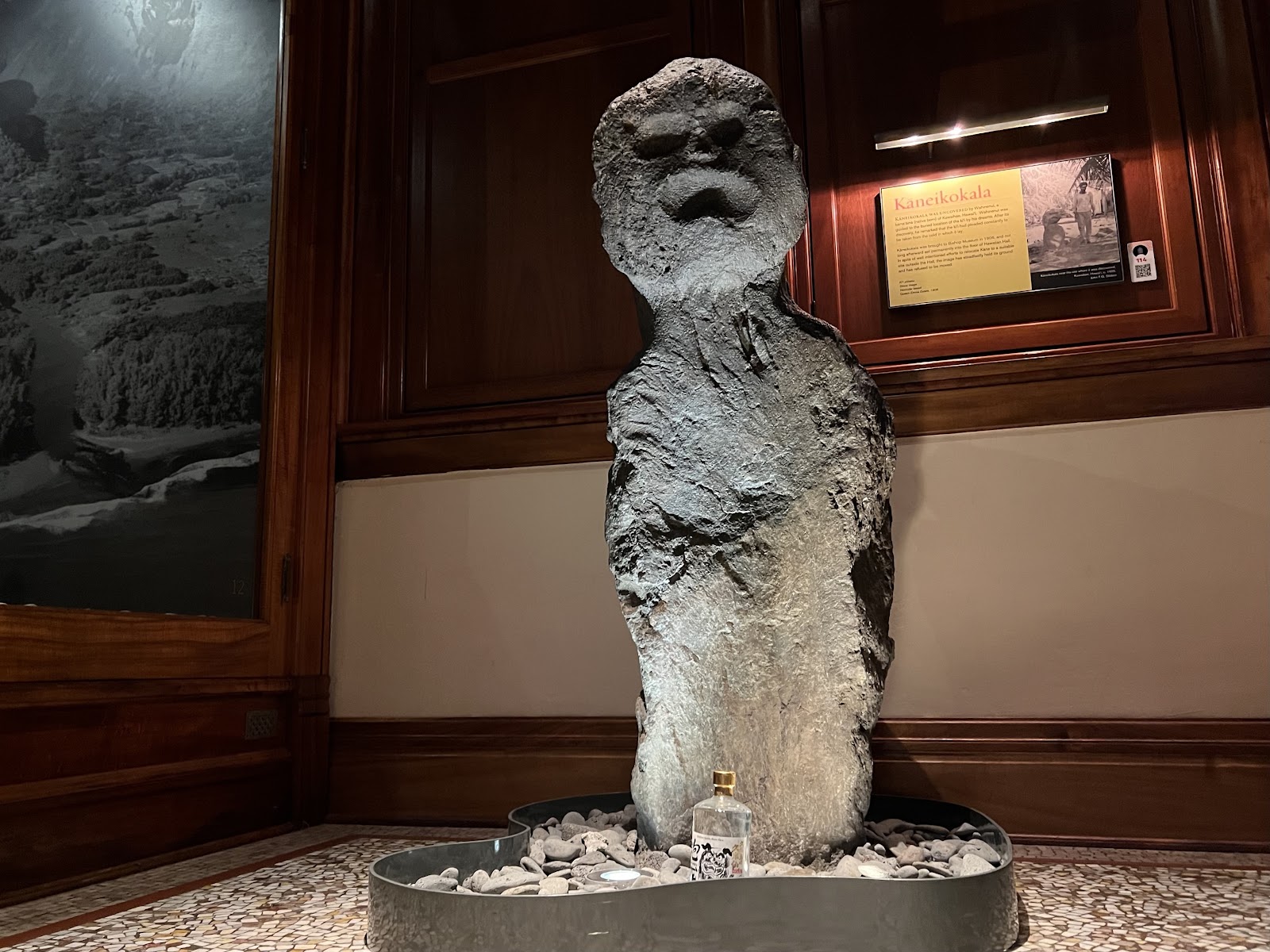
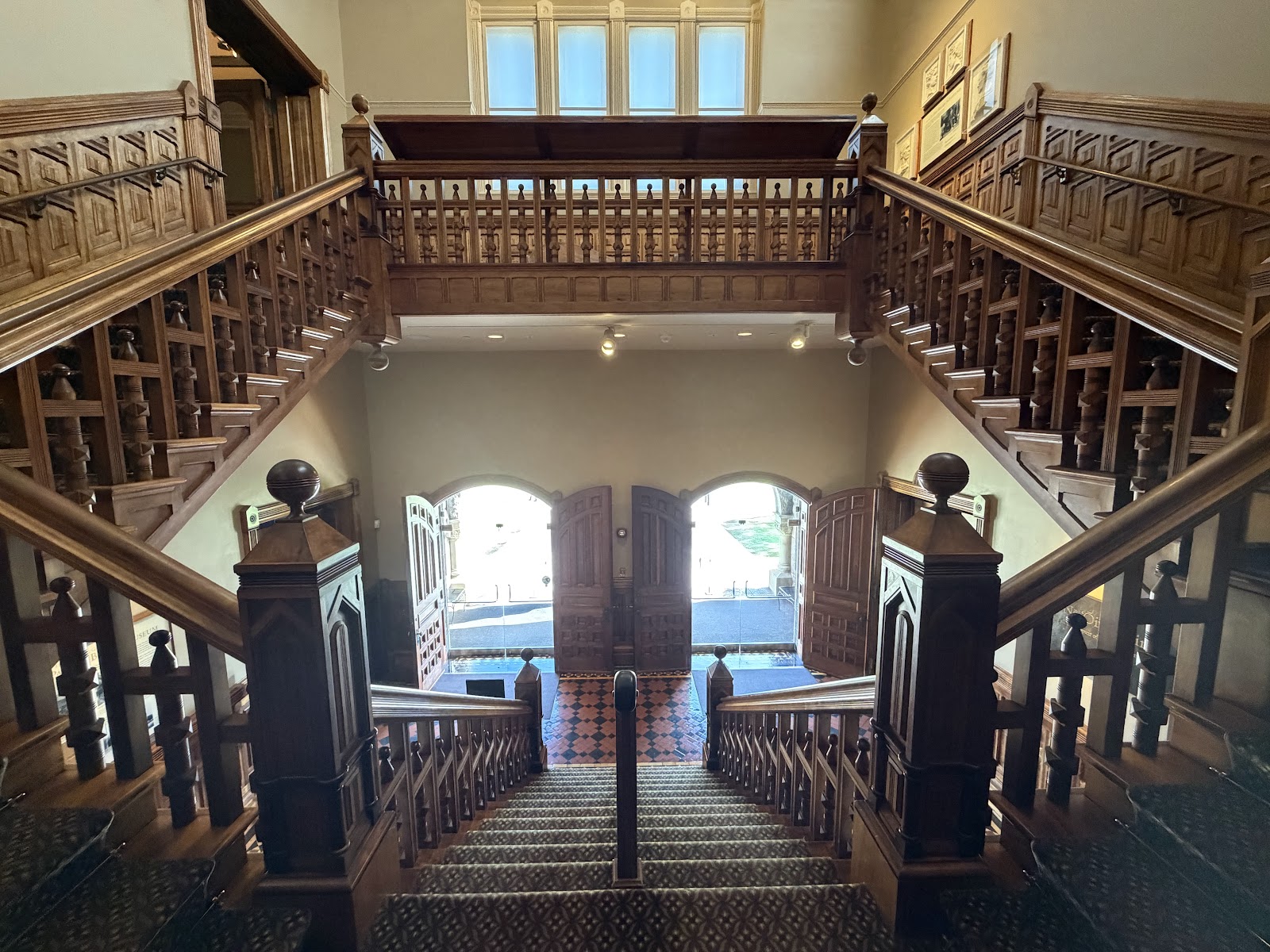
The Bishop Museum wedding photography: common questions
Why does my flash seem weak inside?
Because the interiors are basalt and dark koa hardwood, both of which absorb light rather than returning it. A flash aimed at panelling or the ceiling sends almost nothing back, so bounce — the usual indoor default — barely functions. Light directly instead.
Is that a disadvantage?
Partly. The ambient is low and fall-off is steep, so position matters and you must bring light. But because the ambient is so low, a single well-placed source has enormous relative effect, and the frames are deep and enveloping in a way no pale room gives.
How do you expose a dark stone building?
For the faces, letting the stone go dark. A meter reading a frame dominated by basalt wants to brighten it, which overexposes anyone in shot. Basalt with detail pulled out of it looks grey and washed — the material’s character is that it is very dark.
Does dark stone help with fill?
No, the opposite. Unlike a pale wall it reflects almost nothing, so a couple beside basalt in open sun gets hard light on one side and nothing back on the other. Use a reflector, add fill, or turn them so open sky is doing the filling.
What do the gallery levels give you?
The ability to shoot down into the hall, which places a couple against the space as a background rather than inside it as a component — a much easier exposure, since the background becomes a distant tone you can let fall dark.
How should the day be ordered?
Interiors through the middle of the day, the building’s own shadow for any midday exterior, lawns in the last ninety minutes, and a short block twenty minutes after sunset for the open sky. Interiors absorb delay because nothing in them depends on the sun.
More Honolulu, HI venue guides
We are writing a photographer’s guide to every venue we would happily shoot in Honolulu, HI. Here are three more, plus the full index:
- Foster Botanical Garden: Four Ways Out of the Tall-Canopy Problem
- The Halekulani: Photographing a Deliberately White Hotel
- Koko Crater Botanical Garden: Reading Light Inside a Crater
All Honolulu, HI Wedding Venues →
Planning a wedding at The Bishop Museum?
Dark stone and darker wood need light brought in, not bounced. Tell us your date and we will plan the kit and the order.