 The JW Marriott Austin: What It Suits, and What It Does Not
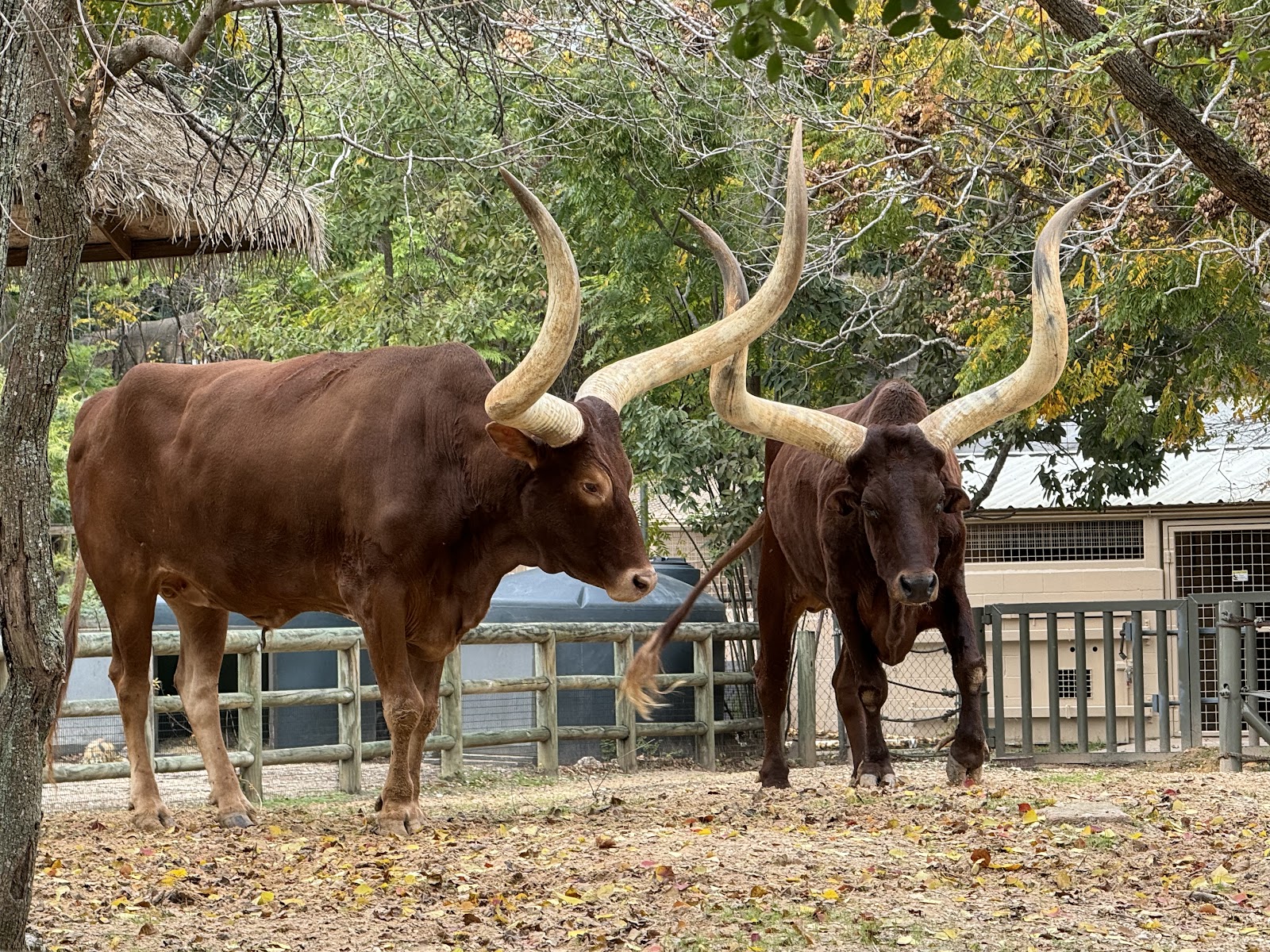
The Houston Zoo: Field Notes
Four problems. The heat is the first one, not the barriers.
At most zoos the first problem is barriers. In Houston it is the heat, and everything else is downstream of that.
The city sits at about fifty feet above sea level on the Gulf coastal plain, roughly fifty miles from open water, with prevailing onshore flow for much of the year. Summer dewpoints reach the seventies, which is genuinely tropical, and the combination of temperature and humidity from June through September makes sustained outdoor activity in formal clothing a welfare matter rather than a comfort one.
A zoo is a walking venue. That is the conflict, and it is the thing to plan around before considering a single photographic question.
The second problem is the one every zoo shares: barriers. Glass, mesh, bars, moats, wires and hidden fences all exist for good reasons and all of them are hostile to a camera. The frame everyone imagines — a couple with an animal behind them — is the hardest one on the property and it almost never works as pictured.
The third is the humidity itself, which has photographic effects both good and bad and which almost nobody accounts for.
And the fourth is crowds, because a major metropolitan zoo in a central park is busy in a way a suburban one is not.
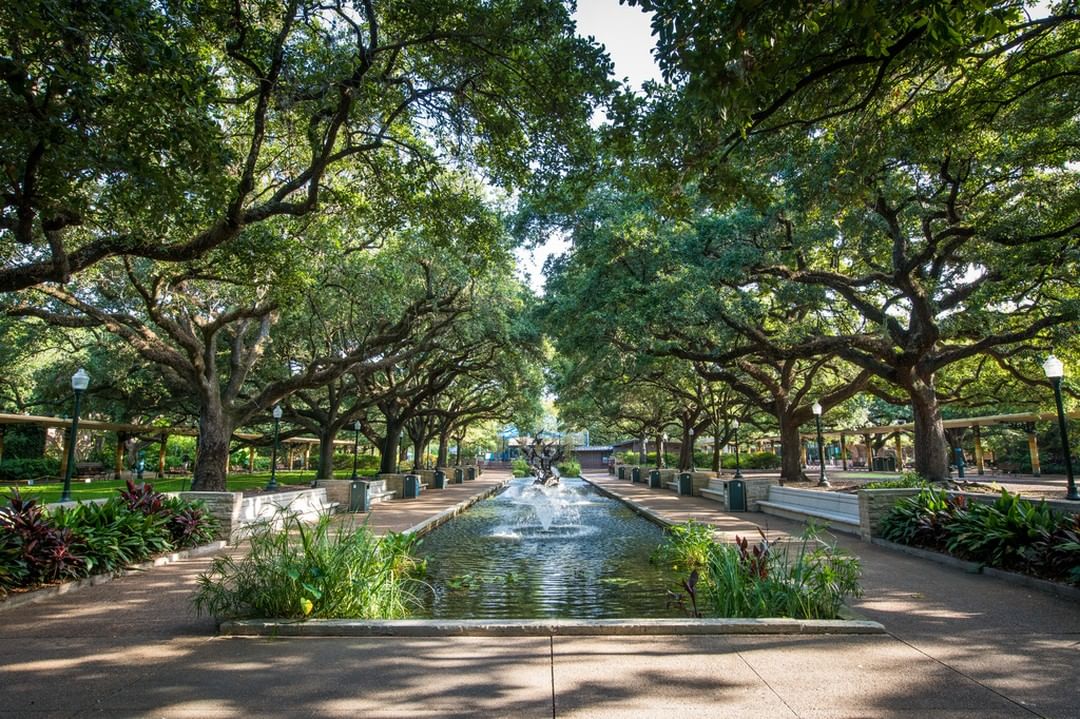
The compensations are real. The park setting is mature and the planting is subtropical, which means the greenery is genuinely lush rather than merely present — live oak, palmetto, crape myrtle, bamboo, banana — and a Gulf Coast zoo in summer looks more like a tropical garden than a temperate one. That is a distinctive look and it is available nowhere north of here.
Houston’s June noon sun reaches around eighty-three and a half degrees, the December noon sun about thirty-seven, days run from about ten hours fifteen to fourteen hours, and civil twilight is roughly twenty-two minutes — the shortest figure in this library.
What follows is four problems and what solves each. We have not photographed a wedding here; which areas are bookable, whether after-hours access exists and the permitted hours are questions for their team.
The Houston Zoo at a glance
| Where | A zoo in Hermann Park, Houston, on the Gulf coastal plain |
| Problem one | Heat and humidity. A zoo is a walking venue and summer is severe |
| Problem two | Barriers — glass, mesh, bars, moats and overhead wires |
| Problem three | Humidity itself: filled shadows, hazed distance, a pale sky |
| Problem four | Crowds. A central-park metropolitan zoo is busy |
Problem one: the heat, and what actually helps
The schedule is the only real answer and it needs to be honest rather than optimistic.
From June through September, a wedding party walking a zoo between about eleven and five is not going to be comfortable, and discomfort shows in photographs — in posture, in expressions, in hair and makeup, and in how quickly people want to stop. No amount of technique fixes a party that has had enough.
So a summer date here belongs at the ends of the day. The first two hours after opening and the last two before dusk are genuinely pleasant; the middle is not. And an October-to-April date avoids the problem entirely, which is the simplest solution available.
The canopy is what helps within a hot day, and Houston’s is better than most. Live oak is the dominant shade tree — evergreen, broad, dense and low-crowned, holding its leaves year-round — and deep shade under a mature specimen is measurably cooler than open ground, because the canopy blocks the radiant load entirely rather than merely filtering it.
That is worth knowing as a practical matter, not just a lighting one: a route planned through shade is a route a party will actually walk. Finding the shaded paths on arrival is the most useful five minutes of the day.
The indoor houses are the other answer and they are the reliable one. An aquarium, a reptile house or a nocturnal house is air conditioned, on its own artificial light cycle, and therefore identical at any hour in any weather — which makes those spaces both the heat refuge and the most consistent light on the property.
For a summer wedding that suggests a clear shape: interiors and shaded paths through the middle of the day, open areas at the ends. That is not a compromise so much as the correct plan.
Water features help less than people expect. A Gulf Coast afternoon is already near saturation, so evaporative cooling does very little — a mister or a fountain that would be genuinely refreshing in Arizona has almost no effect here, because the air cannot take up more moisture. That is worth understanding rather than relying on.
And hydration is a photographic issue rather than a logistical one. A party that is properly looked after in Houston heat photographs better for longer, and it is reasonable for a photographer to suggest a break before it is needed rather than after.
One further practical note. High humidity means lenses fog when moving from an air-conditioned interior into outdoor air — the reverse of the winter problem, and it happens within seconds. The front element mists and takes several minutes to clear. The fix is to carry the camera warm rather than cool, which in practice means not leaving it in the air conditioning while waiting.
Problems two and three: barriers, and the air
Each barrier type has one technique that works and everything else is wasted effort.
Glass: put the lens physically against it. A lens hood pressed to the surface eliminates reflections completely, because no light from behind the camera can reach that point. Shoot wide open so surface marks blur out, and accept lower contrast — enclosure glass is thick and rarely optically clean.
In Houston there is an additional glass problem: condensation. A humid exterior against a cooled interior, or the reverse, puts moisture on the glass, and a fogged panel cannot be shot through at all. There is no technique for it — either it clears or the frame does not happen.
Mesh: get close, use the longest lens and the widest aperture available. Mesh disappears when it is far inside the near limit of depth of field, because the wires blur into nothing. The failure mode is a partly resolved wire reading as a grey veil, and the fix is always closer and wider, never further and stopped down. It also requires the sun to be off the mesh — a sunlit wire registers even when badly out of focus.
Bars: they do not disappear. Compose them deliberately or move to a glazed section.
Moats and distance: the animal and the people are two separate photographs. A long lens for one, a normal lens for the other, and no attempt to force both into a frame. The composite everyone wants almost never works; the two separate frames always do.
Overhead wires: look up before every frame. An aviary tension cable across the top of an otherwise clean composition is the commonest single fault in zoo photography, and it is invisible in a viewfinder and glaring in an edit.
The third problem is the air, and its effects are worth naming precisely because they run counter to most of this library’s advice.
Water vapour scatters light in every direction, which fills shadows. A sunlit path in Houston in July carries perhaps two and a half stops less contrast than the same sun angle in Arizona — shadow edges are soft, eye sockets retain detail, and a midday portrait outdoors is genuinely workable rather than impossible.
So the desert rule does not apply here with the same force. The atmosphere is doing the fill, and a subject in open shade at noon can be exposed normally and look fine.
The costs are three. Long lenses lose contrast, so a compressed frame across the park will read noticeably softer in August than in January. The sky is a whitish rather than saturated blue, which means an empty summer sky contributes nothing to a wide frame. And everything reads slightly lower in contrast overall, which is easy to correct and worth anticipating.
The compensation is the cloud, and it is reliable. Gulf Coast summer afternoons generate convection from sea-breeze convergence almost daily — towering cumulus building through the afternoon, frequently a thunderstorm late. That gives structure overhead most summer days, and the half hour after a cell passes is the best light of the year: washed air, wet foliage and paving, saturated colour, a low sun under a broken ceiling.
Wet subtropical planting is the specific prize. Rain darkens and saturates broad leaves, which makes palmetto, banana and bamboo read properly rather than as washed-out grey-green — and a frame under wet canopy half an hour after a storm is the best the planting will ever look.
- Summer belongs at the ends of the day; the middle is interiors and shaded paths
- Press the lens hood to glass — and accept that a fogged panel cannot be shot through
- Close, long and wide open for mesh, on the shaded side
- Look up before every frame: overhead wires are the commonest fault
- Humidity fills shadows — about two and a half stops less contrast than Arizona
Problem four: crowds, and the subtropical year
A metropolitan zoo in a central park is busy, and the only real solution is scheduling.
Establish whether the booking includes access after public closing. An open zoo on a weekend has very large numbers of visitors, which means strangers in every frame, crowded paths, and a photographer waiting for gaps rather than choosing positions. After closing it becomes a private subtropical garden with nobody in it — a completely different venue, and worth paying for if it is offered.
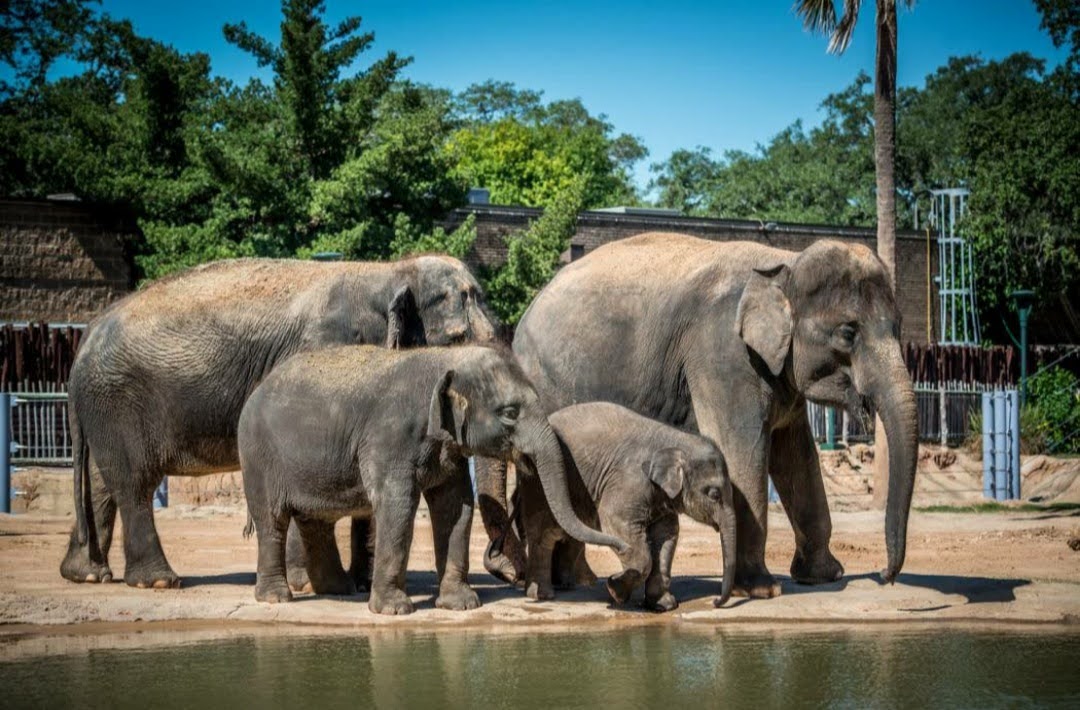
The hour also governs the animals. Most species are least active in the middle of a warm day and most active early and late, which in a Houston summer is emphatic — a midday zoo here is largely a zoo of animals lying in shade. The hours that suit photography also suit the animals doing something.
The indoor houses reverse that entirely, running on artificial cycles regardless of the time of day, which makes them reliable at any hour.
If the event falls during opening hours, the practical approach is to work tight and low. A long lens at a wide aperture compresses the background and throws passing visitors into unrecognisable colour, and a low camera puts planting rather than crowds behind a subject’s head. Both are habits rather than tricks.
The planting is the compensation for all of this and it is worth photographing on its own terms, because it is genuinely different from anywhere north of the Gulf.
Live oak is the structural tree: evergreen, broad, low-crowned, casting dense solid shade with no dapple in any month. The canopy edge — a metre or two inside a tree line — is the most reliable free portrait light anywhere, giving soft directional light from the open ground in front and three or four stops of darkness behind.
Dwarf palmetto is the understorey signature: a fan-shaped evergreen that reads instantly as subtropical and places a frame geographically in a way an oak alone cannot. Backlit, the fans are translucent and show their ribbing.
Crape myrtle is the long-season flower, blooming pink, white or magenta from June through September — precisely the months when nothing temperate is in bloom — with smooth mottled bark that peels in patches and photographs well close up.
Bamboo and banana appear in zoo planting for habitat reasons and both are strong graphic subjects. Banana leaves in particular are very large, broad and translucent, and backlit they glow with visible venation — one of the best close details available in a Gulf Coast garden.
Spanish moss on the oak limbs is the last one: grey-green, translucent, and it glows against a low sun.
The year ranks clearly. October through April is the comfortable season and it is long — mild winters, a December noon sun at thirty-seven degrees that models rather than flattens, evergreen planting that looks the same in January as in July, and none of the heat. A winter wedding here is a genuinely good proposition rather than a compromise.
March is the azalea fortnight, which in older Houston plantings is the strongest colour of the year. Late March into April brings Texas’s bluebonnets, though those are a Hill Country phenomenon rather than a Gulf Coast one.
June through September is the constraint, with the monsoon-like afternoon convection as the photographic compensation. Hurricane season runs June through November and is a real planning consideration for a date in that window rather than a theoretical one.
There is almost no deciduous autumn colour here, so nothing in an October frame says autumn — what October and November give is the clearest air of the year and the first comfortable temperatures, which on a walking venue matters more than foliage.
And the twilight is the shortest in this library at about twenty-two minutes. Under a dense evergreen canopy it is shorter still, because the trees take the last light before the sky does — so the final frames belong in open ground rather than beneath the oaks, and they need to be known in advance rather than discussed.
More frames from The Houston Zoo
The Houston Zoo wedding photography: common questions
What is the first problem here?
The heat. A zoo is a walking venue and a Houston June-to-September middle-of-the-day is a welfare matter, which shows in posture and expressions.
What actually helps in the heat?
Shaded routes under live oak, which blocks the radiant load entirely, and the air-conditioned indoor houses. Misters do very little — the air is already near saturation.
Is there a glass problem specific to Houston?
Condensation. A humid exterior against a cooled interior fogs the panel, and there is no technique for that — either it clears or the frame does not happen.
Does the humidity help at all?
Yes. It fills shadows by roughly two and a half stops compared with Arizona at the same sun angle, so a midday portrait outdoors is genuinely workable.
Is after-hours access worth it?
Substantially. It turns a crowded metropolitan attraction into a private subtropical garden with nobody in it.
When is the best time of year?
October through April. Mild, evergreen planting that looks the same as summer, good low light, and none of the heat.
More Houston, TX venue guides
We are writing a photographer’s guide to every venue we would happily shoot in Houston, TX. Here are three more, plus the full index:
- The Houstonian Hotel, Houston: One Frame, and How It Is Made
- The Museum of Fine Arts, Houston: A Walk Through the Building
Planning a wedding at The Houston Zoo?
A subtropical garden with animals in it. Tell us your date.