 The JW Marriott Austin: What It Suits, and What It Does Not
The Fairmont Austin: What It Suits, and What It Does Not
A vertical venue. That changes more than the view.
A tower hotel is a vertical venue and that single fact distinguishes it from almost everything else in this library, most of which is horizontal.
A resort spreads across a site; a converted barn occupies one volume; a historic house is a plan you walk through. A tower stacks its spaces, which means moving between them is by lift rather than on foot, and the spaces at different heights see completely different things.
That has four consequences a photographer needs to plan around.
The first is that height is the asset. A high floor sees over the surrounding buildings, which in a downtown is the only way to get a horizon, an unobstructed sky and a skyline read as a skyline rather than as the base of the building opposite. On a horizontal site you cannot buy that at any price.
The second is that transitions cost time. A lift is not a corridor: it has waiting, capacity limits and shared use with hotel guests. Moving a wedding party of thirty from a ballroom on one level to a terrace on another is fifteen minutes, not three — and at a latitude where civil twilight runs about twenty-three minutes, a badly planned transition costs the entire blue hour.
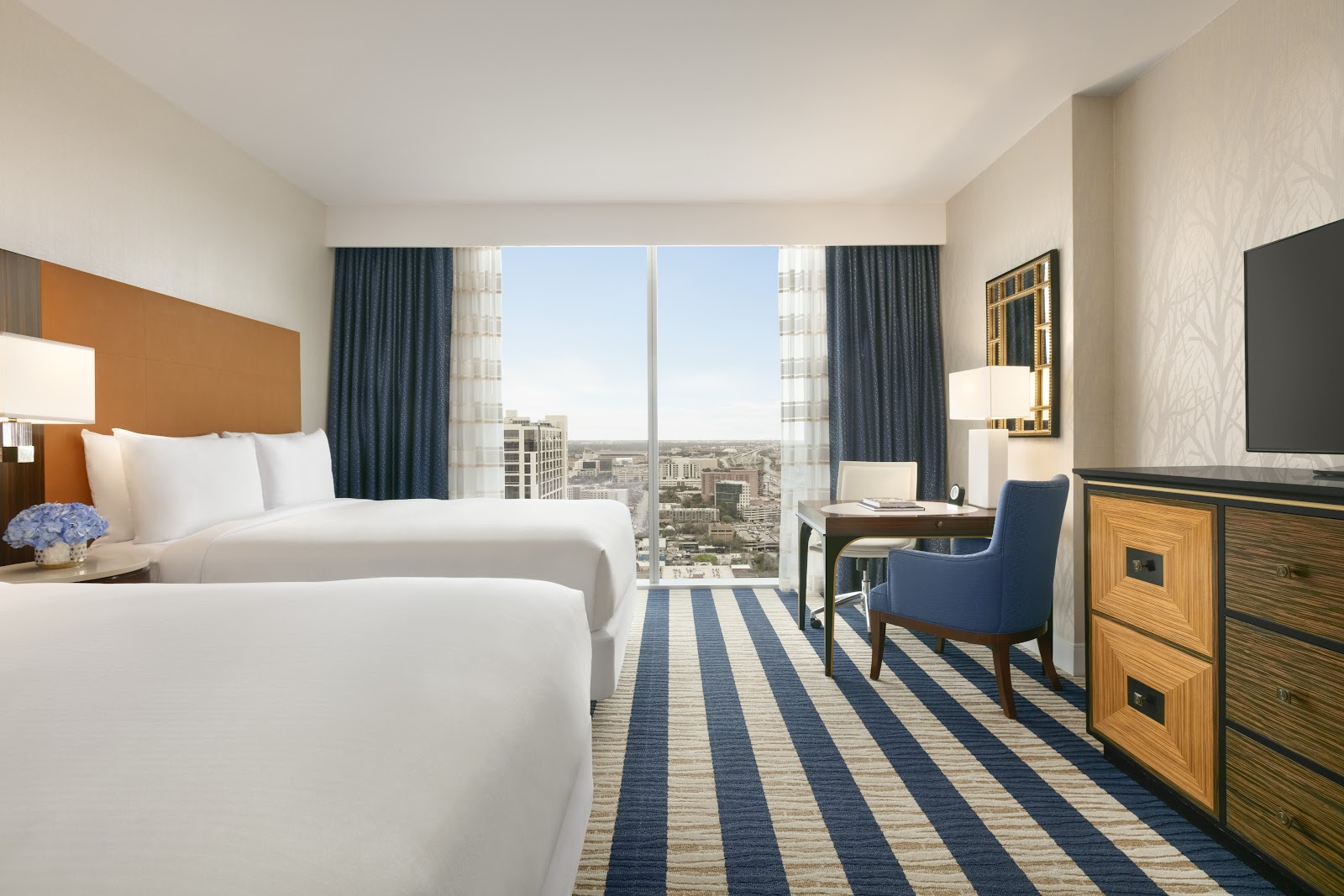
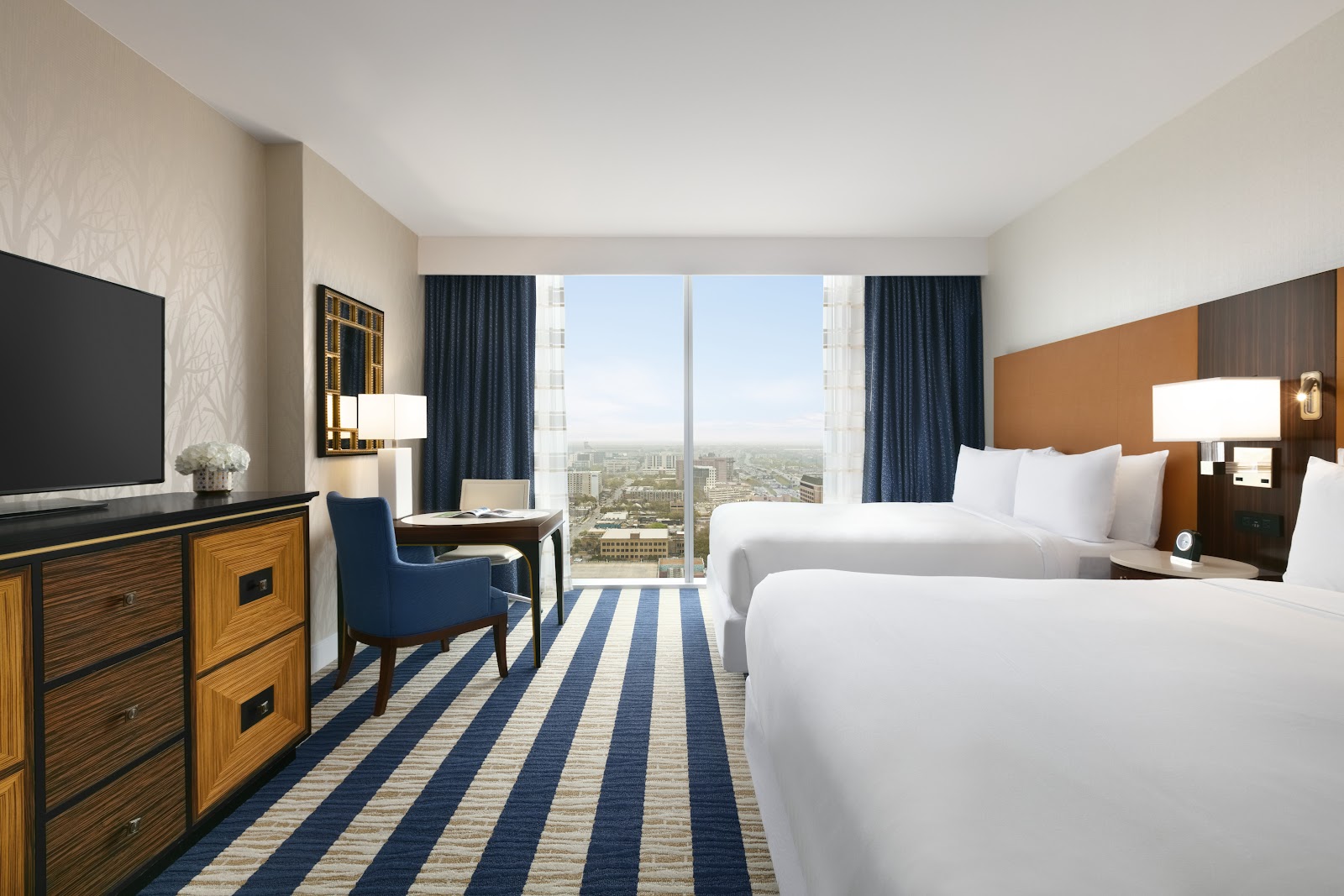
The third is that the window light is exceptional and directional. A tower has glazing on all four elevations, which means at any hour there is a face of the building with good light on it — and high-floor windows have no obstruction, so the light arriving is pure sky rather than sky filtered through trees or bounced off a neighbour.
The fourth is that the ballroom is usually windowless. Large function rooms in a tower are typically placed on low or podium floors in the building’s core, because the perimeter is more valuable as guest rooms — which means the room where the reception happens has no daylight at all, while the rooms with the best light are the ones you cannot put a hundred people in.
That tension is the honest shape of a tower venue and it is what most of this guide is about.
Austin sits at about thirty degrees and a quarter north at roughly five hundred feet. The June noon sun reaches around eighty-three degrees, the December noon sun about thirty-six and a half, days run from about ten hours ten to fourteen hours five, and civil twilight is roughly twenty-three minutes.
We have not photographed a wedding here. Which floors and spaces are bookable, what each sees and the permitted hours are questions for the hotel.
The Fairmont Austin at a glance
| Where | A large downtown tower hotel in Austin, Texas |
| Suits | Large counts, weather-proofing, height, a real skyline and city dusk |
| Does not suit | Anyone wanting grounds, greenery, or a sense of place indoors |
| The tension | The best light is where you cannot fit a hundred people |
| Watch | Lift transitions cost fifteen minutes, and twilight is twenty-three |
What it suits
It suits a large guest count without compromise. A purpose-built hotel ballroom holds two or three hundred for dinner in a room designed for it, with aisles, a proper dance floor, sightlines to the top table and room for a photographer to stand back with a longer lens. A converted venue at the same headcount offers none of that.
It suits logistics absolutely, and logistics affect photographs more than people expect. A hotel has rooms for the party, a kitchen that runs to time, level loading for equipment, adequate power, and staff whose job is keeping a schedule. A venue that runs late costs golden hour, and at this latitude golden hour is not recoverable.
It suits an out-of-town guest list, which for a destination like Austin is most of them. Everyone sleeps in the building, nobody drives, and the getting-ready spaces are upstairs from the ceremony — which for a photographer means a continuous day rather than one broken by transport.
It suits height, and this is the thing worth choosing a tower for. A high floor or a rooftop gives an unobstructed horizon, full sky, and a downtown skyline seen across rather than up at.
The skyline frame wants a long lens. A wide lens from a high floor renders towers at their true angular size and they become a low strip; a moderate telephoto compresses them into mass. Expose for the buildings and lift the subjects with a warm-gelled source at about a stop over the ambient on them — downtown lighting is warm and an ungelled flash puts blue-white faces against a golden city.
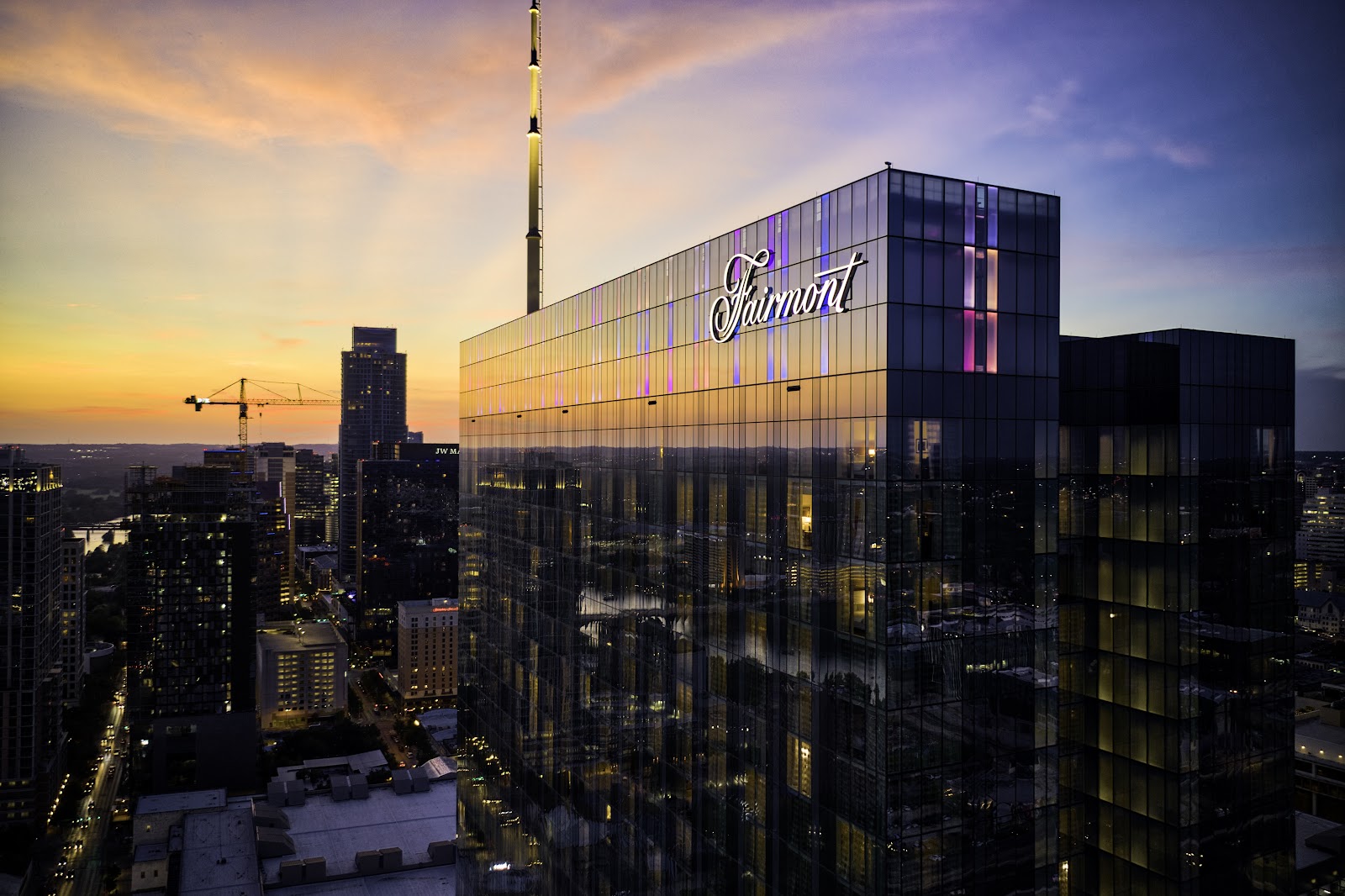
Austin’s downtown is substantially glass, which matters. A glass tower has no texture of its own — its appearance is borrowed entirely from what it reflects — so the skyline is flat grey-blue under an even sky and genuinely spectacular under a broken one. The city frames want structure overhead, or the ends of the day, or darkness.
The best of them is the twilight balance. For roughly ten minutes during civil twilight the sky holds deep blue while the building lights are fully on, and both read in one exposure. Before that the sky overpowers the lights; after, it goes black and the frame loses depth. Ten usable minutes inside twenty-three is genuinely short, and being composed before it starts is the difference.
It suits weather-proofing completely, and in central Texas that matters. Late March through May is the active severe-weather season with real thunderstorm risk, and June through September brings sustained heat above a hundred degrees. A building where everything happens indoors with air conditioning does not care about either — and on a downtown site there is no landscape to miss.
And it suits the glazing, which is the compensation for the windowless ballroom. A guest suite or a function room on a glazed elevation is a very large side source, and three or four metres in from it is the best unassisted light in the building. Arrange groups parallel to the glass, never across the room — perpendicular puts one end of a row three stops below the other.
What it does not suit
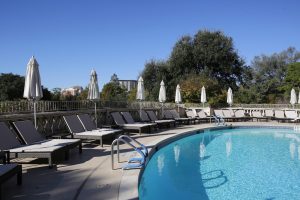
It does not suit anyone wanting grounds or greenery. A downtown tower has a forecourt, perhaps a pool deck, and no landscape whatsoever. Whatever planting exists is in containers, and a frame that needs a tree needs a different venue or a car journey.
That is worth stating plainly because it is the clearest reason not to choose one. Austin has genuinely good green venues — lakeside, Hill Country, sculpture parks — and a tower is the opposite choice.
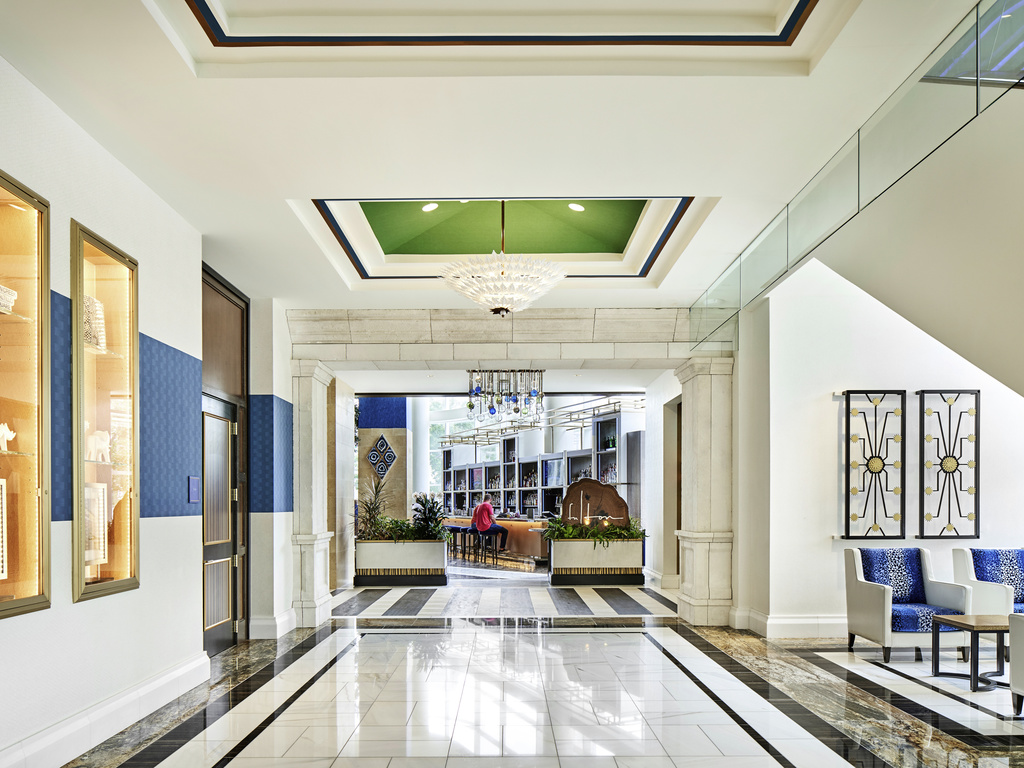
It does not suit a strong sense of place indoors. A large international-standard hotel is designed to be excellent and legible to a guest from anywhere, which tends to make the interiors handsome rather than local. A ballroom in Austin and a ballroom in Atlanta are more alike than either is to the city outside.
So the burden of place falls entirely on what is visible through glass, which makes the question of what each bookable space actually sees the most important one to ask. A high floor facing the lake and the Hill Country is a different venue from a podium floor facing the car park opposite.
It does not suit a photographer relying on the house lighting. Ballrooms are lit by high-level recessed downlights on a low dimmer, which gives strong top light with shadowed eye sockets and a chin shadow — the single most common failure in hotel coverage. The house lighting is for atmosphere in the room, not for faces in a frame.
The fix is to stop using it as a key: bounce a warm-gelled source off a wall or ceiling for a soft directional key, drag the shutter to a thirtieth or sixtieth so the room’s own light registers behind the subject, and use real sources on stands because the distances in a large room are beyond anything on-camera.
It does not suit a schedule with no slack, because of the lifts. Every transition between floors costs real minutes, and the good frames are on different levels from the event. A plan that allows ten minutes to move from the ballroom to a rooftop for the blue hour has not accounted for a lift, a corridor and thirty people.
Twenty minutes is realistic. And the blue hour will not wait.
It does not suit anyone expecting exclusivity. A working hotel has other guests, other events and public spaces in use — which means people in swimwear crossing the frame at a pool deck, strangers in a lobby, and a photographer being tactical about backgrounds rather than assuming clear ones.
And it does not suit a tight budget. Tower hotels of this class typically have minimum spends, mandatory catering, service charges and sometimes preferred-supplier arrangements with real consequences for anyone outside them. That last point bears directly on photography and it is worth asking about before anything else is agreed.
One further honest note about glass. From inside at night the windows become mirrors and reflect the room back — which is useful, since a couple and their reflection in a dark window is a good frame, and it is also why a photographer and a lighting stand will appear in frames where nobody noticed the glass. Check reflective surfaces before the frame rather than after.
- Ask what each bookable space actually sees — that is the whole question
- Budget twenty minutes for any transition between floors, not ten
- Never use ballroom downlights as a key; bounce warm and drag the shutter
- Arrange groups parallel to the glazing, never across the room
- Ask about preferred-supplier arrangements before anything is agreed
Working the height, and the Austin year
Four techniques matter more in a tower than anywhere else, and all of them concern the relationship between inside and outside.
The first is the window exposure problem, which is constant here. A camera metering an interior with a bright city or sky beyond the glass will either hold the room and blow the view to white, or hold the view and lose the room. Holding both means adding light inside to within about a stop and a half of the exterior, or accepting a blown window and composing so it reads as a clean shape rather than a hole.
The second is that high-floor light is harder than ground-level light. At ground level in a city, daylight arrives already bounced off buildings and filtered through trees; on a thirtieth floor it arrives straight from the sky with nothing in the way. That means a window-lit subject high up has more contrast and a faster falloff than the same position at street level, and a reflector on the shadow side is more useful than it would be below.
The third is reflection management from outside. A glass tower photographed from the street shows sky and neighbouring buildings rather than its own interior, and at some angles the reflection is more legible than anything else. Move sideways before reaching for a polariser — reflections are weakest near perpendicular, and a polariser does little at forty-five degrees on a vertical surface.
The fourth is that glass towers reflect the setting sun, and that is a genuine asset rather than a nuisance. A facade facing west at low sun becomes an enormous warm light source, throwing directional light back into the streets and across nearby terraces at an angle no natural source provides. Finding where that light lands is a matter of looking, and standing a couple in it is free studio lighting the size of a building.
The Austin year then governs whatever happens outdoors, and the split is sharp.
October through April is the comfortable season and it is unusually long. Austin winters are mild, the December noon sun at thirty-six and a half degrees models rather than flattens, and any terrace or pool deck is usable throughout. A January wedding here is genuinely pleasant, which is not true of most venues in this library — and at a tower it means the outdoor frames are available in a month when a northern venue would have none.
Late March into April is the best window in the state because of the bluebonnets, though a downtown tower has no meadow — relevant only if part of the day travels to the Hill Country.
Spring also brings storms, and for a tower that is more interesting than threatening. A downtown of glass under a broken sky is spectacular, the half hour after a front passes gives washed air and wet paving reflecting the buildings, and a high floor is the best seat in the city for watching a line of weather arrive across the Hill Country.
The safety note is the obvious one: a rooftop terrace is not the place to be during a thunderstorm, and the plan needs to move indoors without discussion.
Summer is the honest constraint. June through September brings sustained heat with afternoon temperatures frequently above a hundred degrees, high humidity and a sun reaching eighty-three degrees at midsummer noon. An outdoor component belongs at the ends of the day, and the compensation is that the building is fully air conditioned and the interiors are the venue anyway.
The humidity has a real photographic effect from height. Water vapour scatters light and hazes distance, so a skyline compressed from a high floor will read with noticeably less contrast in August than in November — and the Hill Country to the west, visible on a clear day, may be invisible in midsummer. October and November give the clearest air of the year, which on a view-dependent venue matters more than temperature.
One last Austin detail worth knowing if the timing suits. The Congress Avenue bridge, a short distance south on the lake, hosts the largest urban bat colony in North America — well over a million Mexican free-tailed bats emerging in a continuous column at dusk from roughly March to October. From a high floor on the right side of the building it is visible as a dark ribbon over the water against a colour sky, which is a frame no other city offers and which costs nothing but knowing to look.
More frames from The Fairmont Austin
The Fairmont Austin wedding photography: common questions
What makes a tower different from a resort?
It is vertical. Spaces stack, transitions are by lift, and the rooms at different heights see completely different things.
What is the tension to plan around?
The best light is where you cannot fit a hundred people. Glazed high floors have superb window light; the ballroom is usually windowless on a podium level.
How long do transitions take?
Twenty minutes for a party of thirty between floors, not ten. A lift has waiting, capacity limits and other guests — and twilight here is twenty-three minutes.
Why is high-floor window light harder?
It arrives straight from the sky with nothing in the way. At street level daylight is pre-bounced off buildings, so a high window has more contrast and faster falloff.
Can I use the neighbouring towers?
Yes. A glass facade facing the setting sun becomes a warm light source the size of a building. Find where the reflection lands and stand in it.
When is the air clearest?
October and November. Summer humidity hazes distance badly, and on a view-dependent venue that matters more than the temperature does.
More Austin, TX venue guides
We are writing a photographer’s guide to every venue we would happily shoot in Austin, TX. Here are three more, plus the full index:
- The Four Seasons Austin: The One Decision That Governs Everything
- The JW Marriott Austin: What It Suits, and What It Does Not
- The Austin Central Library: The Venue’s Own Logic
Planning a wedding at The Fairmont Austin?
Height, a real skyline and no grounds at all. Tell us your date.