 The Somerset Club on Beacon Street: Is It Right for You?
The Fairmont Battery Wharf, Boston: One Frame and How It Is Made
A quiet stretch of harbour edge is one frame. Everything else in the day supports it.
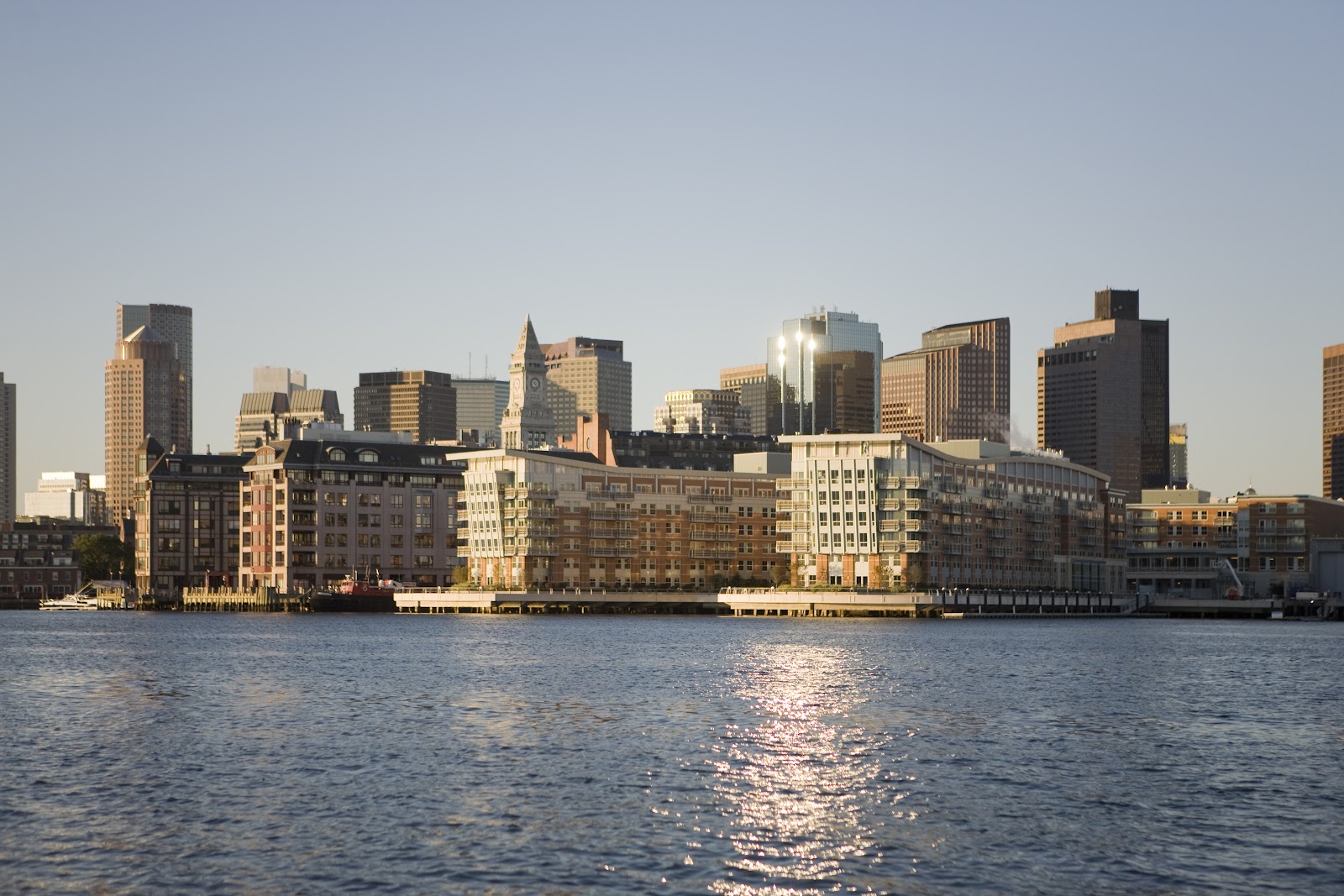
The Fairmont Battery Wharf sits on Boston’s waterfront and feels, by its own account, like a serene escape from the urban rush while remaining close to the city.
That combination — harbour frontage without a crowd on it — points directly at the frame worth building the day around. It is the edge: camera low and close to the quay line, the water’s boundary running away from the viewer into the harbour, the couple placed somewhere along it, and the city or the far shore beyond. A waterfront edge is a leading line that nothing built can match, and the difference between a busy public quay and a hotel’s own frontage is that on the latter you can actually use it.
So this is written as one frame and the three things it needs. We have not photographed a wedding here; harbour frontage behaves the same wherever it is. Whether the waterfront terrace is exclusive, which rooms face the water, and what the wet-weather arrangement for an outdoor ceremony is are the questions for their team.
The Fairmont Battery Wharf at a glance
| Where | The harbour, Boston, Massachusetts |
| Character | A waterfront hotel with its own harbour frontage |
| The frame | Low along the quay line, water running away into the harbour |
| It needs | A low camera, a long lens, and light from the side |
| Ask first | Terrace exclusivity, water-facing rooms, wet-weather plan |
The frame, and the three things it needs
The first requirement is a low camera. The strength of an edge frame comes from the line being long in the picture rather than short, and how long it appears depends entirely on viewing height. Dropping close to the paving stretches the quay line towards the horizon and gives it depth; standing at eye level compresses it into a band across the middle of the frame. This is the most consequential decision in the picture and it costs nothing but kneeling.
The second is a long lens. Compression is what makes a harbour read as a harbour: at 135mm or 200mm the shipping, the islands, the far shore and the city stack up behind a couple as a layered background, while at 24mm the same elements shrink to a thin strip under a large empty sky. A waterfront is almost always a long-lens environment, which is counter-intuitive because the space itself is wide.
The third is light from the side rather than from over the water behind the subject. Low sun reflected off flat water produces a hard specular path — a bright lane running towards the camera — and at the exposure a face needs, that lane is unrecoverable white. So the geometry to seek is the couple lit across the frame, with the water to one side or behind them but the sun not in line with it.
Within those conditions there is a hierarchy of hours. Late afternoon gives raking light along the quay, along the stonework and across the water’s texture. The last twenty minutes give the best version, because the water then stops reflecting and starts glowing, holding the whole sky’s colour as a luminous surface. A couple against a luminous harbour will silhouette unless lit — one warm-gelled source at face height about a stop under the sky holds both.
One geographic decision governs all of it: which way the frontage faces. West-facing frontage puts the sunset in the water and the colour in front of you; east-facing puts warm light on the far shore and the colour behind the camera. Both are good and both are different, and only one is available from any given position — so the walk that matters most is the one that establishes where you will stand at the end of the day.
Harbour wind is the constant and it is stronger and gustier at the water’s edge than in the streets behind. A veil becomes a held-or-removed decision, hair needs managing, and any light stand needs real weight. It also breaks the surface, so a mirrored reflection frame belongs to early morning rather than to the afternoon.
The hotel around it
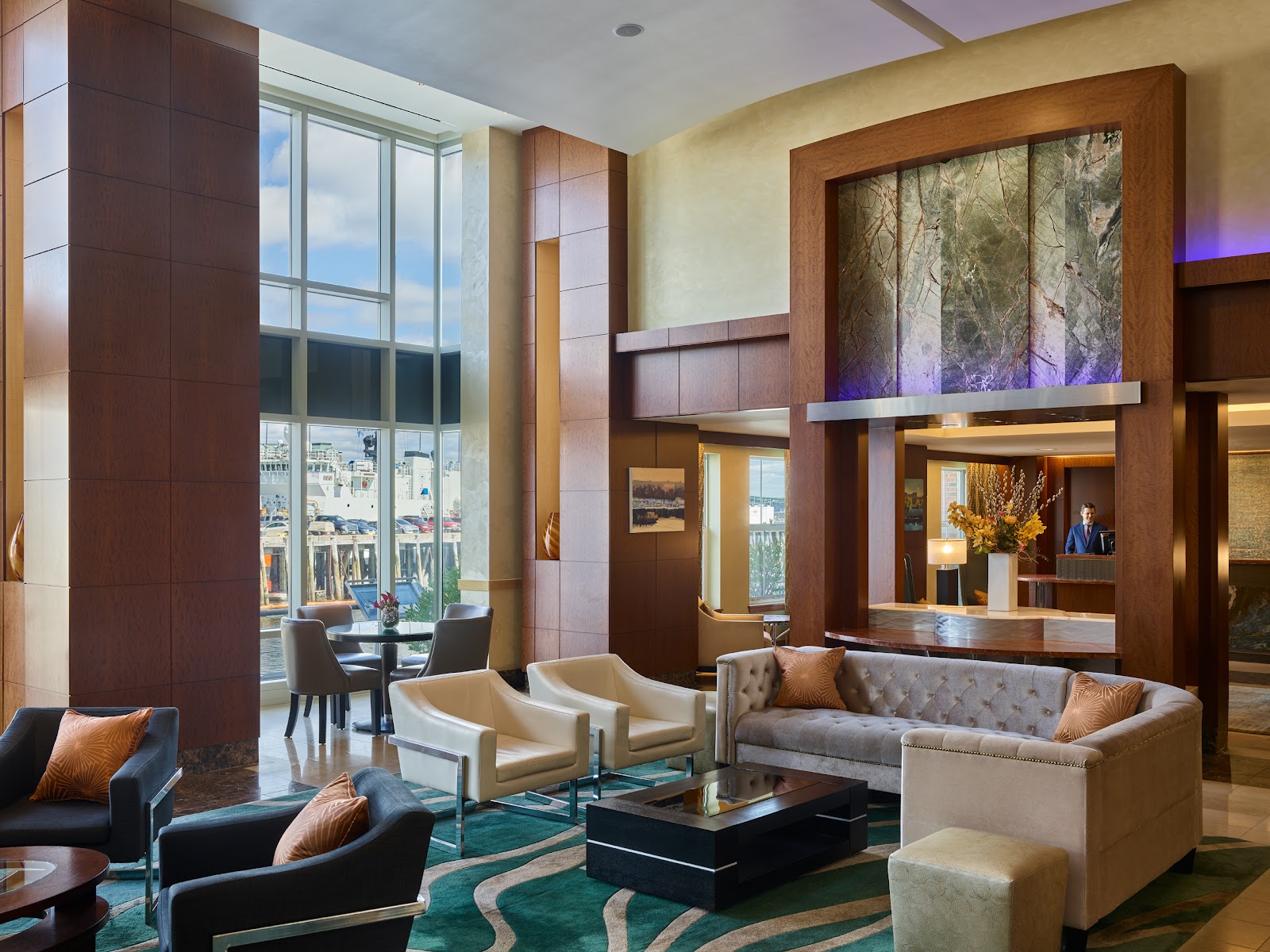
Inside, a hotel of this class presents the familiar two conditions: light that is deliberately even, because unevenness reads as cheap, and surfaces that are pale and uncluttered, because that reads as calm. Even light erases the gradient across a face that the eye reads as shape; pale surfaces erase the tonal difference between a subject and a background.
Neither needs much correcting but both need correcting deliberately. One directional source, off the camera axis at face height, set close to the ambient level rather than above it, restores a shadow side without making the frame look lit — half a stop in one direction does more than two stops overall. For separation, four tools stack: depth, a wide aperture, placement against the darkest element in the room, and negative fill.
Negative fill costs nothing and is the under-used one. Something dark on the shadow side of a face subtracts bounced light from that side and deepens the gradient, and in a pale room it works where adding light does not.
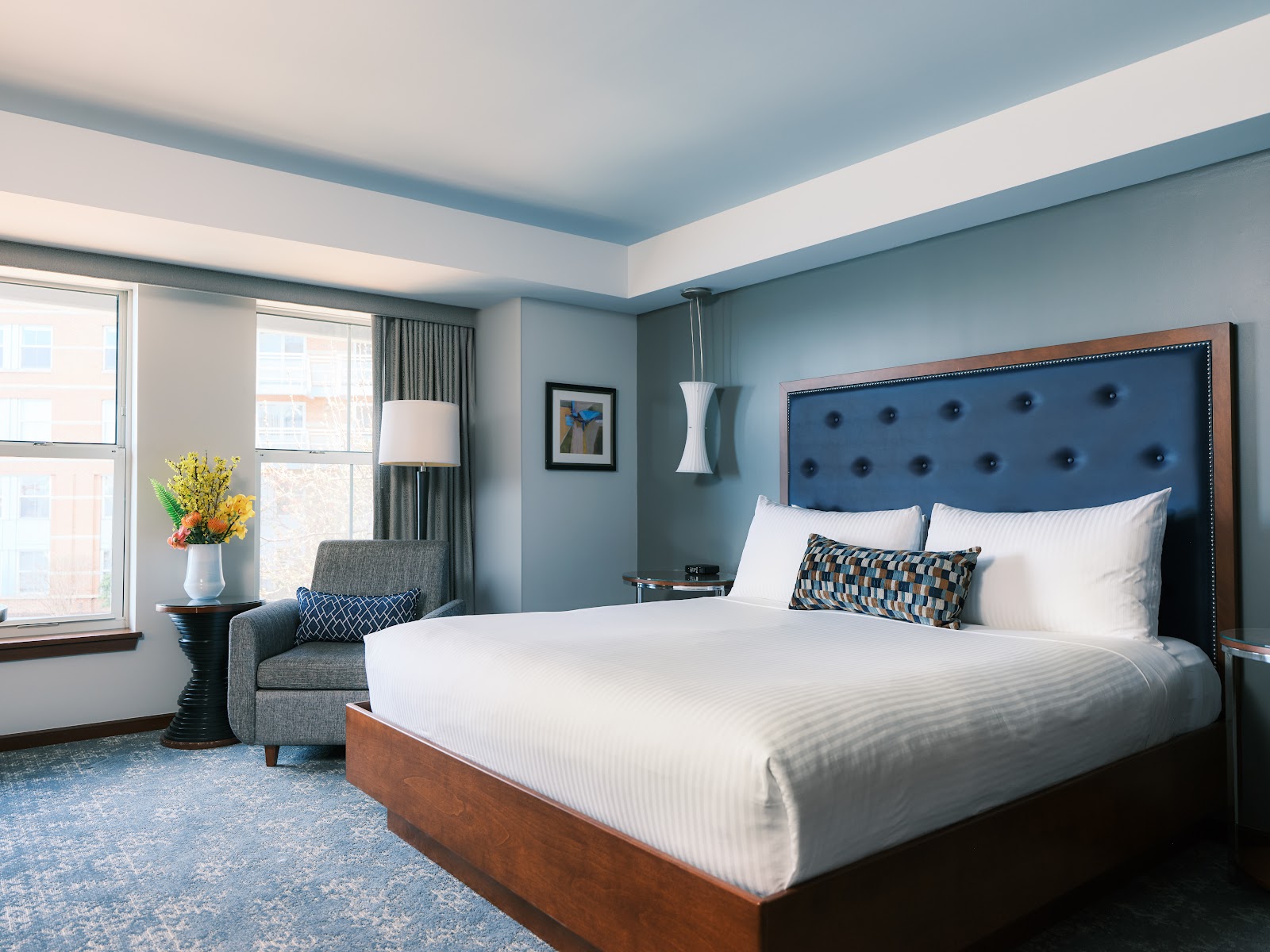
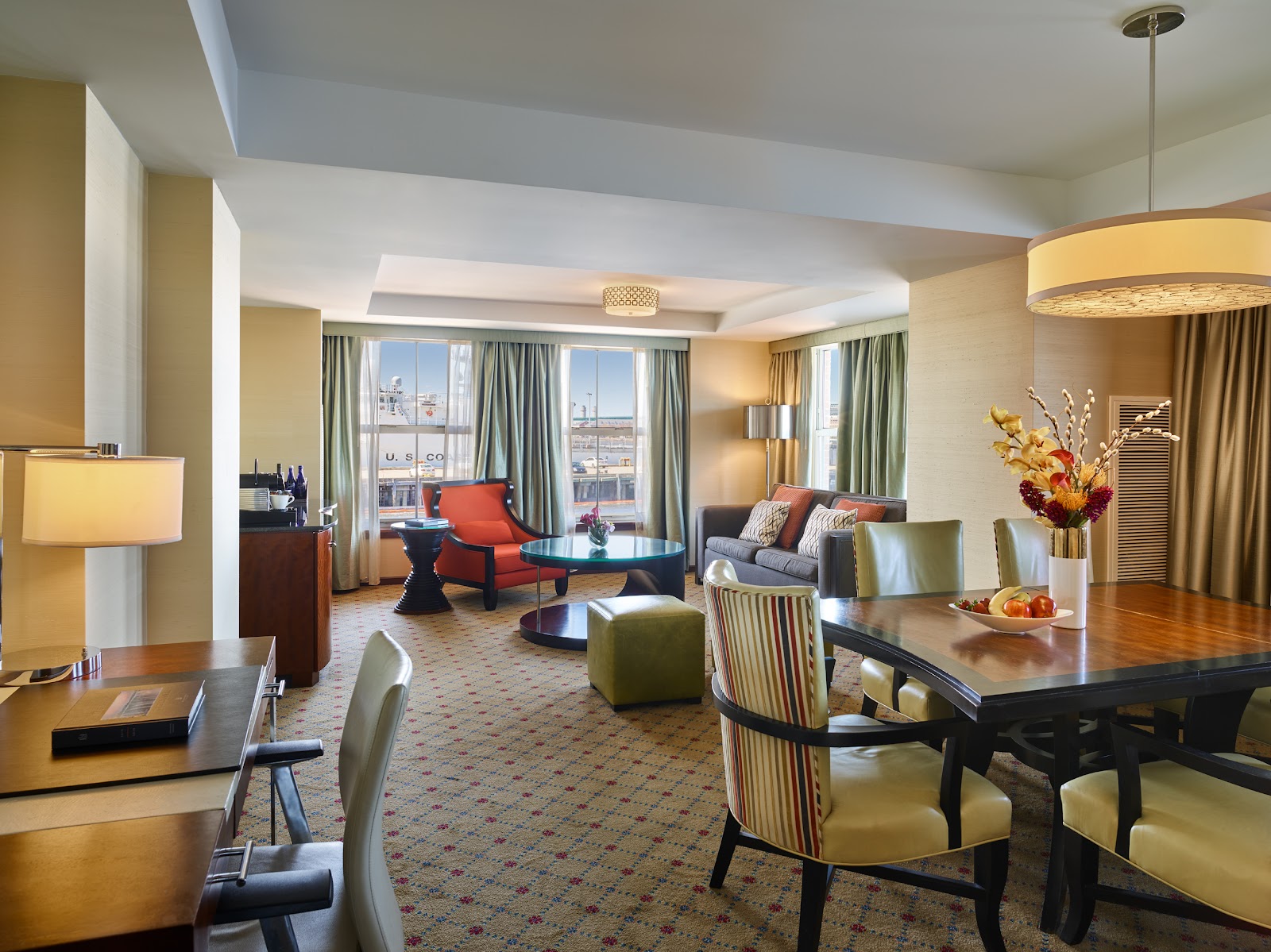
Guest rooms are the best portrait light in the building, and on the water side there is a bonus worth asking for specifically: a room facing the harbour receives light twice, directly from the sky and again bounced up off the surface, which raises ambient and fills shadows from below. It is genuinely flattering and it is a reason to request a water-facing room rather than accept any room.
The setup is always the same three moves — biggest window on the shaded side, every overhead fitting off so the room has one colour of light, lamps out of frame.
The ballroom is the evening and it is a known quantity: a high ceiling with no usable bounce, warm fittings, overhead sources and steep fall-off, which is the free separation the rest of the hotel refuses to provide. Expose for the room, add one warm-gelled source at face height where legibility matters, set white balance to the gel and hold it. Ask whether the lighting can be dimmed to pools rather than set evenly; it usually can, and the difference exceeds any equipment decision.
The dusk crossing happens twice at a waterfront hotel — once outside on the quay and once inside at a window — and they are twenty minutes apart at most. Choose which matters more in advance, because attempting both loses one.
- Get low: viewing height decides how long the quay line reads
- Go long: compression stacks the harbour, wide flattens it to a strip
- Keep the sun’s specular path off the line between camera and couple
- Ask for a water-facing room; the harbour fills faces from below
- Choose the outside or the inside crossing in advance; you cannot have both
Boston through the year, and the shelter question
New England seasons differ more sharply than in almost any other city in this series, and on a harbour front the differences are amplified.
Summer is humid but rarely extreme, and the long June days put sunset late enough that the edge frame lands well into the reception — worth agreeing in advance as a short deliberate excursion, because it is the one frame that cannot be moved earlier.
Autumn brings the region’s foliage peaking in mid-October, and on a waterfront it reads as a coloured band on the far shore at a long focal length rather than as canopy overhead. That is a different and rather good use of it, and it lasts about two weeks.
Winter is the hard season and it needs saying plainly. Sunset falls in the middle of the afternoon in December, which compresses the outdoor window into a couple of hours, and a quayside in a north-easterly wind is genuinely cold — outdoor blocks become three or four minutes rather than twenty, which is a welfare decision as much as a photographic one. Plan the edge frame for early in the afternoon and take it quickly.
Snow is the winter compensation and it is the best natural fill there is, lifting exactly the shadows a low sun carves — while fooling a meter by about two stops, so add them. Snow on a quayside also darkens the water by contrast, which makes the edge line read more strongly than in summer.
Coastal fog in spring and early summer is worth stepping out into specifically. It separates near from far, reduces harbour clutter and shipping to soft shapes, and turns a working waterfront into something atmospheric — the frame most likely to be the best of the day and the one nobody plans for.
The shelter question is the one to settle for any outdoor ceremony here. A harbour terrace has no cover of its own, nor’easters are a real winter possibility and coastal rain can arrive quickly in any season, so the fallback, its capacity and the time by which the call gets made all need agreeing. A hotel is a good answer to that, which is the practical argument for a waterfront hotel over a waterfront park.
One equipment note: salt air and spray mean a rag in a pocket and a habit of checking the front element, and a cold camera carried into a warm interior will fog comprehensively — so let kit come towards the temperature of where it is going before it gets there.
More frames from The Fairmont Battery Wharf
The Fairmont Battery Wharf wedding photography: common questions
What is the defining frame?
The quay edge. Camera low near the water’s boundary, the line running away into the harbour, the couple along it, and the city or far shore beyond — a leading line nothing built can match.
Why does camera height matter so much?
Because how long the quay line reads depends entirely on viewing height. Low stretches it towards the horizon; eye level compresses it into a band across the middle.
Wide or long lens?
Long. Compression stacks shipping, islands, far shore and city into layers behind the couple; a wide lens shrinks all of it to a strip under a big empty sky.
Which guest room should you ask for?
One facing the water. A harbour-facing room receives light twice — from the sky and bounced up off the surface — which raises ambient and fills shadows from below.
What does winter change?
A great deal. Sunset falls mid-afternoon in December and a quayside in a north-easterly is genuinely cold, so outdoor blocks become minutes. Take the edge frame early and quickly.
What has to be settled for an outdoor ceremony?
The fallback, its capacity, and the time by which the call is made. A harbour terrace has no cover, and coastal rain arrives quickly in any season.
More Boston, MA venue guides
We are writing a photographer’s guide to every venue we would happily shoot in Boston, MA. Here are three more, plus the full index:
- The Four Seasons Boston: One Frame and How It Is Made
- The InterContinental Boston: What It Suits and What It Does Not
- The John F. Kennedy Library, Boston: The One Decision That Governs Everything
All Boston, MA Wedding Venues →
Planning a wedding at The Fairmont Battery Wharf?
One frame, one hour, one shelter plan. Tell us your date and we will fix all three.