 The Tlaquepaque Arts Village, Sedona: Field Notes on Courtyards
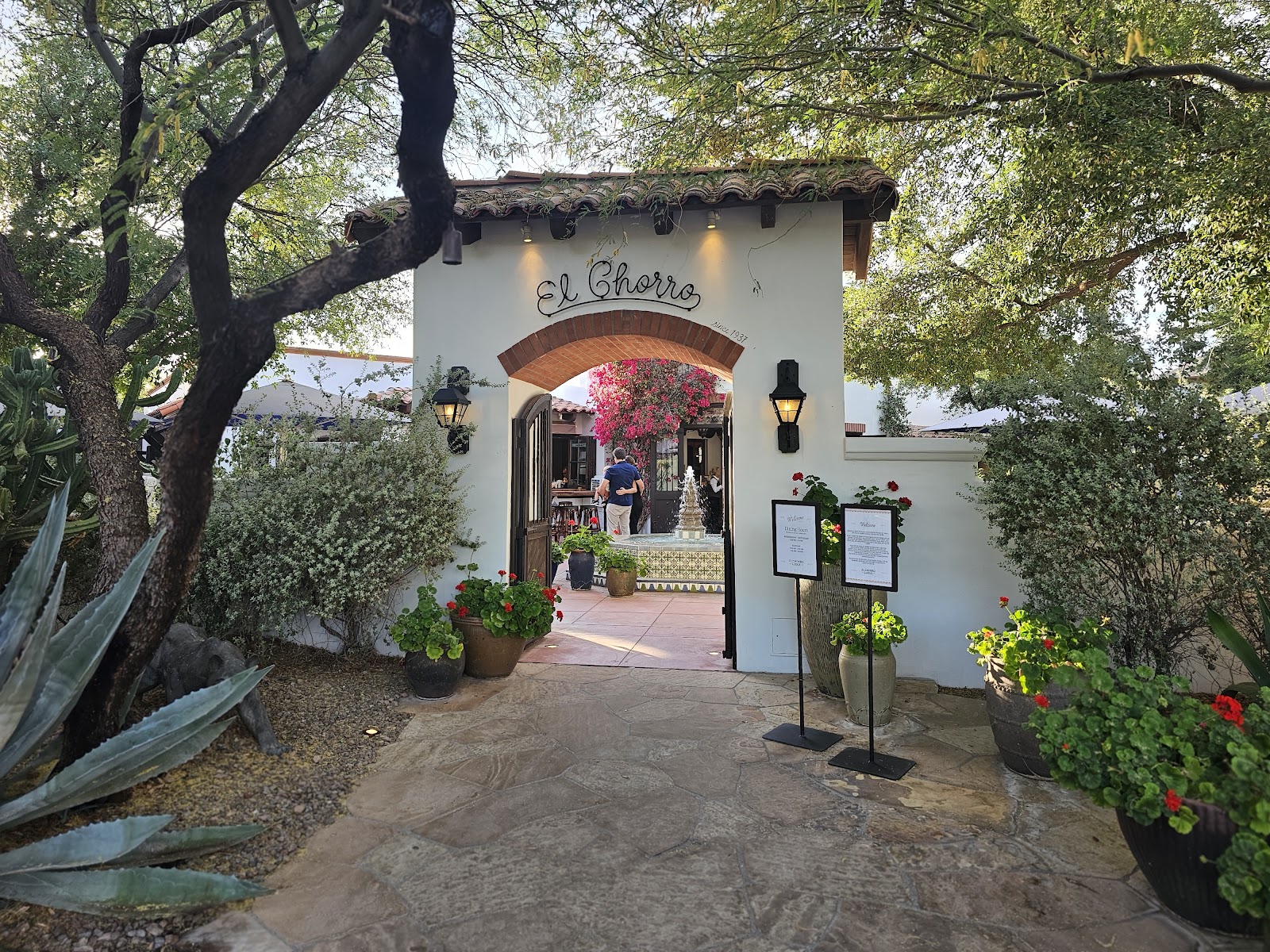
El Chorro, Paradise Valley: The Venue’s Own Logic
Built for the winter season. Which is when the desert works.
This building has one organising idea and it is seasonal rather than architectural: it was made for winter.
A historic desert property of this kind in the Salt River valley was built in the era when the low Sonoran Desert had a season — November to April, when the climate is among the most pleasant in North America — and was largely abandoned for the rest of the year, because a Phoenix summer without air conditioning was not habitable.
That produces a building shaped entirely by the cool half of the year: low adobe or masonry walls, deep covered porches and ramadas for the sun that still reaches seventy-five degrees at noon in March, outdoor rooms rather than indoor ones, generous terraces, and a plan that assumes people will be outside.
For a photographer the practical consequence is unusual and worth stating: the venue’s best spaces are outdoor ones, and the outdoor spaces were designed for a sun angle and a temperature that occur between November and April. A wedding here in February is using the building as intended. A wedding here in July is using it against its own logic.
The second consequence is the covered structures. A ramada or a deep porch is optically a very large soft source with a hard mask — light arrives from the open side only, wraps because the paving and the ceiling bounce it, and falls off fast toward the back. Depth back from the open edge is the whole lighting control.
In the low Sonoran Desert that matters more than anywhere else in these guides, and the reason is the vegetation: this desert has essentially no solid natural shade. Palo verde and mesquite, the two significant trees here, have tiny leaves and open branch structures, which means they produce a filigree dapple rather than cover. A built roof is not a preference in this landscape; it is the only shade there is.
The third is Camelback Mountain, which rises immediately above Paradise Valley and is the one landform in the valley that behaves like a subject rather than a backdrop. It is red sandstone and conglomerate, and at sunset it takes the low sun frontally and glows.
Paradise Valley sits at about thirty-three and a half degrees north at roughly twelve hundred feet. The June noon sun reaches around eighty degrees, the December noon sun about thirty-three, days run from about ten hours fifteen to fourteen hours twenty, and civil twilight is around twenty-five minutes — short.
We have not photographed a wedding at this venue. Which spaces and terraces are included, what covered alternatives exist and what the permitted hours are, are questions for their team.
El Chorro at a glance
| Where | A historic low desert property below Camelback Mountain, Paradise Valley |
| The logic | Built for the November-to-April season, when the low desert is habitable |
| The consequence | The best spaces are outdoor ones, designed for a cool-season sun |
| The key fact | The Sonoran Desert has no solid natural shade — a built roof is the only shade |
| Ask first | Included spaces and terraces, covered alternatives, permitted hours |
Reading the covered structures
Work the ramadas and porches by depth, because depth is the only control they offer and it is a complete one.
At the open edge the light is bright and nearly frontal, the ratio is low, and the result is flat. A metre back the light acquires direction and the ratio opens to something like three to one. Two or three metres back, against the wall, the ratio is dramatic and the sunlit ground beyond has fallen four or five stops.
In the Sonoran Desert that last figure is at the top of its range rather than the middle, and the reason is the air. Low humidity and very little particulate scattering mean direct sun here arrives almost unmodified and shadows receive almost no fill from the atmosphere — so the difference between a lit surface and a shaded one is greater than at the same sun angle in a humid climate.
The practical upshot is that a deep porch in Arizona produces a more extreme ratio than the same porch in Florida, and the deep position is correspondingly stronger. It is the best unassisted portrait on the property and it works at any hour of any day.
The posts are the rhythm and they reward precision: a camera moved a few inches decides whether a column bisects a face, frames it, or disappears. One couple per bay, or the pair centred in a single opening with the rhythm receding, turns repetition into composition.
The material matters to the colour. Adobe or masonry in the desert vernacular is earth-toned — tan, ochre, red-brown — which makes it a warm mid-toned reflector. A subject three or four metres from a sunlit desert wall is lit by a warm bounce, which is flattering and which partly offsets the cool cast that open shade takes from a deep blue desert sky.
That split is worth naming because it governs every desert frame. At this latitude and in this air the sky is a strong saturated blue, which means open shade is lit by a blue source and reads cool, while direct sun reads warm. An ungelled flash in open shade puts a neutral face into a frame that is warm above and cold below; a warm-gelled one resolves it.
The outdoor rooms are the second element and they are the building’s real proposition. A property built for a season spent outside has terraces, courtyards and walled gardens rather than ballrooms — which means the ceremony and the reception both happen in spaces with sky above them and walls around them.
A walled outdoor room behaves like an open-topped interior: it carries daylight, and its character changes completely with the sun’s angle. A bright box with overhead light at noon; a single enormous directional bounce early and late, when one wall is lit and the opposite is shaded. In earth-toned walls that bounce is warm, which makes the early and late courtyard light here the best the property has.
And the third element is the low profile. Desert buildings of this period are single-storey and long rather than tall, which means they sit below the horizon from most positions — and that has a specific photographic use: a camera placed low, with the subjects in front of the building, will have sky above the roofline rather than more building, which makes a clean frame easier than at a tall venue.
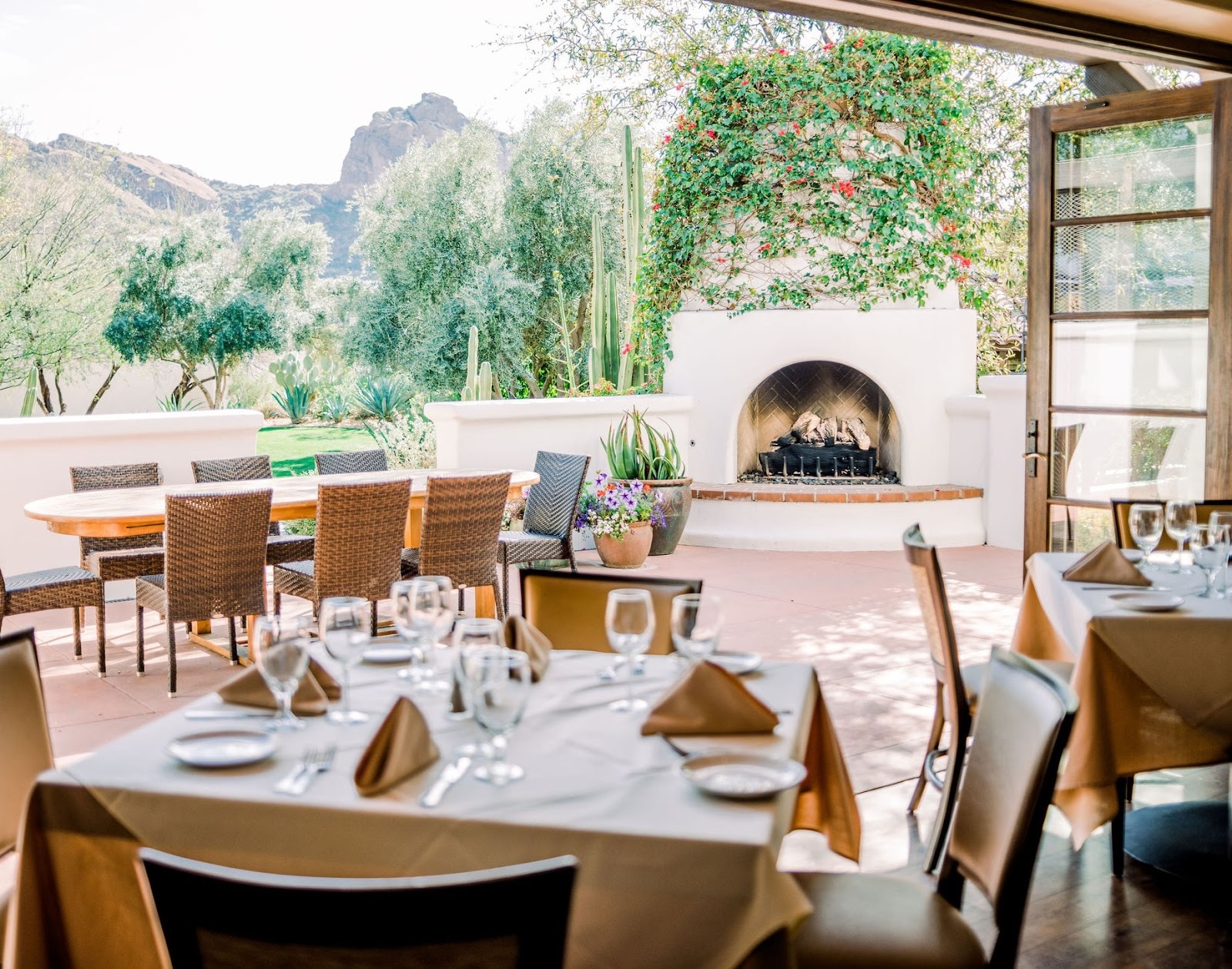
The desert, the mountain and the absent shade
The vegetation is the thing to understand before anything else outdoors, because the Sonoran Desert behaves unlike any other landscape in these guides.
There is no solid shade. The two significant trees of the low desert — palo verde and mesquite — have tiny leaves and open, filigree branch structures, which means the light beneath them is a fine moving dapple rather than cover. Under a palo verde at noon a face is covered in small hard-edged patches, which at eighty degrees of sun elevation in unmodified desert air is unrecoverable.
That is the single most important practical fact about photographing in the low desert, and it is why the built structures matter so much. A ramada, a porch, a wall’s shadow, an umbrella — those are the shade. A tree is not.
Palo verde is worth knowing for two other reasons. Its bark is green — it photosynthesises through its trunk and branches, which is an adaptation to drought and means it reads as a green vertical rather than a brown one, unlike any tree elsewhere in these guides. And in April and May it flowers a mass of bright yellow across the whole crown, which is the strongest colour the low desert produces.
The saguaro is the landscape’s signature and it is a compositional object rather than a plant. A mature saguaro is a columnar cactus several metres tall with upraised arms, and it functions in a frame the way a sculpture does: a strong vertical with an instantly recognisable silhouette, casting a narrow shadow.
That means it is placed rather than included. A saguaro behind a subject’s head is a distraction; a saguaro offset, with space around it, is an anchor. And because the silhouette is so recognisable, a backlit saguaro at low sun is one of the most economical frames in these guides — it needs nothing but a clean sky behind it.
The cholla is the one to be careful with. A jumping cholla backlit at low sun glows, because its dense spines catch and scatter the light — which is genuinely beautiful and worth a frame. The spines are also barbed and they detach on contact, which makes it a real hazard to fabric and skin rather than a theoretical one. Photograph it; do not stand anyone next to it.
Camelback Mountain is the third element and it is the valley’s best background. Red sandstone and conglomerate rising directly above Paradise Valley, it takes the low evening sun frontally and turns a strong red — and because the desert air is exceptionally clear, it holds detail and colour in a way a hazier climate would not allow.
The frame needs a moderate telephoto to bring it forward; a wide lens renders it at its true angular size and reduces it to a lump on the horizon. Expose for the mountain, because that is what the frame is about, and lift the subjects with a close warm-gelled source at about a stop over the ambient on them.
Two further notes on the desert light. It is short at the ends: civil twilight here is about twenty-five minutes, which is among the shortest in these guides, and the fall from usable light to dark is abrupt. Four setups fit into it only if none is being decided at the time.
And it is spectacular. Desert sunsets are genuinely stronger than coastal ones because low humidity and suspended dust scatter the long wavelengths efficiently — which means the colour at the end of a clear desert day is more saturated than the same sun angle produces almost anywhere else. That is worth planning the evening around rather than treating as a bonus.
- Depth back from a ramada is the whole control — and the ratio is extreme in desert air
- There is no solid natural shade in the low desert: a built roof is the only shade
- A saguaro is a sculpture — place it, do not merely include it
- Warm-gel every source: blue-sky shade and warm sun is the desert split
- Compress Camelback with a telephoto and expose for the rock

The Sonoran year
The low desert has two seasons and they are the reverse of most of this guide: the good one is winter and it is emphatic rather than marginal.
The cool season runs roughly November to April and it is among the most pleasant climates in North America — mild, dry, sunny and calm. The December noon sun at about thirty-three degrees means the whole short day models rather than flattens, which combined with unmodified desert air gives genuinely excellent light from morning to dusk with no bad hour at all.
That is the season the building was made for, and a wedding in it is using the venue as intended. The costs are almost none: cool evenings that a party in light clothing will feel, and a day of about ten and a quarter hours at the solstice.
Within the cool season, February to April is the best window in the state and the reason is the bloom. The Sonoran Desert flowers in spring rather than autumn, and in a year with adequate winter rain the display is substantial: brittlebush yellow across the slopes from February, Mexican gold poppies and lupine in March, ocotillo red on its whip-like stems, and palo verde flowering a mass of bright yellow through April and into May.
That is genuinely the strongest colour in the low desert and it is entirely dependent on the previous winter’s rainfall — which means it is knowable a month or two in advance rather than a year. Asking about the bloom close to a spring date is worth doing.
The saguaro flowers at the very end of it: white blooms at the crown of the column in May, which is a small and specific subject and needs a long lens because they are five metres up.
The hot season runs roughly May to September and it is the honest constraint at any low-desert venue. Phoenix summer temperatures exceed a hundred and ten degrees regularly, which is not a photographic problem but a human one — a wedding party in formal clothes outdoors in the afternoon is a genuine welfare matter rather than an inconvenience.
For a venue built around outdoor rooms, that means a summer date shifts the whole event to the very ends of the day and the interior spaces, which is using the building against its own logic. The honest advice is that the low desert is a winter venue and the summer is best avoided if a date can move.
The photographic compensation is the monsoon. From roughly July into September moisture moves north into Arizona and the pattern is reliable: clear mornings, towering convective cloud building over the mountains through the afternoon, and thunderstorms in the late afternoon or evening.
That transforms the sky, which a clear desert sky is not: an empty blue field becomes a structured one, and the light at the end of a monsoon day is the best of the year. Lightning at distance is a genuine subject and the half hour after a cell passes gives washed air and saturated colour.
The monsoon also brings the haboob — an advancing wall of dust ahead of a collapsing storm, sometimes thousands of feet high, moving across the valley. It is one of the most dramatic meteorological subjects in these guides and it is entirely unplannable, and it is also a reason a summer outdoor ceremony needs a covered alternative that is genuinely available.
October is the transition and it is better than its reputation: the heat breaks, the monsoon has usually ended, the air is at its clearest, and the season has not yet started. There is no autumn colour in the low desert — the vegetation is evergreen or deciduous-in-drought rather than seasonal — so nothing in a frame says October except the light and the temperature.
That absence is worth stating: this is a landscape with a spring rather than an autumn, which reverses the assumption most of this guide is built on.
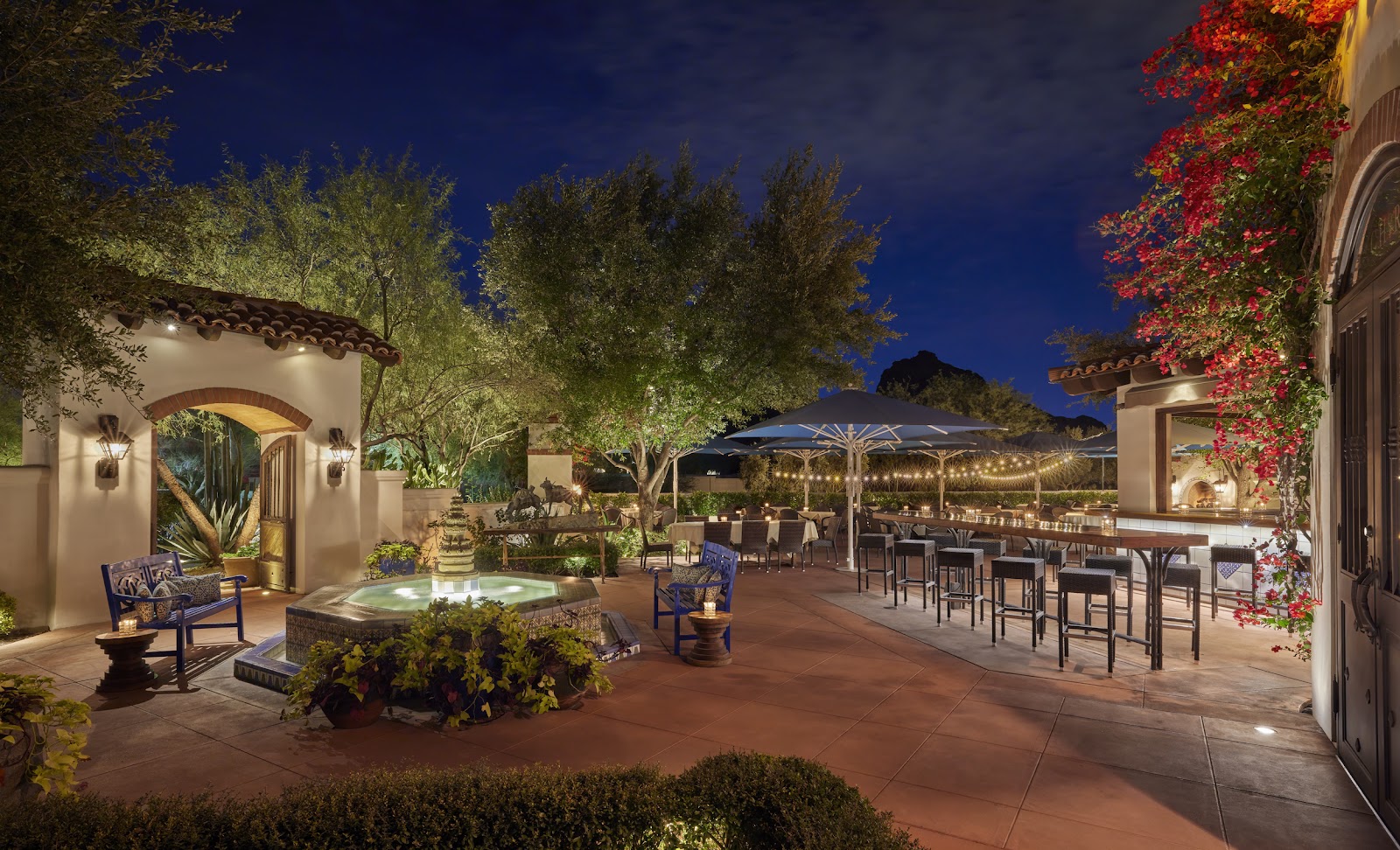
More frames from El Chorro
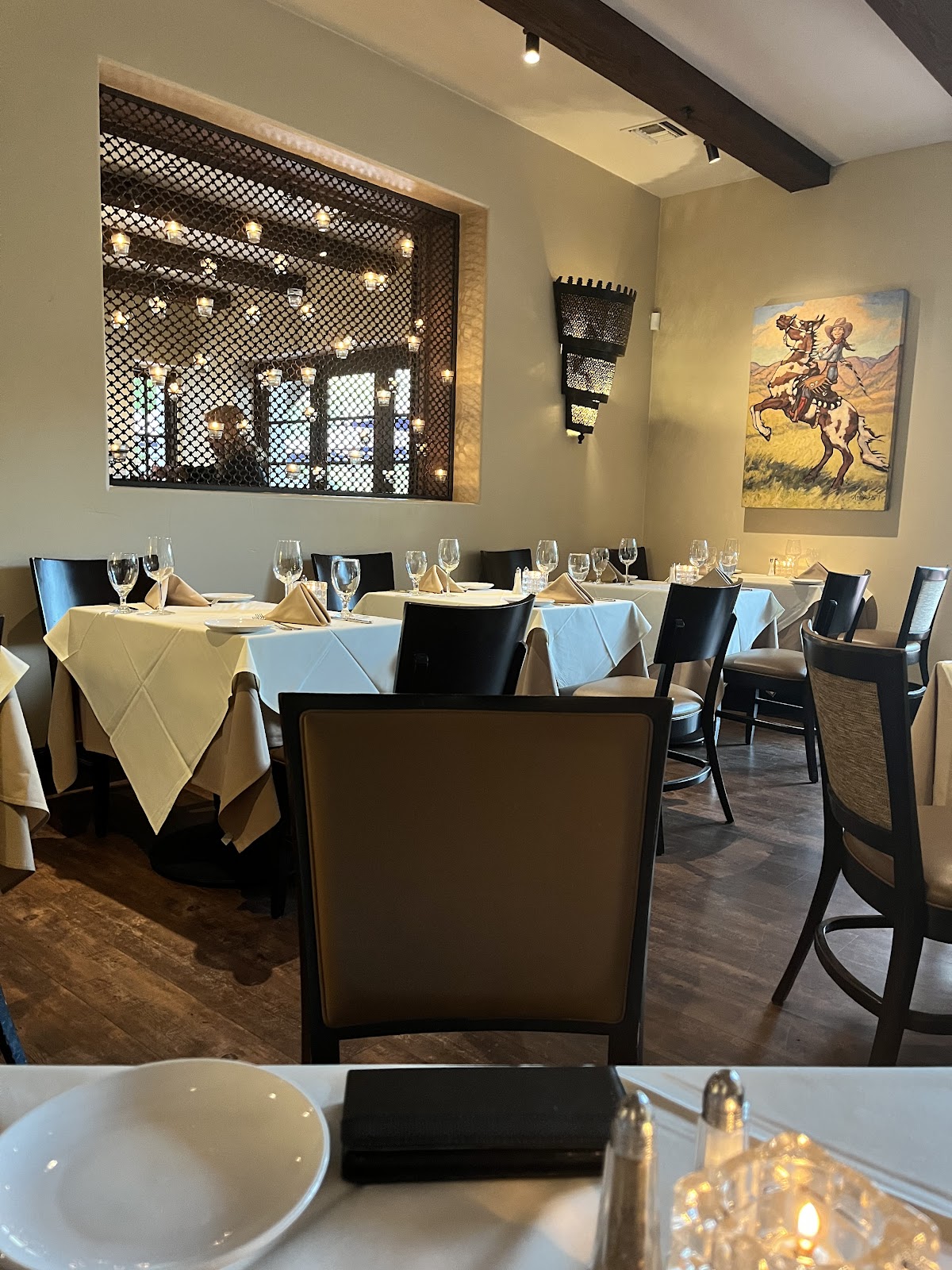
El Chorro wedding photography: common questions
What is the building's logic?
It was built for the November-to-April season, when the low desert is habitable — which means its best spaces are outdoor rooms designed for a cool-season sun.
Where is the shade?
Only in the built structures. Palo verde and mesquite have tiny leaves and open branches, so they give a fine moving dapple rather than cover.
Why is the porch ratio so extreme here?
Low humidity and little particulate scattering mean shadows receive almost no fill from the atmosphere, so the lit-to-shaded difference is greater than in a humid climate.
How do I use a saguaro?
As a sculpture. Offset it with space around it rather than putting it behind a head — and backlit at low sun its silhouette needs nothing else.
When does the desert flower?
February to May, depending on the previous winter’s rain: brittlebush, poppies and lupine first, then palo verde in bright yellow through April.
Should we avoid summer?
If the date can move, yes. Phoenix afternoons regularly exceed a hundred and ten degrees, which for a party in formal clothes outdoors is a welfare matter.
More Arizona venue guides
We are writing a photographer’s guide to every venue we would happily shoot in Arizona. Here are three more, plus the full index:
- The Farm at South Mountain, Phoenix: The Light Through the Day
- The Garden at The Orchard, Queen Creek: The Light Through the Day
- The Haas House, Scottsdale: The Venue’s Own Logic
Planning a wedding at El Chorro?
A building that knows which season it is for. Tell us your date.