 The House of Blues, Cleveland: What It Suits and What It Does Not
COSI Columbus: What It Suits, and What It Does Not
Interactive exhibits make a very particular kind of venue.
A science centre is an unusual wedding venue and the honest way to describe it is by what it does and does not serve, because it is a genuinely divided proposition.
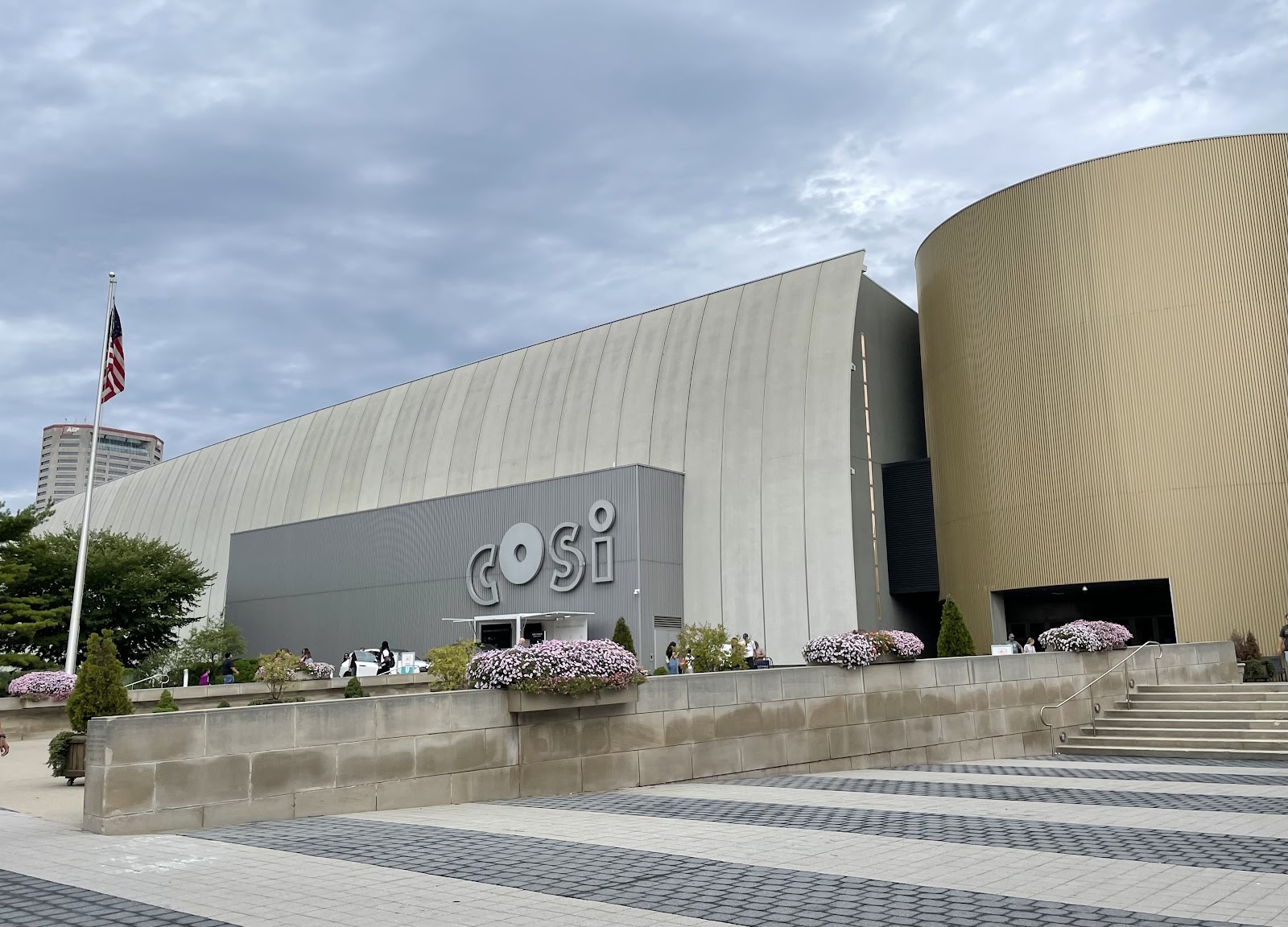
The building is two eras joined. The core is a 1924 high school — a substantial masonry public building of its period, with tall windows, wide corridors and the generous ceiling heights that interwar civic construction used. The addition is from 1999 and it is the opposite: a large sweeping curved form in modern materials, with big open volumes and a great deal of glass.
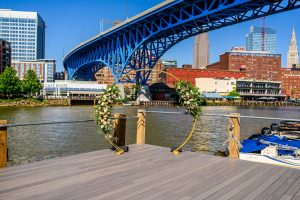
It sits on the west bank of the Scioto River facing downtown Columbus, which gives it the one thing this flat glaciated landscape otherwise withholds — a water frontage and a skyline view.
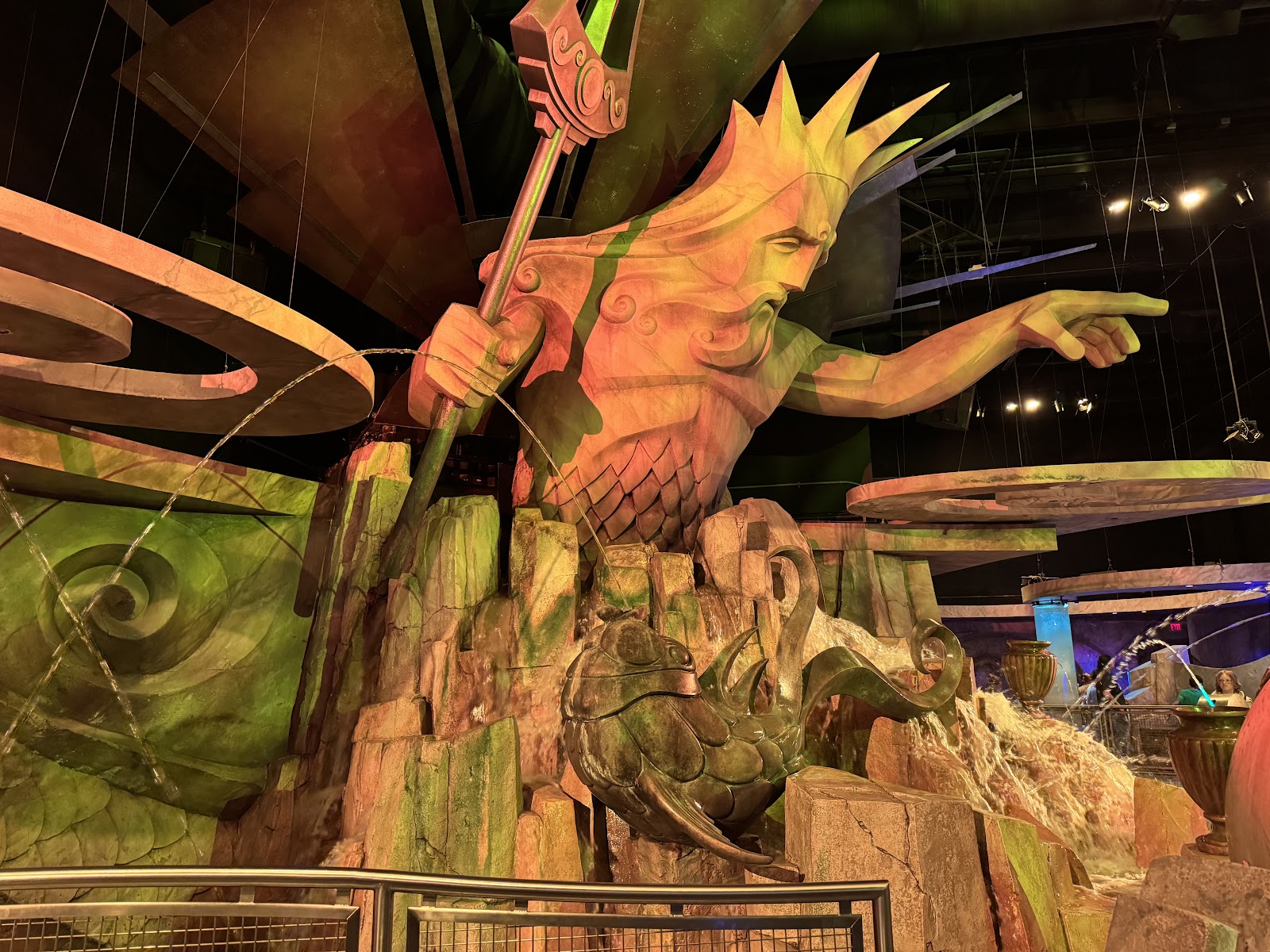
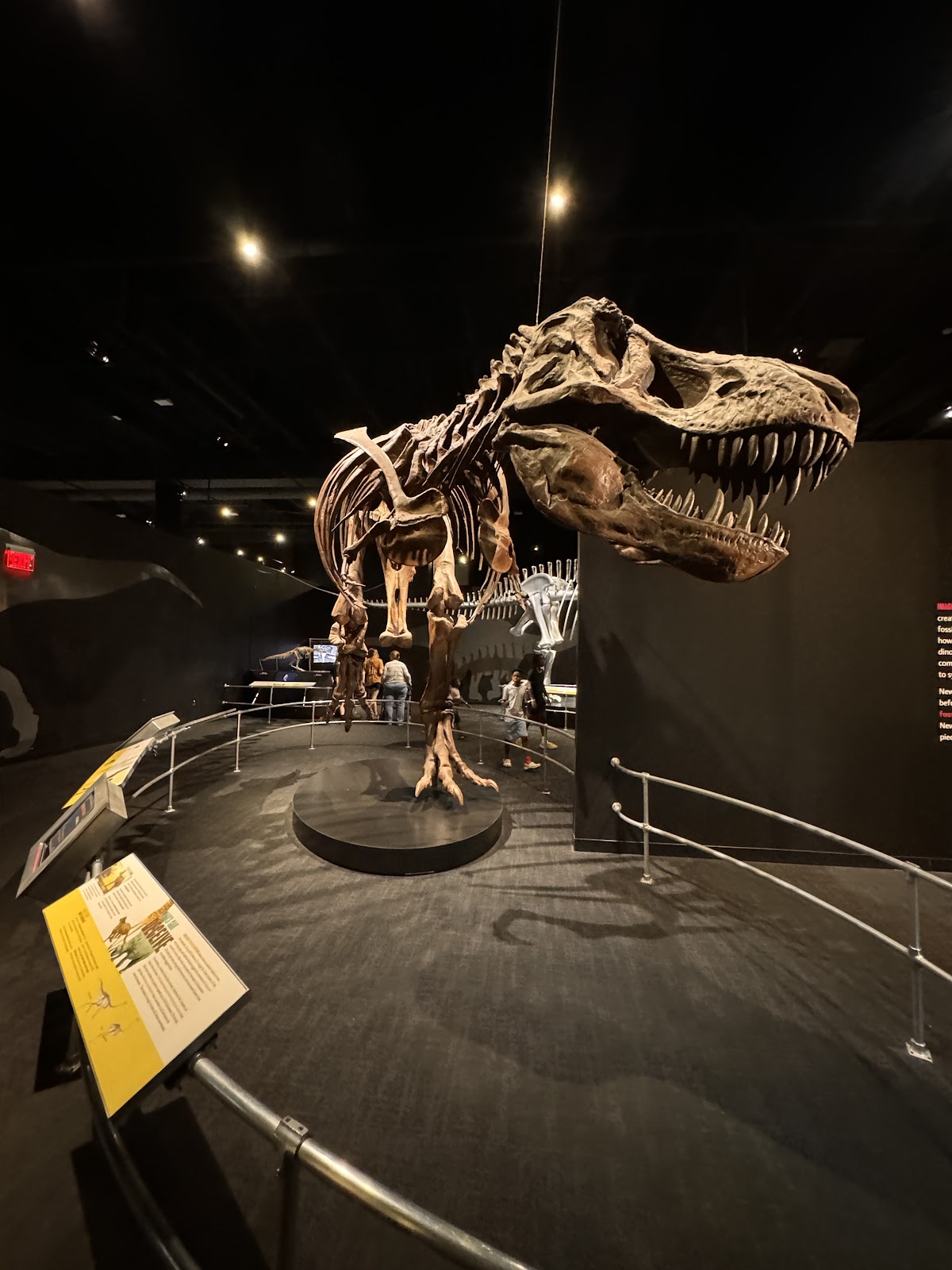
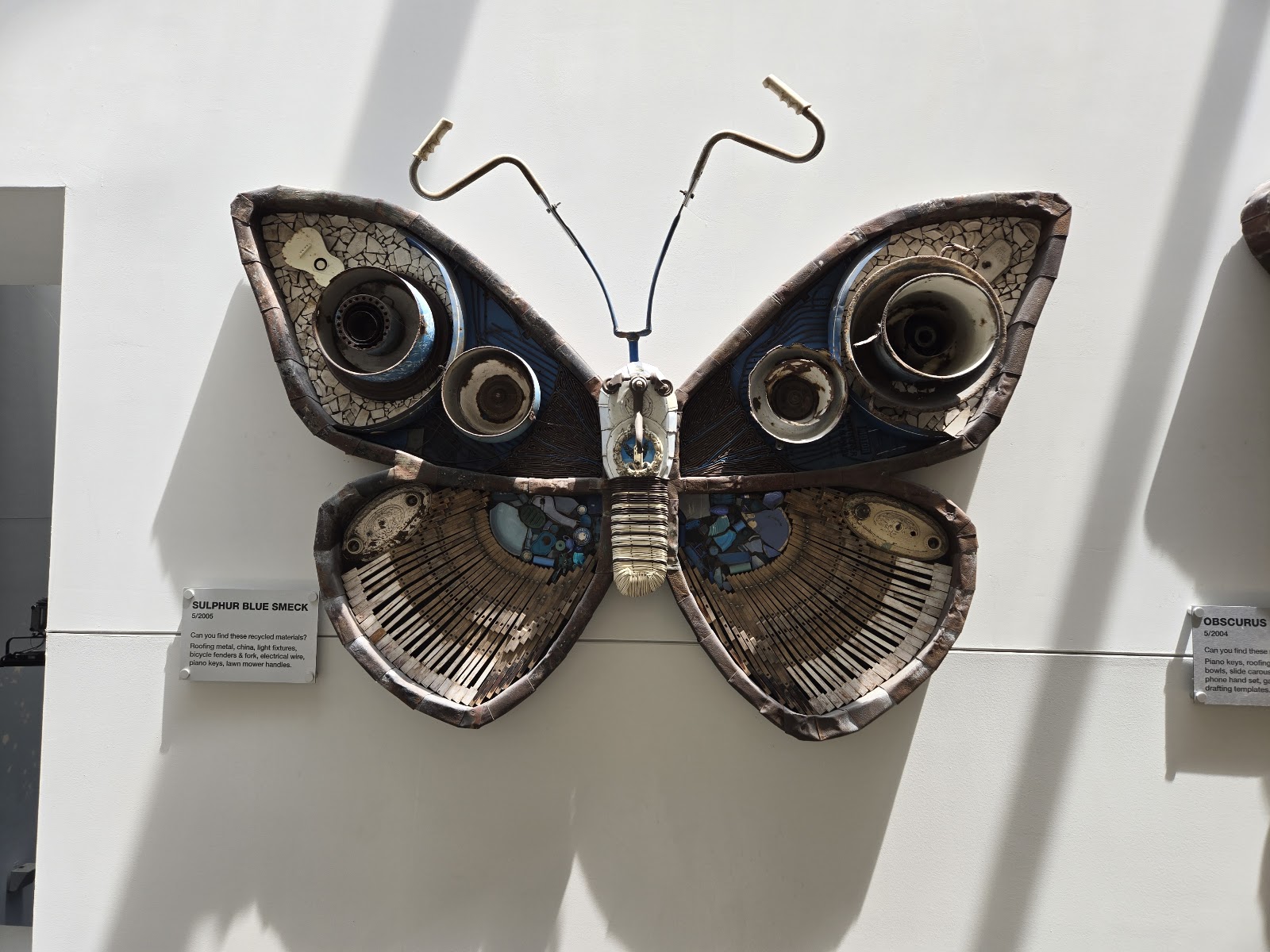
What makes it distinctive as a venue is the content. A science centre’s halls are full of interactive exhibits, and those are simultaneously the reason to book it and the principal photographic problem: they are large, brightly coloured, internally lit, in constant use, and they are designed to attract attention. Which means they compete with a face for every frame.
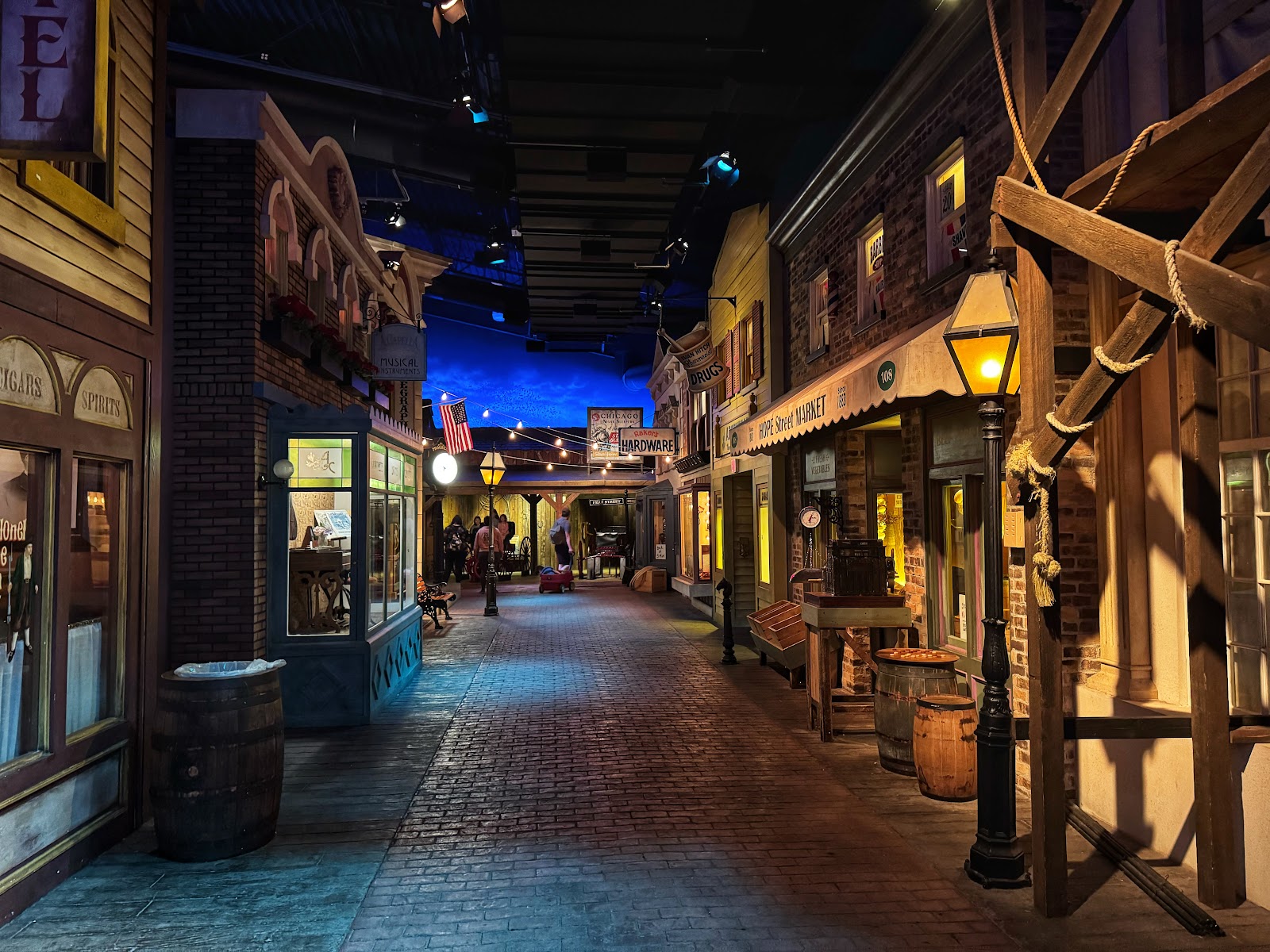
The lighting follows from the exhibits rather than from any aesthetic intention. Halls are lit for wayfinding and for the exhibits’ own displays, which produces a dense mixture — overhead fixtures, coloured LED, backlit panels, screens, and spot lighting on individual pieces, often several colour temperatures within a couple of metres.
So there is no single white balance anywhere in the building, and very little of the light is falling where a photographer would want it.
Columbus sits at about forty degrees north at roughly nine hundred feet. The June noon sun reaches around seventy-three and a half degrees, the December noon sun about twenty-six and a half, days run from about nine hours ten to fifteen hours fifteen, and civil twilight is roughly thirty-one minutes.
We have not photographed a wedding here. Which halls are bookable, whether exhibits are lit or dark during an event, and the permitted hours are questions for their team — and the second one changes the job completely.
COSI Columbus at a glance
| Where | A science centre in a 1924 high school with a 1999 addition, on the Scioto |
| Suits | A distinctive register, riverfront and skyline, big volumes, weather-proofing |
| Does not suit | Anyone wanting a quiet neutral backdrop, or period elegance |
| The core problem | Exhibits are designed to attract the eye, and they compete with faces |
| Ask first | Whether exhibits are lit during your event, and which halls are included |
What it suits
It suits a couple who want their wedding photographs to look like nowhere else, and that is not a small thing. The overwhelming majority of wedding venues fall into a handful of visual categories — barn, ballroom, garden, historic house, hotel — and a science centre falls into none of them. The pictures will be immediately identifiable, which for some couples is the entire point.
It suits large numbers in big volumes. A 1999 addition on this scale gives open halls with real ceiling height, which means two or three hundred people can be accommodated without the space feeling crowded and a photographer has room to stand back with a longer lens. Converted historic venues at the same headcount rarely offer that.
It suits the riverfront, which is the site’s most underrated asset. The Scioto’s west bank faces downtown Columbus across the water, and on a flat glaciated plain with no relief anywhere, a river frontage with a skyline behind it is the only real landscape available in the city.
That view wants a long lens and a low camera. Compression stacks the downtown buildings and gives the skyline mass; a wide lens from the bank renders it at true angular size and it becomes a thin strip along the horizon. Expose for the city and lift the subjects with a warm-gelled source about a stop over whatever ambient is on them.
The water is the reason to be there at dusk. Still water reflects the sky and the lit buildings, and a reflection sits about a stop darker than what it reflects — which brings the whole frame into a range a single exposure holds comfortably. Fifteen minutes after sunset, with downtown lit and the sky still holding colour, is the best exterior frame the venue offers and it takes ten minutes.
Whether the water is still is a matter of wind rather than hour in this climate, unlike in the desert. Central Ohio’s flat terrain means wind is frequent and not strongly diurnal, so a mirror is luck rather than schedule. Broken water still works: a low camera turns a rippled surface into a path of speculars running toward the lens, and that is a strong frame in its own right.
It suits a weather-proof plan completely, and in this climate that matters. Ohio is humid continental and genuinely variable — thunderstorms through the summer, weeks of flat grey overcast in winter when the basin sits under an inversion, and shoulder seasons that can deliver frost and heat in a fortnight. A large indoor venue with an incidental outdoor option does not care.
And it suits the 1924 half, which is the part nobody expects. An interwar high school has tall windows in regular bays, and a tall window is a superb portrait source — much taller than wide, so the light has strong horizontal direction and gentle vertical falloff, modelling a face from the side with no top-light problem. Stand the subject a metre in, turned three-quarters toward the glass, and the room behind falls two or three stops away. That is the best light in the building and it needs nothing.
What it does not suit
It does not suit a couple wanting a quiet, neutral, uncluttered backdrop. Exhibit halls are visually loud by design — saturated colours, large graphics, moving parts, internally lit panels — and a portrait taken in one is a portrait in a busy environment no matter how it is lit.
There are two ways to handle that and both are compromises. Go tight, so the background is reduced to a few soft blocks of colour, which works and means the venue barely appears. Or go wide and commit, placing the couple deliberately against a specific exhibit, which is the distinctive picture and requires the exhibit to be a good one.
What fails is the middle: a half-length portrait with an indistinct colourful jumble behind it, which reads as a badly chosen background rather than as a science centre.
It does not suit period elegance. The 1924 core has civic dignity but it is a school rather than a mansion, and the 1999 addition is emphatically contemporary. A couple whose styling assumes chandeliers and mouldings will find the building working against them.
It does not suit anyone counting on the exhibits being lit. This is the question to ask first, because the answer is often no — exhibit halls are frequently powered down for private events, for cost and for safety, which means the internally lit panels and screens that make the space distinctive may simply be off. A dark exhibit hall is a large empty room with shapes in it.
Conversely, if the exhibits are on, they may be in use, which is its own problem: an interactive exhibit with people playing on it is not a background a wedding party can stand in front of.
It does not suit a photographer unwilling to bring light. The ambient is mixed, coloured and mostly pointing the wrong way, which means nearly every frame indoors is lit. There is no daylight to fall back on in the exhibit halls, and the 1999 addition’s glass gives daylight only where it gives it.
It does not suit a party unwilling to work around institutional constraints. A science centre has real rules about what may be touched, where food and drink can go, which exhibits are off limits, and a firm finish time because the building must be secured and reset for public opening. Those are reasonable and absolute.
And it does not suit a photographer who has not scouted. This is a building where the good positions are not obvious from a floor plan and not discoverable in the first hour of a wedding — a large complex building with two eras, mixed lighting and dozens of possible backgrounds, most of which are wrong. A walkthrough beforehand is worth more here than at any conventional venue.
One further honest note about the location: the Scioto frontage is the venue’s best exterior asset and it is a public riverfront. There will be joggers, cyclists and passers-by in the background of every frame taken there, which is normal and worth expecting rather than resenting.
- Ask whether the exhibits will actually be lit — often they are not
- Go tight or go fully committed; the half-length compromise is the failure
- The 1924 building’s tall windows are the best light in the complex
- Compress downtown with a telephoto; a wide lens makes it a strip
- Scout beforehand. Here it matters more than at any conventional venue
Technique, and the year
Five things govern a day in a building like this.
The colour problem needs one decision applied consistently. There is no white balance that serves a hall lit by overhead fluorescent, coloured LED and backlit screens at once, and attempting to neutralise all of it gives grey skin and dead colour everywhere.
The working answer is to gel the key to match the dominant ambient — usually cool-white or neutral in a modern institutional building, which is unusual and means a gel closer to neutral than the warm gels most venues need — set white balance on skin, and let the coloured exhibit lighting read as saturated accents. The exhibits are supposed to be colourful; letting them be is correct.
The rim light matters more here than at most venues, for the same reason the backgrounds are difficult. A subject lit only from the front merges into a busy colourful environment; a rim at about a stop over the key on the far shoulder lifts them clear of it. It is the single biggest improvement available indoors.
Let the room go under. The instinct in a large dim hall is to lift the ambient until the space is legible, which produces a muddy grey frame full of competing detail. Setting the ambient a stop and a half or two stops under and lighting the subject properly gives clean people in a rich environment.
Drag the shutter deliberately so the lit panels and screens register — a thirtieth to a sixtieth on a wide lens is the usual range. Faster than a hundred and twenty-fifth kills the ambient entirely and the frame could be any dark room.
Bounce is often unavailable and needs checking rather than assuming. Modern institutional ceilings are frequently dark, high, or acoustically treated, and exhibit-hall walls are often dark by design so the displays read. Where there is a pale wall, use it; otherwise direct through a modifier.
And watch the reflective surfaces, of which a science centre has an unusual number — glass cases, polished metal, screens, mirrors, perspex. All of them will show the photographer and the lighting stand, and all of them are easy to miss in a viewfinder and obvious in an edit. Check before the frame.
As to the year: mid to late October is the best fortnight for anything outdoors, when sugar and red maple along the Scioto turn scarlet and orange. Ohio hardwoods cast dense solid shade rather than dapple, which makes a midday riverside portrait straightforward in a way it would not be under a filigree canopy.
The riverbank planting is worth knowing. Sycamore grows along Ohio watercourses and its bark is the distinctive one — mottled white, grey and tan, peeling in irregular plates — so a mature sycamore trunk is a pale abstract pattern and one of the best natural portrait backgrounds in the region. Cottonwood and willow fill in, and both turn yellow rather than red.
Summer’s humidity softens everything: water vapour scatters light and fills shadows, so a sunlit riverbank in July carries around two stops less contrast than the same sun angle in a dry climate. Easier for faces, flatter for architecture, and hazier on long lenses across the water — the downtown skyline will read with noticeably less contrast in August than in October.
Winter is when the building is simply the answer. A nine-hour December day under flat overcast with snow on the ground gives an outdoor venue almost nothing, and gives this one no trouble at all — and the blue hour arrives around five in the afternoon, which puts the riverfront skyline frame comfortably before the reception rather than in the middle of it.
Snow on the riverbank with downtown lit behind it, fifteen minutes after sunset, is a genuinely good frame and one of the few compensations of an Ohio January.
More frames from COSI Columbus
COSI Columbus wedding photography: common questions
What makes this venue distinctive?
The exhibits, which are also the main problem — large, brightly coloured and internally lit, designed to attract the eye, so they compete with a face in every frame.
What should I ask first?
Whether the exhibits will be lit during the event. They are often powered down for private functions, which turns a distinctive hall into a large empty room.
How do I handle the mixed colour?
Gel the key to the dominant ambient — often closer to neutral than the warm gels most venues need — set white balance on skin, and let exhibit colour read as accents.
Where is the best light in the building?
The 1924 half. Interwar school buildings have tall windows in regular bays, and a tall window gives strong side direction with no top-light problem.
What is the riverfront worth?
On a flat plain with no relief, it is the only real landscape in the city — downtown across the water, best fifteen minutes after sunset with the buildings lit.
Does it suit a big wedding?
Yes. The 1999 addition gives open halls with real ceiling height, so two or three hundred people fit without crowding and there is room to stand back.
More Columbus, OH venue guides
We are writing a photographer’s guide to every venue we would happily shoot in Columbus, OH. Here are three more, plus the full index:
- The Franklin Park Conservatory, Columbus: The Light Through the Day
- The Valley Dale Ballroom, Columbus: The One Decision That Governs Everything
- The Ohio Statehouse, Columbus: A Walk Through the Building
Planning a wedding at COSI Columbus?
A venue that looks like nowhere else. Tell us your date.