 The House of Blues, Cleveland: What It Suits and What It Does Not
The Franklin Park Conservatory, Columbus: The Light Through the Day
A building made of glass. The light changes hour by hour, and completely.
A glasshouse is the only building type that is entirely a light source, and that single fact makes it behave unlike anything else in these guides.
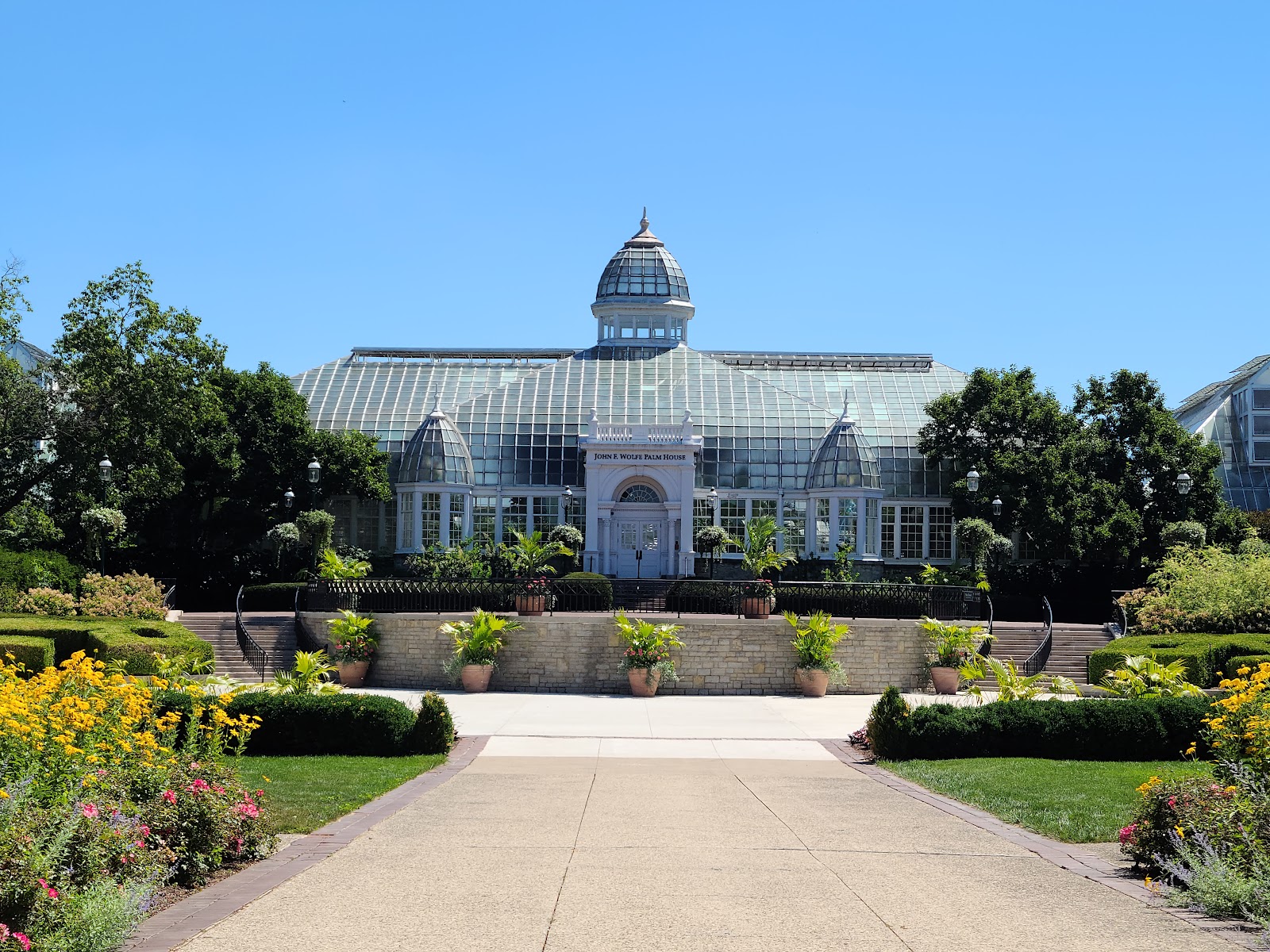
The Palm House here dates from 1895 and belongs to the great Victorian tradition of iron-and-glass horticultural building that began with the Crystal Palace — a structural frame of slender iron members carrying as much glazing as physically possible, because every square foot of opaque material was a square foot of lost growing light.
So the walls are glass, the roof is glass, and the only solid things are the iron ribs, the ridge and the floor. There is no dark side to a room, no wall to bounce off, and nowhere that is not lit.
For a photographer that produces a condition with no real equivalent: light arriving from every direction at once, including directly overhead and from below off pale paving, at a level that changes enormously through the day and through the weather.
It is genuinely excellent light and it has one characteristic problem. Because it comes from everywhere, it has almost no direction — and a portrait needs a shadow somewhere to describe a shape. The work in a glasshouse is nearly always about finding or making direction rather than finding more light.
The second thing to understand is the humidity. A glasshouse is kept warm and damp for the plants, which means condensation on cool glass, mist in the air on cold days, and lenses that fog on the way in. That is a practical matter with a real photographic upside, discussed below.
Columbus sits at about forty degrees north at roughly nine hundred feet, on the flat glaciated till plain of central Ohio. The June noon sun reaches around seventy-three and a half degrees, the December noon sun about twenty-six and a half, days run from about nine hours ten to fifteen hours fifteen, and civil twilight is roughly thirty-one minutes.
What follows is the day in order. We have not photographed a wedding here; which houses and gardens are bookable, and the permitted hours, are questions for their team.
The Franklin Park Conservatory at a glance
| Where | An 1895 Victorian iron-and-glass conservatory in Columbus, Ohio |
| The condition | Light from every direction at once, including overhead and off the floor |
| The problem | Almost no direction — a portrait needs a shadow, and there isn’t one |
| The bonus | Warm damp air, condensation on cold days, and mist in the roof |
| Ask first | Which houses and outdoor gardens are bookable; permitted hours |
Morning into noon
The first hour after sunrise is the one hour a glasshouse has direction, and it is the best light in the building.
With the sun below ten degrees, the beam comes through the side glazing almost horizontally rather than through the roof — which means for a short window the light is coming from one side, exactly as it would through a very large window. Faces model properly, the iron ribs cast long shadows across the floor and the planting, and the space has shape.
That window is short and it moves with the season, and it is worth arriving for. Which side it comes through depends on the building’s orientation, and that is the one thing to establish on a site visit — an east-facing elevation gives it at breakfast, a west-facing one gives the mirror image in the last hour instead.
In that hour the shafts through the ribs are visible if there is any moisture in the air, and in a glasshouse there always is. A warm damp interior on a cool morning produces enough haze for the beams to read as distinct rays — one of the genuinely reliable photographic gifts of the building type, and a frame that needs nothing but being there early.
Through mid-morning the sun climbs fast at this latitude and the character changes completely. By nine or ten the beam is coming mostly through the roof rather than the sides, and the light becomes what a glasshouse is famous for: enormously bright, soft from having been scattered by glazing and foliage, and coming from above.
That is when the direction problem starts. Overhead light on a face gives a bright forehead, shadowed eye sockets, a hard line under the nose and a shadow on the neck — the same problem as a desert noon, arriving through a different mechanism and at a far lower contrast because everything around is bouncing light back.
There are four fixes and all of them are positional rather than technical.
Stand them at the edge of the house, close to the side glazing, where a meaningful proportion of the light arrives horizontally rather than from above. This is the single most effective move in a glasshouse and it costs nothing.
Stand them under a dense specimen — a large palm, a fig, a tree fern — which blocks the overhead component and leaves the side component. That converts an overhead source into a side source by subtraction, and it is what the planting is for as far as a photographer is concerned.
Use the pale floor. Conservatory paving is usually light stone or concrete and it is being hit by the full overhead light, which makes it a large low reflector. A subject standing on a bright patch gets substantial fill from below, and turning them so the brightest paving is in front of them rather than behind lifts the eye sockets noticeably.
Or add a small fill from the front at about a stop under ambient. In a glasshouse that is a subtle correction rather than a lighting setup — the ambient is doing ninety percent of the work and the fill is only opening the sockets.
By the middle of the day the level is remarkable and the shadows are minimal. Bright overcast outside gives the best version of this: a glasshouse under cloud is an enormous softbox, perfectly even, with maybe a two-thirds-of-a-stop range across the whole interior — flattering, easy and slightly characterless.
Direct summer sun gives the harder version, because the glazing bars throw hard shadow lines across everything. A face striped by the shadow of an iron rib is unusable, and the fix is a step: move half a metre and look again.
Afternoon, dusk and the weather
The afternoon mirrors the morning and ends better, because the last hour is the one to build the schedule around.
As the sun descends below about twenty degrees the geometry reverses: the beam comes through the opposite side glazing horizontally, direction returns, and the light warms as it travels a longer air path. In a glasshouse that warmth is amplified, because it passes through foliage and bounces off pale paving and comes back from all sides — so the whole interior takes on a warm cast rather than just the lit surfaces.
That is the best half hour in the building and it has three frames. Backlit through the side glazing, with the couple rim-lit and the foliage glowing translucent. Front-lit from the same low sun, which gives warm modelled faces with the planting behind. And the wide architectural frame with the low sun raking along the length of the house, which shows the ironwork at its most legible.
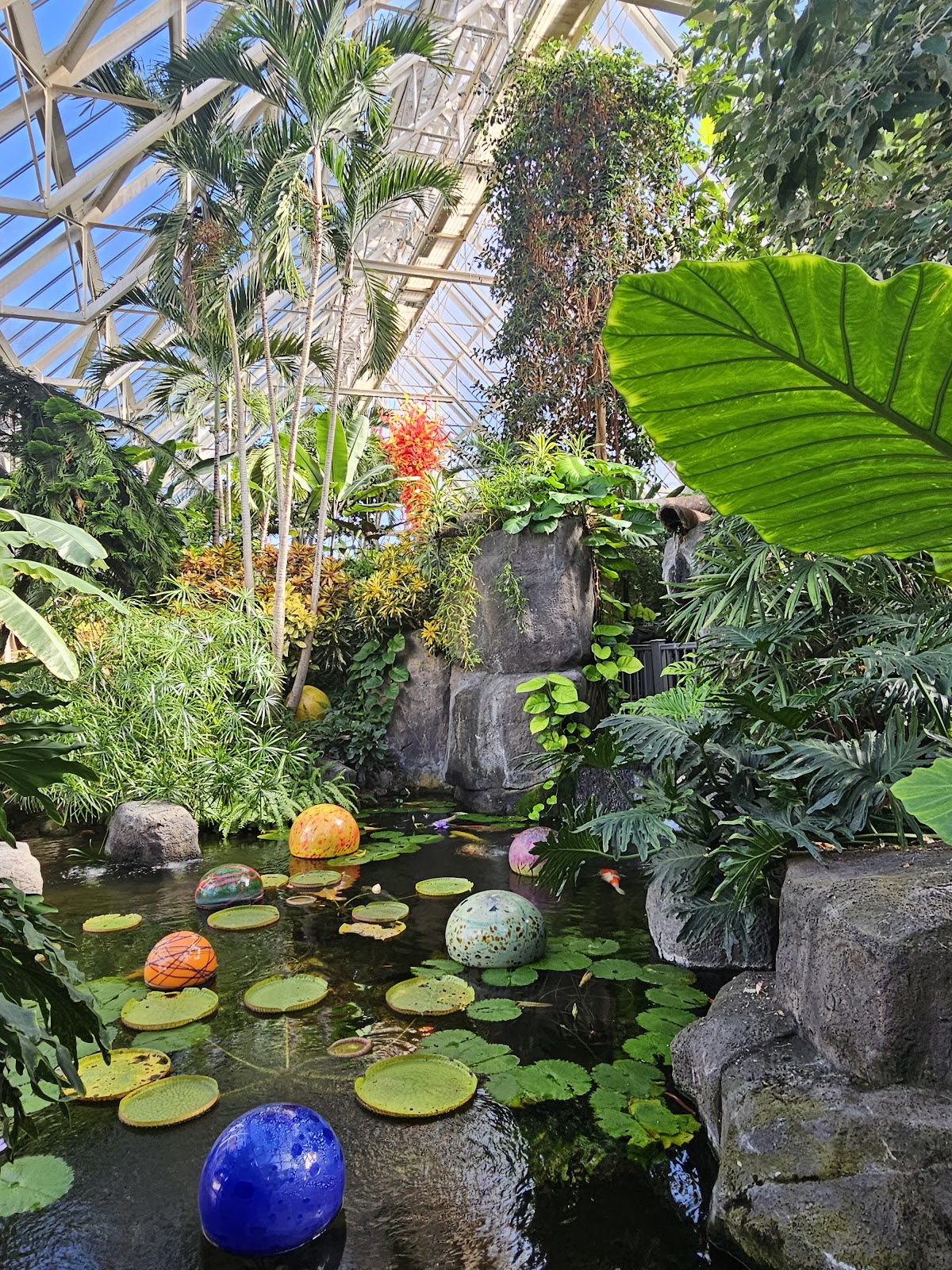
Translucent foliage is worth planning for specifically. Broad thin leaves — banana, palm frond, philodendron — backlit by a low sun glow green and show their venation, which is a frame no opaque background can produce and one of the best details in any conservatory.
Dusk changes the building entirely and it is the moment most people miss. As the exterior light falls below the interior lighting level, the glass stops being a window and becomes a mirror on the inside — so an hour after sunset, a glasshouse photographed from within reflects its own interior back, and the planting doubles.
The reverse frame is better still. From outside at dusk, a lit glasshouse is a glowing lantern: the whole structure is illuminated from within, the iron ribs read as black lines against warm light, and the planting silhouettes inside it. That is the single most distinctive photograph the venue offers, and it takes ten minutes.
Civil twilight here is about thirty-one minutes, which gives a real working window for that frame rather than a scramble. The balance point — where the interior and exterior are equal and both read — lasts perhaps ten minutes and is worth being in position for.
The weather matters more inside a glasshouse than anywhere else indoors, which is counterintuitive. Four conditions each give a different building.
Bright overcast is the easiest and the most flattering: even, soft, high-level light with almost no shadows anywhere. It is the condition to hope for if the priority is faces.
Direct sun is the most dramatic and the most difficult: brilliant shafts, hard glazing-bar shadows, and a contrast range that needs care. It is the condition for architecture rather than portraits.
Rain is genuinely good and under-appreciated. Water running down the outside of the glazing diffuses the light further and adds texture to every surface of the building, and the sound inside is part of the experience. A conservatory in rain is a better venue than a conservatory in sun, and it is the strongest argument for booking one in this climate.
And snow is the spectacular one. A glasshouse in snow has a white exterior visible through the glass behind tropical planting — palms against snow, in the same frame, which is a genuine and slightly surreal picture. Columbus gets measurable snow most winters, and on cold days the condensation and interior mist are at their heaviest, which adds the haze that makes shafts visible.
Cold brings the one real hazard, which is lens condensation. Moving a cold lens into warm damp air fogs the front element immediately and it takes several minutes to clear. The fix is preparation: let the equipment acclimatise inside before the day starts, or keep it in a bag until it has warmed. A photographer who walks in from a January car park and starts shooting will lose the first ten minutes.
- Stand them at the side glazing, not in the middle — that is where direction lives
- Use a dense specimen overhead to subtract the top light
- Pale paving is a large low reflector: turn them toward the bright floor
- Half a metre fixes a glazing-bar shadow across a face
- From outside at dusk the whole building is a lantern — ten minutes, best frame
The houses, the ironwork and the garden
A conservatory of this age is a sequence of climate zones rather than one room, and each is a different photographic proposition.
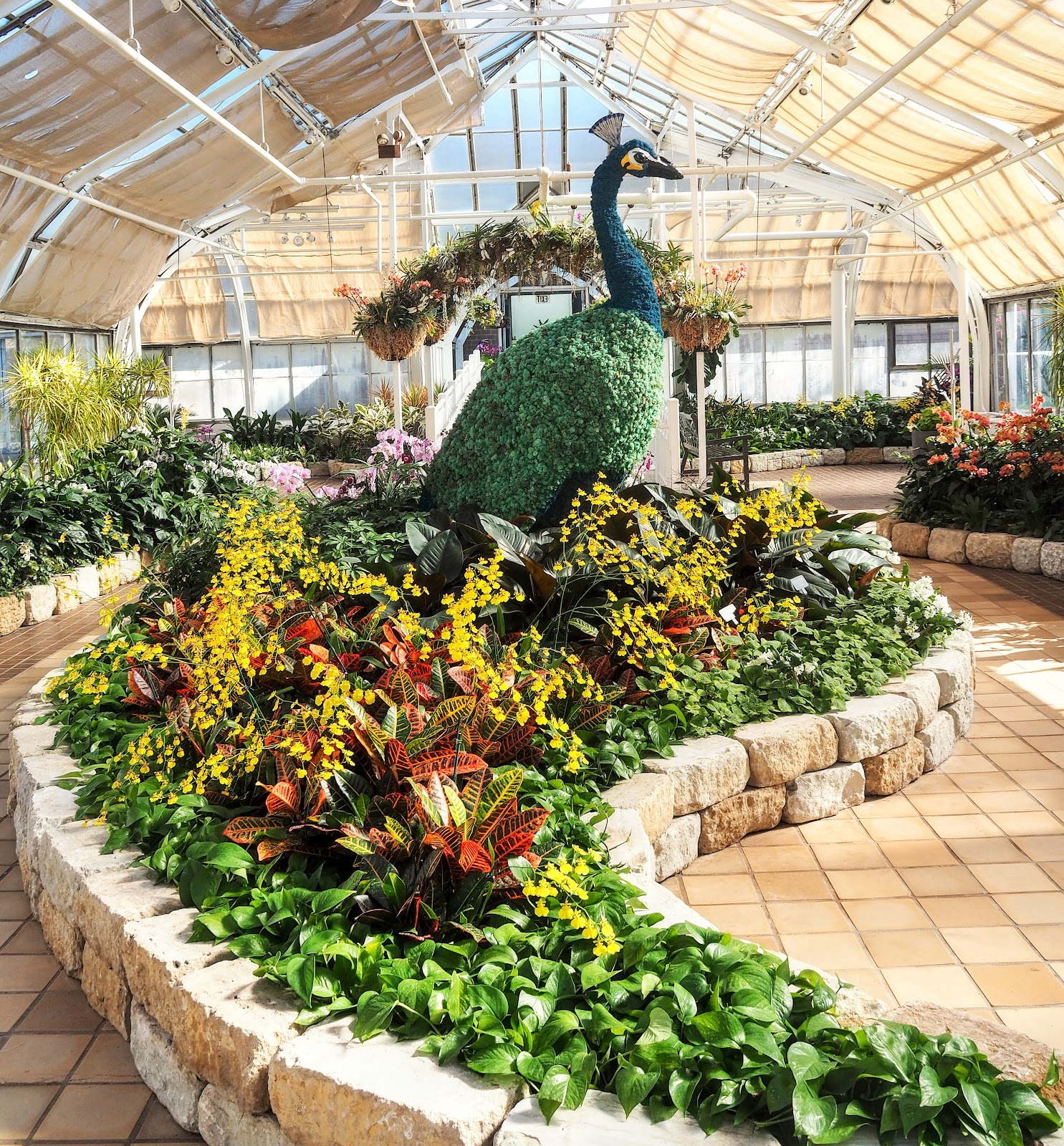
The palm house is the tall one and the reason the building exists. A Victorian palm house is built high specifically to accommodate mature palms, which means a large volume with a lot of vertical space and planting that carries its foliage well above head height.
That produces the building’s best wide frame: a camera low, looking up, with the iron ribs converging toward the ridge and palm crowns filling the upper half. It reads as architecture and horticulture at once, and it works at any hour because the structure does not need direction to be legible.
It also produces the most usable portrait light, because the height means the overhead component is diffused through several layers of foliage before it reaches a face. A tall planted house is measurably kinder to a portrait than a low empty one.
A desert house, if there is one, is the opposite and it is worth knowing. Arid-zone planting is sparse, spiny and short, so there is nothing overhead to diffuse the light and the floor is usually pale gravel — which means maximum overhead light and maximum bounce from below, at high contrast. It is excellent for plant detail, since spines backlit at a low angle glow, and poor for faces.
A tropical or rainforest house is the darkest and the dampest. Dense high canopy blocks a great deal of the light, which brings the level down substantially and restores direction by making the gaps into shafts. It is the most atmospheric space and the one where a tripod is most useful.
The ironwork is the architecture and it wants deliberate use. Victorian glasshouse structure is slender, repetitive and curved — arched ribs at regular intervals, thin glazing bars between them — and backlit against bright sky it reads as fine black tracery. A long lens down the length of a house compresses the ribs into a dense rhythm, which is the strongest graphic frame the building has.
The joints and castings are the close detail. Nineteenth-century glasshouse ironwork usually carries some ornament — a moulded boss, a decorative bracket, a cast finial — and those are worth a frame because they date the building precisely in a way the glass does not.
Outside, the garden is the other half of the venue and central Ohio’s climate governs it.
This is a flat glaciated landscape, which matters more than it sounds: without relief there are no distant views, no valley fog, and no elevated vantage points, so the outdoor frames are all at ground level and all about the planting rather than the setting.
Ohio hardwoods cast solid shade, which is worth naming as a regional contrast. A sugar maple has a dense rounded crown of broad leaves and gives clean even cover with no dapple to manage — so a midday portrait under an Ohio hardwood is straightforward, unlike under the filigree canopies of arid regions.
The garden’s calendar is the standard central Ohio one: magnolia on bare branches in late March, tulips in April, everything leafing by early May, summer bedding from June, and the year’s best fortnight in mid to late October when sugar and red maple turn scarlet and orange against the glasshouse.
That October combination is the outdoor frame worth waiting for — Victorian ironwork and glass behind a maple in full colour, which places the building in its climate rather than in its collection.
And winter is the season this venue is genuinely for. Central Ohio in January gives a nine-hour day, weeks of flat overcast and regular snow — conditions that gut an outdoor venue and that a glasshouse turns into its strongest asset. A tropical interior with snow on the glass is a picture available nowhere else, and it is the reason a conservatory is the right answer to an Ohio winter wedding.
More frames from The Franklin Park Conservatory
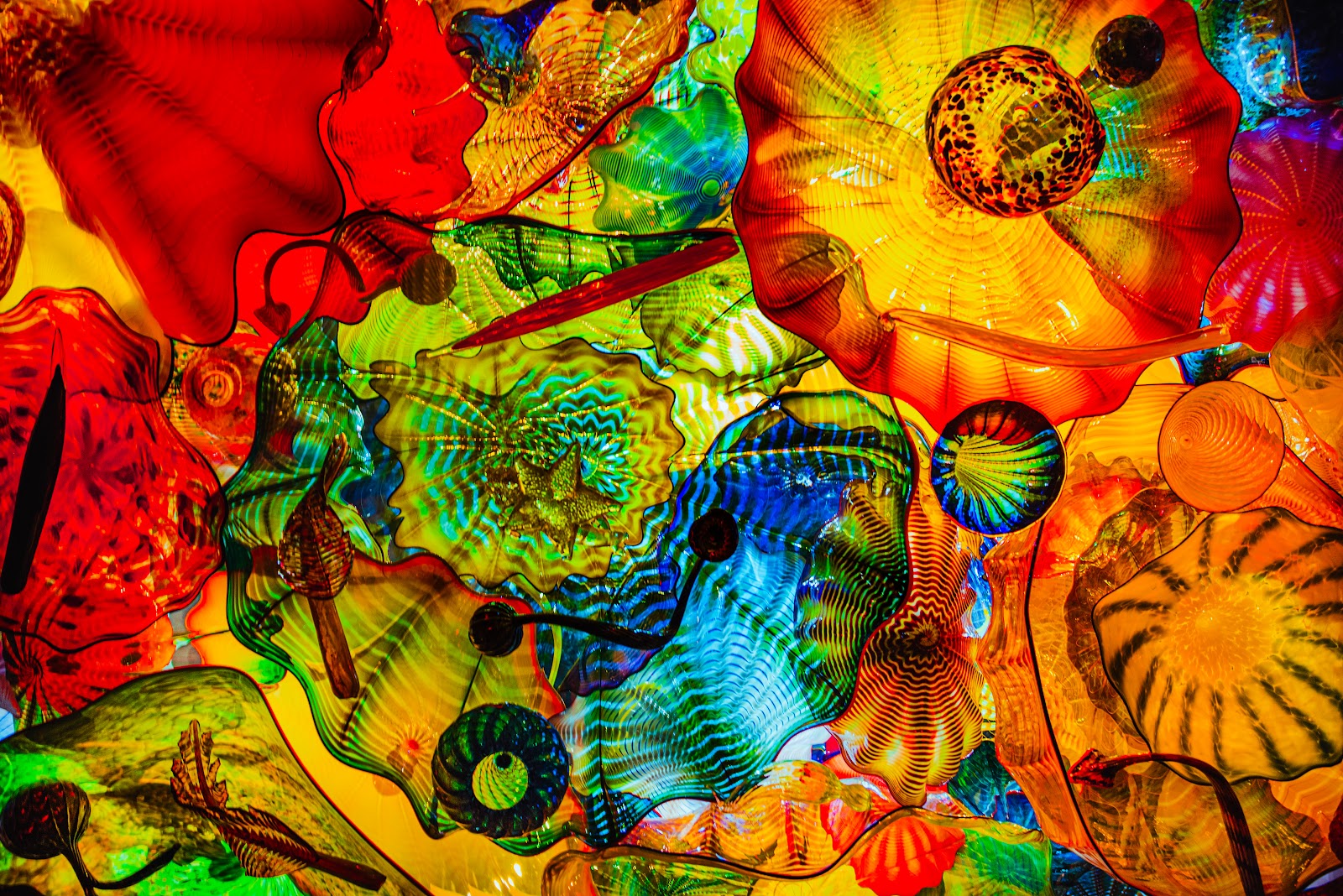
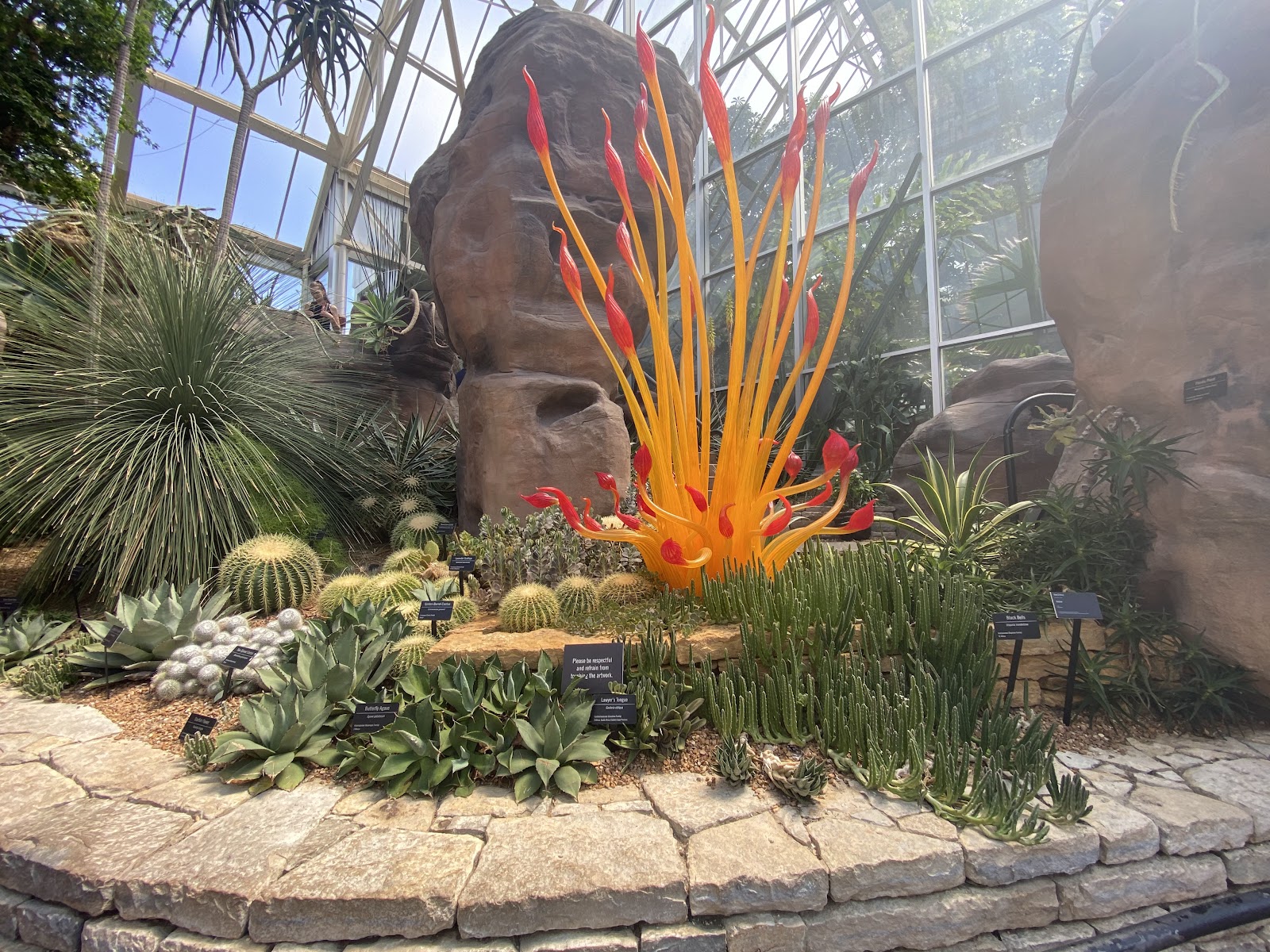
The Franklin Park Conservatory wedding photography: common questions
What makes glasshouse light unusual?
It arrives from every direction at once — sides, roof and up off the paving. That is a lot of light with almost no direction, and a portrait needs a shadow to describe a shape.
How do I get direction back?
Move them to the side glazing, put a dense specimen overhead to subtract the top light, use the bright floor as fill, or add a small front fill a stop under ambient.
What is the single best frame here?
The building from outside at dusk, lit from within — iron ribs as black lines against warm light with the planting silhouetted. About ten minutes of balance.
Is rain a problem?
It is an advantage. Water on the outside of the glazing diffuses the light further and adds texture everywhere. A conservatory in rain beats one in sun.
What about snow?
It is the spectacular condition — palms photographed against snow through the glass, with heavy interior mist making the light shafts visible.
Any equipment warning?
Lens condensation. A cold lens fogs instantly in warm damp air and takes minutes to clear. Acclimatise everything indoors before you start.
More Columbus, OH venue guides
We are writing a photographer’s guide to every venue we would happily shoot in Columbus, OH. Here are three more, plus the full index:
- The Valley Dale Ballroom, Columbus: The One Decision That Governs Everything
- The Ohio Statehouse, Columbus: A Walk Through the Building
- The Bluestone, Columbus: Field Notes
Planning a wedding at The Franklin Park Conservatory?
A building made of light, best in bad weather. Tell us your date.