 The House of Blues, Cleveland: What It Suits and What It Does Not
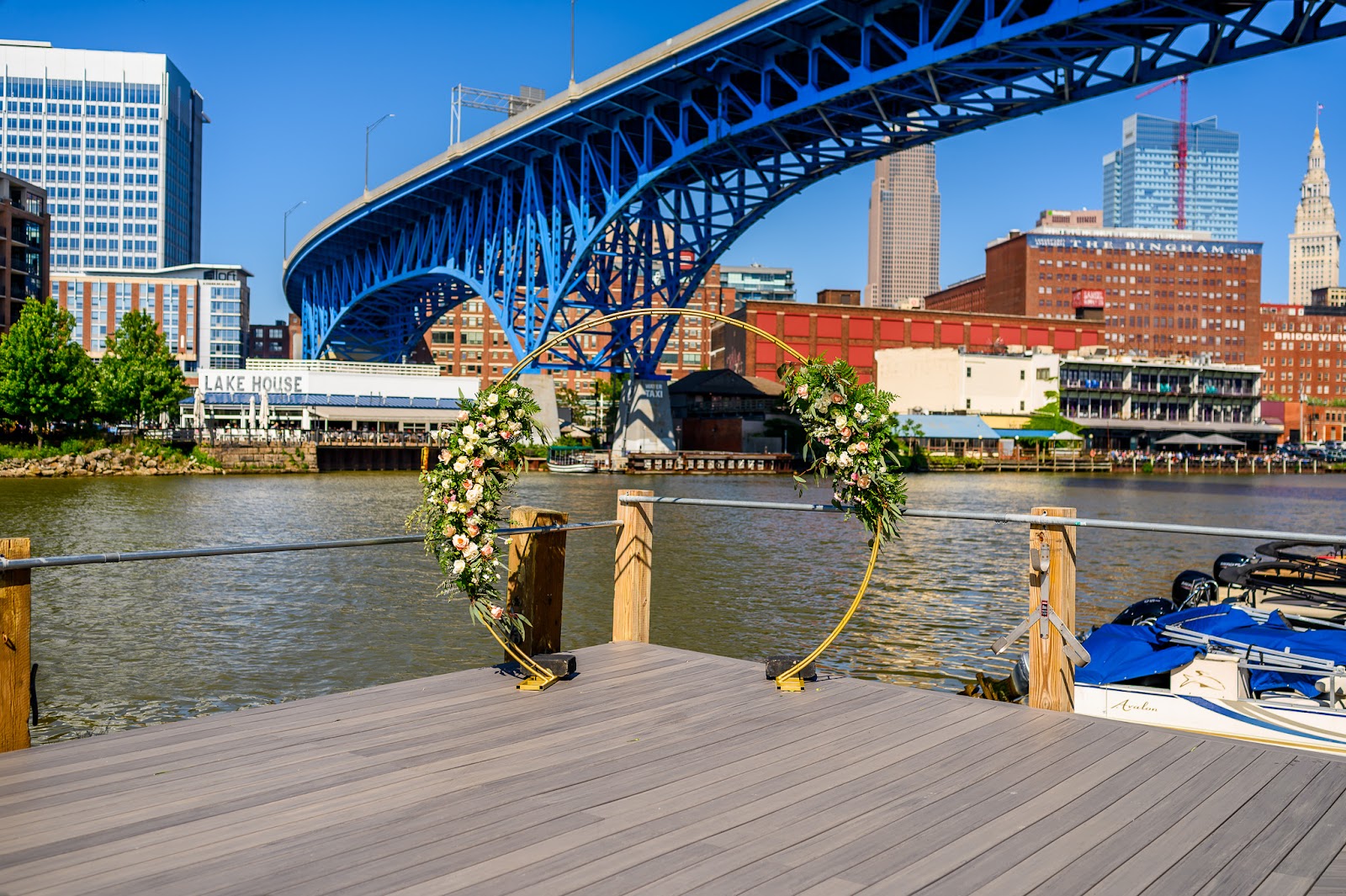
The Music Box Supper Club, Cleveland: How the Light Moves
Exposed brick and panoramic windows in the same room: one never changes and the other changes constantly.
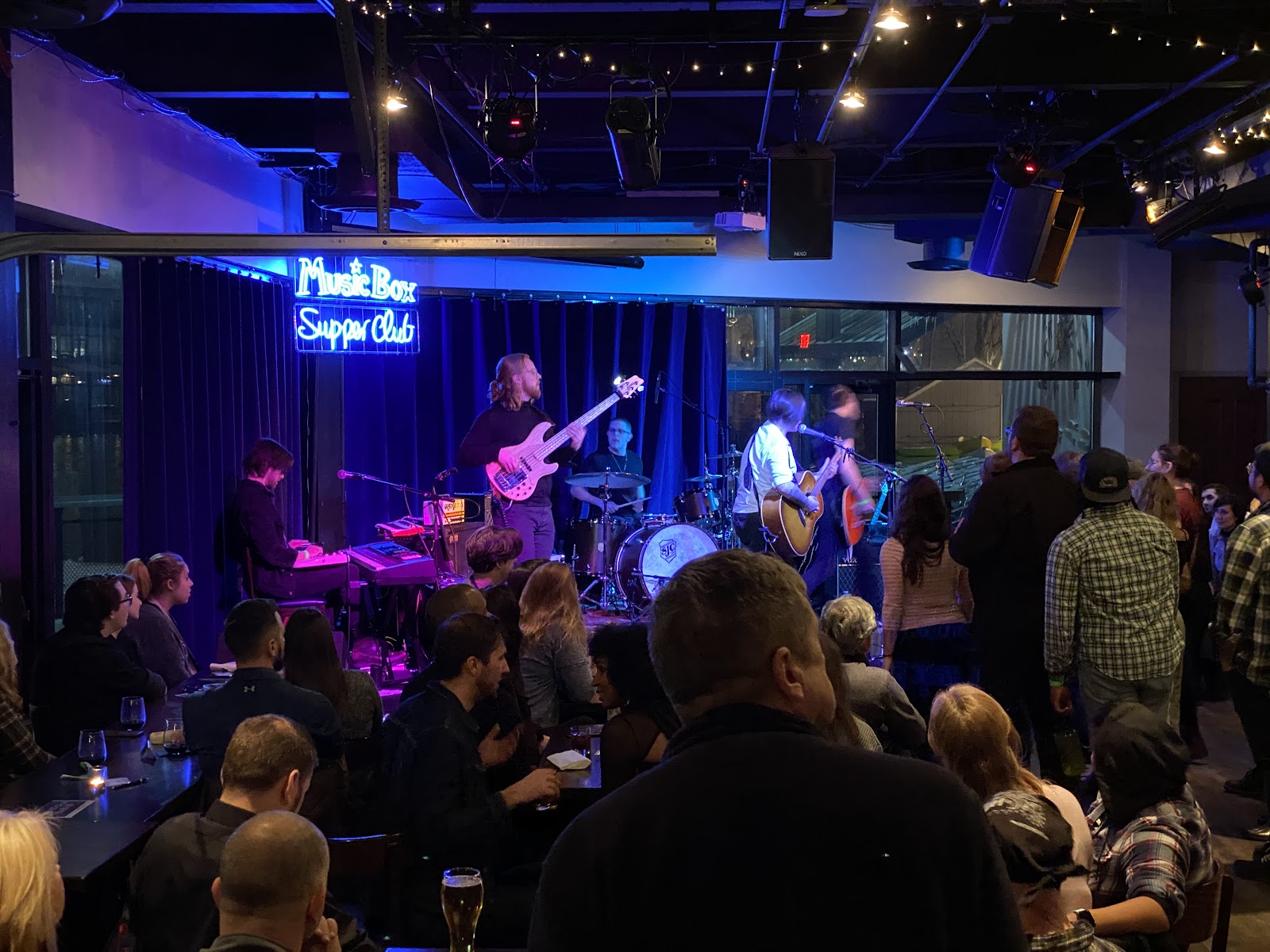
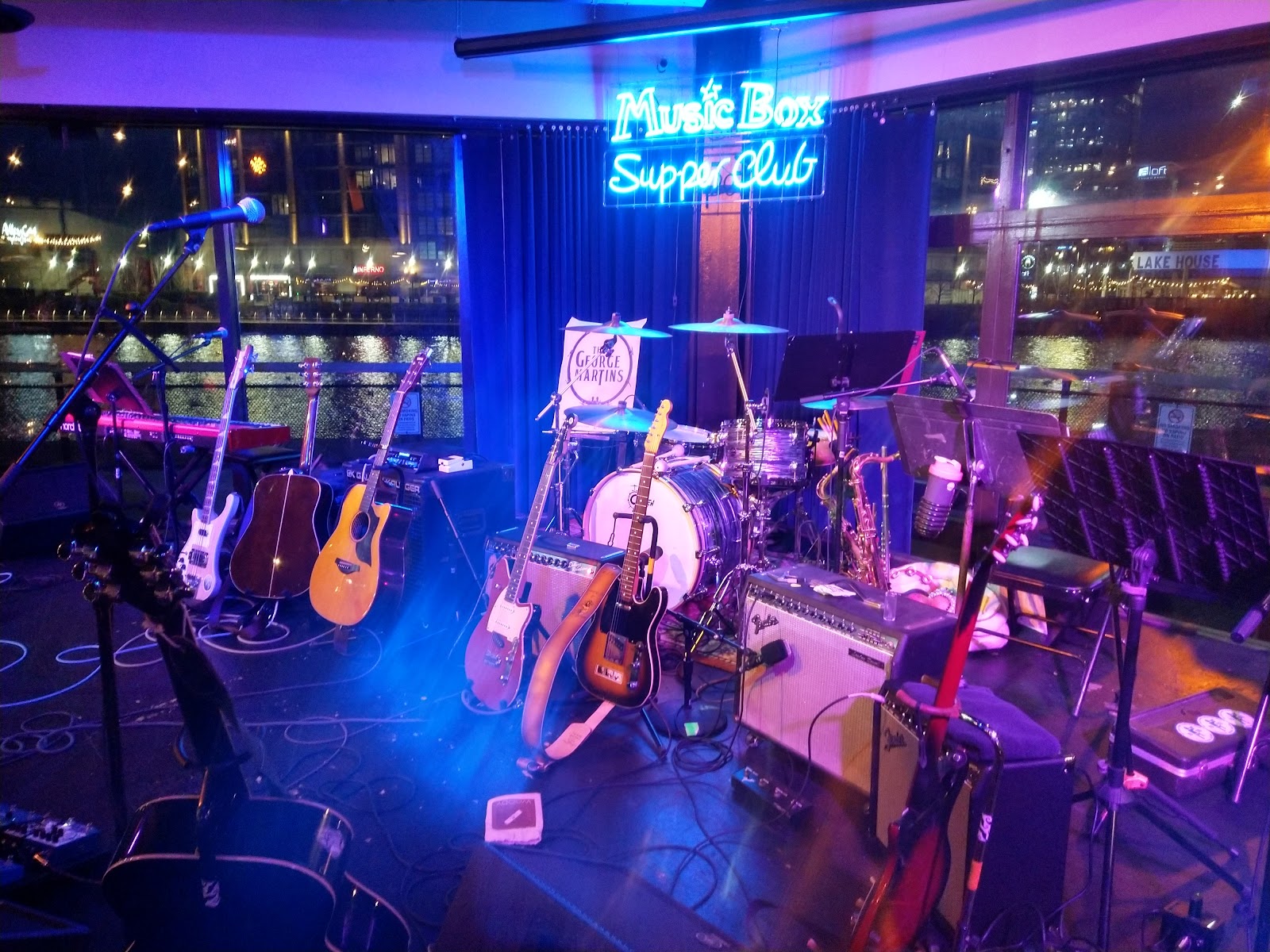
The Music Box Supper Club has a rustic yet modern character, as its own description has it, with exposed brick walls and large panoramic windows letting in an abundance of natural light.
That pairing is the whole planning problem and it is a useful one, because the two halves behave in opposite ways. Exposed brick under the venue’s own lighting is a constant: warm, textured, and identical at two in the afternoon and eleven at night. Panoramic windows over a river are a variable: four to six stops brighter than the room in daylight, soft and directional in the right conditions, and a wall of mirrors after dark.
So the day divides cleanly into hours when the windows are the light and hours when they are a reflective surface, and the running order follows from that rather than from the rooms. This is written as a day. We have not photographed a wedding at the Music Box; brick-and-glass riverside venues behave consistently. Which elevation the windows face, whether there is any outdoor terrace, and whether the house lighting is adjustable are the questions for their team.
The Music Box Supper Club at a glance
| Where | The Cuyahoga, Cleveland, Ohio |
| Character | A supper club with exposed brick and large panoramic river windows |
| The constant | The brick, and the venue’s own lighting |
| The variable | The windows — light by day, mirrors by night |
| Ask first | Window orientation, terrace access, lighting control |
Daytime: the windows are the light
Panoramic windows behave as a very large soft source close to the subject, which is the best light a room can have — and the position that unlocks it is two metres back from the glass rather than pressed against it. Pressed against a window a subject is lit from a very oblique angle with the far side of the face falling away sharply; two metres back the same glazing covers them evenly, soft and still clearly directional, with enough level that the brick behind still reads rather than dropping to black.
Turning the subject then gives three genuinely different setups without moving anything: facing the glass, which is broad and even; side-on, which is the classic portrait position with a shadow side; and back to it, which gives a rim and needs fill from the front.
Which elevation the windows face decides which hours are usable. A shaded orientation gives soft directional light all day with no hotspots anywhere in it; a sunlit one gives a hard patch several stops above the room and, through glazing bars, a grid of hard shadow across anything in it — attractive on brick and unusable on a face.
Cleveland reduces that problem substantially and it is worth knowing rather than discovering. This is one of the cloudiest major cities in the country, and under overcast cloud diffuses the light before the glass does, so every window behaves like a shaded one — soft, even, directional, with no hotspot and no lattice. For a venue whose main asset is glazing, that is the default condition for much of the year.
The brightness difference needs a decision rather than a discovery. In daylight the river outside is four to six stops brighter than the room, so either let the windows blow to white shapes — legitimate if chosen, and in a brick interior it often reads as deliberate — or light the couple to match the view, which needs real power because you are competing with daylight; or wait for the crossing.
River water adds something specific: it is a broad flat reflector, so a room facing it receives light twice, directly from the sky and again bounced up off the surface. That raises ambient, fills shadows from below and produces a quality of light inland rooms do not have. It is genuinely flattering, and it is the reason a riverside glazed room beats a glazed room anywhere else.
One exposure adjustment applies throughout: a large bright window in the frame pushes a meter towards underexposure, so add half a stop to a stop and check skin holds its tone rather than going grey.
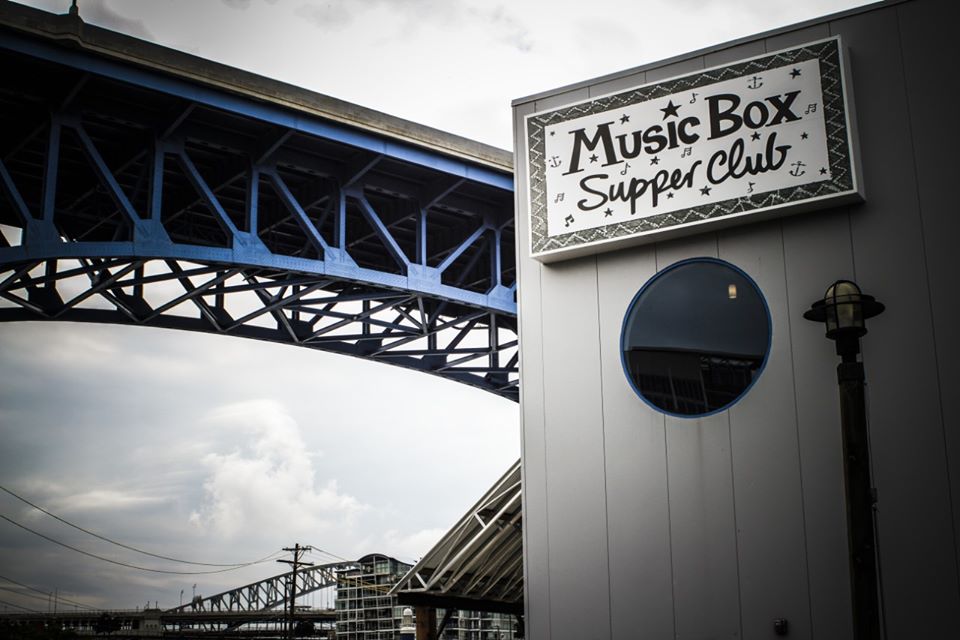
The brick, the room, and the crossing
Exposed brick is the constant and it is the most forgiving surface any venue offers: a mid-tone that meters predictably, with real texture that holds detail at almost any sensible exposure and never leaves a frame feeling empty. The one thing it demands is raking light — light running along a brick wall lifts every mortar line into relief, while light pointed at it flattens the wall into a plain brown field.
That is why the window position matters twice: standing two metres inside a window with the wall running away from it puts the daylight along the brick rather than at it, which lights the subject and the wall correctly in the same move.
Brick also bounces strongly warm, so anyone within a metre or two of it picks up an orange cast on the shadow side of the face. Because it is bounced and localised, global white balance cannot separate it — so let one gelled source be the authority on faces and allow the brick to be as warm as it is. In a room containing both cool daylight and warm brick bounce, a custom white balance set on a face in the position being used is the minimum.
A supper club’s own lighting is the third element and it is usually low, warm and decorative rather than general. That means the ambient after dark is lower than it looks, bounce returns little in a brick room, and the fall-off between lit and unlit areas is steep — which is free separation and should be exploited rather than filled in.
Decorative fittings at a wide aperture become warm points of light behind a subject, which is what this kind of room does beautifully, provided a bright fitting is not sitting immediately beside a head. And asking whether the house lighting can be dimmed to pools rather than set evenly is worth more than any equipment decision.
The crossing is the one timed frame and at a riverside glazed room it is the best thing the venue does. For roughly fifteen to thirty minutes after sunset the river and banks outside fall to about the brightness of the interior lighting, and one exposure holds the lit brick room, the couple and the water with a sky that still has colour in it. The water holds the same colour as the sky, which doubles the colour in the frame — so a riverside crossing beats a city one.
Take the sunset time, add fifteen minutes, be in position with the couple already there, and bracket a sequence as the sky falls. After it the glass inverts completely: the lit interior becomes brighter than outside, so panoramic windows reflect the room rather than showing the river, and wide frames that worked at four o’clock become cluttered at nine. Lights go off the camera axis, frames go oblique, and the reflection becomes material — a couple and a warm brick room doubled in dark glass with bank lights beyond is a good frame if no stand is in it.
- Two metres back from the glass, not pressed against it
- Stand where the daylight runs along the brick rather than at it
- Let one gelled source own the faces; the brick will stay warm
- Sunset plus fifteen; on a river the water doubles the colour
- After dark, go oblique to the glass and check the corners first
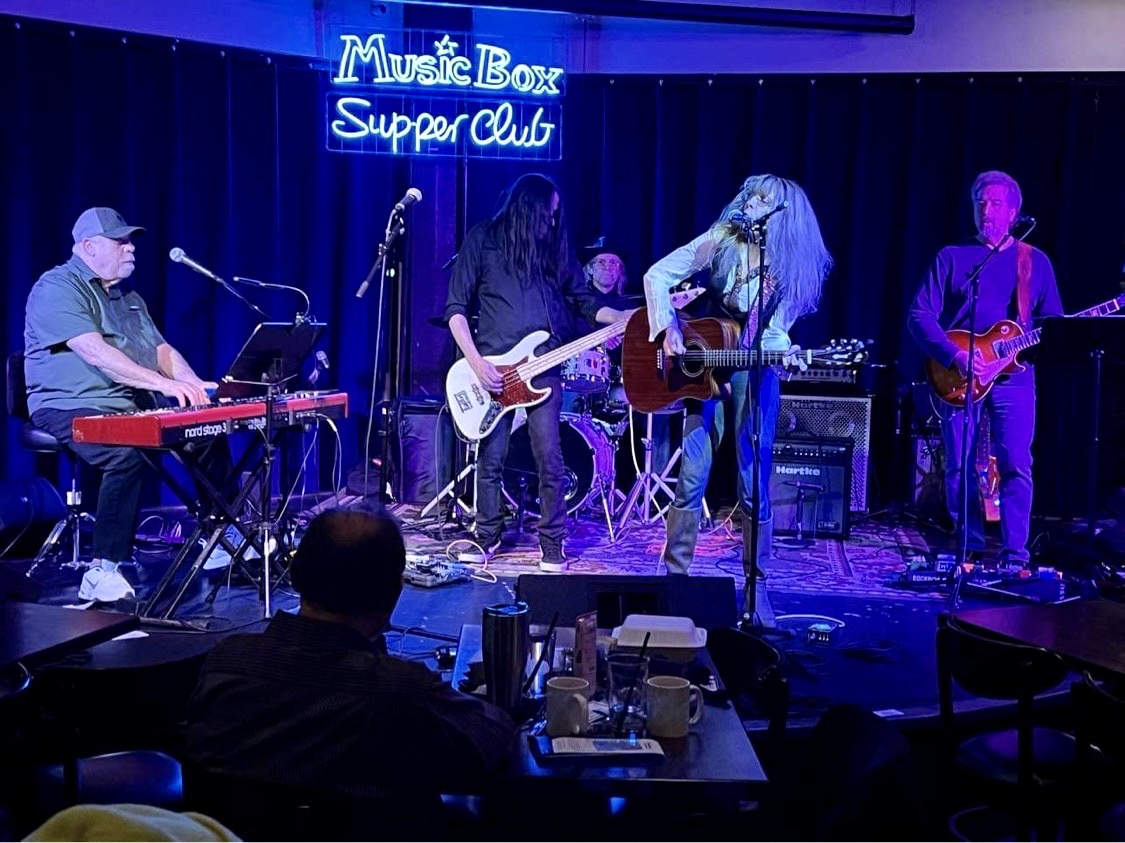
The river, and Cleveland's year
Outside, a working river is better background material than open water because it is specific: industrial banks, lift bridges and freight infrastructure read as a place rather than as a body of water, and they give layers for a long lens to compress — near bank, water, far bank, bridge, sky.
That means a long lens outdoors rather than a wide one. At 135mm or 200mm the bridges and banks stack behind a couple as structure; at 24mm they become a thin strip under a large sky. And a low camera stretches the water’s edge towards the horizon and drops the horizon line, which is the riverside technique.
The geometry to avoid is the sun’s specular path on the water between camera and couple, which at the exposure a face needs is unrecoverable white. Still water mirrors early in the day and breaks into texture as the breeze builds, so a reflection frame is a morning proposition. And wind along a river valley is stronger and gustier than a street back from it, which matters for a veil, for hair and for any light stand.
Cleveland’s seasons are sharp and they change this venue more than they change a windowless one. Summer is humid, with afternoon thunderstorms common rather than rare — and for a room with panoramic windows a storm is an asset rather than a problem: rain running down large glazing with a warm brick room behind it is an atmosphere no ballroom can produce, and it is worth recording rather than waiting out.
Autumn gives the clearest air and the best raking light of the year, which on brick is the condition the material is made for — and the most stable weather, which for a venue whose best frame is timed to the minute is worth something.
Winter is the hard season. Days are short, with sunset in the middle of the afternoon in December, which means the daylit character of the room may be gone before guests sit down and the crossing may fall before or during the ceremony rather than after. Cold clear air does give the deepest and longest-lasting sky colour of the year, so the crossing itself is better then.
Lake-effect snow is localised, sudden and heavy in this region, and it is a logistics question for guests before it is a photographic one. It is also the best natural fill there is, lifting exactly the shadows a low sun carves while fooling a meter by about two stops — and snow on an industrial riverside seen through panoramic windows from a warm brick room is a frame very few venues can offer.
One equipment note: a heated interior and cold river air fog a lens comprehensively in both directions, and the crossing will not wait. Get a body out to ambient temperature well before the window rather than carrying it out cold.
More frames from The Music Box Supper Club
The Music Box Supper Club wedding photography: common questions
Why do the brick and the windows need different planning?
Because the brick under house lighting is identical at any hour while the windows swing four to six stops and become mirrors after dark. The running order follows from that.
How far back from the glass should a subject stand?
About two metres. Pressed against it the light is very oblique and the far side of the face falls away; two metres back it is soft, still directional, and the brick behind still reads.
What is the trick with the brick?
Stand where the window light runs along the wall rather than at it. That lights the subject and lifts every mortar line in the same move.
Why is a riverside crossing better than a city one?
Because the water holds the same colour as the sky, which doubles the colour in the frame and puts it below the horizon as well as above it.
Does Cleveland's cloud help?
Considerably. Under overcast every window behaves like a shaded one — soft, even, directional, with no hotspot or shadow grid — and that is most of the year here.
Is a summer storm a problem?
No. Rain running down large glazing with a warm brick room behind it is an atmosphere no ballroom can produce, and it is worth recording rather than waiting out.
More Cleveland, OH venue guides
We are writing a photographer’s guide to every venue we would happily shoot in Cleveland, OH. Here are three more, plus the full index:
- The Rock & Roll Hall of Fame, Cleveland: A Walk Through the Building
- Windows on the River, Cleveland: One Frame and How It Is Made
- Playhouse Square, Cleveland: One Frame, and How It Is Made
All Cleveland, OH Wedding Venues →
Planning a wedding at The Music Box Supper Club?
The windows set the clock and the brick waits. Tell us your date.