 The Venue, Asheville: A Season-by-Season Guide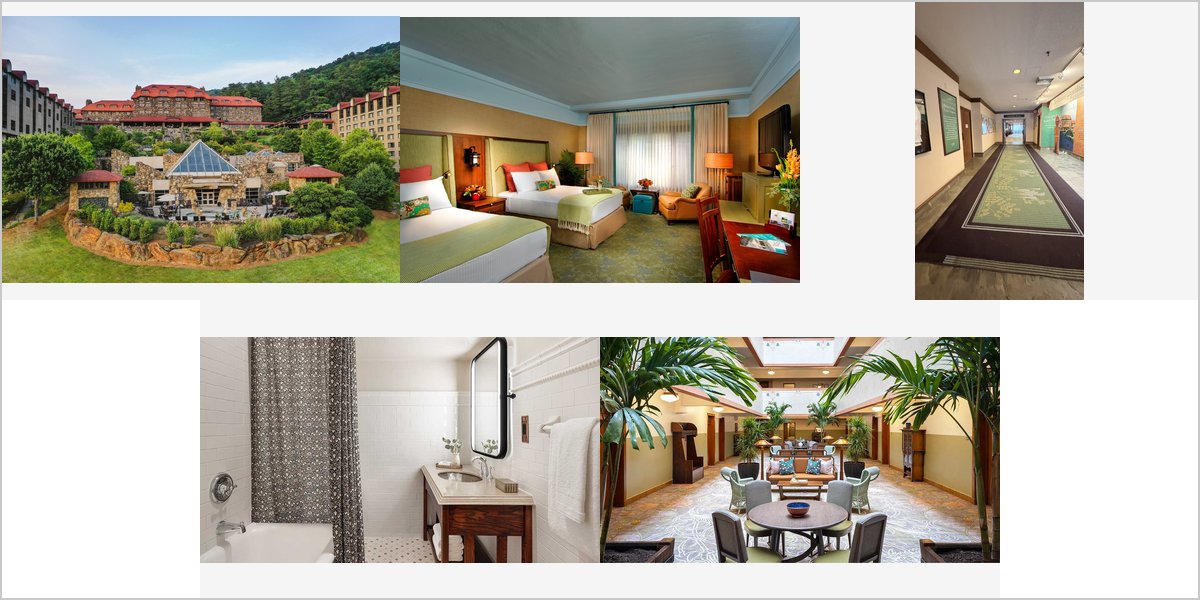
May 4, 2026
The Omni Grove Park Inn: A Walk-Through of a 1913 Boulder Hotel
Granite boulders, two enormous fireplaces and a west-facing terrace over the Blue Ridge. Three distinct photographic problems, and one very good answer to each.
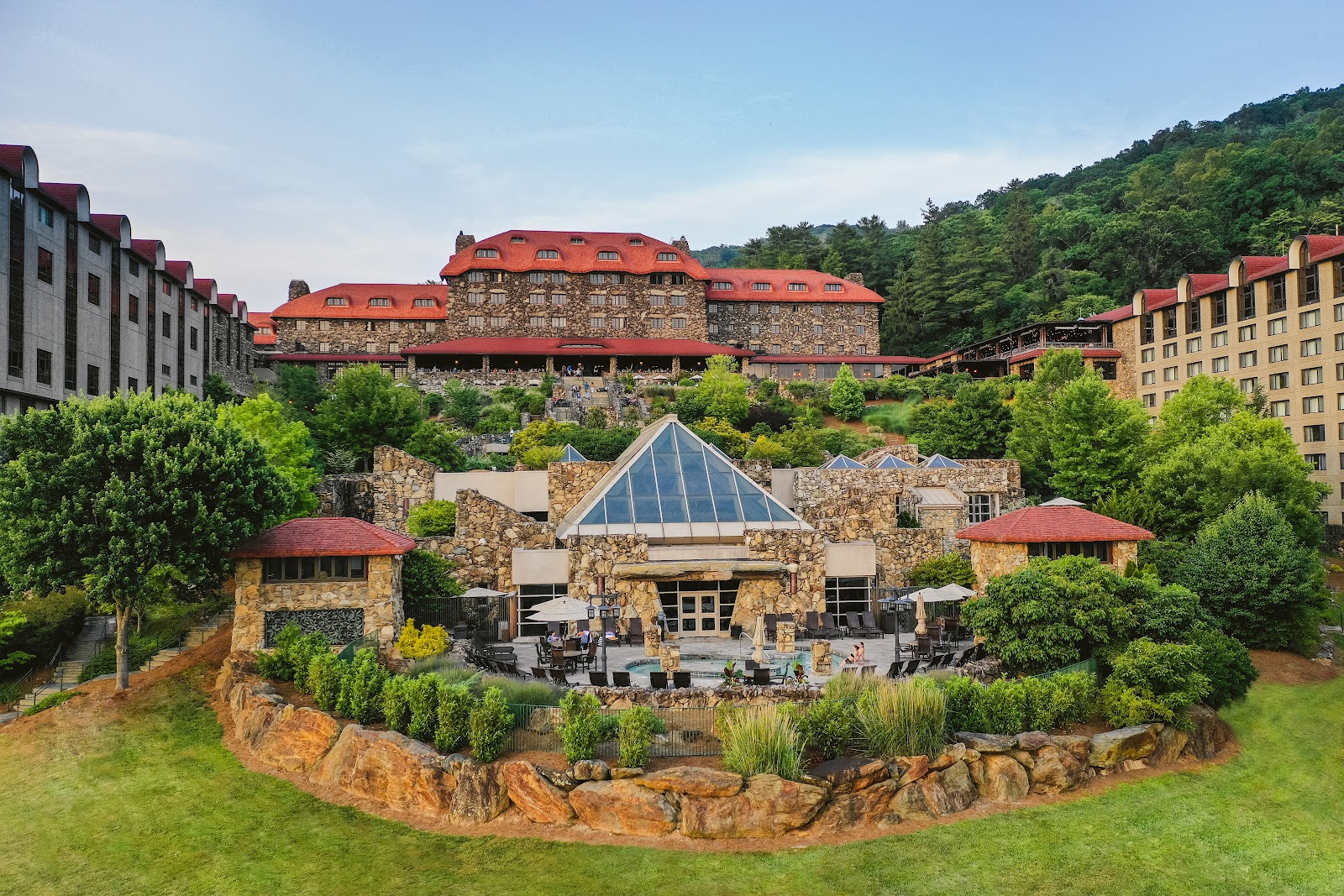
The Grove Park Inn opened in 1913 on the slope of Sunset Mountain above Asheville, built from local granite boulders in a monumental Arts and Crafts idiom. Its centrepiece is the Great Hall, a long room with a vast stone fireplace at each end, and the hotel looks west across the Blue Ridge from a series of terraces.
Photographically the building presents three quite distinct conditions. Rough granite everywhere, which is a dark, textured, neutral-grey material that absorbs light and rewards raking light. The Great Hall, which is enormous, stone-lined and lit largely by firelight and warm fixtures. And a west-facing terrace with a genuine mountain horizon — which, unusually for a mountain venue, means the sunset is in your view rather than behind you.
This is a walk-through in shooting order. We have not photographed a wedding at the Grove Park Inn; granite, firelight and west-facing terraces behave predictably. Which spaces your booking includes and hotel policy are for their events team.
Omni Grove Park Inn at a glance
| Where | Sunset Mountain, Asheville, North Carolina |
| Opened | 1913, Arts and Crafts, built from local granite boulders |
| Centrepiece | The Great Hall, with a vast stone fireplace at each end |
| Orientation | Terraces face west across the Blue Ridge — the sunset is in your view |
| Materials | Rough granite: dark, textured, neutral grey, and light-absorbing |
Outside first: granite needs raking light
Rough granite boulders are a photographer’s material in exactly the same way rough limestone is: the surface is covered in projections, and every projection casts a small shadow when light strikes it at a shallow angle. Under raking low sun the whole facade comes alive with texture and the boulders read individually. Under flat overcast or high midday sun it becomes an inert grey mass.
So the establishing exterior frame belongs in the last hour of usable light, shot obliquely rather than square-on. The building is also very long and low, which suits a compressed frame with a longer lens more than a wide sweep.
Granite’s other property matters for portraits: it is dark and neutral, so it neither reflects much light nor adds any warmth. A couple standing against a granite wall will get no fill and no colour from it, which is the opposite of the pink stucco or heart pine problems elsewhere. Here you supply the warmth, and a warm-gelled fill against grey stone is genuinely transformative.
The Great Hall: firelight is a real light source
The Great Hall’s two enormous fireplaces are the venue’s signature, and they are also a lighting condition rather than a decorative feature. Firelight is very warm — warmer than tungsten, around candle temperature — and it flickers, which means both colour and exposure vary from frame to frame.
The right approach is to use it rather than overpower it. Place people within reach of the firelight so it lands on them, expose for their faces at that level, and add only a small amount of warm-gelled fill if needed. A photograph lit by a stone fireplace in an Arts and Crafts hall should look like it — warm, directional, pooled, with the fire visible in frame as the evident source.
Technically, expect to shoot bursts. Flicker means one frame in three will have the fire at a useful brightness and the others will be darker or hotter. That is not a problem if you are shooting several; it is a problem if you take one and move on. Set white balance manually and warm, and do not let auto try to neutralise a fire.
The Great Hall's scale, and lighting a stone room
Beyond the fireplaces, the hall is a large stone-lined volume with a high ceiling, which makes it one of the least bounce-friendly rooms you will work in. Granite absorbs light and returns almost nothing, and the ceiling is too far away to help. Anyone relying on bounce flash here will produce dark, muddy frames.
Light therefore comes from stands with modifiers. One flash as a feathered key from the side — which also rakes across the stonework and makes its texture read — and one behind the main group as a rim light to separate people from a dark grey background. In a room this absorbent the rim light is doing more work than usual.
Keep the room warm and the faces slightly cooler. Everything in the hall that is not grey stone is warm — timber, copper, firelight, fixtures — and the grey stone adds nothing, so skin lit only by ambient goes muddy and warm at once.
The west terrace, and the timeline
This is the venue’s real advantage over most Blue Ridge properties. Facing west from a mountain slope means the sunset is in front of you and the ridgelines are the horizon rather than an obstruction. You get a genuine sunset, layered ridgelines receding into haze, and warm low light on the granite behind you at the same time.
It also means you are shooting into the sun for the wide frames, which needs handling: expose for the sky, light the couple with a small flash, and the result is a silhouetted mountain horizon with properly lit faces. Without fill you get a silhouette, which is a legitimate frame but should not be the only one.
The timeline follows from this: portraits on the terrace in the last hour before sunset; the granite facade in the same window; the Great Hall and its fireplaces once it is dark and the firelight dominates; groups on the terrace while there is still even light rather than direct sun.
One practical mountain note: the terrace is elevated and exposed, so it is windier and several degrees cooler than Asheville below. That affects comfort, veils and any thought of using a large modifier outdoors.
What works in your favour
- West-facing terraces give a genuine mountain sunset in view, unusual for a Blue Ridge venue
- Rough granite is spectacular in raking low light and holds texture beautifully
- Two vast stone fireplaces provide firelight as a real, characterful light source
- Layered ridgelines receding into haze give depth no flatland venue can offer
- A large historic hotel with accommodation, so preparation coverage is straightforward
What to plan around
- Granite absorbs light and adds no warmth — you supply all the fill and all the colour
- A large stone-lined hall with a high ceiling is among the least bounce-friendly rooms anywhere
- Firelight flickers, so colour and exposure vary frame to frame; shoot bursts
- Shooting west means working into the sun for the wide terrace frames
- An elevated exposed terrace is windy and cooler than the city below
More frames from Omni Grove Park Inn
Omni Grove Park Inn wedding photography: common questions
When does the granite exterior photograph best?
The last hour of usable light, shot obliquely rather than square-on. Rough granite is covered in projections that each cast a small shadow under raking light, which makes the boulders read individually. Under flat or high light the same facade is an inert grey mass.
How do you photograph by firelight?
Use it rather than overpower it. Place people within reach of the firelight, expose for their faces at that level and add only a small warm-gelled fill if needed. Shoot bursts, because flicker means colour and exposure vary frame to frame — one of three will be right and the others will not.
Can you bounce flash in the Great Hall?
No. It is a large stone-lined volume with a high ceiling, and granite absorbs light and returns almost nothing. Relying on bounce here produces dark muddy frames. Use a feathered key from the side — which also rakes the stonework — plus a rim light behind the group.
What makes the terrace unusual for a mountain venue?
It faces west, so the sunset is in your view and the ridgelines are the horizon rather than an obstruction that takes your light early. You get a genuine sunset with layered ridges receding into haze. The trade is that you are shooting into the sun, so the wide frames need fill on faces.
Why does skin look muddy in stone rooms?
Because grey granite adds no warmth and no fill, while everything else in the room — timber, copper, firelight — is warm. Skin lit only by that ambient goes both dark and orange. Keep the room warm in white balance and light faces with something closer to neutral.
More Asheville venue guides
We are writing a photographer’s guide to every venue we would happily shoot in Asheville. Here are three more, plus the full index:
- The Pines at Creston: A Photographer Answers Your Questions
- The Smith-McDowell House: Who This Venue Suits
- The Foundry Hotel: Reading the Light in a Converted Steel Works
All Asheville Wedding Venues →
Planning a wedding at Omni Grove Park Inn?
Grey stone, firelight and a west-facing mountain horizon each need a different answer. Tell us your date and we will send the plan for all three, including the exact sunset time from that terrace.