 Indianapolis Zoo: Reading a Day From Open Grounds to Underwater Glass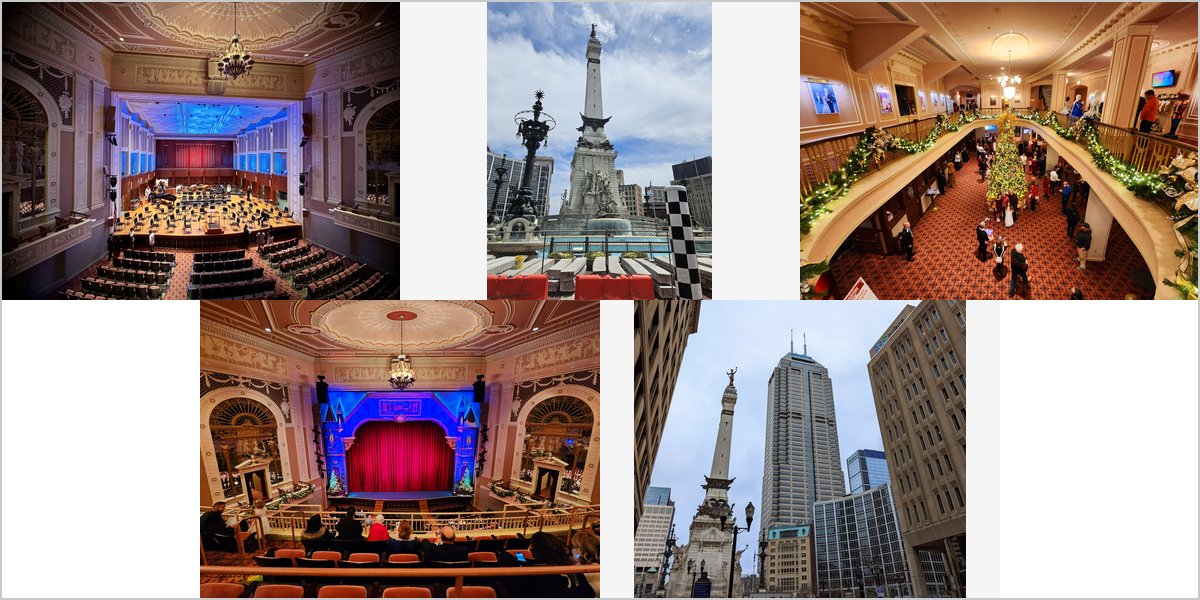
The Hilbert Circle Theatre: Photographing a 1916 Movie Palace
A theatre is not one venue. It is a lobby, an auditorium and a stage, and each is a different photographic problem.
The Hilbert Circle Theatre stands on Monument Circle in downtown Indianapolis, built in 1916 as a movie palace and later converted to a concert hall, retaining the lobby, auditorium and ornamental detail of its original purpose.
Theatres are among the most rewarding wedding venues and among the most misunderstood, because photographers treat them as one space when they are really three or four in sequence, each with completely different light. A lobby is a bright, reflective, public transition space. An auditorium is a very dark room full of seats, lit for performance rather than for occupancy. A stage is a lit platform facing that darkness. And the back-of-house is bare, functional and usually the most interesting of all.
So this is a walk through the building in the order a wedding uses it. We have not photographed a wedding at the Hilbert Circle Theatre; movie-palace lobbies, auditoriums and stages behave the same wherever they were built. Which spaces are available, and whether the stage and its lighting can be used, are questions for their events team — and the stage lighting answer changes what is possible more than anything else.
The Hilbert Circle Theatre at a glance
| Where | Monument Circle, downtown Indianapolis, Indiana |
| Character | A 1916 movie palace converted to a concert hall |
| Four spaces | Lobby, auditorium, stage and back-of-house — all different |
| The best frame | The couple on a lit stage, seen from the dark auditorium |
| Ask first | Whether stage lighting can be operated for the wedding |
The lobby: bright, reflective, and the easiest room in the building
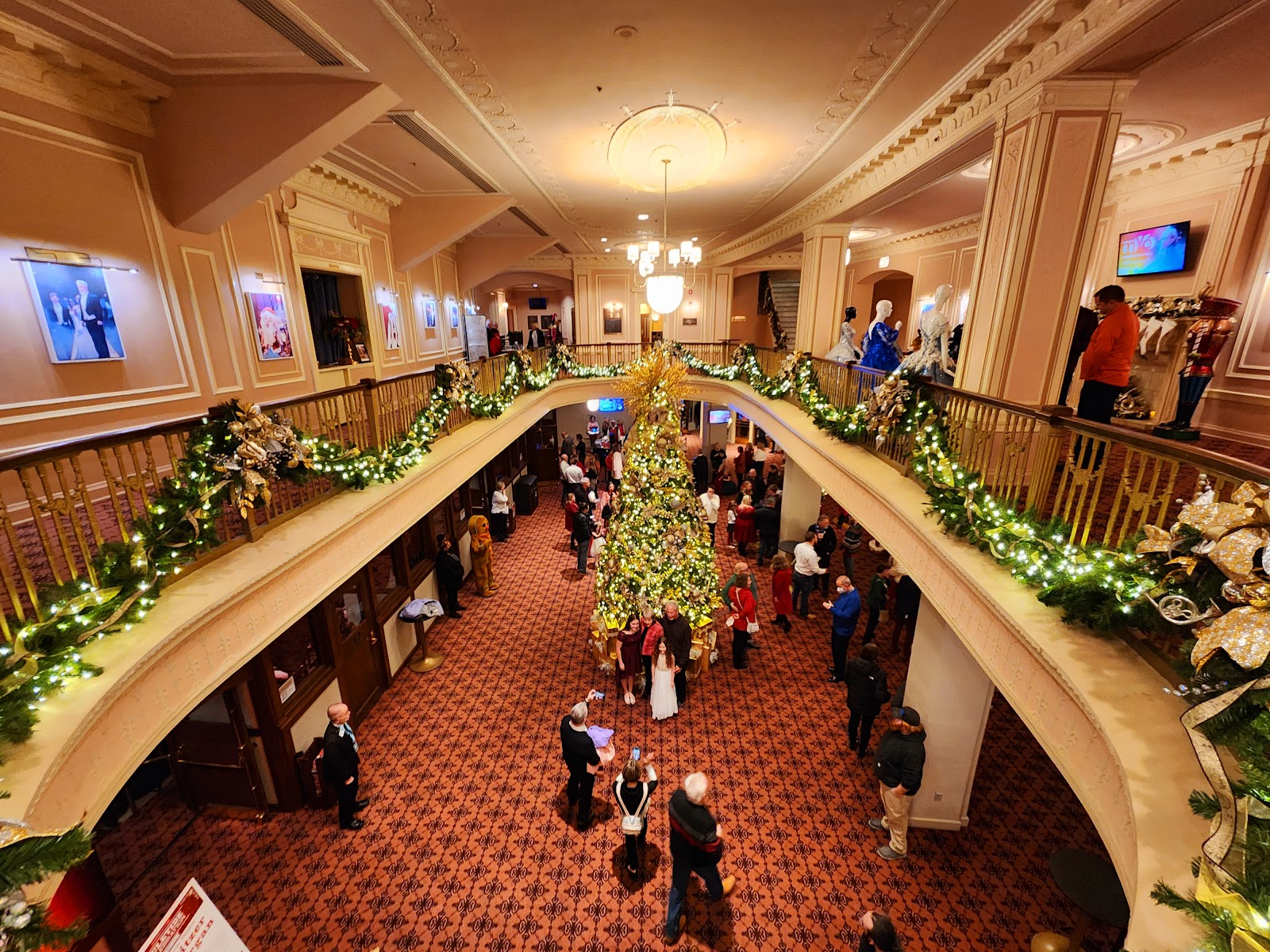
A movie palace lobby was designed to impress an arriving audience, which means gilding, mirrors, marble or terrazzo, patterned plaster and a great deal of light. All of that makes it the most forgiving space here: pale reflective surfaces bounce light in every direction, so the ambient is high, shadows are filled, and faces are flattered with no effort.
The two things to manage are both consequences of the same reflectivity. Mirrors are everywhere in lobbies of this period, and they will show you, your lights and the back of the room — so a deliberate check on what is reflected is part of composing any frame. And light arriving from everywhere gives very little direction, so portraits can be well exposed and slightly flat; one source from the side at modest power restores the modelling.
The lobby is also where the period detail is densest and most accessible, which makes it the right place for the detail frames — a ring on a patterned surface, a dress against a gilded panel. Those work here and nowhere else in the building, because everywhere else is either too dark or too plain.
Ceilings in a lobby like this are usually ornate and uplit, which puts them stops above the people beneath. The rule is the one every grand interior demands: raise the couple towards the ceiling with your own light rather than exposing down to them, so the plasterwork keeps its relief.
The auditorium: a very dark room that rewards restraint
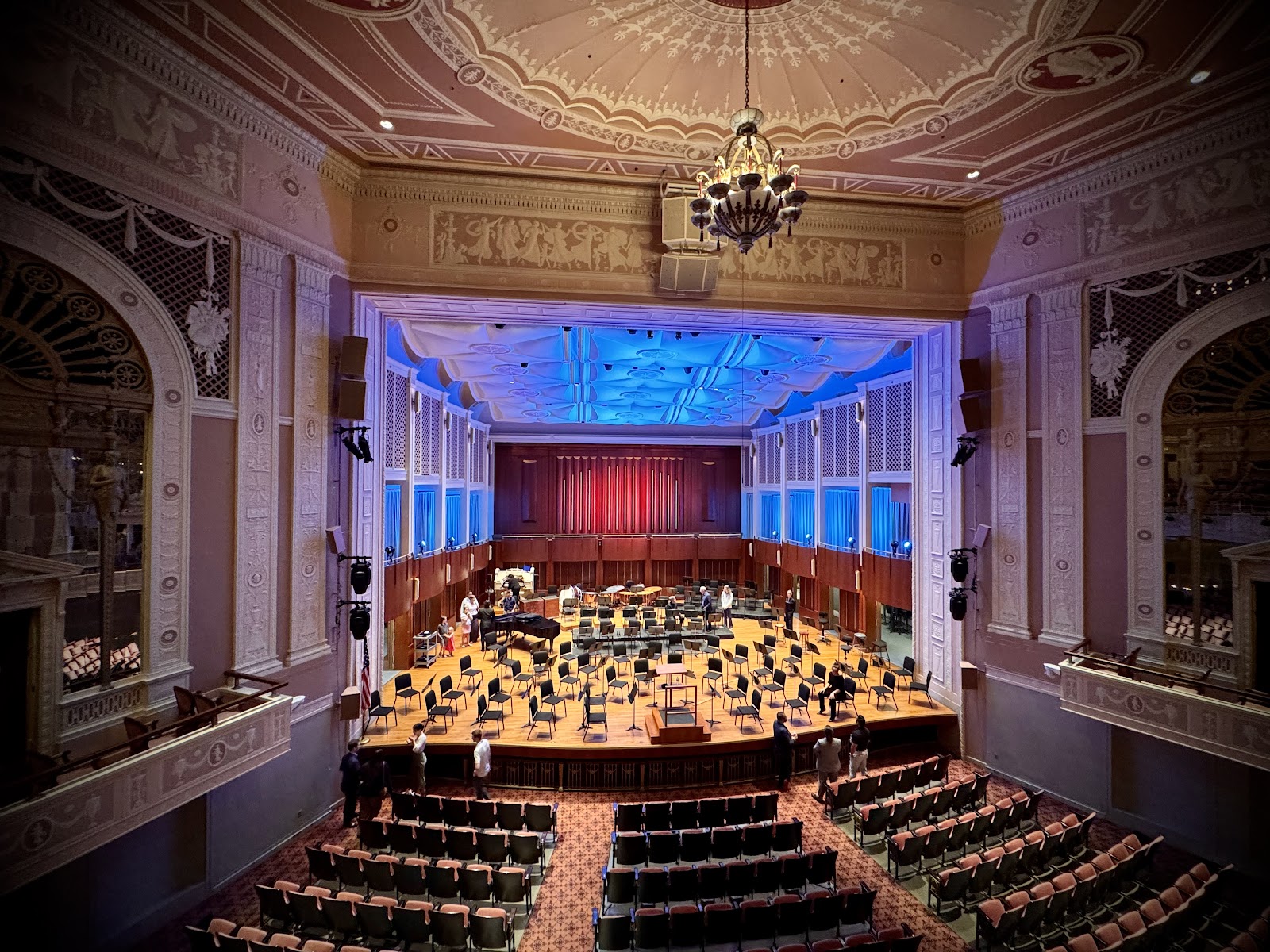
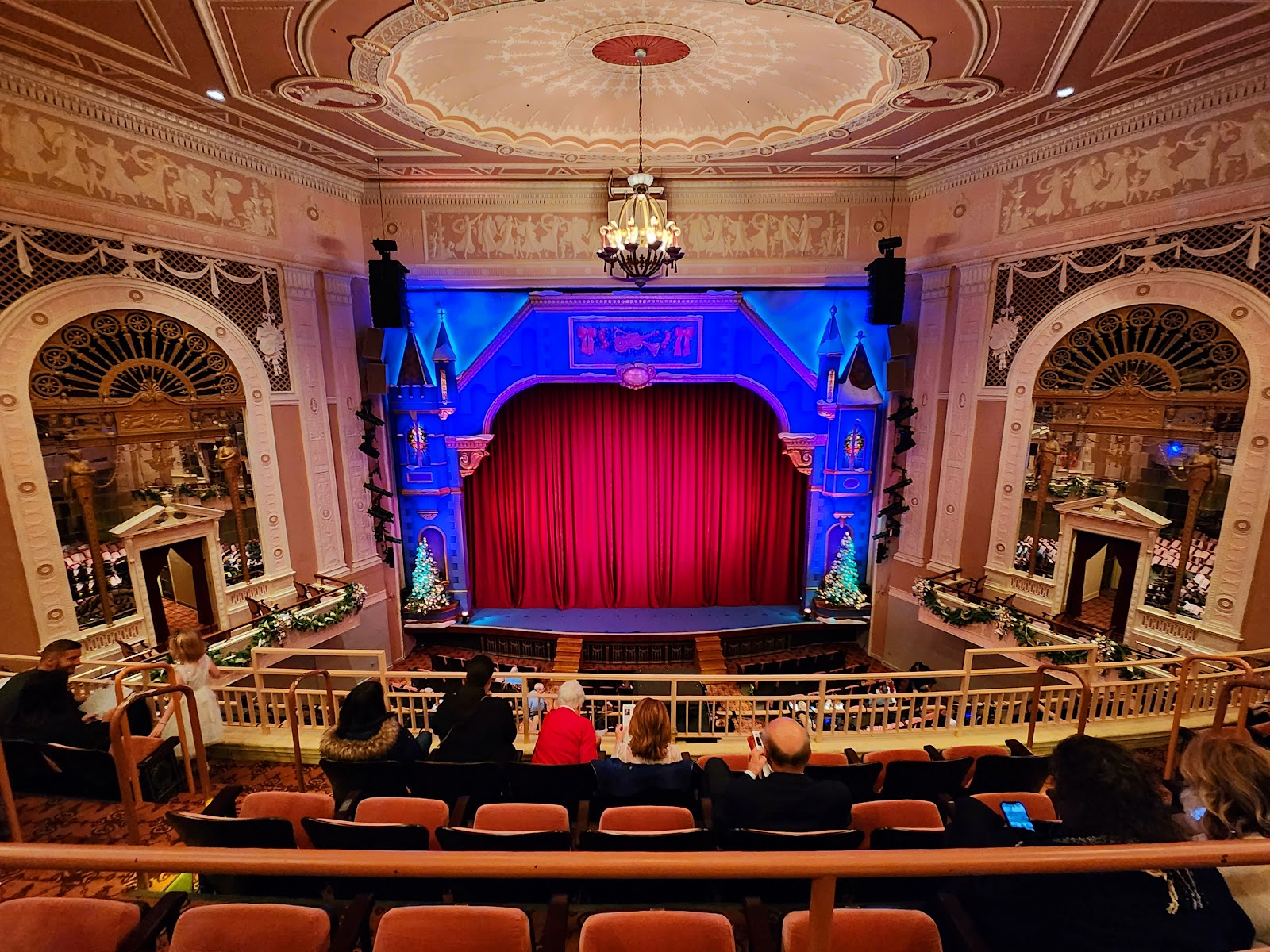
An auditorium is dark by design. House lights are dim, the surfaces are deep-toned to avoid reflecting the screen or the stage, and the seating absorbs light. It is one of the darkest interiors a wedding photographer works in, and the instinct to fix that with a large bounced flash is exactly wrong — filling an auditorium with light turns a dramatic cavern into a badly lit hall full of chairs.
The productive approach uses the room’s own geometry. Rows of seats receding from the camera are one of the strongest repeating patterns in any building, and they read best when they are mostly dark with a shape emerging from them. A couple in an aisle, lit by a single controlled source, with rows disappearing into blackness on either side, is the frame the auditorium gives.
Balcony levels are worth asking about, because looking down over rows from above gives a geometric frame that no ground-level position offers, and it places the couple against the seating as a pattern rather than inside it as a component.
Two practical points. Ambient this low means either a tripod and a slow shutter or a real light, and probably both. And the colour of what house lighting exists is usually deep amber or saturated stage colour, which will not resolve to neutral — treat it as coloured ambient, let your own gelled key own the faces, and the room stays as it looks.
The stage: the frame worth negotiating for
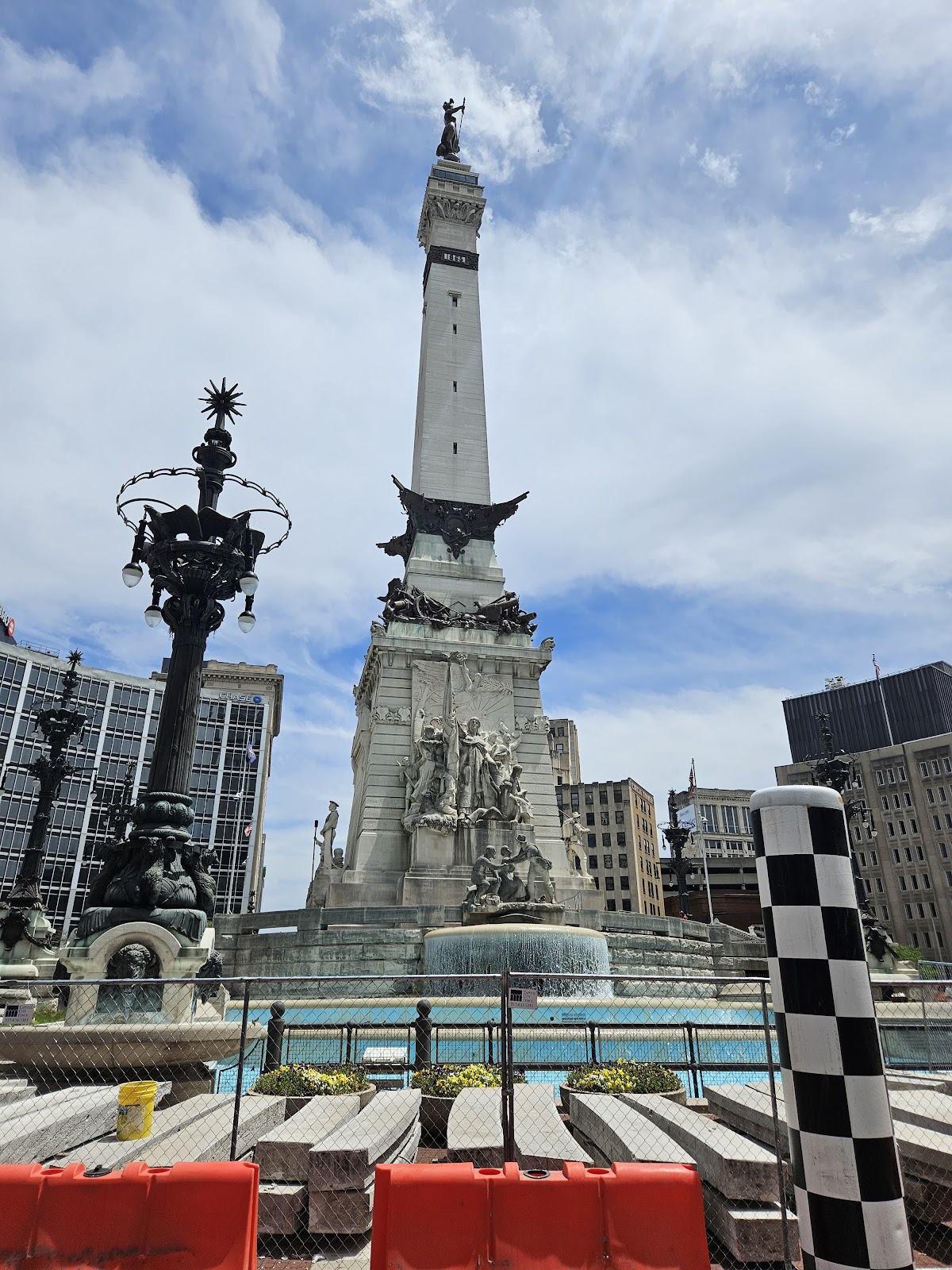
The best photograph in any theatre is the couple on the lit stage seen from the dark house, and it is worth asking for specifically because it depends on someone operating the lighting. A stage wash, or even a single spot, from the front-of-house position gives hard directional light on two people against a black surround — and that is a photograph no other venue type can produce, because nowhere else has both a lit platform and a dark hall to view it from.
If the house lighting can be operated, the request is simple: a warm front wash and, if possible, a backlight. That combination gives modelled faces and a rim that separates the couple from the black cyclorama behind them. Expose for the wash, let everything else fall to black, and the frame makes itself.
If it cannot be operated, the fallback is to light the stage yourself — which is straightforward, because a stage is a defined area and a dark hall gives you complete control with no spill problems. One source at forty-five degrees and one behind, both gridded, at low power, and the result is close to the same.
The reverse frame is also worth taking: from the stage looking out into the auditorium, with the couple in the foreground and the rows and boxes receding into darkness. That is the view a performer has and almost nobody photographs, and it locates the couple in the building in a way the front-on frame does not.
The back-of-house is the underused asset. Bare brick, steel stairs, ropes, dressing rooms with mirror lights, corridors with pipework — functional spaces with strong texture and hard directional light, and a completely different register from the gilt out front. A gallery made only of ornate rooms is relentless; the back-of-house frames give it grit and variety, and they are usually available when nothing else is.
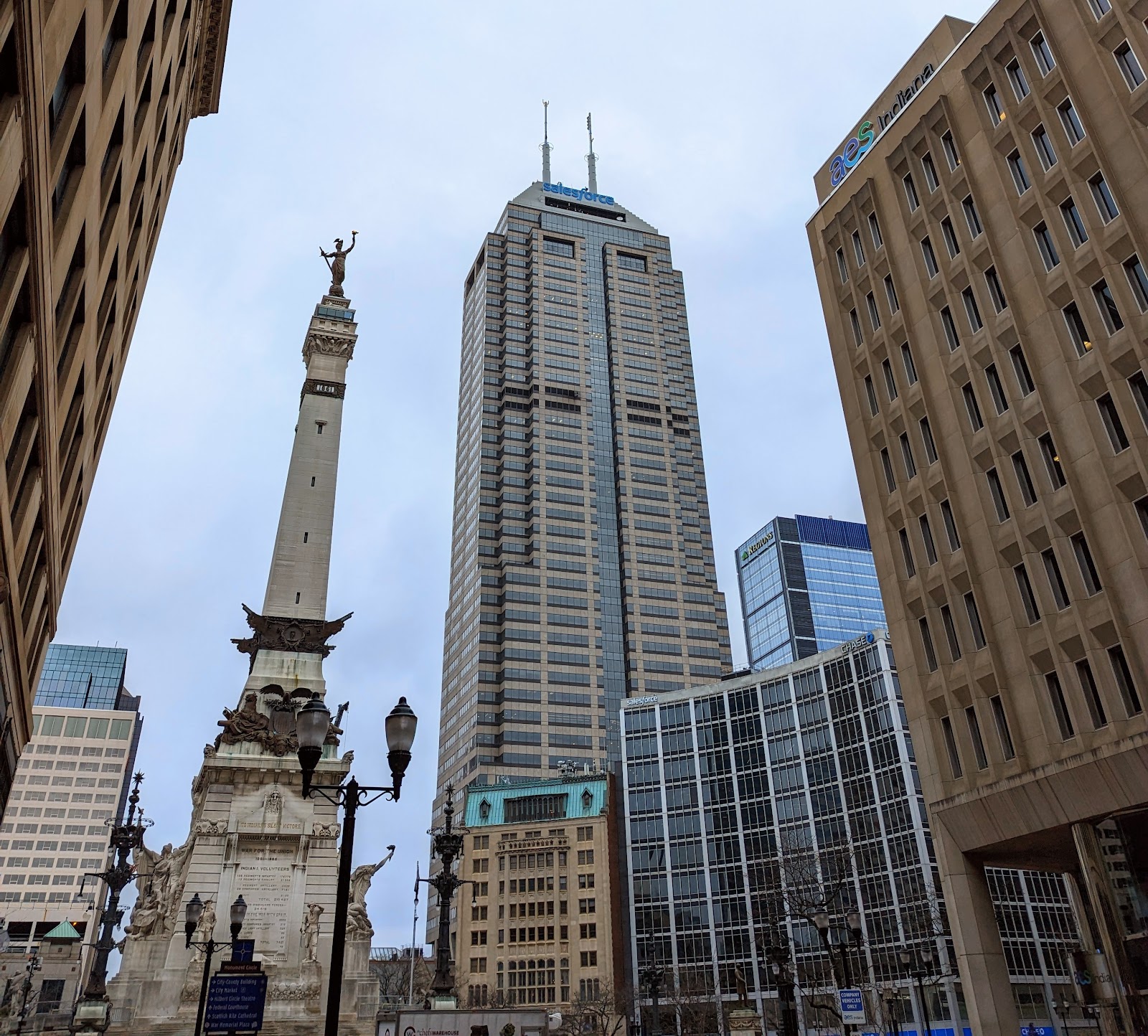
Outside, Monument Circle is immediately there, which gives a strong circular plaza, a monument, and streets radiating off it — good architectural material within a minute, entirely public, and best in the early or late hours.
What works in your favour
- A lit stage seen from a dark house — a frame unique to theatres
- Reflective 1916 lobby with high ambient and dense period detail
- Receding rows of seats as a powerful repeating pattern
- Back-of-house spaces giving grit, texture and variety
- Monument Circle immediately outside for architecture and daylight
What to plan around
- The auditorium is very dark and punishes bounced flash
- Stage frames depend on someone operating the house lighting
- Lobby mirrors reflect you, your lights and the room behind
- Stage and house colour will not resolve to a neutral balance
- Ornate ceilings sit stops above the people standing beneath them
More frames from The Hilbert Circle Theatre
The Hilbert Circle Theatre wedding photography: common questions
What is the best frame in a theatre?
The couple on a lit stage seen from the dark auditorium. Nowhere else has both a lit platform and a dark hall to view it from. It depends on someone operating the house lighting, so ask for it specifically and early.
What if the stage lighting cannot be used?
Light it yourself, which is easy — a stage is a defined area and a dark hall means no spill problems at all. One gridded source at forty-five degrees and one behind, at low power, gets close to the same result.
How should the auditorium be lit?
Sparingly. It is dark by design and filling it with bounced flash turns a dramatic cavern into a badly lit hall full of chairs. Use one controlled source on the couple in an aisle and let the rows disappear into blackness either side.
Why is the lobby the easiest room?
Because a movie palace lobby is full of gilding, mirrors and pale stone, all of which bounce light everywhere. The ambient is high, shadows fill themselves and faces are flattered with no effort. Just watch what the mirrors are showing.
What do people miss in a theatre?
The back-of-house. Bare brick, steel stairs, ropes, dressing-room mirror lights and pipework give strong texture and hard directional light, in a completely different register from the gilt out front — and they are usually available when nothing else is.
Is there a frame besides the front-on stage shot?
Yes — from the stage looking out, with the couple in the foreground and the rows and boxes receding into darkness. It is the view a performer has, almost nobody photographs it, and it locates the couple in the building.
More Indianapolis, IN venue guides
We are writing a photographer’s guide to every venue we would happily shoot in Indianapolis, IN. Here are three more, plus the full index:
- The Indiana Roof Ballroom: How to Photograph an Atmospheric Ceiling
- Indianapolis Zoo: Reading a Day From Open Grounds to Underwater Glass
- The NCAA Hall of Champions: Four Ways Out of the Screen Problem
All Indianapolis, IN Wedding Venues →
Planning a wedding at The Hilbert Circle Theatre?
The stage frame needs a lighting operator and a request. Tell us your date and we will ask for it in advance.