 The Henry Clay: Lighting a 1920s Lodge Building
The Kentucky Center, Louisville: A Walk Through a Glazed Arts Centre
A glass lobby and a dark theatre, four stops apart, in the same building. Take them in order.
A modern performing arts centre is two buildings under one roof and the gap between them is the whole photographic story.
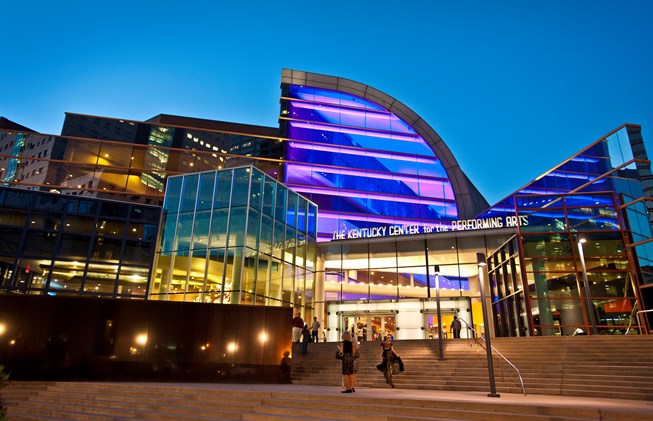
The lobby is glazed — usually generously, often over several storeys — because a public arts building is meant to feel open and to be visible from the street. That makes it the best daylight source in the building and one of the better soft sources anywhere.
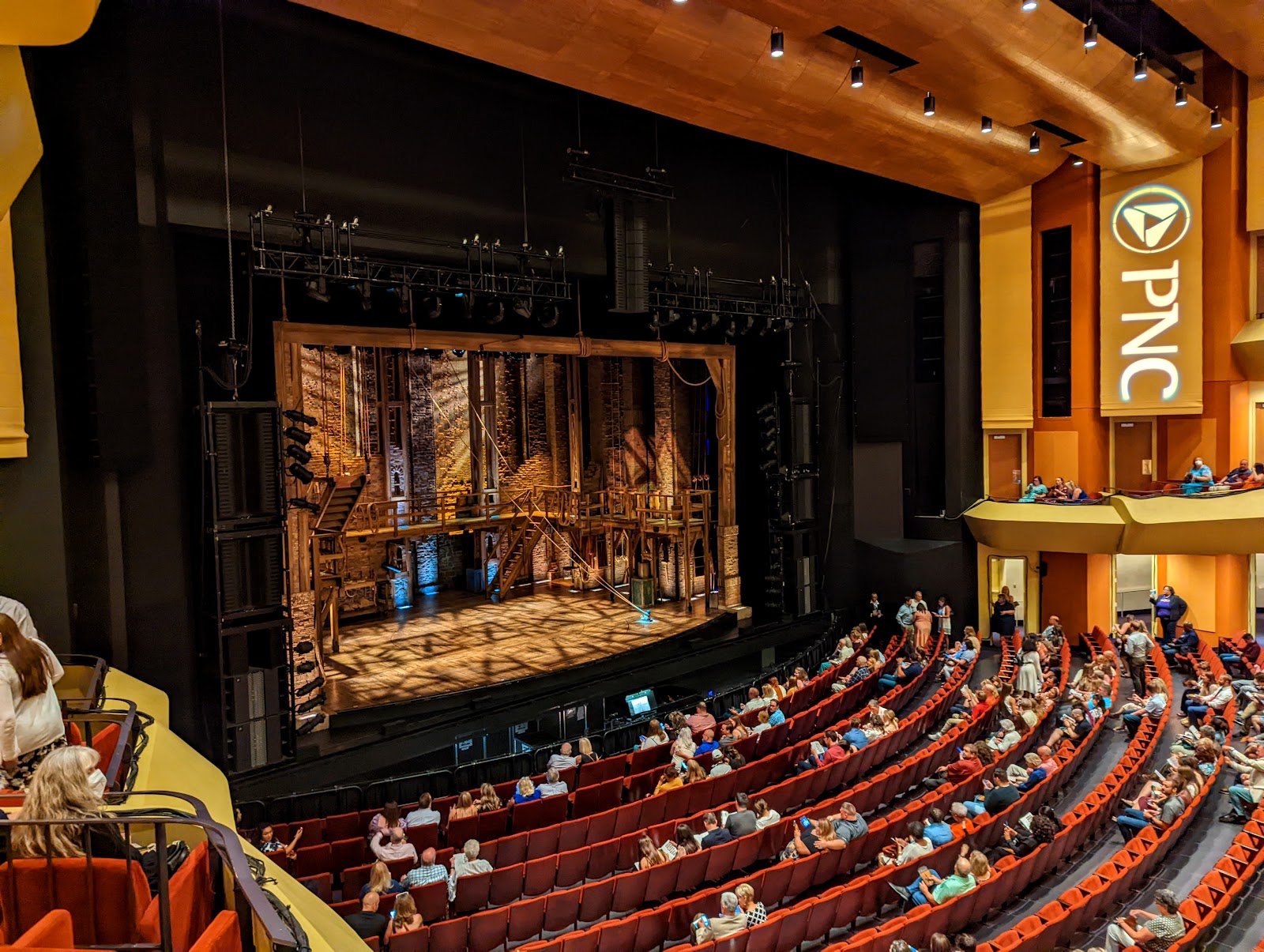
The theatres are the opposite: sealed, dark, designed so that a lit stage reads from a black house. They have no daylight at all and their surfaces are deliberately absorbent.
Between those two there can be four stops or more, and they are separated by a door. A photographer moving between them without changing configuration produces a sequence that looks like two different weddings, and automatic exposure makes it worse by splitting the difference in both.
So this is a walk, taken in the order a day uses the building, with the configuration change named at each threshold. We have not photographed a wedding at the Kentucky Center for the Performing Arts; glazed arts centres behave consistently. Which spaces are included, whether the stage lighting can be set, and what the access arrangements are are questions for their team.
The Kentucky Center for the Performing Arts at a glance
| Where | Downtown Louisville, Kentucky |
| Two buildings | A glazed lobby and sealed dark theatres, four stops apart |
| The lobby | The best daylight in the building, and where groups belong |
| The theatres | A lit stage against a black house — the strongest separation there is |
| Ask first | Spaces included, stage lighting control, access arrangements |
The lobby, and the stairs
The lobby is the first zone and it should be worked properly rather than passed through, because in a building of this type it is where most of the good daylight frames are.
A multi-storey glazed wall behaves like an enormous window: the conditions are the shaded side or an overcast day rather than direct sun, and about three metres back from the glass so a row of people is evenly lit rather than dropping two stops across it. That three-metre figure is what makes a glazed lobby capable of lighting a thirty-person formal with no equipment, which is where the large groups belong.
At Louisville’s latitude, about thirty-eight degrees north, a north-facing glazed wall is shaded all year and is the most reliable, while a south-facing one carries direct low sun through much of a winter afternoon — so which elevation the lobby faces is worth establishing on arrival, and a glazed wall of several storeys frequently faces more than one way.
Architectural glazing is commonly coated for solar control, which shifts colour towards green or blue as a localised cast on anything near it. One test frame rather than a discovery in editing, and a custom white balance set on a face in position if the shift is significant.
The lobby’s second asset is height. A multi-storey volume gives elevation, which means a balcony or a mezzanine allows a camera above a group — seeing faces rather than the backs of heads — and it gives a vertical composition that a single-storey space cannot.
The stairs are the third asset and in a glazed lobby they are exceptional, because they are lit from the side by the glass rather than from above by a rooflight. A stair lit from one side gives modelling on every face; a stair lit from above puts every eye socket in shadow at once. So a glazed-lobby stair is the best stair a photographer is likely to meet, and it should be used for the descent frames.
Hard modern surfaces run under all of it: polished concrete, stone, steel and glass all reflect, which means the lobby is brighter than the glazing alone would suggest and bounce flash may work even where the ceiling is high, because the walls contribute. One test frame settles it.
And those same surfaces will show a badly placed light at full brightness, so the fifteen-second check from the camera position applies — including on the glazing itself, which reflects the lobby behind the camera from many positions.
The theatres, and the thresholds
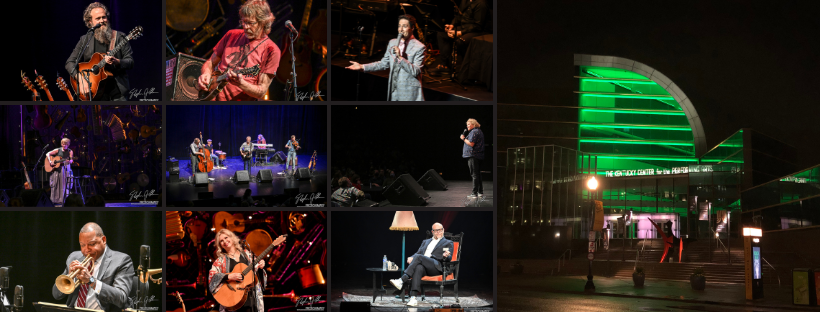
The theatres are the second zone and they give the building’s strongest frame. A couple on a lit stage photographed from the house sits in a pool of light with absolute darkness around and behind — the most complete separation available in any building, needing no equipment at all if the rig can be set.
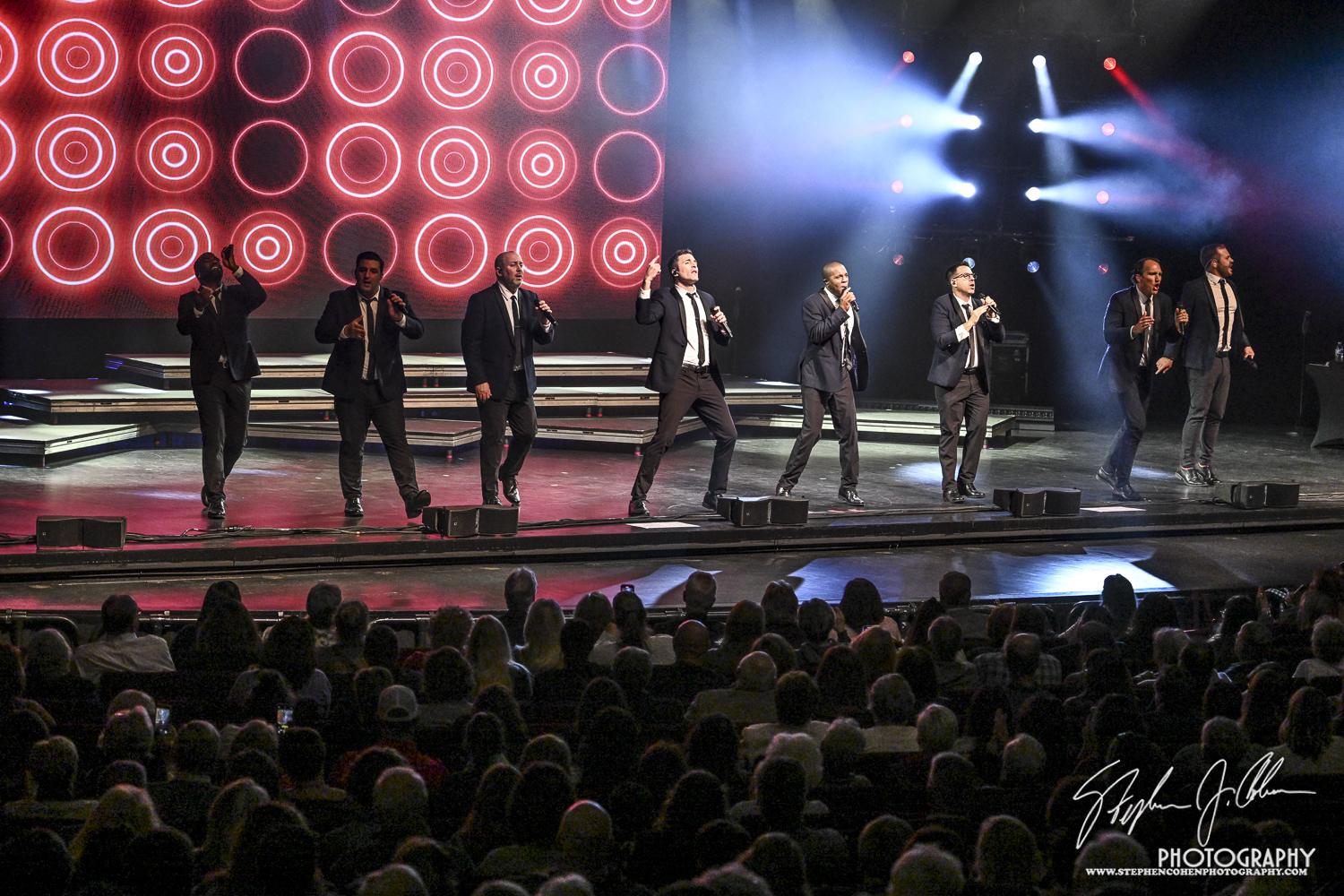
The setting is what to ask about, because a stage lighting rig is a controllable instrument and most venues will help. A warm wash from the front at a low angle is a better portrait light than anything else in the building; a backlight from above separates hair from the darkness; a side light gives shape. What to avoid is the default, which is frequently a rig set for a production and downlit from overhead — filling eye sockets with shadow and cutting a line under every chin.
Saturated gels deserve a specific warning: a coloured gel is a narrow-spectrum source, so skin lit by it has almost no information in two of its three colour channels and no editing recovers what was never recorded. Coloured light belongs behind or above a couple, and asking for the wash set open white is entirely reasonable.
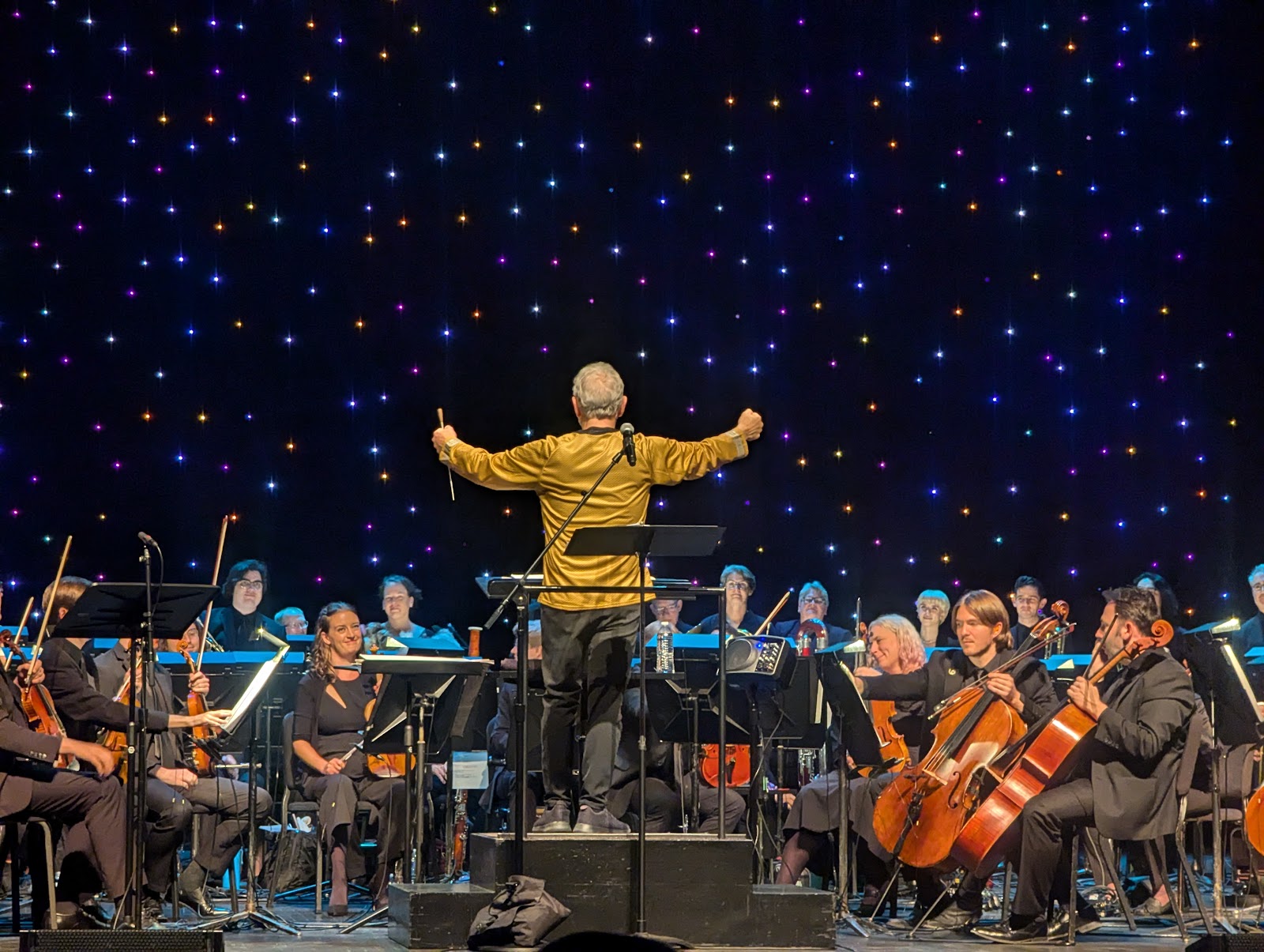
The house itself is several stops below a normal interior with a high dark ceiling, which means bounce returns nothing and any frame made there needs a source direct into a modifier, close and handheld — because a raked floor between fixed seats has nowhere safe or level for a stand. Close matters: a modifier at a metre and a half is a large soft source relative to a face and needs almost no power, while the same modifier at four metres is hard and needs seven times as much.
The rows of seats photographed from the stage, receding into darkness, are the other theatre frame — a strong repeating pattern with real depth, and one of the few compositions where a wide lens genuinely helps.
The thresholds are the third zone and they are where the building’s best portraits are. Standing two or three metres inside a dark theatre or a dark corridor, facing out towards the glazed lobby, a subject is lit by a very large soft source with total darkness behind them. That needs nothing added, and one test frame at two, three and four metres in shows where the trade sits — watching the wall behind rather than the face.
The configuration changes at each threshold and that is the practical discipline. Lobby: low ISO, moderate aperture, daylight white balance, probably no flash at all. Theatre: high ISO, wide aperture, white balance to the rig or to a gel, a source close and handheld or nothing if the stage is lit.
Switching at the door rather than in the middle of a space is what produces a coherent gallery — and it means the schedule should cluster by space rather than by activity, which is worth agreeing with the couple in advance because it changes the order they might expect.
Colour is the standing condition throughout, because a building like this is relit in stages: original fittings, later replacements, modern LED, stage instruments and exit lighting. Pick the temperature that should be correct in the position being used, set white balance to it, and let one gelled source own the faces where legibility matters.
- Large groups in the lobby, three metres back from the glass
- Use the lobby stair — side-lit by glazing rather than top-lit by a rooflight
- Ask for a warm front wash, open white, not the overhead default
- Stand two or three metres inside a dark space facing the lit lobby
- Change configuration at each threshold, and cluster the schedule by space
Outside, and the Kentucky year
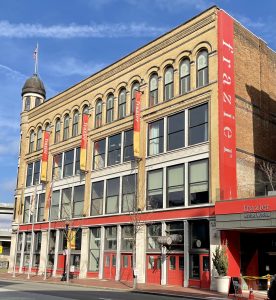
Downtown Louisville has one exterior asset that is genuinely distinctive and worth building frames around: the city holds one of the largest collections of cast-iron building fronts in the country, mostly from the second half of the nineteenth century.
Cast iron is unusually photogenic because of what it is. It was cast in repeating decorative units — columns, capitals, brackets, cornices — which means a facade is a rhythm of identical elements, and repetition at the right scale is a strong graphic subject. And it is painted metal, which reads only under raking light: light running along a cast column lifts every flute and moulding, while the same light facing it flattens the whole front into a field of one colour.
So those are low-sun frames and they suit tight framing: a couple against two or three bays of cast iron reads better than the same couple in front of a whole block, because the pattern repeats and repetition at a distance becomes texture rather than subject.
The Ohio River is the other element, and Louisville sits on the south bank looking north across the water — which means the river is backlit for very little of the day and reasonably frontlit for most of it, the reverse of a north-bank city. That makes riverside frames more forgiving here than in many river cities.
Camera height decides any water frame: low across the surface sees a mirror, high looking down sees the river’s own colour, and low is nearly always the answer.
The timed frame is the crossing: twenty-five to forty minutes after sunset, when the sky still holds colour at about the brightness of the city’s lighting, so one exposure holds couple, buildings and sky. At a glazed arts centre that frame is particularly good, because the lit lobby reads through the glass and the whole building becomes a lantern — and since the interiors do not change through the day, taking ten minutes for it costs nothing.
The seasons here are a humid transition between continental and subtropical. Summer is hot and genuinely humid, and the humidity rather than the heat is the photographic fact: moist air scatters light, which softens shadows and slightly flattens distance. Severe thunderstorms are a real possibility from spring through summer, which at an entirely indoor venue costs a decision rather than a picture.
The fogging problem is severe in this climate and a large public building makes it worse, because the lobby is cooled hard for occupancy: a body carried straight out into July air fogs on every surface at once and does not clear quickly, so a bag opened twenty minutes early is the whole fix.
Autumn is the best exterior light of the year: humidity drops, the air clears, and low sun arrives at a civilised hour, usually late October into November — which is also when the cast-iron frames are at their best, because the raking angle lasts longer through the day.
Winter is mild with frost rather than sustained freeze, and it is quietly the best season for both halves of the building. Frequent overcast removes the direct-sun problem from every glazed wall at once, so the lobby works whichever way it faces; and a December midday sun at about thirty degrees above the horizon rakes cast iron all day rather than lighting it from overhead. Snow is occasional, and when it comes it turns the ground into a reflector that brightens the glazed lobby further.
More frames from The Kentucky Center for the Performing Arts
The Kentucky Center for the Performing Arts wedding photography: common questions
What are the two buildings?
A glazed lobby with the best daylight in the building, and sealed dark theatres with none — four stops or more apart, separated by a door.
Where do the large groups go?
The lobby, three metres back from the glazing. That figure is what makes a thirty-person formal possible with no equipment.
Why is a glazed-lobby stair so good?
Because it is lit from the side by the glass rather than from above by a rooflight — side light models a face, top light shadows every eye socket.
What should be asked of the stage rig?
A warm front wash at a low angle, set open white rather than gelled, plus a backlight. Saturated gels leave two colour channels empty.
Where is the best portrait position?
At a threshold — two or three metres inside a dark space facing out towards the lit lobby. Nothing added is needed.
What is Louisville's exterior asset?
One of the country’s largest collections of cast-iron building fronts — repeating painted metal units that read only under raking light.
More Kentucky venue guides
We are writing a photographer’s guide to every venue we would happily shoot in Kentucky. Here are three more, plus the full index:
- The Lexington Opera House: One Frame, and How It Is Made
- The Louisville Slugger Museum: A Working Factory Inside a Museum
- The Mary Todd Lincoln House, Lexington: What It Suits, and What It Does Not
Planning a wedding at The Kentucky Center for the Performing Arts?
Two buildings, two configurations. Tell us your date and we will walk them in order.