 Hotel Saint Louis: A Walk-Through of an 1893 Union Trust Building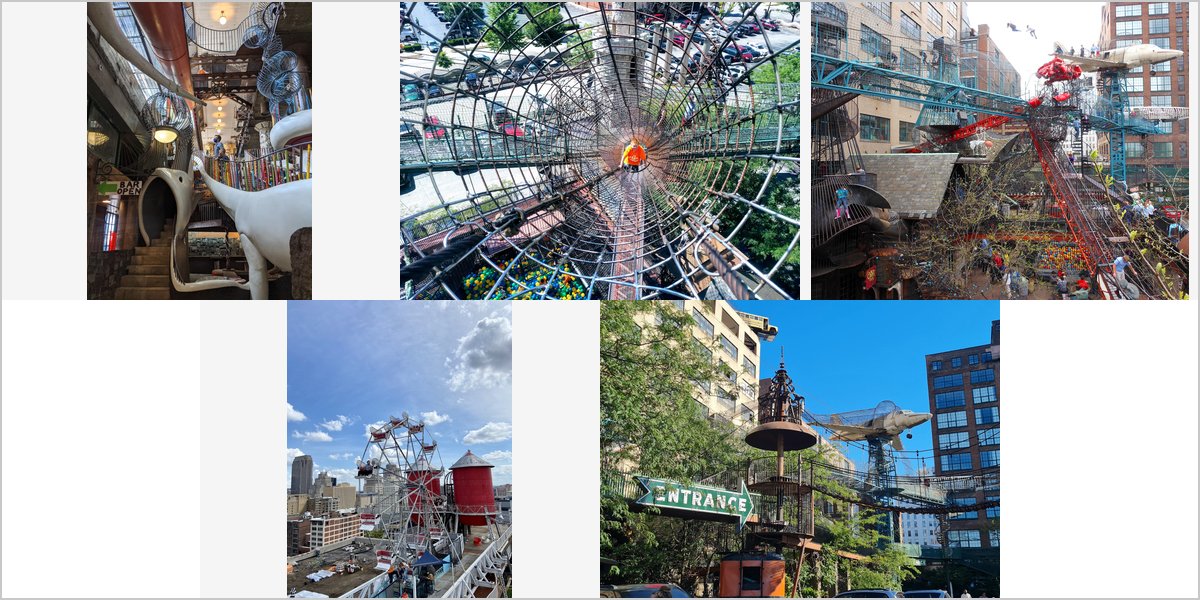
May 5, 2026
The City Museum: Field Notes on the Strangest Venue in St. Louis
Salvaged architecture, mosaic, tunnels and a rooftop, all crammed into a warehouse. Nothing about this venue is conventional, including the lighting.
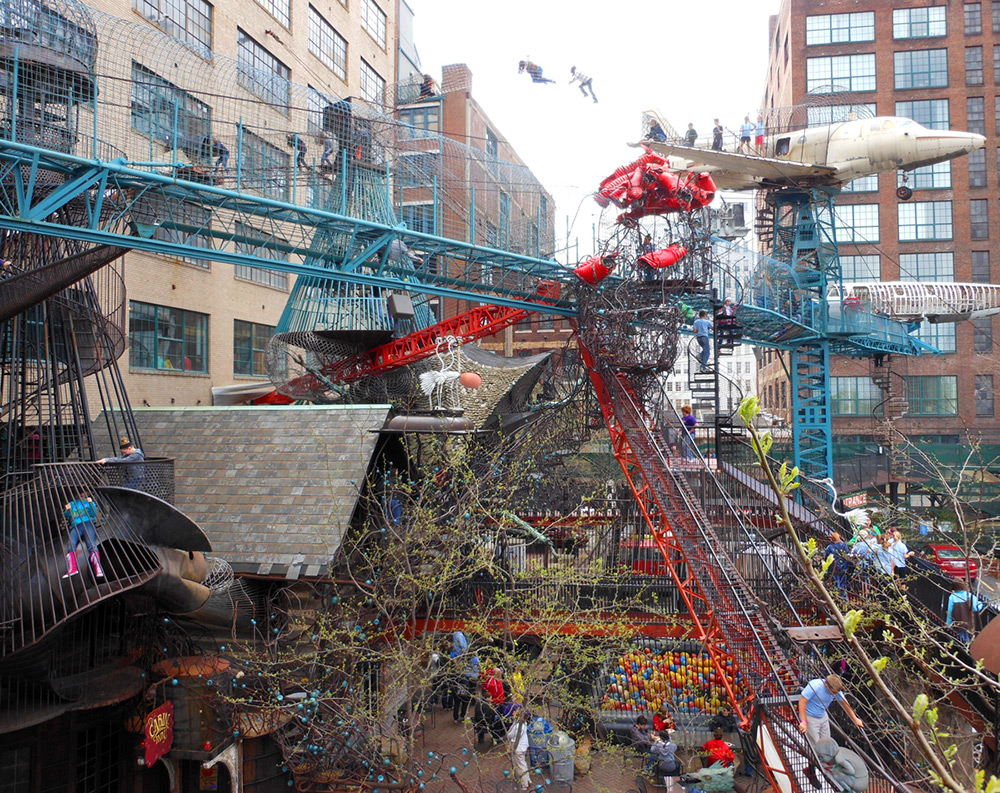
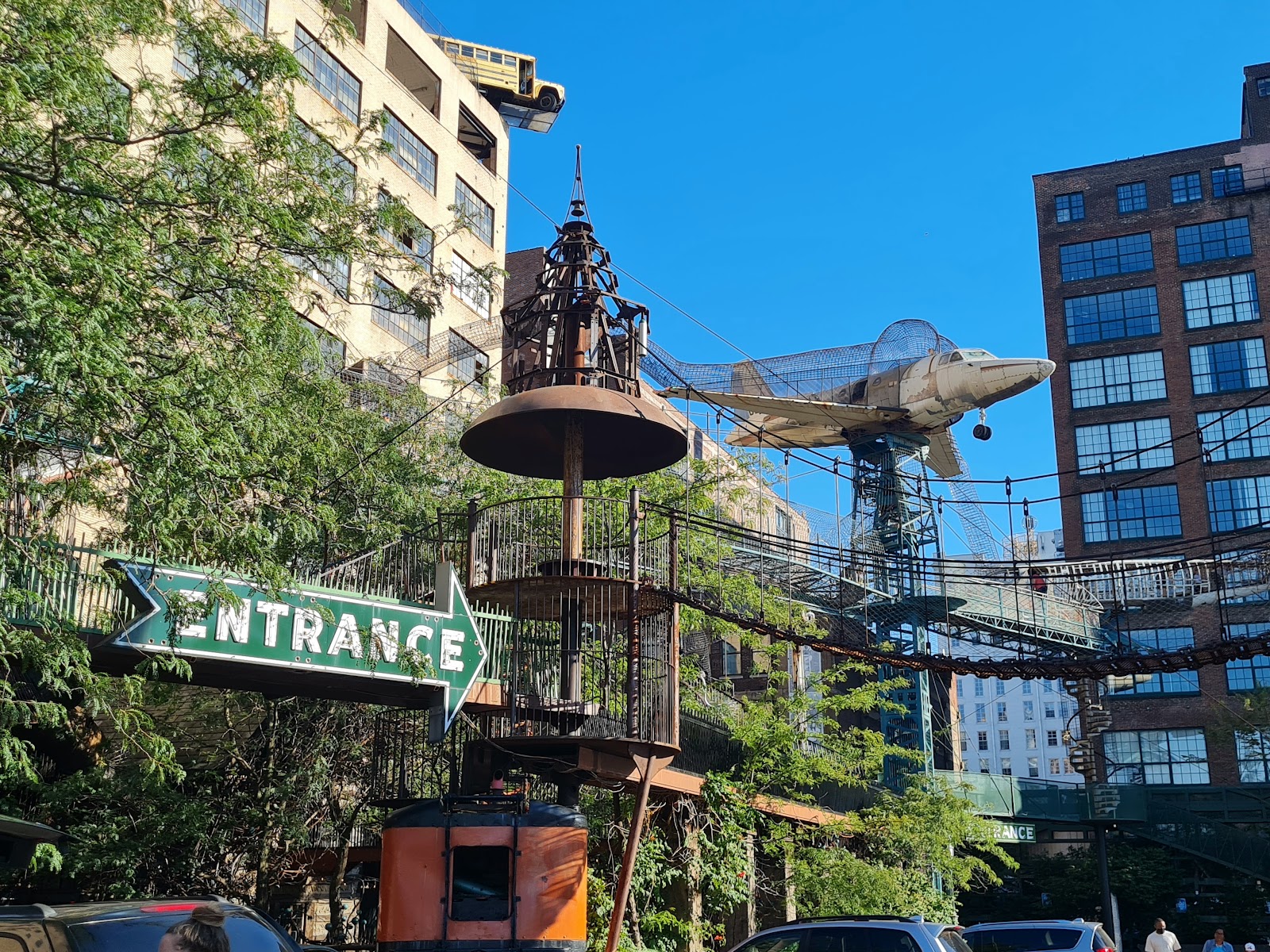
The City Museum occupies a former shoe warehouse in downtown St. Louis, filled since the 1990s with salvaged architectural fragments, mosaic, ironwork, tunnels, caves and constructed passageways, plus a rooftop with additional attractions. It is less a museum than an inhabited sculpture, and it hosts weddings and private events.
Photographically it is the most unusual venue in this city and possibly in this series. The interiors are dense, dark, textured and deliberately disorienting. There is salvaged stone, terracotta, mosaic and ironwork everywhere, often at close quarters. Ceilings vary from warehouse-high to crawl-space low. And the rooftop is an entirely separate proposition with open sky.
These are field notes on four problems. We have not photographed a wedding at the City Museum; dense salvaged interiors and rooftop light behave predictably even when the space does not. Which areas your booking includes, whether the public is present and rooftop access are for their events team — and public presence is the question that matters most here.
City Museum at a glance
| Where | Washington Avenue, downtown St. Louis, Missouri |
| Character | Former shoe warehouse filled with salvaged architecture, tunnels and a rooftop |
| Light | Dense, dark and textured inside; open sky on the roof |
| Ceilings | Everything from warehouse-high to crawl-space low |
| Ask first | Whether the public is present, and what rooftop access is included |
Problem one: the backgrounds are louder than the couple
This is the defining issue. Salvaged architectural fragments, mosaic, ironwork and terracotta are visually dense — every surface has pattern, texture and detail. Stand a couple in front of that and they compete with it rather than dominating it. The photograph becomes a picture of an extraordinary wall that happens to contain two people.
Three fixes, and all three are needed. Separation: move people well clear of the busy surface so a wide aperture can soften it into tone. Longer lenses: compression and shallow depth of field turn detail into texture. And light hierarchy: make the couple the brightest thing in frame, which almost always means adding light to faces even in the middle of the day.
That third point is the decisive one and it applies to every dense venue. You are not lighting the room — you are deciding what the viewer looks at first. A stop and a half of separation between the couple and the background does more for the photograph than any amount of careful framing.
Problem two: the ceiling height changes constantly
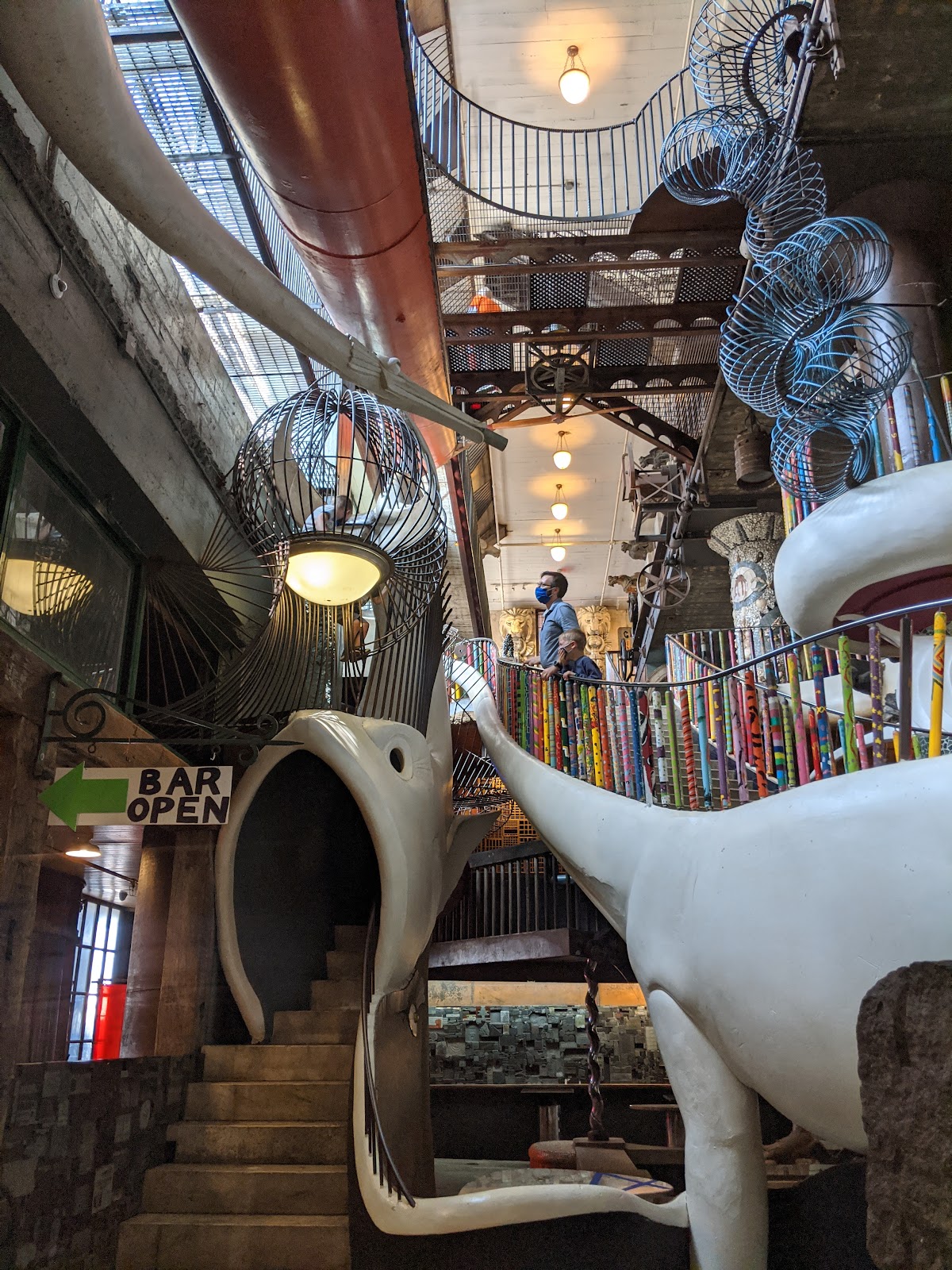
In a single sequence you may move from a warehouse volume with a high ceiling to a low tunnel to a stairwell to a confined constructed space. That matters because it changes what lighting technique works from one frame to the next.
In the high spaces, bounce flash is useless and light must come from stands. In the low spaces, bounce flash works beautifully — a ceiling two and a half metres up returns light strong and soft. So the correct technique inverts within a single venue, which is unusual and catches people out.
Practically, the answer is a flexible lighting setup rather than a fixed one: an on-camera flash with a modifier that can be bounced or aimed forward, plus one light on a stand that can be moved. Anything that takes five minutes to reconfigure will not keep up with a venue that changes shape every twenty metres.
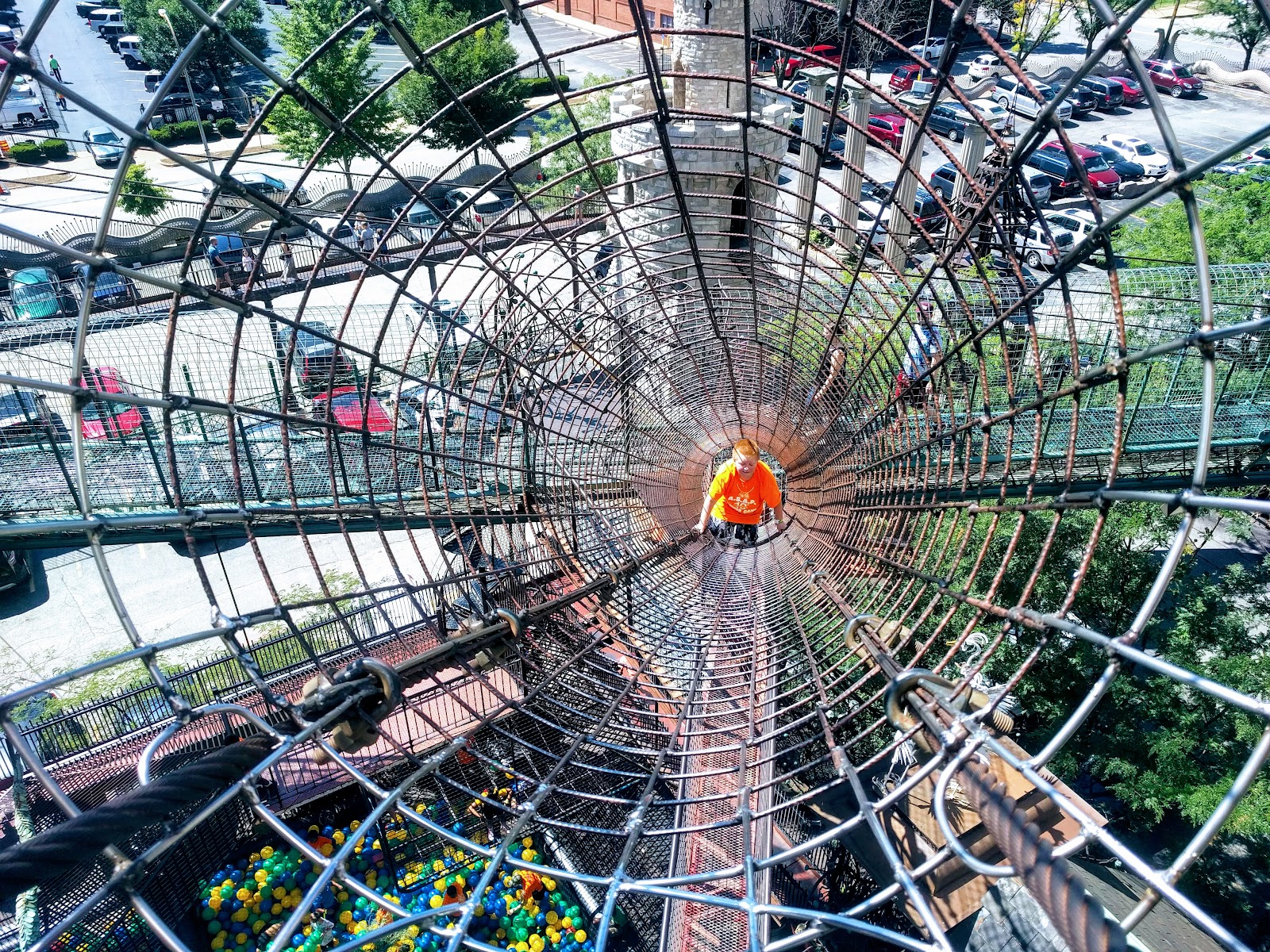
Problem three: it is dark, and the darkness is deliberate
The interiors are dimly lit on purpose — the atmosphere depends on it, and the constructed passages and caves are meant to feel enclosed and mysterious. Flooding them with light destroys the effect and produces frames that look like a warehouse full of junk rather than an immersive environment.
So light selectively. Put light on people and leave the space dark, exposing so the couple sits two or three stops above the ambient. That keeps the venue’s character intact while making your subjects legible, and it is the same principle that governs atmospheric theatres.
For the wide frames that show the scale and strangeness of the place, shoot at the ambient level and accept high ISO. Those frames are about the environment rather than about faces, and noise matters far less than atmosphere.
Problem four: the public, and what the rooftop offers
The City Museum is a popular attraction, and the single most consequential question is whether the public is present during your event. With exclusive access it is an extraordinary private playground; with the public present it is a busy attraction in which you are also having a wedding, and every wide frame will contain strangers, many of them children.
Ask directly, get it in writing, and plan accordingly. If the public is present, the answer is tight frames and longer lenses throughout, plus whichever areas are reserved for you.
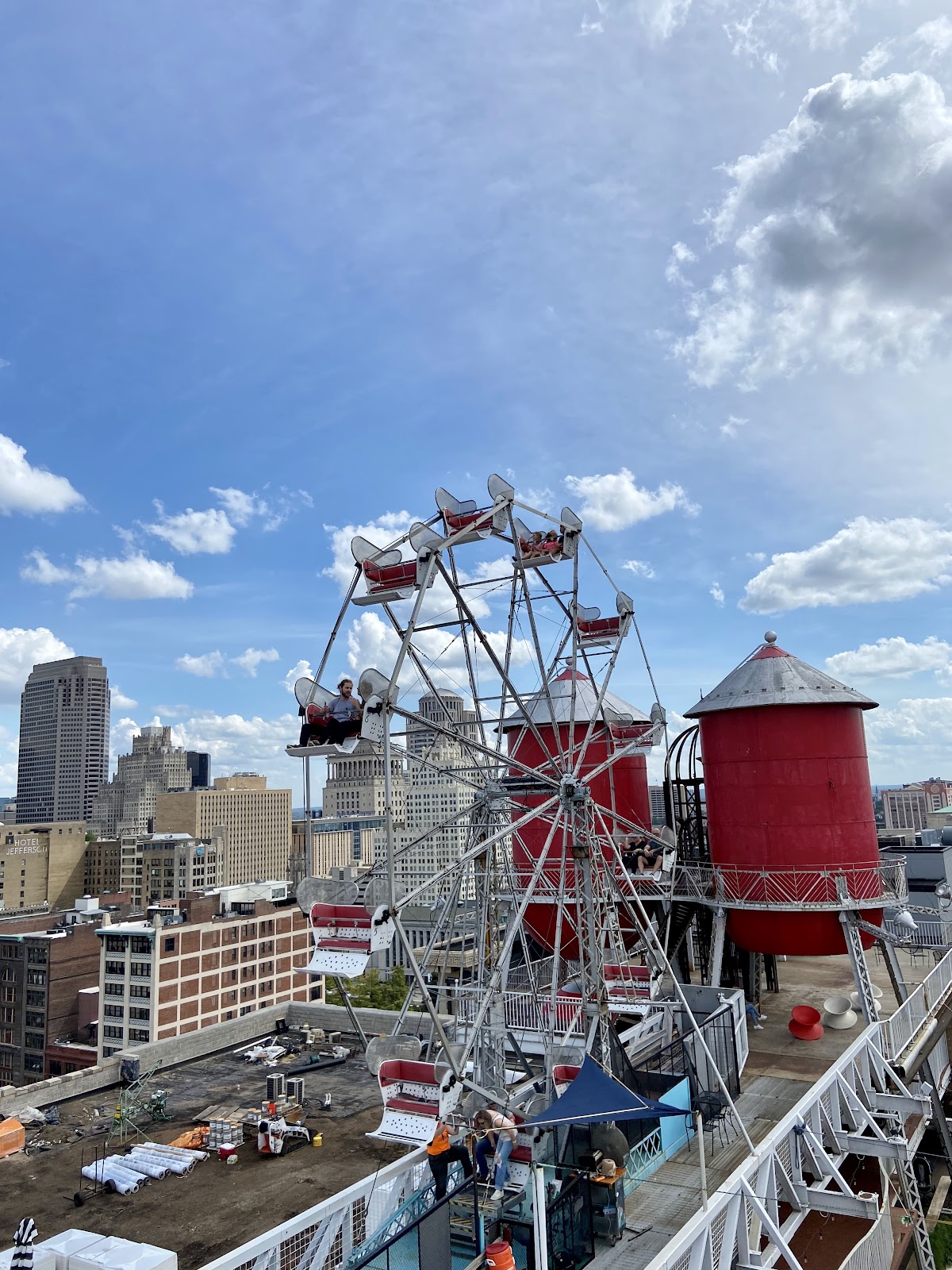
The rooftop is the counterweight to everything above. Open sky means real daylight, room to spread out, and a horizon — which makes it the place for groups, for flattering portraits and for the twenty minutes after sunset when downtown St. Louis lights up. Confirm access and timing, because it is the one space here that gives you conventional good light.
And do go outside at street level too. Washington Avenue has a strong stock of early twentieth-century warehouse and commercial architecture with cast-iron and terracotta detail, which photographs superbly in raking late light and provides a calm counterpoint to the interior’s density.
What works in your favour
- Genuinely unlike any other venue — salvaged architecture, mosaic, tunnels and caves
- Low-ceilinged spaces make bounce flash work beautifully, unusual in a large building
- A rooftop with open sky for groups, portraits and a downtown dusk frame
- Washington Avenue’s warehouse architecture outside is excellent in raking light
- Wide ambient frames of the interior are genuinely arresting
What to plan around
- Extremely dense backgrounds compete with the couple unless separation and light hierarchy are managed
- Ceiling heights change constantly, so the right lighting technique inverts within one venue
- Deliberately dark interiors; lighting the space destroys its character
- If the public is present, strangers appear in every wide frame
- Disorienting layout means scouting is essential rather than optional
More frames from City Museum
City Museum wedding photography: common questions
Why is this venue hard to photograph people in?
Because the backgrounds are visually louder than the couple. Salvaged architecture, mosaic and ironwork have pattern and texture on every surface, so people compete with them rather than dominating. Move well clear of busy surfaces, use a longer lens at a wide aperture, and light faces so your subjects are the brightest thing in frame.
Does bounce flash work there?
In some rooms and not others, which is the unusual part. The low-ceilinged tunnels and constructed spaces return bounced light beautifully, while the warehouse-height volumes return almost nothing. The correct technique inverts within a single venue, so bring a flexible setup rather than a fixed one.
Should we light the interiors brightly?
No — the darkness is deliberate and the atmosphere depends on it. Light people selectively so the couple sits two or three stops above the ambient, and leave the space dark. Flooding it produces frames that look like a warehouse full of salvage rather than an immersive environment.
What is the most important thing to confirm?
Whether the public is present during your event. With exclusive access it is an extraordinary private space; with the public present every wide frame will contain strangers, many of them children, and you are shooting tight with long lenses all day. Get the answer in writing.
What does the rooftop add?
Everything the interior cannot: open sky, real daylight, room to spread out for groups, and a horizon. It is also where the twenty minutes after sunset works, with downtown St. Louis lighting up. Confirm access and timing — it is the one space here with conventional good light.
More St. Louis venue guides
We are writing a photographer’s guide to every venue we would happily shoot in St. Louis. Here are three more, plus the full index:
- The Gateway Arch: Field Notes on Photographing 630 Feet of Steel
- Hotel Saint Louis: A Walk-Through of an 1893 Union Trust Building
- The Missouri Botanical Garden: Reading the Light Across 79 Acres
All St. Louis Wedding Venues →
Planning a wedding at City Museum?
This venue is a lighting puzzle and a background puzzle at once, and it is one of the more enjoyable ones. Tell us your date and whether the public will be present, and we will plan accordingly.