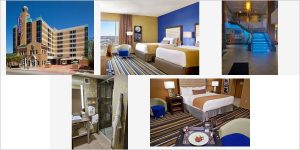
 Hotel Saint Louis: A Walk-Through of an 1893 Union Trust Building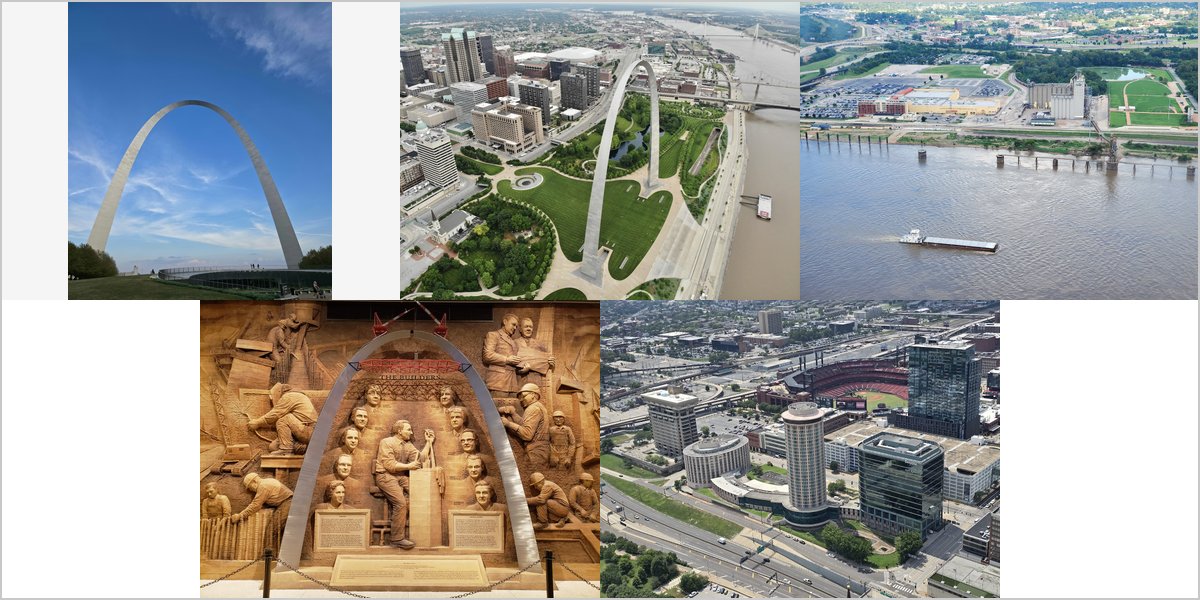
June 23, 2026
The Gateway Arch: Field Notes on Photographing 630 Feet of Steel
Six hundred and thirty feet of stainless steel. The only real question at this venue is what distance you stand at, and there are exactly three good answers.
The Gateway Arch was designed by Eero Saarinen, completed in 1965, and stands 630 feet high on the Mississippi riverfront in St. Louis — a stainless steel catenary curve that is both the tallest monument in the United States and one of the most recognisable structures in the world. The surrounding grounds were substantially redesigned and reopened in recent years, and the whole site is a national park.
Photographically the Arch is a peculiar subject, and the peculiarity is its proportions. It is enormous, very thin relative to its height, and made of a material that behaves like a mirror. That combination means it photographs well from three specific distances and badly from everywhere in between — which is not obvious, and is why most Arch photographs are disappointing.
These are field notes on four problems. We have not photographed a wedding at the Arch; catenary geometry and stainless steel behave predictably. Permits, which areas may be used and what the National Park Service allows are entirely theirs, and a federal site has published requirements and lead times.
The Gateway Arch at a glance
| Where | Mississippi riverfront, downtown St. Louis, Missouri |
| Completed | 1965, designed by Eero Saarinen; 630 feet high |
| Material | Stainless steel — reflective, and it takes its colour from the sky |
| Administered by | National Park Service; permits and published rules apply |
| The core problem | It photographs well at three distances and poorly at all others |
Problem one: the middle distance does not work
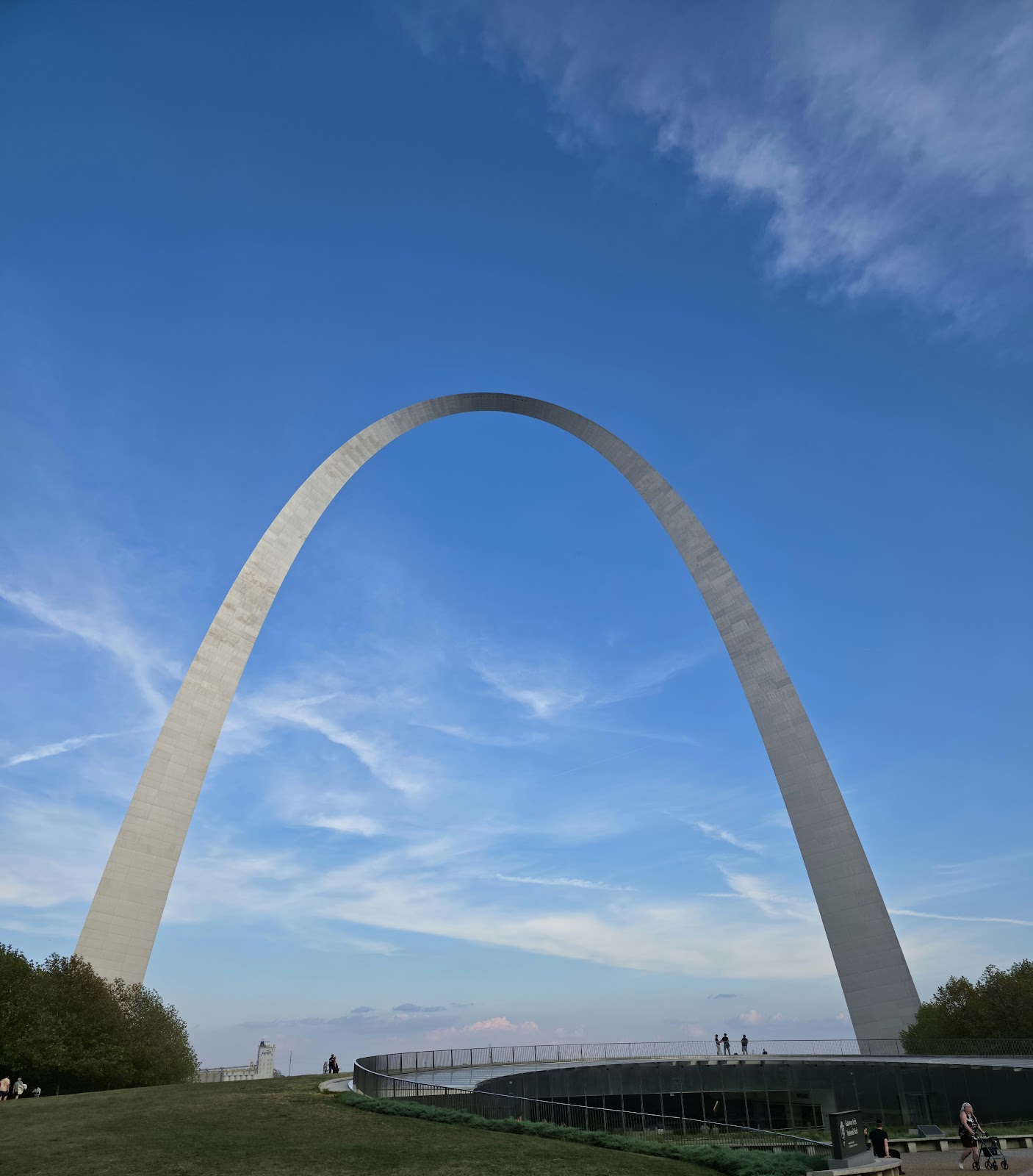
At close range, looking up a leg, the Arch becomes an abstract sweeping curve filling the frame — a strong graphic image with the couple small at its base. From a long distance, the whole span fits with room around it and people read as figures in a landscape. Both of those work.
The middle distance is the trap, and it is where almost everyone stands. From fifty to a hundred metres you are too close to fit the whole Arch and too far for the curve to be dramatic, so you get a frame containing part of a leg and a lot of sky, with the couple awkwardly scaled against it. It looks like a photograph of nothing in particular.
So decide before you walk out: close enough to look up the leg, or far enough back to fit the span. There is no useful compromise, and knowing that in advance saves twenty minutes of wandering.
Problem two: stainless steel takes its colour from the sky
The Arch’s skin is reflective, which means it has almost no colour of its own — it shows whatever the sky is doing. Under flat grey overcast it is a dull grey curve, visually inert. Under a blue sky it is a bright silver band. At sunset and dusk it picks up the entire colour of the sky, and the two faces read differently because they face different directions.
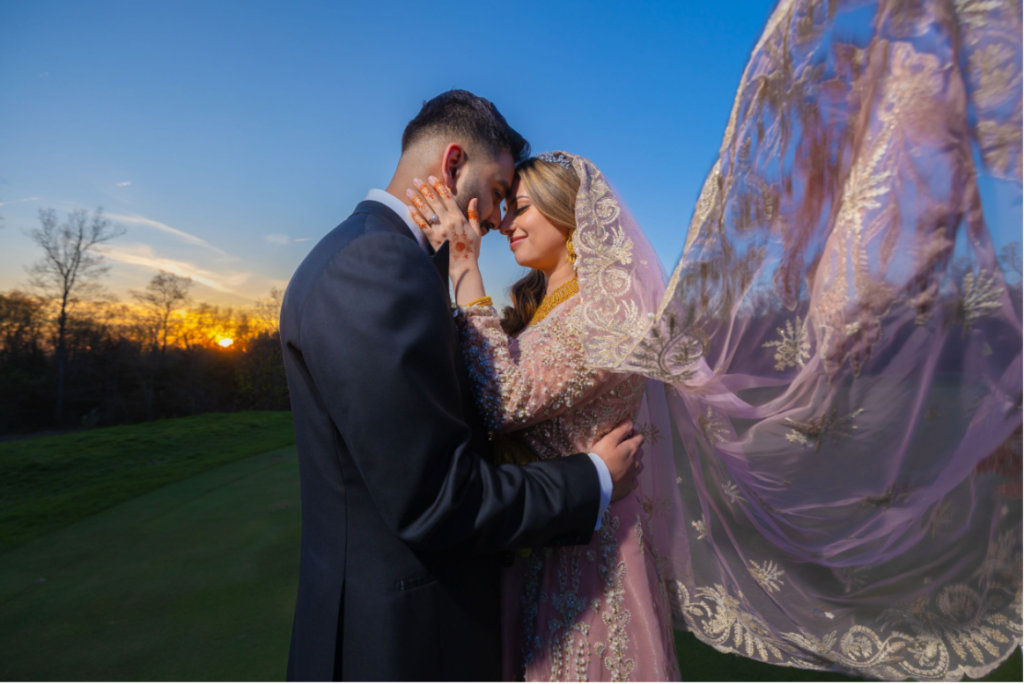
That makes the twenty minutes after sunset the single best time to photograph it, by a wide margin. The steel goes pink, then lilac, then deep blue, and because it is a curve the colour gradates along its length. Nothing else in the city does that, and it lasts about twenty minutes.
The practical instruction is simple: whatever else the timeline contains, be on the Arch grounds for those twenty minutes. It is short, it does not wait, and it produces the best frame of the day. Put it in the schedule as a fixed appointment.
Problem three: orientation, and shooting a thin object against sky
The Arch runs broadly north-south, so its faces look east and west. Morning sun lights the east face; evening sun lights the west face. In the middle of the day both are bright and the structure flattens, which is another reason midday is the worst time here.
Because the Arch is very thin against a very large sky, exposure is mostly a question of how you handle the background. Expose for the sky and the Arch reads as a clean shape; expose for the couple in shade and the sky blows out and the Arch’s edge disappears into it. The second failure is common and it destroys the subject.
So light the couple rather than lifting the exposure. A flash on faces, with the ambient set for the sky, keeps both the Arch’s shape and the couple’s skin. That is the single technique that separates good Arch photographs from silhouettes-by-accident.
Problem four: it is a federal site, and the grounds are large
National Park Service rules apply: permits for ceremonies, specified locations rather than free run, published restrictions on equipment and decoration, and lead times. Ask early, in writing, and arrive with a short specific list rather than a general request.
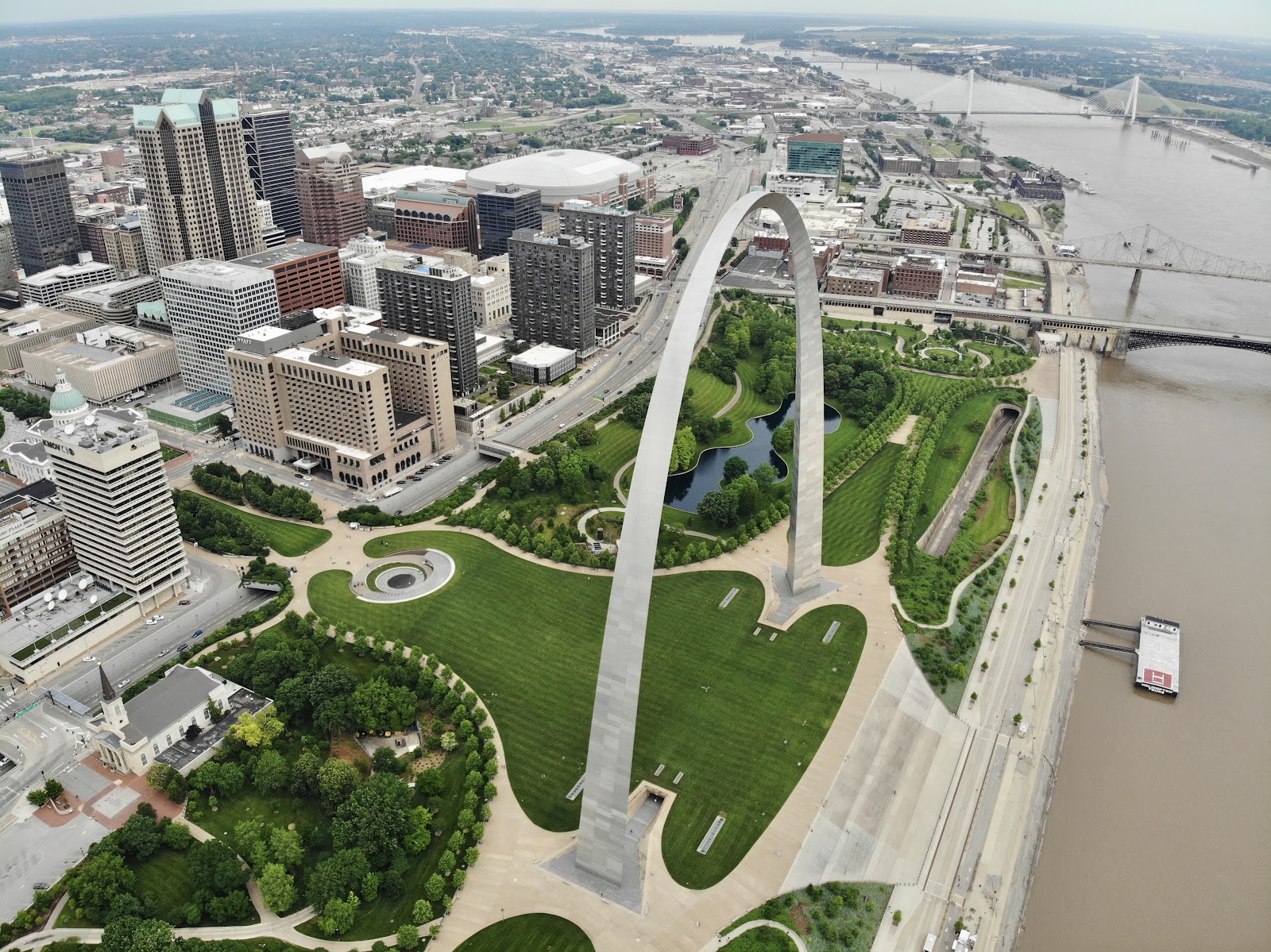
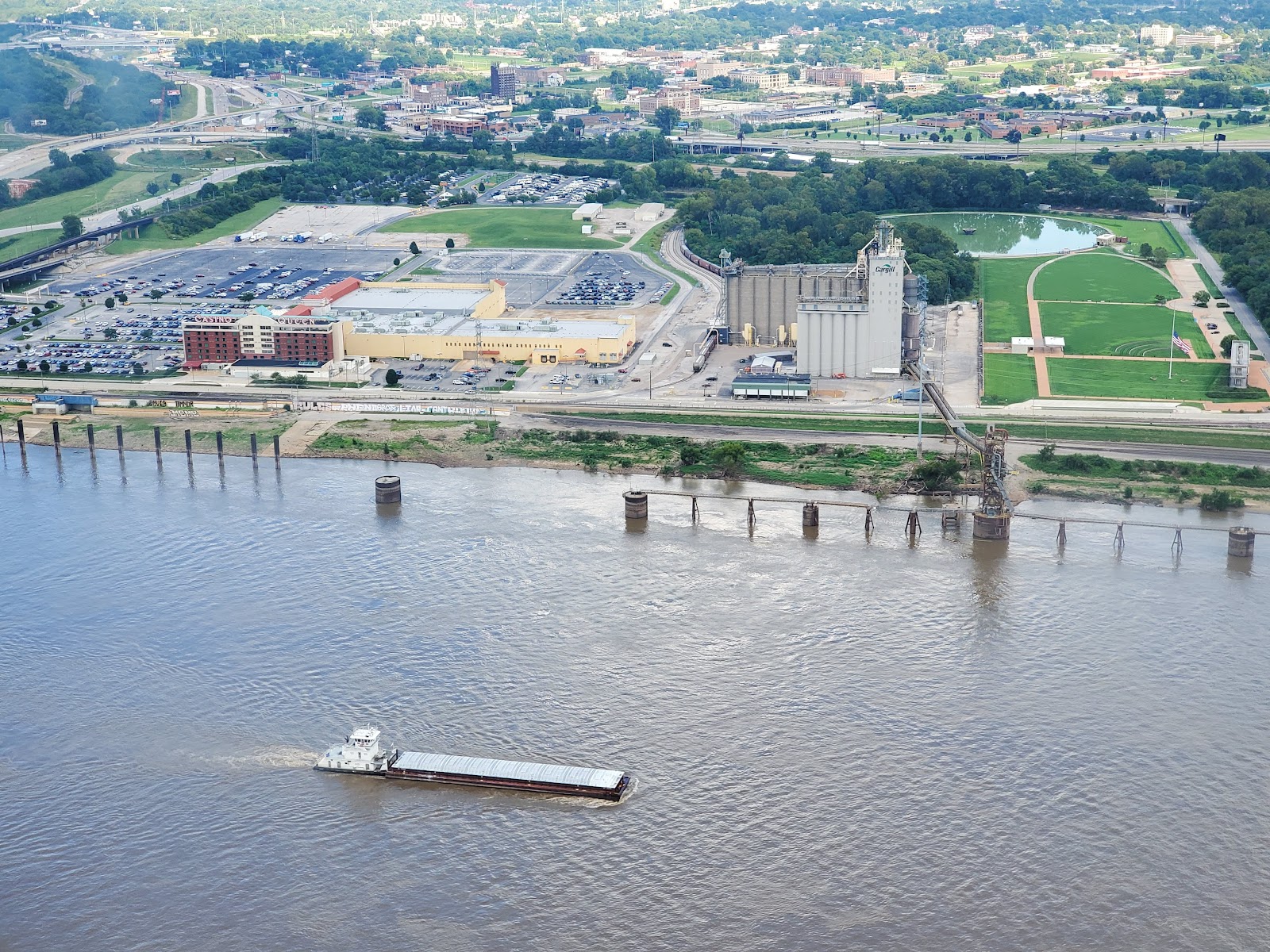
The grounds are also substantial — redesigned with lawns, paths and tree planting running down to the river — which means real distances. Getting from the Old Courthouse end to the riverfront to a long-distance viewpoint involves proper walking, and a federal access window will not stretch for a slipping schedule.
Two further practicalities. The riverfront is exposed and windy, which rules out large modifiers and will move veils continuously. And the site is heavily visited, so expect other people in any frame taken at a distance — which is another argument for the dusk window, when the crowds thin and the light is best simultaneously.
Finally, the Mississippi itself is worth using. Water at the base of a 630-foot monument gives you reflections, a foreground and a sense of place, and the riverfront steps give elevation changes to compose with.
What works in your favour
- One of the most recognisable structures in the world, and instantly identifiable
- Stainless steel at dusk picks up the whole sky and gradates along the curve — spectacular
- Close range up a leg gives a strong abstract graphic frame
- Redesigned grounds with lawns, paths and river frontage
- The Mississippi provides reflections, foreground and elevation changes
What to plan around
- The middle distance — where most people stand — produces poor frames
- Under flat overcast the steel is visually inert
- Midday flattens both faces; it is the worst time to be there
- Federal permits, specified locations, equipment limits and lead times
- Exposed windy riverfront, heavily visited, with real walking distances
More frames from The Gateway Arch
The Gateway Arch wedding photography: common questions
Where should you stand to photograph the Arch?
Either very close, looking up a leg so the curve fills the frame abstractly, or far enough back that the whole span fits with room around it. The middle distance — roughly fifty to a hundred metres — is where almost everyone stands and it produces the worst frames: too close to fit the Arch, too far for the curve to be dramatic.
When is the best time of day?
The twenty minutes after sunset, by a wide margin. The stainless skin has almost no colour of its own, so it takes the sky’s — going pink, then lilac, then deep blue, gradating along the curve. Nothing else in the city does that. Put it in the schedule as a fixed appointment, because it is short and it does not wait.
How do you avoid silhouetting the couple?
Light them rather than lifting the exposure. Because the Arch is thin against a very large sky, you have to expose for the sky or its edge disappears — so set the ambient for the sky and put a flash on faces. That single technique separates good Arch photographs from accidental silhouettes.
Is overcast a problem?
Yes, more than at most venues. The Arch is a mirror, so under flat grey cloud it reflects flat grey and becomes visually inert — a dull curve with no life in it. Blue sky makes it a bright silver band; dusk makes it extraordinary. Cloud is the one condition that genuinely diminishes it.
What are the site rules?
National Park Service rules: a permit for a ceremony, specified locations rather than free run, published restrictions on equipment and decoration, and real lead times. Ask early and in writing, arrive with a short specific list, and budget for the distances — the grounds are large and the access window will not stretch.
More St. Louis venue guides
We are writing a photographer’s guide to every venue we would happily shoot in St. Louis. Here are three more, plus the full index:
- Hotel Saint Louis: A Walk-Through of an 1893 Union Trust Building
- The Missouri Botanical Garden: Reading the Light Across 79 Acres
- The Moonrise Hotel: A Season-by-Season Guide
All St. Louis Wedding Venues →
Planning a wedding at The Gateway Arch?
Two distances work and one does not, and the whole thing hinges on twenty minutes after sunset. Tell us your date and we will give you the exact window and help with the federal permit lead time.