 The House of Blues, Cleveland: What It Suits and What It Does Not
The Agora, Cleveland: Photographing a Vaudeville Theatre Turned Music Venue
A vaudeville theatre turned music venue has period bones and a modern rig. They want opposite things.
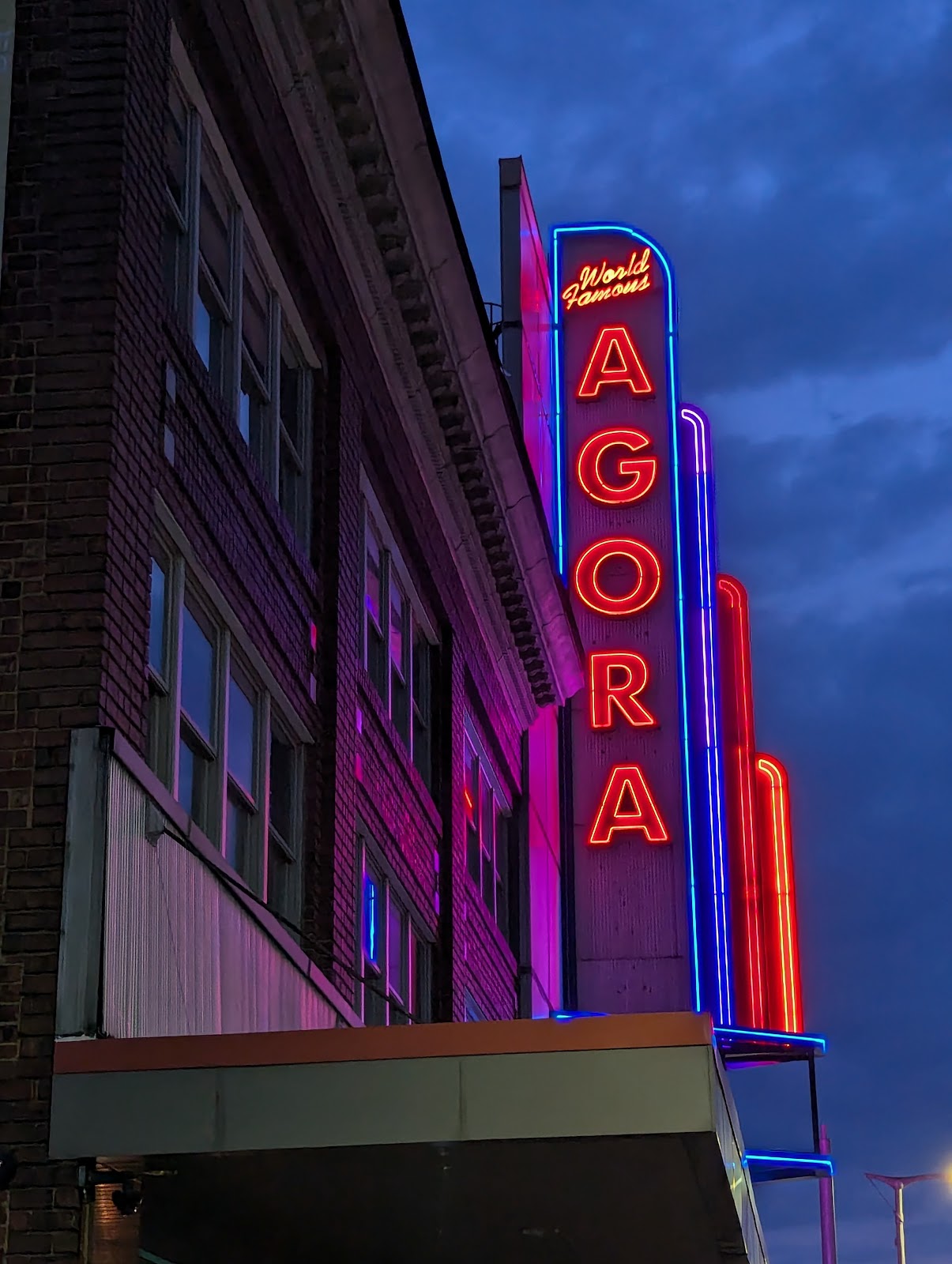
The Agora’s history reaches back to its roots as a vaudeville theatre in the early twentieth century, as its own description notes, and it has since become a music venue.
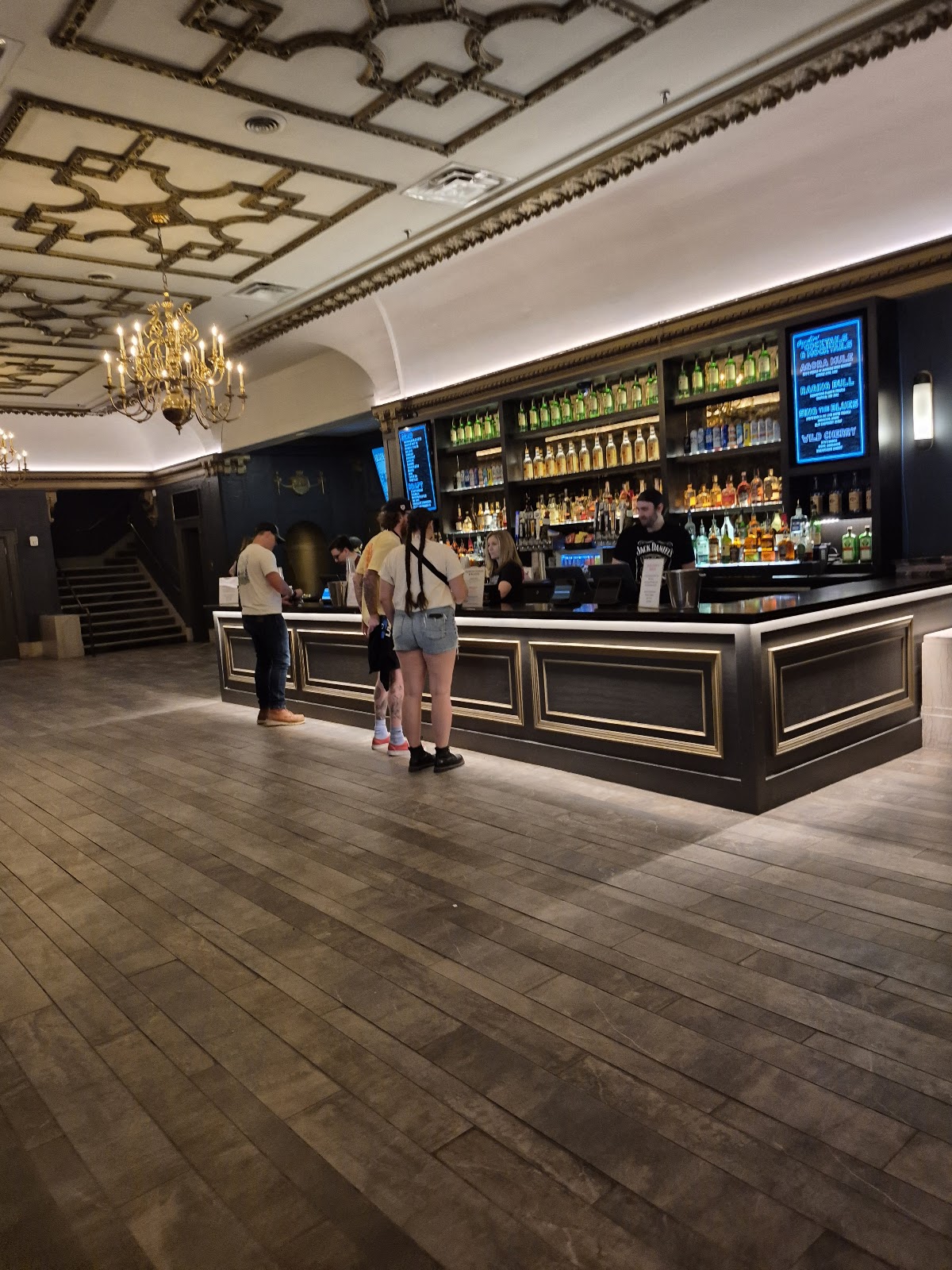
That history is the venue’s own logic and it explains the conflict at the centre of photographing there. The bones are a theatre of the 1910s or 1920s: a proscenium, a balcony, plasterwork, a raked or flat floor where seating used to be, and ornament concentrated where an audience’s eye would travel. The overlay is a working music room: a lighting rig designed to make a stage exciting, black-painted surfaces to make that rig read, sound equipment, and a bar.
Those two layers want opposite things. Period ornament reads only when light crosses it at an angle. A music rig is coloured, moving, and aimed at a stage rather than at faces. Black paint absorbs everything. So almost every decision here is about which layer a given frame belongs to.
We have not photographed a wedding at the Agora; vaudeville theatres converted to music venues behave consistently. What the house lighting can be set to and who operates it, whether the stage rig is available, and whether the house lights can be brought up plain for a few minutes are the questions for their team — the last is the most valuable and the least often asked.
The Agora at a glance
| Where | Cleveland, Ohio |
| Character | An early twentieth-century vaudeville theatre now working as a music room |
| Two layers | Period ornament that needs raking light; a rig that is coloured and overhead |
| The conflict | Black paint and a stage rig erase the architecture |
| Ask first | Lighting control and operator, stage rig, plain house lights for five minutes |
The period layer, and how to make it appear
The architecture is the thing worth recovering, because it is what makes the venue specific rather than merely atmospheric. A proscenium arch, balcony fronts, plaster mouldings and any surviving decorative ceiling are three-dimensional objects, which means they read only when light crosses them at an angle and casts small shadows.
Under a house wash — flat, downward, and usually low — the same ornament flattens into a dark field and photographs as nothing at all. One source placed to one side of an arch or a balcony front puts a small shadow beside every moulding and the detail returns. It is a one-light problem rather than a big-kit one, and it is the single most valuable technique in a converted theatre.
Black paint is the layer that makes this harder, and it is worth naming as a condition rather than a complaint. Music venues paint surfaces dark so that a lit stage reads against them, and dark paint absorbs rather than returning light — so the usable ambient is far below what the fitting count suggests, bounce returns nothing, and every source has to be direct and modified with enough power for the distance.
The compensation is steep fall-off, which is genuinely useful: a couple three metres in front of anything else sits against natural darkness with no equipment at all. That is free separation and it is the opposite of the problem a pale venue presents.
The most valuable single request is whether the house lights can be brought up plain — white, undimmed, no colour — for a few minutes before guests arrive. That is when the room can be photographed as a room: the architecture legible, the volume readable, the balcony and proscenium in their own right. It costs a conversation rather than equipment, and almost nobody asks for it.
A balcony is the other period asset and it is the position most often missed. From a balcony front the camera is above the floor, which turns a crowd into a pattern, shows the whole volume rather than a corner of it, and puts the proscenium at eye level rather than above it. It takes two minutes of walking and it is the frame that shows what the building is.
The music layer, and what to do with it
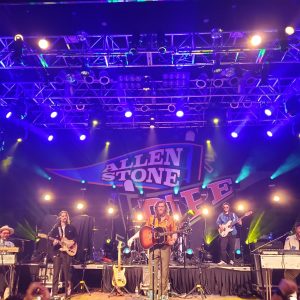
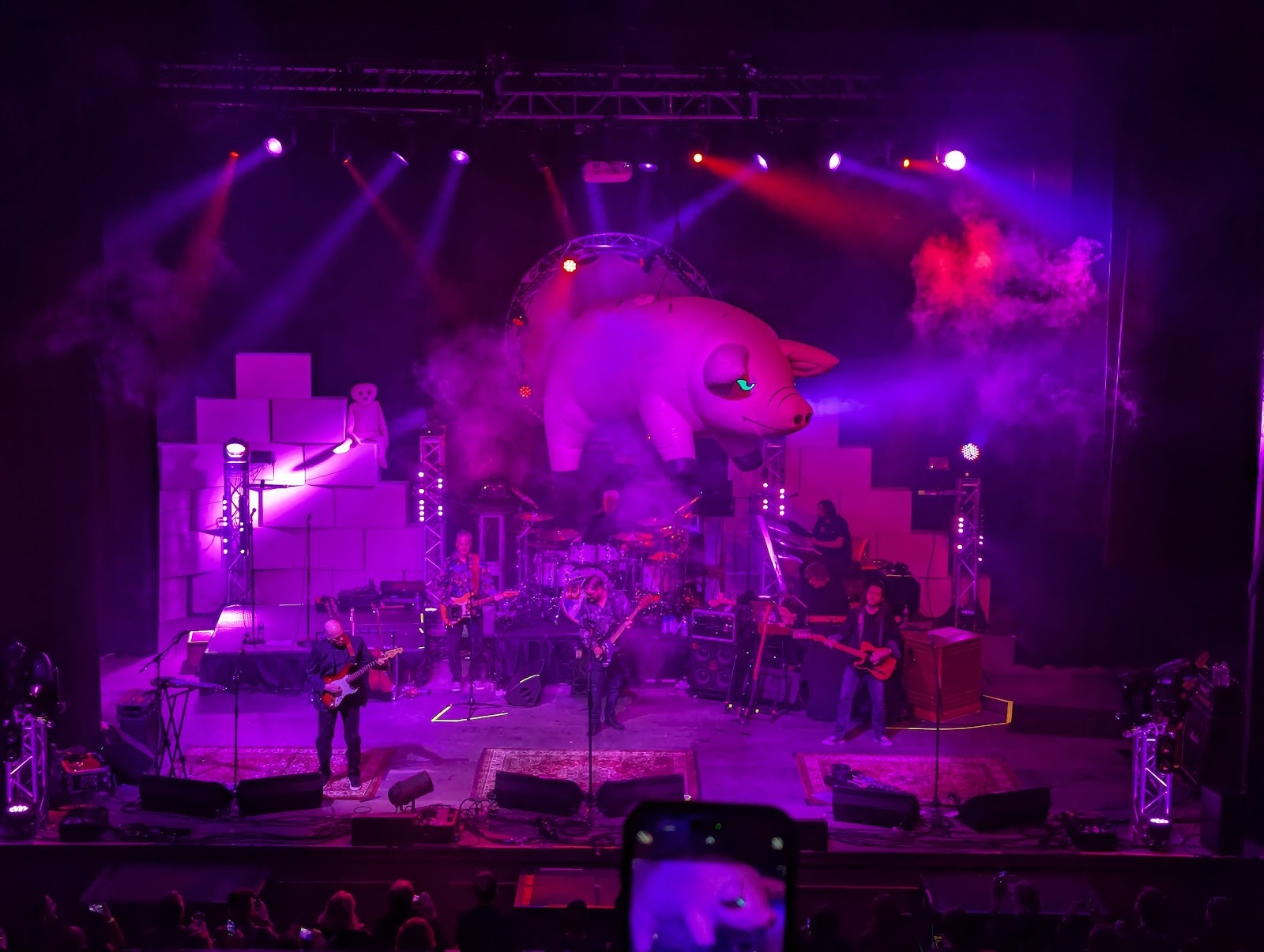
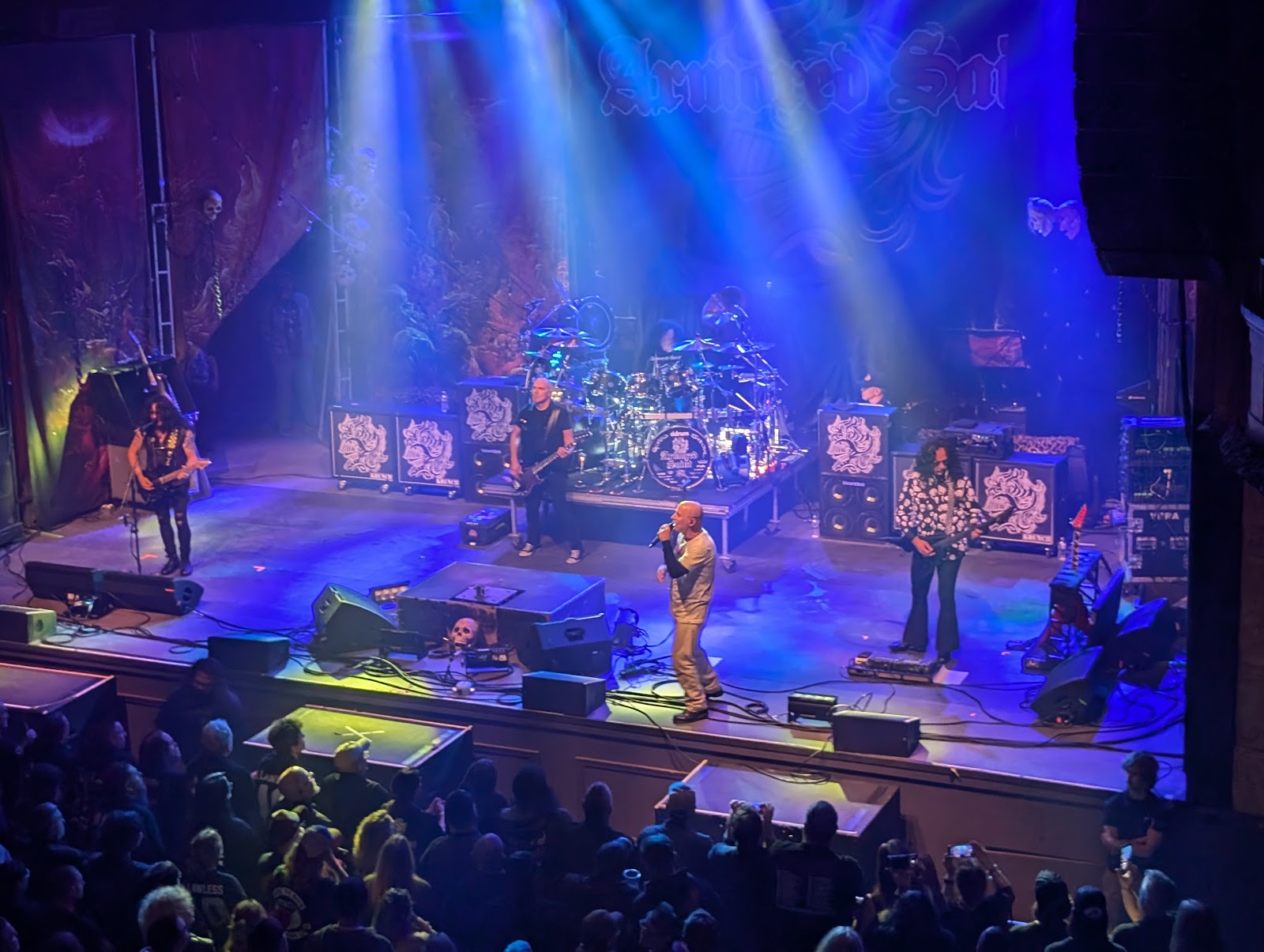
A music rig is coloured by design and that is the condition to plan around rather than fight. A saturated coloured source emits only a narrow band of wavelengths, so skin under it records in that colour with almost nothing in the other channels to recover from — and a face lit by two coloured sources from two directions has two casts at once, with no single global correction available.
So one gelled source has to own the faces: off the camera axis at face height, modified so it does not announce itself, gelled to a chosen temperature with white balance set to it, and set bright enough on skin to dominate whatever the rig is doing. The room then stays as coloured as it actually is — which is what makes the frame — while the faces stay consistent from one frame to the next.
The level matters more than the power. The aim is to be the dominant source on skin specifically, not to overpower the room: overpowering everything gives a brightly lit couple against a black void, which is a studio portrait with a music venue in the caption.
Motion is the other rig condition. Moving heads, colour changers and cycling programs alter both intensity and hue between one frame and the next, so a burst of three can contain three different colour balances. Where a program cycles, wait for the phase you want rather than shooting through it.
The second approach is worth having alongside the first: commit to the colour deliberately. Silhouettes, shapes, a couple against a lit backdrop, dancing figures reduced to colour and motion — those are strong photographs that need no equipment and no permission, and they often carry more of the venue’s character than a correctly lit frame does. Shooting both rather than choosing is the right answer.
If the stage rig is available outside a performance, it becomes the venue’s best asset rather than its main problem. A single pool of light on an otherwise dark stage, with a couple standing in it in front of an empty room, is one of the strongest frames any venue type can produce — and it needs a board operator rather than equipment, which is why it belongs in the contract rather than in a conversation on the night.
And the view from the stage towards the room is the frame most people miss: a dark volume with a balcony above and the floor receding, seen from a position almost nobody is ever photographed in.
- Graze the ornament with one source, or the architecture disappears
- Ask for the house lights up plain for five minutes before guests arrive
- Go up to the balcony; it is the frame that shows the building
- One gelled source dominates skin specifically, not the whole room
- Shoot the committed-colour version too; it often carries more character
Daylight, outside, and Cleveland's year
A music venue has little or no daylight, so anything that needs to be flattering happens either before guests arrive with lights brought in, in whatever lobby or front-of-house space exists, or outdoors. Establish on arrival whether there is any window, skylight or street-facing glazing; a converted theatre often has a lobby with tall street windows, and if so that is the best light in the building by a wide margin.
Otherwise the portrait coverage belongs outside, and Cleveland’s older commercial fabric is good material: brick and stone at a largely low-rise scale, which means low sun reaches street level and runs the length of a block. Both materials show their texture only when light runs along them, so a short walk to find which side is being raked is worth more than any accessory. Alleys are the most dependable positions, giving directional light from walls on both sides and a contained background with nothing distracting in it.
A theatre facade is the other exterior asset and, where there is a marquee or signage, it is time-critical. A lit sign against a sky that still holds colour exists only in the twenty to thirty minutes after sunset — before that the sign is invisible against a bright sky, and after it the sky is black and the frame becomes a lit sign floating in nothing. Take the sunset time, add fifteen minutes, be in the street with the couple already there, and confirm in advance that the sign will be lit, because outside performance hours that is a request rather than a given.
Cleveland’s weather is largely helpful here. Persistent overcast through much of the late autumn, winter and spring — this is one of the cloudiest major cities in the country — makes any lobby glazing soft and even on the majority of days, and a sealed music room is entirely unaffected by weather, which is the practical argument for this kind of venue in this city.
The casualty is the marquee frame, which needs a sky, and raking light on brick, which needs sun. On a grey day both are diminished, which is worth saying in advance rather than explaining afterwards.
Lake-effect snow in winter is localised, sudden and heavy, and it is a logistics question for guests as much as a photographic one. It is also the best natural fill there is, lifting exactly the shadows a low sun carves while fooling a meter by about two stops — and snow falling through the light of a lit theatre sign is one of the best frames a venue like this can give.
Winter days are short, with sunset in the middle of the afternoon in December, which moves the marquee window early. And a heated venue with cold street air fogs a lens in both directions, so let a body reach ambient before the marquee window rather than carrying it out cold.
More frames from The Agora
The Agora wedding photography: common questions
What are the two layers?
Period theatre bones — proscenium, balcony, plasterwork — and a working music overlay of coloured rig lighting, black paint and sound equipment. They want opposite things.
How do you make the architecture appear?
Place one source to one side of an arch or balcony front so it grazes the ornament and casts small shadows. Under a flat house wash the same detail photographs as nothing.
What is the most valuable request?
That the house lights be brought up plain — white, undimmed, no colour — for a few minutes before guests arrive. That is when the room can be photographed as a room.
What is the most missed position?
The balcony. From its front the camera is above the floor, the whole volume reads, and the proscenium is at eye level. It takes two minutes of walking.
How do you handle the coloured rig?
One gelled source dominating skin specifically, with white balance set to it, so the room stays coloured and the faces stay consistent. And shoot the committed-colour version too.
Why does black paint matter?
Because it absorbs rather than returns light, so the ambient is far below what the fittings suggest and bounce returns nothing. The compensation is steep fall-off, which is free separation.
More Cleveland, OH venue guides
We are writing a photographer’s guide to every venue we would happily shoot in Cleveland, OH. Here are three more, plus the full index:
- The Cleveland Botanical Garden: How the Light Moves
- The Cleveland Museum of Art: What It Suits and What It Does Not
- The Cleveland Zoo: Four Ways Out of the Fencing Problem
All Cleveland, OH Wedding Venues →
Planning a wedding at The Agora?
Ask for five minutes of plain house light. Tell us your date and we will ask.