 Hotel Saint Louis: A Walk-Through of an 1893 Union Trust Building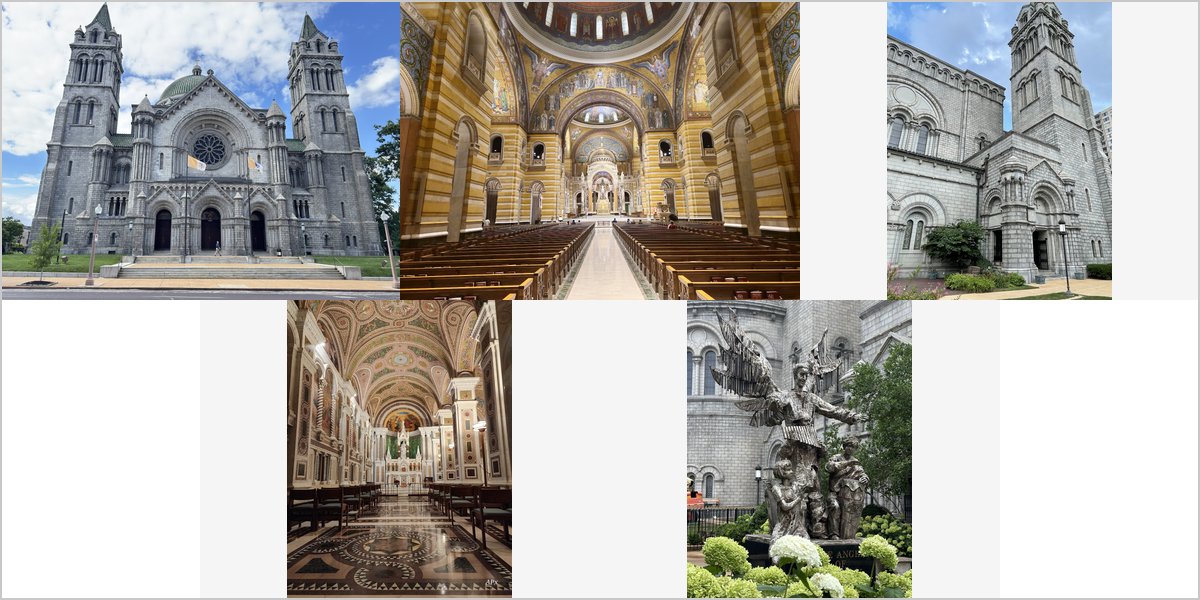
April 28, 2026
The Cathedral Basilica of Saint Louis: Photographing 41 Million Tesserae
Gold glass mosaic is a light source, a mirror and a colour cast all at once. No other building material behaves like it, and nothing else in St. Louis looks like this.
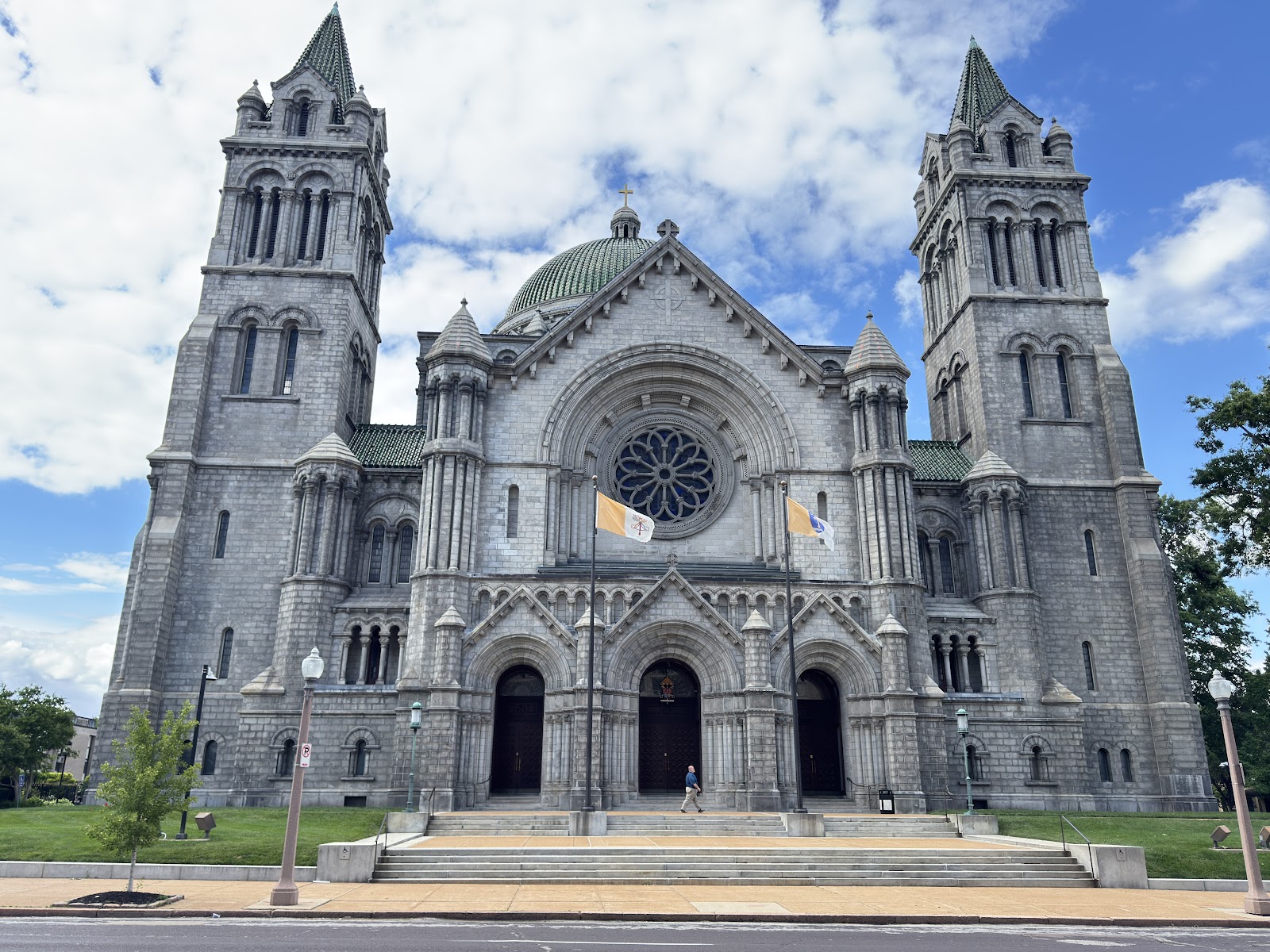
The Cathedral Basilica of Saint Louis was begun in 1907 and consecrated in 1926, built in a Byzantine Revival manner with a great central dome. Its interior is covered in mosaic installed over several decades — on the order of 41.5 million glass tesserae across roughly 83,000 square feet, which makes it one of the largest mosaic installations anywhere in the world.
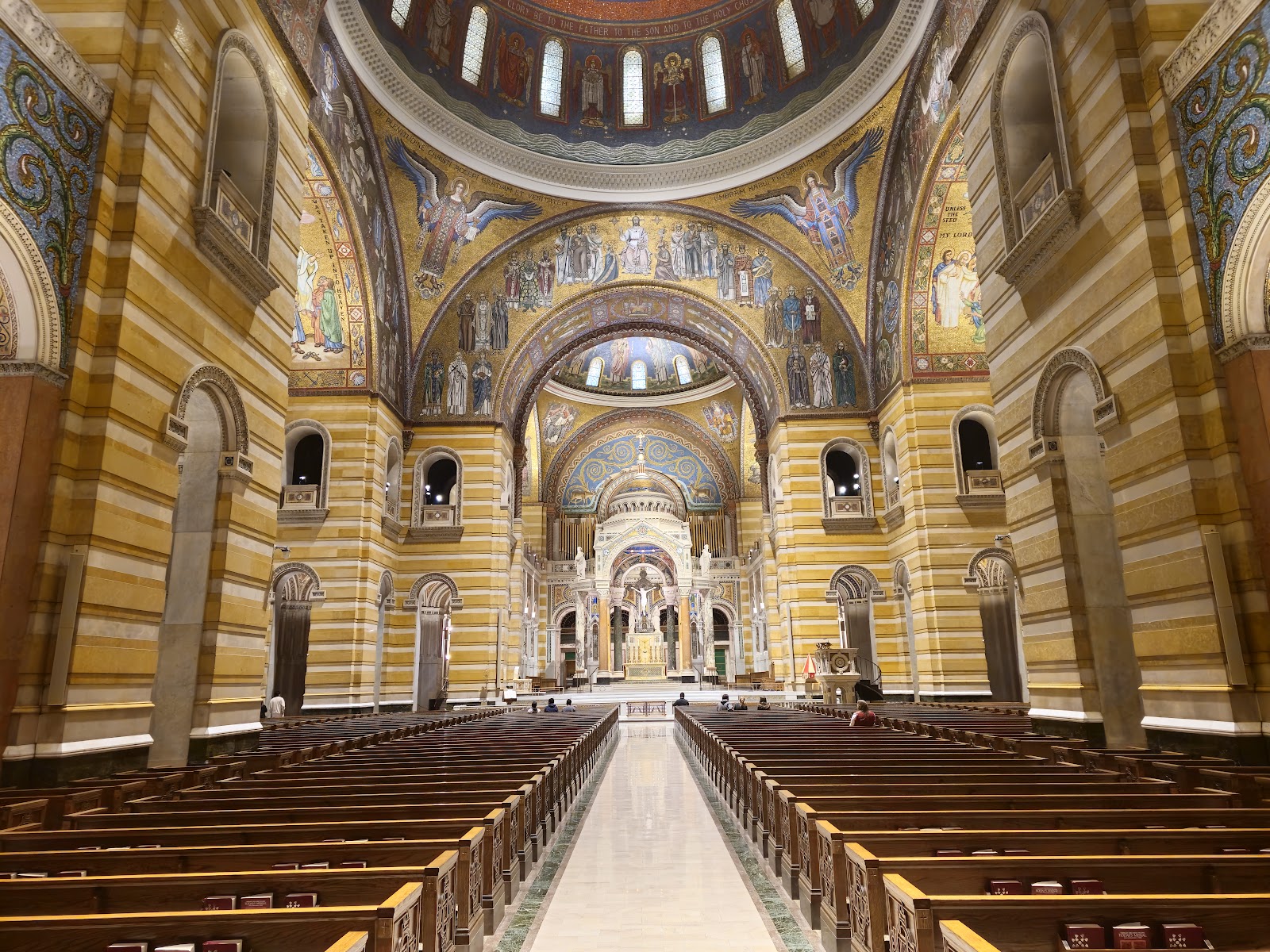
For a photographer, glass mosaic is a genuinely unusual material and it needs understanding rather than merely admiring. Each tessera is a small piece of glass set at a slightly different angle, and many are backed with gold leaf. That means the surface is simultaneously reflective, refractive and strongly coloured — it throws specular glints, it returns coloured light, and it changes appearance as you move relative to it.
This is the technical guide. We have not photographed a wedding here; the optics of gold glass mosaic are consistent wherever it occurs. As an active cathedral, its rules on flash, photographer position and movement during the liturgy are set by the parish and should be assumed firm — ask early, because they determine what the ceremony coverage can be.
Cathedral Basilica of Saint Louis at a glance
| Where | Lindell Boulevard, Central West End, St. Louis, Missouri |
| Built | Begun 1907, consecrated 1926 — Byzantine Revival with a central dome |
| Interior | Around 41.5 million glass tesserae; among the largest mosaic installations on earth |
| Light | Dim, warm, and strongly coloured by gold-backed mosaic |
| Assume | Firm parish rules on flash, position and movement during the ceremony |
Gold mosaic returns coloured light, and it lands on skin
Gold-leaf-backed glass is an efficient reflector and what it reflects is warm — warmer than the tungsten fixtures lighting it. In a building whose walls, vaults and dome are largely gold mosaic, every surface bouncing light onto a face is adding amber, and there is nothing pale or neutral anywhere to balance it.
Uncorrected, that gives skin a strong orange cast with no cool component at all. Corrected globally, the mosaic goes grey-green and the building loses the quality that makes it extraordinary. Neither is acceptable.
The answer is differential: keep the building warm in your white balance, because gold is genuinely gold, and light faces with something closer to neutral so skin retains some coolness. Where flash is not permitted, position matters instead — place people where a paler surface or a window is contributing light, rather than in the middle of a gold vault.
Specular glints, and why the angle you shoot from matters
Because each tessera sits at a slightly different angle, mosaic does not reflect light evenly. It produces thousands of tiny specular glints, and which ones you see depends entirely on where you stand. Move two metres and a dull gold wall becomes a shimmering one, or the reverse.
That is a genuine compositional tool and most photographers never use it deliberately. Before committing to a position, move and watch the wall — there will be an angle where the mosaic catches the light and comes alive, and another where it goes flat. The difference between those two frames is far larger than any exposure adjustment.
It also means the glints will read as bright points in your frame. That is correct and it is what mosaic looks like; do not try to expose them away. Let them sit slightly hot and the surface reads as glass rather than as paint.
Exposing a dim building with a bright dome
The dome is the building’s centrepiece and it is usually considerably brighter than the nave floor, because it is closer to the windows and because gold mosaic high up catches more light. That creates a wide range between the vault and the people beneath it.
Shoot them as separate frames rather than compromising one. The dome deserves its own exposure, looking straight up, ideally braced or on a tripod if permitted — and a mosaic dome photographed properly is one of the most impressive single images any wedding gallery can contain. Then expose separately for the couple, letting the vault above go where it will.
Technically, expect fast primes wide open and high ISO, as in any cathedral. The compensation here is that gold mosaic is far more efficient at returning light than stone is, so the building is brighter than a comparable Gothic interior — noticeably easier than Trinity Church in Boston, for instance, despite being larger.
Ceremony constraints, and the Central West End outside
Assume the standard cathedral position: no flash, a fixed shooting location, and no movement during the liturgy. That sets the kit — a fast 85mm to 135mm on one body for the ceremony, something wider on a second for context, and the frames you most want taken before the service begins.
Take the dome, the empty nave, the mosaic detail and the view down the aisle in whatever access time you are given beforehand. Those are the frames that cannot be got later, and ten minutes of pre-ceremony access is worth more than an hour of improvisation afterwards.
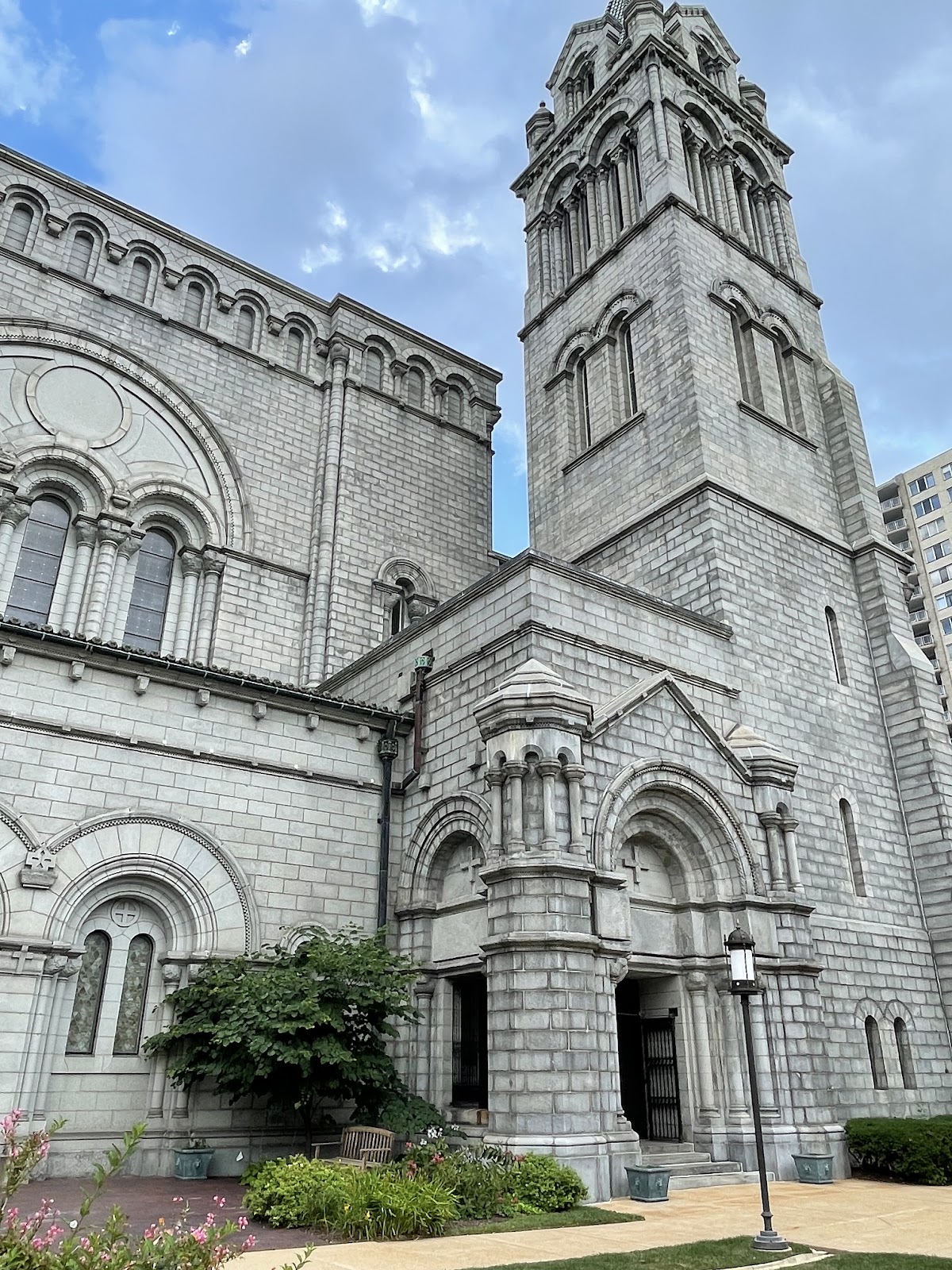
Outside, the Central West End is one of St. Louis’s better neighbourhoods for portraits — early twentieth-century architecture, mature street trees, and Forest Park a short distance away with open ground and formal landscape. The cathedral’s own facade, with its Romanesque-influenced massing, is a strong establishing frame and is best in low raking light.
For a timeline: portraits and groups outside in the last ninety minutes of daylight, the cathedral interior in whatever window you are granted, and the dome as the first frame you take rather than the last.
What works in your favour
- One of the largest mosaic installations in the world — an interior with no real comparison
- Gold mosaic returns light efficiently, so the building is brighter than a comparable stone cathedral
- Specular glints give a genuine compositional tool if you move to find them
- The dome, photographed on its own, is among the most impressive frames a gallery can hold
- Central West End and Forest Park nearby for daylight portraits and groups
What to plan around
- Gold mosaic casts a strong warm bias with nothing neutral anywhere to balance skin
- A global white balance correction destroys the building’s character
- Wide range between a bright dome and the darker nave — shoot them as separate frames
- Assume no flash, a fixed position and no movement during the ceremony
- An active cathedral, not a venue; rules are the parish’s and are not negotiable
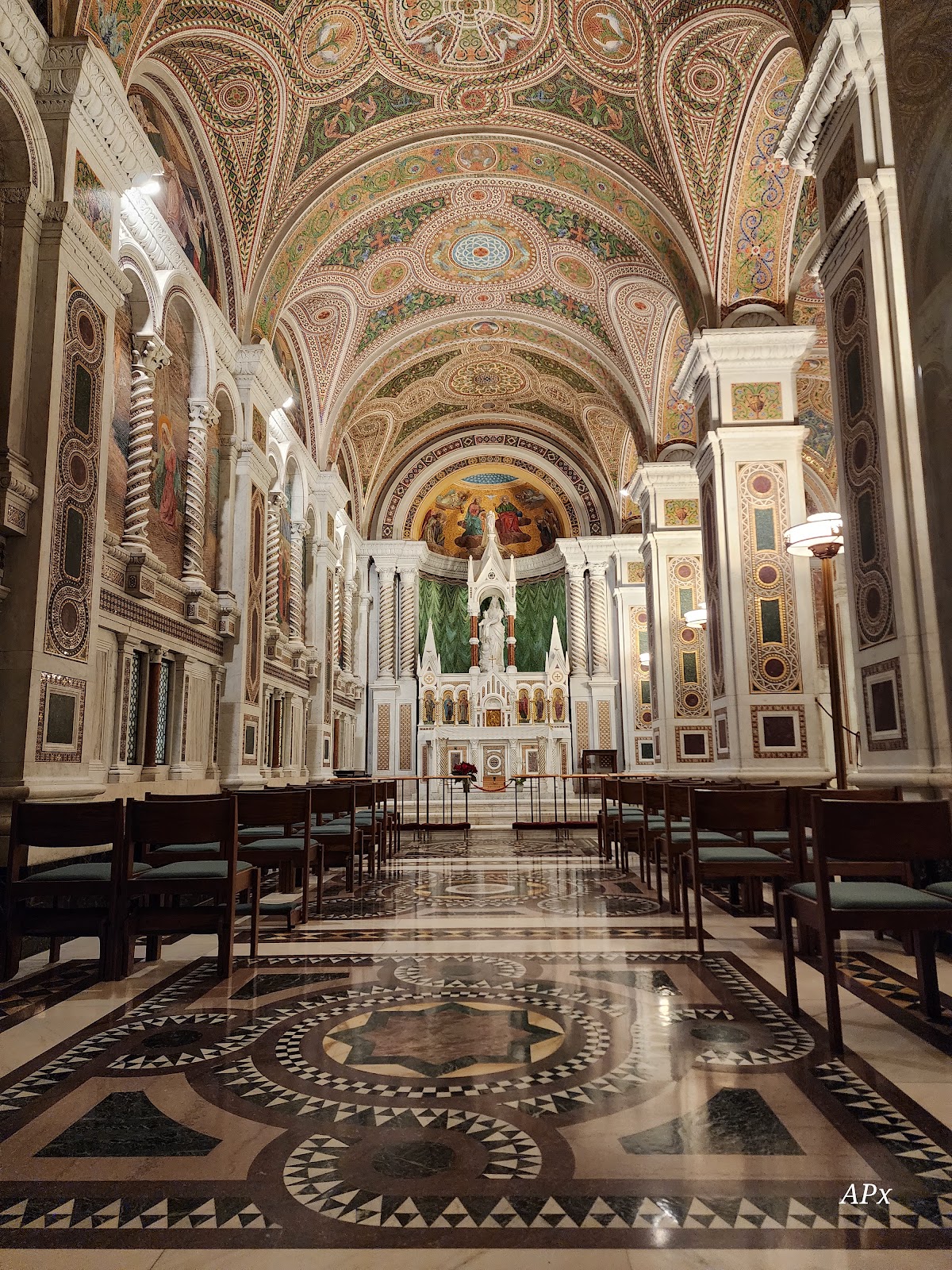
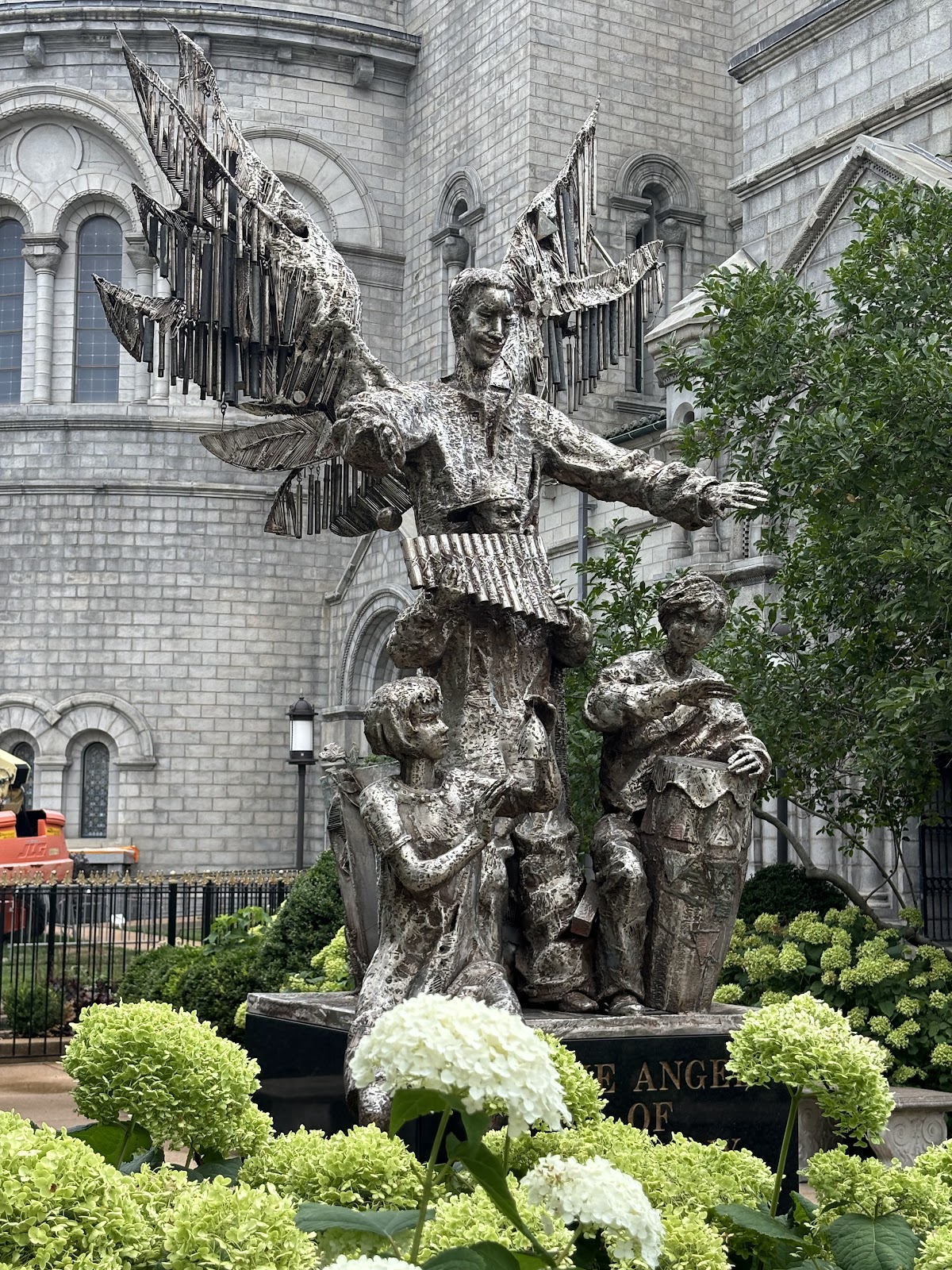
More frames from Cathedral Basilica of Saint Louis
Cathedral Basilica of Saint Louis wedding photography: common questions
Why does gold mosaic make skin look orange?
Because gold-leaf-backed glass reflects warm light efficiently, and in a building whose vaults and dome are largely gold mosaic there is nothing pale or neutral anywhere to balance it. Keep the building warm in your white balance and light faces with something closer to neutral — a global correction turns the mosaic grey-green and ruins the interior.
Does the angle I shoot from really matter?
More than in any other kind of building. Each tessera sits at a slightly different angle, so mosaic reflects unevenly — move two metres and a dull gold wall becomes a shimmering one. Before committing to a position, move and watch the wall. The difference between the right angle and the wrong one is larger than any exposure adjustment.
How should the dome be photographed?
As its own frame, looking straight up, braced or on a tripod if permitted. The dome is considerably brighter than the nave floor, so no single exposure holds both well. Shot properly and on its own, a mosaic dome is among the most impressive images a wedding gallery can contain — and it is best taken first, not last.
Is it as dark as other cathedrals?
Noticeably less so. Gold mosaic returns light far more efficiently than stone does, so this building is brighter than a comparable Gothic interior despite being larger. You will still need fast primes wide open and high ISO, but it is an easier exposure than most churches.
What are the ceremony restrictions likely to be?
Assume no flash, a fixed shooting position and no movement during the liturgy — the standard position at a cathedral. That means a fast 85mm to 135mm for the ceremony and taking the dome, the empty nave and the mosaic detail during whatever pre-ceremony access you are granted.
More St. Louis venue guides
We are writing a photographer’s guide to every venue we would happily shoot in St. Louis. Here are three more, plus the full index:
- The Chase Park Plaza: A Walk-Through of a 1920s Grand Hotel
- The City Museum: Field Notes on the Strangest Venue in St. Louis
- The Gateway Arch: Field Notes on Photographing 630 Feet of Steel
All St. Louis Wedding Venues →
Planning a wedding at Cathedral Basilica of Saint Louis?
Gold mosaic is a material most photographers meet once. Tell us your date and we will settle the parish’s rules early and plan the dome, the angles and the Central West End around them.