 The House of Blues, Cleveland: What It Suits and What It Does Not
The Huntington Convention Center, Cleveland: Photographing a Convention Venue
A convention centre is built to become anything, which means it starts out as nothing.
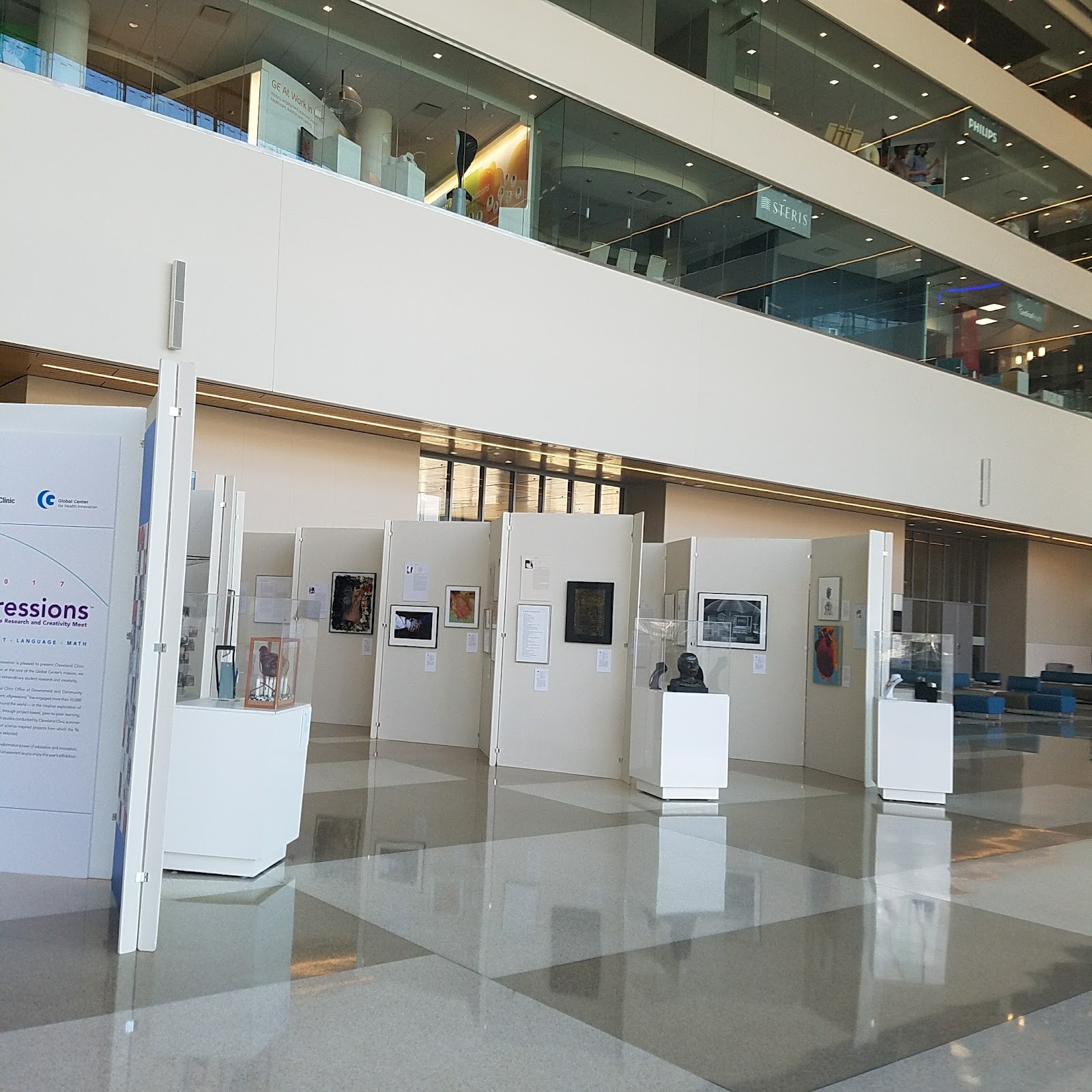
The Huntington Convention Center offers a blend of modern design and classic sophistication, as its own description has it, in the heart of downtown Cleveland.
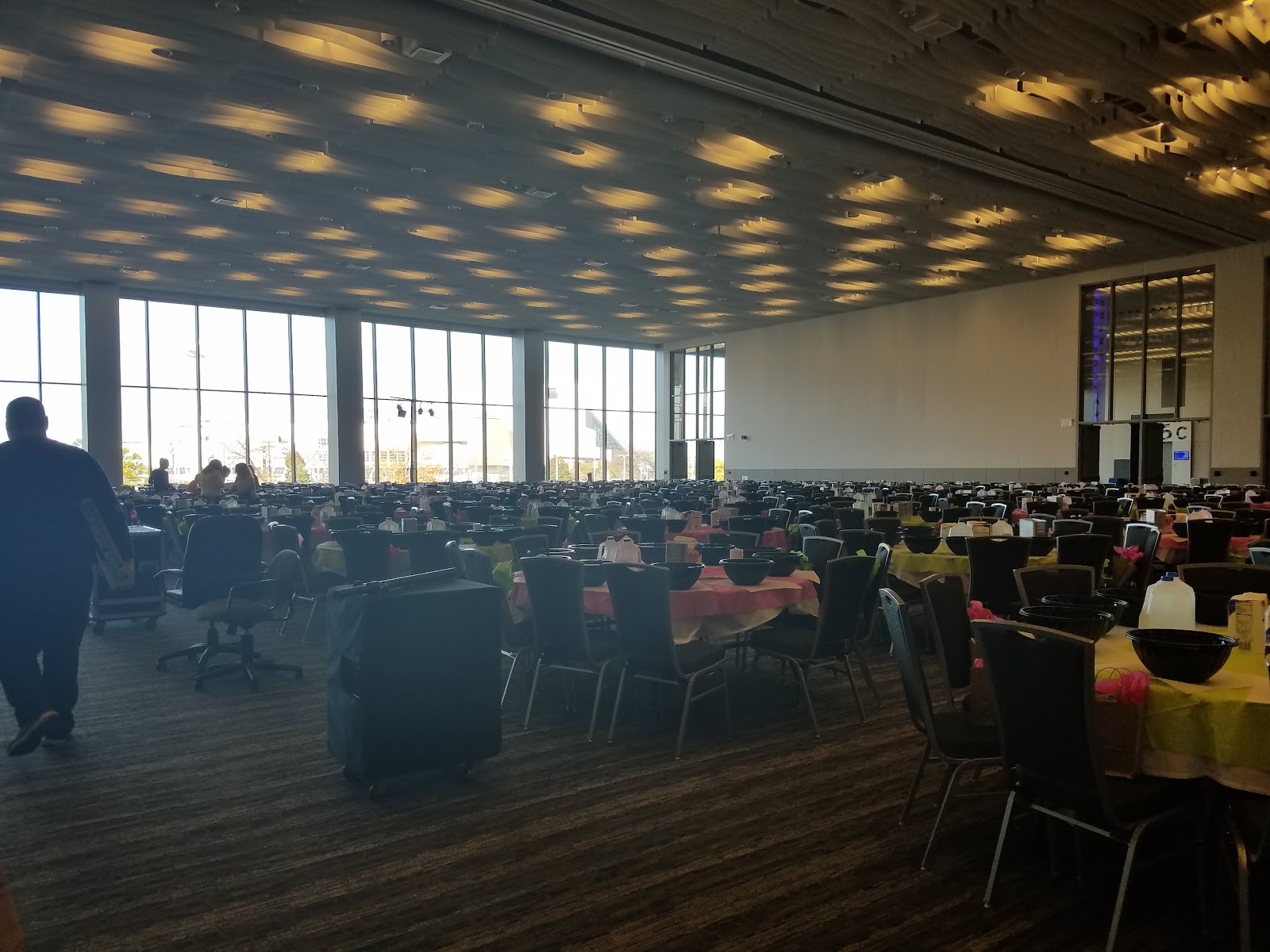
The logic of a convention venue is flexibility at scale, and it is worth understanding on its own terms because it is the most purpose-built kind of space in this whole series. Everything about it is designed to accommodate: the halls are large and clear so that any layout can be built in them, the finishes are neutral so that any branding can be applied over them, the lighting is general and even so that any configuration is usable, and the circulation is wide so that crowds move.
Every one of those decisions is exactly the opposite of what a photograph wants. A photograph wants a background with character, light with direction, and a reason to stand in one place rather than another — and a convention centre supplies none of the three, deliberately. What it does supply is capacity, accessibility, climate control, and public spaces that are frequently generously glazed, which is where the day’s good frames live.
We have not photographed a wedding at the Huntington; convention venues behave consistently. Which spaces a booking includes, whether the hall lighting can be dimmed and who operates it, and which public areas have glazing are the questions for their team — the last one matters most.
The Huntington Convention Center at a glance
| Where | Downtown Cleveland, Ohio |
| Character | A modern convention centre with large flexible halls and glazed public areas |
| The logic | Built to accommodate anything, which means it asserts nothing |
| Where the frames are | The glazed public spaces, and outdoors |
| Ask first | Spaces included, hall lighting control, which areas have glazing |
What flexibility removes, and how to replace it
Four things are missing in a purpose-built flexible hall and it is worth naming them, because the absence is easy to feel and hard to diagnose.
Background is the first. Neutral walls and a clear floor mean whatever is behind a subject is either an empty plane or the rest of the event — tables, staging, catering, other guests. Neither is a background so much as an absence of one.
Framing is the second. Architecture normally supplies doorways, columns, arches and openings that give a composition its edges, and a clear-span hall has none. Every frame has to be built from scratch.
Direction is the third. Hall lighting is general and overhead because that is what suits any layout, which is the classic problem: eye sockets in shadow, a hard line down the nose, and no gradient across a face at all.
And reason is the fourth. In a hall where every position is equivalent, there is no natural place to put people, so the coverage drifts towards wherever the event happens to be rather than towards where the photographs are best.
All four can be supplied, and that makes this one of the few venue types where preparation genuinely beats improvisation. One directional source, off the camera axis at face height, is the entire difference between a flat frame and a modelled one — and in a room with general overhead lighting it needs to be only slightly brighter than the ambient, because it is dominating the direction rather than the level. Gel it to match the house colour, set white balance to the gel, and hold it for the block.
Background comes from darkness rather than from objects: place the couple well forward of anything else, expose for them, and let the hall behind fall away. Steep fall-off is free separation and it works in any volume. Where the hall lighting is adjustable, asking for most of the room dimmed and a small area lit converts a blank hall into a stage — and that is a request to the venue rather than an equipment problem, which makes it the single most valuable question to ask.
Framing comes from whatever structure exists — columns, a doorway, a corner, a run of glazing — and from depth: a long view through a space with the couple placed into it reads as composition where a square-on frame reads as a snapshot.
Ceiling height should be tested once with a single frame, because a convention hall’s ceiling is usually far too high to bounce from, and the distances are real enough that a small flash will be lost.
The glazed public spaces, and the crossing
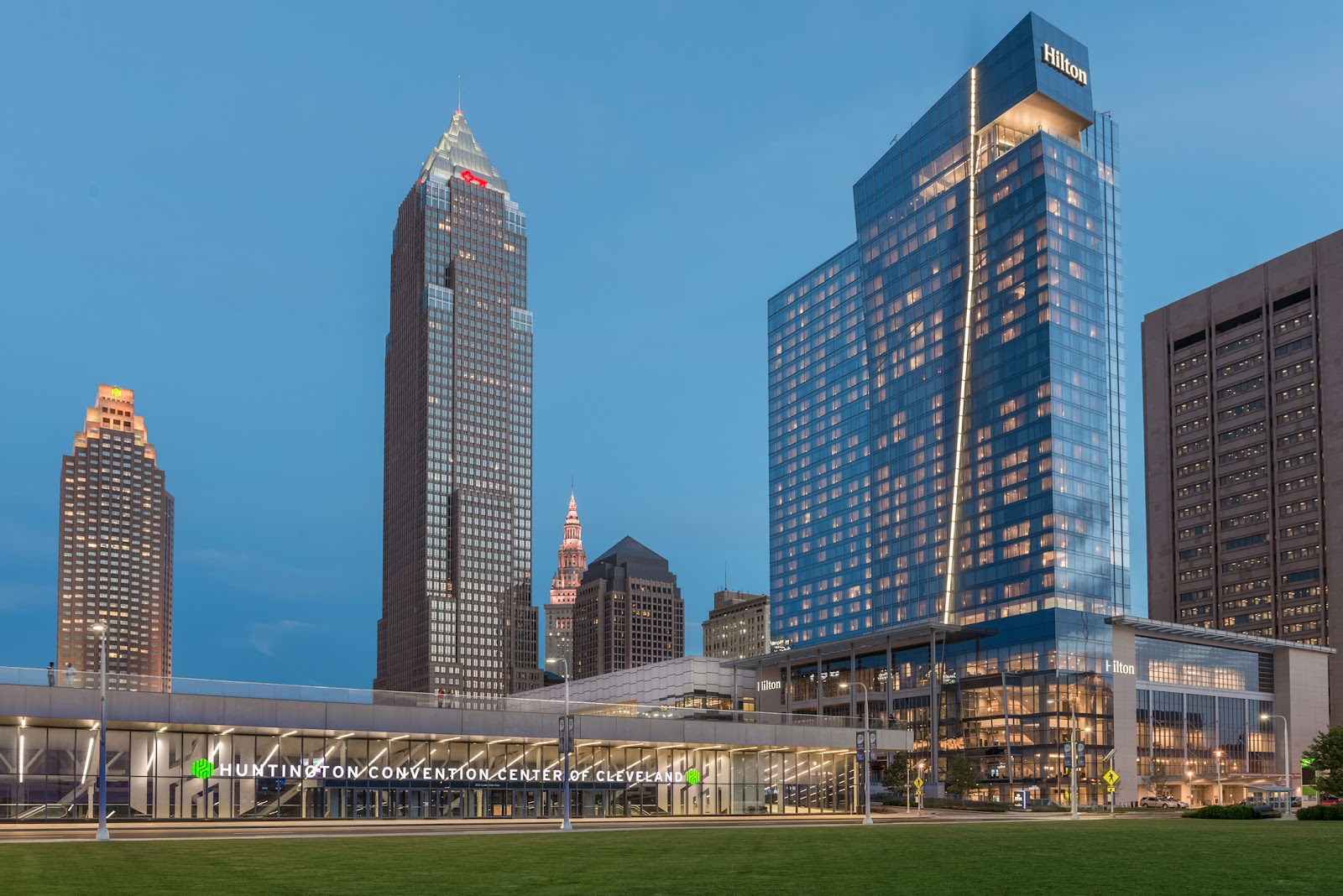
Modern convention centres almost always have generously glazed public areas — concourses, entrance halls, circulation spines — because crowds need daylight and orientation. Those spaces hold nothing that needs protecting, so the glazing is large, and they are where the day’s flattering frames live.
The rules are the ordinary glazing rules. Two metres back from the glass rather than pressed against it: pressed against a window a subject is lit from a very oblique angle with the far side of the face falling away, while two metres back the same glazing covers them evenly, soft and still clearly directional. Turning the subject then gives three setups without moving anything.
Which elevation the glazing faces decides which hours are usable. A shaded elevation gives soft directional light all day with no hotspots. A sunlit one gives a hard patch several stops above the interior and, through structural mullions, a grid of hard shadow across anything in it — attractive on a floor and unusable on a face.
Cleveland reduces that problem substantially. This is one of the cloudiest major cities in the country, and under overcast cloud diffuses the light before the glass does, so every elevation behaves like a shaded one and the lattice disappears. For a glazed concourse that is the default condition for much of the year.
Concourses also give the one thing a hall does not: geometry. Long curving or straight circulation with repeating structure is strong repetition, and shot long with the couple placed into the depth it reads immediately. A concourse is a far better portrait environment than any hall in the same building, and it is worth finding on arrival rather than at the end of the evening.
Spare modern surfaces still give no separation, so negative fill earns its place: something dark on the shadow side of a face subtracts bounced light and deepens the gradient. In a pale bright concourse, subtracting beats adding.
The crossing is the one timed frame. For roughly twenty minutes after sunset the city outside falls to about the brightness of the interior lighting, and one exposure at a glazed concourse holds the lit space, the couple and the city beyond. After it the glazing inverts and becomes a mirror — lights off-axis, frames oblique, glazed corners checked before guests arrive.
One practical note on a working convention venue: other events may be in the building. That constrains where a photographer can work and when, and it is not obvious from a site visit on a quiet day. Asking what else is booked on the date turns a possible surprise into a known boundary.
- One directional source slightly over ambient does the whole job in a hall
- Ask for most of the hall dimmed and one area lit — the best single request
- Build background from darkness: place people forward, let the hall fall away
- Find the glazed concourse on arrival; it is the best room in the building
- Ask what else is booked on the date
Downtown, and Cleveland's year
Downtown Cleveland is the outdoor counterweight and it supplies exactly what a convention centre cannot: texture, age and specificity. Early twentieth-century commercial architecture in brick and stone at a largely low-rise scale means low sun reaches street level and runs the length of a block, and both materials show their texture only when light runs along them — so a short walk to find which side is being raked is worth more than any accessory.
Alleys are the most dependable positions in any downtown: walls on both sides give directional light and a contained background with nothing distracting in it, plus shelter.
Cleveland’s lakefront is the other nearby asset, and it gives two things a street cannot: a broad reflector that fills faces from below, and an unobstructed horizon, which means the golden hour is long rather than clipped short by buildings. Lakefront wind is stronger and gustier than a street back from the water, which matters for a veil and for any light stand.
One lake fact is worth knowing: Cleveland’s shore faces north, so the sun sets well north of west in summer and south of west in winter — a sunset over the water is a summer proposition rather than a year-round one.
Cleveland’s weather is the most consequential planning fact and for a large enclosed building it is almost entirely an advantage. Persistent overcast through much of the late autumn, winter and spring makes the glazed concourses soft and even on the majority of days; and afternoon thunderstorms in summer, or lake-effect snow in winter, change nothing indoors at all. The day continues without a decision while every outdoor venue in the city is making one.
Lake-effect snow is localised, sudden and heavy, and it is a logistics question for guests before it is a photographic one — worth raising honestly for a December or January date. It is also the best natural fill there is, lifting exactly the shadows a low sun carves while fooling a meter by about two stops, and snow seen through a glazed concourse from a warm lit interior is a genuinely good frame.
Winter days are short, with sunset in the middle of the afternoon in December, which moves the crossing to the late afternoon and may put it before or during the ceremony. Cold clear air gives the deepest sky colour of the year, so the crossing itself is better then.
And a heated interior with cold outside air fogs a lens comprehensively in both directions, so let equipment come towards the temperature of where it is going before it gets there — which at a venue with long walks between spaces means planning one outdoor excursion rather than several.
More frames from The Huntington Convention Center
The Huntington Convention Center wedding photography: common questions
What does a convention hall remove?
Background, framing, directional light and any reason to stand in one place. All four can be supplied, which is why preparation beats improvisation here.
What is the most valuable request?
That most of the hall be dimmed and a small area lit. That converts a blank hall into a stage, and it is a request to the venue rather than an equipment problem.
How do you make a background in a neutral hall?
From darkness. Place the couple well forward of anything else, expose for them, and let the hall behind fall away. Steep fall-off is free separation in any volume.
Where is the best room in the building?
A glazed concourse. It holds nothing that needs protecting, so the glazing is large — and it has the repeating geometry a clear hall lacks.
Does Cleveland's cloud help?
Considerably. Under overcast every glazed elevation behaves like a shaded one and the mullion shadow grid disappears, which is the default for much of the year here.
What should be asked about the date?
What else is booked in the building. Other events constrain where you can work and when, and that is not obvious from a site visit on a quiet day.
More Cleveland, OH venue guides
We are writing a photographer’s guide to every venue we would happily shoot in Cleveland, OH. Here are three more, plus the full index:
- The KeyBank State Theatre, Cleveland: The One Decision That Governs Everything
- The Lago Events Center, Cleveland: A Walk Through a Glazed Event Venue
- The Music Box Supper Club, Cleveland: How the Light Moves
All Cleveland, OH Wedding Venues →
Planning a wedding at The Huntington Convention Center?
Ask for the hall dimmed and find the concourse. Tell us your date.