 The Ozark Mountain Lodge, Eureka Springs: The Problem, and Four Ways Out
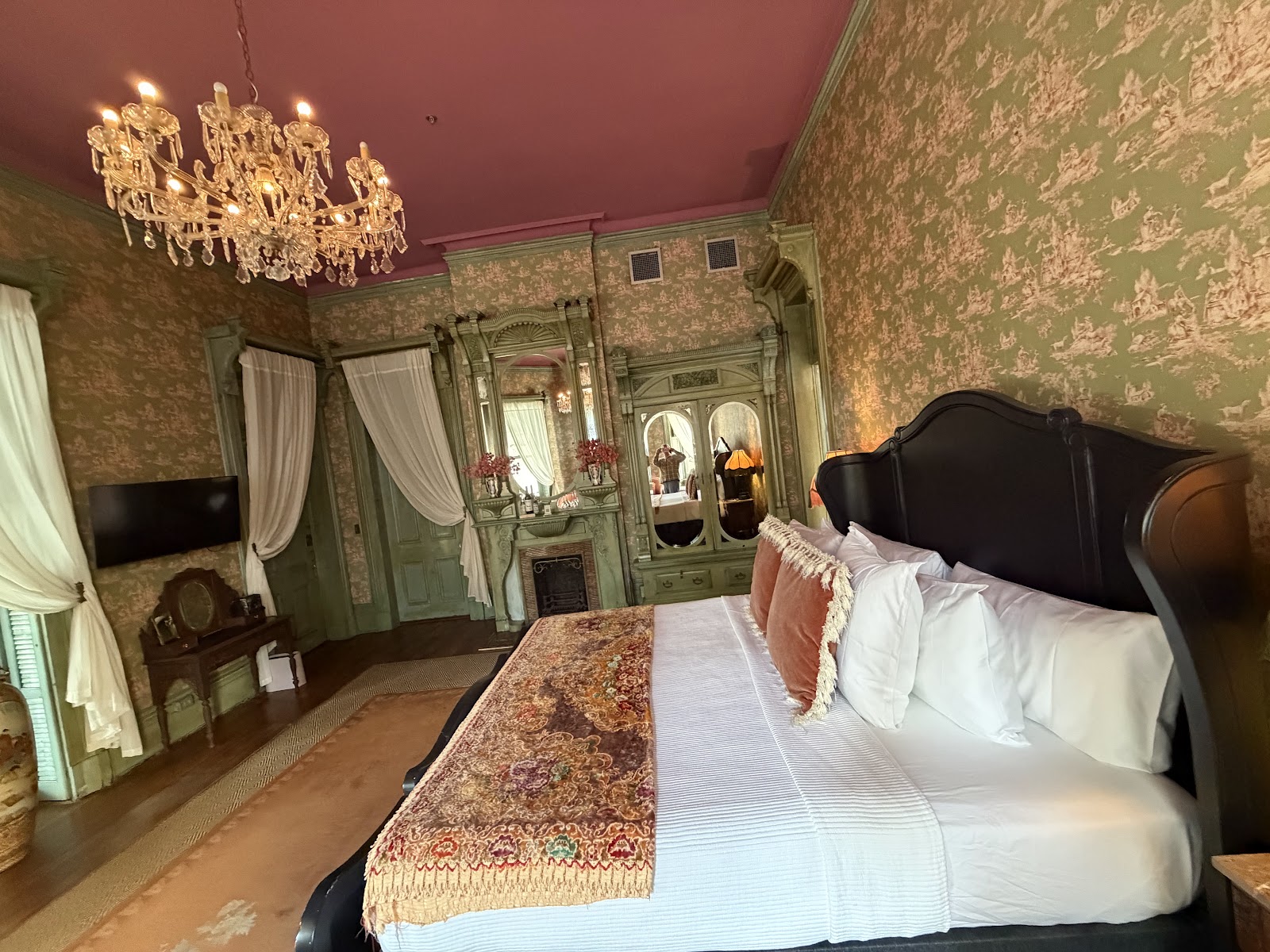
The Columns at The Grand, Benton: What It Suits and What It Does Not
Symmetry is generous and unforgiving in equal measure.
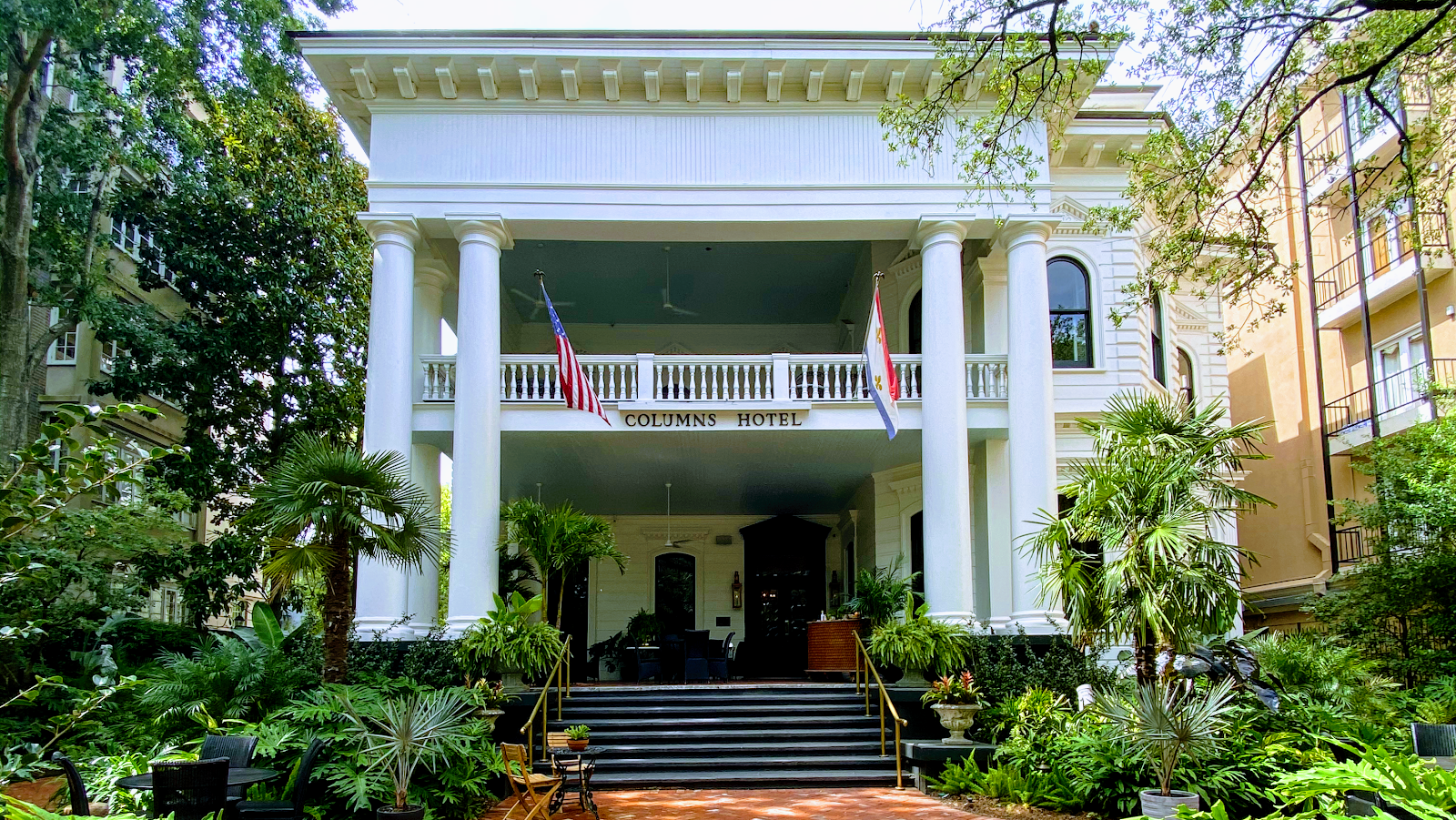
A building with a columned front is a particular proposition and the honest way to describe it is by what classical formality suits and does not suit.
The shape of it is familiar: a symmetrical façade, a colonnade or portico across the front, steps up to it, and an interior of formal rooms behind. Benton sits in central Arkansas, south-west of Little Rock, between the Ouachita foothills and the coastal plain — which means gentle ground, mixed pine and hardwood, and a climate that is humid in summer and mild in winter.
The columns are the building’s whole photographic character and they do two specific things. They create a deep roofed space with an open side, which is optically a very large soft source with a hard mask — a softbox the width of a building, with rapid fall-off toward the back. And they establish a rhythm of verticals, which is a strong compositional structure and an exacting one.
That second property is the one that decides whether photographs here look good or slightly wrong. A colonnade is a set of parallel vertical lines at regular intervals, and the eye reads both the verticality and the interval with great precision. A camera a degree off level makes every column lean; a camera off the building’s axis makes the intervals uneven; a subject placed a hand’s breadth off a column’s centre reads as careless.
None of that is difficult, but all of it has to be attended to, and it is the opposite of a rough-textured venue where imprecision disappears.
Benton sits at about thirty-four and a half degrees north. The June noon sun reaches around seventy-nine degrees, the December noon sun about thirty-two, days run from about ten hours to fourteen hours ten, and civil twilight is around twenty-seven minutes.
We have not photographed a wedding at this venue. Which spaces and grounds are included, what covered alternatives exist and what the permitted hours are, are questions for their team.
The Columns at The Grand at a glance
| Where | A columned event venue at Benton, central Arkansas |
| Suits | Formality, symmetry, a softbox the width of a building, and any weather |
| Does not suit | Texture, informality, or a camera that is not exactly level |
| The portico | Depth back from the open edge sets the lighting ratio |
| Ask first | Included spaces and grounds, covered alternatives, permitted hours |
What it suits
It suits the portico, and the portico is the best free light on the property. A deep roofed space with an open side gives light arriving from one direction only, wrapping because the floor and the ceiling bounce it, and falling off fast toward the back.
Depth is the control and it is complete. At the open edge the light is bright and nearly frontal, the ratio is low and the result is flat. A metre back the light acquires direction. Two or three metres back, against the building’s wall, the ratio is dramatic and the sunlit ground beyond falls away four or five stops.
That deep position produces the most expensive-looking portrait available here with no equipment at all: a lit face against a dark ground, framed by the structure. It works at any hour of any day, including the middle of a July afternoon when everything in the open is unusable, and it works in rain — which in Arkansas between April and June is not a small consideration.
It suits symmetry, and a columned building rewards using it rather than avoiding it. A frame taken on the building’s exact axis, with the couple centred, the columns receding evenly on both sides and the camera absolutely level, is a formal photograph in the older sense — composed, still, deliberate — and very few venues can produce one.
The requirements are exact: on the axis, level, and at a height that keeps the verticals from converging, which usually means a camera at about the subjects’ chest height rather than eye height. Getting it right takes a minute; getting it approximately right is visibly worse than not attempting it.
It suits the rhythm as an alternative to symmetry. A colonnade photographed obliquely gives a diminishing series of verticals with light and shade alternating between them, which is a strong graphic structure and more dynamic than the symmetrical version. One couple per bay, or the pair centred in a single intercolumniation with the rhythm receding behind them, turns repetition into composition.
It suits steps, which most venues do not have. A flight of steps gives a level change, which means a group can be arranged at several heights without anyone standing on anything improvised, and it means a couple can be placed at different elevations for a portrait — which is a simple compositional device that flat ground cannot provide.
Steps are also the answer to the group problem at a columned building: arranged on them, everyone is visible, nobody is hidden behind anybody, and the architecture supplies the ranking.
It suits pale-painted surfaces as a light source. A large area of white or pale stone or render is a substantial neutral reflector, which means the light near it is brighter, softer and more evenly distributed than near a dark building — and faces standing beside a sunlit pale wall are filled from the side generously and neutrally.
The technical caution is that meters mislead: a frame with a lot of pale façade reads bright and the camera underexposes, often by a full stop. Compensate deliberately and check on skin.
And it suits any weather. The portico is covered, the interiors are formal, and nothing about the building’s best frames depends on the sun being out — which at an Arkansas venue in a severe-weather season is a genuine practical asset rather than a consolation.
What it does not suit
It does not suit imprecision, and that is the headline. Every error a camera can make is visible against a colonnade: a degree of tilt makes the columns lean, a step off the axis makes the intervals uneven, a subject placed slightly off a column’s centre reads as accidental, and a converging vertical from a camera held too low or too high reads as a mistake rather than as a choice.
There is no fix beyond care and a level. The practical approach is to use a level for the symmetrical frames, to compose deliberately off-axis for the oblique ones rather than drifting off-axis by accident, and to accept that a columned building rewards slow work and punishes fast work.
It does not suit texture. A classical building is smooth by intention — rendered or painted surfaces, fluted or plain columns, dressed stone or joinery — which means there is almost nothing rough at close range, and the interest has to come from light, geometry and the people.
That is the same limitation stated differently: with nothing to hide in, precision carries the whole frame.
It does not suit informality. A columned portico is a formal setting and photographs made in it read as formal, which is what most couples who choose it want. But a candid, loose, unposed style sits oddly against classical symmetry — the architecture is doing something deliberate and the subjects are not, and the mismatch shows.
The honest advice is to make the formal frames formal and the informal ones somewhere else: on the lawn, at a treeline, away from the building’s axis entirely.
It does not suit the middle of a summer day on the open ground. At seventy-nine degrees of June elevation the sun puts eyes in shadow and foreheads in light, and a lawn has no cover. The portico is the answer and it is a complete one — but it is not where the schedule will put people unless somebody plans it.
It does not suit an unmanaged background outside the building’s immediate setting. Central Arkansas here is gentle mixed pine and hardwood country, and outside the formal grounds the landscape is green — which is the least useful background colour there is, because skin sits close to it in luminance and complementary to it in hue.
The solutions are the ones that apply at every Arkansas venue. Eastern redcedar margins, where they exist, block almost all light and read near-black at three stops down, which gives a genuinely dark background rather than a green one. Loblolly and shortleaf pine, which dominate this part of the state, also block well and give a dark reddish-brown trunk field that is far better than hardwood green.
A low camera against the sky removes the green entirely. And the season removes it outright: Arkansas woods are bare from mid-November to late March, which replaces green with grey trunks, brown litter and near-black cedar.
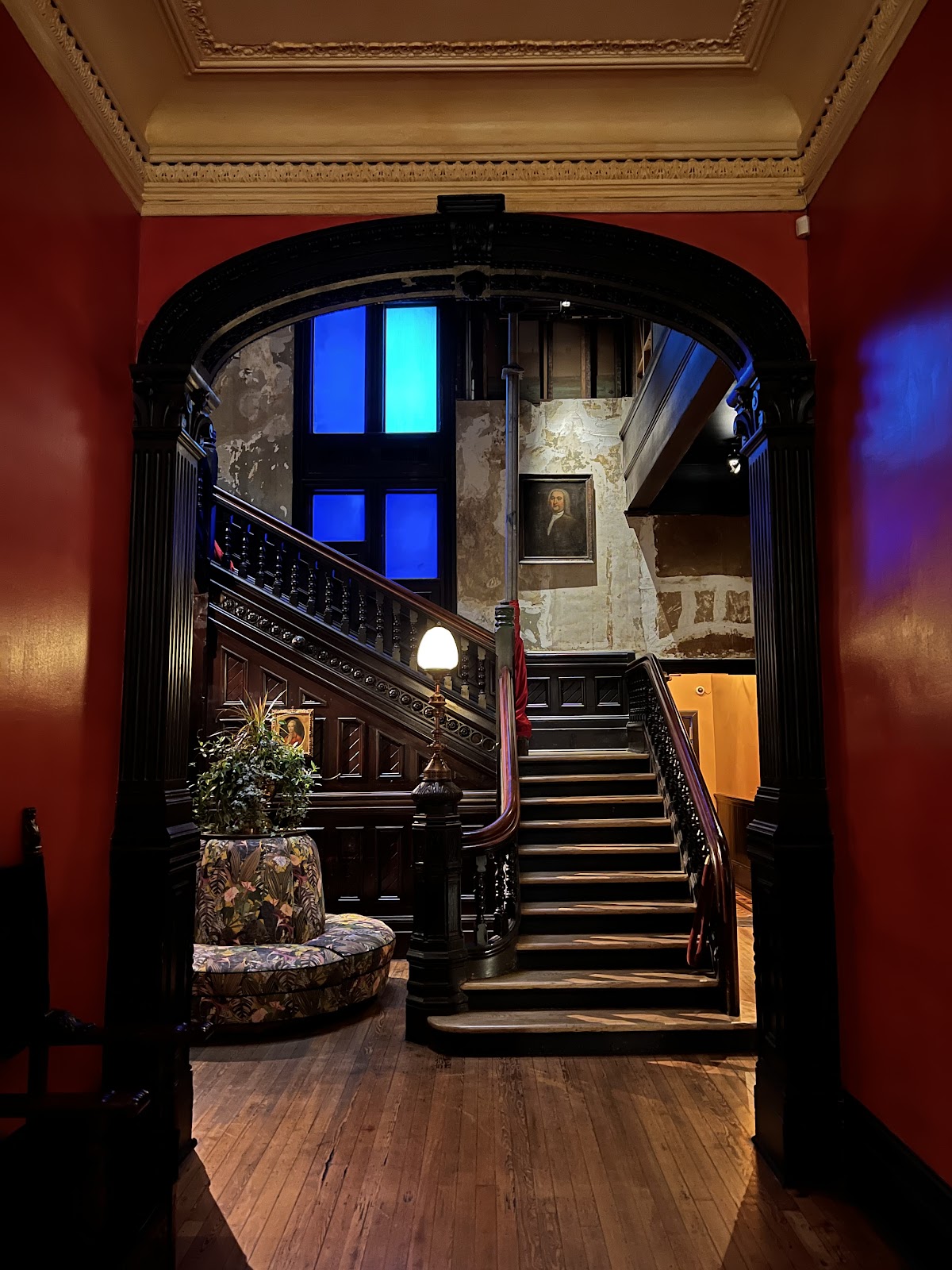
Indoors, formal rooms in a building of this type behave predictably: moderate to generous ceilings, symmetrical window arrangements, and finishes that are more likely to be pale than dark. Where they are pale the problem is separation rather than light — a subject against a pale wall in a bright room has nothing to sit against, and the answers are to find something dark, to use a window at forty-five degrees and let the opposite side of the face fall off, or to add a source a stop over ambient so the subject has a shadow side.
Where a room has a symmetrical pair of windows, using one as key and the other as fill is a complete lighting setup made of architecture, and it is the most elegant approach available in a classical interior.
One practical note. Arkansas sits in the secondary severe-weather corridor of the southeastern United States, with peaks in April–May and a smaller one in November, so a named indoor alternative for anything outdoors in those months is a requirement — and at this venue the portico and the interiors mean that alternative already exists, which is part of what a building like this is for.
- Depth back from the portico edge sets the ratio — choose it deliberately
- On the axis, level, at chest height, for the symmetrical frame
- Steps solve the group problem: everyone visible, ranked by architecture
- Pale façades fool a meter by about a stop
- Make the formal frames formal and the loose ones away from the building
The central Arkansas year
Four real seasons with long shoulders, and a building whose best frames are largely indifferent to all of them — which is the point of a covered portico.
Winter is short and mild, with a December noon sun at around thirty-two degrees that never rises high enough to flatten anything. For a columned building that is the best light of the year: a low sun on a colonnade rakes along the columns rather than falling onto them, which models the shafts, throws the intervals into relief, and makes the whole rhythm read.
The same sun crossing a pale façade at a shallow angle picks up every surface variation, and at thirty-two degrees it does so for most of the afternoon rather than for twenty minutes. A columned building in an Arkansas winter has hours of usable raking light.
Bare trees also mean the green problem disappears from the surroundings entirely, replaced by grey trunks, brown litter and near-black cedar — a landscape of neutrals that suits a formal pale building far better than summer green does.
Snow occurs but rarely lasts. The characteristic Arkansas winter event is freezing rain, which glazes every edge in clear ice and, on a colonnade, outlines the whole geometry. Spectacular for a day, hazardous for longer, unplannable.
Spring is the region’s best outdoor season and it is early. Leaf-out runs through late March, and before the canopy closes redbud flowers magenta on bare wood and dogwood white beneath. Against a pale classical façade, both are strong — dogwood particularly, because white on white works when the flower is lit and the wall is in shade.
The cost is the severe-weather peak in April and May, which in central Arkansas is serious. The covered portico and the interiors mean the building is largely unaffected, which is worth stating positively rather than as a fallback.
Summer is hot and humid, with dew points in the low to mid twenties Celsius. On gentle wooded ground the haze softens anything at distance, which at a venue whose subject is a building at close range costs almost nothing.
The June noon sun at seventy-nine degrees is the hardest light of the year, and the portico is the complete answer. Days run to fourteen hours ten at the solstice, which means the low-light exterior sequence does not arrive until after half past eight — usually after the point in a reception when people can be taken out, and worth planning for.
Summer is also when the pale façade is at its most difficult, because a bright white surface under a high sun against a bright sky has very little separation at the roofline. In low light the silhouette is strong; at noon it barely exists.
Autumn is the other strong season and it is late. Central Arkansas turns from the last week of October into the first half of November — three to five weeks behind New England — with oak russet, hickory gold, sweetgum purple-red and sassafras orange, holding for a genuine three weeks because oak colours and drops slowly.
Against a pale classical building that warm palette is the best background combination of the year, and by late October the sun is already low enough that the raking window on the colonnade has begun to lengthen toward its winter generosity.
November brings a second, smaller severe-weather peak, and by late in the month the surroundings are bare, the columns rake all afternoon, and the twenty-seven-minute twilight arrives at a civilised hour.
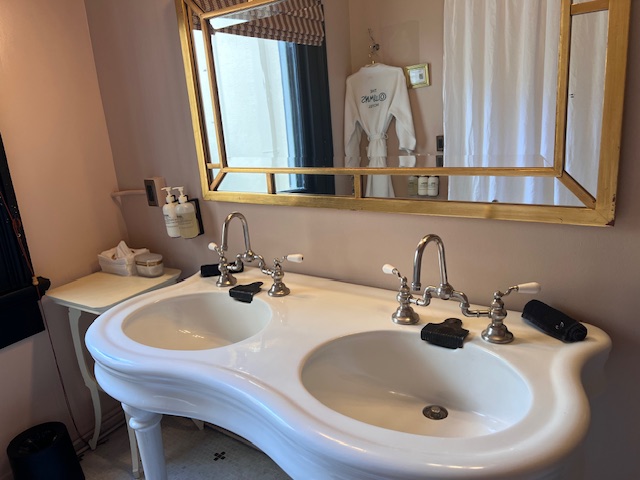
More frames from The Columns at The Grand
The Columns at The Grand wedding photography: common questions
What does a columned building suit?
Formality and symmetry — and the portico, which is a softbox the width of a building with four or five stops of fall-off, available in any weather.
What does it not suit?
Imprecision. A degree of tilt makes every column lean, and a step off the axis makes the intervals uneven. There is nothing rough to hide in.
How do I take the symmetrical frame?
On the building’s exact axis, absolutely level, with the camera at about the subjects’ chest height so the verticals do not converge.
How should I photograph a group?
On the steps. Everyone is visible, nobody is hidden, and the architecture supplies the arrangement.
Why is my exposure wrong outside?
A pale façade reflects a great deal, so a frame containing much of it underexposes by about a stop. Compensate and check on skin.
When is the building at its best?
Winter and late autumn. A sun that never rises above thirty-two degrees rakes along the colonnade for most of the afternoon rather than for twenty minutes.
More Arkansas venue guides
We are writing a photographer’s guide to every venue we would happily shoot in Arkansas. Here are three more, plus the full index:
- The Crystal Ballroom, Little Rock: The Venue’s Own Logic
- The Grandview Venue, Bentonville: The One Decision That Governs Everything
- The Greenbrier, Greenbrier: Field Notes, Problem and Solution
Planning a wedding at The Columns at The Grand?
A building that rewards slow work. Tell us your date.