 Choctaw Hall: What a Gazebo Ceremony Does to the Photographs
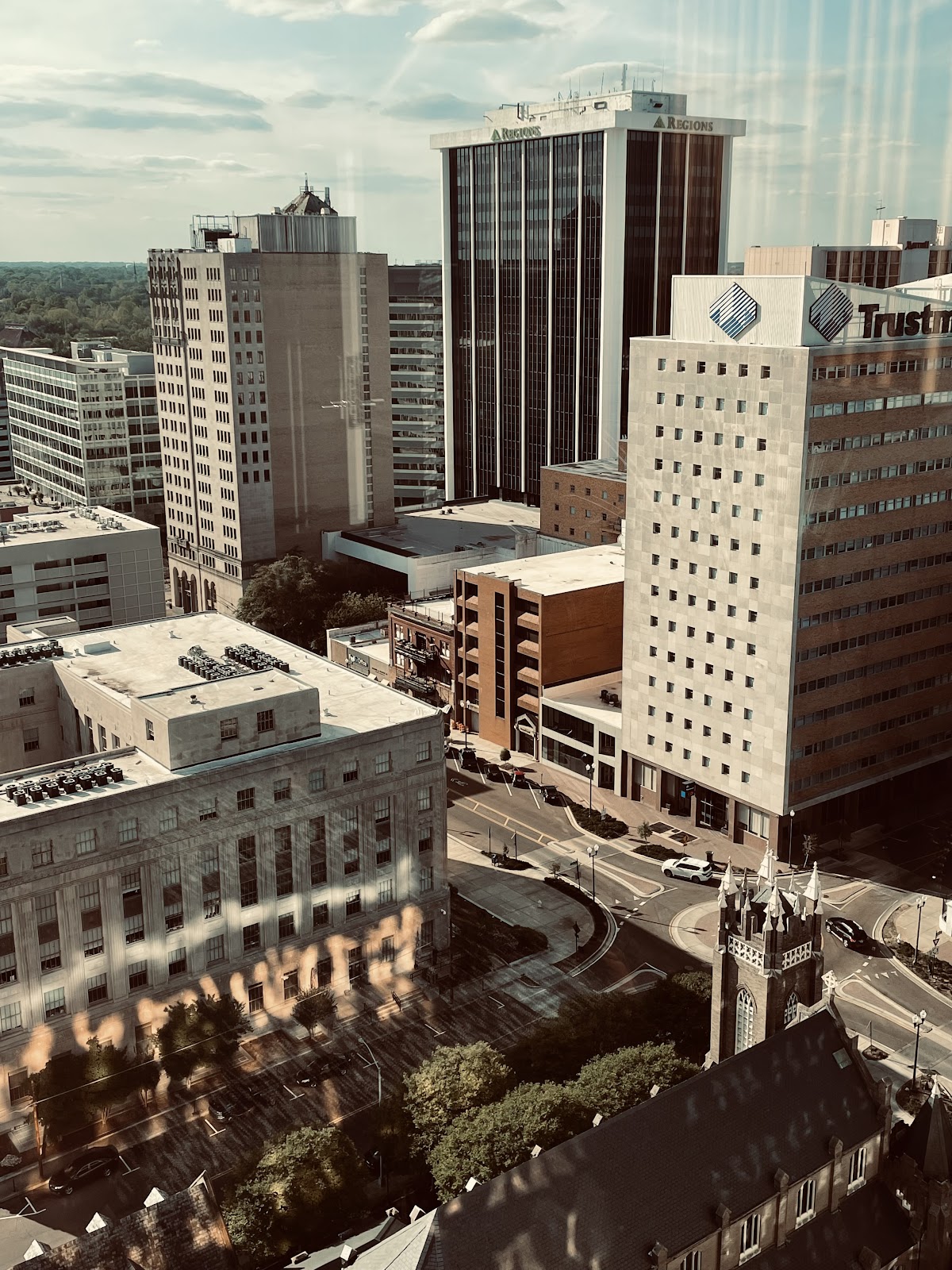
The Capital Club, Jackson: Photographing a Club Above the City
A downtown club is built to be private and to look out at the same time. Both halves matter.
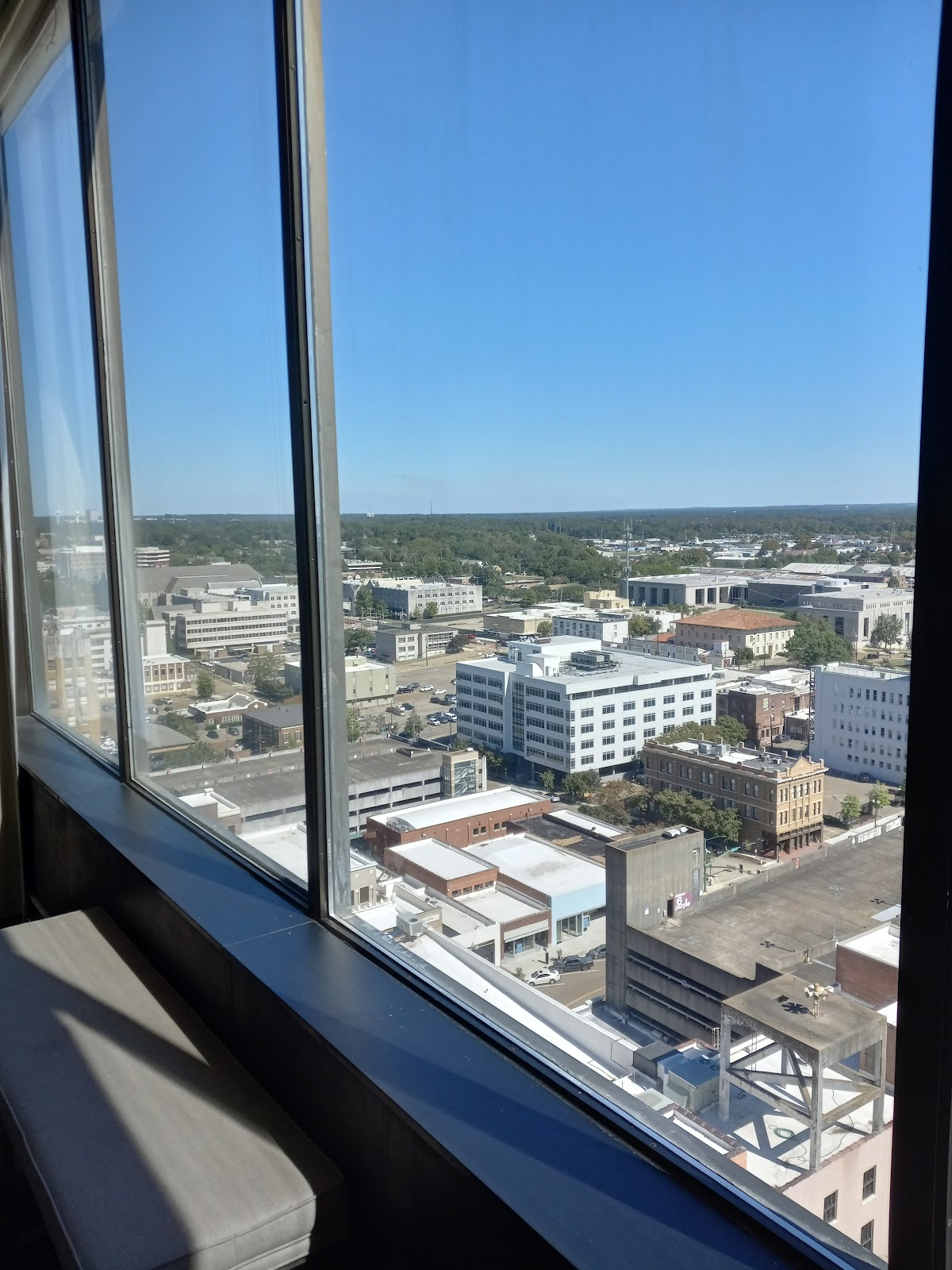
The Capital Club occupies a position in the heart of downtown Jackson, Mississippi — a private club with dining and function space and outlook over the city around it.
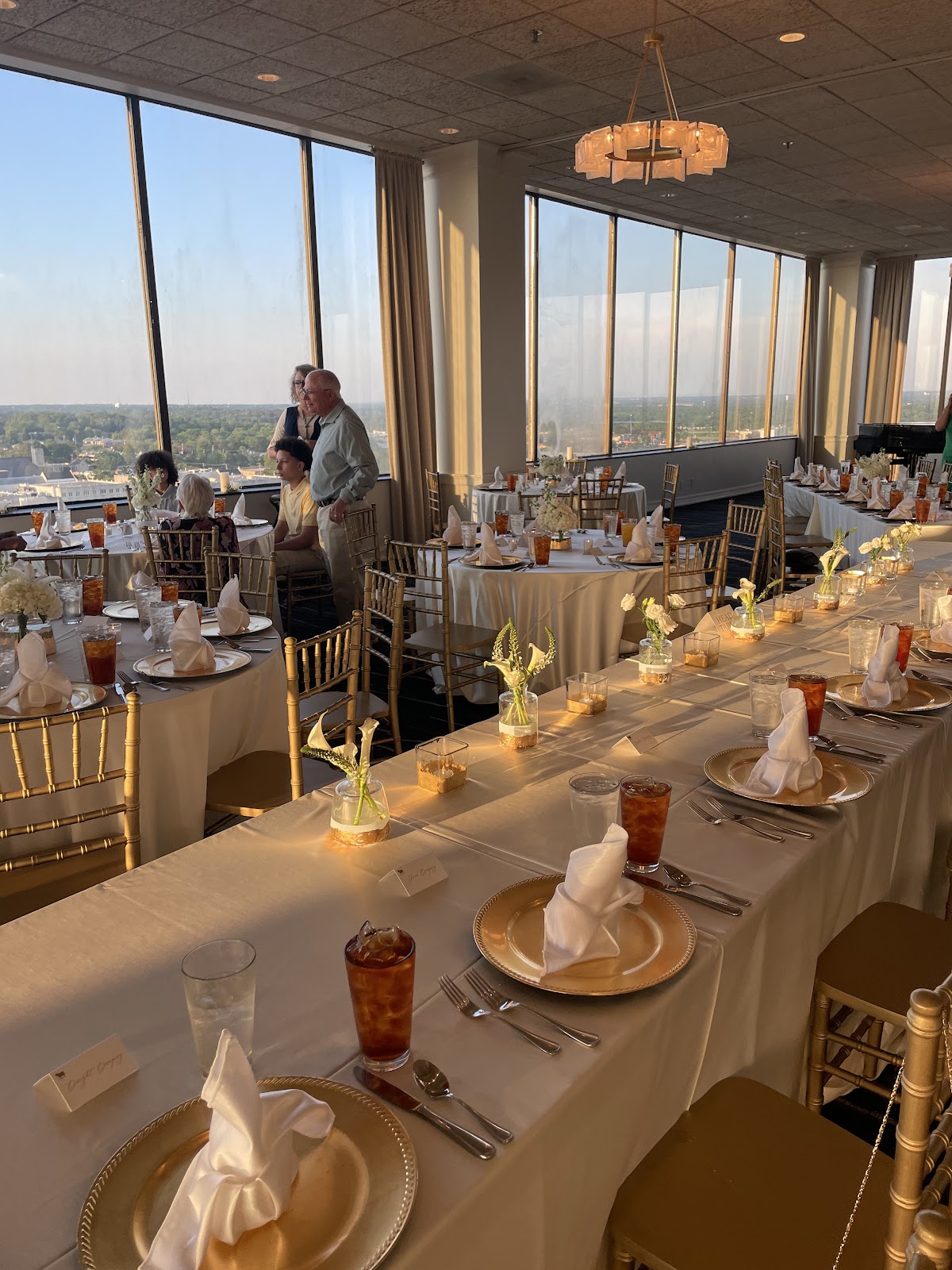
A club of this kind has a consistent internal logic, and following it is more useful than listing rooms. It was built to do two things that pull against each other: to enclose a small number of members in comfortable, quiet, panelled rooms, and to give them a view out over the city that justifies the address. Enclosure means warm low light, dark timber, deep colour and heavy textiles — an interior that absorbs light rather than returning it. View means glazing, which is the brightest thing in any room it is in. Those two conditions sit metres apart, and almost every photographic decision here is about the gap between them.
So this follows the venue’s own logic. We have not photographed a wedding at the Capital Club; downtown city clubs behave consistently. Which rooms a wedding gets, what the window orientation is and whether the club’s own lighting can be adjusted are the questions for their team.
The Capital Club at a glance
| Where | Downtown Jackson, Mississippi |
| Character | A private club — panelled rooms, dining and function space, city outlook |
| The logic | Enclosure and view at once, in the same rooms |
| The gap | Dark absorbing interior next to the brightest thing in it |
| Ask first | Which rooms, window orientation, whether house lighting is adjustable |
The enclosure: why a club interior needs light brought in
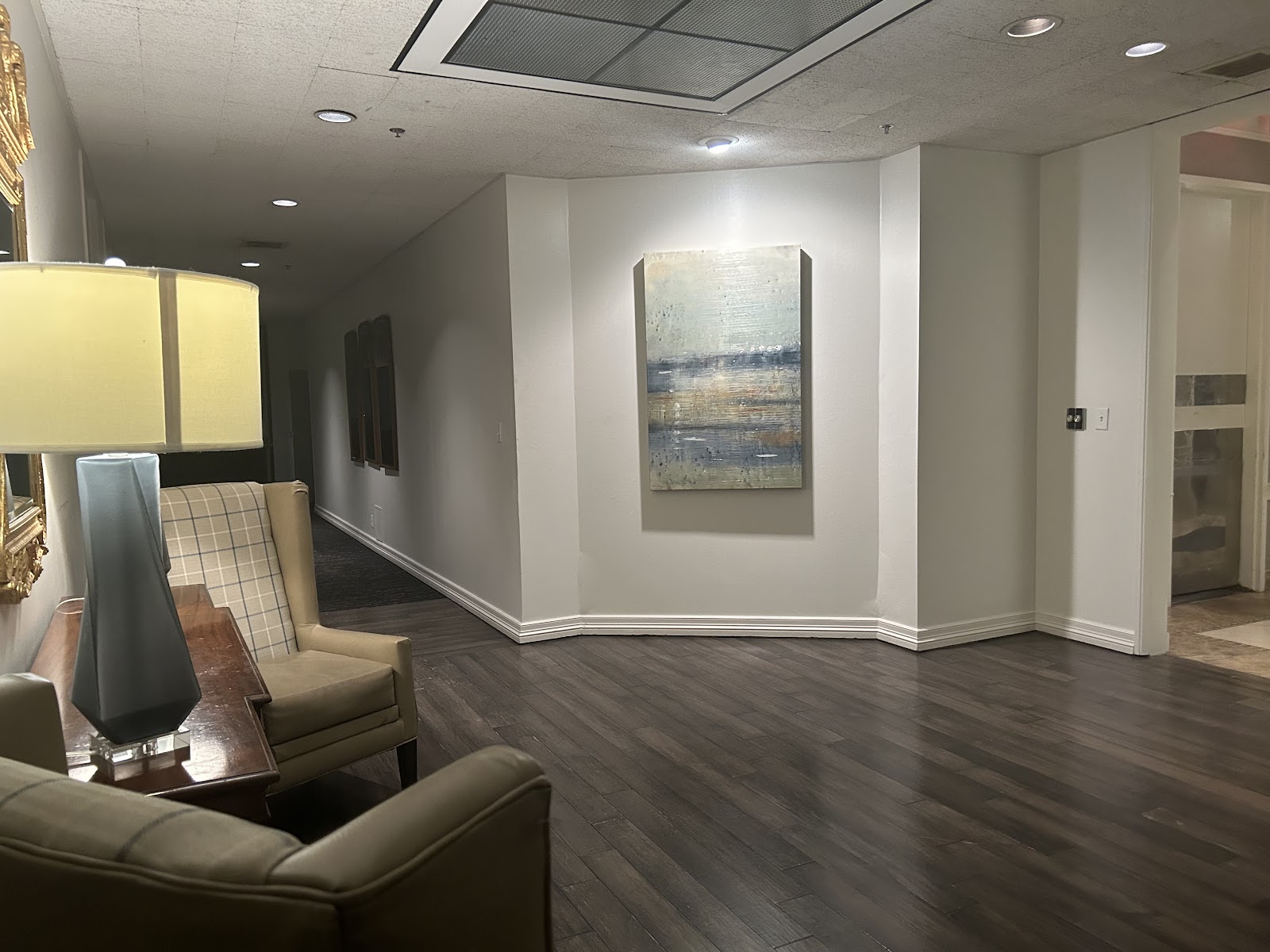
Panelled walls, dark timber, deep carpet and heavy curtains are the club vocabulary, and every one of those materials absorbs light instead of returning it. That matters more than the lamp count, because the usable ambient in a room is mostly bounced light, and a dark room bounces almost nothing. Two clubs with identical fittings — one panelled, one painted pale — will differ by two stops.
The direct practical consequence is that bounce flash, the reflex indoor move, does very little here. A flash aimed at a timber ceiling or a panelled wall returns a fraction of what the same flash returns in a white-walled room, and it comes back warm. Establish that on arrival rather than discovering it when a bounced frame looks unlit.
So light directly and modestly: one source, off the camera axis, at face height, in a modifier large enough to be soft at the distance you are using it, gelled warm to match the room’s tungsten with white balance set to the gel. Expose so the room still reads as the warm dim panelled space it is, and add only enough to put a catchlight in the eyes and separate a shoulder from the background. A club interior lit to an even brightness stops being a club interior.
The materials do give something back. Timber and plasterwork hold real texture, and texture only reads when light runs along a surface rather than at it — so the positions worth finding are those where the key rakes down a panelled wall rather than facing it. And a dark interior means steep fall-off, which is free separation: a subject three metres from the background sits against something naturally darker with no equipment at all.
The view: the brightest thing in the room
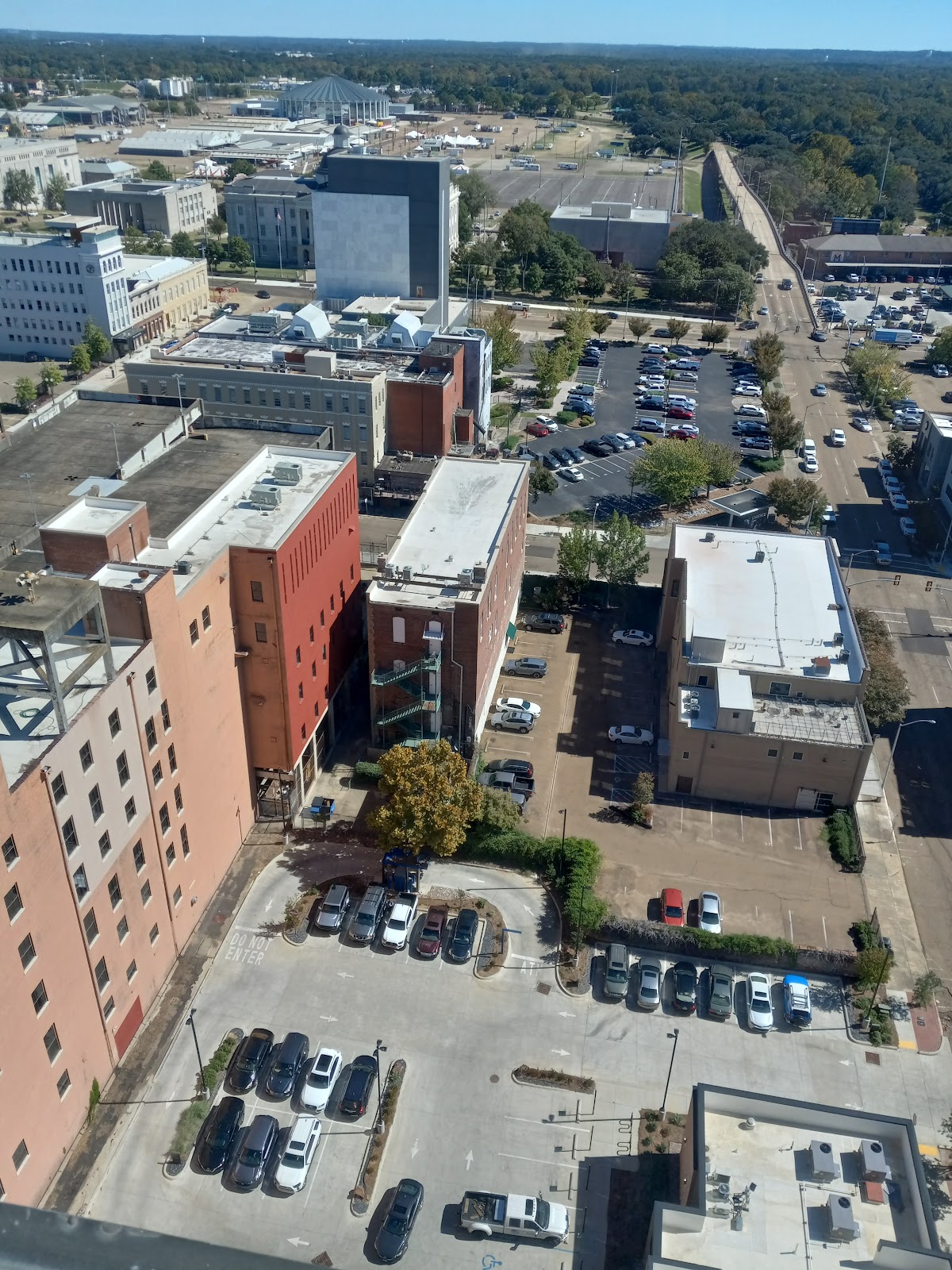
Glazing with a city behind it is, in daylight, four to six stops brighter than a panelled interior. That is the venue’s central technical fact and it has only three honest answers.
The first is to expose for the room and let the window go white. That is not a failure if it is chosen — a bright window as a graphic white shape behind a warm interior is a legitimate frame, and it is often the best one. The failure is choosing it accidentally and then trying to recover a city that was never recorded.
The second is to expose for the view and light the couple to match it. One source at roughly the window’s brightness holds both a legible skyline and a correctly exposed face, and it is the frame people actually want from a club with a view. It needs real power rather than a small flash, because you are competing with daylight.
The third is to wait for the levels to converge, which they do once a day. In the twenty to thirty minutes after sunset the city outside falls to about the brightness of the interior lighting, and a single exposure holds the lit room, the couple and the city behind them with no added light at all. That window is the most valuable thing in the building and it does not come back — take the sunset time for the date, add fifteen minutes, and be in position with the couple already there.
After that crossing the glass inverts and becomes a mirror, because the lit interior is now brighter than the street. Lights go off the camera axis, frames go oblique to the glazing, and the reflection becomes something to use deliberately rather than tolerate — a couple and the room doubled in dark glass is a good frame if the light stands are not in it. Check the reflections before the guests arrive.
- Assume bounce barely works: panelling and timber return almost nothing
- One warm-gelled source at face height, a stop under the room
- Find the position where the key rakes along panelling rather than at it
- Sunset plus fifteen is the appointment — room, couple and city in one frame
- After dark, go oblique to the glass and use the reflection on purpose
Downtown, and a Mississippi summer
Downtown Jackson is the outdoor extension and it is coherent material: early twentieth-century commercial architecture in brick and stone, on a regular grid, with a low-rise scale over much of it. Low-rise on a grid is the useful part, because it means evening sun reaches street level and runs the length of a street rather than being blocked by towers — so the last ninety minutes give long raking light down a whole block, at no equipment cost.
Brick and stone are forgiving mid-tones that hold detail at almost any sensible exposure, and they show their texture only when light runs along them. Walking a block to find which side the light is raking is worth more than any accessory. Alleys and side streets are the most dependable positions: walls both sides give directional light and a contained background with nothing distracting in it.
A Mississippi summer sets the limits and they are not small. Heat and humidity together make an outdoor block in July a welfare question in formal clothes, which argues for short purposeful trips late in the day rather than long wanders in the afternoon. The building’s own shadow across the street is the reliable midday shade.
Humidity also does something specific to equipment that is worth planning for, because it is the opposite of the cold-climate problem. A camera and lens chilled by a heavily air-conditioned interior will fog instantly and comprehensively on being carried outside into warm damp air, and it can take many minutes to clear — which is long enough to lose a first-look or an arrival. The handling is to let the kit warm towards outside temperature before it goes out: leave a bag near a door or in an unconditioned stair for a while, rather than stepping straight from a cold room into the street.
Afternoon thunderstorms are routine in a Mississippi summer rather than exceptional, building fast and often clearing fast. That means a rain plan is a normal part of planning here, not a contingency — and it also means the light after a cell passes is frequently the best of the day, with a dark sky, wet streets returning reflections and low sun coming in underneath. Worth going back out for.
More frames from The Capital Club
The Capital Club wedding photography: common questions
Why does bounce flash fail in a club interior?
Because panelling, dark timber and deep carpet absorb rather than return light. A flash aimed at a timber ceiling gives back a fraction of what it would in a white room, and what returns is warm.
How should the interior be lit?
One source off-axis at face height, gelled to the room’s tungsten, exposed so the room still reads as warm and dim. Add only enough for a catchlight and shoulder separation — lit to an even brightness it stops being a club.
What do you do about a bright window?
Choose one of three answers deliberately: let it blow to a white shape, light the couple to match the view, or wait for dusk when the levels converge. The failure is choosing the first by accident.
When is the best frame of the day available?
Twenty to thirty minutes after sunset. The city falls to interior brightness and one exposure holds the lit room, the couple and the skyline with no added light. Sunset plus fifteen, in position, couple already there.
What happens to the glass after dark?
It becomes a mirror, because the lit room is now brighter than the street. Shoot obliquely, keep lights off the camera axis, and use the doubled reflection deliberately — after checking the light stands are not in it.
What is the equipment risk in a Mississippi summer?
Fogging, and it is the reverse of the cold-climate problem. Kit chilled by air conditioning fogs comprehensively on reaching warm damp air. Let it warm towards outside temperature before carrying it out.
More Jackson, MS venue guides
We are writing a photographer’s guide to every venue we would happily shoot in Jackson, MS. Here are three more, plus the full index:
- The Country Club of Jackson: What It Suits and What It Does Not
- The Eudora Welty House, Jackson: A Walk Through House and Garden
- The Fairview Inn, Jackson: How the Light Moves
All Jackson, MS Wedding Venues →
Planning a wedding at The Capital Club?
There is one appointment in this building and it is fifteen minutes after sunset. Tell us your date.