 The Hilton Garden Inn Fargo: Field Notes on a Standardised Hotel
The Sanctuary Events Center: Four Ways Out of the Stained-Glass Problem
Stained glass is the best thing in a converted church and the most reliably lost. It is five stops brighter than the room.
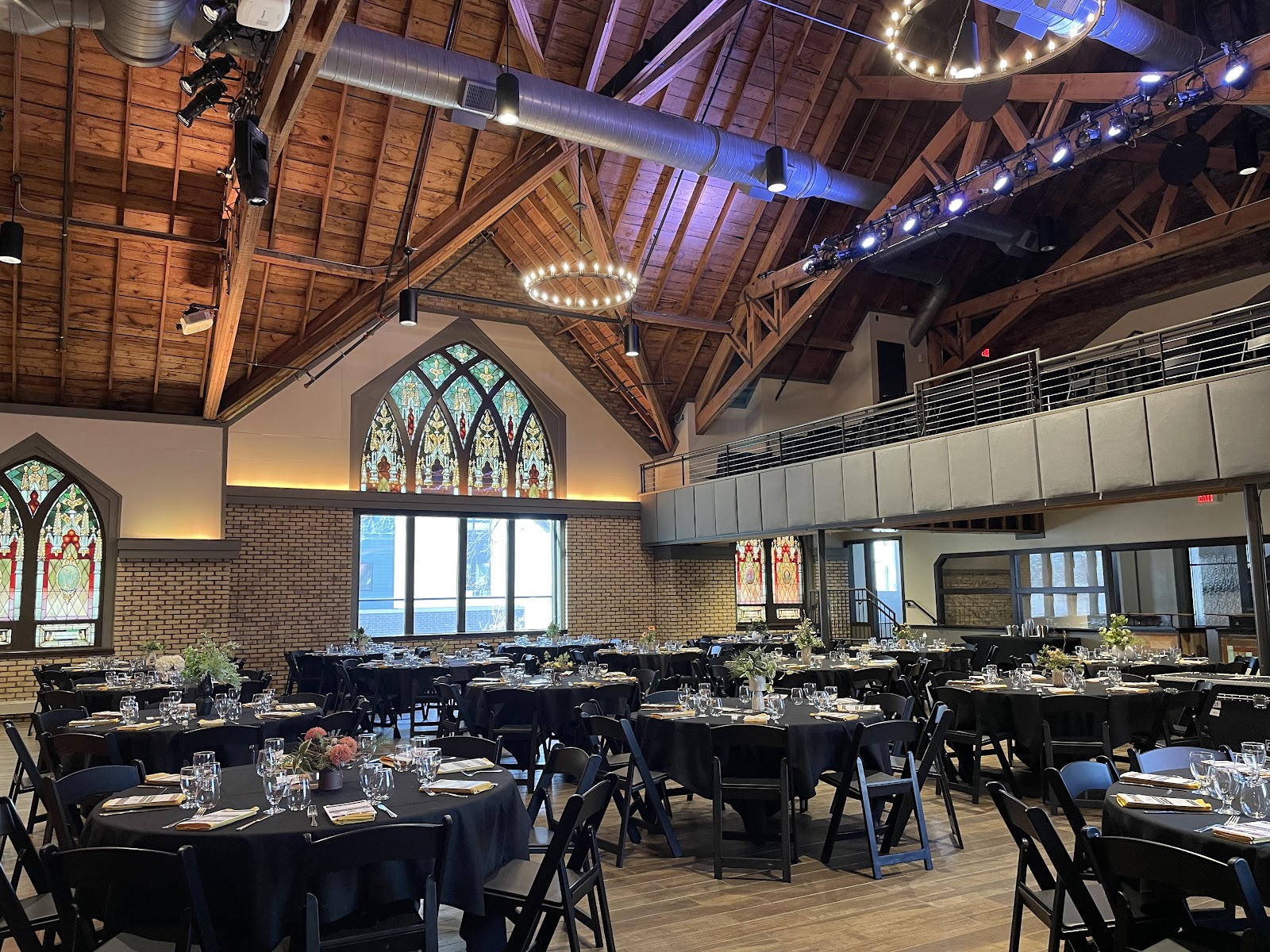
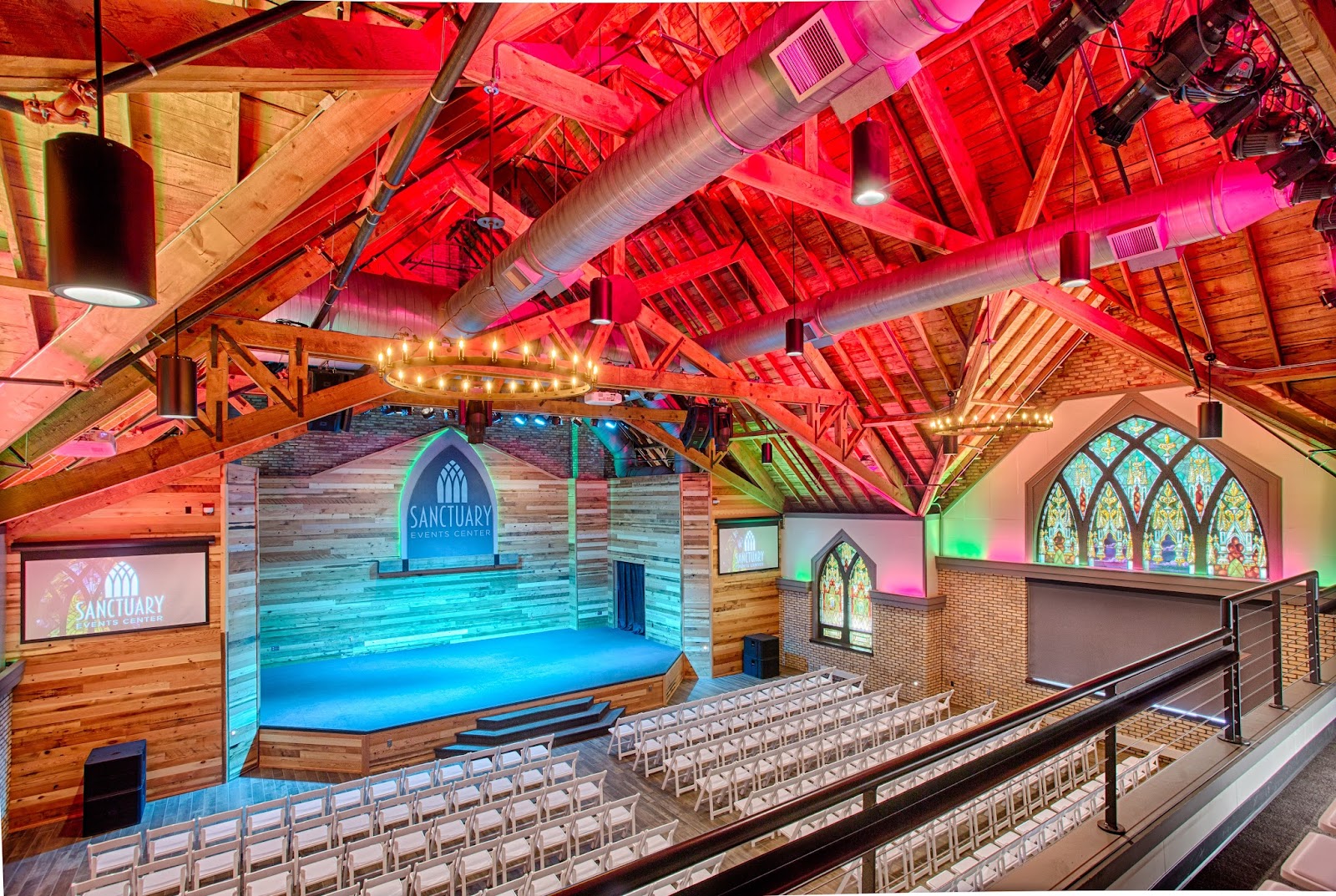
The Sanctuary Events Center occupies a converted church in Fargo, North Dakota, with stained glass windows, restored hardwood floors and the open volume of a former nave now used for events.
Converted churches share one dominant photographic condition and it is the stained glass. A leaded coloured window is lit from outside by daylight, which means it is not a decorative feature in the room but the brightest object in it — commonly four to six stops above the floor and walls on a bright day. Meter for the couple and the window washes to a white blank with faint colour at its edges, throwing away the single thing that makes the building distinctive. Meter for the glass and everyone is a silhouette.
There are four ways through that and they suit different frames. We have not photographed a wedding here; stained glass and converted naves behave the same wherever they survive. Which spaces are available and what may be attached to original fabric are questions for their team — restored surfaces usually take no fixings.
The Sanctuary Events Center at a glance
| Where | Fargo, North Dakota |
| Character | A converted church with stained glass, hardwood and an open nave |
| The problem | Stained glass runs four to six stops above the room |
| Consequence | Metered for people, the windows blank out entirely |
| Ask first | What may be attached to restored fabric — usually nothing |
Why the windows blank out
A stained glass window is a window, not a light fitting. It is lit from outside by daylight, so its brightness depends on the weather and the hour rather than on anything in the room, and on a sunny day it can sit four to six stops above the floor beneath it. That is a wider range than any single exposure holds.
It also means the glass is best on a bright day and disappointing on a dull one, exactly as a conservatory roof is. Worth telling a couple in advance: the signature feature has a weather dependency, and if their date is grey the other frames need to carry the set.
The colour is narrow-band and saturated, so it will not correct to neutral and should not be asked to. Coloured glass throws patches of red, gold and blue onto whatever is beneath it, and skin lit through a warm pane is flattering rather than a fault. The instinct to neutralise it is the wrong one — correcting stained glass towards white drags everything else to its complement and the window stops looking like stained glass.
And lead reduces the light. The cames occupy a real proportion of the opening, so a large stained window transmits noticeably less than a plain one of the same size — which means the room is dimmer than the window area suggests while the window itself is still the brightest thing in it.
Ways one and two: raise the room, or use the patch
The first and most reliable approach is to light the room up towards the window rather than exposing down to it. Add enough of your own light on the couple that the interior sits within two or three stops of the glass, then expose for the glass. Now the window keeps its saturation, the hardwood and the nave read properly, and the frame is the one the building is for.
Two or three stops rather than matching. Bringing them level flattens the frame and removes the sense that light is entering from outside, which is the whole character of a church interior. The window should stay clearly brighter — just not clipped.
The light needs gelling warm so it belongs in a space where the ambient is coloured and the timber is warm. An ungelled flash in a converted church reads as a cold intrusion.
The second approach costs nothing: use the coloured patch the glass throws rather than the window itself. Light passing through stained glass lands somewhere — on a floor, a wall, a pew, a dress — and that patch moves predictably through the day. A couple placed in it gets coloured light on skin with the room falling away around them, which is a frame that exists only where there is period glass. Finding where the patch falls at the ceremony hour is a site-visit job and it is entirely predictable.
- Raise the room to within two or three stops, then expose for the glass
- Gel your light warm; an ungelled flash reads as a cold intrusion
- Find where the coloured patch falls at the ceremony hour
- Use the nave’s height as scale rather than trying to light it
- Assume nothing may be fixed to restored fabric
Ways three and four: silhouette it, or use the volume
The third approach accepts the range instead of fighting it. Expose for the glass and let the couple go dark, and the result is a silhouette against a saturated coloured window — which is a strong, graphic, deliberate frame rather than a failure. It needs the pose to read entirely from shape, so a clear gap between the figures and a recognisable profile, and it wants agreeing with the couple in advance because it is a bolder image than most people expect.
The fourth uses the nave itself. A former church has volume and height that an events room does not, and where the ceiling is high the same rule applies as in any large interior: do not try to light it. Expose for the space as it looks, place the couple small, and let the scale be the subject — a tripod and a slow shutter, with the couple asked to stay still.
A nave is also built on an axis, so centring exactly on that axis gives a frame with a formality an approximate position never achieves. Find the centre, level with the electronic level, and commit.
Restored hardwood is the other material and it behaves usefully: a mid-tone with real grain, holding detail at almost any sensible exposure, and reflecting warm. It needs raking light to read as timber rather than as a brown field, so light running along the floor lifts it while light pointed down at it flattens it.
North Dakota winter shapes the outdoor half. Days are very short, so any daylight block belongs early in the afternoon; cold limits outdoor time to minutes; snow is the best natural fill there is and will fool a meter by two stops, so overexpose deliberately; and a camera moved between a heated interior and deep cold fogs badly coming in, so acclimatise rather than cycling it. Low winter sun also stays raking all day, which suits stained glass — it enters at a shallower angle and throws longer, more dramatic coloured patches than a high summer sun does.
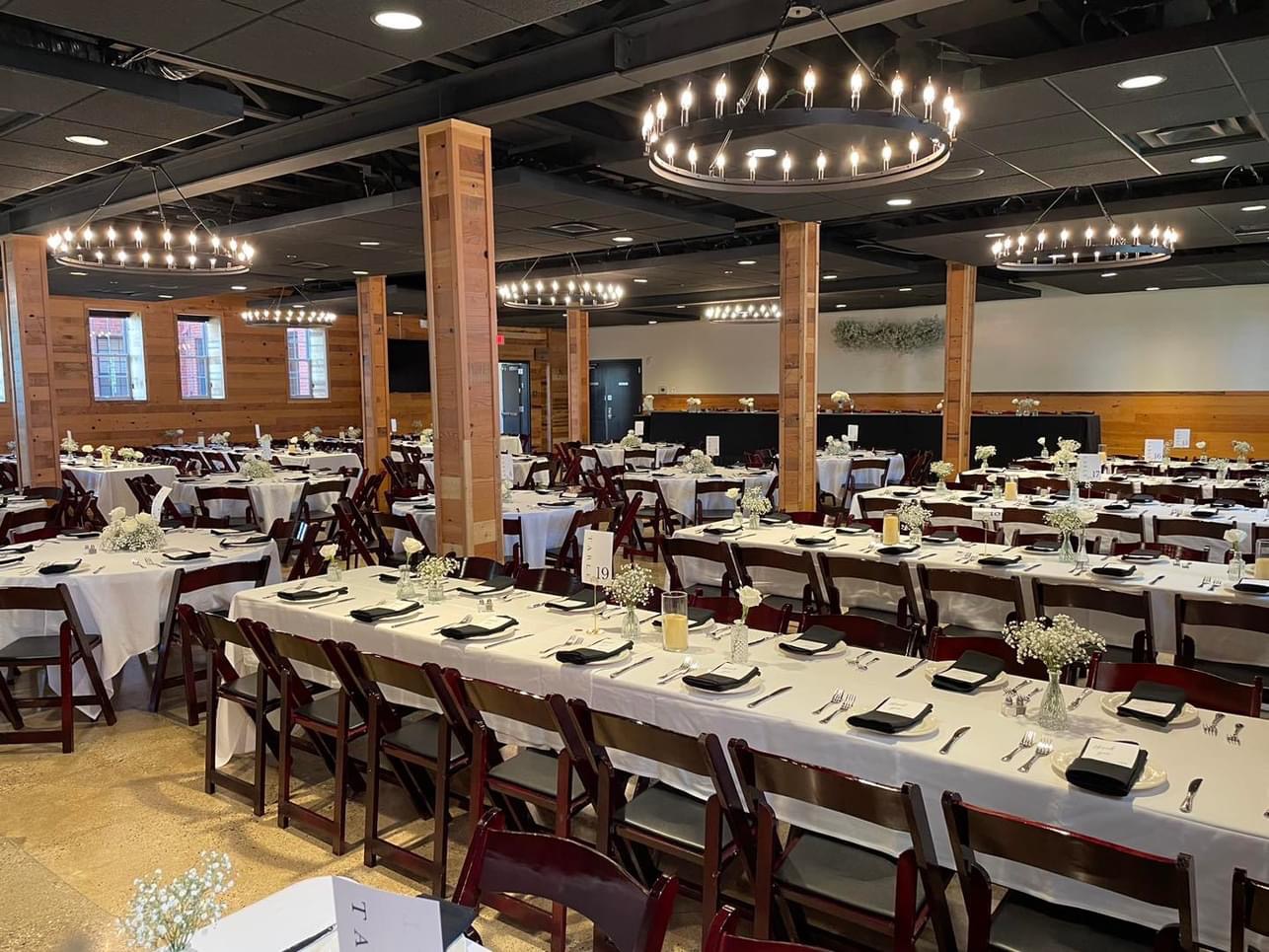
More frames from The Sanctuary Events Center
The Sanctuary Events Center wedding photography: common questions
Why do the stained glass windows blank out?
Because they are windows rather than light fittings, lit from outside, and commonly four to six stops brighter than the room. No single exposure holds that range, so metered for the couple the glass washes to white.
What is the fix?
Light the room up towards the window — add enough on the couple that the interior sits within two or three stops of the glass, then expose for the glass. Not level, because matching flattens the sense of light entering from outside.
Should the coloured light be corrected?
No. It is narrow-band and saturated, and skin lit through a warm pane is flattering. Correcting stained glass towards white drags everything else to its complement and the window stops looking like stained glass.
What is the free frame?
The coloured patch the glass throws. Light passing through lands on a floor or a wall and moves predictably through the day — a couple placed in it gets coloured light on skin with the room falling away. Find it on a site visit.
Is the silhouette version valid?
Very. Expose for the glass and let the couple go dark against a saturated window — a strong graphic frame rather than a failure. It needs the pose to read from shape alone, and it is worth agreeing in advance.
Does winter help?
For the glass, yes. Low winter sun enters at a shallower angle and throws longer, more dramatic coloured patches than high summer sun. The costs are very short days, severe cold, and a camera that fogs coming back inside.
More Fargo, ND venue guides
We are writing a photographer’s guide to every venue we would happily shoot in Fargo, ND. Here are three more, plus the full index:
- The Hotel Donaldson: Contemporary Art in an 1890s Building
- The Red River Zoo: What a Northern Zoo Suits and When
- The Avalon Events Center: What a Purpose-Built Room Gets Right
All Fargo, ND Wedding Venues →
Planning a wedding at The Sanctuary Events Center?
Stained glass is the reason to be here and the thing most often lost. Tell us your date and we will plan to keep it.