 Tulsa Country Club: Field Notes on a 1908 Club
The Yale Theater, Oklahoma City: The One Decision That Governs Everything
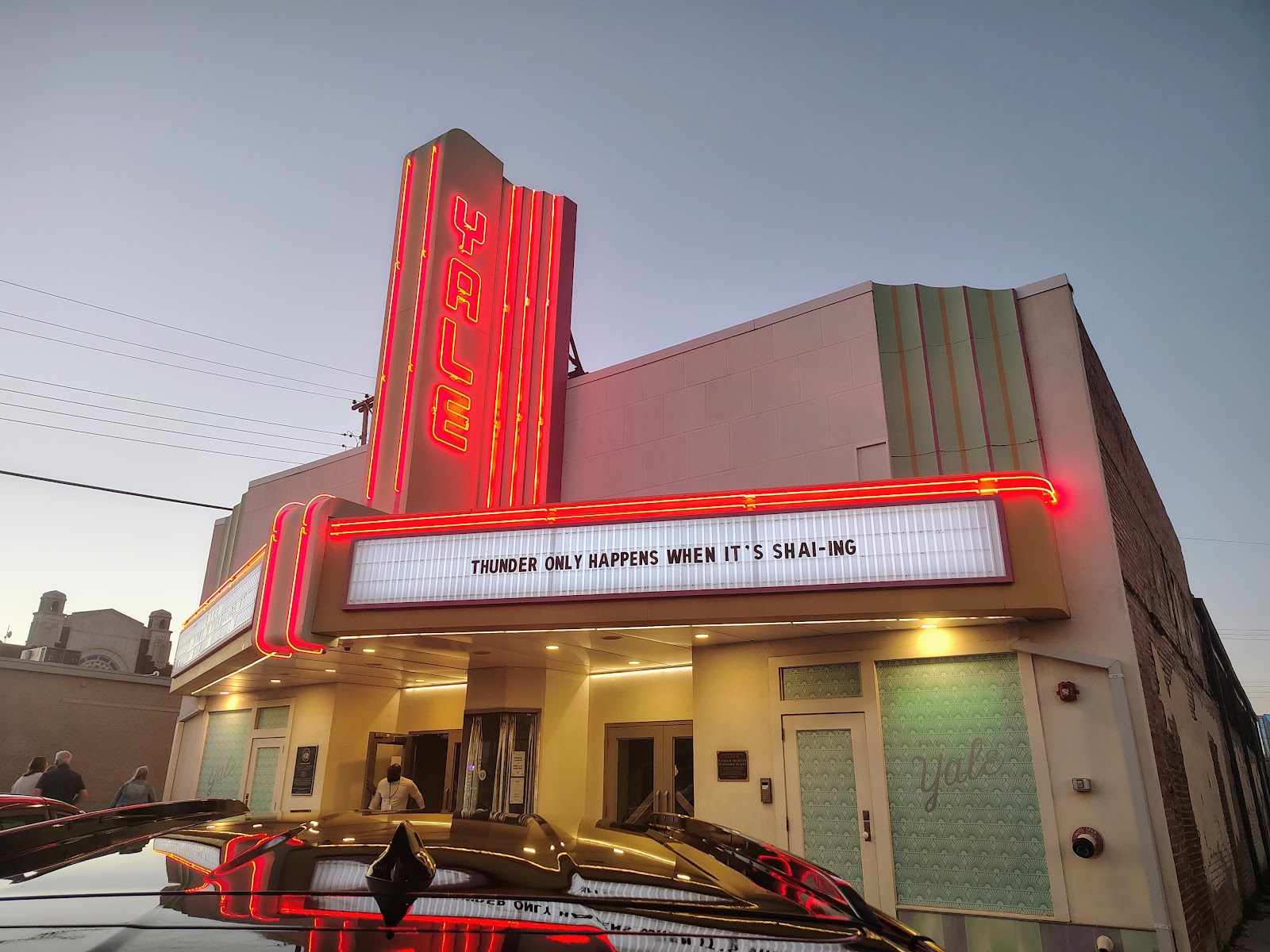
A theatre’s marquee is a light source, a sign and a clock all at once. Everything else follows from when you shoot it.
The Yale Theater is a historic Oklahoma City theatre given a contemporary fit-out — period character in the shell, modern finishes and fittings inside.
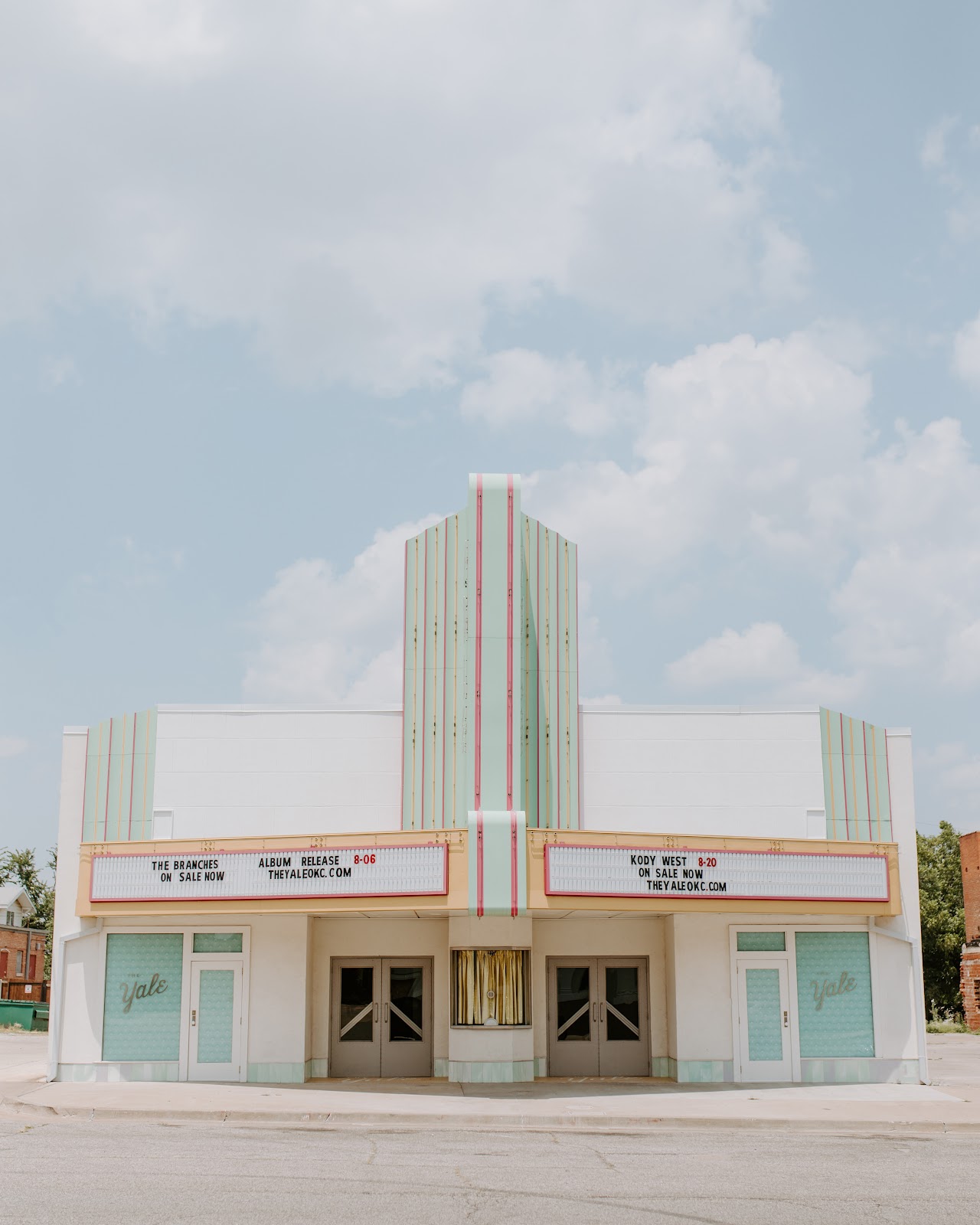
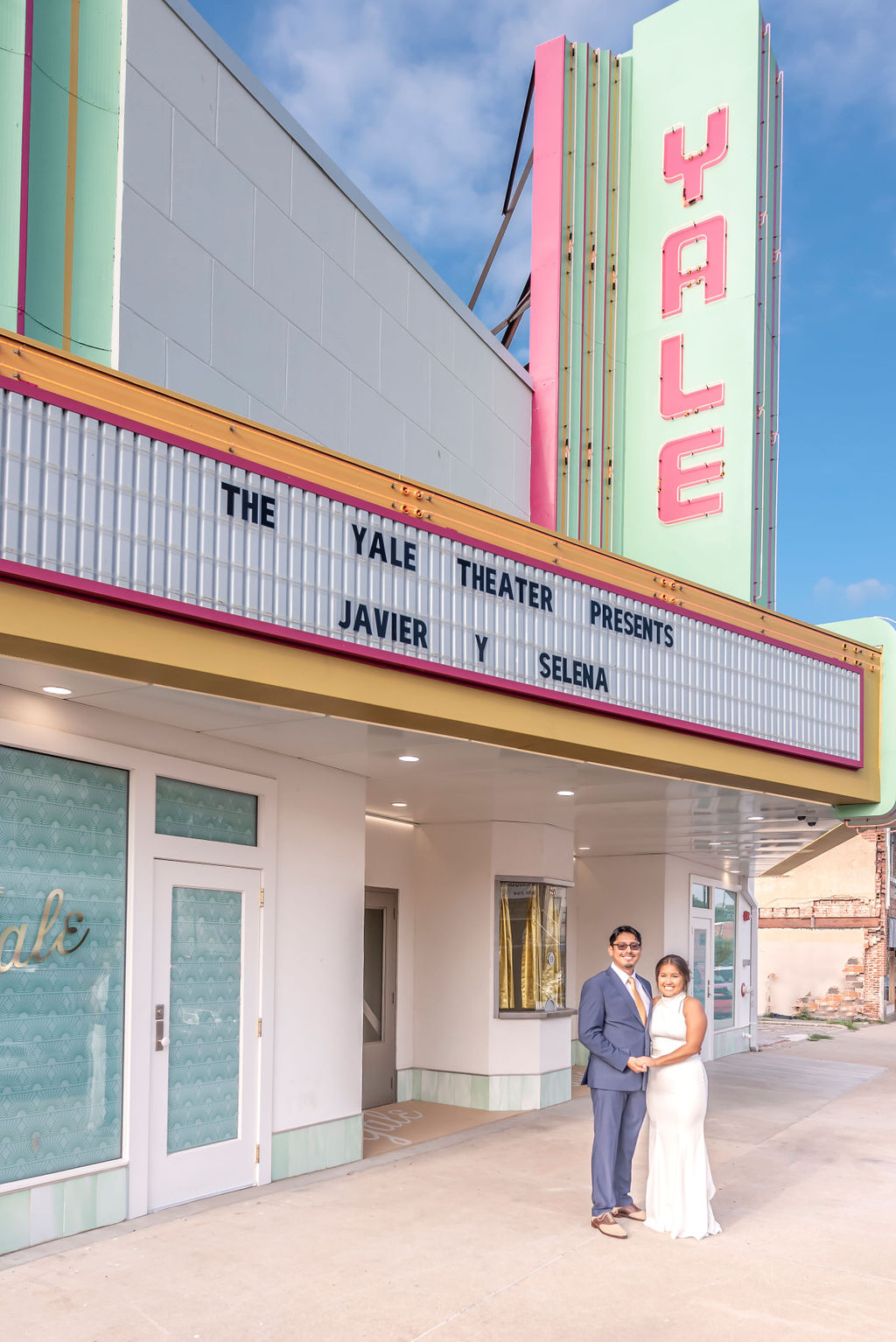
One decision governs the whole evening here, and it is not about the interior. It is when you shoot the front of the building. A theatre facade with a lit marquee or signage is the single most recognisable frame the venue type produces, and it is only available inside a narrow window: roughly twenty to thirty minutes after sunset, when the sky still holds colour and the sign is already on. Before that the sign is invisible against a bright sky; after it, the sky is black and the frame becomes a lit sign floating in nothing.
Everything else in the schedule arranges itself around that window. We have not photographed a wedding at the Yale; restored neighbourhood theatres behave the same wherever they survive. Whether the marquee can be lit and switched on request, what the house lighting can do and what may be fixed to original fabric are the questions for their team.
The Yale Theater at a glance
| Where | Oklahoma City, Oklahoma |
| Character | A historic neighbourhood theatre with contemporary interior fit-out |
| The decision | When you shoot the facade — a 20–30 minute window after sunset |
| Why it matters | It is the frame the venue type is known for, and it does not come back |
| Ask first | Whether the marquee can be lit on request; fixings to original fabric |
The window, and why it is so narrow
The reason the window is narrow is a simple brightness comparison. A marquee’s bulbs and neon are bright relative to a night street and dim relative to a daylit sky — perhaps six or seven stops dimmer than a bright afternoon. So while the sky is lit, an exposure that renders the sky correctly renders the sign as barely-there grey, and an exposure that renders the sign renders the sky as white.
As the sky falls after sunset, its brightness drops towards the sign’s. There is a crossing point at which both sit within the same exposure — the sky a deep saturated blue with detail, the sign glowing and legible, the facade lit by its own light — and that is the frame. It lasts as long as the sky takes to fall through about two stops, which in practice is twenty to thirty minutes.
It is also worth knowing which way the front faces, because a west-facing facade gets the afterglow behind it and a colour gradient in the sky above it, while an east-facing one goes to flat blue sooner. Neither is bad, but they are different frames and they peak at slightly different times.
The practical handling is to fix it as a clock time rather than an intention. Take the sunset time for the date, add fifteen minutes, be standing in the street with the lens chosen and the couple with you, and shoot a bracketed sequence as the sky falls so that one of them is exactly right. Arriving to find it and then fetching people has already lost it.
And it needs confirmation that the sign will be on. A marquee is not always lit outside performance hours, and switching it on is usually a request rather than an obstacle — but it is a request that has to be made in advance, and it is the single question whose answer determines whether this frame exists at all.
What follows from it
If the facade is the appointment, then the couple’s portrait block runs up to it rather than after it. The natural sequence is the last of the daylight for outdoor frames, then the facade at the crossing, then the interior for the rest of the night — which puts the only irreversible frame in the middle where it can be protected, rather than at the end where it gets cut.
It also means the interior gets shot after dark, which for a theatre is correct anyway. Auditoria are sealed against daylight, so nothing indoors is lost by leaving it late; lobbies do have daylight, so anything that needs a window happens early. That gives a clean division: lobbies and street in the daylight, facade at the crossing, auditorium and reception after.
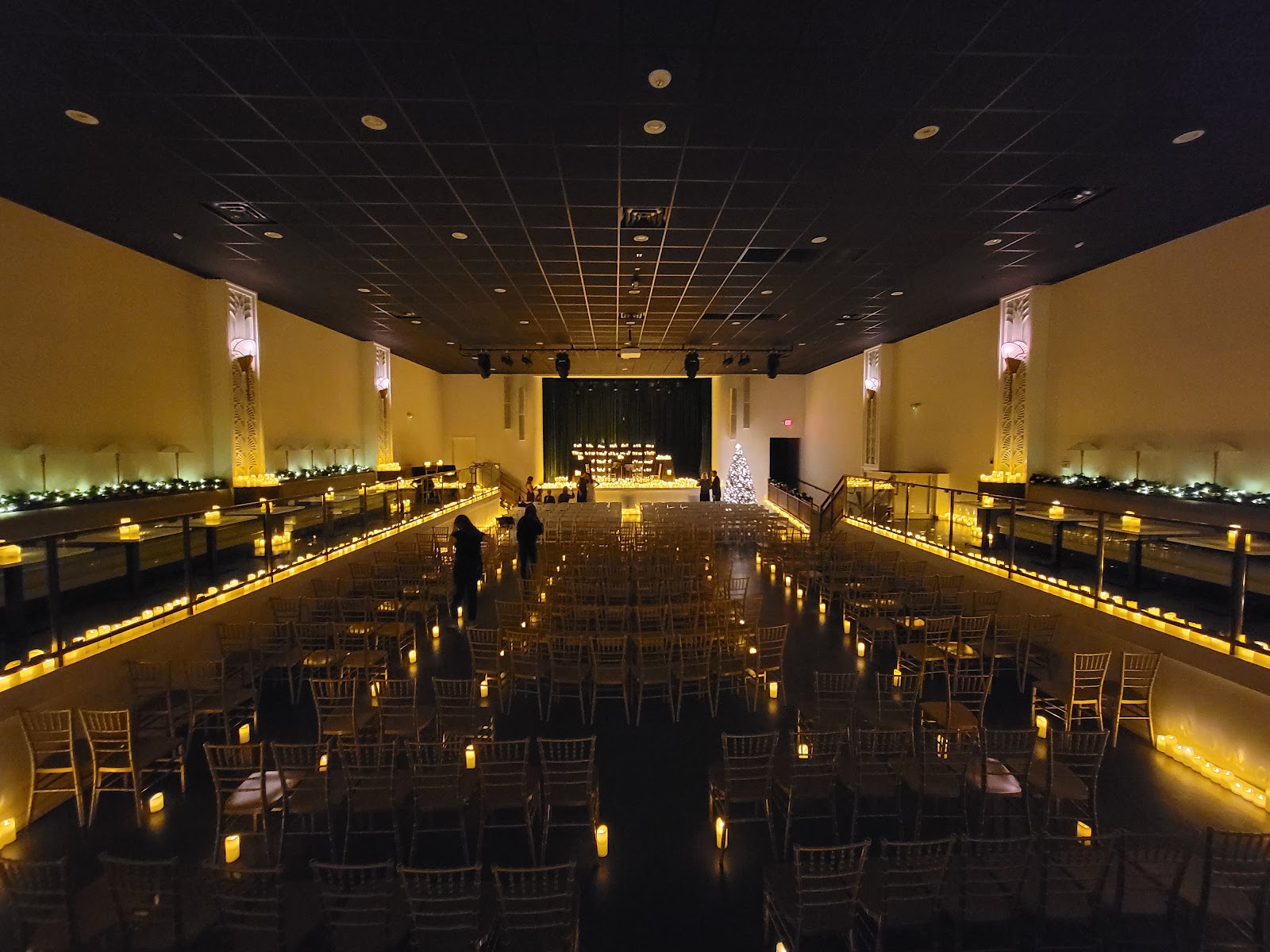
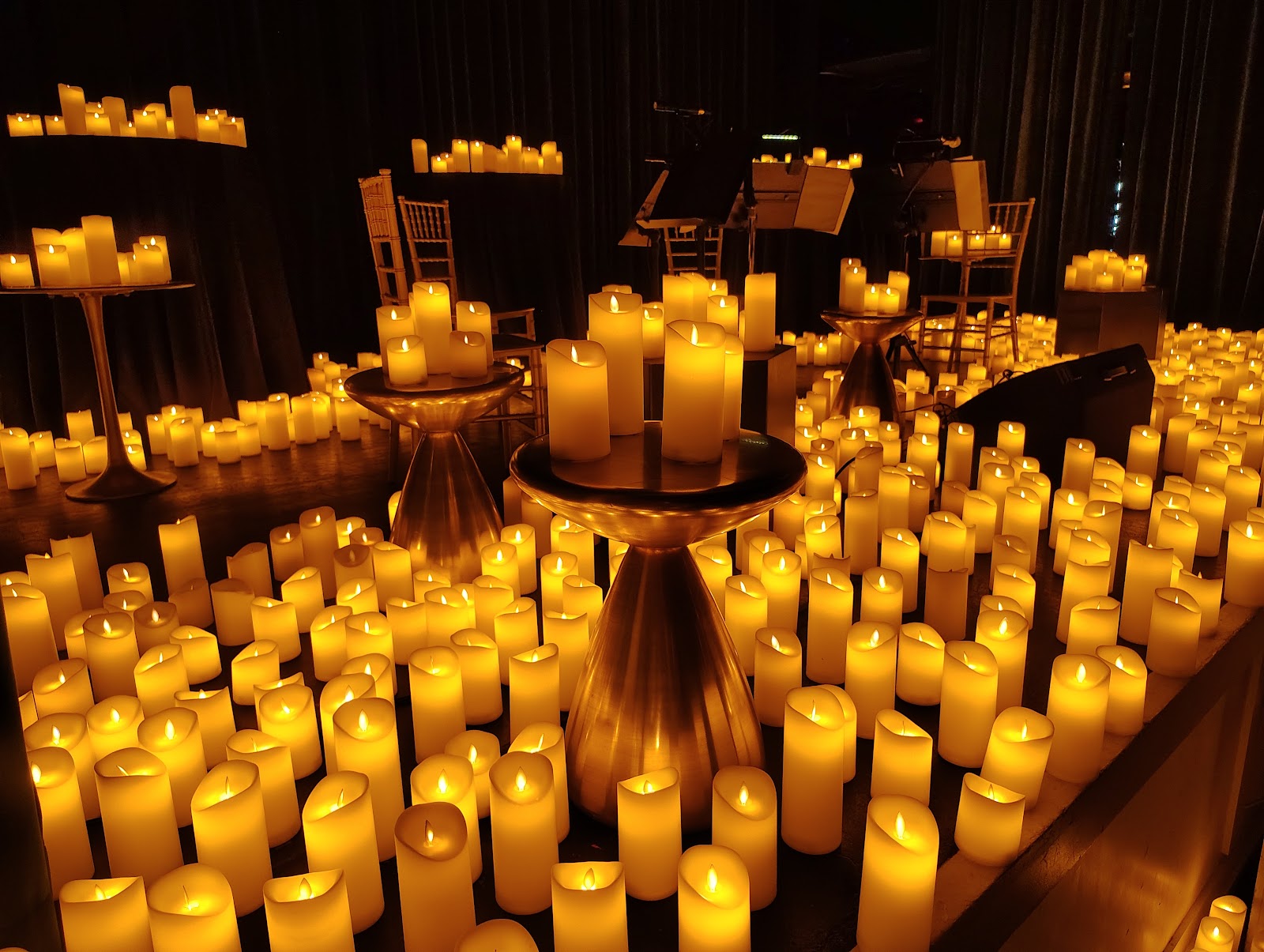
House lighting inside a restored theatre is designed to let an audience find a seat, not to light a face — low, warm, from overhead fittings, often dimmed well down. So the interior needs one small source at face height, off the camera axis, gelled warm to match the room’s tungsten, exposed so the room still reads as a warm dim theatre with just enough added for a catchlight. Lighting a face correctly and losing the room produces a portrait that could have been made anywhere.
If stage lighting is available, it is the interior equivalent of the marquee: a single pool of light on an otherwise dark stage with a couple standing in it is the strongest frame a theatre gives, and it needs a board operator rather than equipment. Coloured washes, though, render skin unrecoverably in their own colour, so under one either commit to silhouette or add a neutral source on the faces.
Contemporary fit-out in a historic shell gives a useful mix of surfaces: period plaster and metalwork that need raking light to read, and modern finishes that are clean and take light plainly. Both want a single considered white balance, set for faces, held through the block — a set that fails to match itself in a warm interior is nearly always auto white balance drifting.
- Sunset plus fifteen, in the street, people already with you, bracketed
- Confirm in advance that the marquee will be switched on
- Lobbies and street in daylight; facade at the crossing; auditorium after
- Interior needs a warm-gelled face-height source, a stop under the room
- If the stage rig is available, one pool on a dark stage beats anything you carry
Street, weather and the practical questions
A neighbourhood theatre sits on a street, and the street is part of the material. Oklahoma City’s commercial strips are low-rise on a regular grid, so low evening sun reaches street level and runs the length of a block — which is the daylight frame that locates the theatre in its city, and it is available for the ninety minutes before the marquee window with no equipment at all.
Alleys and side streets nearby are the dependable positions. Walls on both sides give directional light, a contained background with nothing distracting in it, and shelter from wind, which on the southern plains is close to constant rather than occasional.
Brick and painted commercial frontages are forgiving mid-tones that hold detail at almost any sensible exposure, and they only show their texture when light runs along them rather than at them. Walking a block to find which wall the light is raking along is worth more than any filter.
Oklahoma conditions set the outdoor limits. Severe summer heat keeps street blocks short and purposeful — five minutes at a time rather than a long wander — and the building’s own shadow is the reliable midday shade. Spring and early summer bring fast-building convective storms, and a theatre is an excellent fallback because the interior day is unaffected; the only casualty is the marquee frame, which needs the sky, so on an unsettled evening it is worth taking it early and taking it twice.
Original fabric in a restored theatre usually takes no fixings, so assume nothing may be taped or clamped and plan free-standing weighted stands. And it is worth asking what else is in the building on the date — a working theatre may have a production, which changes access, timing and whether the stage is available at all.
More frames from The Yale Theater
The Yale Theater wedding photography: common questions
What is the one decision here?
When you shoot the facade. A lit marquee against a sky that still holds colour is the frame this venue type is known for, and it exists for only twenty to thirty minutes after sunset.
Why is the window so short?
Brightness. A marquee is six or seven stops dimmer than an afternoon sky, so while the sky is lit one exposure cannot hold both. The crossing lasts as long as the sky takes to fall two stops.
How do you actually catch it?
As a clock time, not an intention. Sunset plus fifteen minutes, standing in the street, lens chosen, couple already with you, shooting a bracketed sequence as the sky falls.
What has to be confirmed in advance?
That the marquee will be switched on. A sign is not always lit outside performance hours, and switching it on is a request rather than an obstacle — but it must be made early.
What order should the day run in?
Lobbies and street in the daylight, facade at the crossing, auditorium and reception after dark. That puts the only irreversible frame in the middle where it can be protected rather than at the end where it gets cut.
How do you light the auditorium?
One small source at face height, off-axis, gelled warm to match the house tungsten, with the exposure set so the room still reads as a warm dim theatre. Add only enough for a catchlight.
More Oklahoma venue guides
We are writing a photographer’s guide to every venue we would happily shoot in Oklahoma. Here are three more, plus the full index:
- The BOK Center, Tulsa: A Building Wrapped in Curved Glass
- The Hard Rock Casino Tulsa: The Light Through a Day
- The River Spirit Casino, Tulsa: Field Notes on a Riverside Resort
Planning a wedding at The Yale Theater?
This venue has one appointment in it. Tell us your date and we will put it in the schedule.