 The Hilton Garden Inn Fargo: Field Notes on a Standardised Hotel
The Fargo Theatre: How the Marquee Frame Is Actually Made
The marquee is the frame everybody wants, and it only exists once the sky has gone.
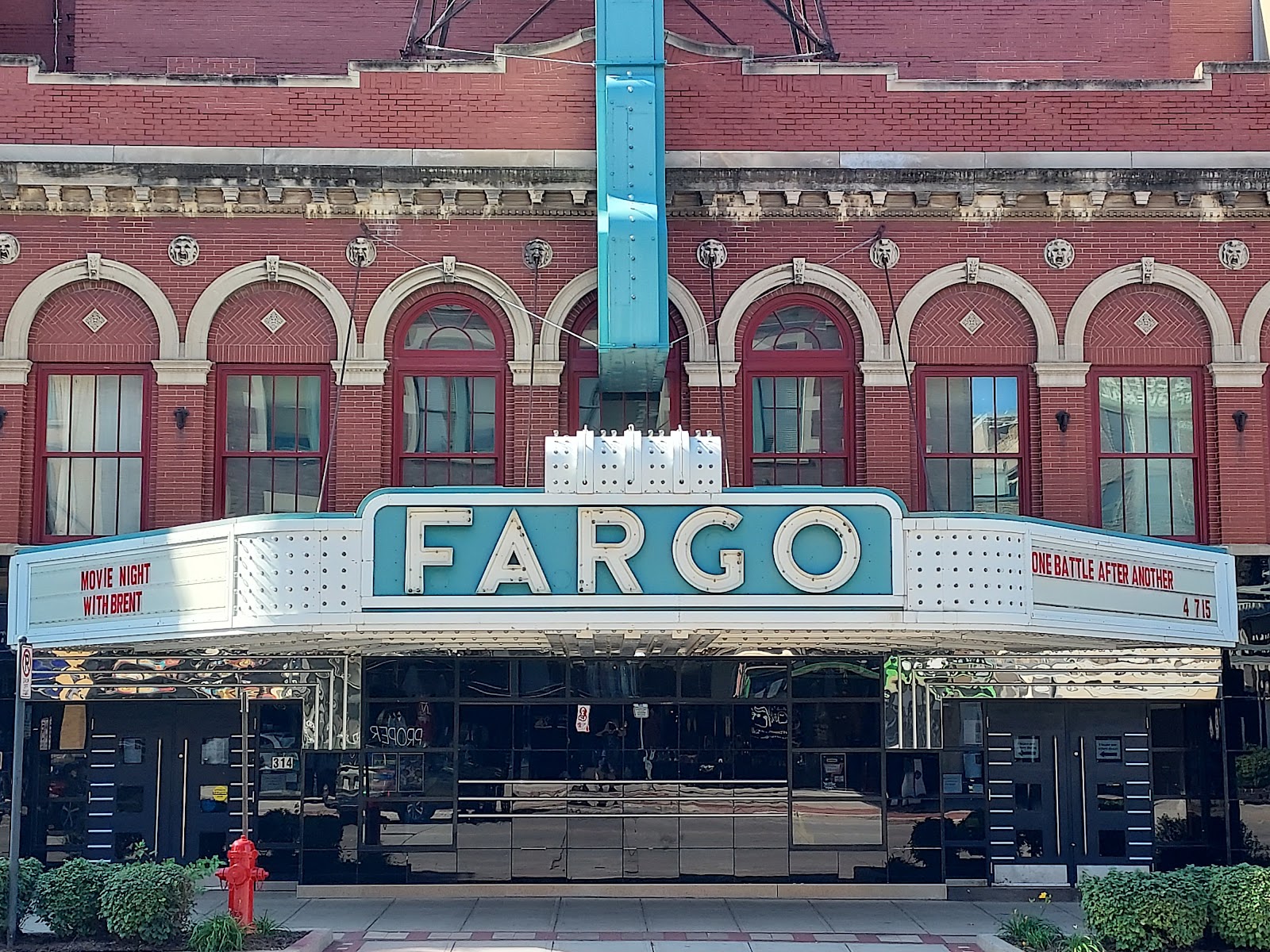
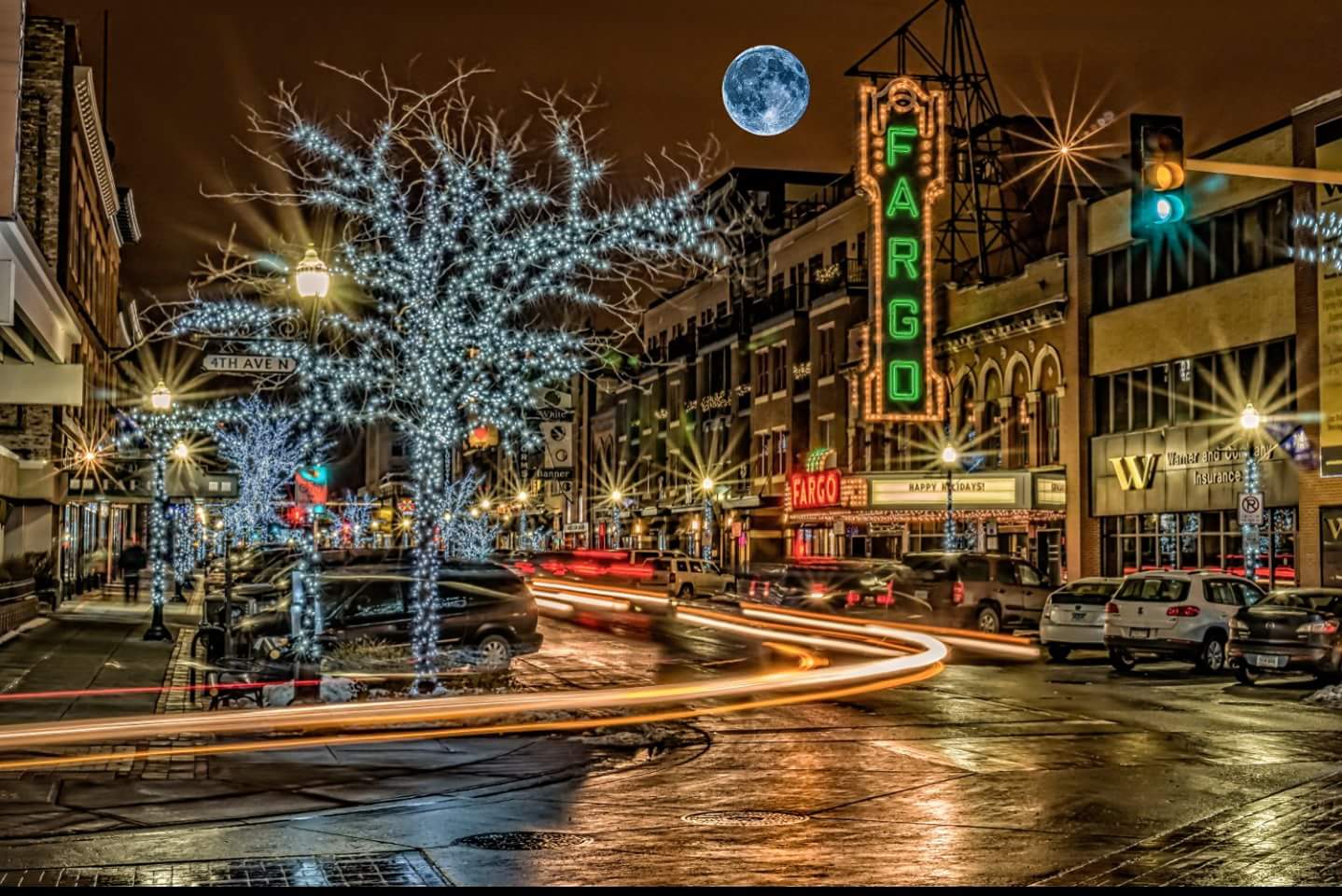
The Fargo Theatre opened in 1926 in downtown Fargo, North Dakota, a cinema with an Art Deco auditorium, a restored interior and a neon marquee and vertical sign on the street outside.
That marquee is the venue’s signature and it produces one specific frame: the couple beneath lit neon on a dark street. It is a genuinely distinctive image and it depends on three things — a sky dark enough for the neon to dominate, a focal length that keeps the sign legible, and light on the couple, because neon puts out almost nothing usable on a face.
It is also the only frame in the building with a clock attached, since the interior has no daylight at all. This is an account of making it and of what the auditorium gives. We have not photographed a wedding at the Fargo Theatre; neon marquees and Deco auditoria behave the same wherever they survive. Whether the marquee can be lit on request, and whether the rig can be operated, are the two questions for their team.
The Fargo Theatre at a glance
| Where | Downtown Fargo, North Dakota |
| Character | A 1926 cinema with an Art Deco auditorium and a neon marquee |
| The frame | The couple beneath lit neon on a dark street |
| It needs | A dark sky, a long lens, and light on the couple |
| Ask first | Whether the marquee can be lit for the wedding |
Step one: wait for the sky to go
Neon is a narrow-band emissive source and it is not very bright in absolute terms. Against a daylit or even a dusk sky it reads as pale coloured tubing rather than as glowing sign, because the sky behind it is brighter than the neon itself. The frame only works once the sky has dropped well below the sign — which in practice means later than photographers expect, and later than the blue-hour window that suits most city frames.
So this is a full-darkness frame rather than a dusk one, and that is worth saying because the two are usually conflated. A skyline frame wants the twenty minutes after sunset; a neon frame wants the period after that, when the sky is genuinely dark and the sign is the brightest thing in the street.
In a North Dakota winter that arrives early and is easy to reach, which is a real advantage — a December wedding can have the marquee frame before dinner. In midsummer it arrives very late, well after the reception has started, which makes it a planned ten-minute departure rather than an opportunistic stop.
The compensating benefit of true darkness is that the street empties of everything except light. Buildings recede, traffic becomes streaks if you want them, and the marquee is the only subject — which is exactly what the frame needs.
Step two: the lens and the light
A wide lens at the base of a marquee gives perspective distortion that throws the sign backwards and makes the lettering unreadable, plus a great deal of empty street. A longer lens from further back along the pavement keeps the sign’s proportions honest, makes the lettering legible, and compresses the street façades into layers behind it.
So stand across the road or well down the block and shoot back. The couple go beneath or just in front of the sign, and the distance is what lets the neon read as a substantial element rather than as a bright smudge overhead.
They must be lit. Neon throws coloured light but very little of it, so a couple lit only by a marquee is a silhouette with coloured edges. One warm off-camera source from the side, at a power balanced to the sign rather than overwhelming it, is the whole technique — and erring towards too much flash is the commoner mistake, because it turns a neon frame into a studio portrait with a coloured background.
Colour needs a decision rather than a correction. Neon is narrow-band and will not resolve to neutral, so set white balance for your own gelled source so skin is right, and let the sign stay the colour it is. Correcting neon towards white drags everything else to its complement and the sign stops looking like neon.
- Wait for true darkness, not dusk; neon needs the sky below it
- Long lens from across the road, not wide from the base
- Light the couple with one warm source balanced to the sign
- Set white balance for your light; let the neon stay its own colour
- Winter brings darkness before dinner — plan accordingly
Step three: inside, and the rest of the day
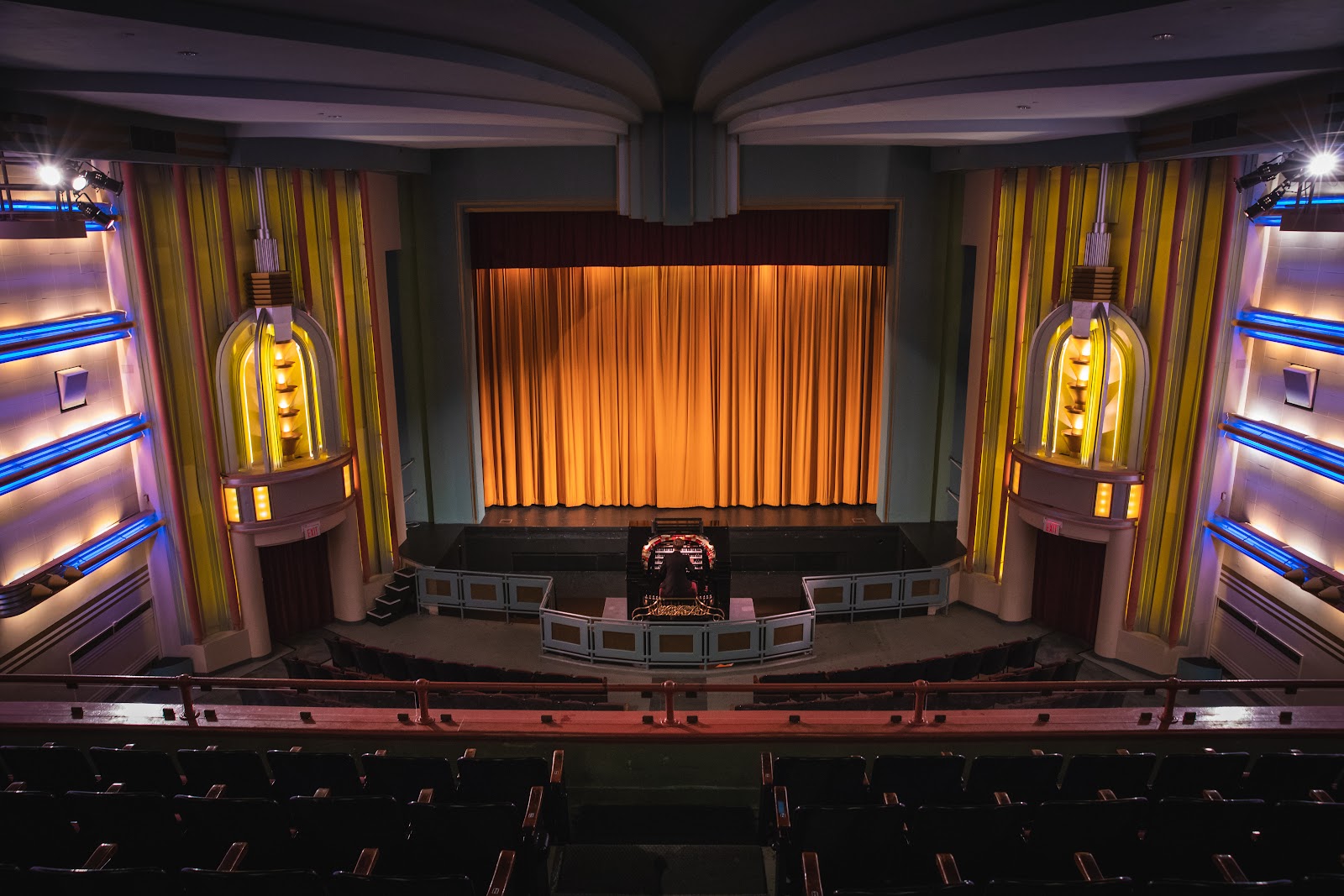
The auditorium is Art Deco and it behaves like every cinema of the period: dark by design, with deep-toned surfaces that do not reflect the screen, and seating that absorbs light. Do not flood it — filling an auditorium with bounced flash turns a dramatic room into a badly lit hall full of chairs. Use one controlled source on a couple in an aisle and let the rows disappear into blackness either side.
The stage is the frame only a theatre gives, and it needs someone rostered who can operate the rig — ask weeks ahead for a warm front wash, a backlight if the rig allows, and house lights low rather than off so the rows read faintly as context. If the desk is unavailable, light it yourself; a dark hall has nothing nearby to bounce off, so there is no spill to manage.
Deco ornament is geometric rather than floral, which means it reads as line and pattern and rewards precise framing — level deliberately, and either centre on an axis or offset clearly. Where there is metalwork, remember it is specular rather than diffuse: light the reflection with a broad bounce rather than pointing a bare flash at it.
Because the interior has no daylight it is entirely time-independent, which makes it the block that absorbs any delay. Everything with a clock attached is out on the street.
North Dakota winters are long and severely cold, and that shapes an outdoor block more than at any venue so far. Days are very short, so daylight frames belong early in the afternoon; cold limits outdoor time to minutes rather than tens of minutes; and snow is the best natural fill there is while fooling a meter by about two stops, so overexpose deliberately and check it holds texture. A camera moved from a heated lobby into deep cold and back fogs badly coming in — acclimatise, and keep one body outside rather than cycling it.
More frames from The Fargo Theatre
The Fargo Theatre wedding photography: common questions
When does the marquee frame work?
In true darkness rather than at dusk. Neon is not very bright in absolute terms, so against a dusk sky it reads as pale tubing. The frame needs the sky well below the sign — later than the blue-hour window most city frames want.
Wide or long lens?
Long, from across the road or down the block. A wide lens at the base throws the sign backwards and makes the lettering unreadable. Compression keeps the proportions honest and stacks the street façades behind it.
Do you need to light the couple?
Yes. Neon throws coloured light but very little of it, so a couple lit only by a marquee is a silhouette with coloured edges. One warm source from the side, balanced to the sign — too much flash is the commoner error.
Should the neon colour be corrected?
No. It is narrow-band and will not resolve to neutral. Set white balance for your own gelled source so skin is right and let the sign stay its own colour — correcting it drags everything else to its complement.
Is winter better or worse here?
Better for this frame. Darkness arrives before dinner in December, so the marquee is reachable without leaving the reception late. The cost is severe cold, very short days, and a camera that fogs coming back inside.
How should the auditorium be lit?
Sparingly. It is dark by design and flooding it turns a dramatic room into a badly lit hall full of chairs. One controlled source on a couple in an aisle, with the rows disappearing into blackness.
More Fargo, ND venue guides
We are writing a photographer’s guide to every venue we would happily shoot in Fargo, ND. Here are three more, plus the full index:
- The Hilton Garden Inn Fargo: Field Notes on a Standardised Hotel
- Island Park: Reading a Mature City Park Through the Day
- The Jasper Hotel: Photographing a New Hotel in an Old Downtown
All Fargo, ND Wedding Venues →
Planning a wedding at The Fargo Theatre?
The marquee frame needs full darkness and a long lens. Tell us your date and we will give you the clock time.