 The Hilton Garden Inn Fargo: Field Notes on a Standardised Hotel
Island Park: Reading a Mature City Park Through the Day
Mature canopy is the rarest thing on the northern plains, and it changes which hours work.
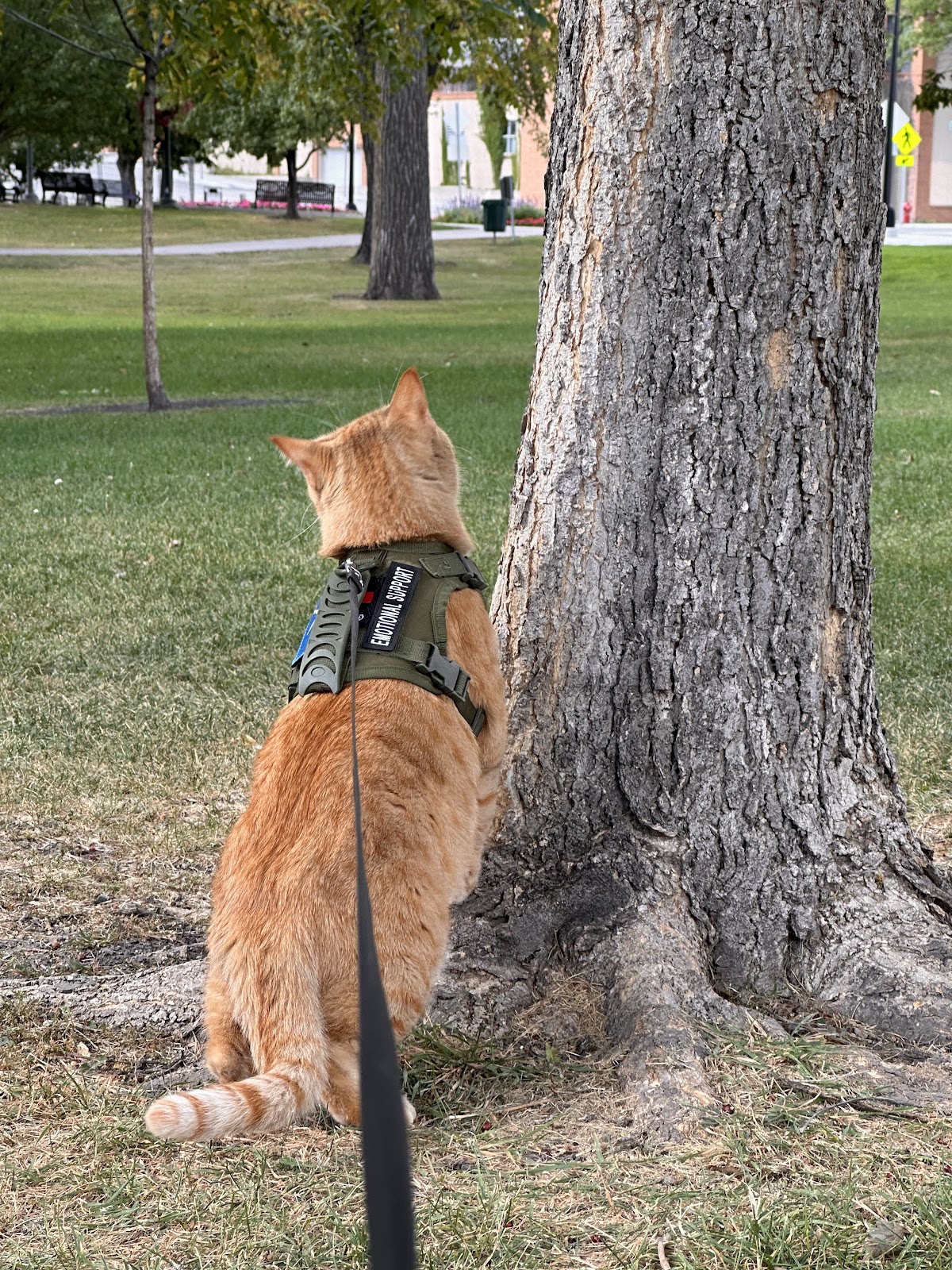
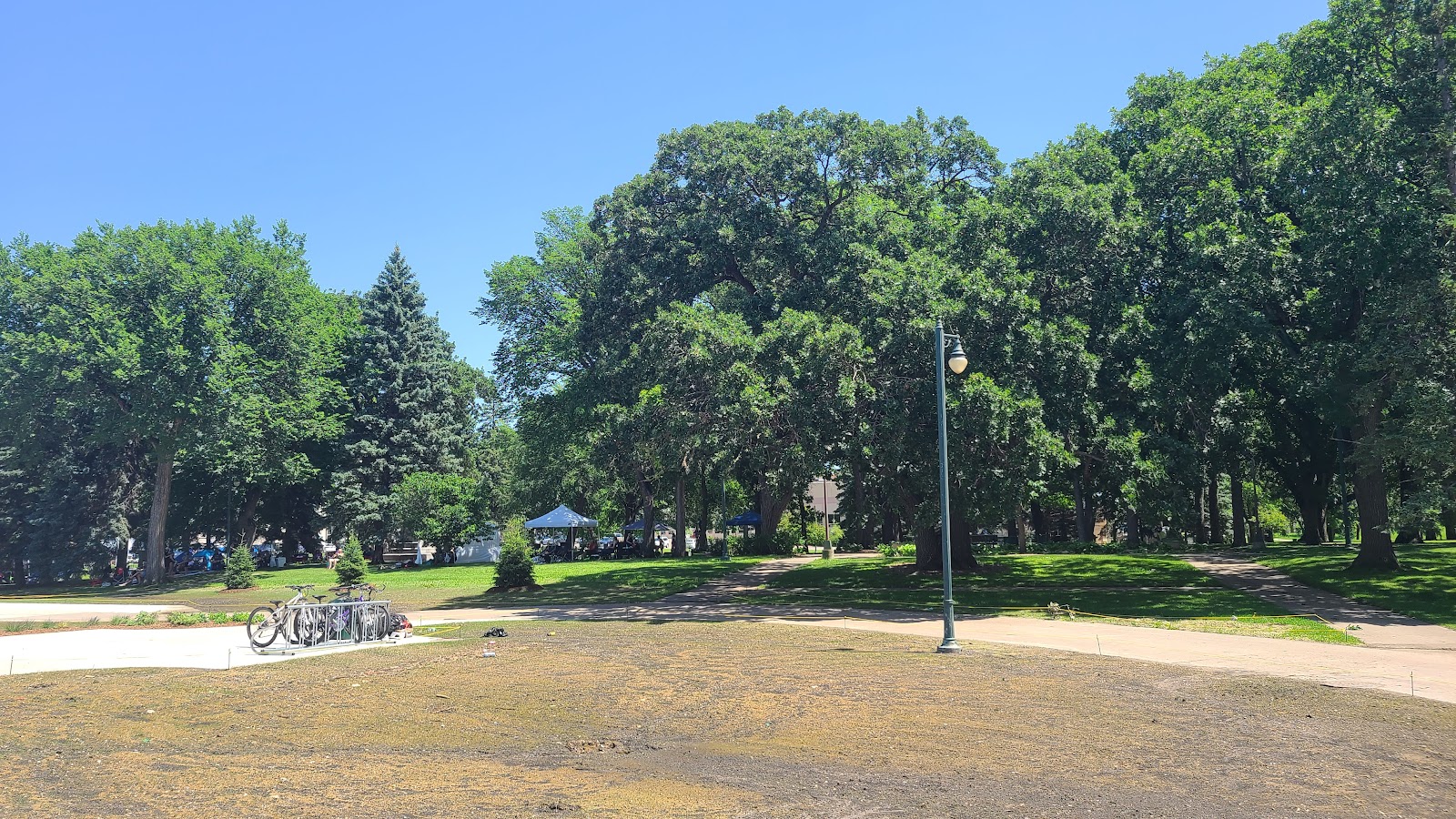
Island Park sits beside the Red River in Fargo, North Dakota, one of the city’s older parks, with large mature trees, open lawns and frontage onto the river.
On the plains a closed canopy is genuinely scarce, and a park with old trees in it is therefore a different proposition from almost every other outdoor venue in this region. Where a plains lawn or a prairie garden has no shade at all and hands you a brutal midday, a mature park has continuous shade over real area — which means the middle of the day becomes usable outdoors rather than something to be escaped indoors.
It also brings the costs that canopy always brings. This walks the day through. We have not photographed a wedding at Island Park; mature urban canopy and river frontage behave the same wherever they meet. What shelter exists, whether an area can be reserved and what the river access allows are questions for the parks authority — and shelter matters here, because a public park has no building of its own.
Island Park at a glance
| Where | Beside the Red River, Fargo, North Dakota |
| Character | A mature city park with large old trees, lawns and river frontage |
| The rarity | Closed canopy, which is scarce on the northern plains |
| The inversion | Midday becomes usable rather than something to escape |
| Ask first | What shelter exists; a public park has no building |
Morning: the river, while the air is still
Early is when the river is worth using, because a reflection needs a flat surface and plains air is calmest before the ground heats and thermals build. A still river doubles the canopy and the sky and bounces a soft fill upward into faces, which fills exactly the shadows a low sun would otherwise carve.
Any breeze ends it, and on the plains breeze is the default rather than the exception — so this is a first-couple-of-hours proposition or it does not happen. High sun spoils it differently, turning the surface into clipping specular highlights rather than an image of anything.
Shoot low at the water: dropping the camera close to the surface enlarges the reflection and pushes the horizon down the frame, which strengthens the symmetry. At eye level the reflection compresses into a narrow strip and is wasted.
The Red River is also a working northern river with a variable level and muddy banks, so the state of the bank is worth a look rather than an assumption. High water gives a clean waterline and reflections; low water gives exposed mud, which is not unusable but is a different photograph.
Midday: the canopy, which is the point of the place
This is where a mature park earns its place on the plains. Under a closed canopy the light is even, soft and flattering, and it is available at the hour when every open venue in the region is unworkable. A whole ceremony and a full group block can happen outdoors at one in the afternoon with even light on everyone — which is not possible at a prairie garden, a golf course or a plains lawn.
The caveat is the one every wooded site carries: canopy shade is only good where it is continuous. Where the canopy breaks, the sun punches through in patches several stops brighter than their surroundings, moving with any breeze — and dappled light cannot be corrected. The only remedy is position, which means looking for the dense areas rather than the pretty ones. The most attractive-looking spot in a park is usually the one with sun flecking through it, and it is usually the worst place to stand.
Green cast is the second canopy cost. Light bouncing off leaves arrives on skin carrying green, which reads as illness in a way warm or cool casts do not. Position people where the light reaches them without passing through foliage — a path, a clearing, the canopy edge — and set a custom white balance under the trees rather than trusting auto.
The canopy edge is the single most useful position in any wooded park, and worth naming clearly: at the margin of a stand, light arrives sideways from the open sky rather than filtering down through leaves, so it is directional, much brighter and far less green. Standing a couple just inside that edge facing out gives a large soft key with a dark surround. It is the outdoor equivalent of a porch and it works all day.
- River reflections are a first-two-hours proposition; breeze ends them
- Look for continuous canopy, not the prettiest dappled spot
- Work the canopy edge facing out — the porch equivalent
- Custom white balance under the trees; foliage throws green
- Canopy blocks low evening sun as well as high midday sun
Evening, winter, and what a park does not have
The counterintuitive point about a closed canopy is that it blocks low sun as effectively as high sun, so the golden hour that transforms an open venue barely reaches the ground here. That inverts the usual schedule: a mature park is at its best through the middle of the day and comparatively unremarkable at the end of it, which is the reverse of almost every other outdoor venue.
Where the canopy opens onto lawn or the river, the last ninety minutes do work — low sun across open grass backlights every blade and rims figures, and light coming in under the canopy edge horizontally turns leaves translucent. So the evening block belongs at the edges and the open areas rather than in the trees.
After sunset there is almost nothing under a canopy. A closed park at dusk is very dark indeed, and any frame then is entirely a lit frame — which in a public park means a portable source and no mains.
What a park does not have is a building, and that is the constraint to settle first. There is no shelter from a storm, no indoor fallback, no preparation room and no power. On the northern plains that matters twice: summer brings fast-building severe convective storms, and any month can bring wind strong enough to make a veil unmanageable and an unweighted stand a hazard. Establishing what cover exists, and how far away it is, is the most useful question available.
And winter removes the venue entirely for practical purposes — a Fargo January is too cold for a wedding to happen outdoors in any meaningful way, which makes this a seasonal venue in a way the indoor ones are not. Worth saying plainly to a couple choosing a date, because the park’s whole advantage is its canopy and the canopy is bare for half the year. Late September, when the mature trees turn and the air is still cool rather than cold, is the strongest week of the year here.
More frames from Island Park
Island Park wedding photography: common questions
Why is mature canopy unusual here?
Because closed canopy is scarce on the northern plains, where most outdoor venues are open lawn or prairie with no shade at all. A park with old trees gives continuous shade over real area, which changes which hours are usable.
When is a mature park at its best?
The middle of the day, which inverts the usual rule. Continuous canopy gives even flattering light exactly when every open venue in the region is unworkable — a whole ceremony can happen outdoors at one in the afternoon.
Why is the evening less good?
Because a closed canopy blocks low sun as effectively as high sun, so the golden hour that transforms an open venue barely reaches the ground. The evening block belongs at the canopy edges and on open lawn rather than in the trees.
What do you do about dappled light?
Move. It is several stops across a face, random, and shifting with the breeze, and no technique corrects it. Look for continuous canopy rather than the prettiest flecked spot — the attractive position is usually the worst one.
Where is the best light?
The canopy edge, facing out. Light arrives sideways from open sky rather than filtering through leaves, so it is directional, brighter and far less green — the outdoor equivalent of a porch, and it works all day.
What does a public park lack?
A building. No shelter from a storm, no indoor fallback, no preparation room and no power — which on the northern plains matters twice, given severe summer storms and wind strong enough to make a veil unmanageable.
More Fargo, ND venue guides
We are writing a photographer’s guide to every venue we would happily shoot in Fargo, ND. Here are three more, plus the full index:
- The Jasper Hotel: Photographing a New Hotel in an Old Downtown
- Lindenwood Park: Four Ways Out of the No-Building Problem
- The Plains Art Museum: A Warehouse Converted Into Galleries
All Fargo, ND Wedding Venues →
Planning a wedding at Island Park?
A mature canopy makes midday usable and the evening ordinary. Tell us your date and we will order the day accordingly.