 The Hilton Garden Inn Fargo: Field Notes on a Standardised Hotel
The Jasper Hotel: Photographing a New Hotel in an Old Downtown
A new hotel in an old downtown supplies the light and borrows the character from the street.
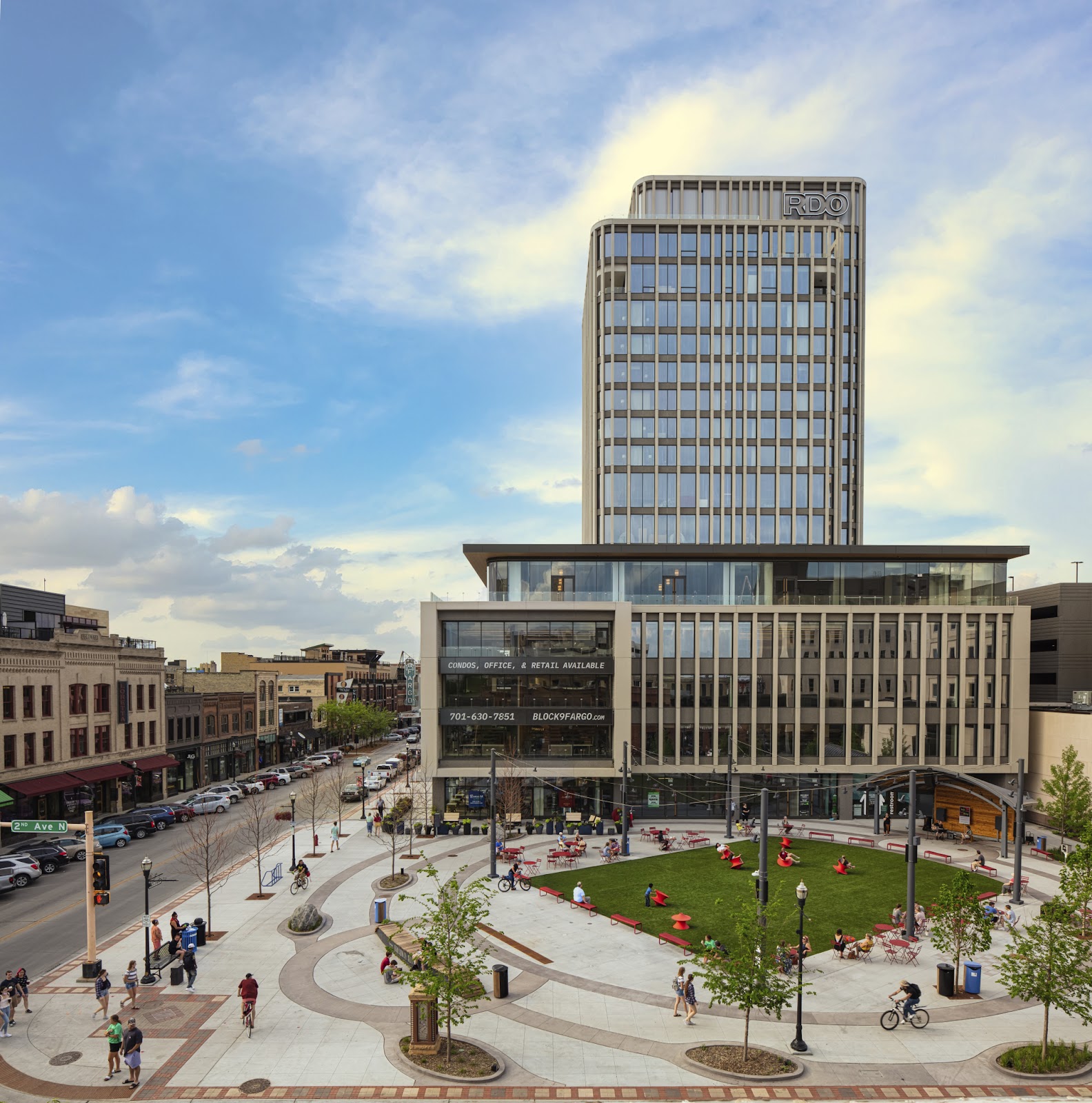
The Jasper Hotel is a contemporary hotel in downtown Fargo, North Dakota, with event space, guest floors and the city’s historic commercial street grid immediately outside it.
New buildings in old downtowns are an increasingly common venue type and the arrangement has a clear logic. The interior is clean, well serviced and dependable: level floors, real power, generous glazing, a restrained palette and no weather dependency. What it does not have is patina — nothing inside says where it is or how old it is. The character comes from the street, which in a city like Fargo means brick commercial frontages at a walkable low-rise scale.
So the day divides along that line. This is a walk through the building and out into the grid. We have not photographed a wedding at the Jasper; contemporary hotels and historic downtown grids behave the same wherever they meet. Which rooms are allocated and which way they face are the useful questions for their events team.
The Jasper Hotel at a glance
| Where | Downtown Fargo, North Dakota |
| Character | A contemporary hotel in a historic low-rise commercial grid |
| Inside | Clean, dependable and characterless — the light is good, the walls are not |
| Outside | Brick frontages at walkable scale, with real street-level sun |
| Ask first | Which rooms have the largest shaded-side windows |
The guest floors: where the light is
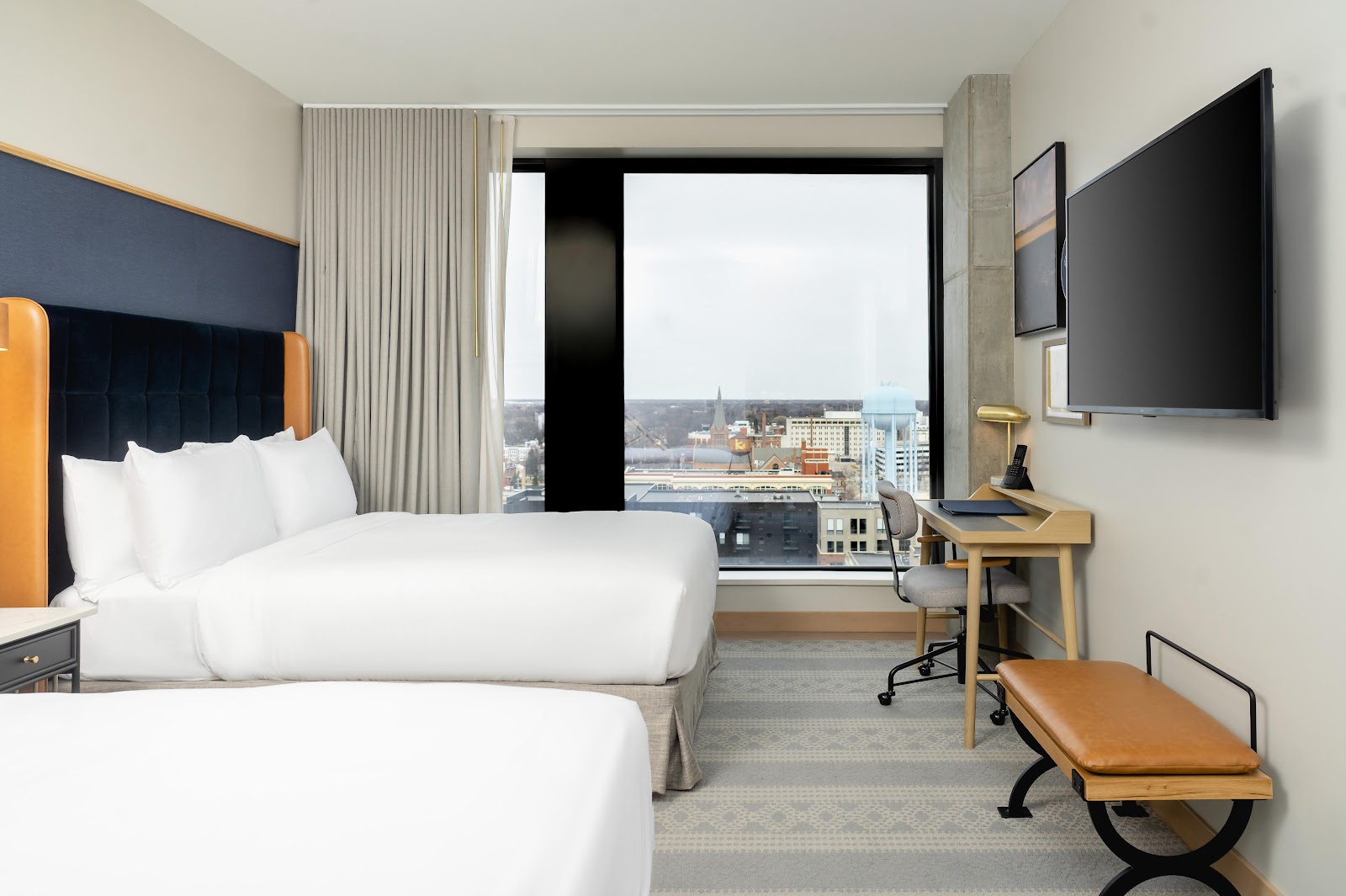
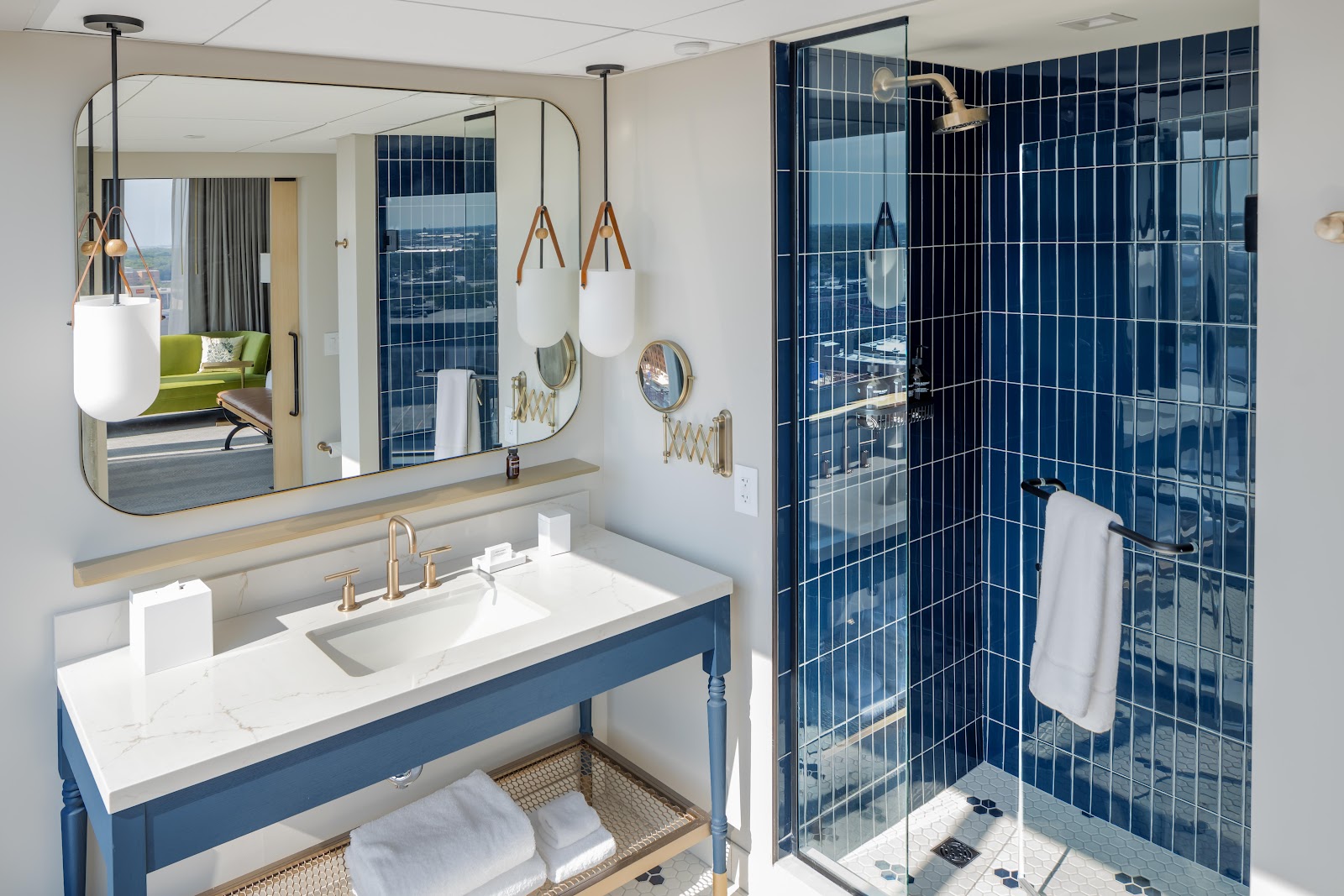
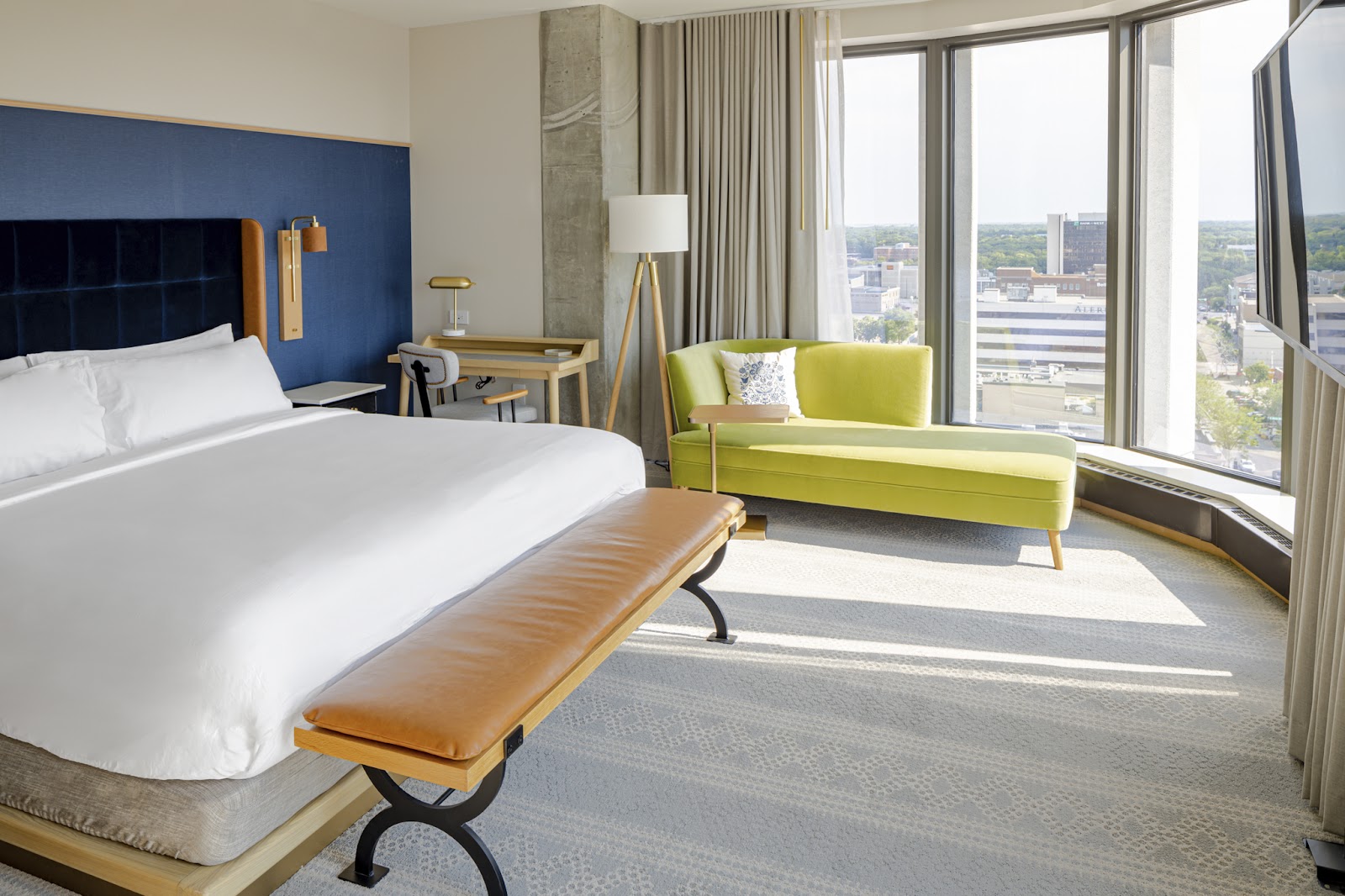
Contemporary hotels glaze generously, and in a low-rise downtown nothing tall is immediately opposite — so a guest-room window sees a large area of open sky with no shadowing and no colour bouncing in from a building across the street. That makes it clean, strong and directional, and it is the best natural light in the building by a wide margin.
Place a subject a metre or two back, turned into the glass, and the fall-off does the separation: a broad soft key with the room dropping away behind. One window gives three setups for a change of stance — facing it, side-on, back to it — so preparation coverage needs nothing carried.
Ask for the largest window on the shaded side. Then switch off every overhead and move the lamps out, because mixed tungsten and daylight in one room is the commonest cause of skin tone drifting across a morning. If the sun is on the glass, draw a sheer curtain — direct sun through a window is a small hard source and a thin curtain converts it into a large soft one instantly.
Modern rooms give no separation of their own, though. Pale walls and even lighting mean a couple has no edge against the background, so the low-contrast toolkit applies: a long lens wide open, one directional source, framing against a darker element, and negative fill — something dark on the shadow side, which subtracts light where the room insists on adding it.
The event space, and what a new building gives
Event rooms in a contemporary hotel are neutral by design, which is both the problem and the advantage. The problem is that nothing supplies texture, colour or incident, so frames can be technically perfect and visually inert. The advantage is that nothing competes, the lighting condition is fixed and controllable, and the room will do whatever the couple’s styling asks of it.
That makes the styling the background. In a neutral room, whatever has been brought — lighting design, florals, drapes, a feature wall — is the only visual content, and it should be treated as the set rather than as decoration. Photograph it while pristine in the twenty minutes before guests enter, ideally from a tripod with a couple of bracketed exposures, because nothing is moving and that frame is in almost every gallery a couple keeps.
House lighting will be warm, dim and overhead, which shadows the eye sockets and flatters nobody. One warm-gelled source at face height at about forty-five degrees fixes it, a second behind as a rim finishes the dance floor, and because the ambient never changes that setup holds all evening. Which also makes the event space the block that absorbs any delay.
Coloured uplighting is near-universal and needs the same treatment as any narrow-band source: let it be background. Once your own key owns the faces, coloured walls become atmosphere — usually exactly what the couple pictured. And keep patterned carpet out of wide frames, because it draws the eye and dates an image more reliably than anything else in a hotel.
Precision matters in spare rooms. Clean planes and repeated modules mean a crooked horizon or an ambiguous near-symmetry is glaring, because there is nothing else in the frame to distract from it.
- Ask for the largest shaded-side window; overheads off, lamps out
- Use the low-contrast toolkit — long lens, one source, negative fill
- Treat the couple’s styling as the set and shoot it before doors open
- One warm source at face height kills the overhead look, and it holds all evening
- Keep patterned carpet out of wide frames
Out into the grid, and a Dakota winter
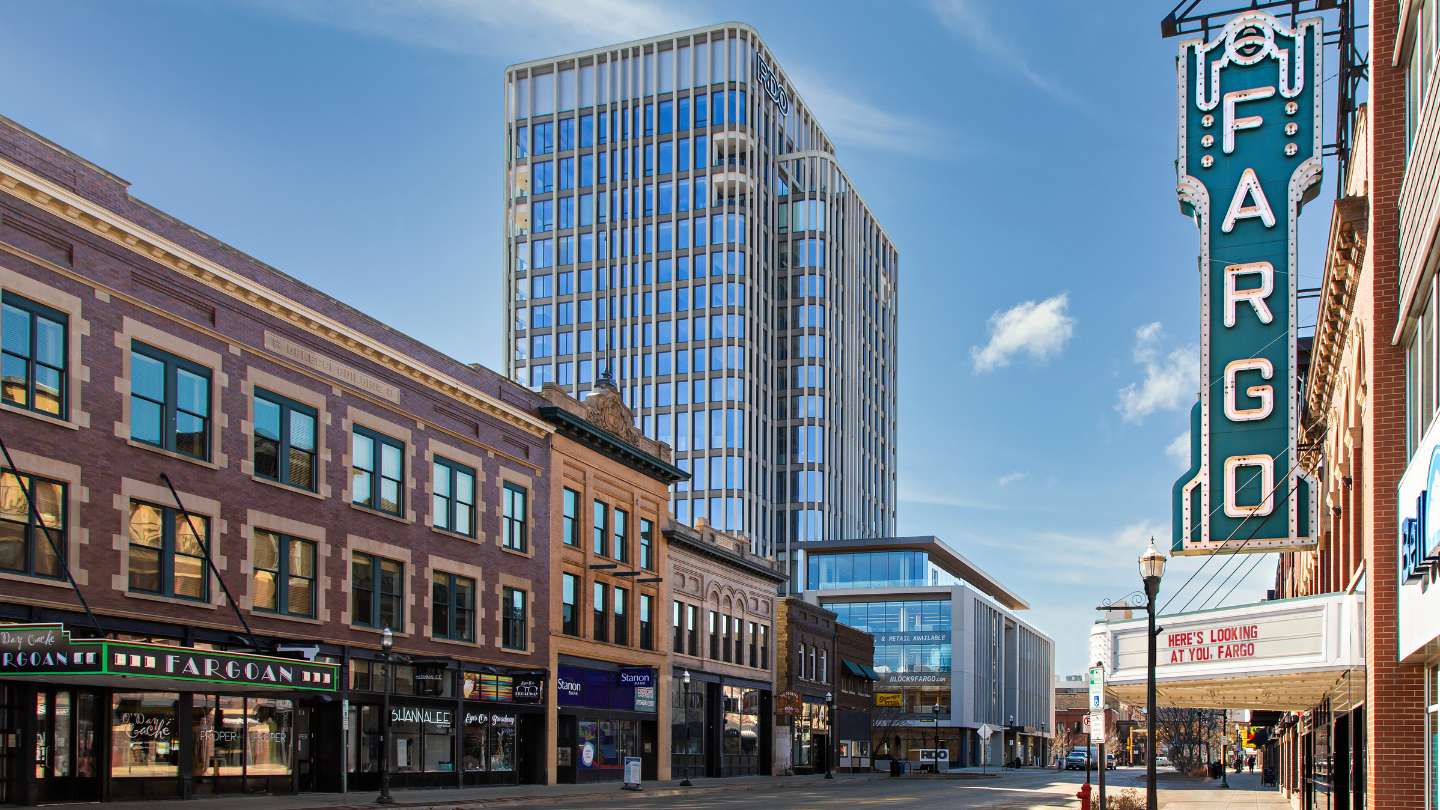
Downtown Fargo is the character the hotel lacks, and it is good material: brick commercial frontages of the late nineteenth and early twentieth centuries, at a walkable low-rise scale, with a regular street grid. That regularity is worth exploiting rather than just walking through, because a grid means you can predict where the sun will be — and because the buildings are low, low evening sun actually reaches street level and runs the full length of a street, lighting one side and shading the other.
Finding which streets run roughly east-west is a ten-minute site visit and the most useful outdoor preparation available. That is the frame a city of towers cannot produce, and it is the only block in the whole day with a clock attached, because the hotel interior is entirely time-independent.
Brick is the material outside and it behaves well: a mid-tone with real texture, holding detail at almost any sensible exposure, and reflecting strongly warm so white balance should be set for faces rather than for the wall. It needs raking light to read as masonry — along the elevation rather than at it.
Alleys and service lanes are the most reliable outdoor positions in a downtown grid: walls on both sides make the light directional, contain the background so there is no sky to blow out, and shelter from the wind — which on the northern plains is a constant rather than an occasional event, and enough to make a veil a held-or-removed decision.
Winter is severe and it shapes the outdoor half completely. Days are very short, so the street block belongs early in the afternoon rather than at the end of it; cold limits it to minutes; snow is the best natural fill available and will fool a meter by about two stops, so overexpose deliberately and check it holds texture. And a camera carried from a heated hotel into deep cold and back fogs comprehensively coming in, so acclimatise rather than cycling it, and carry extra batteries kept warm because cold drains them fast. The compensation is that low winter sun stays raking all day, so brick is well lit throughout the short afternoon.
More frames from The Jasper Hotel
The Jasper Hotel wedding photography: common questions
Why is the window light good here?
Because the hotel glazes generously and the downtown is low-rise, so nothing tall is immediately opposite to shadow the window or bounce colour into it. A guest-room window sees a large area of open sky — clean, strong and directional.
What does a new building lack?
Patina. Nothing inside says where it is or how old it is, so the character has to come from the street. The interior supplies the light and the reliability; the grid outside supplies the identity.
How do you fix a neutral event room?
Treat the couple’s styling as the set and photograph it pristine before the doors open. Then one warm source at face height for the people, and the low-contrast toolkit — long lens, directional light, negative fill — for separation.
What is the one block with a clock?
The street. The hotel interior is entirely time-independent, but low evening sun only reaches street level for a limited window — so find which streets run roughly east-west and treat that block as fixed.
Why are alleys useful?
Three reasons at once: walls on both sides make the light directional, they contain the background so there is no sky to blow out, and they shelter from plains wind — which is a constant here rather than an occasional event.
What does a Fargo winter demand?
A street block early in the afternoon, kept to minutes; two stops of deliberate overexposure for snow; acclimatising the camera rather than cycling it; and extra batteries kept warm. Low sun stays raking all day, which is the compensation.
More Fargo, ND venue guides
We are writing a photographer’s guide to every venue we would happily shoot in Fargo, ND. Here are three more, plus the full index:
- Lindenwood Park: Four Ways Out of the No-Building Problem
- The Plains Art Museum: A Warehouse Converted Into Galleries
- The Radisson Blu Fargo: How the High Window Frame Is Made
All Fargo, ND Wedding Venues →
Planning a wedding at The Jasper Hotel?
The hotel gives the light and the grid gives the character. Tell us your date and we will find the east-west streets.