 Tulsa Country Club: Field Notes on a 1908 Club

Paycom Center, Oklahoma City: What an Arena Suits and What It Does Not
An arena solves problems no other venue can solve, and creates two it cannot solve itself.
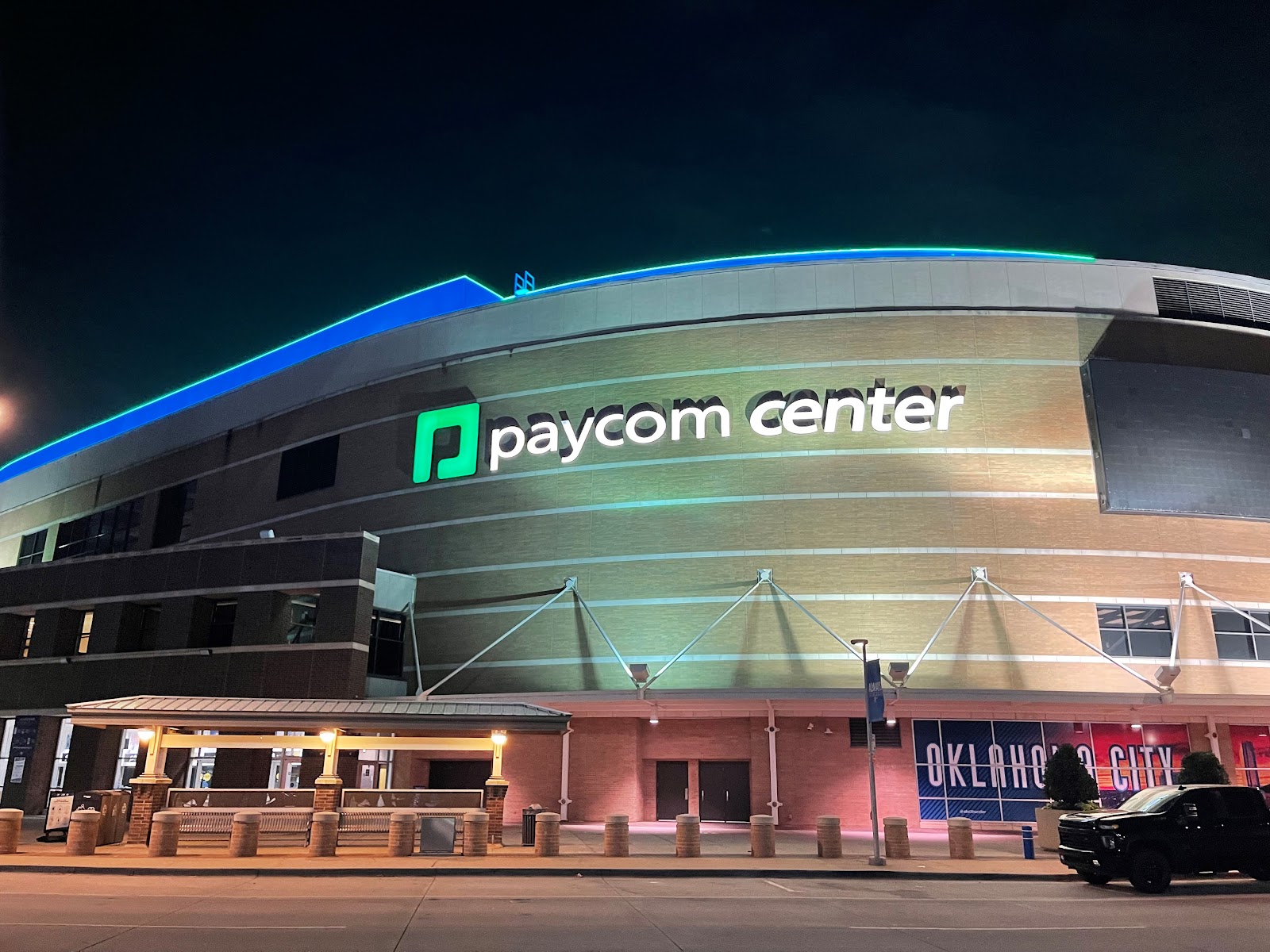
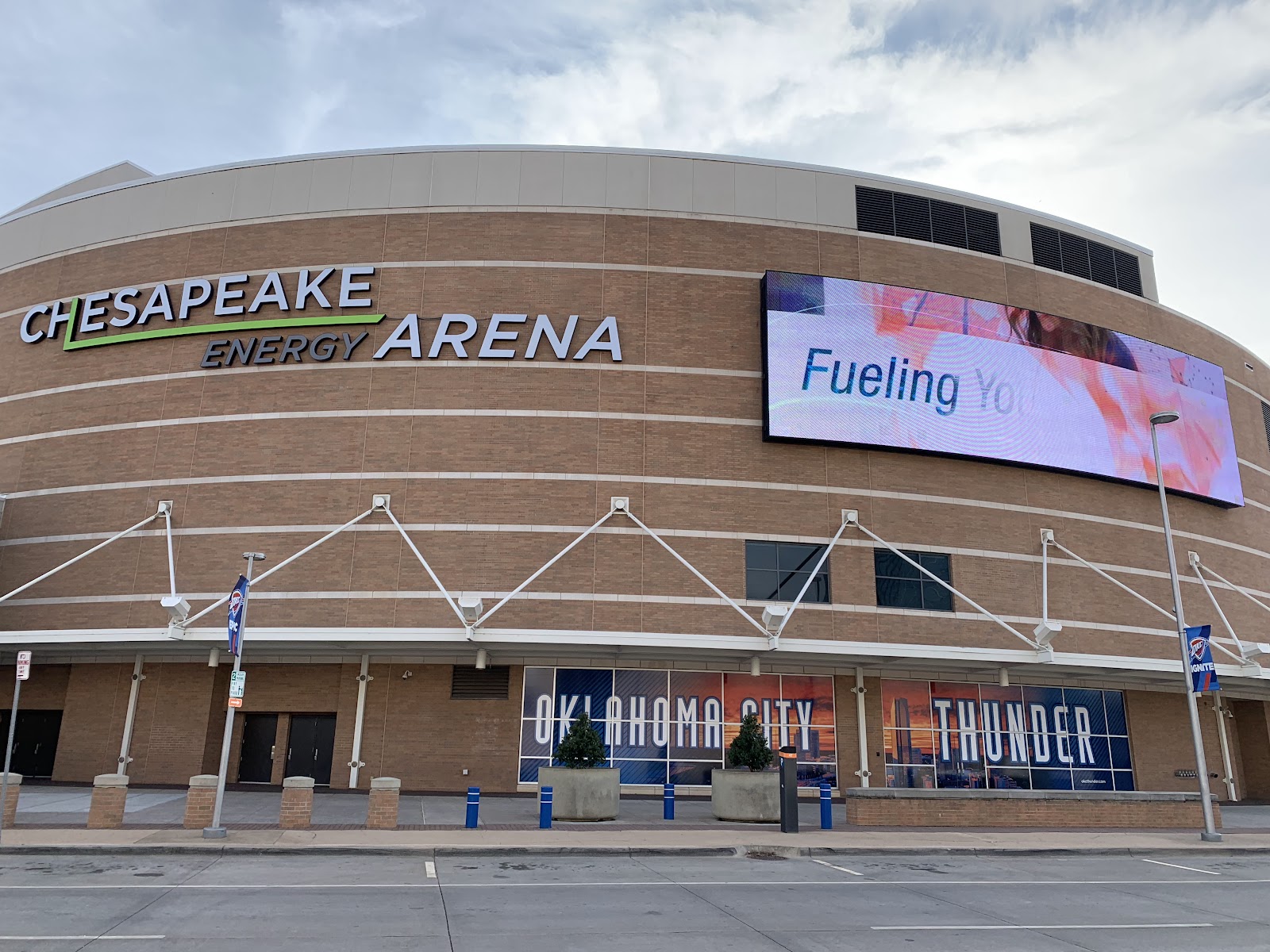
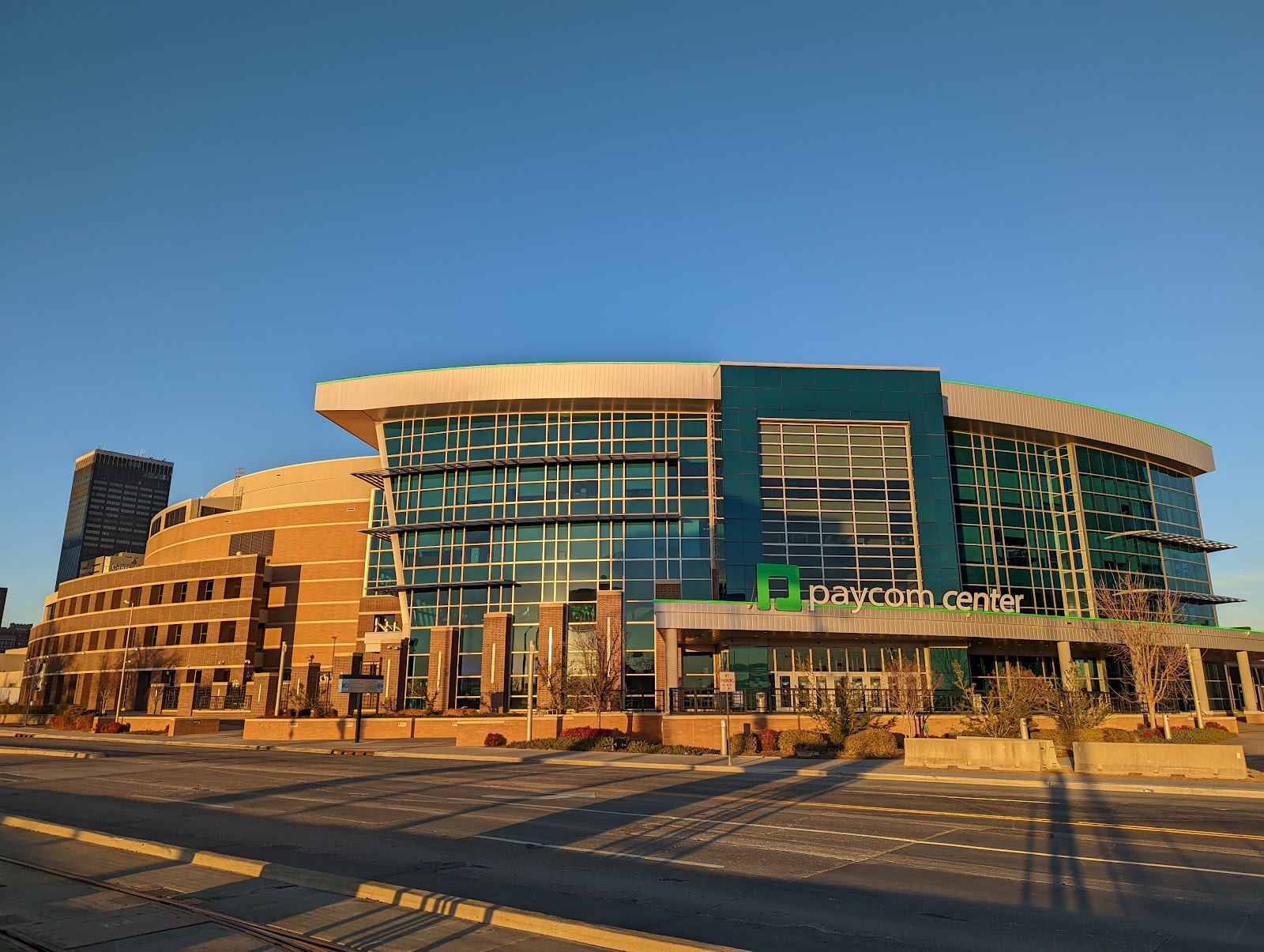
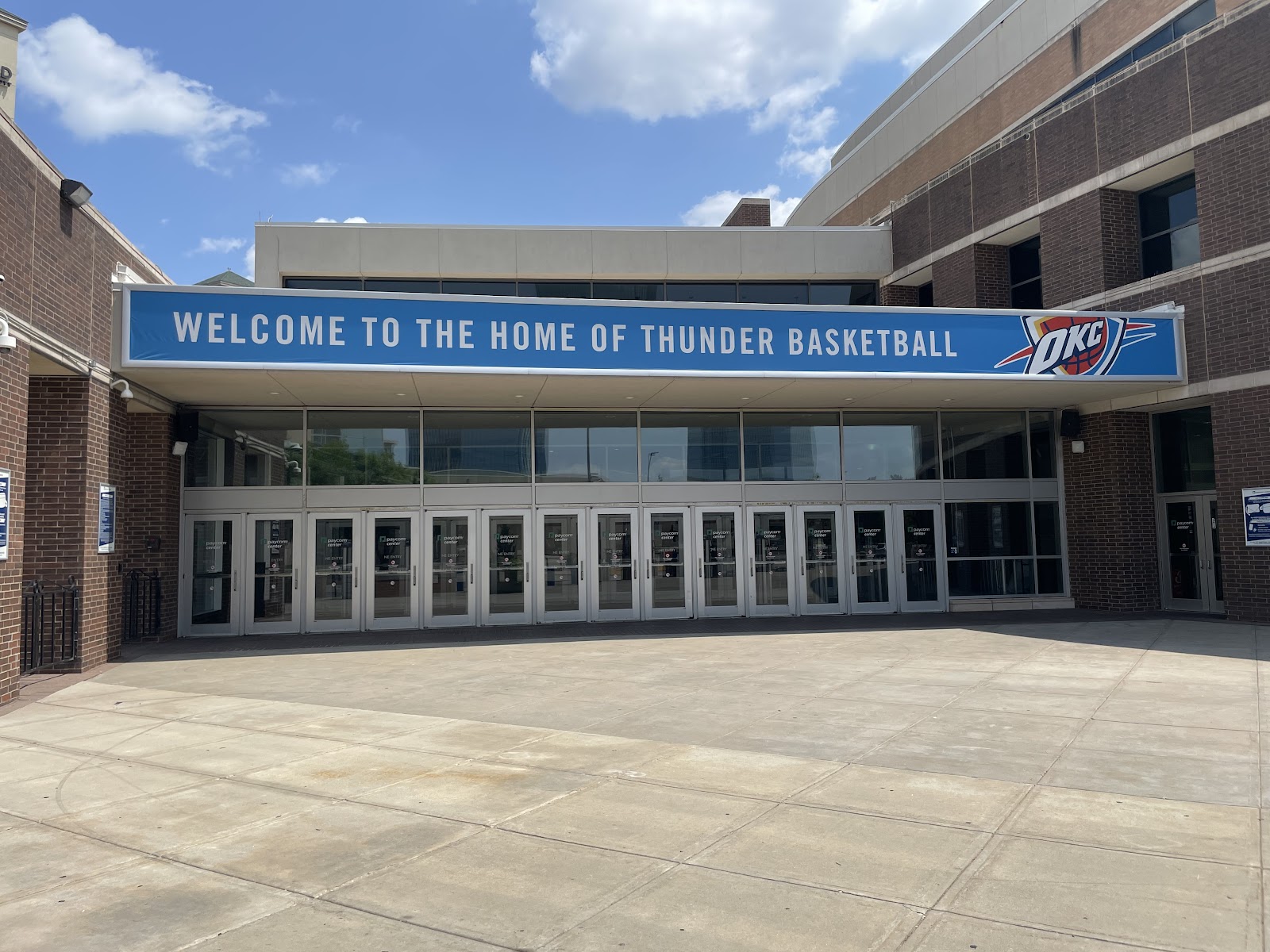
The Paycom Center is a large arena in the heart of downtown Oklahoma City, with extensive concourse and function space and the parking that a building of its capacity requires.
That description already tells you what kind of wedding it fits, and being straightforward about the match is more useful than cataloguing features. An arena is a logistics machine: it was designed to move thousands of people in and out of a building efficiently, feed them, and seat them in sight of one thing. Where a wedding shares those requirements, it is excellent. Where a wedding wants the opposite — closeness, daylight, small rooms, character in the walls — it is working against the building.
So this is written as suits and does not suit. We have not photographed a wedding at the Paycom Center; large modern arenas behave the same everywhere. Which spaces are available, whether the bowl and floor are accessible and what the house lighting can do are the questions that decide the day.
The Paycom Center at a glance
| Where | Downtown Oklahoma City, Oklahoma |
| Character | A large modern arena with extensive concourses and function space |
| Suits | Large guest counts, easy access and parking, bad weather, scale |
| Does not suit | Intimacy, daylight, character in the walls, small groups |
| Ask first | Which spaces, bowl and floor access, house lighting control |
What it suits
It suits a large guest count without strain. Most venues have a number above which circulation becomes uncomfortable, queues form and the room feels full; an arena’s number is an order of magnitude higher, so a wedding of three hundred moves through it as easily as a wedding of fifty moves through a restaurant. Photographically that means no jostling for position, no waiting for a corridor to clear, and no frame ruined because there was nowhere else to stand.
It suits guests who are travelling and driving, which in Oklahoma City is most of them. Ample parking attached to the venue, a downtown location and straightforward access remove the two most common sources of lateness, and a schedule that is not being eaten by arrivals is a schedule with portrait time still in it.
It suits bad weather completely. This is not a small point in a state with severe convective storms in spring and early summer and severe heat in summer: an arena is a fully enclosed, climate-controlled, structurally substantial building, and nothing the Oklahoma sky does changes the day inside it. A garden venue in May is a gamble; this is not.
It suits scale as an aesthetic. If the bowl is accessible, an arena gives frames no other venue can — thousands of empty seats curving away, an enormous floor, structure high overhead. A couple placed small in that volume, shot long so the seating fills the frame, is genuinely spectacular and completely specific to the building type.
And it suits an evening, because everything in it is built for artificial light. There are no windows to balance, no changing conditions, no light that runs out at sunset. Once you have solved the lighting you have solved it for the whole night, which is a real operational advantage.
What it does not suit
It does not suit intimacy. Every dimension is large, every corridor is wide, every ceiling is high, and a small group in a large volume reads as sparse rather than as close. The answer is technical rather than architectural: long lenses, wide apertures, tight framing, and accepting that the intimate frames here will be made by excluding the building rather than by including it. Wide frames belong to the scale, tight frames to the people, and mixing the intentions produces neither.
It does not suit daylight. Concourses in modern arenas often have some glazing, and where they do that glazing is the single most valuable resource in the building and worth finding on arrival — but the bowl, the function rooms and most of the circulation have none. Plan as though there is no daylight and treat any you find as a bonus.
It does not suit finding character in the walls. Arena interiors are painted block, sealed concrete, carpet and signage — surfaces with no texture to rake, no patina and no period detail. There is nothing wrong with them and nothing in them either, which means backgrounds have to be constructed: use depth, use light fall-off, use the repetition of seating or structure, and go long so that the surface becomes tone rather than subject.
It does not suit a photographer who has not checked the lighting. Arena house lighting is high-mounted, narrow-spectrum metal halide or LED, aimed down at a floor. That is the hardest version of the overhead problem: very high, very hard, strongly coloured, and rendering skin badly even at correct white balance. A gelled source at face height, with white balance set to the gel, is not optional — and ceilings are far too high for any bounce at all, so every source is direct and modified.
It also does not suit improvisation with distance. Sources that would be adequate in a hotel ballroom are lost in an arena volume, so power and modifier choices need to assume distance. Working here with one small flash is the equipment mismatch this venue punishes.
- Long lenses and tight framing for intimacy; wide only for scale
- Find any concourse glazing on arrival — it is the building’s best resource
- Backgrounds must be built from depth and repetition, not from surfaces
- Gel the key to match house lighting and set white balance to the gel
- Assume no bounce and real distance: bring power, not one small flash
Working it, and the city outside
The practical approach is to divide the building into a scale set and a people set and shoot them differently. The scale set is wide, symmetrical, deliberate: the bowl, the floor, the long concourse, the structure overhead, all shot with the couple small and the geometry dominant. The people set is long and tight, made anywhere with a clean tone behind, lit with one source, and indifferent to which room it happened in.
If the bowl or floor is available, treat it as an appointment rather than an opportunity — it takes time to get to, the lighting has to be set, and the frames are the ones that will define the set. Ask what the house can do with the bowl lights, because a dark bowl with a single lit area is dramatically better than a fully lit one, and the difference is a request rather than equipment.
The concourse is the most underrated space. A long curving concourse is strong repetition and real depth, and shot long with the couple placed into it, the curve carries the eye where an ordinary corridor would not.
Downtown Oklahoma City outside is the counterweight the building needs. A regular street grid with a low-rise core and towers at the centre means low evening sun reaches street level and runs the length of a street, which gives the located, human-scaled frames the arena cannot. That is a short walk and worth building into the schedule rather than hoping for.
Wind on the plains is a constant and matters for anything outdoors — veils, stands, hair. Summer heat keeps outdoor blocks short and purposeful. And when a storm does come through, the arena means the day carries on indoors while everybody else is cancelling, which is the single most persuasive argument for this kind of building in this state.
More frames from The Paycom Center
The Paycom Center wedding photography: common questions
Who is an arena right for?
A large guest count, guests who are driving and travelling, and anyone who wants the weather to be irrelevant. It moves three hundred people as easily as a restaurant moves fifty.
What does an arena not give you?
Intimacy, daylight and character in the walls. Every dimension is large, most of the building has no windows, and the surfaces are painted block and carpet with nothing to rake.
How do you get intimate frames in a huge building?
Technically rather than architecturally: long lenses, wide apertures, tight framing, one light. The intimate frames are made by excluding the building; the wide frames belong to the scale. Mixing the intentions gives neither.
What is the lighting problem?
House lighting is very high, very hard, narrow-spectrum and aimed at a floor — the hardest version of the overhead problem, rendering skin badly even at correct white balance. Gel a key at face height and set white balance to the gel.
Can you bounce flash here?
No. The ceilings are far too high to return anything, so every source is direct and modified. And distances are real, so a single small flash is the equipment mismatch this venue punishes.
What should you ask about the bowl?
Whether you can get onto it, and what the house can do with its lights. A dark bowl with one lit area is dramatically better than a fully lit one, and that difference is a request rather than equipment.
More Oklahoma venue guides
We are writing a photographer’s guide to every venue we would happily shoot in Oklahoma. Here are three more, plus the full index:
- The Yale Theater, Oklahoma City: The One Decision That Governs Everything
- The BOK Center, Tulsa: A Building Wrapped in Curved Glass
- The Hard Rock Casino Tulsa: The Light Through a Day
Planning a wedding at The Paycom Center?
If scale and weatherproofing are the priorities, this building delivers both. Tell us your date.