 Tulsa Country Club: Field Notes on a 1908 Club
June 19, 2026
Union Plaza: A Season-by-Season Photography Guide
An indoor venue with an outdoor plaza, in a climate where wind is a bigger planning factor than rain. Each season changes what the plaza can do.
Union Plaza is a downtown Tulsa event venue with industrial character and adjoining outdoor plaza space, in a part of the city within reach of Tulsa’s remarkable Art Deco and terracotta building stock.
Photographically the interest is the pairing of an indoor room with usable outdoor space in a downtown setting — which means the venue works in weather that would cancel an open-air plan while still offering somewhere to step outside. That combination is more valuable in Oklahoma than in most places, because the regional conditions are more demanding than couples expect.
This guide is organised by season, because an outdoor plaza changes completely across an Oklahoma year while the interior does not. We have not photographed a wedding at Union Plaza; industrial interiors, plaza light and Oklahoma weather behave predictably. Which spaces are included, rigging, power and plaza exclusivity are for their events team.
Union Plaza at a glance
| Where | Downtown Tulsa, Oklahoma |
| Character | Industrial-character event space with adjoining outdoor plaza |
| Light | Artificial indoors; open sky on the plaza with no canopy |
| Nearby | Tulsa’s Art Deco and terracotta architecture, superb in raking light |
| The regional factor | Wind, more than rain, is what constrains outdoor plans here |
Spring: the best plaza weather and the worst storms
April and May give the most comfortable temperatures of the year and the plaza at its most usable — warm enough without being punishing, with the sun high enough for long days but not yet at the brutal summer angle. Street trees in the surrounding downtown come into leaf, which adds something green to frames that are otherwise brick, terracotta and concrete.
The complication is that Oklahoma spring is severe-weather season in the genuine sense. This is tornado country and the spring storm system is a real feature rather than an occasional inconvenience, with hail, high wind and sudden heavy rain all plausible on a given afternoon.
That makes the indoor space the plan and the plaza the bonus, rather than the other way round. Ask specifically what happens if the plaza becomes unusable at short notice, because in April that is not a hypothetical question.
Summer: heat, and a plaza with no shade
Tulsa summers are hot and humid, and a hard-surfaced downtown plaza with no canopy is among the least comfortable outdoor environments there is — concrete and brick hold and radiate heat, so it is warmer than the air temperature suggests. Between roughly eleven and six, asking a wedding party to stand out there is not realistic.
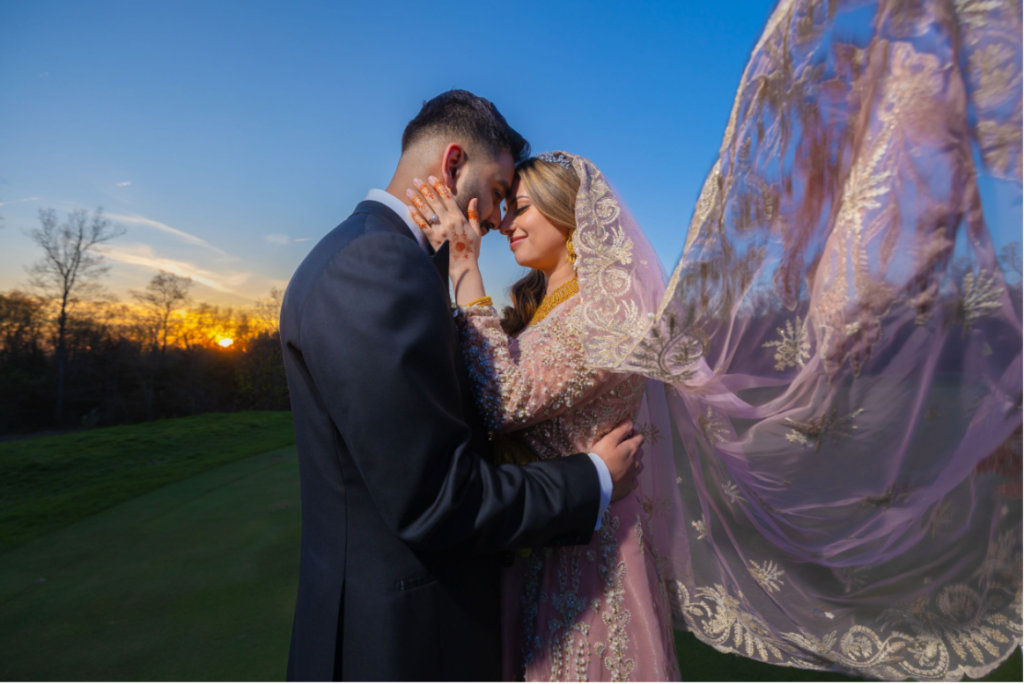
The usable window narrows to the last ninety minutes and the twenty minutes after sunset. Both are good: low sun raking across a plaza and the surrounding buildings picks out texture, and the Deco terracotta nearby is at its best in exactly that light.
Humidity also hazes distant views and fogs a lens carried from an air-conditioned interior to the plaza — ten to twenty minutes to clear — so acclimatise equipment before the outdoor block rather than during it.
Autumn: the strongest season
September and October are the best window here by a clear margin. The heat breaks, humidity drops so the air clears, severe-storm risk falls away, and the sun stays low through more of the afternoon — which widens the good outdoor window from forty minutes to a couple of hours.
The downtown street trees also turn, which matters more than it sounds in a city of brick and terracotta. Warm foliage at eye level lifts frames that would otherwise be entirely architectural, and it agrees with terracotta far better than high-summer green does.
Wind remains, because it always does in Oklahoma, but autumn wind is generally less fierce than spring wind. Plan for bare or minimally modified flash outdoors regardless.
Winter: the interior carries it, and the wind is the issue
Tulsa winters are milder than the northern plains but they are windy, and wind is what makes a winter plaza unusable rather than temperature alone. A calm five-degree afternoon is workable for ten minutes; the same temperature with a thirty-mile-an-hour wind across open concrete is not, and it will wreck hair and veils in seconds.
That is the honest headline for this venue in winter: the interior carries the day and the plaza becomes a brief, wind-dependent excursion. Ask what the indoor event spaces are and what they look like, because in January they are the venue rather than a backup.
The compensation is downtown at night. Tulsa’s Deco facades are lit, streets are quiet in winter, and wet asphalt after rain doubles every light source. A winter evening on the surrounding blocks produces better street photographs than a summer afternoon on the plaza, and it is more comfortable too — walking generates warmth in a way standing on concrete does not.
Indoors, the industrial character means the usual approach: brick and steel absorb light, high ceilings rule out bounce, so lighting comes from stands with modifiers plus a rim light behind any group. Keep the room warm in white balance and faces slightly cooler.
A practical suggestion for any windy-city venue, because it is cheap and it works. If the couple are willing, a second simpler hairstyle for the outdoor block — or simply an accepted decision that hair will move and that is fine — removes the main source of anxiety from a plaza session. Most of the tension in windy outdoor portraits comes from people trying to hold a style that the conditions will not allow, and the photographs show that tension. Accepting the wind produces visibly more relaxed frames than fighting it does.
What works in your favour
- An indoor room paired with outdoor plaza space — works in weather that cancels open-air plans
- Tulsa’s Art Deco and terracotta architecture nearby, superb in raking light
- Autumn gives clear air, low afternoon sun and a good window of a couple of hours
- Downtown street trees add warm colour at eye level in autumn
- Winter nights on lit Deco blocks beat summer afternoons on the plaza
What to plan around
- Oklahoma spring is genuine severe-weather season; the plaza may be lost at short notice
- A hard-surfaced plaza with no canopy radiates heat and is unusable in summer middays
- Persistent wind is the real constraint — worse than rain, and it ruins hair and veils
- Humidity hazes views and fogs lenses moving from air conditioning outdoors
- Industrial interiors absorb light; stands and modifiers are required
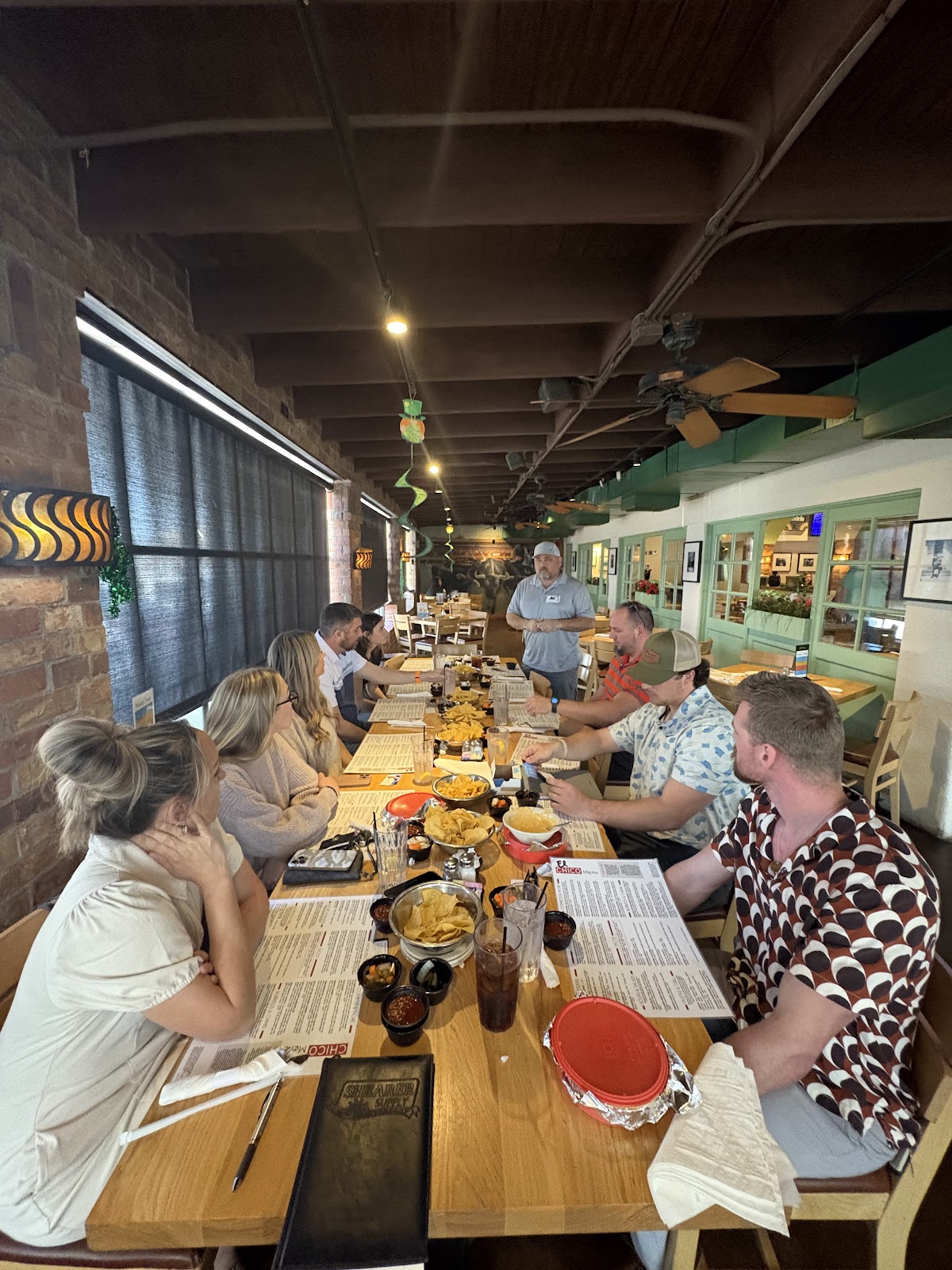
More frames from Union Plaza
Union Plaza wedding photography: common questions
What is the best season at Union Plaza?
September and October, clearly. The heat breaks, humidity drops so the air clears, severe-storm risk falls away, and the sun stays low through more of the afternoon — which widens the usable outdoor window from about forty minutes to a couple of hours. The street trees turn as well.
Is rain or wind the bigger problem?
Wind, and it is not close. Oklahoma is persistently windy and a hard open plaza offers no shelter, so wind ruins hair and veils in seconds and makes large light modifiers impractical. A calm cold afternoon is workable; the same temperature with a thirty-mile-an-hour wind is not.
How bad is the plaza in summer?
Between roughly eleven and six, not realistic. Concrete and brick hold and radiate heat, so a hard-surfaced plaza is warmer than the air temperature suggests, and there is no canopy. Use the last ninety minutes and the twenty minutes after sunset, both of which are genuinely good.
What should we ask about spring dates?
Specifically what happens if the plaza becomes unusable at short notice, because Oklahoma spring is genuine severe-weather season — hail, high wind and sudden heavy rain are all plausible on a given afternoon. Treat the indoor space as the plan and the plaza as the bonus.
Is a winter wedding here viable?
Yes, as an interior wedding with a brief outdoor excursion. The compensation is downtown at night: Tulsa’s Deco facades are lit, the streets are quiet, and wet asphalt doubles every light source. Walking the blocks is also warmer than standing on a plaza.
More Tulsa venue guides
We are writing a photographer’s guide to every venue we would happily shoot in Tulsa. Here are three more, plus the full index:
- The Ambassador Hotel: A Walk-Through of a 1929 Boutique Building
- Cain’s Ballroom: Field Notes on a 1924 Dance Hall
- The Gilcrease Museum: Building the Shot List Across Gardens and Galleries
Planning a wedding at Union Plaza?
In Oklahoma the wind decides more than the forecast does. Tell us your date and we will plan the indoor room as the certainty and the plaza as the bonus — and give you the raking-light window for the Deco blocks.