 Tulsa Country Club: Field Notes on a 1908 Club
The Boathouse District, Oklahoma City: How the Light Moves
Glass above, water below. Every hour of the day this site behaves differently, and the plan should follow.
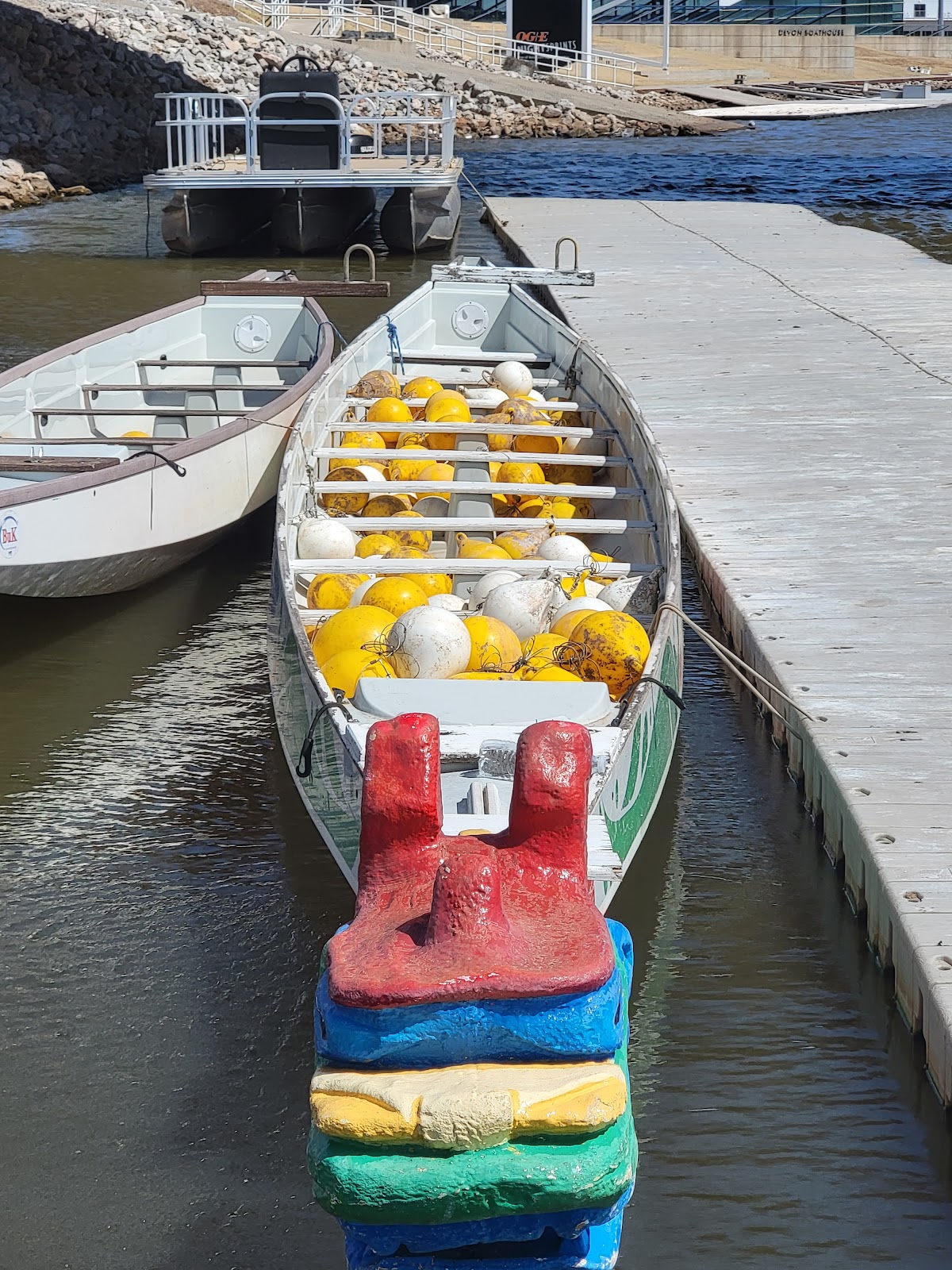
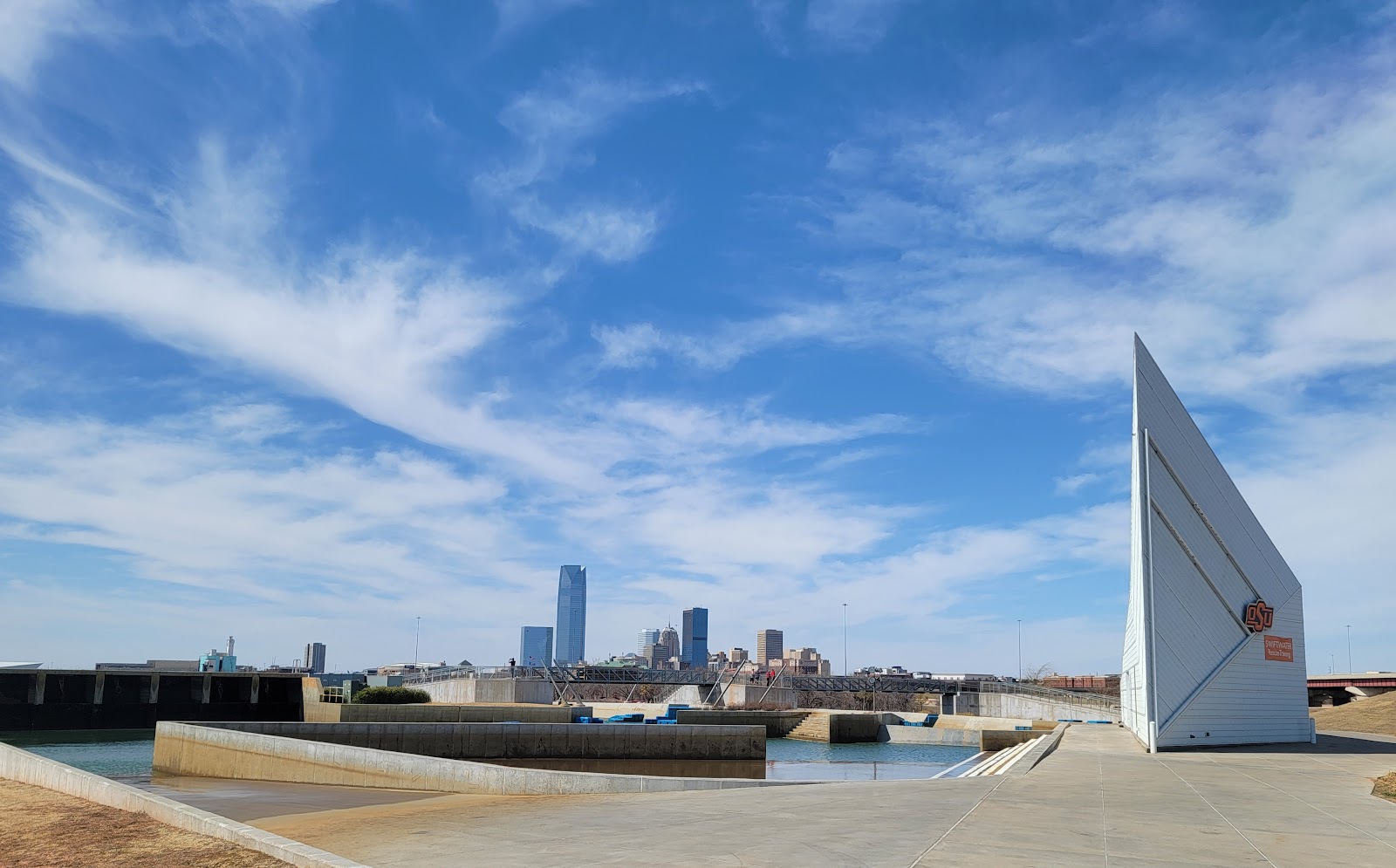
The Boathouse District runs along the Oklahoma River south of downtown Oklahoma City: a cluster of contemporary boathouses with reflective glass facades and sculptural, angular forms, built for rowing and paddling on the river below.
This is a reflective site twice over. A reflective glass facade throws light back at whatever stands in front of it, and a broad flat river does the same from below. That means the amount and the direction of light reaching a face here changes more through the day than at a venue built of brick and lawn — sometimes usefully, sometimes destructively, and the difference is often twenty minutes.
So this is written as a day. We have not photographed a wedding in the district; glass and water behave the same wherever they meet. Which boathouse hosts events, what river access is permitted and whether the terraces are bookable are questions for the venue — the second one decides how much of the water you can actually use.
The Boathouse District at a glance
| Where | Oklahoma River, south of downtown Oklahoma City |
| Character | Modern glass boathouses, angular forms, broad river below |
| The condition | Reflective glass above and flat water below — light arrives twice |
| Best hours | Late afternoon into the last hour; the middle of the day is the problem |
| Ask first | River and terrace access, and which boathouse is yours |
Morning and midday: the hours to spend indoors
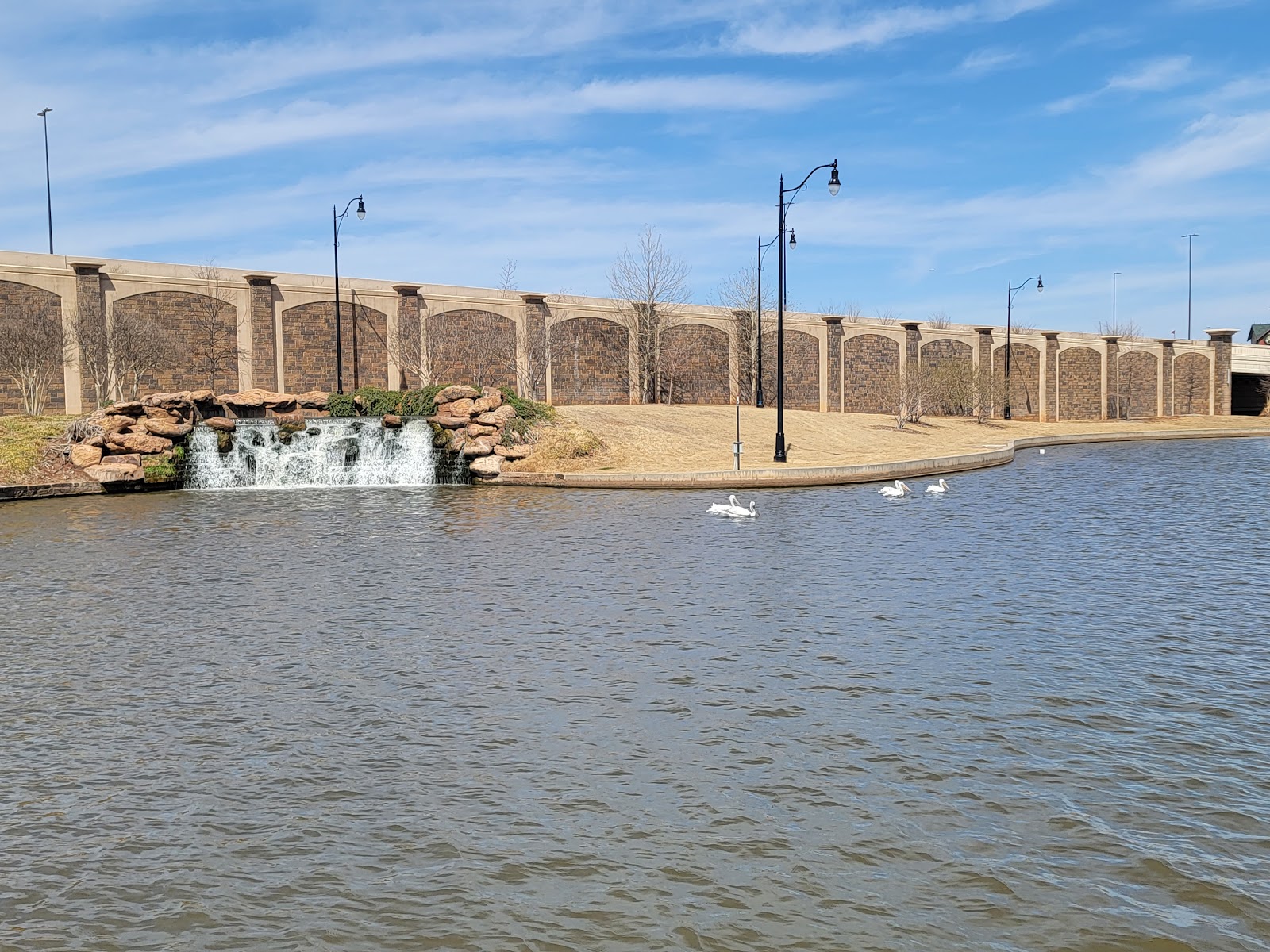
In the first hours the sun is low across the river, which means it is either behind the buildings or skimming the water at a shallow angle. Low sun on flat water produces a hard specular path — a bright lane of reflected sun running towards the camera — and that path is genuinely unphotographable at the exposure a face needs. It is not a problem to solve, only a direction to avoid: shoot with the water to the side or behind, not between the couple and the sun.
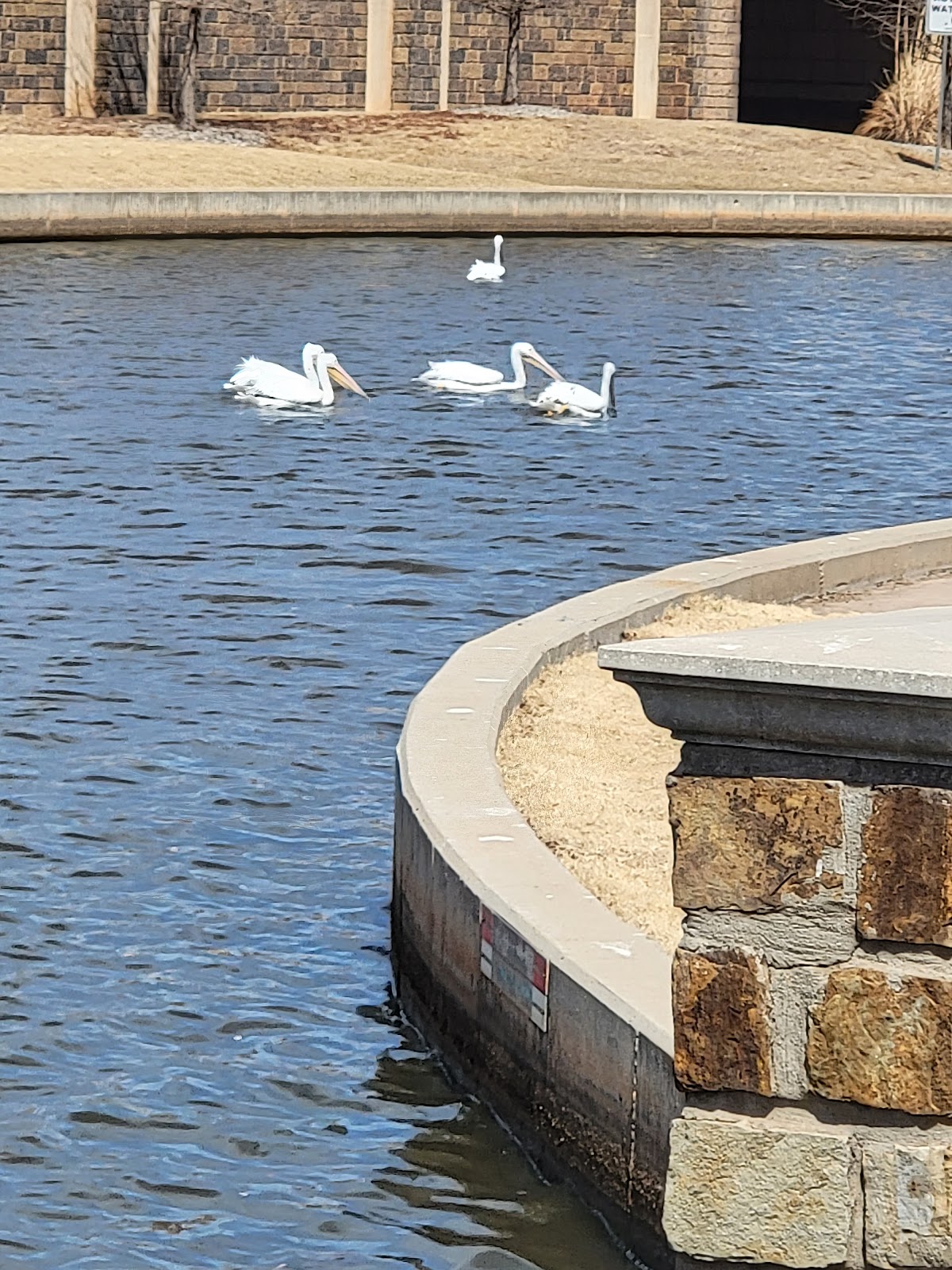
Morning is otherwise the calm part of the day, and calm matters here more than at most venues. Reflections in water only exist when the surface is still, and on the southern plains the wind builds through the day almost every day. If a mirrored reflection of the buildings in the river is on the list, it is a morning frame and not an afternoon one — by mid-afternoon the surface is usually broken into texture and the reflection is gone for good.
Midday is the worst part of the day here and should be planned around rather than worked through. A high sun on reflective glass produces intense specular hotspots that move as you move, which makes the facades unusable as background; the same high sun on open water raises ambient from below onto the underside of the chin, which is an unfamiliar and unflattering direction. Add Oklahoma summer heat on an exposed riverside with almost no shade, and the honest answer is that the middle of the day belongs indoors.
Indoors is genuinely good, because a glass building is a daylit building. Large glazing gives a broad soft key to anyone standing a metre or two back from it, and the shaded elevation gives that light all day without a hotspot anywhere in it. Find which side of the building the sun is not on and work there while the sun is high.
Late afternoon: when the site becomes itself
From roughly two hours before sunset the geometry starts to work. The sun drops low enough that the glass stops flaring and starts reflecting the sky as a large pale field, which turns a whole facade into a soft source rather than a wall of hotspots. Standing a couple of metres out from a lit facade at this hour gives a broad wraparound key that no equipment could duplicate at that scale.
The angular forms also begin to matter. Sculptural buildings look flat and diagrammatic under high light and become three-dimensional as soon as light rakes across them, because the planes separate into distinct tones. The architecture itself is only really available in the last two hours of the day — before that it is a pale shape.
Long lenses earn their place along a riverside because there is depth to compress. A couple on a terrace with the river and the far bank behind them, shot long and wide open, stacks water, bank and city into a layered background; the same frame shot wide reduces the river to a thin strip and the buildings to specks. This is a long-lens site far more than a wide-angle one, despite the impulse a striking building provokes.
The last twenty minutes is when the river does its work. With the sun on the horizon the water goes from reflective to luminous — the whole surface holds the sky’s colour — and a couple placed against it reads as a silhouette or near-silhouette unless a source is put on them. A single warm-gelled light at face height, set about a stop under the sky, holds both: the river stays bright and coloured, and the faces stay faces.
- Mirrored water reflections are a morning frame — wind kills them by afternoon
- Never put the sun’s specular path on the water between camera and couple
- Glass becomes a soft source, not a flare source, in the last two hours
- Go long: the river gives depth to compress, and wide throws it away
- Against a luminous river you need a light on the faces or a silhouette
After dark, and the weather
Once the sky is gone the glass inverts. A lit interior is brighter than the outside, so the facades stop reflecting the city and start reflecting the room, and the river goes black except where lights on the banks streak across it. Those streaks are the asset: broken reflections of building lights on moving water make a background of vertical coloured lines that is entirely specific to a waterfront site.
The exposure that shows them is long enough that the couple must be still, or lit hard enough to freeze. Both work; the decision is whether you want the water to read as texture or as smear, and it is worth taking one of each rather than choosing on the night.
Indoors after dark, a glass building is a set of mirrors. Any light placed on the camera axis comes straight back, so everything goes off-axis, and frames shot obliquely to the glazing rather than square on. Shooting into a corner where two glazed planes meet gives a reflection on both sides, which is either the best frame of the evening or a mess, depending on whether the light stands are in shot. Check the corners before the guests arrive.
Oklahoma weather is the operational constraint. Summer heat on an exposed riverside limits outdoor blocks to short, purposeful trips rather than long wanders; wind is close to constant and matters for veils, light stands and the water surface; and spring and early summer bring fast-building convective storms that on an open river frontage need a decided route to cover rather than an improvised one. The glass buildings are the cover, and storm light over a broad river is genuinely worth going out for once the weather has passed.
More frames from The Boathouse District
The Boathouse District wedding photography: common questions
When is the light best here?
The last two hours. Before that, high sun turns reflective glass into moving hotspots and lifts light from the water onto the underside of the chin. After it drops, the same glass becomes a large soft source.
When should mirrored water reflections be shot?
Morning. Reflections need a still surface, and on the southern plains wind builds through the day — by mid-afternoon the river is usually broken into texture and the reflection is gone.
What should the middle of the day be used for?
Indoors. A glass building is a daylit building: large glazing on the shaded elevation gives a broad soft key all day with no hotspots, which is better than anything available outside at noon.
Wide or long lens on the river?
Long. The river gives depth to compress — water, far bank and city stack into layers. Wide reduces the river to a thin strip and the buildings to specks, despite the impulse a striking building provokes.
How do you handle a luminous river at sunset?
Put a light on the faces or accept a silhouette. A single warm-gelled source at face height about a stop under the sky keeps the water bright and coloured while the faces stay faces.
What is the after-dark asset?
Broken reflections of bank lights on moving water — vertical coloured lines that only a waterfront gives you. Shoot one long exposure for smear and one lit frame for texture rather than choosing on the night.
More Oklahoma venue guides
We are writing a photographer’s guide to every venue we would happily shoot in Oklahoma. Here are three more, plus the full index:
- Bricktown Ballpark: Photographing a Wedding in a Stadium
- The Chesapeake Boathouse: How the River Reflection Frame Is Made
- Civic Center Music Hall, Oklahoma City: How the Light Moves
Planning a wedding at The Boathouse District?
This site rewards a schedule built around the last two hours. Tell us your date and we will build it.