 Tulsa Country Club: Field Notes on a 1908 Club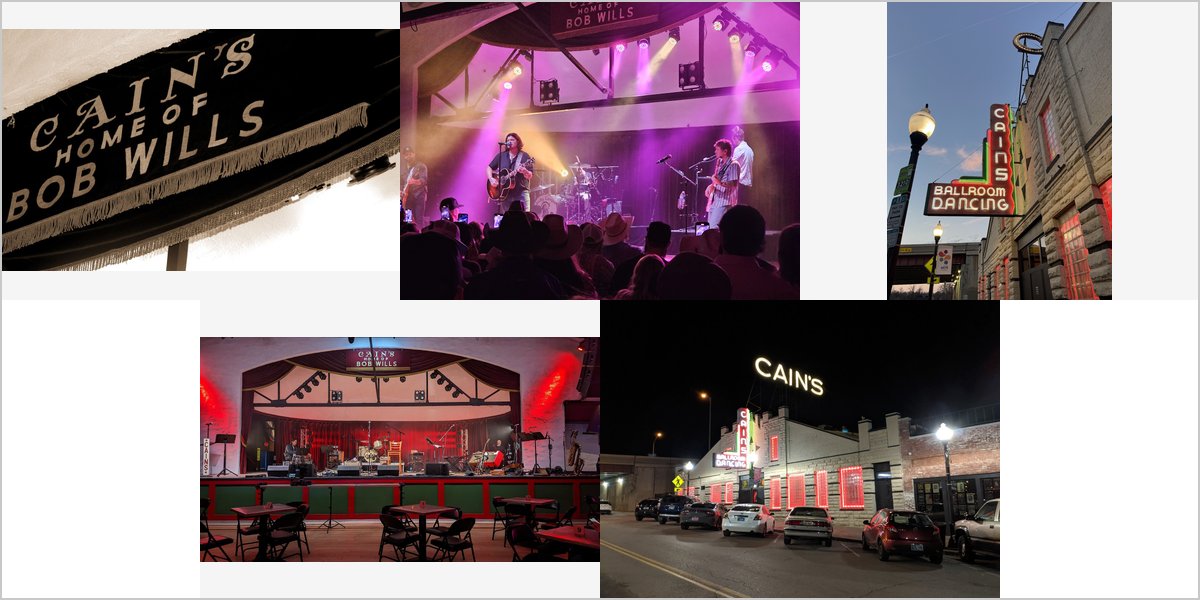
May 8, 2026
Cain’s Ballroom: Field Notes on a 1924 Dance Hall
A sprung maple floor and nearly a century of Western swing. The floor is the venue’s soul and the reason your shutter speed matters.
Cain’s Ballroom opened in 1924 in Tulsa and became the home of Bob Wills and the Texas Playboys, which makes it one of the most historically significant venues in American popular music. It has operated as a dance hall and concert venue for a century, and its sprung maple dancefloor is the feature everyone mentions.
Photographically this is a historic music venue rather than a ballroom in the hotel sense, and the distinction matters. It is built to make a lit stage look good in a dark room, the interior is dark-toned and unglamorous, and the lighting is concert rather than architectural. What it has instead of grandeur is character and genuine history.
These are field notes on three problems. We have not photographed a wedding at Cain’s; sprung floors, concert lighting and dark music-venue interiors behave predictably. Which spaces your booking includes, stage access, rigging and power are for their team — and stage access matters here, because the stage is the historic part.
Cain's Ballroom at a glance
| Where | North Main Street, Tulsa, Oklahoma |
| Opened | 1924; long the home of Bob Wills and the Texas Playboys |
| Signature feature | A sprung maple dancefloor, in continuous use for a century |
| Light | Low ambient, concert-style fixtures, dark-toned surfaces |
| Ask first | Stage access, rigging points and available power |
Problem one: a sprung floor means a faster shutter
A sprung dancefloor is built to flex, and it does — under a crowd it moves noticeably, which means dancers have a vertical component of motion they would not have on a concrete slab. In a dark room at a slow shutter speed that shows as a soft swimming blur on top of ordinary motion blur, and it looks like a focus error rather than a deliberate effect.
The practical floor is 1/200 for dancing coverage, and 1/250 is safer. In a room this dark that forces the other variables: a wide aperture, high ISO, and realistically flash. There is no way to hold that shutter on ambient alone.
For the deliberately atmospheric wide frame — the crowd as a mass, the room as a whole — dropping to 1/60 and letting everything smear is a legitimate choice, and the moving floor makes that smear more interesting here than it would be elsewhere. Just make it a decision rather than an accident of low light.
Problem two: dark surfaces and nothing to bounce off
A century-old dance hall is finished for durability and acoustics rather than for brightness: dark-toned walls, a high ceiling with structure, and surfaces that have absorbed a hundred years of use. Bounce flash returns very little, and what comes back is muddy.
So light comes from stands and it is modified. One flash with a softbox or umbrella as a feathered key from the side, and one behind the dancefloor aimed back toward the camera as a rim light. That rim light is doing more work here than at most venues — in a dark absorbent room it is the only thing separating a crowd from the background.
For moving coverage, on-camera flash through a small diffuser, deliberately dialled down to fill rather than dominate. Not pointed at the ceiling, which will give you almost nothing back.
Problem three: the character is the subject, and it is not pretty
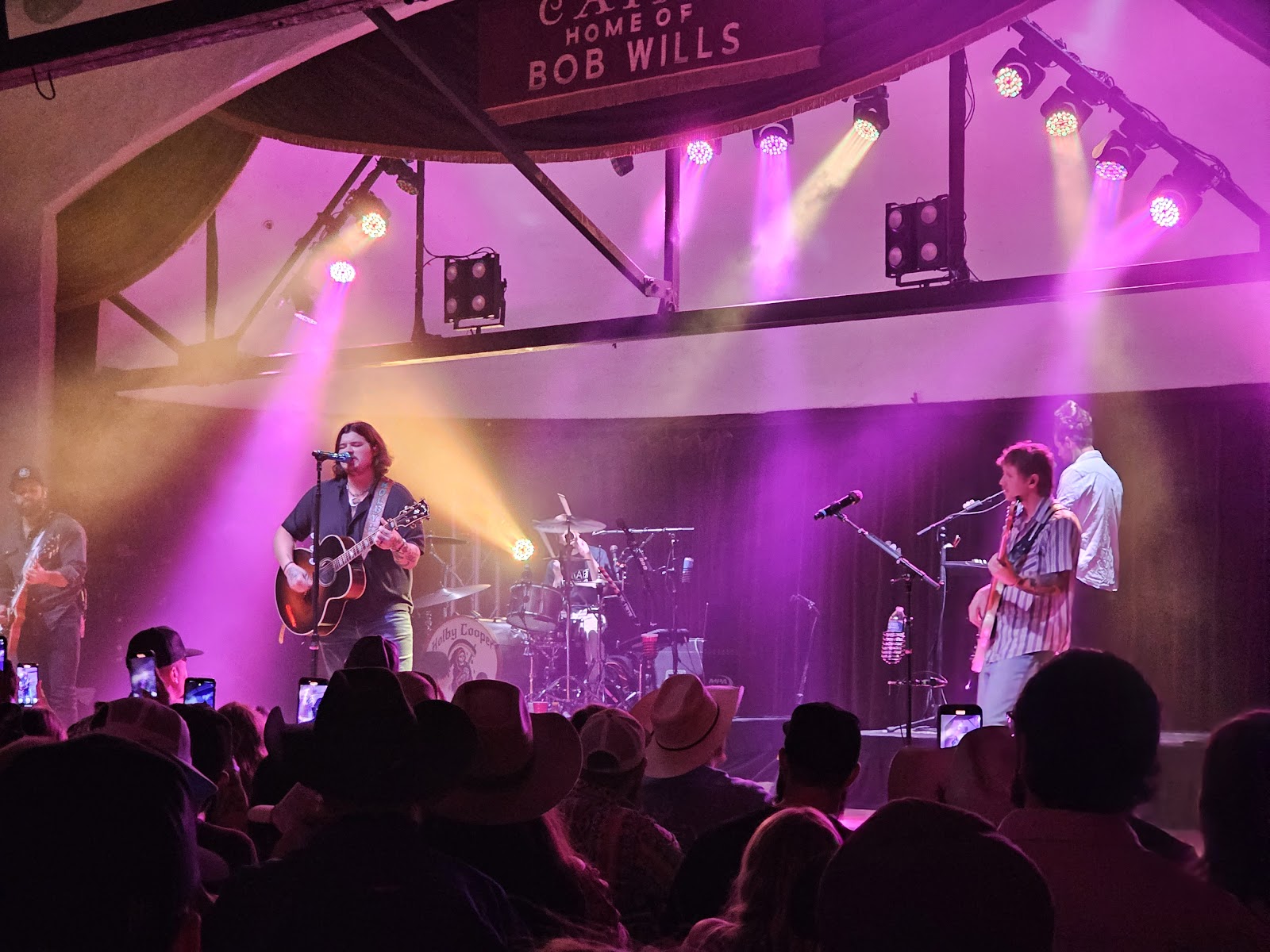
This is worth saying plainly. Cain’s is historically extraordinary and visually rough — a working dance hall with a century of wear, signage, equipment and the honest patina of continuous use. It is not a room that flatters a formal aesthetic, and it will not be styled into one.
That means the photographs that work here lean into it: a couple on a stage that Bob Wills played, dancing on a floor that has been danced on since 1924, the crowd in a room that looks like what it is. Those are genuinely good photographs and they carry meaning no purpose-built venue can manufacture.
The photographs that do not work are the ones that try to make it elegant. A wide frame of a scuffed dance hall lit evenly and brightly shows the scuffs and none of the soul. Light selectively, keep the room dark, let the character read as atmosphere rather than as wear.
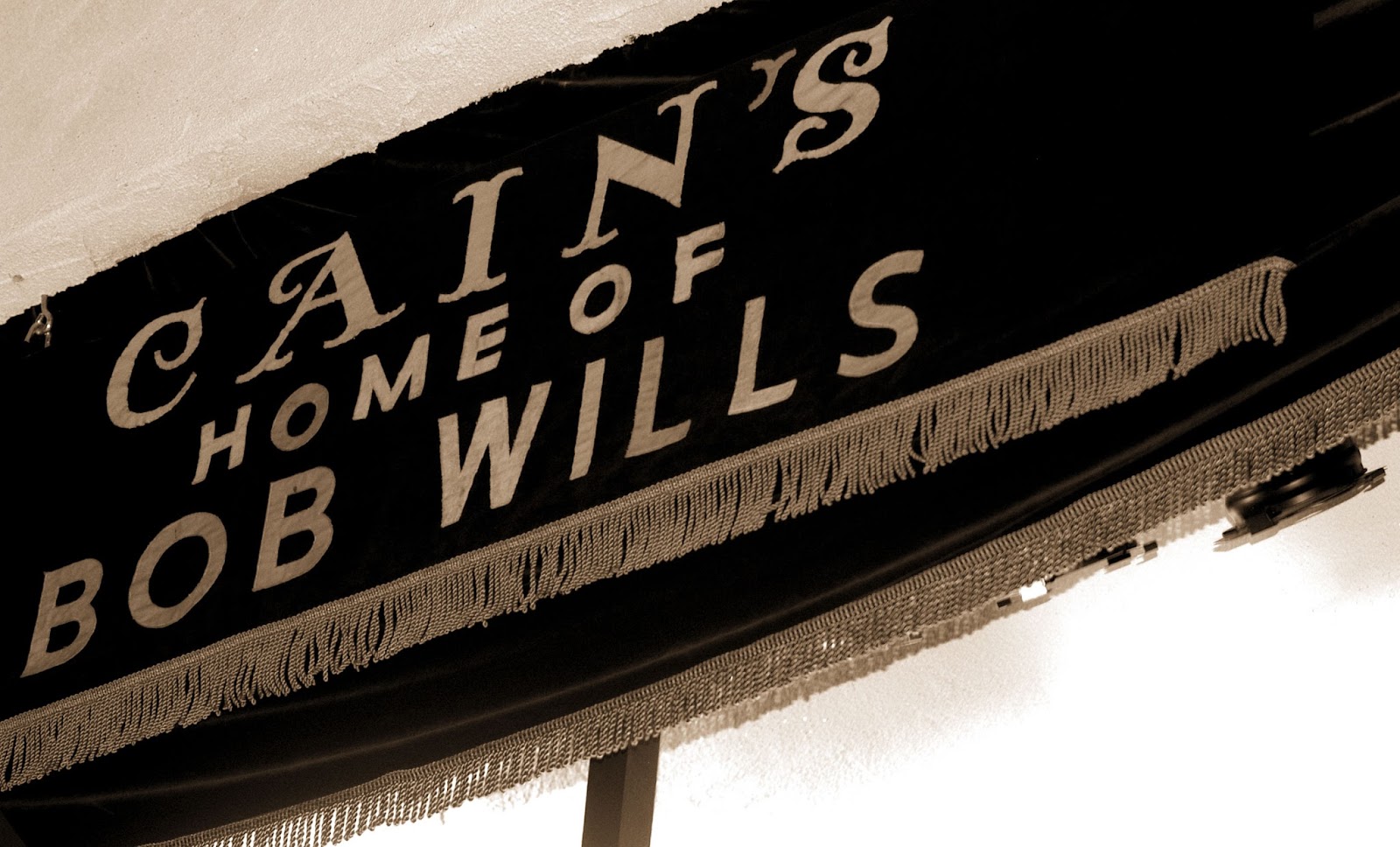
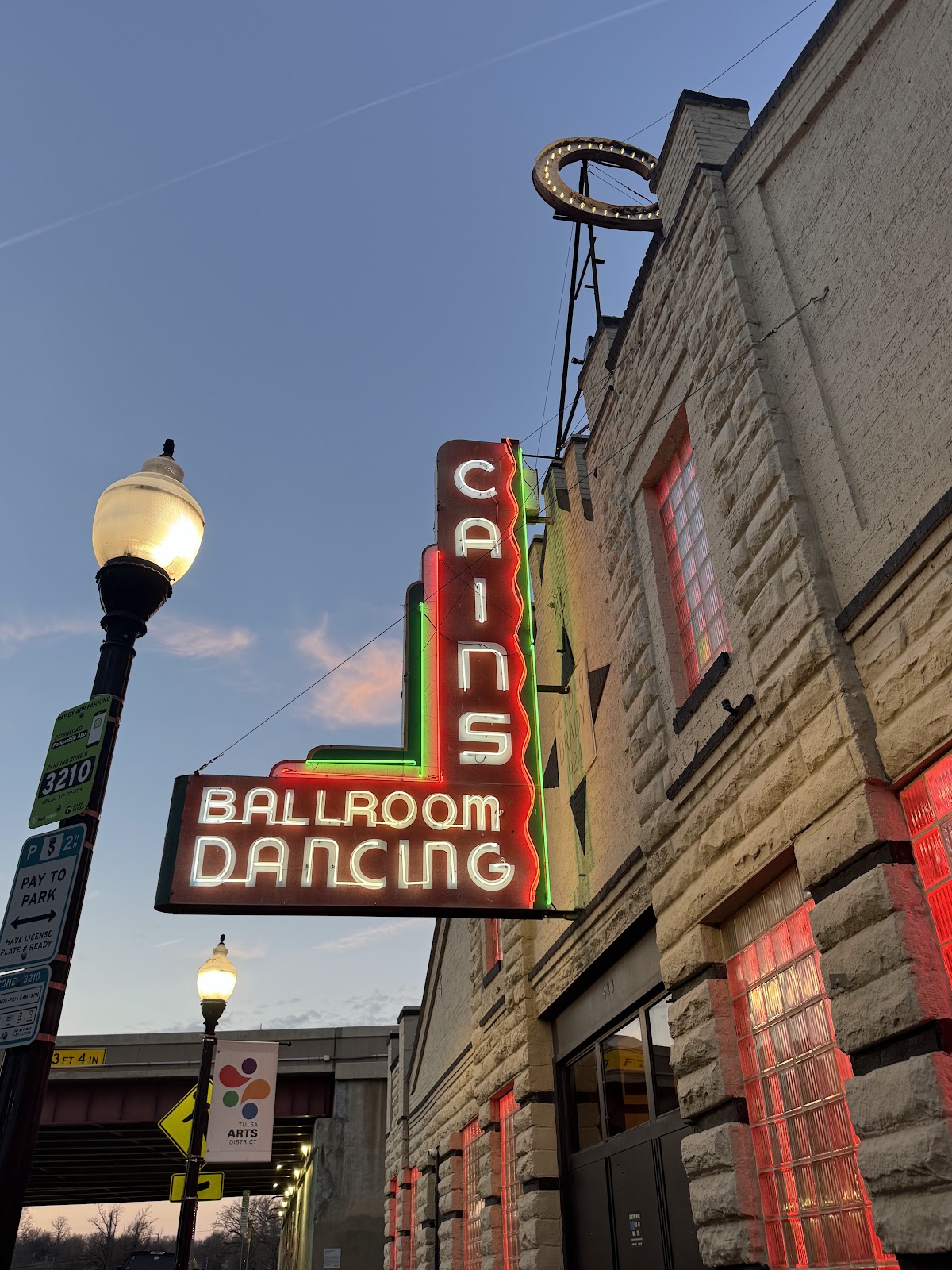
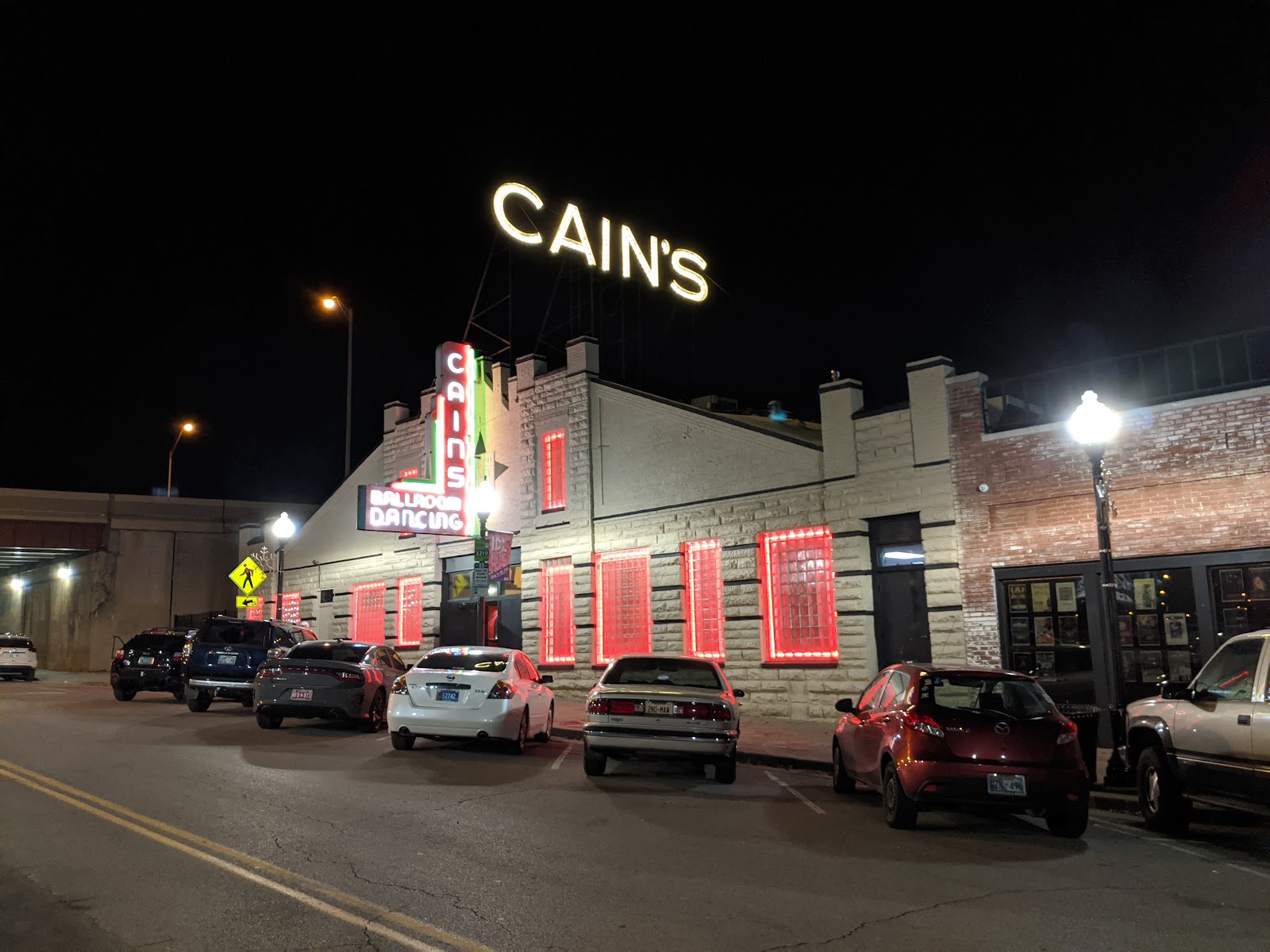
One further asset worth using: historic music venues accumulate signage, posters and marquee lettering, and those are strong graphic elements that state exactly where you are. A frame with the venue’s name in it does a job no portrait can.
What to settle in advance, and Tulsa outside
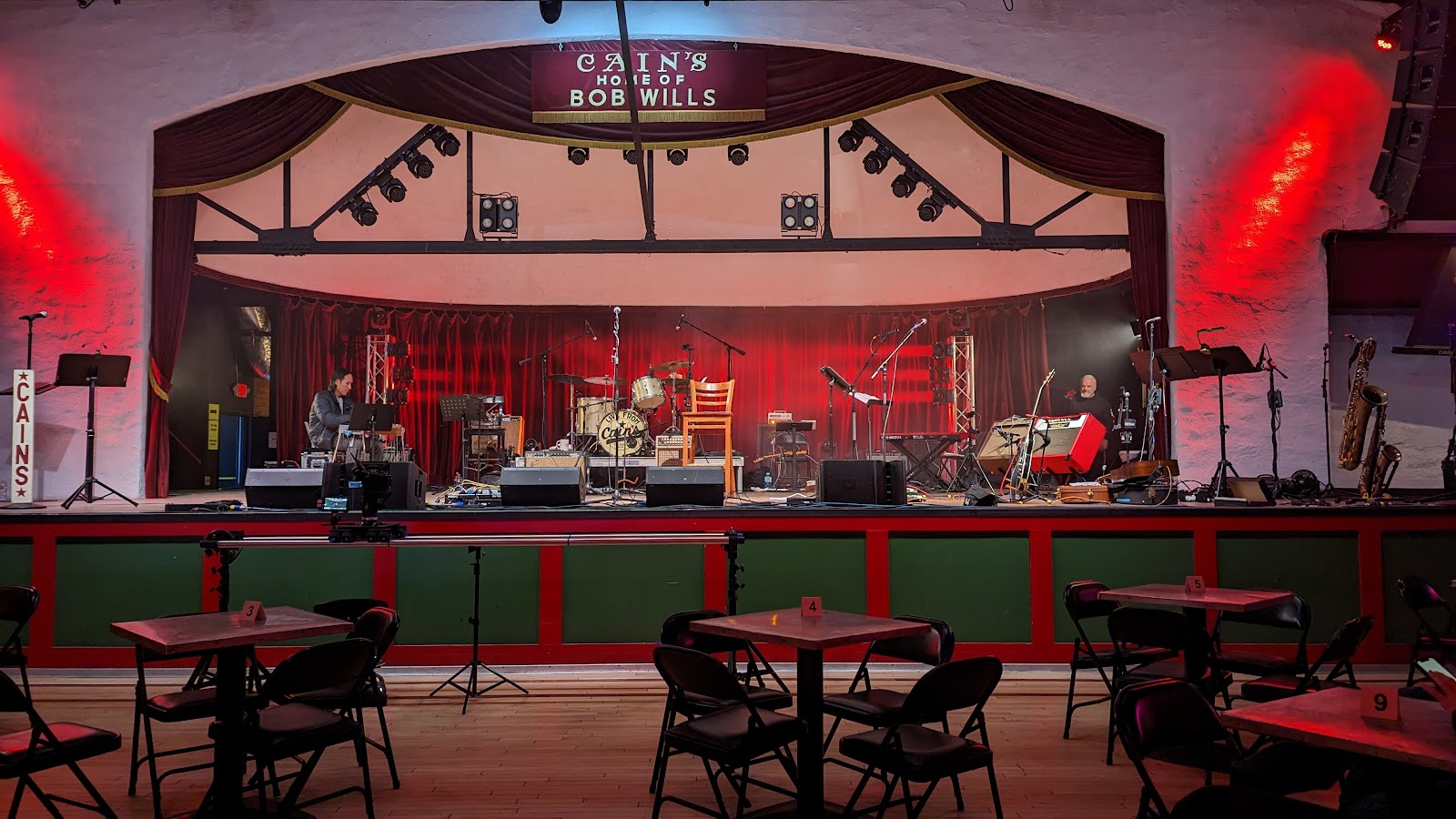
Three questions. Stage access, because a couple on that stage is the frame that justifies the venue historically. Rigging points and available power, because in a century-old hall they are neither obvious nor abundant. And what installed lighting is planned, since a dark music venue with no ambient beyond the house rig is a difficult room and one with festoons or uplighting is a good one.
There is no daylight in a dance hall, so the outdoor block is the only naturally lit part of the day. Tulsa’s downtown and the surrounding area have an exceptional stock of Art Deco and oil-boom terracotta architecture, which photographs superbly in raking low light, and the twenty minutes after sunset is the window.
Oklahoma’s wind and heat govern the length of that block. Summers are hot and the state is persistently windy, so plan bare or minimally modified flash outdoors and keep the excursion tight rather than open-ended.
For the order of the day: portraits outside in the last hour of daylight and at dusk, since the interior offers no daylight at all; the stage and the floor once it is dark and the room reads as itself; and the wide atmospheric frames at the ambient level with high ISO accepted.
What works in your favour
- Genuine historical significance — a century of Western swing and a floor still in use
- A sprung maple dancefloor that is a real, unusual physical feature
- Stage access, if granted, gives a frame with meaning no venue can manufacture
- Signage and marquee lettering give strong graphic frames that state the location
- Tulsa’s Art Deco and terracotta architecture outside for the daylight block
What to plan around
- A sprung floor demands 1/200 to 1/250, which in this light means flash
- Dark absorbent surfaces make bounce flash largely useless
- Visually rough — it will not be styled into an elegant room
- No daylight anywhere in the building
- Persistent Oklahoma wind limits modifiers on the outdoor block
More frames from Cain's Ballroom
Cain's Ballroom wedding photography: common questions
Why does the sprung floor affect the photographs?
Because it flexes under a crowd, giving dancers a vertical component of motion they would not have on concrete. At slow shutter speeds that reads as a soft swimming blur on top of ordinary motion blur, and it looks like a focus error. Hold 1/200 and preferably 1/250, which in this light means flash.
Can you bounce flash in the ballroom?
Not usefully. A century-old dance hall is dark-toned and absorbent with a high structured ceiling, so bounce returns very little and what comes back is muddy. Use a modified key from the side plus a rim light behind the dancefloor — in an absorbent room that rim light is what separates a crowd from the background.
Is it an elegant venue?
No, and it should not be treated as one. It is historically extraordinary and visually rough — a working dance hall with a century of wear, signage and honest patina. The photographs that work lean into that; the ones that fail try to make it elegant, which shows the scuffs and none of the soul.
What is the frame worth negotiating for?
Stage access. A couple standing on the stage that Bob Wills played is the frame that justifies the venue historically, and it carries meaning no purpose-built room can manufacture. Ask for it specifically rather than assuming it comes with the booking.
Where do the daylight photographs happen?
Outside, because a dance hall has none. Tulsa has an exceptional stock of Art Deco and oil-boom terracotta architecture that photographs superbly in raking low light, and the twenty minutes after sunset is the window. Keep it tight — Oklahoma is hot in summer and persistently windy.
More Tulsa venue guides
We are writing a photographer’s guide to every venue we would happily shoot in Tulsa. Here are three more, plus the full index:
- The Gilcrease Museum: Building the Shot List Across Gardens and Galleries
- The Mayo Hotel: Lighting a 1925 Terracotta Tower
- The Philbrook Museum: Reading the Light in an Italian Villa and Its Gardens
Planning a wedding at Cain's Ballroom?
A sprung floor and a hundred years of music make this a venue with real soul and no elegance. Tell us your date and whether stage access is included, and we will plan the lighting and the Tulsa block around it.