 The Van Dusen Mansion, Minneapolis: A Walk Through House and Grounds
The Mill City Museum, Minneapolis: Field Notes on a Ruined Flour Mill
A building with no roof over part of it is two venues: an interior and an outdoor room with brick walls.
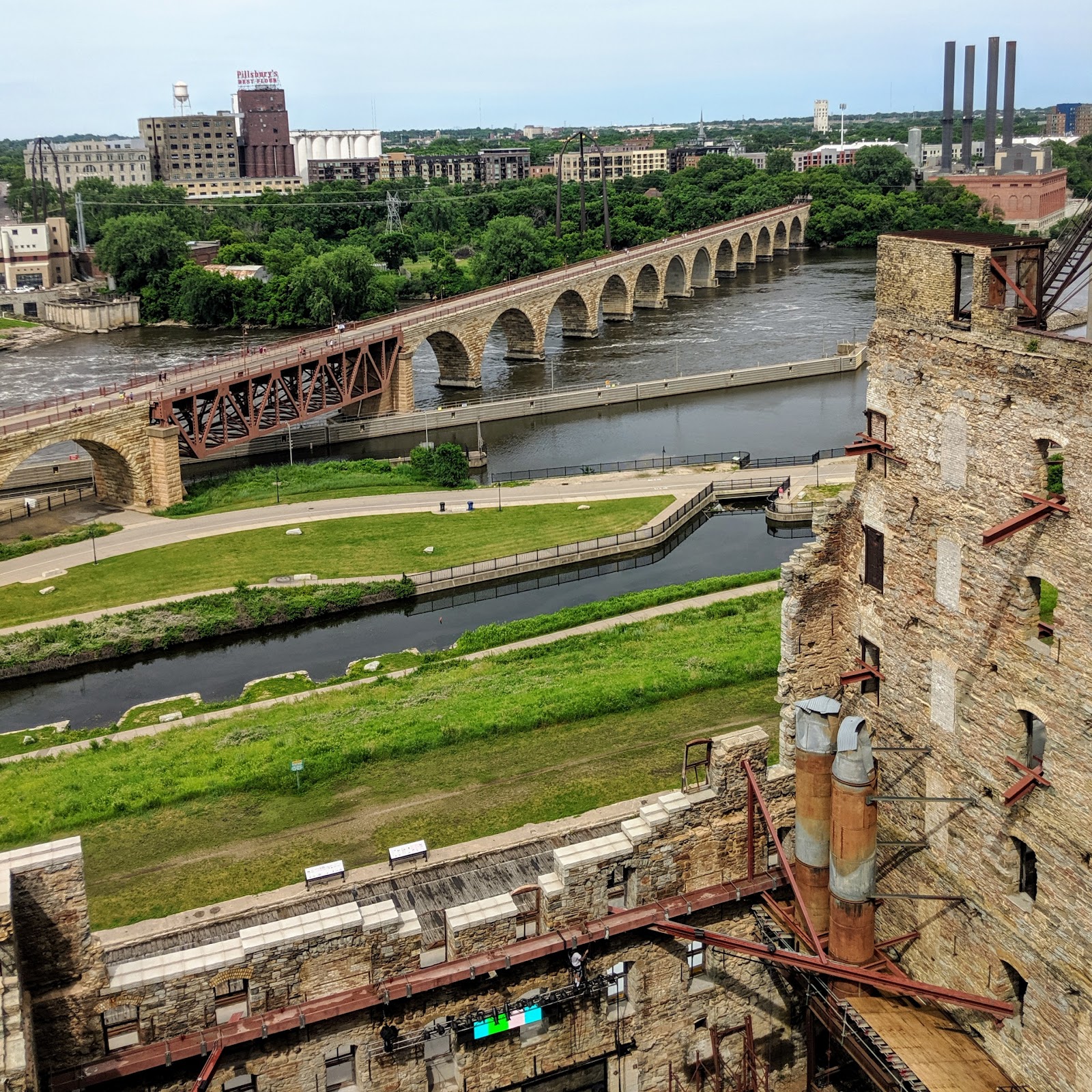
The Mill City Museum’s exterior offers a striking contrast of weathered brick and steel, as its own description has it, and those elements can add real drama to an album.
The more useful fact is structural: this is a museum built inside the ruins of a mill, which means part of it has walls and no roof. That produces something almost no venue has — an outdoor room. Masonry on every side, sky directly above, and no view out. It is the geometry of a courtyard with the scale and material of an industrial building, and it behaves like neither a room nor a yard.
These are field notes: the conditions you will meet and what each one needs. We have not photographed a wedding at Mill City; ruined industrial buildings and enclosed courtyards both behave predictably. Which spaces a booking includes, what may be attached to historic fabric, whether the open courtyard has any cover, and whether the observation level is accessible are the questions for their team — the last two matter most in this climate.
The Mill City Museum at a glance
| Where | The Mississippi riverfront, Minneapolis, Minnesota |
| Character | A museum within the ruins of a flour mill — brick, steel and open courtyards |
| The unusual condition | An outdoor room: walls all round, sky above, no view out |
| The materials | Weathered brick that bounces warm; steel that reflects cool |
| Ask first | Spaces included, fixings, courtyard cover, observation level access |
What you meet, and what each one needs
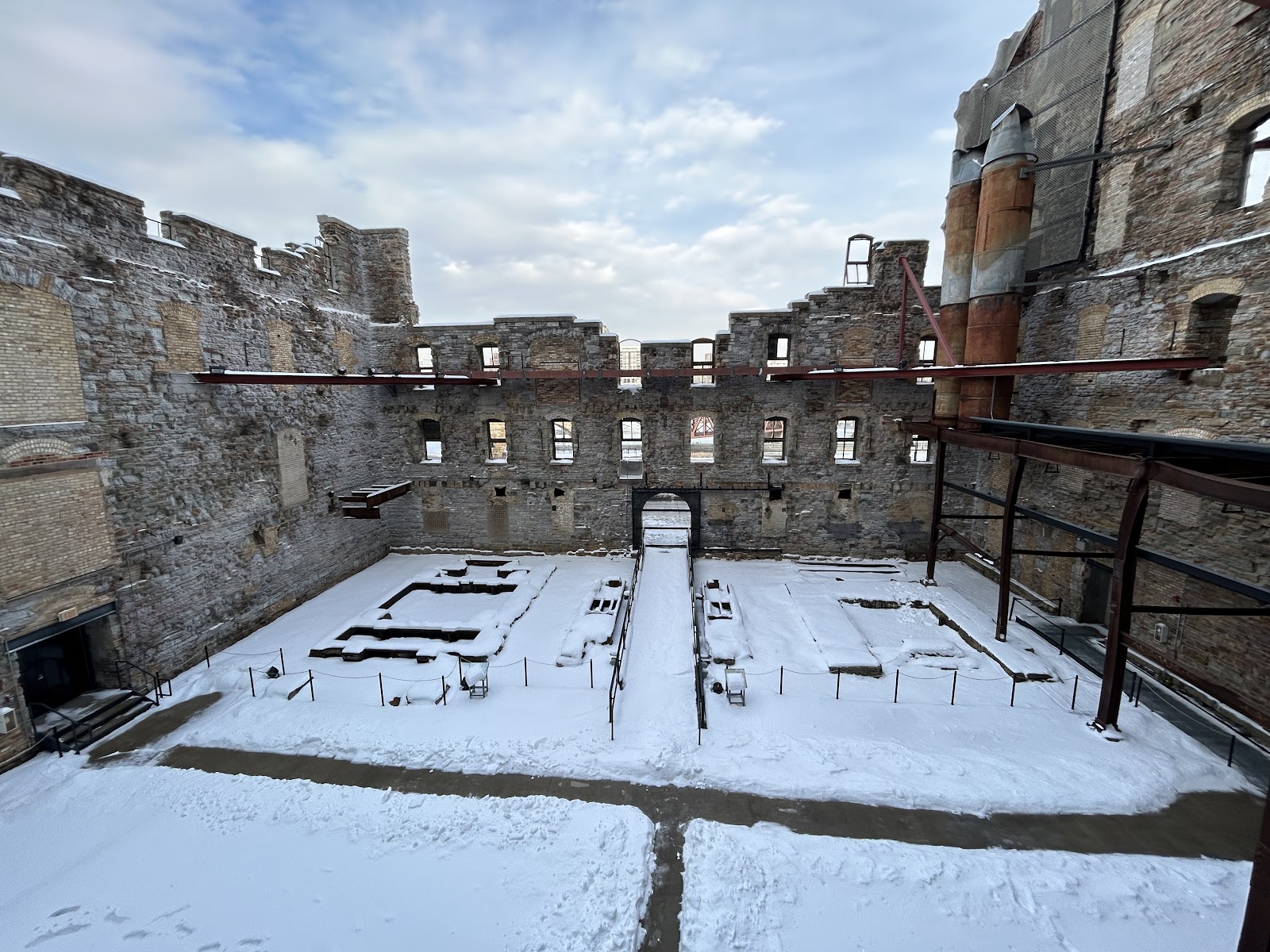
The open courtyard is the first condition and it behaves like a very tall walled courtyard rather than like open ground. Light arrives from the rectangle of sky overhead, which means standing in the middle puts a subject directly under it — flat, top-down illumination that darkens eye sockets and marks the line under the nose. Against a wall, light arrives from one side after bouncing off the facing masonry and from above at an angle, which is a proper portrait condition.
Because the walls are tall and the courtyard is deep, most of the floor is in shade for most of the day, which is genuinely useful: a large area of soft even light, available for hours. When the sun does reach in, it puts a hard patch on part of the floor with the rest in shade — a five- or six-stop difference within a few metres. Work the shaded part, use the sunlit part as a bright background element, and never straddle the line.
The bounce source is weathered brick, which means the light filling a face in that courtyard is warm. Because it is bounced and localised, global white balance cannot separate it from the subject — so either use it, with a custom white balance set on a face in position and held through the block, or neutralise it by filling from a white reflector so the fill comes from a neutral surface while the brick stays as warm as it is.
Weathered brick is the second condition and it is the most rewarding surface in the building. Fire-damaged and weathered masonry has more texture than new brick — scorching, spalling, patched courses, mortar variation — and all of it reads only when light runs along the surface rather than at it. Light raking down a ruined wall lifts everything; light pointed at it flattens the wall into a brown field.
Steel is the third condition and it behaves in the opposite direction: cool rather than warm, and partly specular, so it returns a bright reflection of a source rather than a soft scatter. Angle lights away from steel planes, or run a highlight along a beam deliberately. A frame containing both weathered brick and exposed steel has two colour influences pulling apart, which is another reason to set white balance on a face rather than on the scene.
Interior volumes are the fourth condition and they are tall enough that bounce returns nothing usable — so the substitutes are a pale wall at a sensible distance, a reflector, or direct modified light, with enough power for real distance. The compensation is steep fall-off, which is free separation: a couple three metres in front of anything sits against natural darkness with no equipment at all.
And museum galleries, where a booking includes them, carry the usual constraints — lower light, fittings aimed from above, and possible restrictions on photography, stands or flash. Those are three separate questions and an institution may answer them differently.
The ruin, the river and the vertical frame
The single most distinctive frame in a ruined mill is the vertical one, and almost nobody takes it. Standing in the open courtyard and pointing the camera up the wall — or up and out towards the sky between the walls — gives converging masonry on two or three sides with a rectangle of bright sky at the top, and a couple small at the bottom of that frame. It reads as scale in a way a horizontal frame cannot, and it costs a minute.
The complementary frame is the low one. Dropping close to the courtyard floor exaggerates the height of the walls, puts the floor surface running towards the viewer as texture, and lifts the couple against masonry rather than against a doorway. In a space defined by height, a low camera is the tool.
Openings are the third frame and they are the best light in the building. A window or doorway in a ruined wall behaves as a very large soft source close to the subject, with natural fall-off into whatever is behind — and two metres inside one gives a broad wraparound key better than anything that can be carried. Which elevation the main openings face decides which hours work, and a shaded opening gives that light all day.
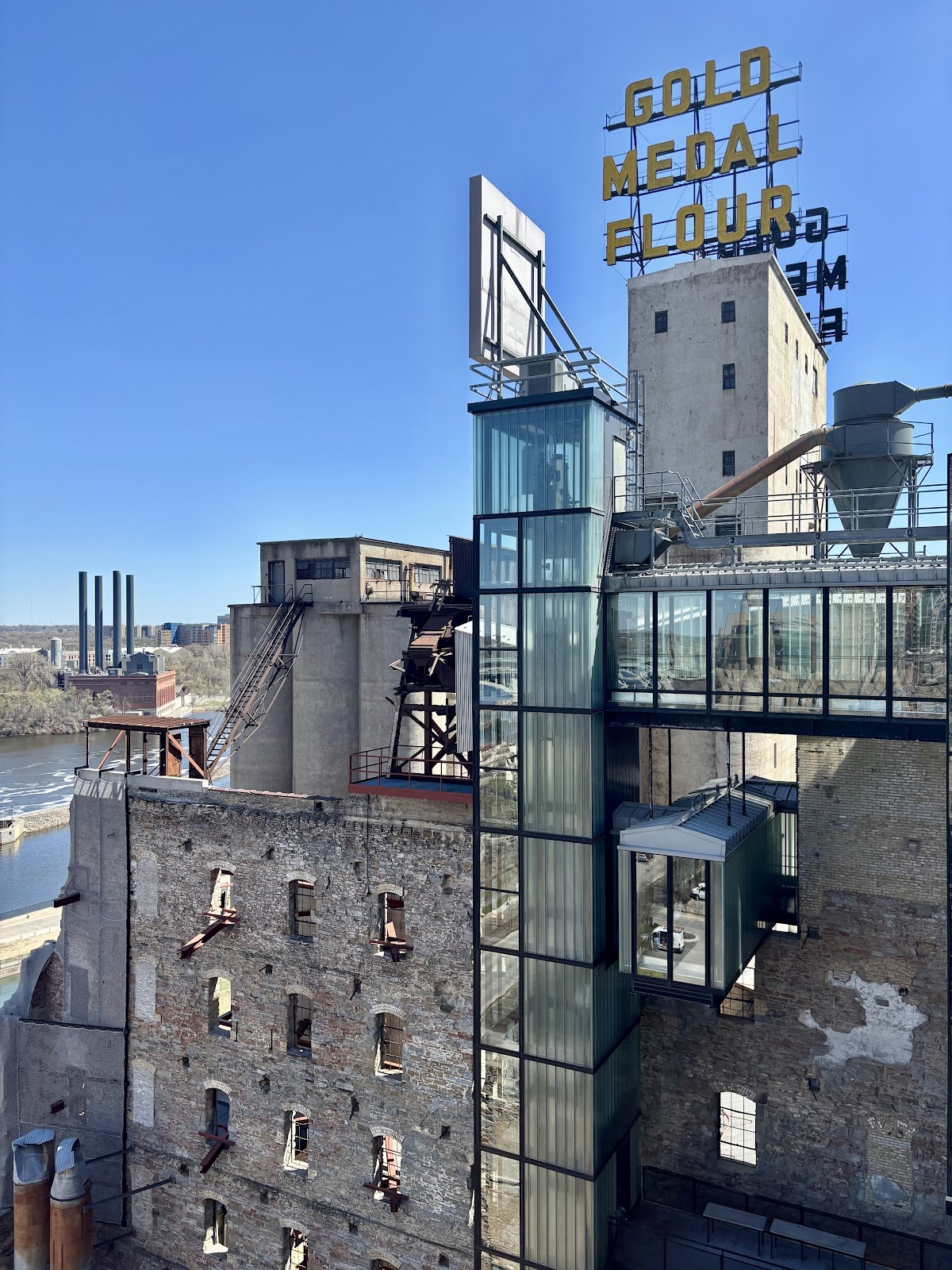
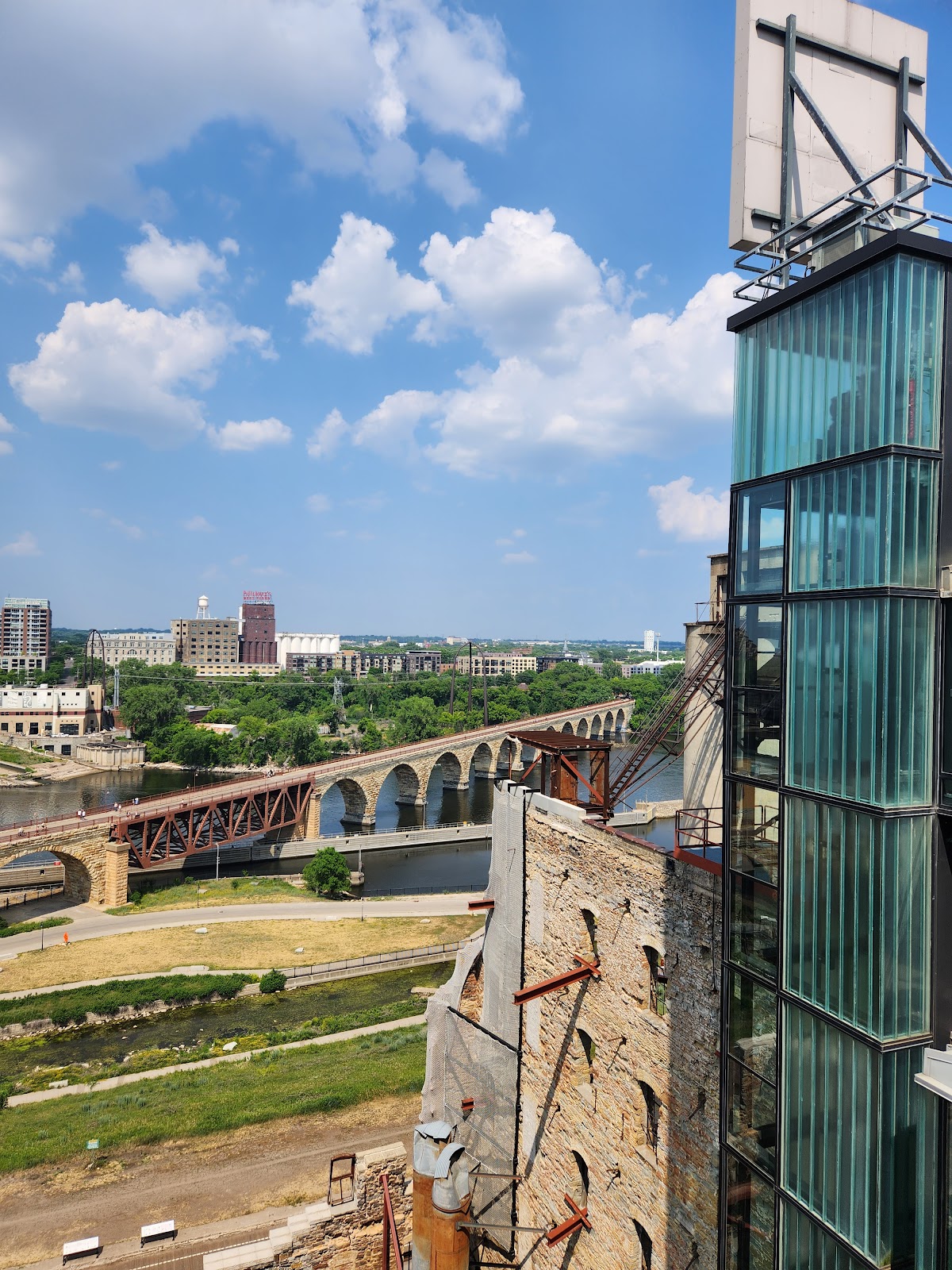
Openings also frame the river, which is the site’s other asset. A working river with a falls, a bridge and industrial banks gives layers for a long lens to compress — near bank, water, far bank, structure — where a wide lens reduces all of it to a strip. A low camera stretches the water’s edge and drops the horizon, which is the riverside technique everywhere.
An observation level, where the building has one, is worth asking about specifically. Height above a river gorge gives a layered view rather than a street-level one, and low sun reaches an upper level while the gorge below is already in shadow — which is worth extra time in the schedule.
Wind in a river gorge is stronger and gustier than a street back from it, and a tall open courtyard funnels it rather than sheltering from it, which matters for a veil and for any light stand.
The crossing is the one timed frame and in an open courtyard it is unusual: for roughly twenty minutes after sunset the rectangle of sky above still holds colour while the walls are lit by whatever the museum has installed, and one exposure holds both. That is a frame specific to a roofless building and it exists once.
- Work against a wall in the courtyard, never in the middle
- Never straddle the sun line; the difference is five or six stops
- Rake the brick and angle away from the steel
- Point the camera up the courtyard walls once — it takes a minute
- Sunset plus fifteen: the sky rectangle above a lit ruined wall
Minneapolis weather, and the year
Minneapolis has the most demanding climate in this series and an open courtyard is exactly where that bites. Winter here is severe and long: days are short, with sunset in the middle of the afternoon in December, and temperatures are low enough that an outdoor block becomes three or four minutes rather than twenty — which is a welfare decision in formal clothes as much as a photographic one.
An open-roofed courtyard in a Minnesota January is effectively outdoors, so anything planned there in winter needs the same treatment as a street: a short, decided, rehearsed visit rather than an exploration, with the frames known in advance.
Snow is the compensation and it is the best natural fill there is, lifting exactly the shadows a low sun carves while fooling a meter by about two stops — and snow lying in a roofless ruined courtyard, with brick walls rising round it and a warm lit museum beyond the openings, is a frame that almost nothing else in the country can offer. It is worth planning a winter date around rather than enduring one.
The specific equipment risk in this climate is fogging and it is severe in both directions. A camera carried from a heated museum into subzero air will not fog immediately, but bringing it back in will fog it comprehensively and can take a long time to clear — long enough to lose a sequence. Let a body stay cold between outdoor visits rather than cycling it, and plan one excursion rather than several.
Summer is warm and humid, with long days: sunset falls late enough in June that the golden hour arrives after a reception has started, which needs agreeing in advance as a short deliberate excursion. Thunderstorms are a real possibility and an open courtyard has no cover, so the wet-weather arrangement needs a capacity and a decision time.
Autumn is the best season for a riverfront site: clear stable air, the sharpest views of the year, and genuine colour along the gorge in early October — a short window and worth building a date around.
Spring is the awkward one, with late snow possible and the river high and fast, which changes what the water looks like rather than whether it can be photographed.
One last practical note: a ruined building has uneven surfaces, and a roofless courtyard collects water and ice. Asking what is safe to walk on, and whether any area is closed in winter, is a question of consequence rather than courtesy.
More frames from The Mill City Museum
The Mill City Museum wedding photography: common questions
What is unusual about this building?
Part of it has walls and no roof, which makes an outdoor room — masonry on every side, sky directly above, and no view out. It behaves like neither a room nor a yard.
Where should you stand in the open courtyard?
Against a wall. The middle sits directly under the sky opening and gives flat top-down light; against a wall it arrives from one side after bouncing off the facing masonry.
What colour is the fill in there?
Warm, because weathered brick is the bounce source. Use it with a fixed custom white balance set on a face, or neutralise it by filling from a white reflector.
What is the frame nobody takes?
The vertical one: pointing the camera up the courtyard walls, with converging masonry and a rectangle of bright sky at the top and the couple small below. It costs a minute.
What does winter do here?
An open-roofed courtyard in a Minnesota January is effectively outdoors, so the block becomes three or four minutes with the frames known in advance. Snow in a ruined courtyard is worth planning a date around.
What is the fogging rule in this climate?
Let a body stay cold between outdoor visits rather than cycling it in and out. Coming back into a heated museum fogs a lens comprehensively and can take a long time to clear.
More Minneapolis, MN venue guides
We are writing a photographer’s guide to every venue we would happily shoot in Minneapolis, MN. Here are three more, plus the full index:
- The Minneapolis Institute of Art: Four Ways Out of the Gallery Problem
- The Nordic House, Minneapolis: Photographing Pale Timber and Clean Lines
- The Pique, Minneapolis: One Frame and How It Is Made
All Minneapolis, MN Wedding Venues →
Planning a wedding at The Mill City Museum?
An outdoor room needs an indoor plan. Tell us your date and we will make one.