 Tulsa Country Club: Field Notes on a 1908 Club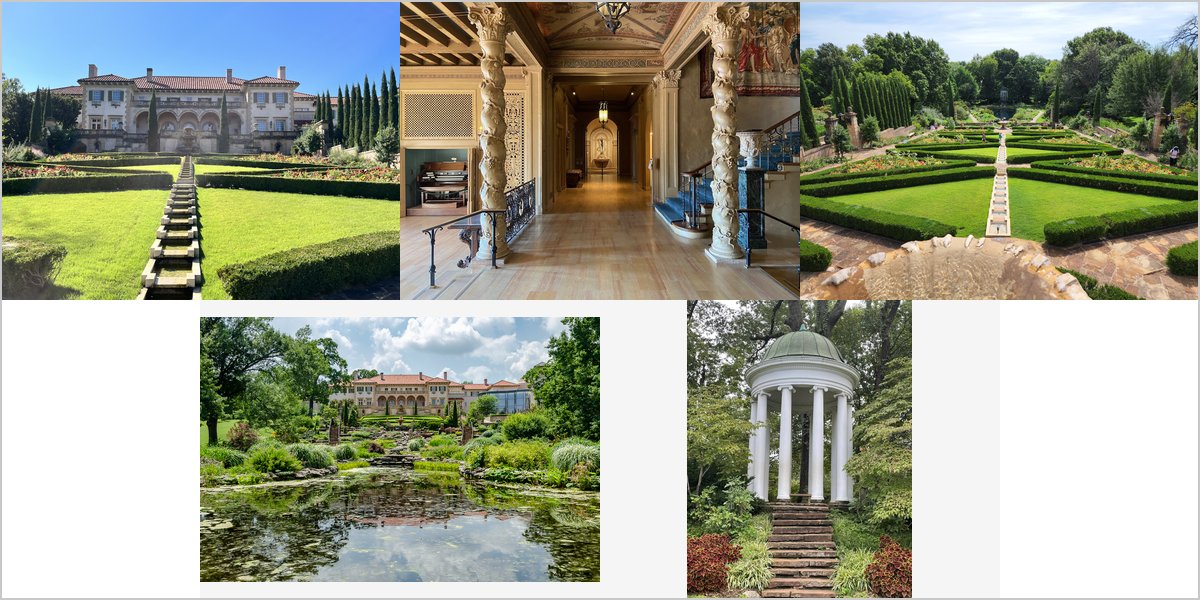
April 24, 2026
The Philbrook Museum: Reading the Light in an Italian Villa and Its Gardens
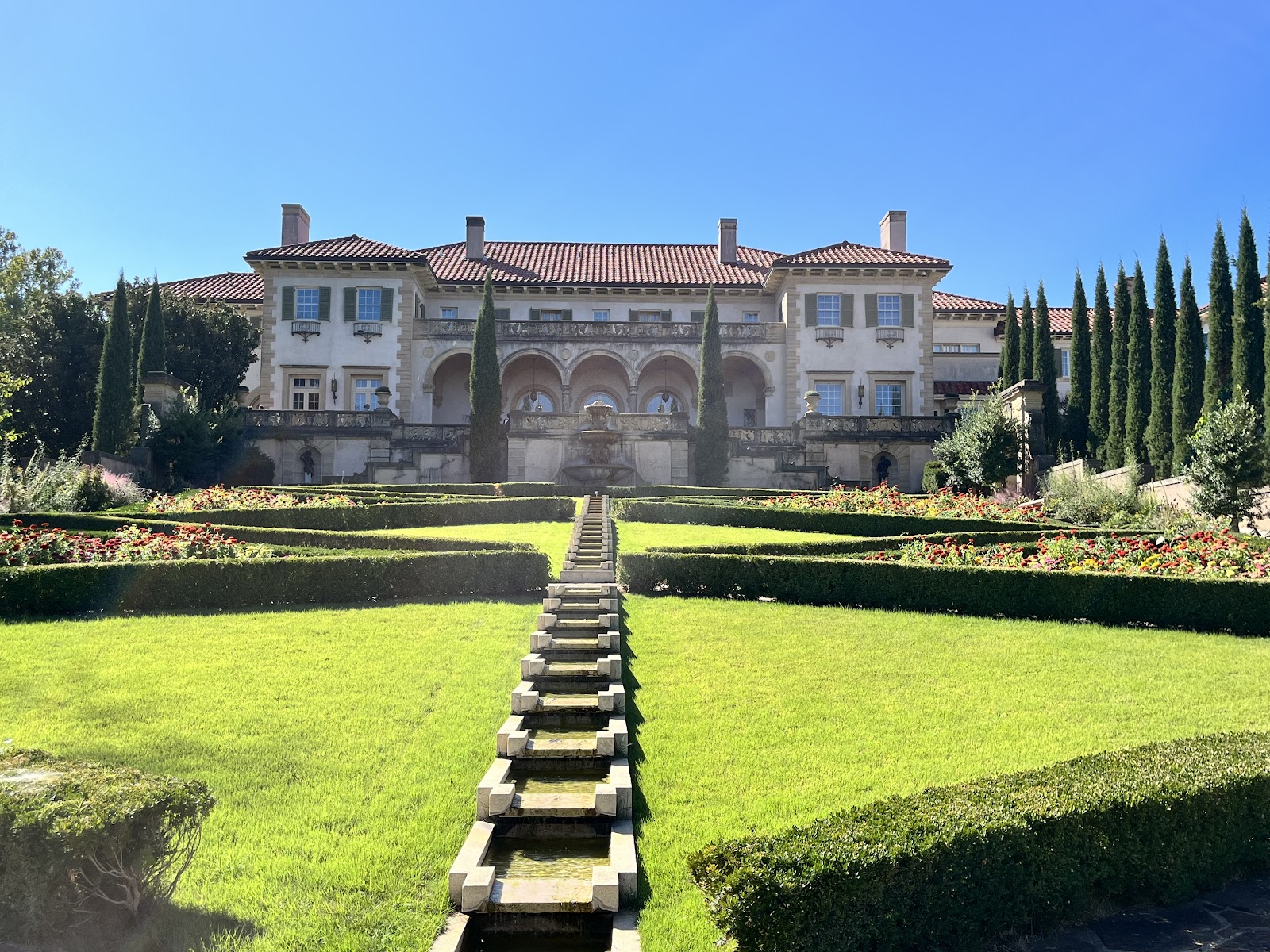
An Italian villa with a formal garden axis running away from it. The axis is the venue’s signature frame, and it only works at certain hours.
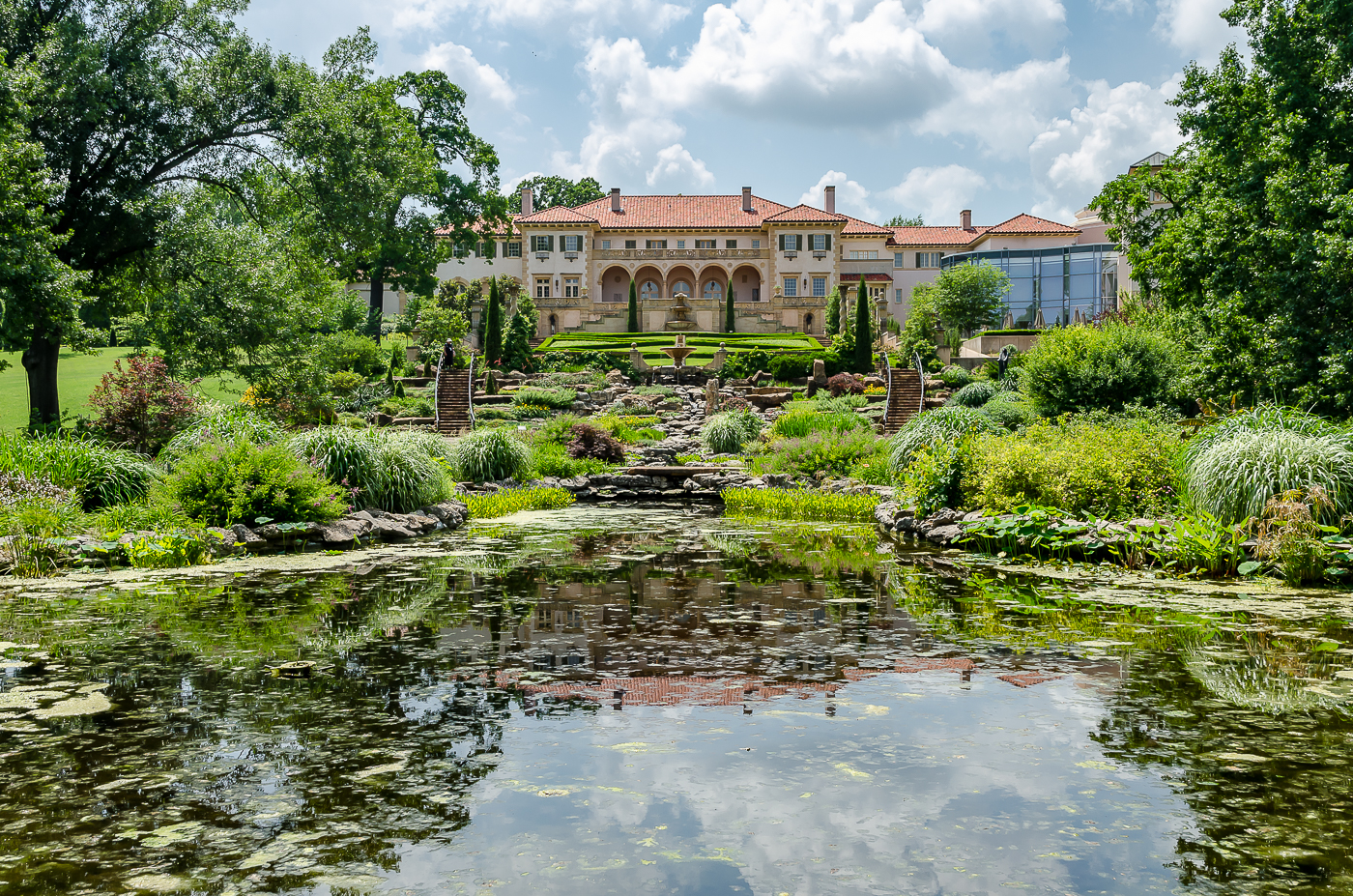
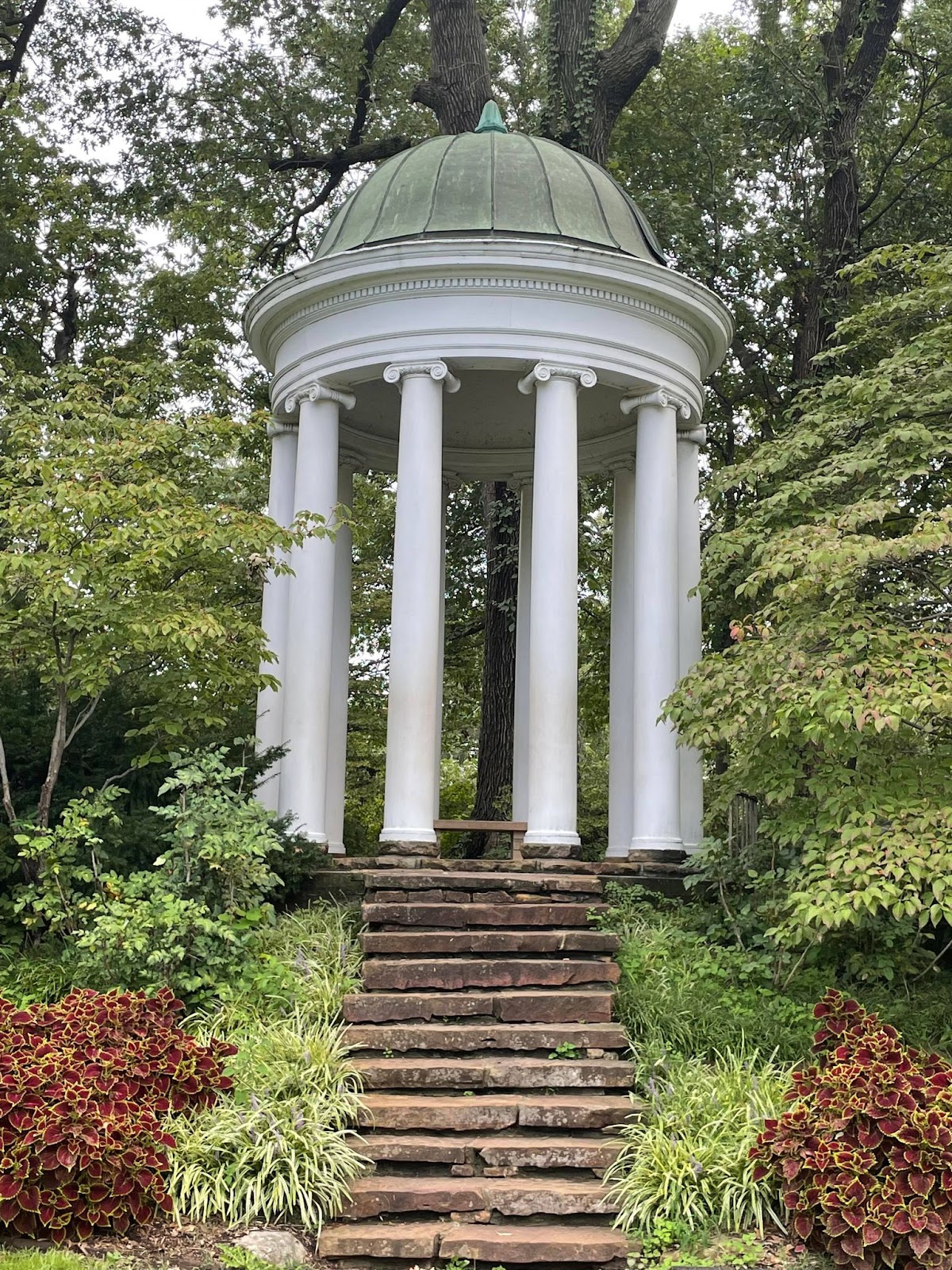
Philbrook was completed in 1927 as the Tulsa home of oil magnate Waite Phillips, an Italian Renaissance revival villa designed by Edward Delk, set in around 25 acres. It opened as an art museum in 1939, and the formal gardens — a strong central axis running from the villa down to a tempietto — remain the property’s defining feature alongside the house itself.
Photographically the villa and the gardens are two quite different assignments, and the gardens are the more distinctive. A formal Italian garden is built on an axis, symmetry and sightlines, which means the good compositions are designed into the place: stand where the designer intended and the frame organises itself. That is rare and it is worth using deliberately rather than wandering.
This is a light-and-timeline guide. We have not photographed a wedding at Philbrook; formal garden axes, villa interiors and Oklahoma light behave predictably. Which spaces are included, gallery access and flash policy are for their events team, and at an art museum assume flash is restricted near works.
Philbrook Museum of Art at a glance
| Where | Rockford Road, Tulsa, Oklahoma — around 25 acres |
| Built | 1927, Italian Renaissance revival villa; an art museum since 1939 |
| Gardens | A strong formal axis running from the villa down to a tempietto |
| Light | Villa interiors warm and gallery-lit; gardens open and axis-dependent |
| Plan around | Oklahoma heat, humidity and wind, and an axis that needs the right hour |
The garden axis: the signature frame and its hour
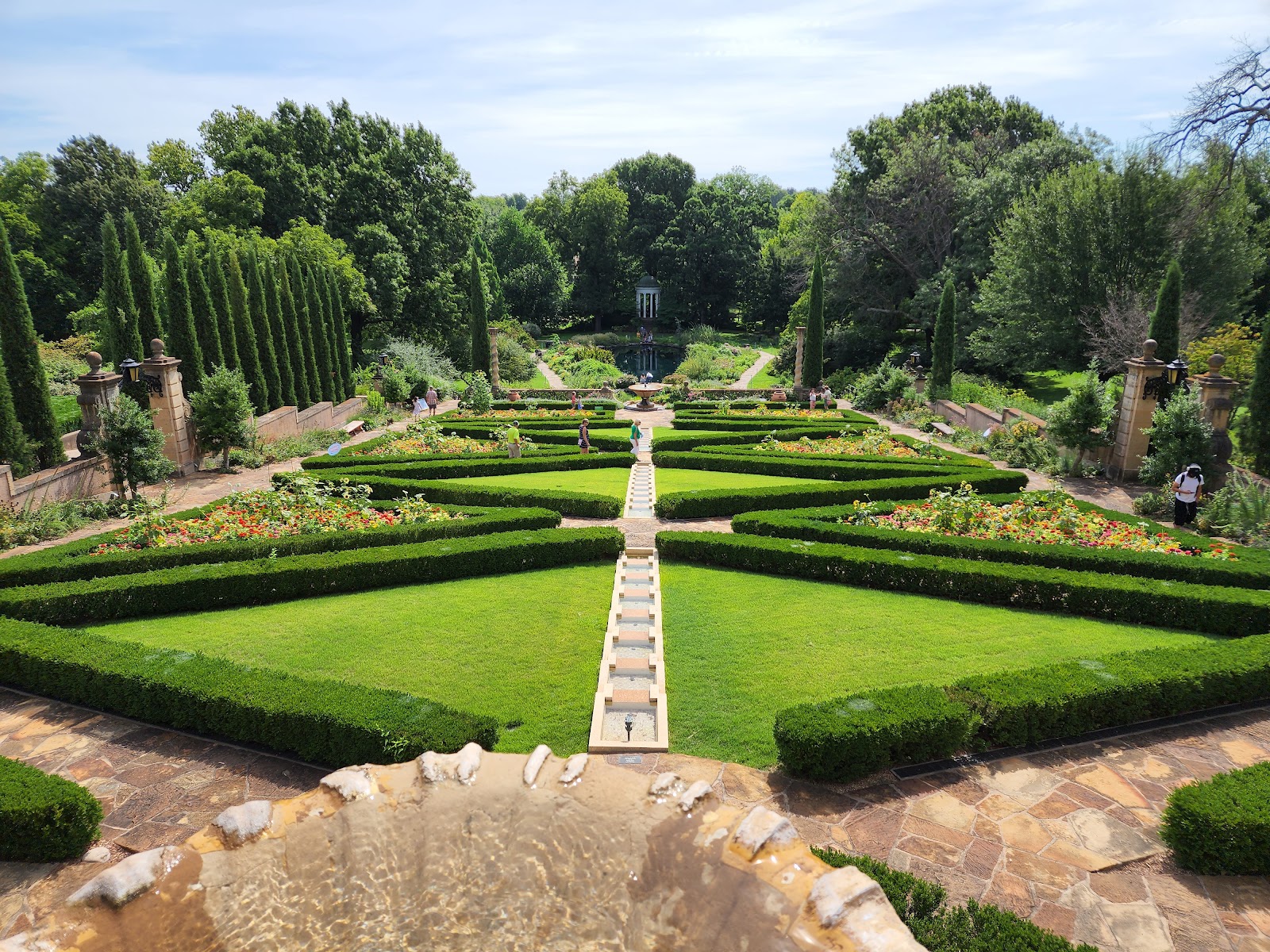
A formal Italian garden is organised around a central axis, and at Philbrook that axis runs from the villa down through terraces and water to a tempietto at the far end. Shot along it, with the tempietto as a distant focal point and the couple on the axis, you get a frame with depth, symmetry and a designed sense of recession that no informal garden produces.
Two things make or break it. The first is precision: an axial composition is unforgiving, so the camera must be on the centre line and level. A few centimetres off and the symmetry collapses and the frame reads as a mistake rather than a composition. Slow down for this one.
The second is the hour. An axis running in a particular compass direction is lit along its length only when the sun aligns with it, and lit across it the rest of the time. Along-axis light gives you the glowing, receding, backlit version; across-axis light gives a flatter, more documentary version. Establish which direction the axis runs and therefore when the sun lines up, because that single piece of homework determines whether the signature frame is spectacular or merely competent.
Oklahoma light, and why midday is not an option
Tulsa summers are hot and humid, and formal gardens are open by design — parterres, terraces and lawns with little canopy. Between roughly eleven and five on a clear summer day, that is the harshest light you will meet: high sun, hard shadows, squinting, and a white dress blowing out while faces darken under brows.
The usable outdoor window is early morning and the last ninety minutes. Both are genuinely good — low sun raking across a formal garden picks out the geometry of hedges and paths, and the water features catch light — so this is a scheduling problem rather than a photographic one.
Wind is the other Oklahoma factor and it is more significant than visitors expect. The state is persistently windy, which affects veils and hair continuously and makes large light modifiers impractical outdoors. Plan for bare or minimally modified flash in the gardens, and shoot bursts so the movement works in your favour rather than against it.
Humidity also hazes distant views and will fog a lens brought from an air-conditioned villa into the gardens — ten to twenty minutes to clear, so acclimatise equipment before you need it.
The villa: warm interiors and museum rules
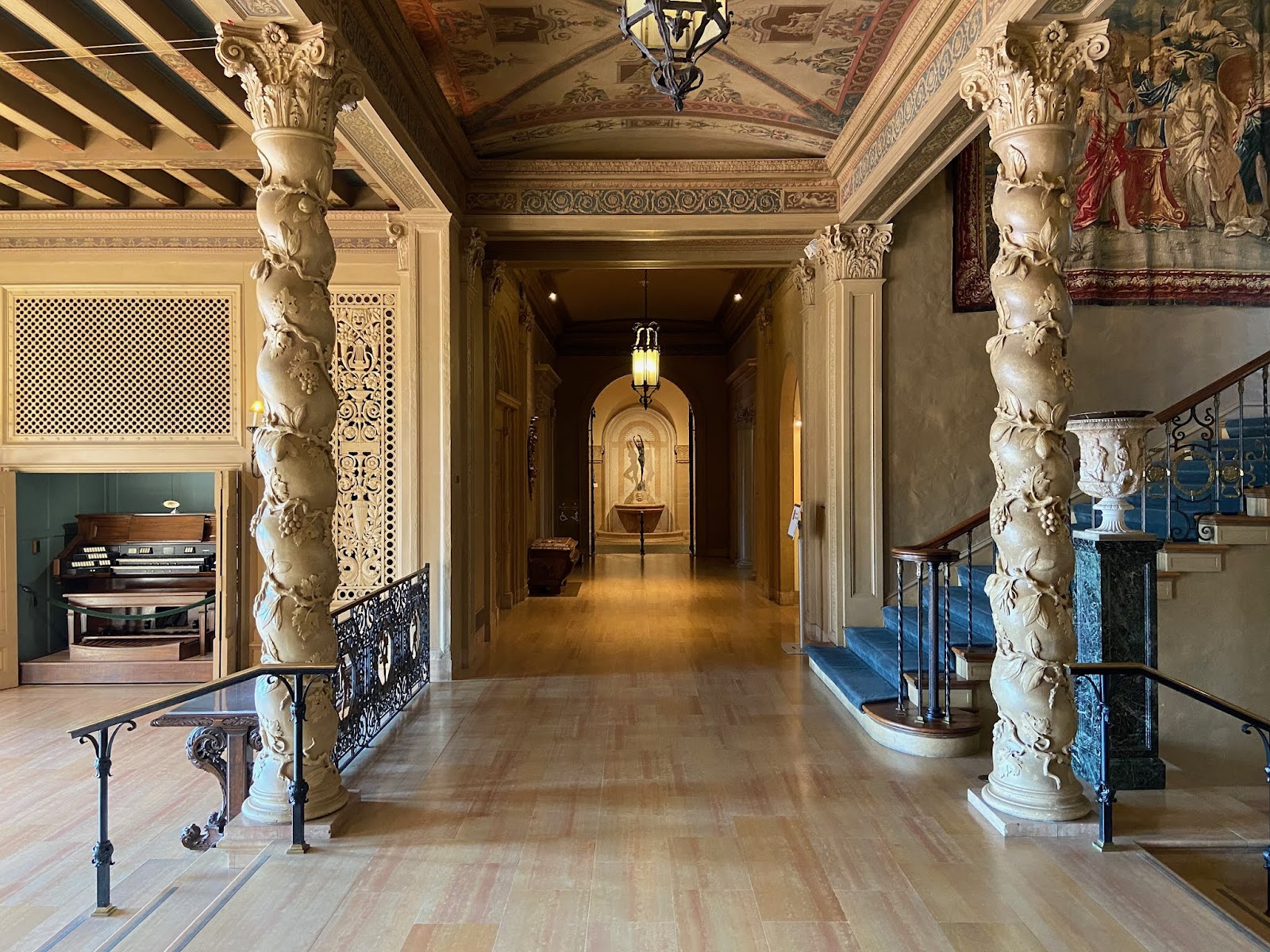
The house is an Italian Renaissance villa converted to a museum, which means two overlapping conditions. Architecturally it has the villa vocabulary — arched openings, loggias, courtyards, plaster and stone, thick walls with deep reveals. As a museum it has gallery lighting in the exhibition spaces and, almost certainly, restrictions on flash near works.
The architectural spaces are where the photographs belong. A loggia is the single best light in any villa: a roof blocking the overhead component, open on one side admitting broad light at head height — a natural softbox with a top gobo, flattering and usable even at midday when the gardens are not. Courtyards do the same with the added benefit of walls bouncing light inward.
Deep window reveals in thick villa walls shape the entering light and make it fall off fast, giving contained directional illumination for free. Find them and use them. The galleries, by contrast, are pooled and warm and hostile to faces — one considered frame there if permitted, not a series.
The timeline
Built around the axis hour and the heat rather than a generic template.
- Find out when the sun aligns with the garden axis. The single most valuable piece of planning here, and it decides where the best frame sits in the day.
- Loggias and courtyards during the middle of the day. Architectural shade with lateral light is excellent when the open gardens are unusable.
- The axis and the terraces in the last ninety minutes, shot precisely on the centre line and level.
- Groups on a terrace or lawn while the light is still even rather than raking.
- Acclimatise equipment before moving from the villa to the gardens, or lose ten to twenty minutes to fogged glass.
- Plan for wind. No large modifiers outdoors, and shoot bursts for veils and hair.
What works in your favour
- A designed formal axis that gives depth, symmetry and recession no informal garden offers
- Loggias and courtyards provide architectural shade usable even at midday
- Deep villa window reveals give contained directional daylight for free
- Twenty-five acres with terraces, water features and a tempietto for variety
- Low sun raking across formal geometry picks out hedges, paths and water
What to plan around
- The axial frame demands precision and the right hour; off-centre reads as a mistake
- Open formal gardens are unusable between roughly eleven and five in an Oklahoma summer
- Persistent wind rules out large modifiers and moves veils continuously
- Humidity hazes views and fogs lenses moving from the air-conditioned villa
- Gallery lighting is pooled and warm; assume flash restricted near works
More frames from Philbrook Museum of Art
Philbrook Museum of Art wedding photography: common questions
What is the signature photograph at Philbrook?
Shot along the formal garden axis, with the tempietto as a distant focal point and the couple on the centre line. It gives depth, symmetry and designed recession that informal gardens cannot. It demands precision — the camera must be exactly on the axis and level, or the symmetry collapses.
Does the time of day matter for that frame?
A great deal. An axis is lit along its length only when the sun aligns with it, and across it the rest of the time. Along-axis light gives the glowing backlit version; across-axis gives a flatter documentary one. Establish which direction the axis runs and when the sun lines up — it is the most valuable planning you can do here.
Can we use the gardens in the middle of the day?
Not in summer. Formal gardens are open by design with little canopy, and an Oklahoma midday gives hard shadows, squinting and a blown dress. Use the loggias and courtyards instead — architectural shade with lateral light is excellent precisely when the open gardens are not.
How much of a problem is the wind?
More than visitors expect. Oklahoma is persistently windy, which moves veils and hair continuously and makes large light modifiers impractical outdoors. Plan for bare or minimally modified flash in the gardens and shoot bursts, so the movement works for you rather than against you.
What about photographing inside the museum?
The architectural spaces — loggias, courtyards, halls, deep window reveals — are where photographs belong. The galleries are pooled, warm and unkind to faces, and flash is almost certainly restricted near works. Plan one considered gallery frame at most, not a series.
More Tulsa venue guides
We are writing a photographer’s guide to every venue we would happily shoot in Tulsa. Here are three more, plus the full index:
- Southern Hills Country Club: Who This Venue Suits
- The Summit Club: Working a Private Club at the Top of a Tower
- Tulsa Country Club: Field Notes on a 1908 Club
Planning a wedding at Philbrook Museum of Art?
One piece of homework makes this venue: when does the sun align with the garden axis. Tell us your date and we will work it out and build the day around that frame.