 Overhills Mansion: Who This Venue Suits, and Who It Doesn’t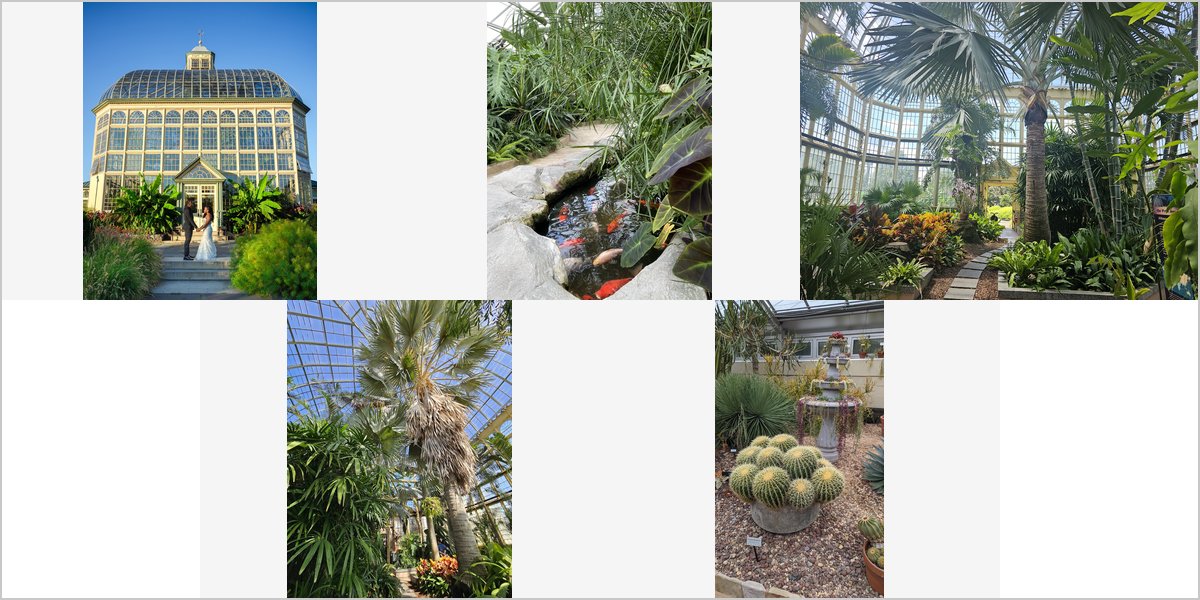
April 23, 2026
The Rawlings Conservatory: A Walk-Through of Glass Houses
A Victorian glasshouse is the most flattering light a photographer can be handed. It also fogs your lenses, dyes your skin tones green, and has nowhere to stand.
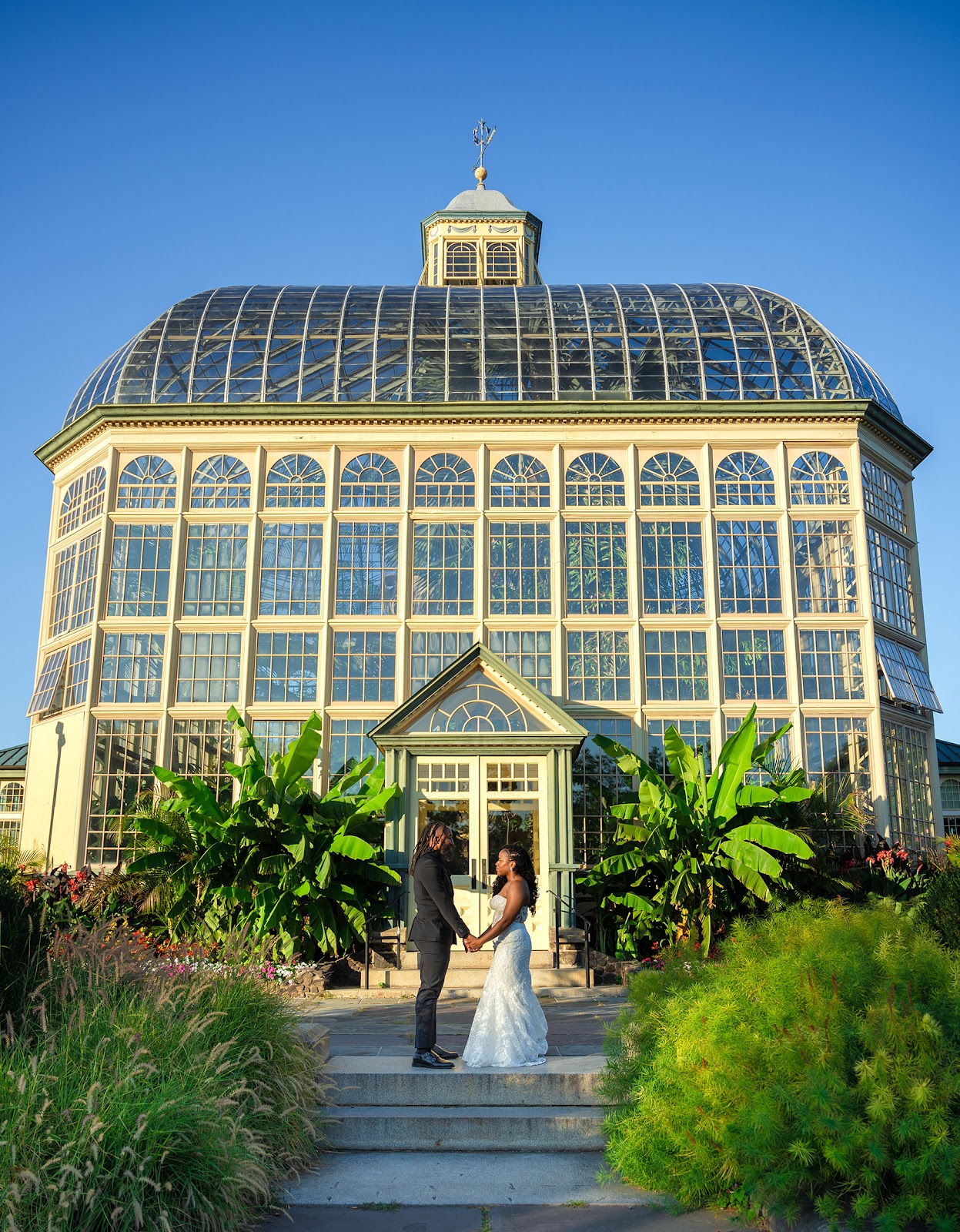
The Rawlings Conservatory opened in 1888 in Druid Hill Park, making it one of the oldest surviving Victorian glass conservatories in the United States. The original palm house — a tall glass and iron structure — connects to a series of growing houses holding tropical, Mediterranean and desert collections, each with its own climate.
Photographically a conservatory is a gift and a trap in equal measure. The gift is the light: diffused through glass on all sides and from above, it is broad, soft, wrapping and almost impossible to make unflattering. The trap is everything else — humidity that condenses on cold lenses, foliage that throws green onto skin, and paths narrow enough that a wedding party physically cannot spread out.
This is a walk-through in the order you would shoot it. We have not photographed a wedding here; glasshouse optics and tropical-house humidity behave identically everywhere. Capacity, which houses are available and what the conservatory permits are for their team, and at a working botanical collection expect firm limits on numbers and on where anyone may step.
Rawlings Conservatory at a glance
| Where | Druid Hill Park, Baltimore, Maryland |
| Opened | 1888 — among the oldest surviving Victorian glass conservatories in the US |
| Structure | Tall glass and iron palm house linked to separate climate-controlled growing houses |
| Light | Diffused through glass on all sides — broad, soft and exceptionally flattering |
| Real problems | Lens condensation, green colour cast, and very narrow paths |
The palm house: why this light is so good
Glass on every side and overhead means light arrives from all directions at once, already scattered by the glazing and by leaves. That is the definition of soft light, and unlike an atrium or a skylight it is not purely top-down — a substantial amount comes in laterally through the walls, which fills eye sockets rather than shadowing them.
The practical consequence is that you can place people almost anywhere and get flattering illumination, which is rare. It also means overcast and bright days both work: cloud gives even gentleness, sun gives dappled patterns on the ironwork and paths that read as atmosphere rather than as a problem, provided you keep faces out of the hard patches.
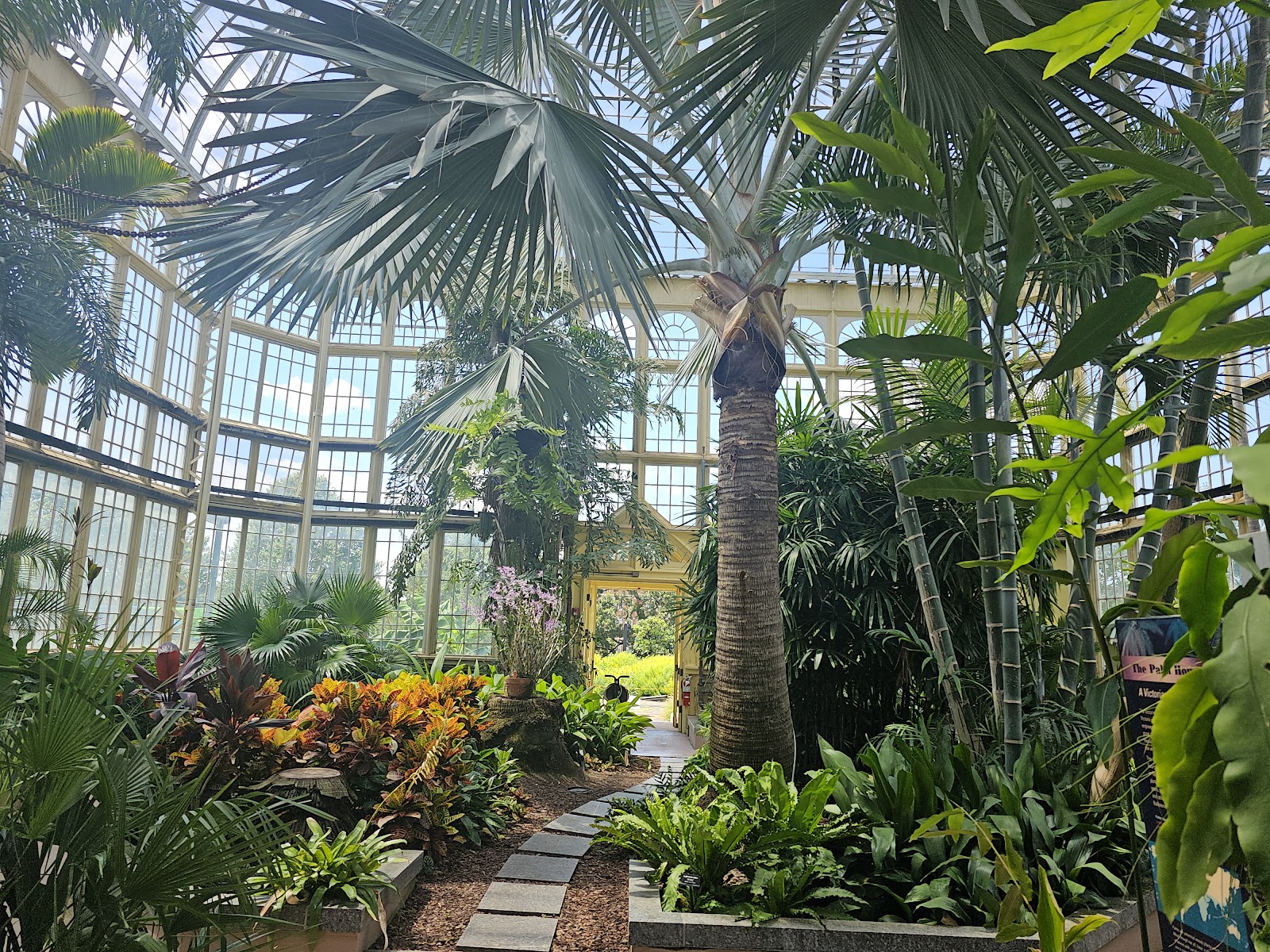
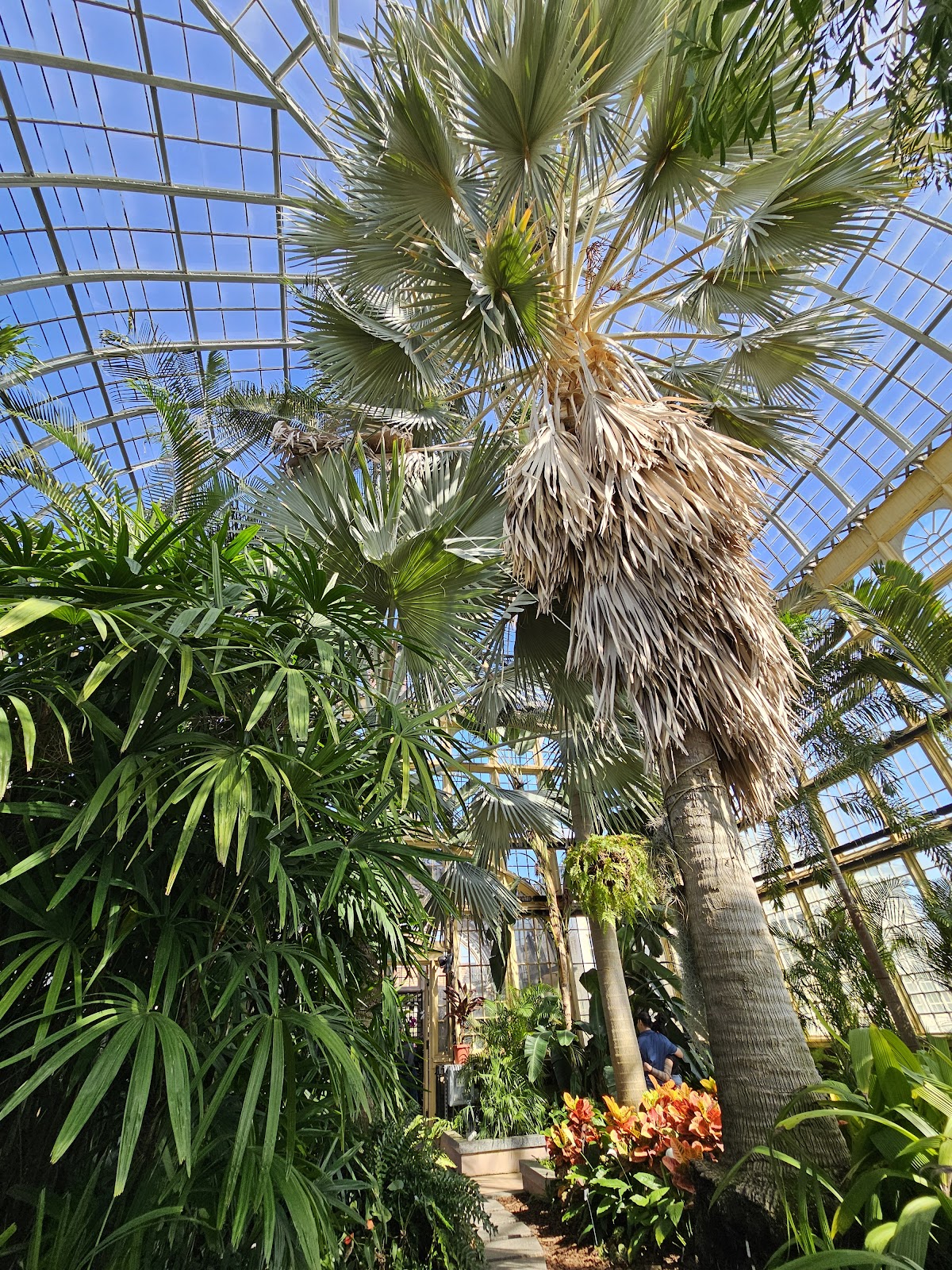
The palm house is also the tallest space, which means it is the only one where you can include the structure overhead and get scale. A frame looking up through palm fronds to Victorian glazing bars is the shot that says conservatory, and it is worth taking early before the party disperses.
Condensation, which will cost you frames if you let it
This is the practical issue that catches photographers out, and it is worth being blunt about. A tropical growing house is warm and very humid. A lens that has been sitting in a cool car, or in an air-conditioned room, will fog instantly and completely when it enters — inside and out — and it will not clear for ten to twenty minutes. No cloth fixes internal condensation.
The only reliable solution is acclimatisation. Bring the bodies and lenses into the building well before you need them and let them reach ambient temperature, ideally in the same house you will be shooting in. If you must move between a cold outdoor space and a hot tropical house repeatedly, keep one body dedicated to each and do not swap.
It affects couples too, for the record. Warm humid air is hard on hair and makeup, and a long dress in a tropical house is genuinely uncomfortable. Keeping the time inside the hottest houses short is kinder to everyone and produces better photographs, because nobody looks relaxed when they are overheating.
The green cast, and how to handle it
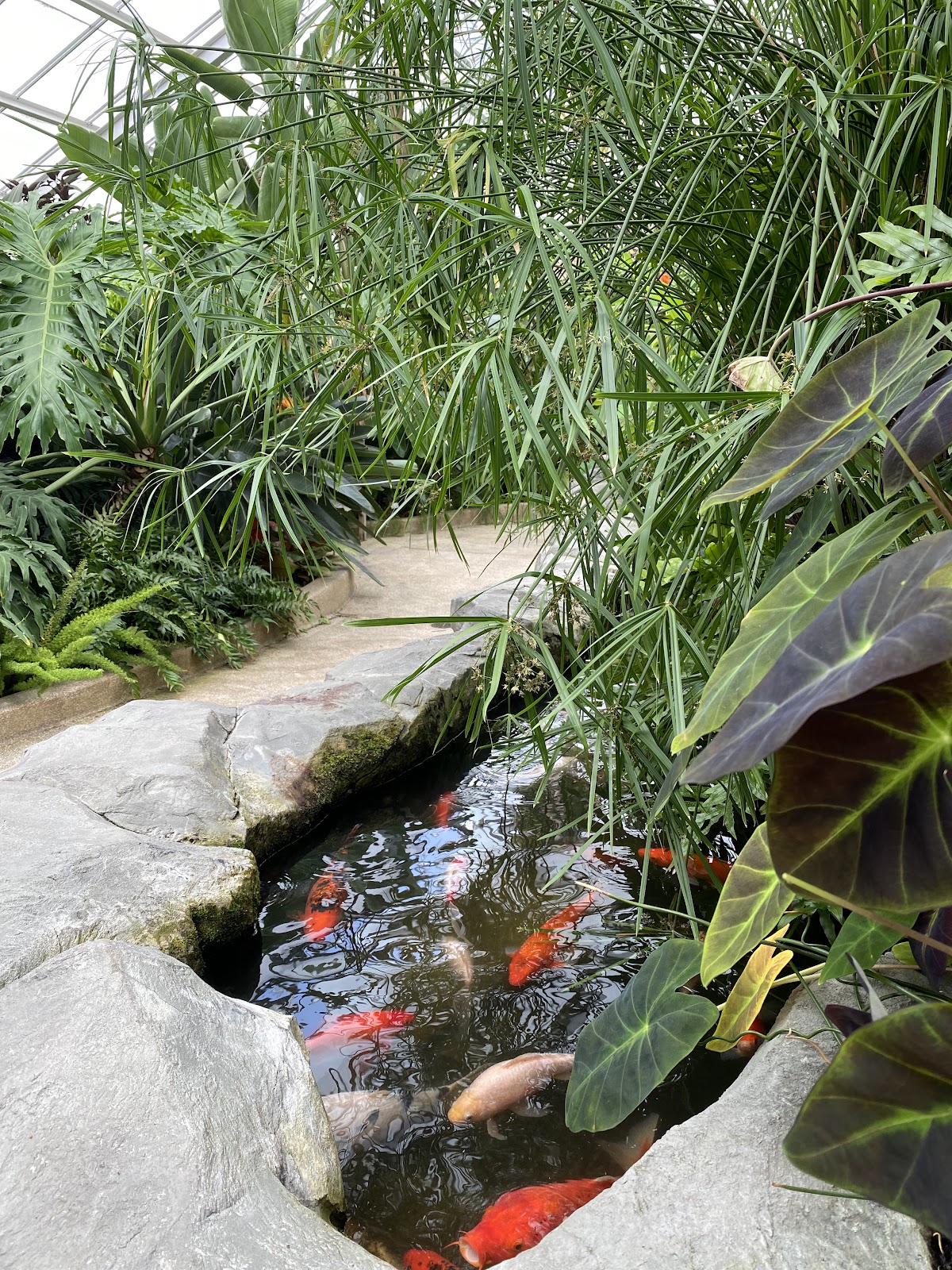
Every surface bouncing light onto a face in a conservatory is a leaf. The result is a green cast on skin that reads as unwell, and it is stronger here than in an outdoor garden because the light is bouncing around inside a closed glass box rather than escaping into open sky.
The remedy is the same as in any garden but applied more firmly: set a custom white balance in the specific house you are shooting in, shoot raw so there is room to move the tint toward magenta afterwards, and where possible keep a small warm source on faces. Even a reflector catching light from a pale path helps.
Compositionally, the other answer is separation. Standing a couple a metre or two clear of dense planting rather than pressed into it reduces the bounce considerably and lets the foliage go soft behind them, which improves the photograph on both counts.
The paths, the timeline, and Druid Hill Park
Conservatory paths are narrow because they are designed for one person examining a plant, not for a photographer backing away from a group. That has two consequences. You will work at 35mm and wider indoors, and large group photographs are not possible inside — they have to happen outdoors.
Which is fine, because Druid Hill Park is one of the largest and oldest public parks in the United States, and it is immediately outside. Mature specimen trees, open lawns and long sightlines give you high open shade for groups, lateral light for portraits and the scale that the glasshouses cannot. Late afternoon under the big trees is the best outdoor light on the site.
Timeline-wise, the sequence that works is: acclimatise the gear, take the palm house structural frames first, do the couple’s portraits in the best-lit house, keep the hottest houses brief, then go outside for groups and golden hour. And because conservatories are fully enclosed, rain is irrelevant to the indoor portion — which makes this an unusually safe booking in a wet season, provided the outdoor group plan has an alternative.
What works in your favour
- Glass on all sides gives broad, soft, lateral light — among the most flattering available anywhere
- Works in both overcast and bright conditions, unlike top-lit atriums
- A genuine 1888 Victorian glass and iron structure with real architectural character
- Separate climate houses give visually distinct backgrounds within one venue
- Druid Hill Park immediately outside for groups and golden hour; indoor portion is rain-proof
What to plan around
- Severe lens condensation moving into humid houses — gear must be acclimatised in advance
- Strong green colour cast on skin, worse than an outdoor garden because light is trapped inside
- Very narrow paths: wide lenses only, and no large groups indoors
- Warm humid houses are uncomfortable in formalwear and hard on hair and makeup
- A working botanical collection — expect firm limits on numbers and on stepping off paths
More frames from Rawlings Conservatory
Rawlings Conservatory wedding photography: common questions
Why is conservatory light so flattering?
Because glass on every side and overhead scatters light so it arrives from all directions at once. Unlike a skylight or an atrium, a lot of it comes in laterally through the walls, which fills eye sockets instead of shadowing them. You can place people almost anywhere and still get good light, which is rare.
What is the biggest practical problem?
Lens condensation. A lens brought from a cool car or an air-conditioned room into a warm humid tropical house fogs instantly, inside and out, and takes ten to twenty minutes to clear — no cloth fixes internal fogging. Acclimatise the gear in the building well before you need it.
Will the plants affect our skin tones?
Yes. Every surface bouncing light onto a face is a leaf, and because the light is trapped inside a glass box the green cast is stronger than in an outdoor garden. Set a custom white balance in the specific house, shoot raw, and stand a metre or two clear of dense planting rather than pressed into it.
Can we do large group photographs inside?
No. Conservatory paths are designed for one person looking at a plant, not for a photographer backing away from twenty people. Groups have to happen outside — which is easy here, because Druid Hill Park is immediately outside with mature trees and open lawns.
Is it a good venue if it rains?
Very. The glasshouses are fully enclosed, so rain has no effect on the indoor portion at all, and wet glass actually diffuses the light further. The only thing to plan for is an alternative for the outdoor group photographs.
More Baltimore venue guides
We are writing a photographer’s guide to every venue we would happily shoot in Baltimore. Here are three more, plus the full index:
- The Belvedere: The Technical Side of a 1903 Grand Hotel
- The American Visionary Art Museum: Who This Venue Suits
- The Baltimore Basilica: Field Notes on a Latrobe Interior
All Baltimore Wedding Venues →
Planning a wedding at Rawlings Conservatory?
Conservatories are the easiest light and the trickiest logistics we work in. Tell us your date and we will plan the acclimatisation, the group location and the golden-hour block so the humidity never costs you a frame.