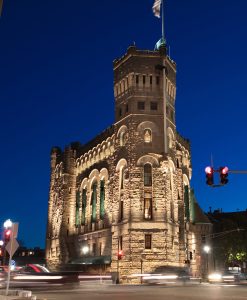
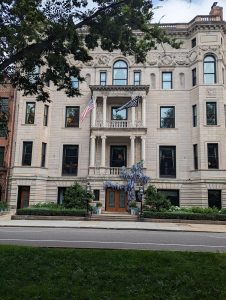
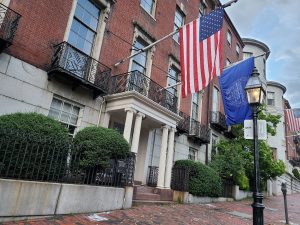
 The Somerset Club on Beacon Street: Is It Right for You?
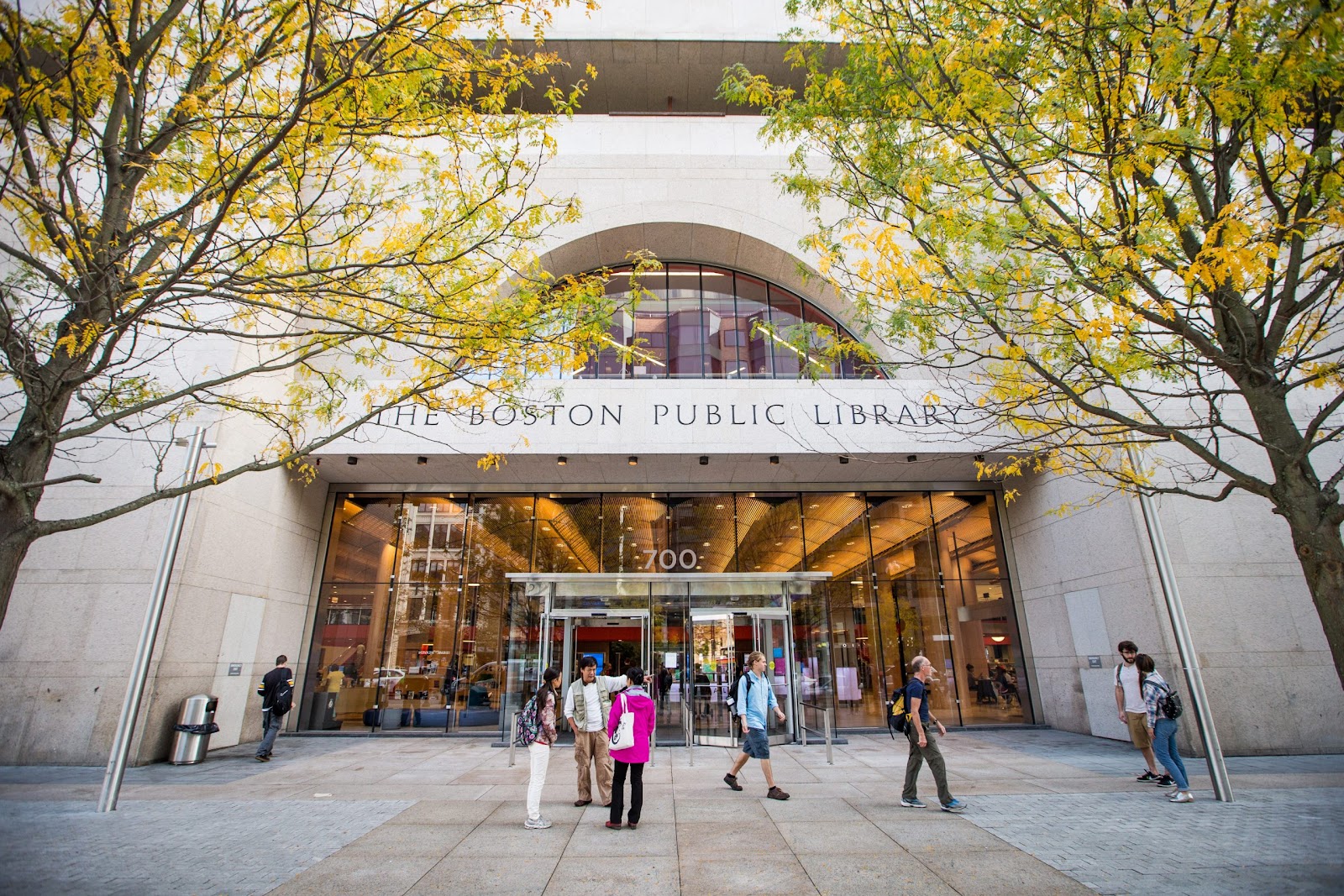
The Boston Public Library: A Walk Through a Renaissance Revival Landmark
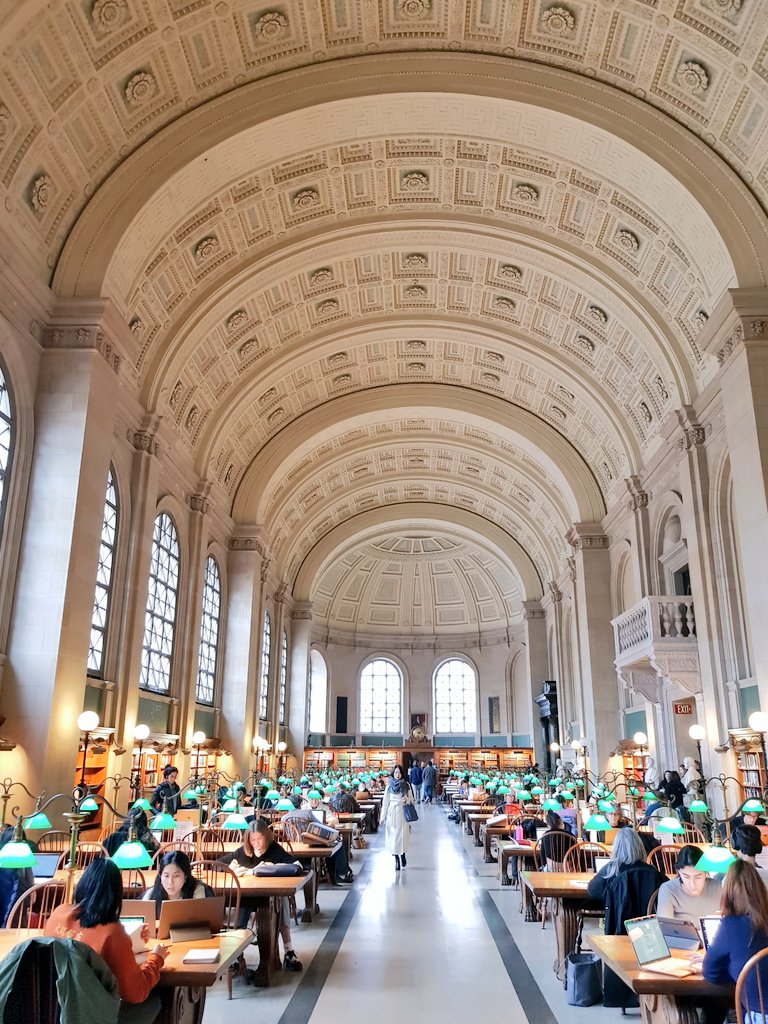
A courtyard, a stone staircase and a reading room are three different photographs in one building.
The Boston Public Library’s McKim building in Copley Square includes, among its spaces, the Courtyard — an open-air oasis, as the venue’s own material describes it, bringing a touch of nature to an urban setting.
A library of this type and period is a sequence of very distinct spaces rather than one venue, and the useful way to plan it is as a walk. The courtyard is outdoors and enclosed. The entrance hall and staircase are stone, monumental and lit from above. The reading rooms are tall, quiet and lit by tall windows down one side. Each has a different light, a different scale and a different set of rules, and treating them as variations on one room is how a day here gets photographed generically.
So this is a walk through the building. We have not photographed a wedding at the BPL; Renaissance Revival civic libraries behave consistently. Which spaces a booking includes, what may be attached to stone or brought into a reading room, and whether the courtyard is exclusive are the questions for their team — a working public library has firm answers and they should be in writing.
The Boston Public Library at a glance
| Where | Copley Square, Boston, Massachusetts |
| Character | A Renaissance Revival library with courtyard, stone stairs and reading rooms |
| The pattern | Three distinct spaces, three different lighting problems |
| The best light | The courtyard, and the reading room windows |
| Ask first | Spaces included, what may be brought in, courtyard exclusivity |
The courtyard: an enclosed outdoor room
Start in the courtyard, because it is the best light on the site and the least like anything else in Boston. An enclosed courtyard surrounded by tall arcaded building is a photographic instrument rather than a garden: the walls bounce light inward, the opening of sky above acts as the source, the arcade gives framing at human scale, and there is no view out — which means no distant clutter, no passers-by and no background to manage.
The position that works is against a wall or under the arcade rather than in the middle. The centre of a courtyard sits directly beneath the sky opening, which is flat top-down light that darkens eye sockets and marks the line under the nose. Against a wall, light arrives from one side after bouncing off the facing elevation and from above at an angle — which is a proper portrait condition.
Under the arcade is better still. An arcade has a roof above and columns to the sides with one open face, which makes it a large directional source at exactly the right size for two people. It is also rainproof, which in Boston matters more than a few months of the year.
Two things to manage. Even in the best courtyard position there is more light from above than from the front, so a reflector held low, a lifted chin, or a small source at face height should be ready. And the walls are the bounce source, so their colour fills the faces: pale stone or limestone fills neutral to slightly cool, which in an overcast Boston sky can push skin towards grey. Set a custom white balance on a face in the position being used.
In a tall courtyard the sun only reaches the floor for a limited part of the day, which is usually good news: for most of the day the whole space is in soft even light. When the sun does come in, it puts a hard patch on part of the floor with the rest in shade — a five- or six-stop difference within a few metres. Work the shaded part, use the sunlit part as a bright background element, and never straddle the line.
The stairs and the entrance hall
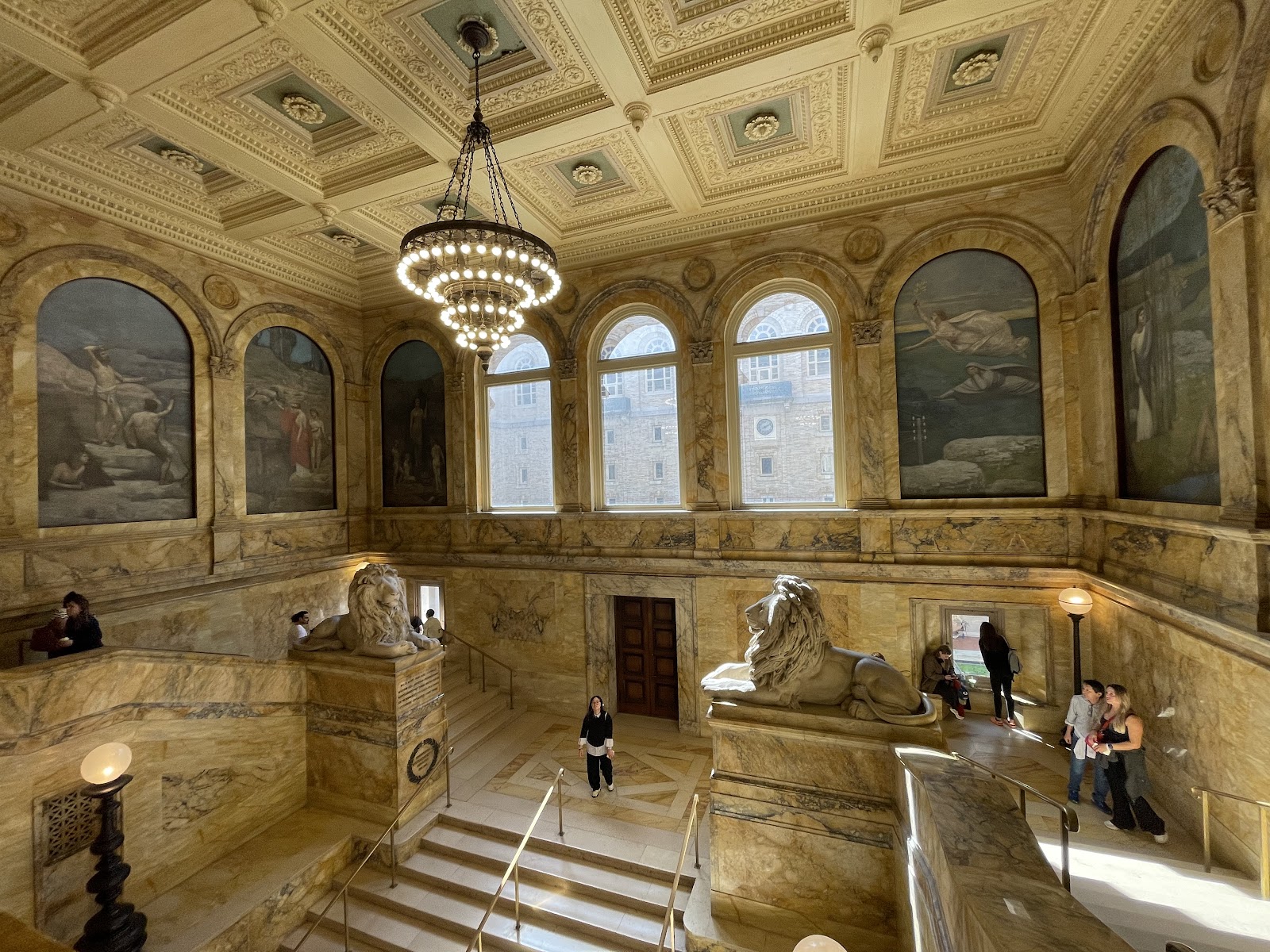
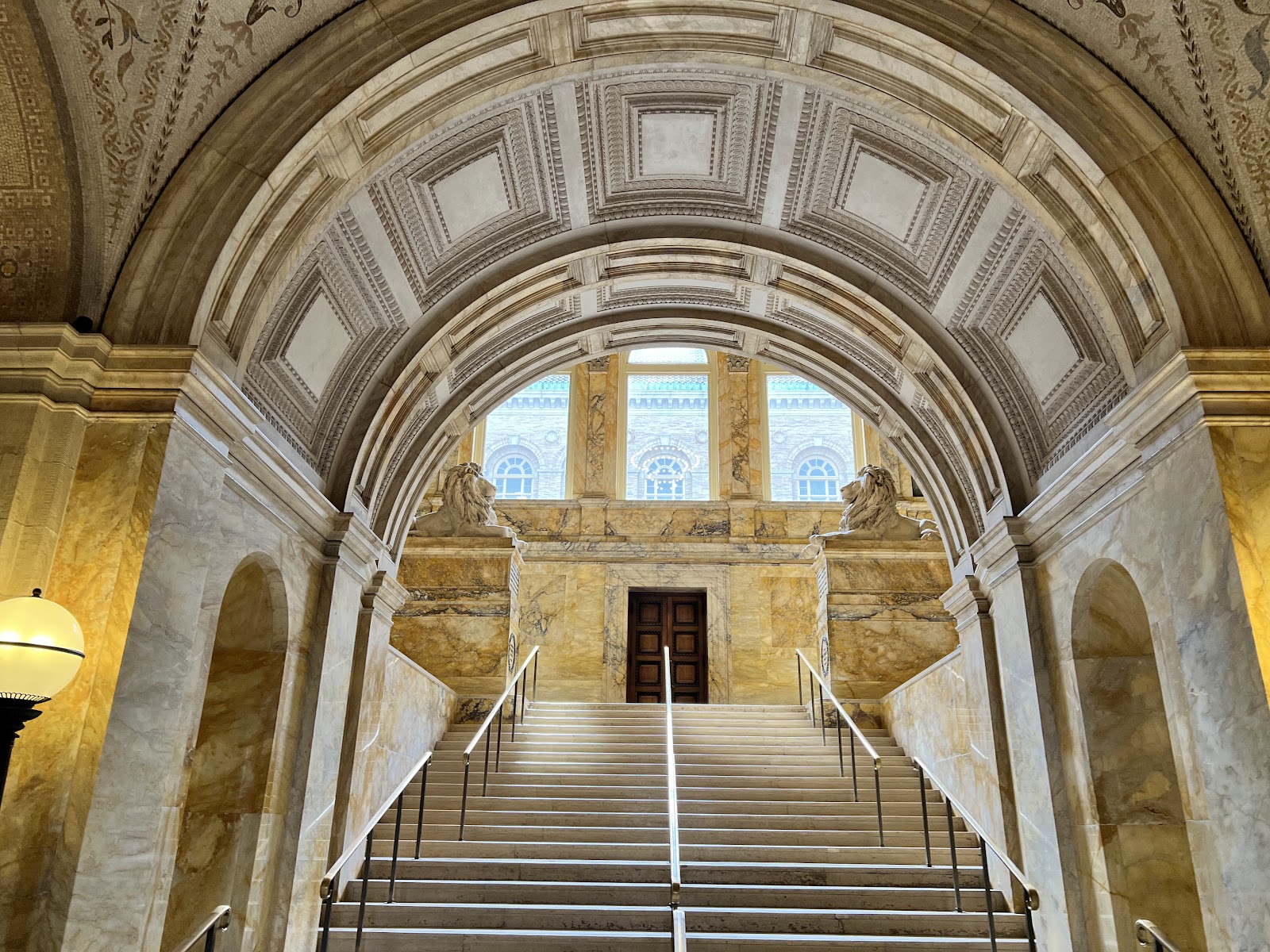
A monumental stone staircase is the most useful single feature in any civic building of this kind, and it solves the problem that grand interiors otherwise handle badly. Steps make rows automatically: a group of thirty arranges itself in tiers with everybody visible, which no flat floor will ever do. Almost every group photograph in a building like this belongs on its stairs.
Stairs also give a photographer elevation without architecture — standing above a subject or below them changes the whole relationship of figure to space, and a staircase provides both within a few paces.
Stone is the material and it behaves differently from brick or timber. It is a mid-tone that holds detail well, but it bounces neutral to cool rather than warm — so where a brick building gives a warm fill that flatters skin, a stone hall gives a cool one that can render it slightly grey. A warm-gelled source, or a warm reflector, is the correction, and it is worth carrying specifically for this kind of interior.
Polished stone adds a second consideration: it is partly specular, returning a bright reflection of any source rather than a soft scatter. Angle lights away from polished planes or place the reflection deliberately where it is wanted.
Entrance halls in this tradition are lit from above — through a skylight, a lantern or high windows — which gives soft even illumination at a usable level where position barely matters, and darkens eye sockets. The fixes are the cheap ones again: low reflector, lifted chin, small face-height source.
Pale stone also pushes a meter towards underexposure, because the whole frame is bright. Add half a stop to a stop over the metered reading and check that the stone still holds texture rather than clipping to blank cream.
Symmetry is the last consideration and it rewards precision while punishing near-misses. A frame centred on a staircase or an axial hall collapses if the camera is off centre or a degree out of level, because the verticals splay and the composition reads as careless. Level, and either centre exactly or clearly do not.
- Work under the arcade or against a wall, never the middle of the courtyard
- Fix the overhead component with a low reflector or a lifted chin
- Stone bounces cool — carry a warm gel or a warm reflector
- Put the group on the stairs; a flat floor will not make rows
- Add half a stop or more in a pale stone hall, as for snow
The reading rooms, outside, and Boston weather
A grand reading room is a tall hall with tall windows down one or both sides, and that produces the best interior portrait light in the building. Windows sized for an era before reliable artificial light are generous, and a tall window sends light further into a room and higher up a standing figure than a small one — so a subject two or three metres inside a window on the shaded elevation has a broad soft key with steep natural fall-off.
The volume removes bounce, though: a reading room ceiling is far beyond the reach of a flash, so the substitutes are a pale wall at a sensible distance, a reflector, or direct modified light. Test with one frame on arrival.
A working library imposes real constraints and they are not adjustable. There may be readers present; noise, movement, stands and lighting may all be restricted; and access may be limited to particular hours. Establish what is permitted, then work inside it without testing the boundaries.
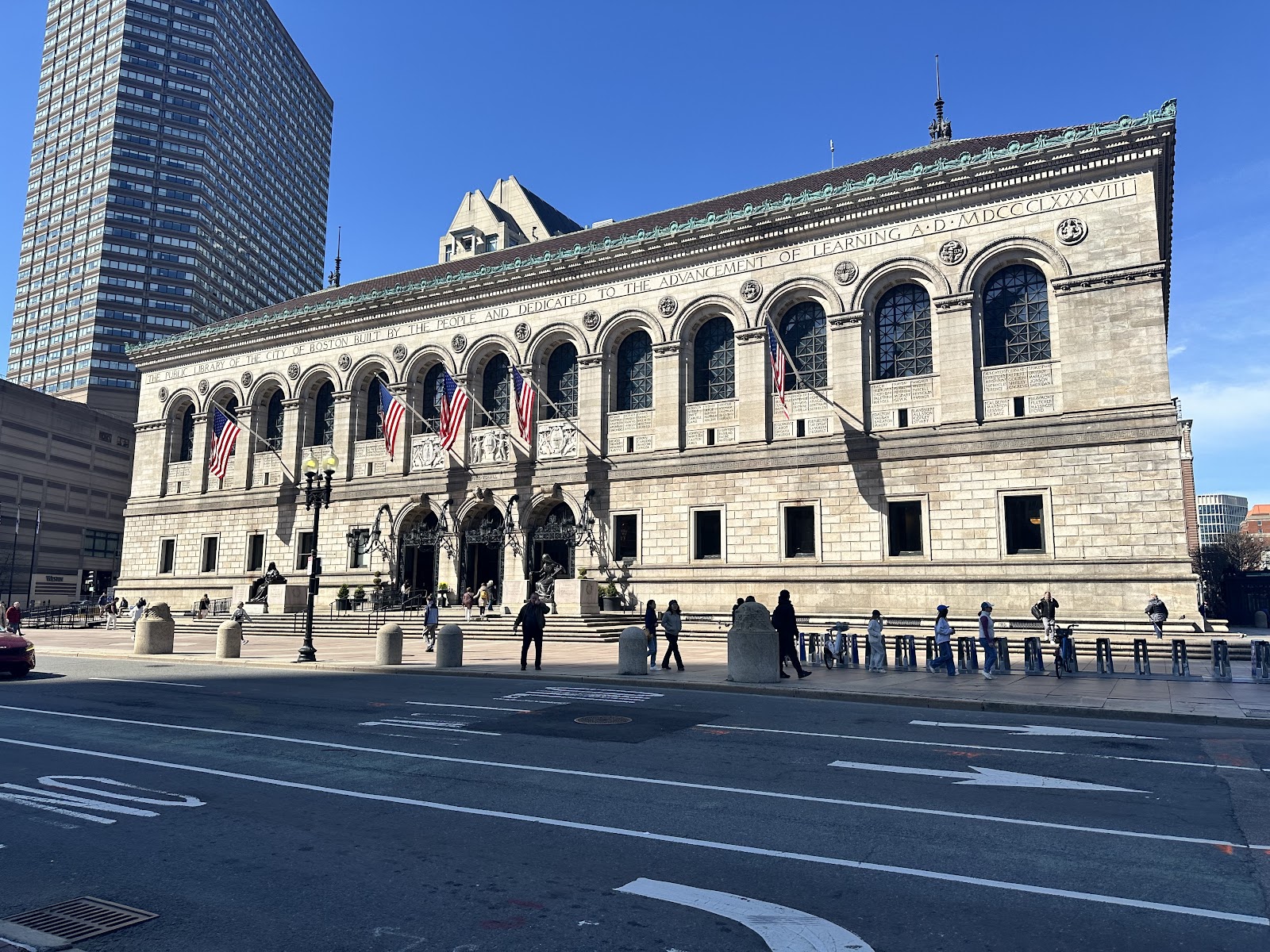
Outside, Copley Square and Back Bay are exceptional material. Back Bay is one of the few gridded parts of Boston, which means low sun reaches street level and runs the length of a street rather than being lost in an irregular plan — and the brownstone rowhouses that line those streets bounce warm, which is the useful complement to the library’s cool stone.
That brownstone-versus-granite distinction is worth carrying around Boston generally: brownstone and brick fill warm and flatter skin, granite and limestone fill cool and can grey it. Which side of a street you stand on changes the colour of a face here more than in most cities.
New England weather sets the seasons apart sharply. Summer is humid but rarely extreme, and the long June days put sunset late enough that the golden hour arrives after a reception has started. Autumn brings the region’s foliage, which peaks in the middle of October and is a genuine photographic asset rather than a cliché — warm backlit colour that no other season provides. Winter days are very short, with sunset in the middle of the afternoon in December, which compresses the entire outdoor window into a couple of hours and makes an early, protected block essential.
Snow is the winter compensation and it is the best natural fill there is, lifting exactly the shadows a low sun carves — while fooling a meter by about two stops, so add them. And coastal weather means nor’easters and spring fog are both real possibilities: fog in particular is worth going out in, because it separates near from far and turns Copley Square’s towers into flat shapes behind a couple.
More frames from The Boston Public Library
The Boston Public Library wedding photography: common questions
Why is the courtyard the best light?
Because it is an enclosed instrument rather than a garden: walls bouncing inward, sky above as the source, an arcade for framing, and no view out — so no clutter and no background to manage.
Where should you stand in it?
Under the arcade, or against a wall. The middle sits directly beneath the sky opening and gives flat top-down light. The arcade has a roof and columns with one open face, which makes it a large directional source — and it is rainproof.
How does stone differ from brick?
It bounces neutral to cool rather than warm, so it can render skin slightly grey where brick flatters it. A warm gel or a warm reflector is the correction, and it is worth carrying for stone interiors specifically.
Where should a group photograph happen?
On the monumental stairs. Steps make rows automatically, so thirty people arrange themselves with everybody visible — which no flat floor will do.
What is the best interior portrait light?
A reading room window on the shaded elevation, two or three metres in. Tall windows from an era before reliable artificial light send light deep into a room and high up a standing figure.
What is the Boston colour rule outside?
Brownstone and brick fill warm and flatter skin; granite and limestone fill cool and can grey it. Which side of a street you stand on changes the colour of a face here more than in most cities.
More Boston, MA venue guides
We are writing a photographer’s guide to every venue we would happily shoot in Boston, MA. Here are three more, plus the full index:
- The Envoy Hotel, Boston: The One Decision That Governs Everything
- The Fairmont Battery Wharf, Boston: One Frame and How It Is Made
- The Four Seasons Boston: One Frame and How It Is Made
All Boston, MA Wedding Venues →
Planning a wedding at The Boston Public Library?
Three spaces, three plans, one running order. Tell us your date.