 The Ozark Mountain Lodge, Eureka Springs: The Problem, and Four Ways Out
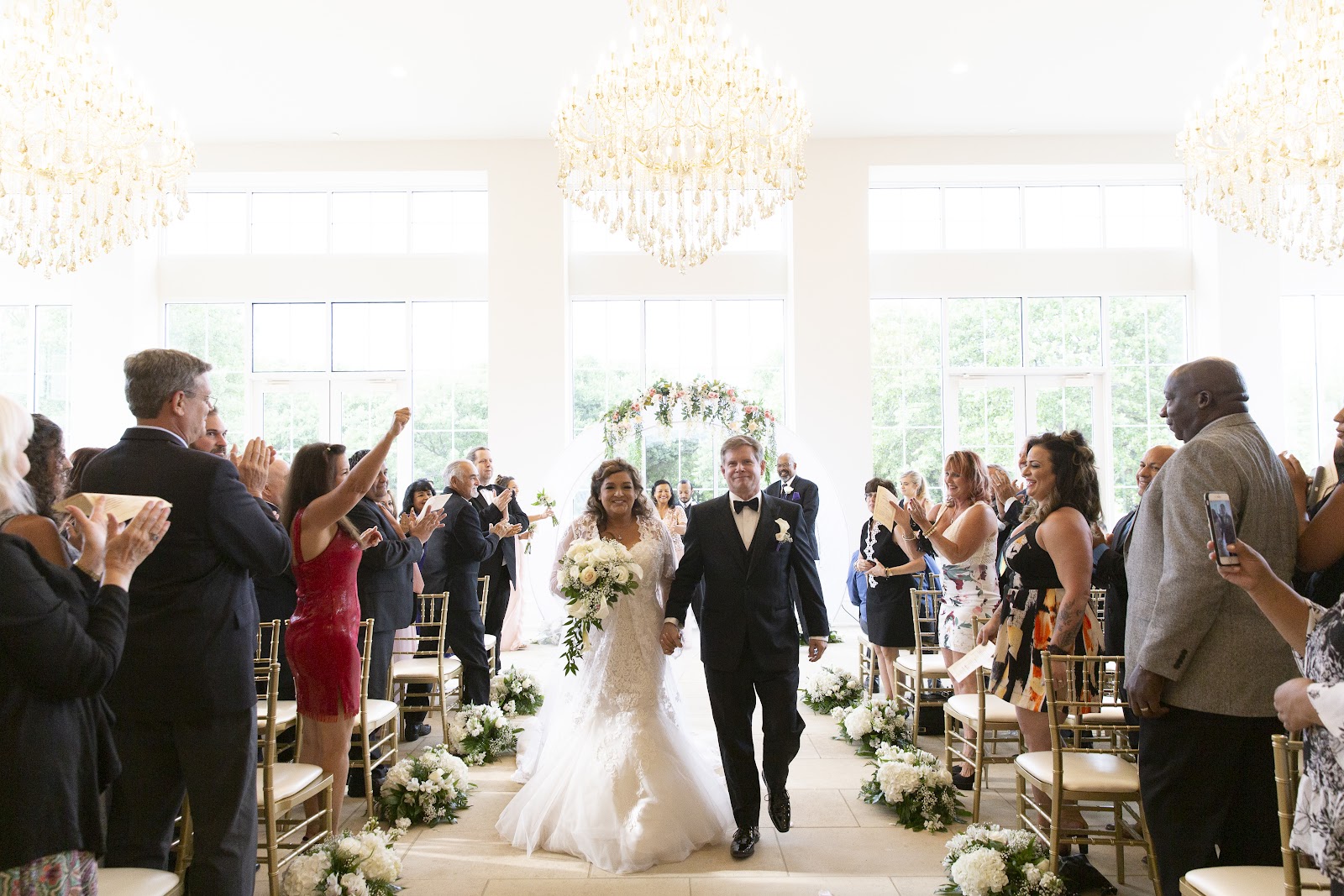
The Venue at Hickory Creek, Alexander: Field Notes, Problem and Solution
Hickory, pine and a creek. Each one behaves differently in the same light.
These are field notes rather than a description, organised as problems and what solves them, because the useful information about a rural Arkansas venue is practical rather than atmospheric.
The setting first. Alexander sits south-west of Little Rock, in the transitional country between the Arkansas River valley and the Ouachita foothills — gentle rolling ground, mixed hickory-oak and pine forest, and small watercourses cutting through it.
The species mix is worth taking seriously, because on a property like this it determines where a portrait can be made and what colour the light will be. Three types matter and they behave quite differently.
Hickory and oak give a closed hardwood canopy in summer: soft light two to four stops down, with a strong green cast because the light has been transmitted through broad leaves several times. Useful at the edge, difficult deep inside.
Shortleaf and loblolly pine give a higher, more open canopy: shade only a stop or two down, much less green because more of the light arrives from open sky, and tall straight reddish-brown trunks that make a genuinely good background field.
Eastern redcedar — a juniper rather than a true cedar — is the densest and darkest of the three. It blocks almost all direct light, which makes its edge the best free separation available outdoors, and at three stops down it reads near-black rather than green.
Knowing which of those three you are standing in is the practical difference between a good frame and a wasted one, and it takes five minutes to establish on arrival.
Alexander sits at about thirty-four and a half degrees north. The June noon sun reaches around seventy-nine degrees, the December noon sun about thirty-two, days run from about ten hours to fourteen hours ten, and civil twilight is around twenty-seven minutes.
We have not photographed a wedding at this venue. Which spaces and grounds are included, what access there is to the creek, what covered alternatives exist and what the permitted hours are, are questions for their team.
The Venue at Hickory Creek at a glance
| Where | A creekside venue at Alexander, south-west of Little Rock |
| Three canopies | Hardwood (dim and green), pine (brighter and neutral), cedar (near-black) |
| The problem | A high summer sun, green as the dominant colour, and directionless shade |
| The solutions | Canopy edges by species, the creek, camera height, and the calendar |
| Ask first | Included grounds, creek access, covered alternatives, hours |
Four problems and what solves them
Problem one: no cover on open ground under a high sun. At seventy-nine degrees of June elevation the sun puts eyes in shadow and foreheads in light, and a field or lawn has nothing to modify it. Between roughly ten and four in the warmer months a face on open ground here is not a difficult exposure but a poor one.
The solution is the margins, taken in order of usefulness. Redcedar first: a subject standing a metre inside a redcedar margin, facing out toward the lit ground, has soft directional light in front and three or four stops of near-blackness behind. Pine second: brighter shade, far less green, and a good dark trunk field. Hardwood third, and only at the edge — two metres inside, facing out, not four.
The boundary line itself, where bright open ground meets dark cedar or pine, is the best single compositional element on this kind of property: a clean division that a subject can be placed on.
Problem two: the shade has no direction. Light arriving through a closed canopy comes from the whole hemisphere above, filtered — which is soft and directionless. Soft is good; directionless is not, because a face lit from everywhere at once has no modelling: the nose casts no shadow and the cheekbone does not read.
Two solutions. The canopy edge, as above, because it converts overhead light into side light by putting the open sky in front of the subject rather than above them. And a source of your own, which in a wood needs far less output than instinct suggests because the ambient is already two to four stops down.
One light at forty-five degrees and slightly above eye level, close enough to fall off before it reaches the trees behind, restores the direction the canopy removed. Warm-gel it and set the white balance for the ambient rather than for the flash, and the same source also overrides the transmitted green on skin while leaving the foliage the colour it is. That is the standard woodland recipe and it works every time.
Problem three: the green. From May to October everything is green — grass, canopy, distance — and green is the least useful background colour there is, because skin sits close to it in luminance and complementary to it in hue.
Three solutions. Lower the camera so everything behind the subjects is sky, which works anywhere on the property. Use the non-green surfaces: pine trunks, weathered timber, gravel, and the dark cedar. And use the calendar, which removes the problem outright between mid-November and late March.
Problem four: dapple, which is worse than any of the above and worth avoiding rather than solving. Where a partial canopy lets hard sunlight through, the ground is covered in patches with a four or five stop range between patch and shade, and a face half in one is unrecoverable.
There is no fix; there is only avoidance. That means either full open shade at a margin, full sun with the sun behind the camera, or full overcast. The middle ground — standing a party under a scattered canopy on a bright afternoon — is the single commonest way a rural wedding set goes wrong, and it is entirely preventable by moving twenty metres.
Further notes from the field
On the creek. A watercourse in a wood is a linear gap in the canopy, which makes it both a light source and an opening — and a subject standing beside it, facing along it or out over it, is lit from the side rather than from above. That single positional change is the most useful thing a creekside property offers.
The water also fills from below: a surface returns light upward, filling under brows and chins, which is precisely where a high sun or a high canopy leaves people dark. And it is a mirror more often than a lake is, because the surrounding canopy blocks the wind that breaks a lake surface by mid-morning.
The reflection rule applies: a reflection is about a stop darker than what it reflects, so compose so the reflection is of the far bank’s dark trees rather than of the open sky, and the two sit within a stop of each other and need nothing.
The colour is worth knowing. A central Arkansas creek carries sediment and tannin from leaf litter, which makes it brown-green rather than clear — so it reflects the sky rather than showing its own colour, and the blue in any water frame comes from above rather than from the water.
And the exposure caution: a frame containing bright water and bright sky reads brighter than it is and the camera underexposes by up to a stop. Compensate deliberately and check on skin.
On the gradient. Rolling ground means a rise is usually available, and a rise is a disproportionate resource. From below the subjects they stand against open sky with no horizon behind them — the cleanest background at any venue in any weather, and the fastest way to remove buildings, vehicles and guests from a frame, because everything at or below their level falls out of it. From above them, the country fills the space behind.
On groups. Rolling ground gives level benches for arrangement and gradient for variety. Everyone in the same light is the requirement — full open shade, full overcast, or full sun with the sun behind the camera — and on a slope, the flattest bench with ranks arranged across it rather than up it keeps heads at the same height.
Or arrange the group up the slope with the camera downhill, which makes every face visible without anyone standing on anything.
On the low light. Open ground at the ends of the day is the best version of itself: a low sun rakes across grass rather than falling onto it, which puts relief into every rise and hollow and shifts the grass from a flat mid-green toward gold, which substantially reduces the colour problem.
Civil twilight here is around twenty-seven minutes, and a wooded property takes part of it early because the western treeline acts as a ridge. The place to be at the end of the day is wherever the canopy opens — the creek line, an open field, a clearing — and that is worth deciding in advance rather than walking to find.
The sequence that fits: the couple with the sun behind them, exposed for the sky and lifted by a close warm-gelled source; the couple with the sun behind the camera, which needs nothing; a low-camera frame against the deeper sky opposite the sun; and one silhouette against the treeline. Four setups in under half an hour, decided in advance.
On buildings. Where the venue has a barn or unpainted timber, that is both the best exterior background and the best interior light. Weathered timber is dark, textured and low in saturation, which separates a white dress where a pale wall cannot, and it rakes in low light — so the building and the landscape want the same hour.
Inside, a barn is a dark volume with a few bright openings, which is what a studio is: depth back from a large open door is the whole lighting control, and three metres in gives four or five stops of fall-off. Meter on skin, never on the scene, and set a custom white balance on a face in position.
Three practical matters. Chiggers and ticks are a genuine consideration in Arkansas in tall grass and at woodland edges from about May into September. Mosquitoes are a real consideration near a creek at dusk from May into October. And Arkansas sits in the secondary severe-weather corridor of the southeastern United States, with peaks in April–May and a smaller one in November, so a named indoor alternative for anything outdoors in those months is a requirement rather than a courtesy.
- Cedar first, pine second, hardwood third — and hardwood only at the edge
- Warm-gelled source at a stop over ambient fixes direction and skin colour at once
- Avoid dapple entirely: full shade, full sun behind camera, or full overcast
- The creek converts overhead light into side light
- Be at a canopy opening for twilight, not under trees
The central Arkansas year
Four real seasons with long shoulders, and a wooded property whose canopy state changes it more than the weather does.
Winter is the best season here and it is the reverse of what most people assume. With the hardwoods bare, light reaches the ground everywhere, the green cast disappears entirely, the level rises by two or three stops, and the light acquires direction because it arrives through bare branches rather than through leaves.
The pine stays green, which in a bare landscape makes it the one dark solid mass rather than one green thing among many — and that is more useful, not less. The cedar stays near-black. And what replaces the hardwood green is brown leaf litter, grey trunks and open sky, which is a palette of neutrals that treats skin and white fabric far better than green does.
The December noon sun at around thirty-two degrees never rises high enough to flatten anything, which means the whole short day models and there is no bad hour in an Arkansas winter day. At ten hours the day is meaningfully longer than a northern winter one. The bare-canopy window runs from about mid-November to late March — four months rather than a fortnight.
Snow occurs but rarely lasts. The characteristic Arkansas winter event is freezing rain, which glazes every twig and pine needle in clear ice: spectacular for about a day, hazardous for longer, and impossible to plan for.
Spring is the region’s best flowering season and it is early. Leaf-out runs through late March, and the two weeks before the canopy closes are the best fortnight of the year on a wooded property — because the understory is lit directly rather than filtered.
Redbud is the one to plan for: magenta flowers on bare wood before its own leaves emerge and before the canopy closes above it, which means full sun on a saturated colour in a wood that is still open. Dogwood follows, flowering white beneath a half-closed canopy, and dogwood under open pine is the classic central Arkansas spring frame — white flowers in a shaft of light with dark pine trunks behind.
The cost is the severe-weather peak in April and May, which in this part of the state is serious rather than nominal.
Summer is the season the first half of this page is about: closed hardwood canopy, directionless green light, dapple wherever the sun finds a gap, and a seventy-nine-degree noon sun on any open ground. Dew points in the low to mid twenties Celsius put haze in the air, which at close range under canopy costs almost nothing.
The creek is summer’s compensation — the coolest and best-lit place on the property. Mosquitoes at dusk from May into October and chiggers and ticks from May through September are the costs. Days run to fourteen hours ten at the solstice, though a wooded property takes the last light early.
Autumn is the other strong season and it is late. Central Arkansas turns from the last week of October into the first half of November — three to five weeks behind New England — and holds for a genuine three weeks because oak colours and drops slowly.
Hickory is the star of an Arkansas autumn and it is worth naming: it turns a clear strong gold, earlier and more reliably than the oaks around it, and against dark evergreen pine that gold is the best background combination the property has all year. Oak russet, sweetgum purple-red and sassafras orange fill in around it.
By late November the hardwoods are down, the pine and cedar are the only green, and the four-month bare-wood season has begun.
More frames from The Venue at Hickory Creek
The Venue at Hickory Creek wedding photography: common questions
Which canopy should I look for?
Redcedar first — it blocks almost everything and reads near-black. Pine second: brighter shade, much less green, good dark trunks. Hardwood third, and only at the edge.
Why does closed canopy light look wrong?
It arrives from the whole hemisphere above, so it is soft but has no direction — the nose casts no shadow and the cheekbone does not read.
What is the standard woodland recipe?
One warm-gelled source at forty-five degrees, a stop over the ambient, with white balance set for the ambient. It restores direction and fixes the green on skin at once.
What should I avoid completely?
Dapple. Partial canopy in direct sun gives a four or five stop range across a face, and it is the commonest way a rural wedding set goes wrong.
What does the creek give me?
Side light. A watercourse is a linear gap in the canopy, so a subject beside it is lit from one side rather than from overhead.
When is the property at its best?
Late March to mid-April, before the canopy closes; the first week of November for gold hickory against dark pine; and the whole bare-canopy season from mid-November to late March.
More Arkansas venue guides
We are writing a photographer’s guide to every venue we would happily shoot in Arkansas. Here are three more, plus the full index:
- The Venue at South Spring, Malvern: What It Suits and What It Does Not
- The Venue at The Farm, Judsonia: The One Decision That Governs Everything
- The Victoria Venue, Fort Smith: How the Light Moves
Planning a wedding at The Venue at Hickory Creek?
Cedar, pine, hickory and water. Tell us your date and we will use them in order.