 The Somerset Club on Beacon Street: Is It Right for You?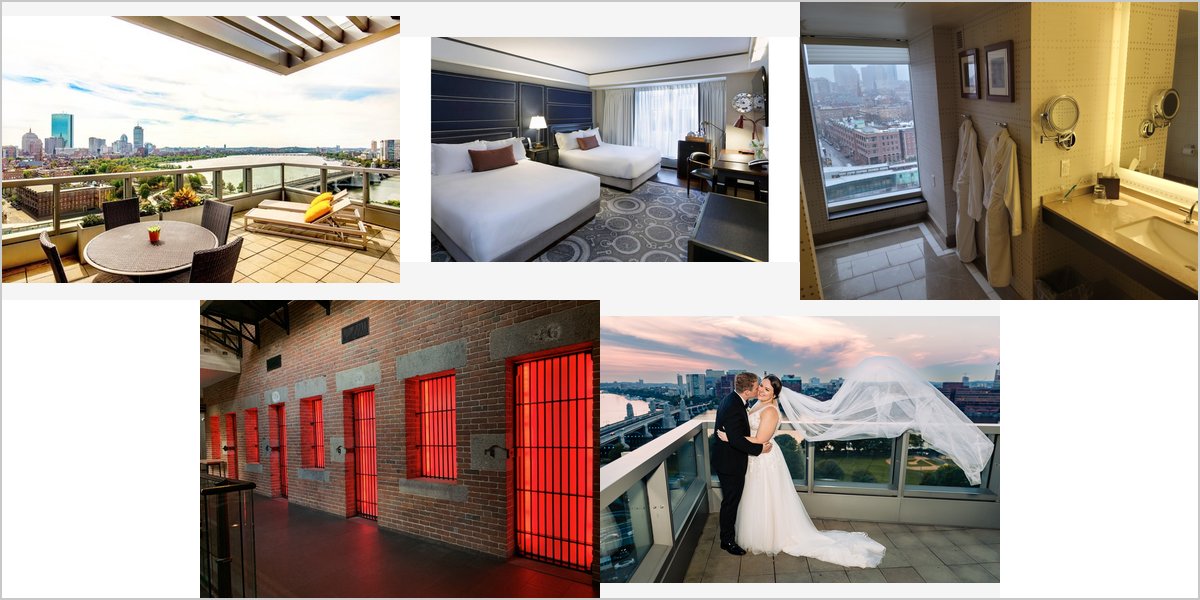
May 26, 2026
The Liberty Hotel: Who This Venue Suits
A ninety-foot granite atrium with catwalks is the most dramatic hotel interior in Boston. Whether that is right for you depends on how you feel about hard light and hard surfaces.
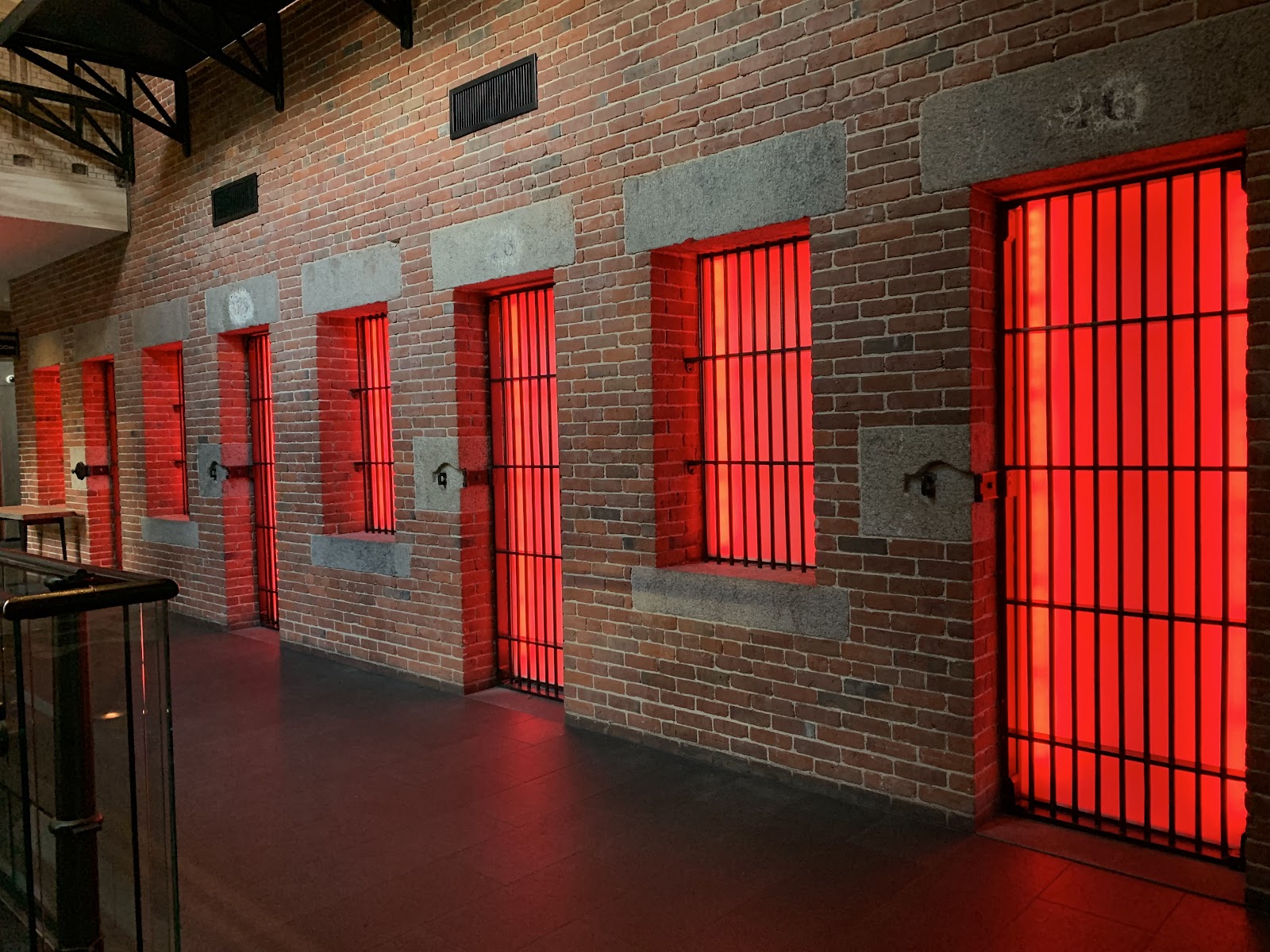
The Liberty Hotel occupies the former Charles Street Jail, built in 1851 to a design by Gridley James Fox Bryant and the Reverend Louis Dwight, and converted to a hotel in 2007. The conversion kept the central rotunda: a granite-walled atrium rising roughly ninety feet, with the original catwalks and ironwork intact and daylight entering high above.
It is genuinely unlike anything else in the city, and that cuts both ways. The atrium gives you verticality, scale and industrial texture — granite, iron, brick — of a kind no purpose-built hotel possesses. It also gives you hard grey surfaces, top-down light and a fundamentally austere character that suits some weddings extremely well and fights others.
This is a fit assessment rather than a technical manual. We have not photographed a wedding here; the architecture and its optical consequences are matters of record, while room availability, access to the catwalk levels and hotel policy are for their events team. Ask specifically about the upper levels, because that is where the best frames are.
The Liberty Hotel at a glance
| Where | Charles Street, Beacon Hill, Boston — the former Charles Street Jail |
| Built / converted | 1851 as a jail; converted to a hotel in 2007 |
| Centrepiece | A granite rotunda roughly ninety feet high with original catwalks and ironwork |
| Light | High daylight falling down the atrium; hard grey granite everywhere |
| Ask about | Access to the catwalk and upper levels — the strongest angles are up there |
What the atrium actually does for photographs
Height is the rarest commodity in interior photography, and ninety feet of it is extraordinary. It lets you do two things almost no other venue allows: shoot upward so the architecture towers over the couple, and shoot downward from a catwalk so they appear small within a vast geometric space. Both are genuinely striking frames, and both identify the venue instantly.
The light entering high above behaves like courtyard light — soft in quality, strongly top-down in direction, and dependent on the weather rather than the hour. On a bright day it comes down as a shaft, which against grey granite is dramatic and high-contrast. On an overcast Boston day it fills the space evenly and gently, which is easier and arguably more flattering.
The granite is the complicating factor. Stone this colour is neutral and fairly dark, so it absorbs more light than it returns, and it gives almost no warm bounce onto skin. Faces in the atrium tend to look cool and slightly hard unless you add something — which is why we would always bring a warm-gelled fill here, even at midday.
Who this venue suits
Four kinds of couple do very well at a venue like this.
- Couples who want drama over prettiness. If your reference images are architectural, graphic and high-contrast rather than soft and romantic, this building will give you exactly that.
- Anyone booking in the wet or cold months. The atrium is interior daylight — weather-proof, windless, and unaffected by a four-thirty winter sunset.
- Couples with a design-led aesthetic. Granite, iron and brick are a strong, coherent palette, and they suit modern styling, sharp tailoring and restrained florals better than heavy traditional decor.
- Those who value a landmark. A converted 1851 jail is a story, and the photographs carry it without explanation.
Who should look elsewhere
Equally specific, because this is a venue people book on photographs and occasionally regret.
- Couples wanting warm, soft, classic wedding imagery. Grey granite and top light are neither warm nor soft. A Back Bay townhouse club or a gilded grand hotel will deliver that far more easily.
- Anyone who wants intimacy. A ninety-foot rotunda is magnificent and not remotely intimate. Small guest lists can feel lost in it.
- Couples who dislike hard shadows. On a bright day, top light against stone produces strong contrast. It is a look, but it is a look you should want.
- Anyone unwilling to ask about upper-level access. The catwalk angles are most of the venue’s photographic value. Without them you have a tall grey room.
The practical work: fill light, and the river outside
Two things make the difference between a good and a mediocre gallery here. The first is fill. Because granite gives back so little and the light comes straight down, we would use a warm-gelled light source on faces throughout — not to overpower the atrium, just to put some warmth and some direction into skin that the building refuses to supply. A reflector works in a pinch; a small gelled flash works better.
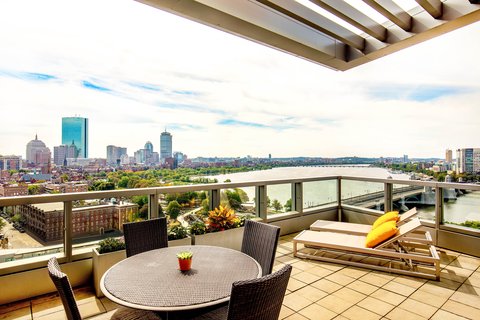
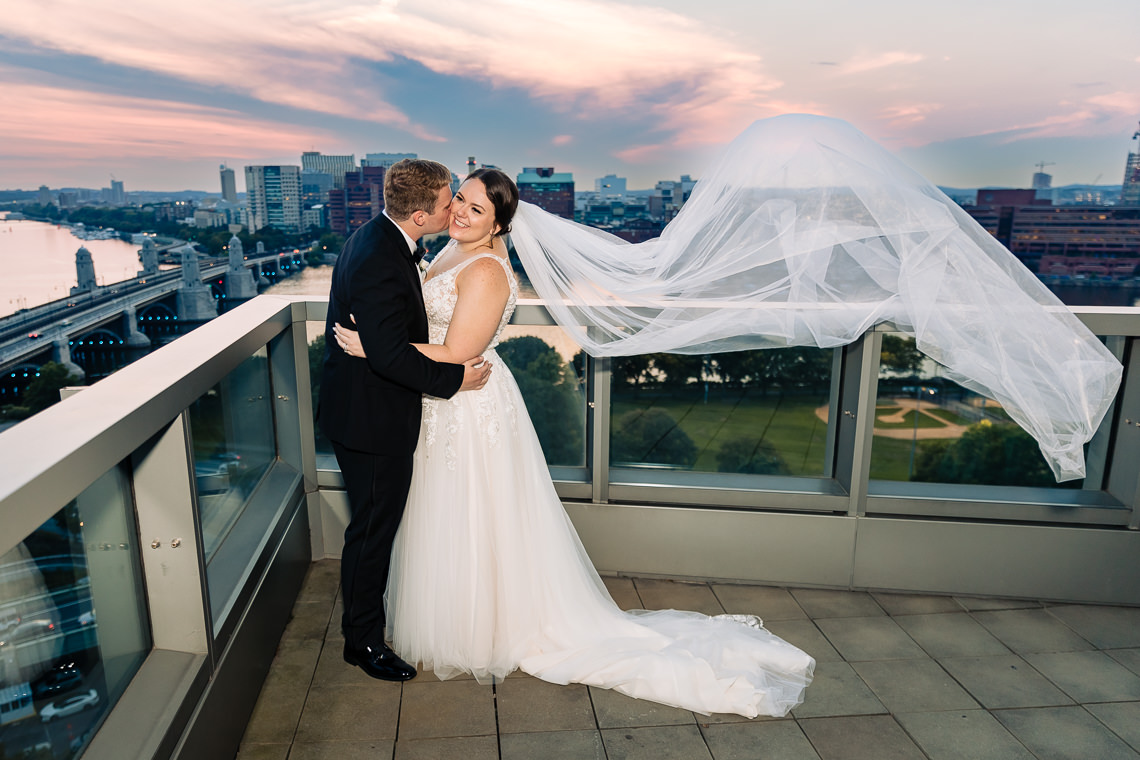
The second is going outside. The hotel sits near the Charles River and the Esplanade, with the Longfellow Bridge and the river basin close by, and Beacon Hill’s brick streets immediately behind. That gives you warm evening light over water and traditional brick warmth within a few minutes — the exact qualities the atrium lacks. A gallery that uses both the rotunda and the river reads as varied; one that stays inside reads as monochrome.
Timing note: the river faces roughly west from this side of the city, so late afternoon and sunset over the water are excellent. Put fifteen minutes there and the balance of the whole set improves.
What works in your favour
- A ninety-foot granite rotunda with original catwalks — unmatched verticality and scale in Boston
- Upward and downward angles that almost no other venue can offer
- Interior daylight, so it is weather-proof and indifferent to winter sunsets
- A coherent granite, iron and brick palette that suits modern, design-led styling
- Charles River, the Esplanade and Beacon Hill’s brick streets all within minutes
What to plan around
- Grey granite returns little light and no warmth — faces need added fill to avoid looking cold and hard
- Strongly top-down light produces shadowed eye sockets unless corrected
- On bright days, contrast against stone is severe; it is a deliberate look, not a neutral one
- The scale makes small guest lists feel sparse and offers little intimacy
- Most of the photographic value depends on upper-level access — confirm it before booking
More frames from The Liberty Hotel
The Liberty Hotel wedding photography: common questions
What makes the Liberty Hotel unusual for wedding photographs?
The rotunda of the former Charles Street Jail — roughly ninety feet high, granite-walled, with the original catwalks intact. It allows you to shoot steeply upward so the architecture towers over the couple, and downward from a catwalk so they read as small figures in a vast geometric space. Very few venues offer either angle.
Is the atrium light flattering?
Soft in quality but difficult in direction and colour. It comes almost straight down, which shadows eye sockets, and the grey granite returns very little light and no warmth at all. We would use a warm-gelled fill on faces throughout, even in the middle of the day, simply to put some warmth and direction into the skin.
Who should not book this venue?
Couples wanting warm, soft, classic wedding imagery, and couples wanting intimacy. Granite and top light are neither warm nor soft, and a ninety-foot rotunda makes a small guest list feel lost. A Back Bay townhouse club or a gilded grand hotel serves that brief far better.
What should we confirm before booking?
Access to the catwalk and upper levels. That is where most of the venue’s photographic value sits — without those angles you have a tall grey room rather than a landmark interior. Get it confirmed rather than assumed.
Where are the outdoor portraits?
The Charles River and the Esplanade, with the Longfellow Bridge nearby, plus Beacon Hill’s brick streets behind the hotel. The river faces roughly west from this side, so late afternoon and sunset over the water are excellent — and they supply exactly the warmth the granite atrium does not.
More Boston venue guides
We are writing a photographer’s guide to every venue we would happily shoot in Boston. Here are three more, plus the full index:
- The Somerset Club on Beacon Street: Is It Right for You?
- The Cyclorama: Field Notes on a Domed Room
- Trinity Church, Copley Square: A Photographer Answers Your Questions
Planning a wedding at The Liberty Hotel?
The Liberty is a venue worth booking deliberately rather than on one photograph. Tell us your date and what look you are after, and we will tell you honestly whether the rotunda will give it to you — and how we would balance it with the river.