 Hotel Saint Louis: A Walk-Through of an 1893 Union Trust Building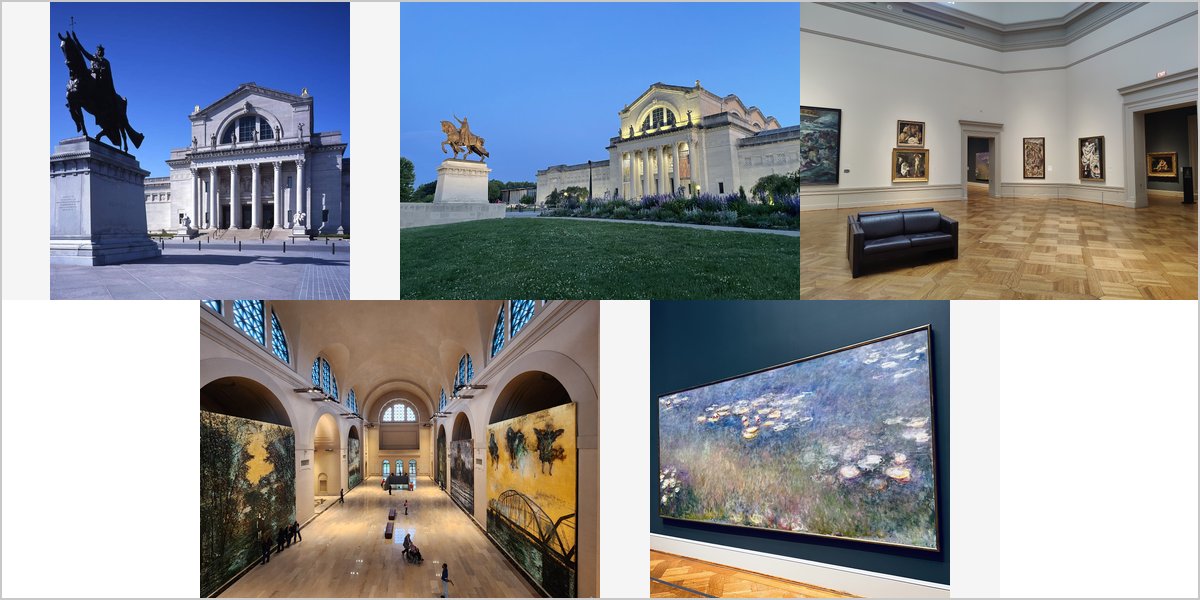
May 26, 2026
The Saint Louis Art Museum: Building the Shot List
Two buildings a century apart, on a hill in a great park. The contrast between them is the shot list, and Art Hill is the frame everyone remembers.
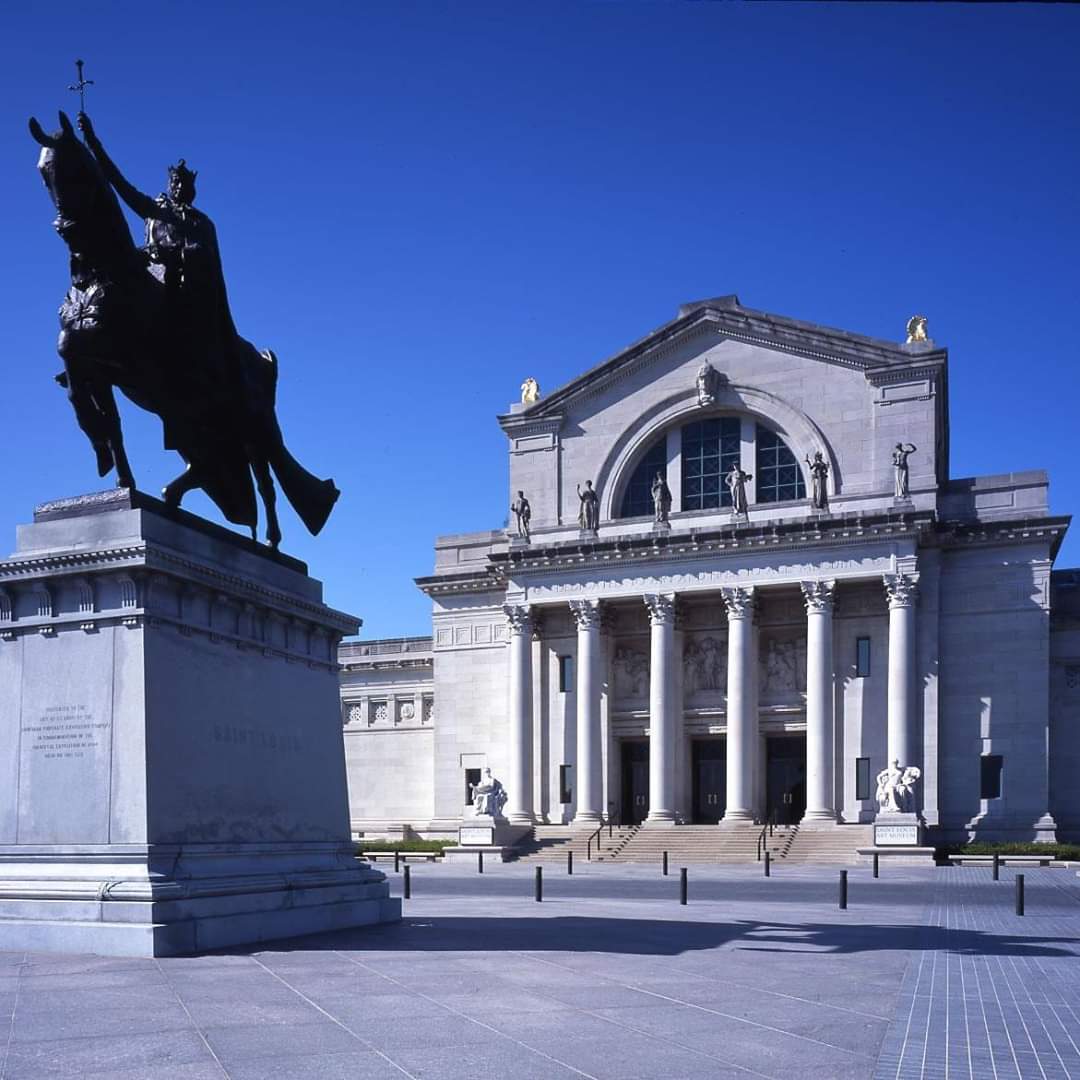
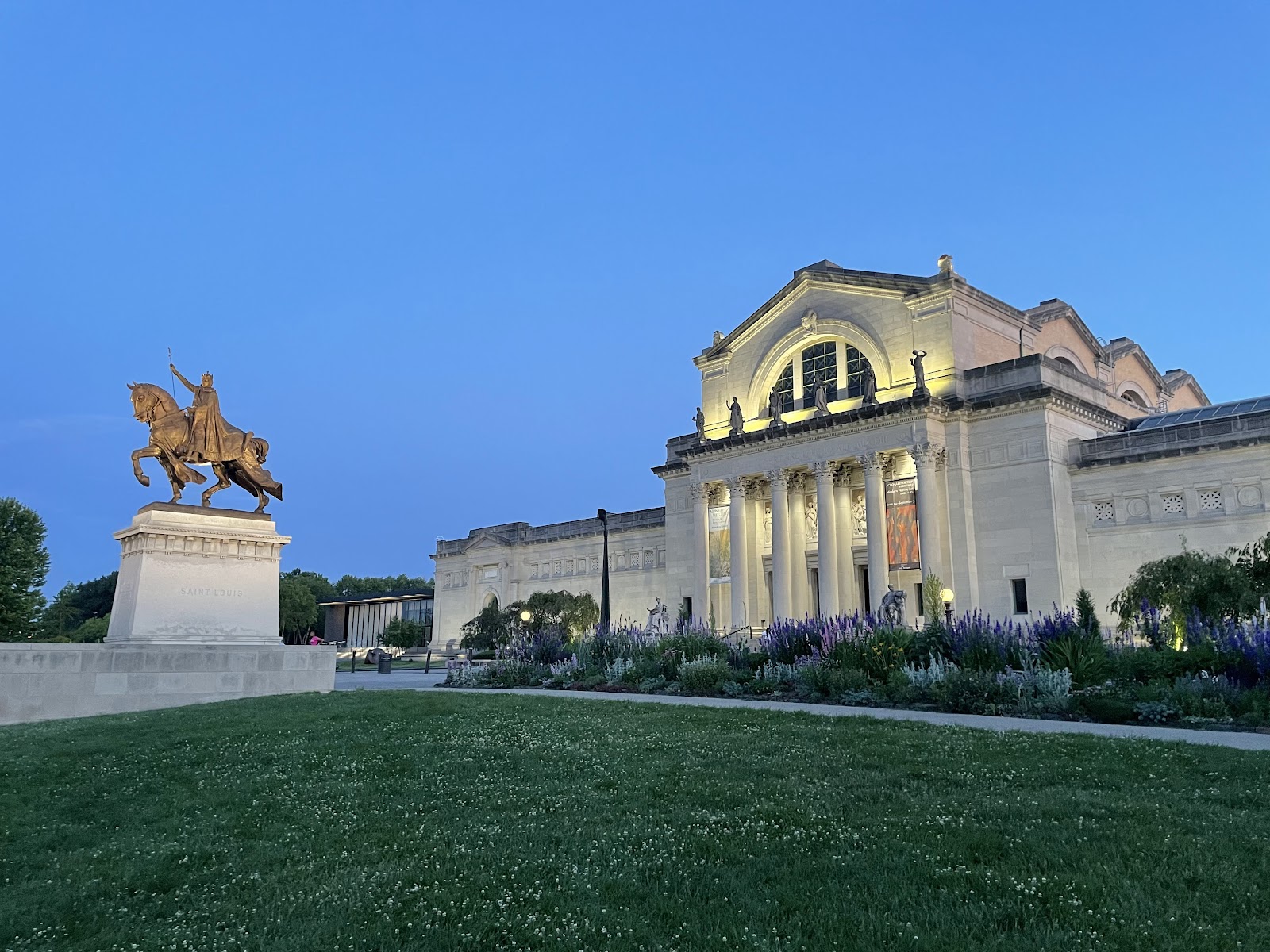
The Saint Louis Art Museum occupies the Palace of Fine Arts built for the 1904 World’s Fair, a Beaux-Arts building by Cass Gilbert on Art Hill in Forest Park, extended in 2013 by a contemporary East Building designed by David Chipperfield. Art Hill runs down from the building’s steps to the Grand Basin.
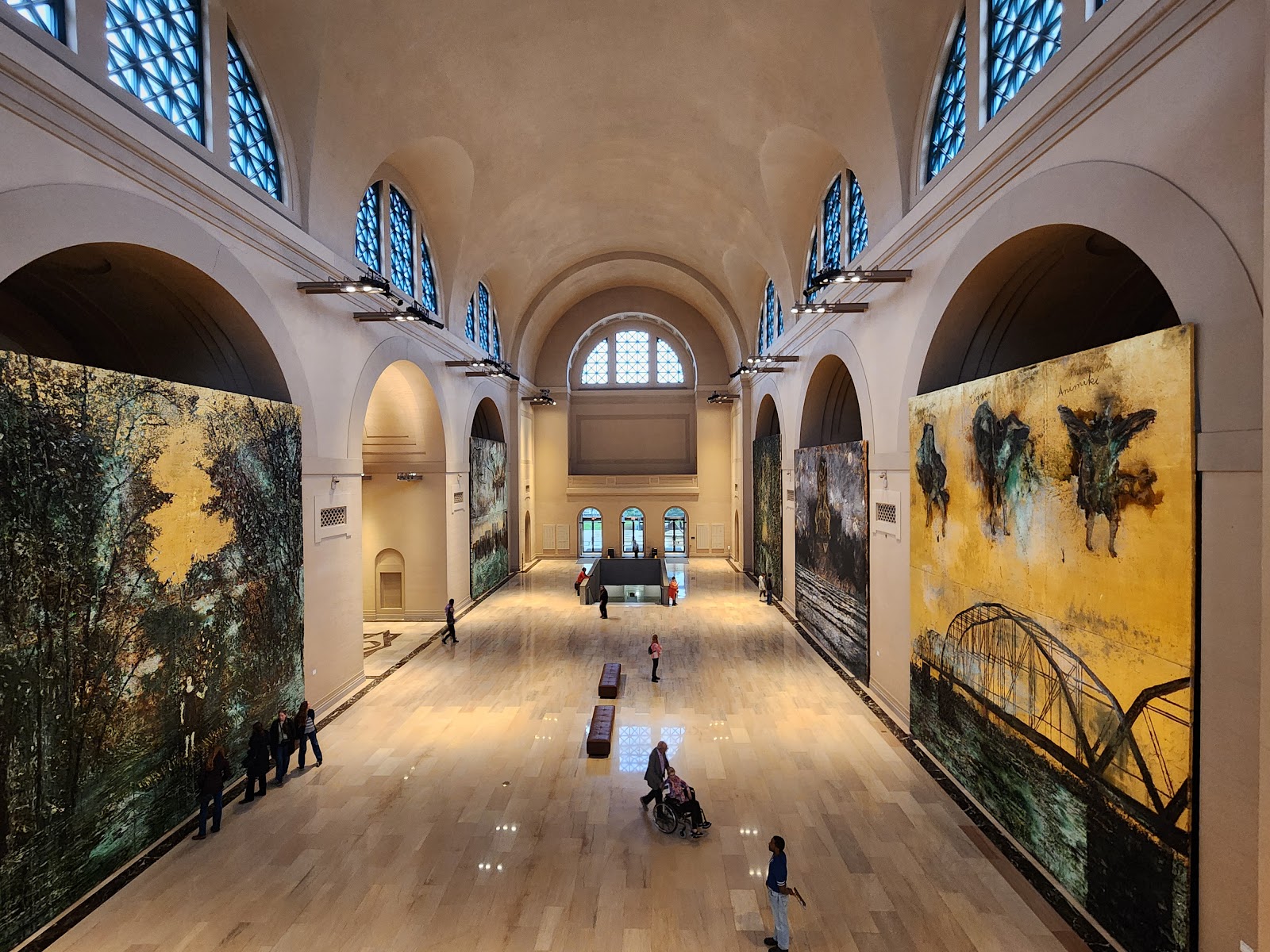
For a photographer the interest is the contrast. The 1904 building is monumental, symmetrical, stone, with a colonnaded entrance and a grand sculpture hall. The 2013 wing is low, horizontal, poured concrete with a coffered ceiling and large glazed openings onto the park. They photograph as opposites, and a gallery using both has a visual range that a single-period building cannot produce.
This guide is a shot list, because at a museum with restricted interiors and a great park outside, the useful plan is knowing which frames you want. We have not photographed a wedding here. Which spaces your booking includes, gallery access and flash policy are for their events team, and at an art museum assume flash is restricted near works.
Saint Louis Art Museum at a glance
| Where | Art Hill, Forest Park, St. Louis, Missouri |
| Buildings | 1904 Beaux-Arts Palace of Fine Arts by Cass Gilbert; 2013 East Building by David Chipperfield |
| Setting | Art Hill running down to the Grand Basin, within Forest Park |
| Light | Gallery lighting inside; the East Building’s glazing gives real daylight |
| Assume | Flash restricted near artworks; access windows set by public hours |
Establish which spaces you actually have
At an art museum the difference between a good gallery and an ordinary one is mostly about access. Galleries are the most restricted spaces and the worst lit. Architectural spaces — the sculpture hall, the colonnade, the East Building’s glazed rooms and circulation — are far better for photographs and usually far easier to get.
So ask specifically which rooms are included, whether the East Building is available, and whether the exterior steps and Art Hill can be used. Those three answers determine the shot list completely, and the East Building in particular is worth pursuing because it is the only interior with real daylight.
Then accept that access windows are set by public hours and security rather than by your preferred timeline. Confirm times before the ceremony hour is fixed, not afterwards.
The shot list, in priority order
Six frames. The first is the one people remember.
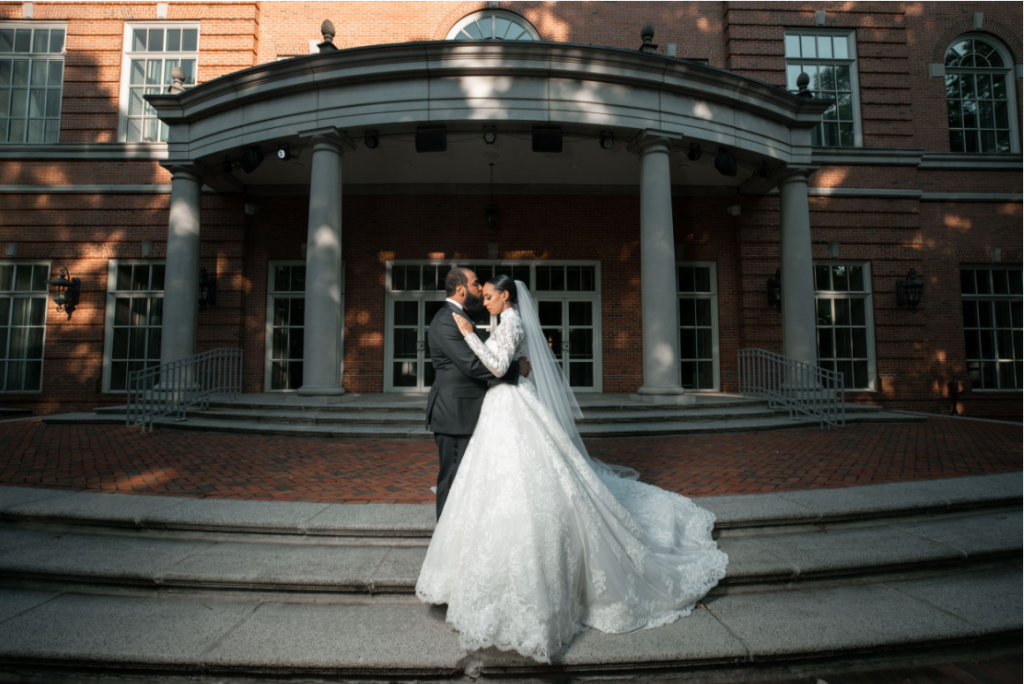
- Art Hill, from below. Couple on the slope with the Beaux-Arts facade above them, shot from down the hill with a longer lens so the building looms. The signature frame of this venue and possibly of St. Louis.
- The colonnade. Columns give vertical framing and deep architectural shade — soft, directional light with no colour problems, which is the best portrait light on the property.
- The East Building’s glazing. Large glazed openings onto the park give lateral daylight and a view of trees. Turn people parallel to the glass, not against it.
- The concrete coffered ceiling. Chipperfield’s ceiling is a strong geometric pattern. Shot wide with the couple beneath, it states the contemporary half of the museum.
- One gallery frame, if permitted. At the edge of a light pool, an artwork as context rather than a competing light source. One, not a series.
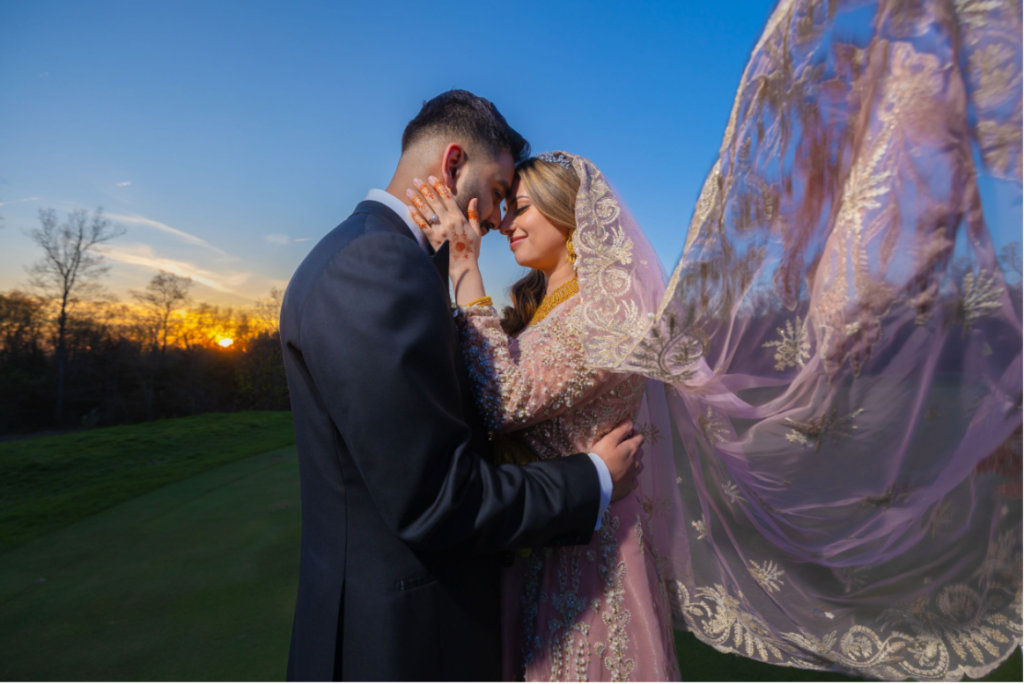
- The Grand Basin at golden hour. Water at the bottom of the hill, with light across it and the museum behind. Forest Park’s best light is here.
Two interiors, two completely different lighting problems
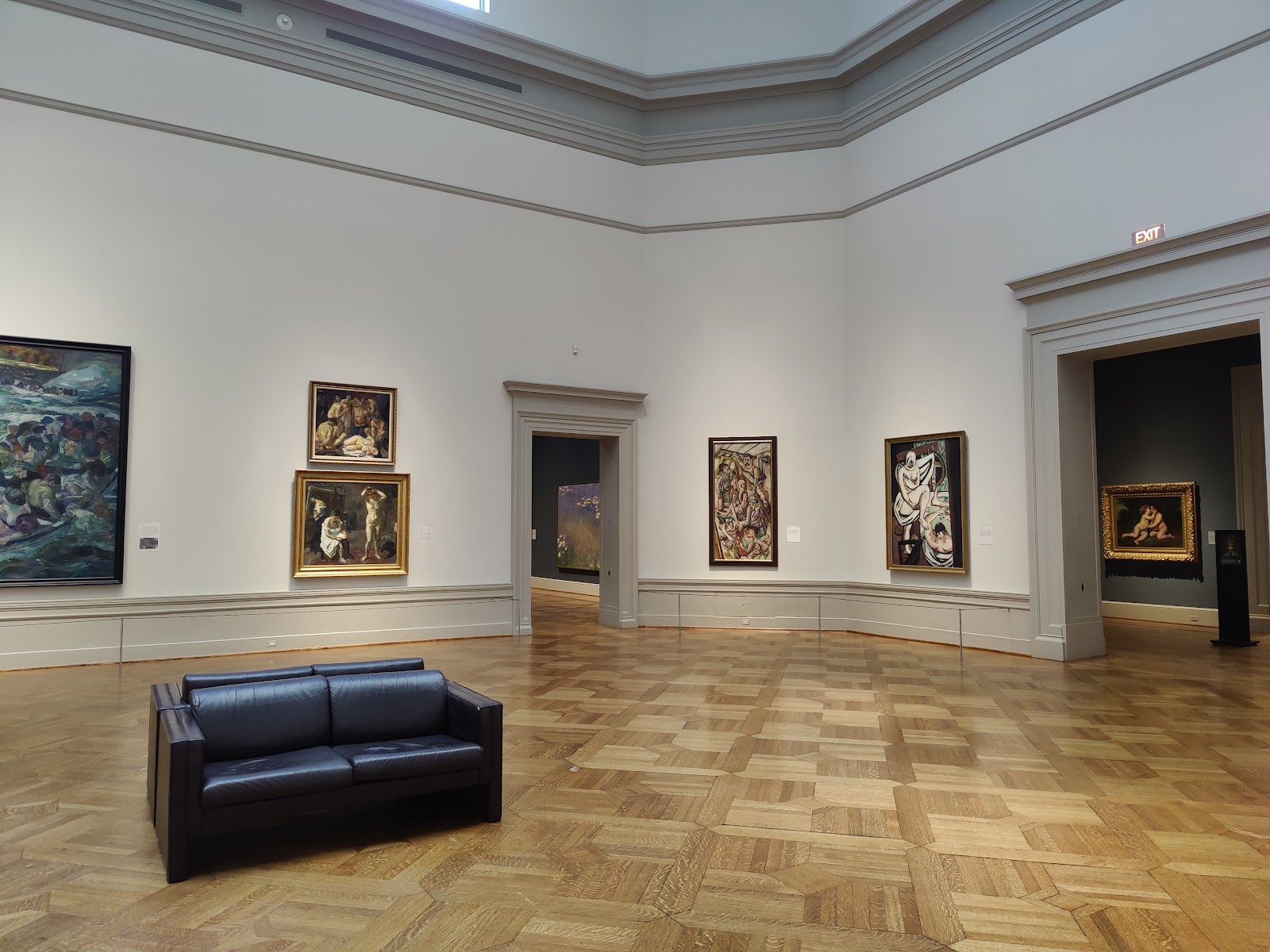
The 1904 building has the classic museum profile: high stone spaces, gallery track lighting that pools tightly and warmly, and very little daylight. Work by placement rather than illumination — at the edge of pools so light rakes across faces, never directly beneath a fixture, which produces bright foreheads and dark eyes.
The 2013 East Building is the opposite. Large glazed openings mean genuine lateral daylight, and poured concrete is a neutral mid-grey that neither warms nor colours what it reflects. That makes it the easiest interior in the museum for skin tones — no amber cast to correct, no green from foliage, just clean daylight.
The concrete’s one drawback is that it is fairly dark and adds no warmth, so faces can read cool and slightly flat. A small warm-gelled fill solves it, or simply position people closer to the glazing where the daylight is strongest. Set white balance separately for each building; they are nothing alike.
Art Hill, Forest Park, and the timeline
Art Hill is the venue’s great asset. A long grass slope running down from a monumental facade to a formal basin gives you elevation, a clean sky background, room for a group of any size, and the ability to shoot up at the building or down at the water. Very few museums anywhere have anything comparable.
Orientation matters: the museum faces broadly east down the hill, which means morning light hits the facade directly and evening light comes from behind it. So a facade frame is best earlier in the day, while the hill and basin are best in the last ninety minutes, when low light rakes across the grass and the water.
That splits the timeline usefully. Take the architectural exterior earlier, do interiors during the middle of the day when light outside is poor anyway, and save the hill and the basin for golden hour.
Practical notes: Art Hill is a popular public space, busy in good weather and used by sledders in snow. It is also a genuine hill — walking up it in formalwear takes longer and more effort than it looks. Budget for both.
What works in your favour
- Art Hill is a landmark frame with elevation, clean sky and room for any size of group
- Two buildings a century apart give a gallery real visual range
- The colonnade gives architectural shade — the best portrait light on the property
- Chipperfield’s East Building has genuine lateral daylight and neutral concrete, easy for skin tones
- Forest Park and the Grand Basin immediately below for golden hour
What to plan around
- Galleries are tightly pooled and warmly lit; assume flash restricted near works
- Access windows are set by public hours and security, not by your timeline
- The facade faces east, so evening light comes from behind it
- Concrete in the East Building is neutral but dark and adds no warmth
- Art Hill is public, busy in good weather, and a real climb in formalwear
More frames from Saint Louis Art Museum
Saint Louis Art Museum wedding photography: common questions
What is the signature photograph here?
Art Hill from below — the couple on the slope with the Beaux-Arts facade above them, shot from down the hill with a longer lens so the building looms behind them. It is the frame that identifies this venue and arguably the city, and it needs distance and compression rather than a wide lens up close.
Which interior is easiest to photograph in?
The 2013 East Building. Its large glazed openings give genuine lateral daylight and poured concrete is a neutral mid-grey that neither warms nor colours what it reflects — so no amber cast to correct and no green from foliage. Position people near the glazing, since the concrete is dark and adds no warmth.
Can we photograph in the galleries?
Assume restrictions, especially on flash near works. Where it is permitted, plan one considered frame rather than a series: place the couple at the edge of a light pool so it rakes across their faces, never directly beneath a fixture, and use an artwork as context rather than a competing light source.
When should the facade be photographed?
Earlier in the day. The museum faces broadly east down Art Hill, so morning light strikes the facade directly while evening light comes from behind it. Save the last ninety minutes for the hill and the Grand Basin, where low light rakes across the grass and the water.
Is Art Hill difficult in formalwear?
More than it looks. It is a genuine hill, and walking up it takes longer and more effort than the photographs suggest. It is also a busy public space in good weather. Budget the time, and consider taking just the couple down rather than the whole party.
More St. Louis venue guides
We are writing a photographer’s guide to every venue we would happily shoot in St. Louis. Here are three more, plus the full index:
- The Saint Louis Zoo: A Photographer Answers Your Questions
- The Union Station Hotel: Photographing a Barrel-Vaulted Grand Hall
- The Angad Arts Hotel: Who This Colour-Themed Venue Suits
All St. Louis Wedding Venues →
Planning a wedding at Saint Louis Art Museum?
Two buildings, a hill and a great park. Tell us your date and what your booking includes, and we will build a shot list that gets the Art Hill frame and uses the East Building’s daylight properly.