 The Somerset Club on Beacon Street: Is It Right for You?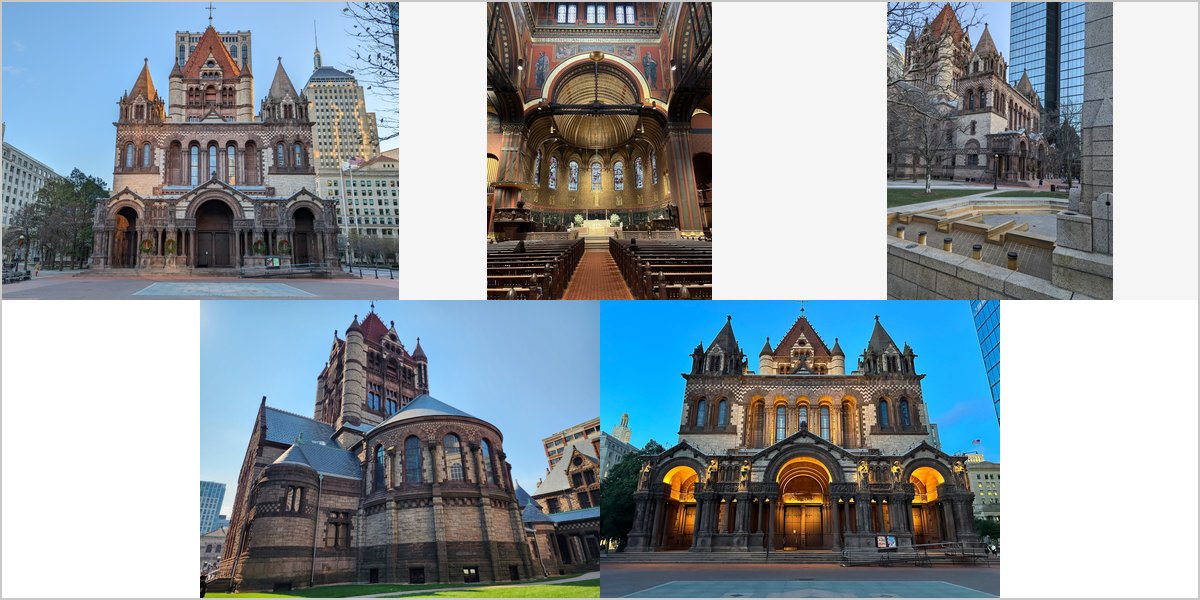
April 21, 2026
Trinity Church, Copley Square: A Photographer Answers Your Questions
A church is not a venue, and that distinction answers most questions. The clergy set the rules, the rules are usually strict, and the building is worth it.
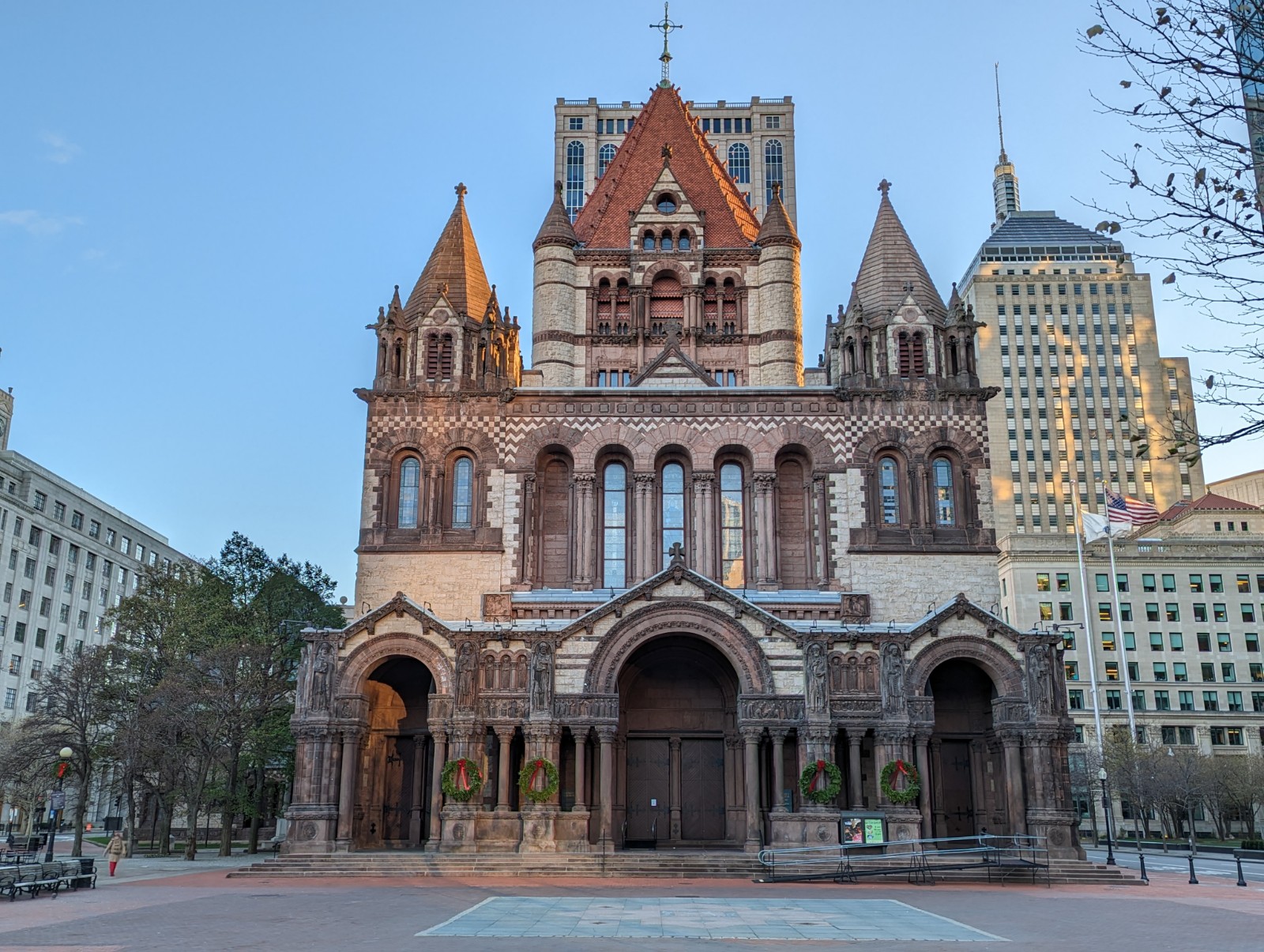
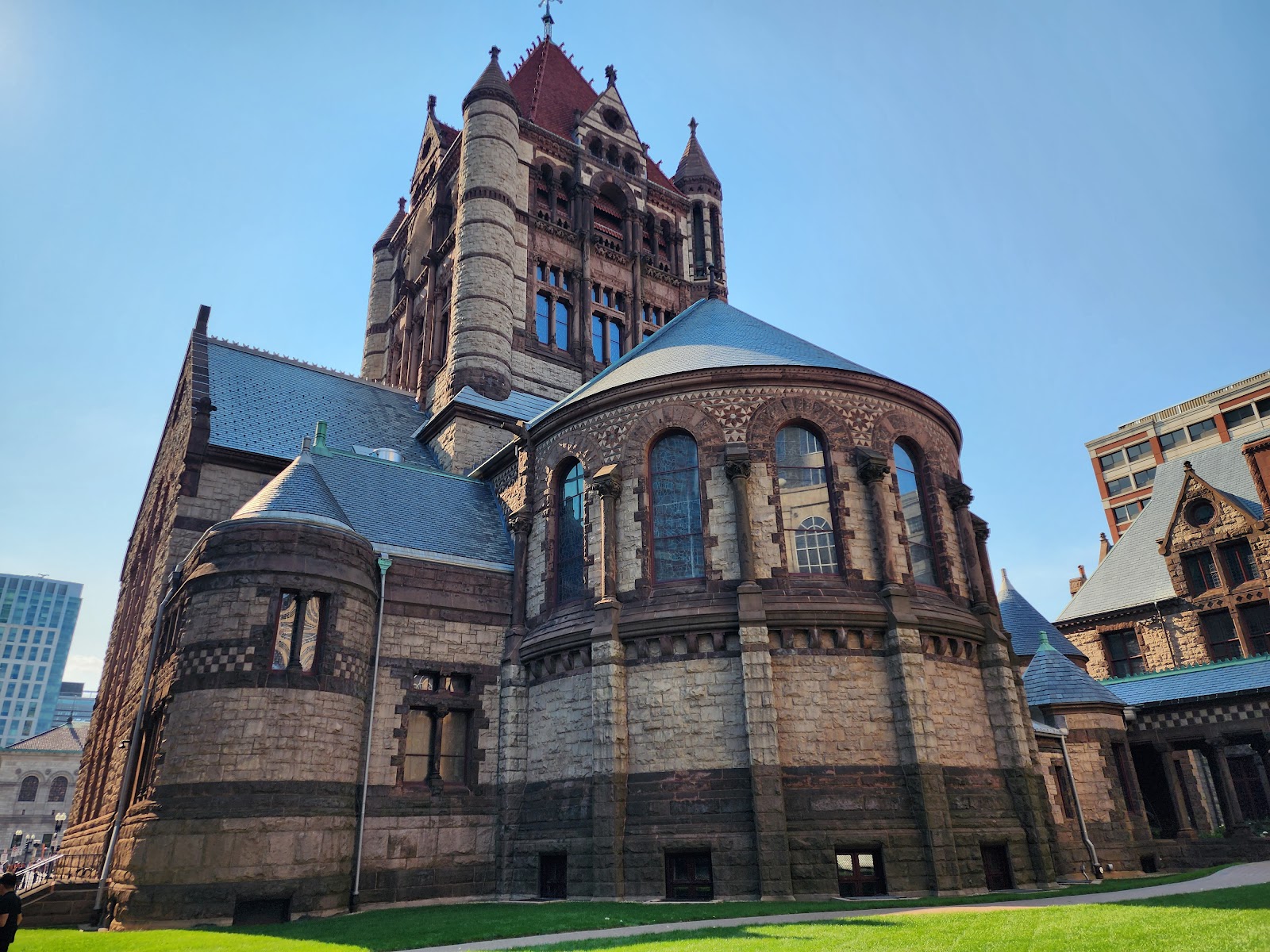
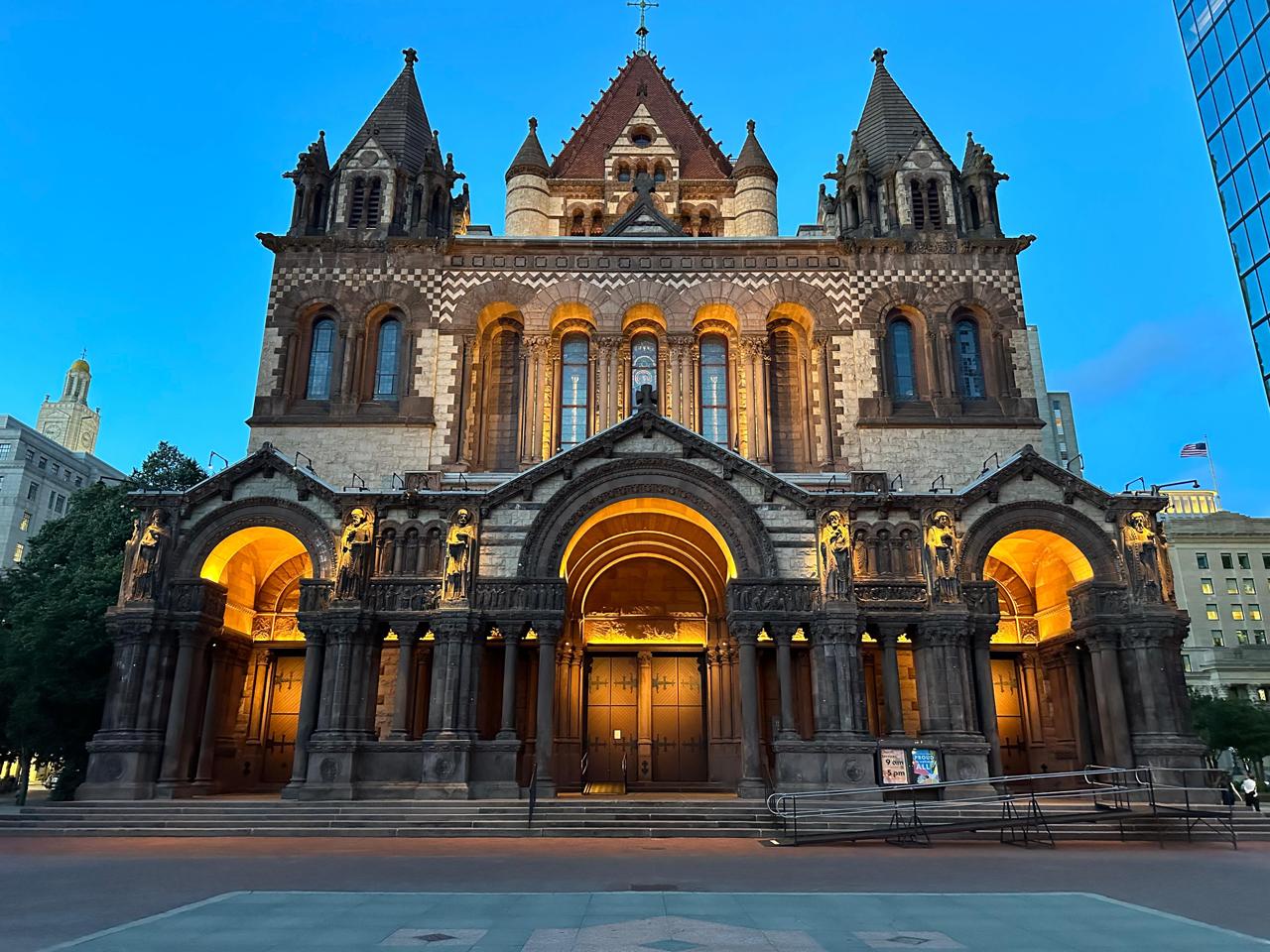
Trinity Church was completed in 1877 to H. H. Richardson’s design and stands on Copley Square as the founding work of what became known as Richardsonian Romanesque. The interior carries decorative work by John La Farge and stained glass from La Farge and others. It is routinely named among the most significant buildings in the United States, and it is an active Episcopal parish rather than an event space.
That last point is the one that matters most for planning. At a church, photography is governed by the clergy and the parish, not by an events manager whose job is to accommodate you. Restrictions on where a photographer may stand, whether flash may be used, and whether anyone may move during the ceremony are common, reasonable and non-negotiable.
What follows are the questions couples actually ask, answered from the craft side. We have not photographed a wedding at Trinity, and nothing here should be read as a statement of the parish’s current rules — ask them directly and early, because the answers determine what your ceremony coverage can look like.
Trinity Church at a glance
| Where | Copley Square, Back Bay, Boston, Massachusetts |
| Completed | 1877, designed by H. H. Richardson — the founding Richardsonian Romanesque building |
| Interior | Decorative work by John La Farge; extensive stained glass |
| Light | Very dark nave, tungsten fixtures, intensely coloured light from stained glass |
| Governed by | Parish clergy, not an events team — assume firm restrictions |
How dark is it, really?
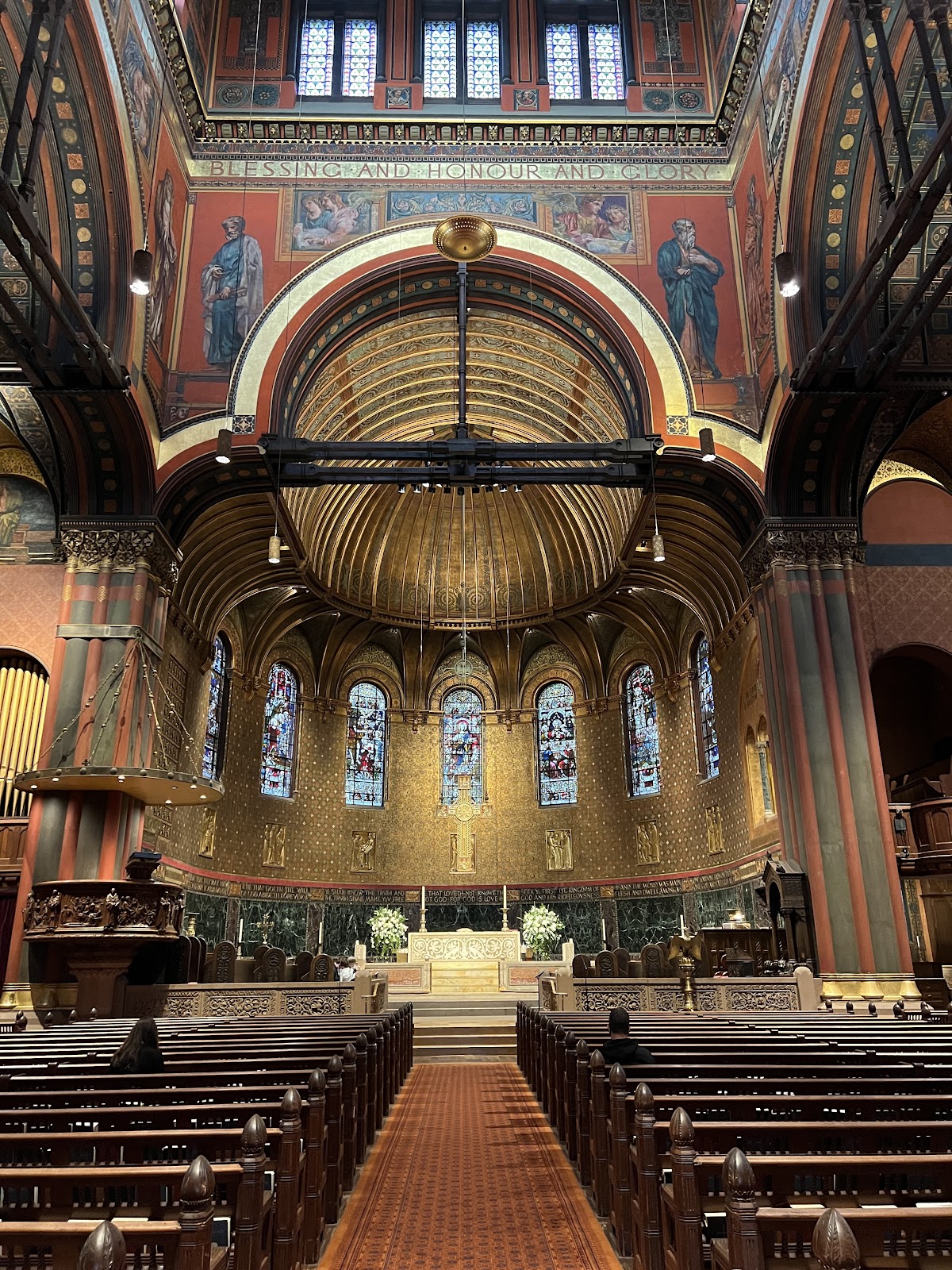
Darker than any hotel or museum you have been in. A stone Romanesque interior has thick walls, deep-set windows and no interest in admitting large quantities of daylight, and the glass that does let light in is heavily coloured, which absorbs a great deal of it. The artificial fixtures are warm and sparse, lighting the space for worship rather than for photography.
In practice that means fast prime lenses used wide open, and ISO values that would be unthinkable outdoors. It also means accepting a shallow depth of field during the ceremony, which is a genuine trade — at f/1.4 from the back of a nave, the margin for focus error is small.
The compensation is that the light, while scarce, is beautiful. Coloured light from stained glass falling across stone is one of the most distinctive things a photograph can contain, and it exists in no other kind of building.
What about the stained glass and white balance?
This is the technical trap specific to churches. Stained glass does not just admit less light; it admits light of many strongly different colours at once, and those pools of colour land on people. A bride standing where a blue window falls has blue skin; two metres left, under a red window, she is red. No single white balance setting is correct for the frame.
The workable approach is to set white balance for the dominant artificial light — usually the tungsten fixtures — and treat the coloured pools as deliberate, because they are. A photograph that shows coloured light on stone and on fabric reads as a church. A photograph corrected until everything is neutral reads as a badly lit room.
What you should avoid is standing people directly in a strongly coloured pool for portraits. Use the colour on the architecture, keep faces in neutral light, and the frame gets both the character and usable skin tones.
Can the photographer use flash, or move around?
Assume no to both until the parish tells you otherwise. The common position at significant churches is that the photographer works from a fixed position, without flash, and does not move during the ceremony itself. Some parishes are more relaxed; some are stricter still and restrict photography during parts of the service entirely.
This is not an obstacle so much as a specification, and it changes the kit. Working from one position in very low light means a long fast lens — something in the 85mm to 135mm range at a wide aperture — on a second body alongside a wider lens for context. It means getting the frames you need before the service starts, because you will not be able to reposition during it.
It also means the couple should know in advance what is and is not possible. A photographer who is forbidden from moving cannot produce a photograph from the front of the aisle, and it is far better for that to be understood at the planning stage than discovered in an album.
Where are the best portraits, if not inside?
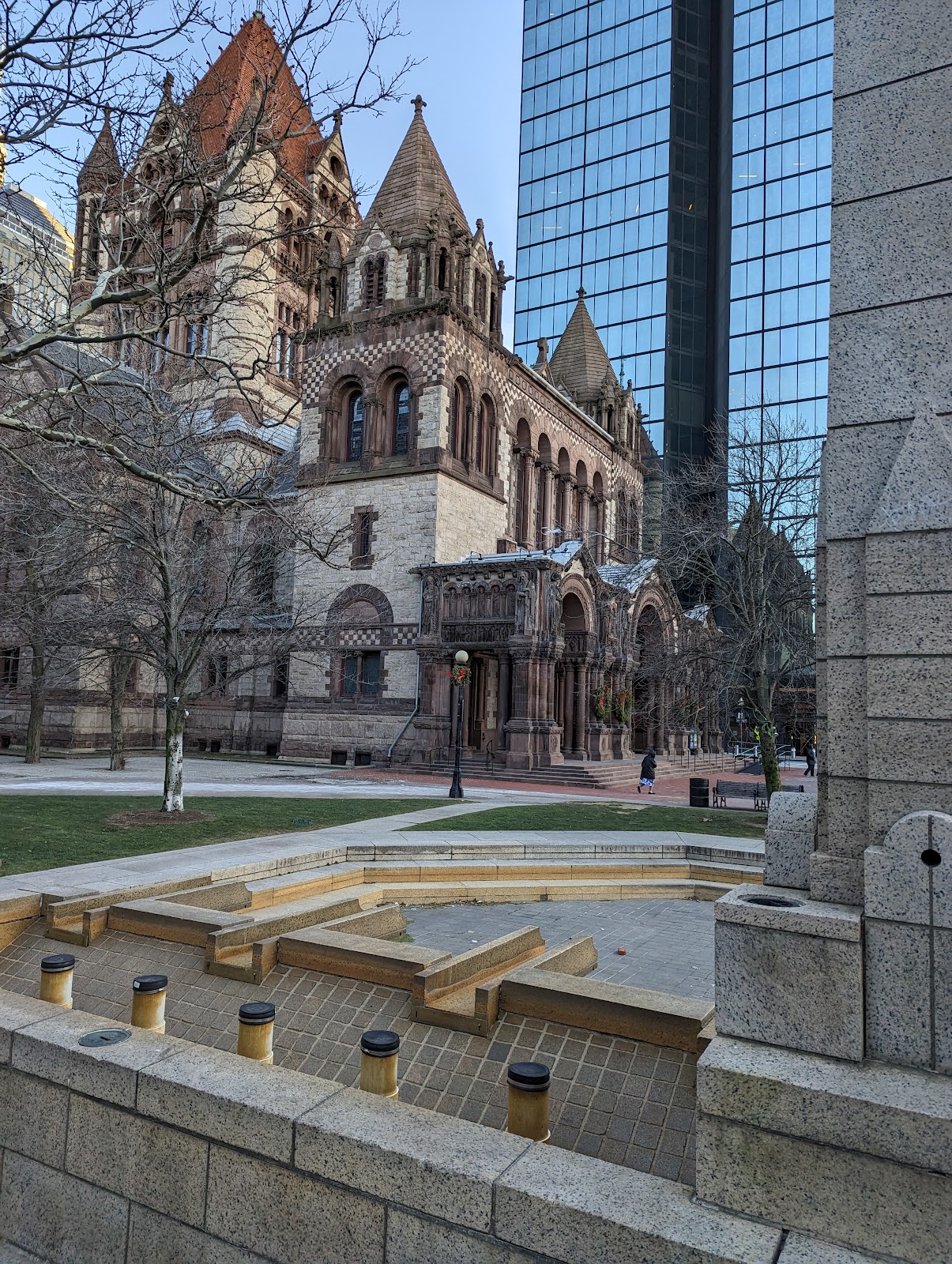
Copley Square, and it is not a compromise. The church’s own exterior is one of the great facades in American architecture, and it sits on a square with mature trees, open sky and the Boston Public Library opposite. The contrast of Richardson’s heavy stonework against the glass of the tower behind is a frame available nowhere else.
Open shade on the square, or under the trees, gives you soft directional light with none of the colour problems inside. Late afternoon is best, when the low sun rakes across the stonework and brings out its texture and colour — Romanesque stone rewards raking light more than almost any other material.
Back Bay is also, simply, an outstanding neighbourhood to walk. Brownstone streets, Commonwealth Avenue’s mall, and the library’s courtyard are all within a few minutes and all photograph well. Budget twenty minutes and the gallery gains more than any interior frame would add.
What works in your favour
- One of the most architecturally significant buildings in the United States
- Coloured light from stained glass on stone is unique to this kind of interior
- Copley Square outside is an exceptional portrait location in its own right
- Back Bay’s brownstone streets and the library courtyard are minutes away
- The exterior facade is a landmark frame that identifies the photographs instantly
What to plan around
- Extremely dark interior — fast primes wide open and very high ISO are mandatory
- Stained glass throws strongly coloured light onto faces; no single white balance is correct
- Assume no flash and a fixed shooting position during the ceremony
- An active parish, not a venue: rules are set by clergy and are not negotiable
- Not a reception venue; the celebration happens elsewhere
More frames from Trinity Church
Trinity Church wedding photography: common questions
How dark is Trinity Church for photography?
Very. Thick stone walls, deep-set windows and heavily coloured glass mean far less light than any hotel or museum, and the artificial fixtures are warm and sparse. Expect fast prime lenses used wide open and ISO levels that would be unthinkable outdoors, with a correspondingly small margin for focus error.
Will the stained glass ruin our skin tones?
It will change them, which is why placement matters. Coloured pools of light land on people, and a bride under a blue window has blue skin. Set white balance for the dominant artificial light, use the coloured light on the architecture rather than on faces, and it becomes character instead of a problem.
Is flash allowed during the ceremony?
Assume not. The usual position at significant churches is no flash, a fixed shooting position, and no movement during the service — and at some parishes photography is restricted during parts of it entirely. Ask the parish directly and early, because the answer determines what your ceremony coverage can be.
What lens does a photographer need there?
If movement is restricted, something long and fast — 85mm to 135mm at a wide aperture — on one body, with a wider lens on a second for context. Working from a single fixed position in very low light is the specification, and the kit has to match it.
Where should the portraits happen?
Copley Square and Back Bay, and this is genuinely better rather than a fallback. Open shade on the square gives soft directional light with no colour problems, late afternoon rakes across Richardson’s stonework beautifully, and the brownstone streets and library courtyard are a few minutes’ walk.
More Boston venue guides
We are writing a photographer’s guide to every venue we would happily shoot in Boston. Here are three more, plus the full index:
- The Union Club of Boston: A Walk-Through for Photographs
- The Algonquin Club on Commonwealth Avenue: Questions Answered
- Arlington Street Church: Field Notes for Wedding Photographs
Planning a wedding at Trinity Church?
With a church wedding, the parish’s rules decide what the ceremony photographs can be — so the first conversation matters. Tell us your date and we will help you get clear answers, and plan the Copley Square and Back Bay portraits around them.