 The Hotel St. Francis: A Walk-Through of Santa Fe’s Oldest Hotel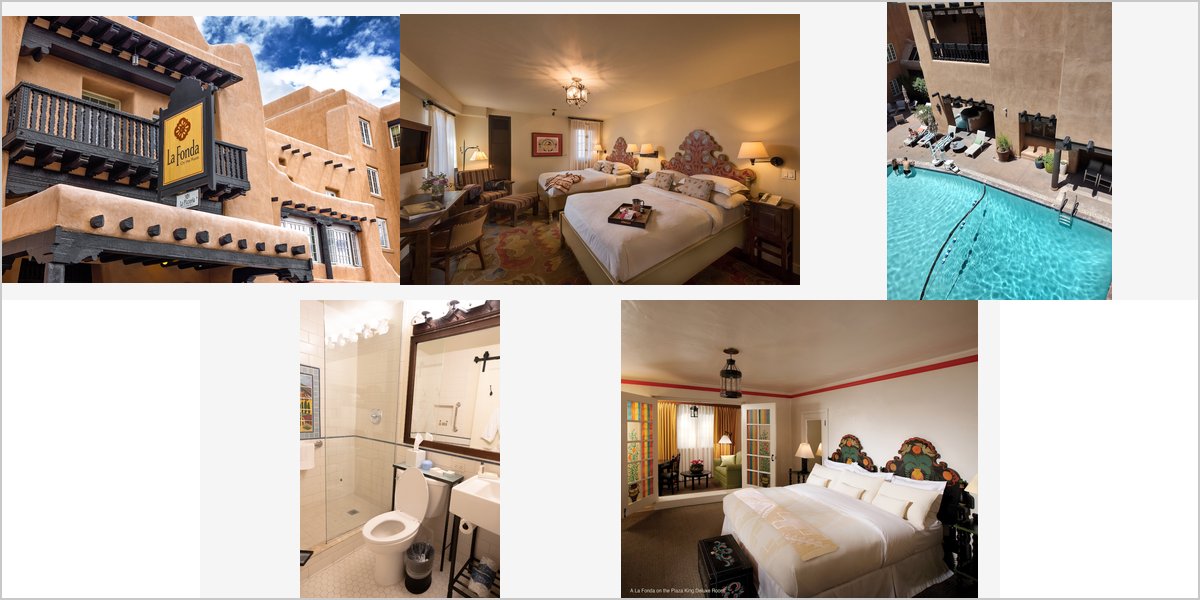
April 22, 2026
La Fonda on the Plaza: Reading High-Desert Light at 7,000 Feet
Santa Fe sits at 7,000 feet, and altitude changes the light more than any architectural detail does. Adobe, fortunately, rescues what altitude ruins.
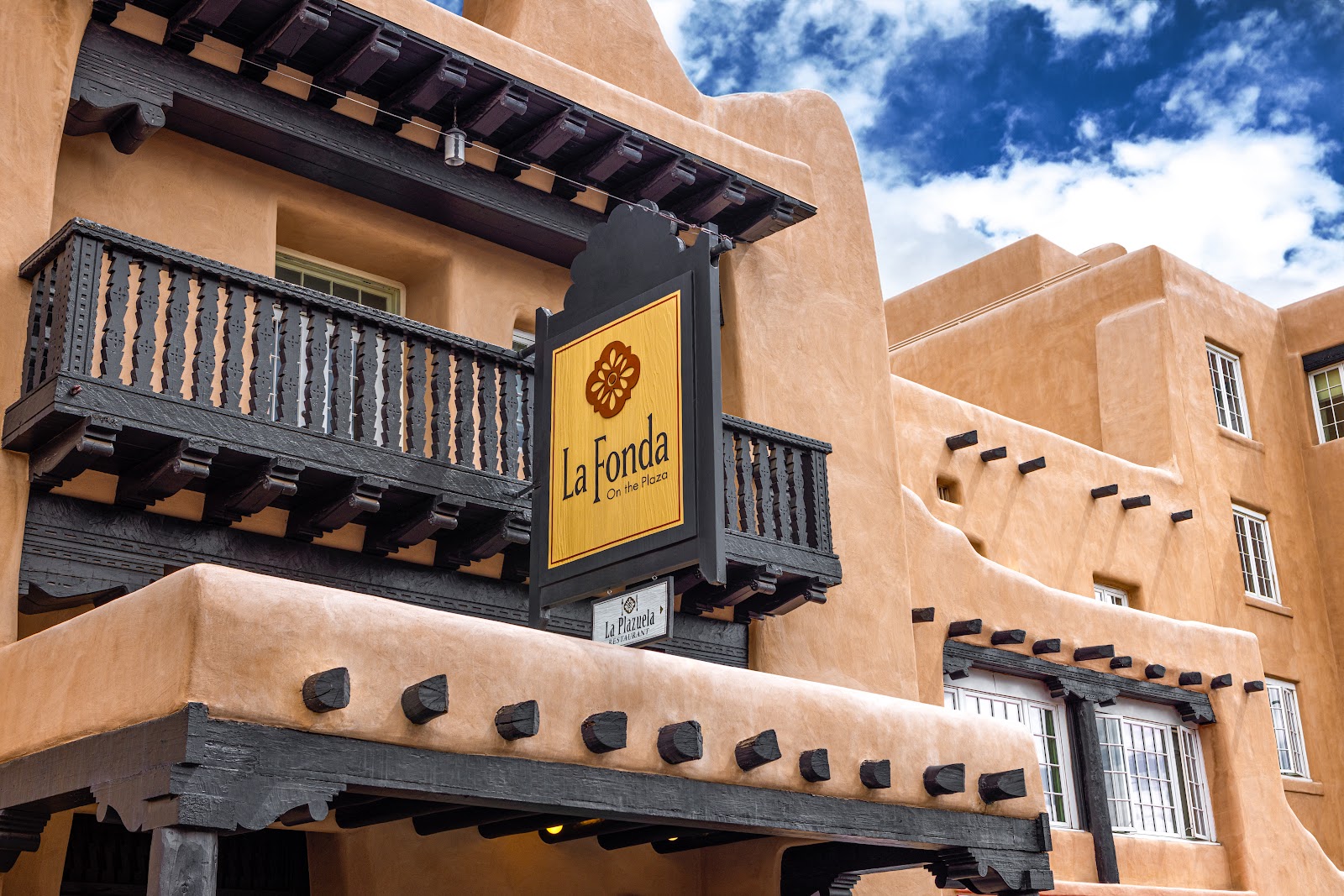
La Fonda on the Plaza was built in 1922 in the Pueblo Revival manner on the corner of the Santa Fe Plaza, on a site with a long history of inns. It carries the vocabulary of the style — thick adobe-form walls, exposed timber vigas, hand-painted detail, punched tin light fixtures — along with a rooftop bar looking toward the Sangre de Cristo mountains.
The dominant photographic fact about any Santa Fe venue is not the architecture but the altitude. At roughly 7,000 feet the air is thin and dry, and thin dry air scatters far less light than air at sea level. The consequence is harder, darker shadows, brighter highlights, and a contrast range on a clear day that exceeds anything you meet in a coastal city.
Adobe is what saves it. This is a light-and-timeline guide built around both facts. We have not photographed a wedding at La Fonda; altitude and adobe behave consistently across the region. Which spaces your booking includes and rooftop access are for their events team.
La Fonda on the Plaza at a glance
| Where | On the Santa Fe Plaza, New Mexico — roughly 7,000 feet |
| Built | 1922, Pueblo Revival, on a long-established inn site |
| Character | Adobe-form walls, timber vigas, hand-painted detail, punched tin fixtures |
| Light | Very high contrast at altitude; warm bounce from adobe fills the shadows |
| Plan around | Monsoon afternoon storms in July and August, and a very intense midday sun |
Altitude makes the light harder — and adobe fixes it
At 7,000 feet there is less atmosphere above you and far less moisture in it, so sunlight arrives less scattered. Practically that means shadows are darker and edges sharper than the same scene would produce at sea level, and the range between a sunlit wall and a shaded face is wider than a sensor comfortably holds.
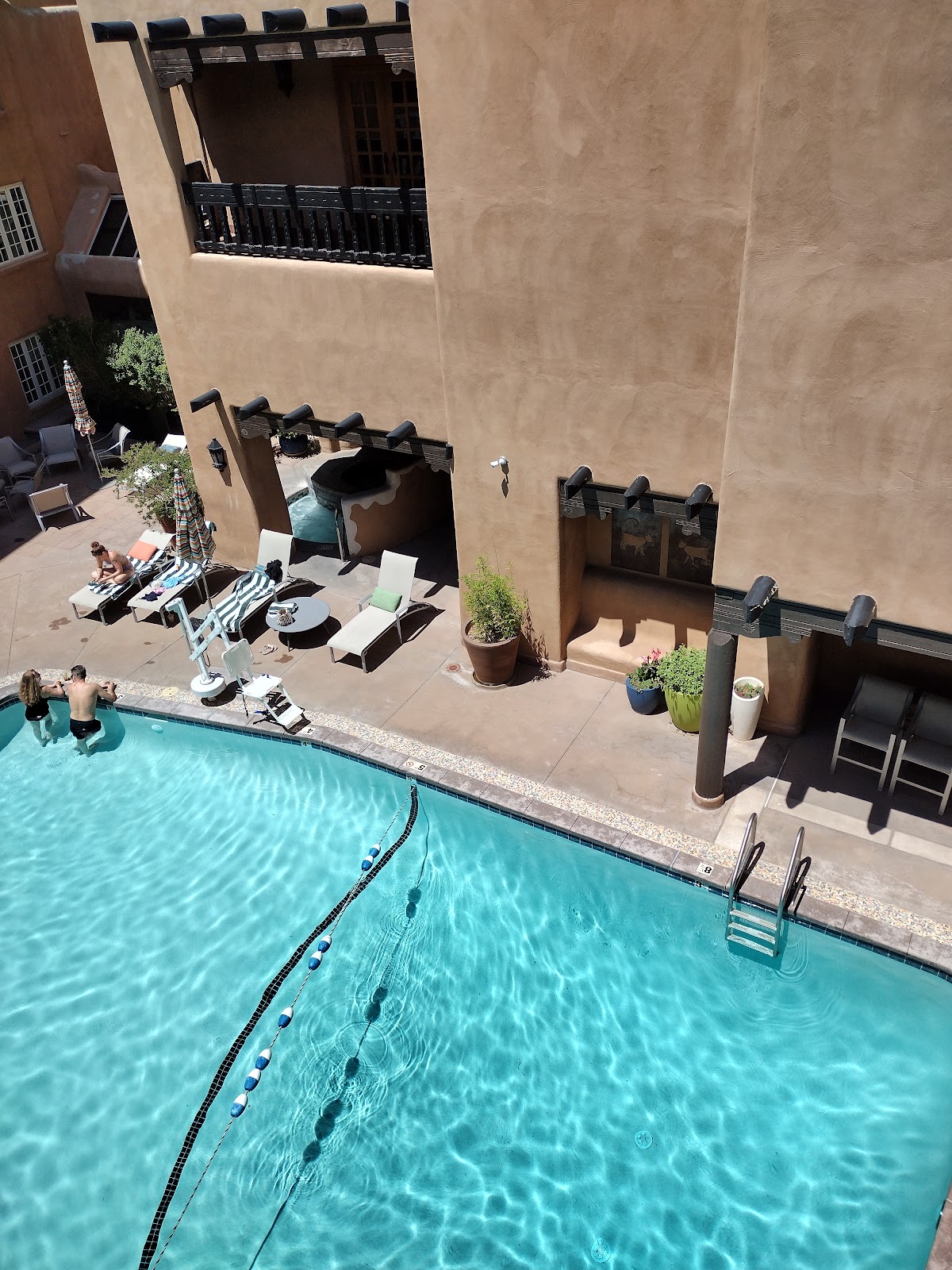
Adobe is the compensating factor and it is a genuine one. Thick earth-coloured walls are efficient reflectors, and being warm in tone they throw a soft warm light back into shadows. Stand a couple in the shade of an adobe building with a sunlit adobe wall opposite, and the shadow fills with warm bounce from a direction no reflector would reach. That combination — hard sun, deep shade, warm fill — is what makes Santa Fe photograph the way it does.
So the working method is to use the architecture as your light modifier. Shade beside a sunlit adobe wall is the best light in the city, and it is available for most of the day somewhere in a building like this. Avoid open sun on faces entirely between mid-morning and late afternoon; there is no need for it when the walls will do the work.
Interiors: warm, dark and full of punched tin
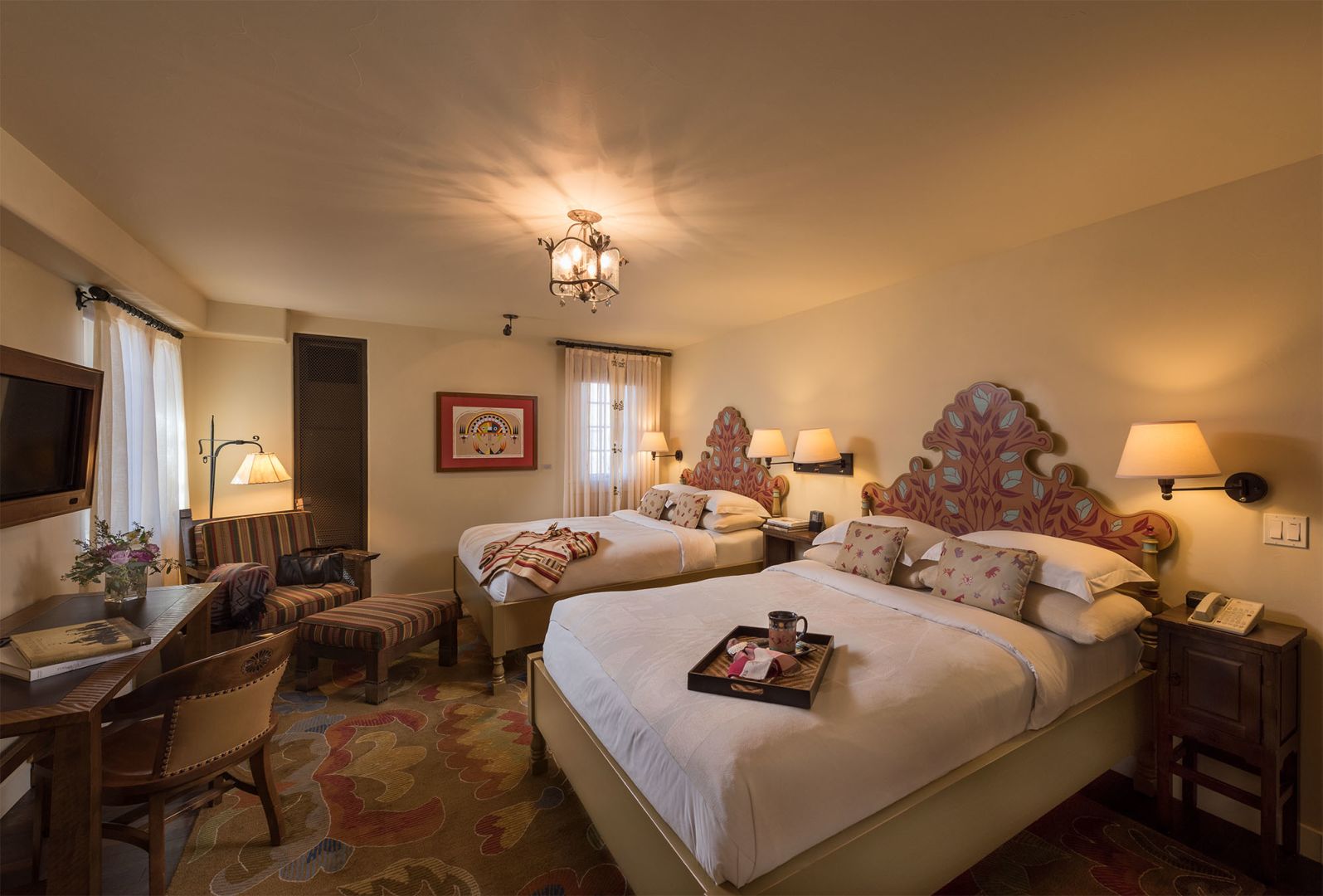
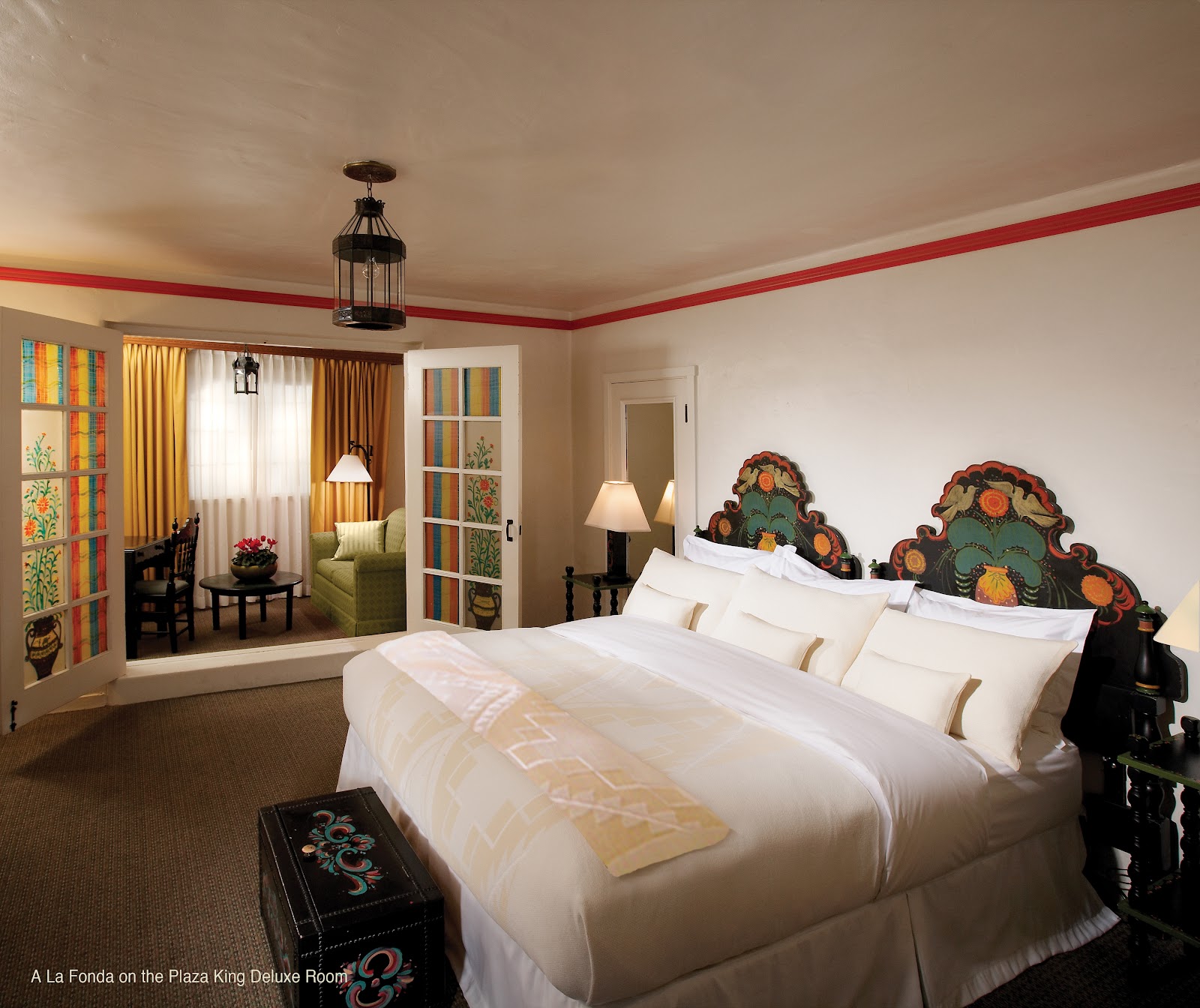
Pueblo Revival interiors are warm and relatively dark. Thick walls mean deep window reveals, which cuts the amount of daylight entering; timber vigas overhead absorb light; and the hand-painted detail and earth-toned plaster return everything warm. Punched tin fixtures, which are characteristic and beautiful, cast patterned light rather than broad illumination.
The consequence is familiar: skin with no cool component looks artificial, so keep the room warm in white balance and light faces slightly cooler. And the patterned light from tin fixtures is lovely on a wall and difficult on a face, so treat it as background rather than as key.
Deep window reveals do give one real gift. A thick-walled window is a natural softbox with a built-in snoot: light enters, is shaped by the reveal, and falls off fast. Place someone a metre inside a deep-set window and you get directional, contained, beautifully falling light that a thin modern wall cannot produce.
The rooftop and the mountains
A rooftop on the Plaza looking toward the Sangre de Cristo range is the venue’s strongest asset. It gives elevation, a horizon, mountain backdrops and — crucially at altitude — a clear view, because thin dry air means distant peaks read with far more separation and colour than they would through humid lowland haze.
The best window is the last hour before sunset and the twenty minutes after. At altitude the sky colour after sunset is unusually intense and long-lasting, and the Sangre de Cristos to the east often catch a pink alpenglow while the sky to the west is still bright. That eastward glow is the frame worth planning for, and most people are looking the wrong way to see it.
Rooftops are exposed, and at 7,000 feet it is cooler than visitors expect after the sun goes — a twenty-degree drop between afternoon and evening is routine. Warn the party, and plan the rooftop block as a defined ten or fifteen minutes rather than an open-ended session.
The timeline, and the monsoon
The schedule that works at altitude, which differs from a coastal one.
- Nothing in open sun between mid-morning and late afternoon. The contrast is unmanageable and the adobe shade is better anyway.
- Portraits in shade beside sunlit adobe. Available most of the day, and the best light in Santa Fe.
- Interiors in deep-set windows, a metre inside the reveal, for contained directional light.
- Rooftop for the last hour and the twenty minutes after sunset, watching east for alpenglow on the Sangre de Cristos.
- In July and August, plan around the monsoon. Afternoon thunderstorms are near-daily and they are genuine — but they also produce the most dramatic skies of the year, and they usually clear before evening.
What works in your favour
- Adobe walls throw warm fill into shadows — the best light in Santa Fe is free and architectural
- Deep window reveals act as natural softboxes with fast falloff
- A rooftop with Sangre de Cristo mountain views and unusually clear high-desert air
- Intense, long-lasting post-sunset sky colour at altitude, with eastward alpenglow
- Directly on the Plaza, so the whole historic centre is at the door
What to plan around
- Thin air at 7,000 feet gives a contrast range that exceeds what a sensor holds
- Open sun on faces is unusable for most of the day
- Warm interiors with no neutral reference; punched tin casts patterned light unsuited to faces
- Monsoon thunderstorms are near-daily in July and August
- Sharp evening temperature drops catch guests out; rooftops are exposed
More frames from La Fonda on the Plaza
La Fonda on the Plaza wedding photography: common questions
How does altitude change the light in Santa Fe?
At 7,000 feet the air is thin and dry, so sunlight arrives much less scattered. Shadows are darker, edges sharper, and the range between a sunlit wall and a shaded face is wider than a sensor comfortably holds. Open sun on faces is effectively unusable for most of the day.
What is the best light here?
Shade beside a sunlit adobe wall. Adobe is an efficient, warm-toned reflector, so it throws soft warm light back into shadows from a direction no reflector would reach. Hard sun, deep shade and warm architectural fill together are what make Santa Fe photograph the way it does — and it is free.
How do you use the thick walls indoors?
As natural softboxes. A deep window reveal shapes the light entering and makes it fall off fast, so placing someone a metre inside a deep-set window gives directional, contained, beautifully falling light that a thin modern wall cannot produce. That is the best interior light in a Pueblo Revival building.
When should we be on the rooftop?
The last hour before sunset and the twenty minutes after. At altitude the post-sunset sky colour is unusually intense and long-lasting, and the Sangre de Cristos to the east often catch a pink alpenglow while the west is still bright. Look east — most people are facing the wrong way.
What about the summer monsoon?
July and August bring near-daily afternoon thunderstorms, which are genuine and need a plan. They also produce the most dramatic skies of the year and usually clear before evening, so a monsoon-season wedding is not a write-off — it just needs the outdoor blocks scheduled with that pattern in mind.
More Santa Fe venue guides
We are writing a photographer’s guide to every venue we would happily shoot in Santa Fe. Here are three more, plus the full index:
- The Lensic: Lighting a 1931 Moorish-Spanish Theatre
- The Museum of Indian Arts and Culture: Building the Shot List
- The Museum of International Folk Art: A Photographer Answers Your Questions
Planning a wedding at La Fonda on the Plaza?
At 7,000 feet the adobe does the work a reflector would do at sea level. Tell us your date and we will plan the shade, the deep windows, and the twenty minutes when the mountains go pink.