 The Hotel St. Francis: A Walk-Through of Santa Fe’s Oldest Hotel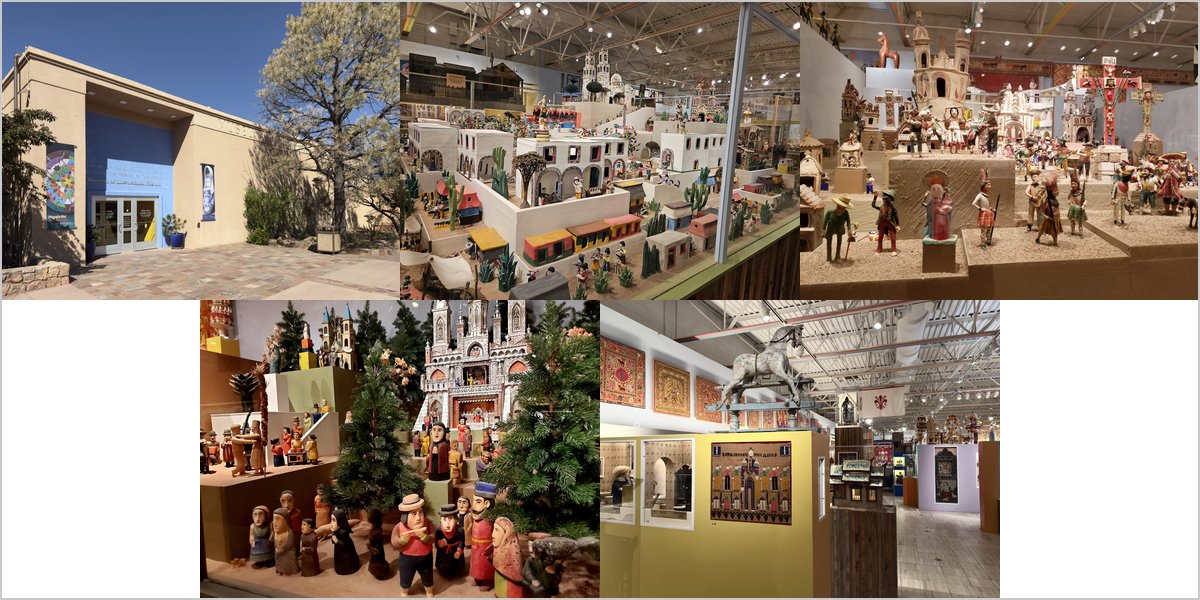
June 17, 2026
The Museum of International Folk Art: A Photographer Answers Your Questions
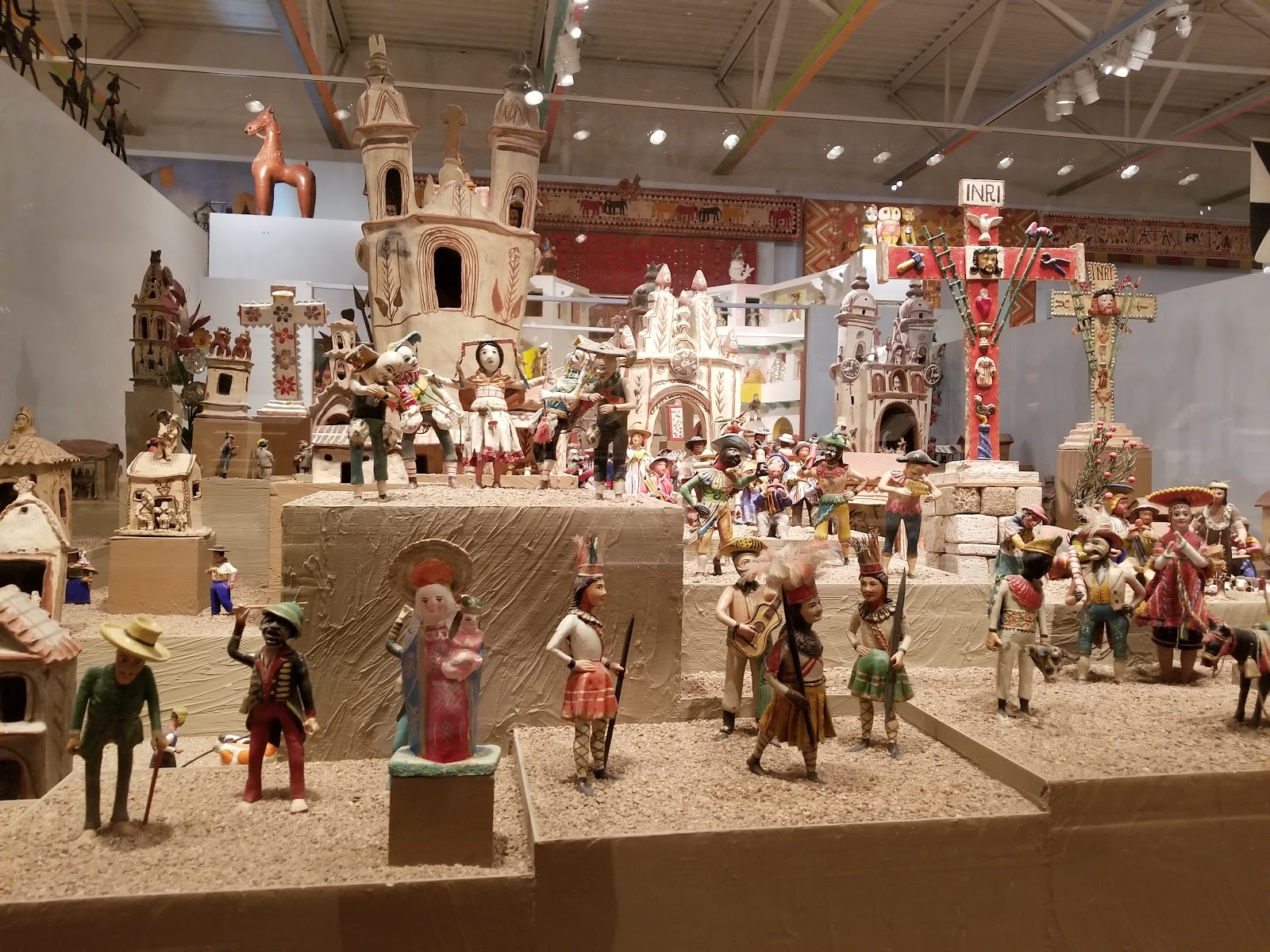
The Girard Wing may be the most visually crowded room in any American museum. That is remarkable to visit and genuinely hard to photograph people in.
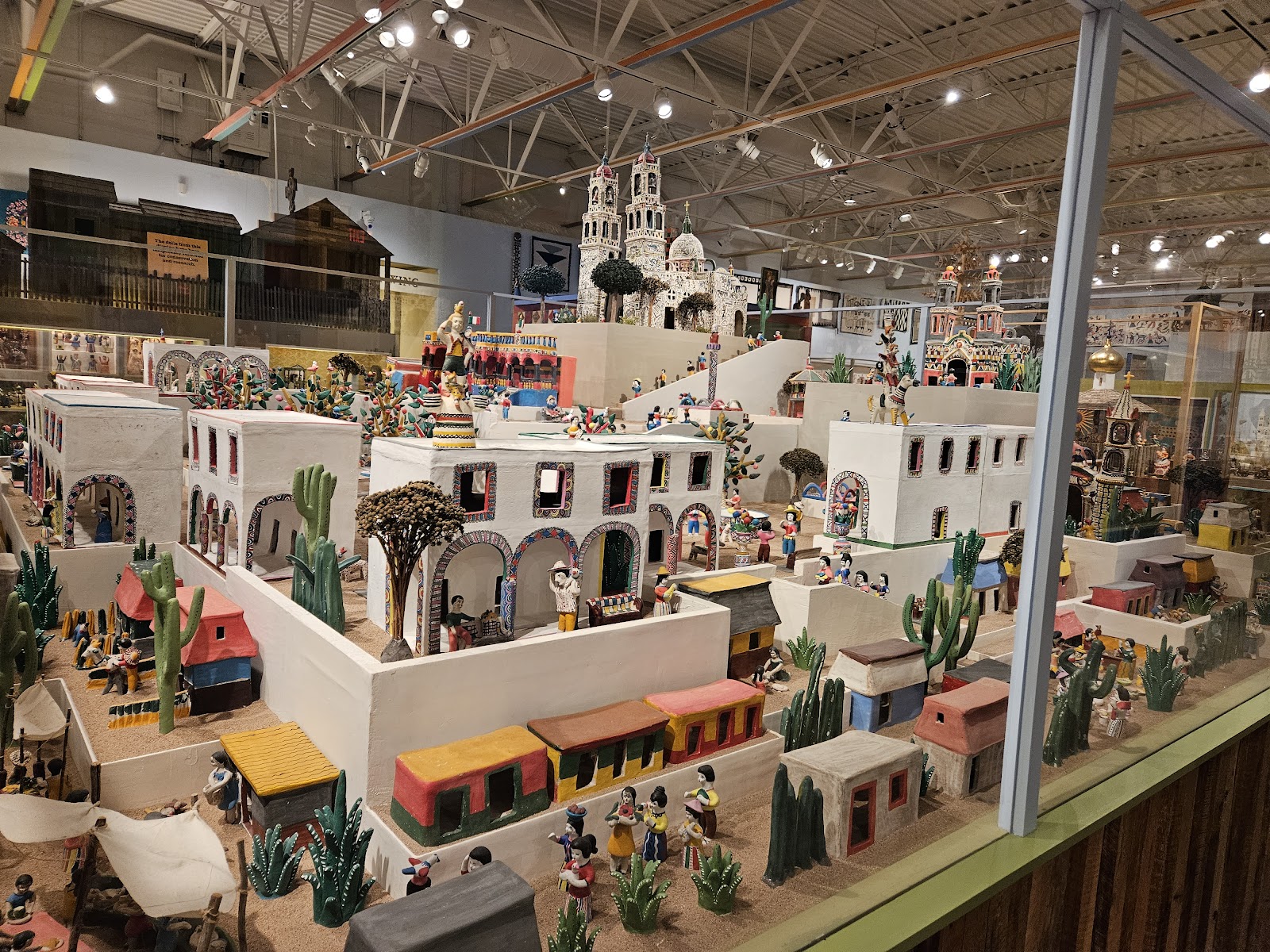
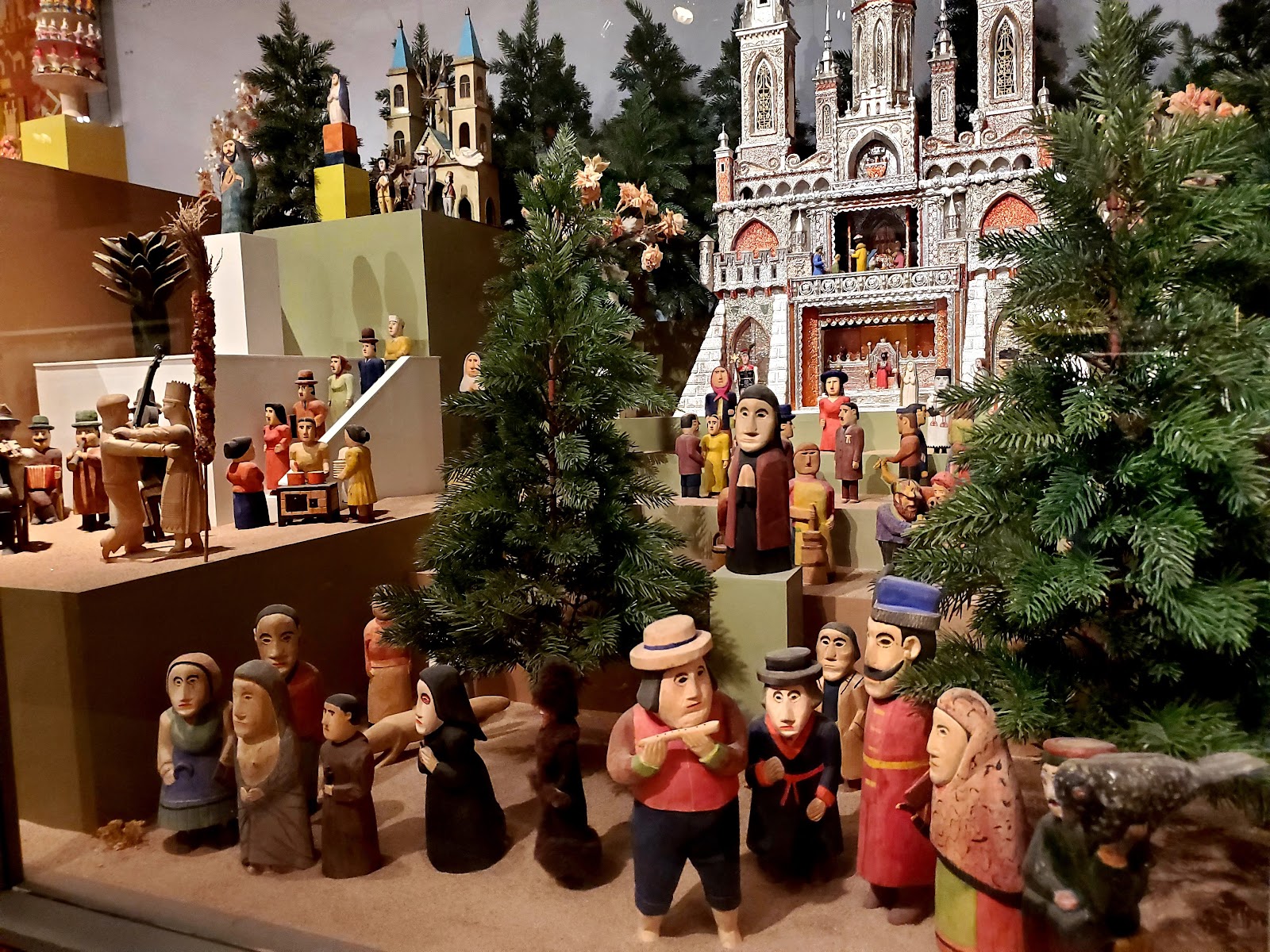
The Museum of International Folk Art sits on Museum Hill, southeast of central Santa Fe, and holds the largest collection of international folk art in the world. Its best-known space is the Girard Wing, an installation designed by Alexander Girard in which thousands of objects are displayed together in densely packed tableaux — a single room containing an overwhelming quantity of colour, pattern and small figures.
Photographically that presents a problem more extreme than any other venue in this series. Backgrounds are not merely busy; they are saturated, patterned and full of faces. Standing a couple in front of a Girard tableau means standing them in front of several hundred competing subjects, and no amount of careful framing changes that arithmetic.
These are the questions couples ask, answered honestly. We have not photographed a wedding here; the optics of extremely dense backgrounds are predictable. Which spaces are available, flash policy and access are for their events team, and at a museum with a collection of this density expect firm conservation rules.
Museum of International Folk Art at a glance
| Where | Museum Hill, southeast of central Santa Fe, New Mexico |
| Holdings | The largest collection of international folk art in the world |
| Signature space | The Girard Wing — thousands of objects in densely packed tableaux |
| Light | Gallery lighting, pooled and warm; assume flash restrictions |
| The core issue | Backgrounds more visually crowded than any other venue type |
How bad is the background problem, really?
Severe, and worth being blunt about. A photograph is a hierarchy — the viewer’s eye goes to the brightest, sharpest, most human thing in the frame. In a Girard tableau there are hundreds of small human figures, all of them brightly coloured and all of them faces. Your couple becomes two more faces among many.
There are three levers and all three are needed together. Separation: move the couple well away from the installation so a wide aperture can dissolve it into colour rather than detail. Compression: a longer lens narrows how much of the background appears at all. And hierarchy: light the couple so they are clearly the brightest thing in frame, which means adding light even in the middle of the day.
Even with all three, expect these to be busy photographs. The honest advice is to take one or two frames in the dense spaces as a record of an extraordinary room, and to do the real portraiture elsewhere in the building or outside. Fighting a room like this for a full portrait session is a losing proposition.
So where should the portraits happen?
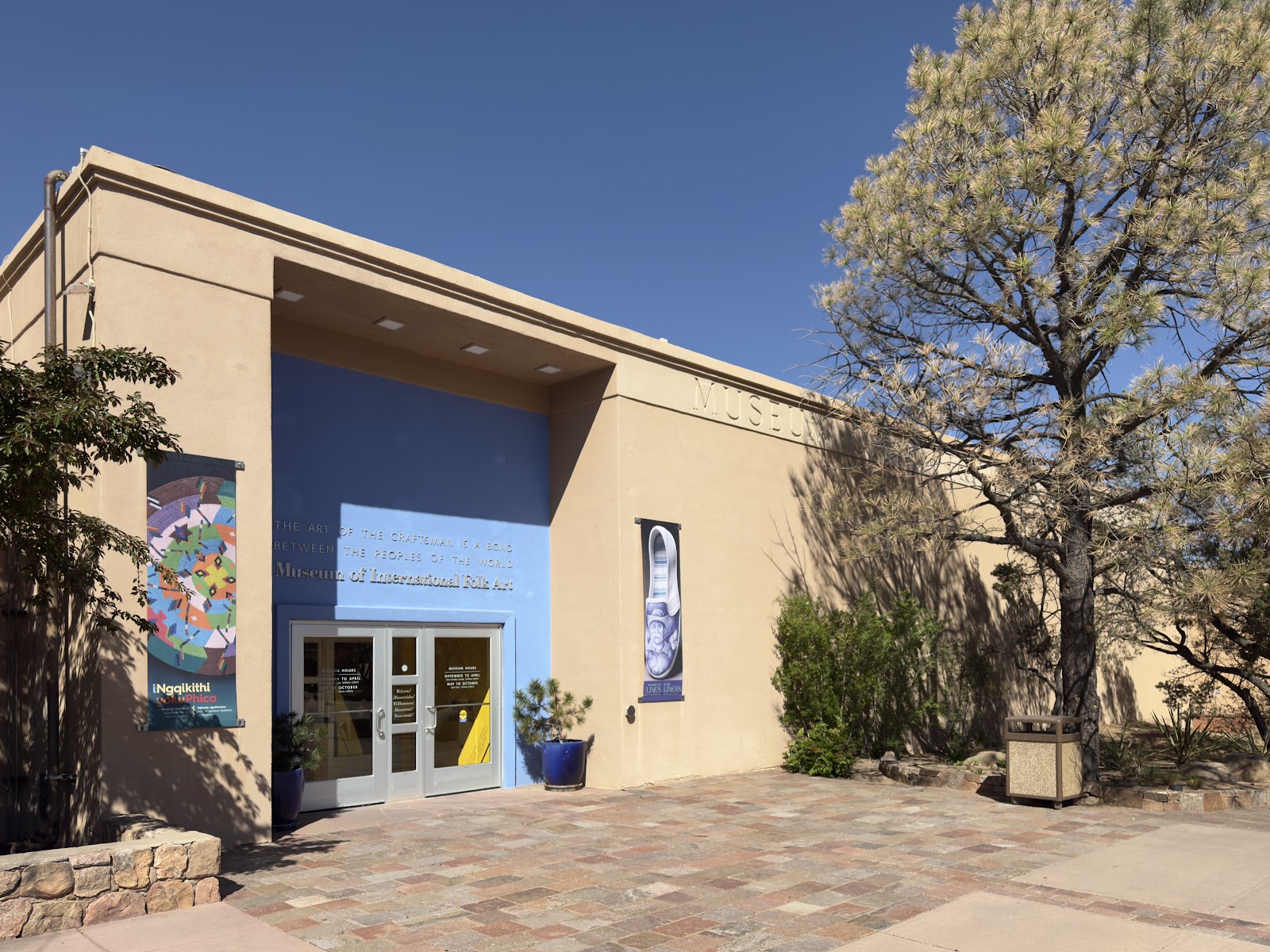
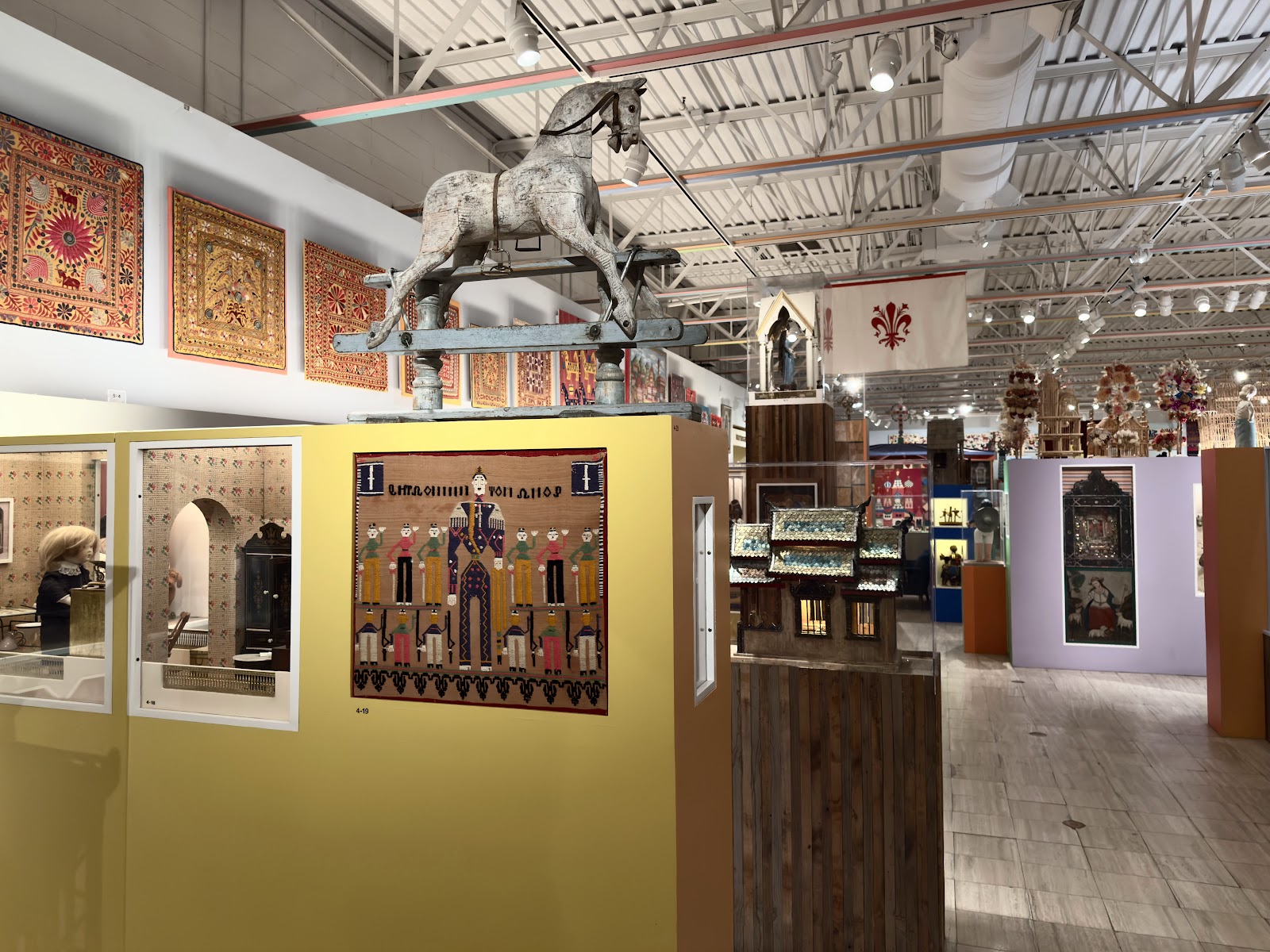
In the museum’s architectural spaces rather than its dense galleries. Almost every museum has circulation areas, lobbies, courtyards and plain-walled halls, and those are where people photograph well — clean backgrounds, more even light, and far fewer restrictions.
Museum Hill also has a genuine advantage: it is a hilltop site with views across the Santa Fe basin toward the mountains, and the buildings are adobe-form with the warm bounce that makes Santa Fe light so good. Outside the museum you have architectural shade, warm reflected light and a mountain horizon.
So the plan is inverted from what couples usually imagine. Use the collection for one or two remarkable frames, and use the architecture and the hilltop for the photographs you will actually hang on a wall.
What about the light and the rules?
Gallery lighting here is what it is everywhere: pooled, warm, aimed at objects rather than faces. Stand someone directly beneath a fixture and you get a bright forehead and dark eyes. Work at the edge of a pool so the light rakes across the face, or find where two pools overlap and the light broadens.
Assume flash is restricted near the collection. Folk art includes textiles, painted wood and pigments that are light-sensitive, and a museum holding the largest such collection in the world will protect it. Plan a natural-light approach in the galleries: fast primes wide open, ISO accepted in advance, white balance set manually because gallery fixtures are warm and rarely match.
Arrive with a short specific list rather than a general request. Asking for ten minutes in a named space with hand-held cameras is easy to grant; asking to photograph throughout with lighting is not.
Is it worth it, then?
Yes, for the right couple, and the reason is meaning rather than mechanics. A wedding at a museum holding the world’s largest folk art collection says something about the people getting married, and the Girard Wing is a genuinely extraordinary human achievement that most people never see. Photographs taken there carry that.
It is also a distinctive setting in a city where the default is adobe. A gallery containing a Girard tableau alongside Santa Fe’s earth-toned streets has a range that neither produces alone.
What it is not is an easy venue for conventional wedding portraiture, and a couple expecting soft romantic frames against a clean background should know that before booking. Museum Hill’s exteriors and the museum’s architectural spaces will deliver those; the collection itself will not.
For a timeline: architectural and exterior portraits in the last hour of daylight when Museum Hill’s adobe and the mountain horizon are at their best; one or two considered frames in the dense galleries during whatever access window you are granted; and the mountain view for groups, since the hilltop has room and the galleries do not.
What works in your favour
- Genuine cultural significance — the world’s largest international folk art collection
- The Girard Wing is an extraordinary room that few people ever see
- A hilltop site with Santa Fe basin and mountain views for exteriors and groups
- Adobe-form architecture outside gives the warm bounce that flatters faces
- A distinctive setting in a city where almost everything else is adobe
What to plan around
- The densest backgrounds of any venue type — hundreds of competing small figures and faces
- Even with separation, compression and added light, these remain busy photographs
- Assume flash restricted near light-sensitive textiles and pigments
- Gallery lighting is pooled and unkind to faces without careful placement
- Not a venue for conventional soft romantic portraiture
More frames from Museum of International Folk Art
Museum of International Folk Art wedding photography: common questions
Why are the Girard Wing backgrounds so difficult?
Because a photograph is a hierarchy and the eye goes to the brightest, sharpest, most human thing in frame — and a Girard tableau contains hundreds of brightly coloured human figures. Your couple becomes two more faces among many. Separation, a longer lens and added light on the couple all help, but these remain busy photographs.
Where should the real portraits be taken?
In the museum’s architectural spaces — circulation areas, courtyards, plain-walled halls — and outside on Museum Hill. Those give clean backgrounds, more even light and fewer restrictions. Use the collection for one or two remarkable record frames, not for the portraits you will hang on a wall.
Can we use flash in the galleries?
Assume not. Folk art includes textiles, painted wood and pigments that are light-sensitive, and a museum holding the world’s largest such collection will protect it. Plan a natural-light approach: fast primes wide open, high ISO accepted in advance, and manual white balance per room.
What does Museum Hill add?
A hilltop site with views across the Santa Fe basin toward the mountains, and adobe-form architecture that provides the warm bounce which makes Santa Fe light so flattering. That combination — architectural shade, warm reflected light and a mountain horizon — is where the good portraits and the groups belong.
Who should book this venue?
Couples for whom the collection genuinely means something, and who will accept that the extraordinary rooms produce busy photographs while the architecture and the hilltop produce the beautiful ones. Anyone wanting soft romantic frames against clean backgrounds should look at a different Santa Fe venue.
More Santa Fe venue guides
We are writing a photographer’s guide to every venue we would happily shoot in Santa Fe. Here are three more, plus the full index:
- The Rosewood Inn of the Anasazi: Who This Small Hotel Suits
- The Santa Fe Opera: Building the Shot List at an Open-Air Theatre
- The Santa Fe Railyard: Field Notes on an Industrial District
Planning a wedding at Museum of International Folk Art?
This venue is remarkable and it is hard to photograph people in. Tell us your date and we will plan one or two frames in the collection and put the real portraiture where it belongs.