 The Hotel St. Francis: A Walk-Through of Santa Fe’s Oldest Hotel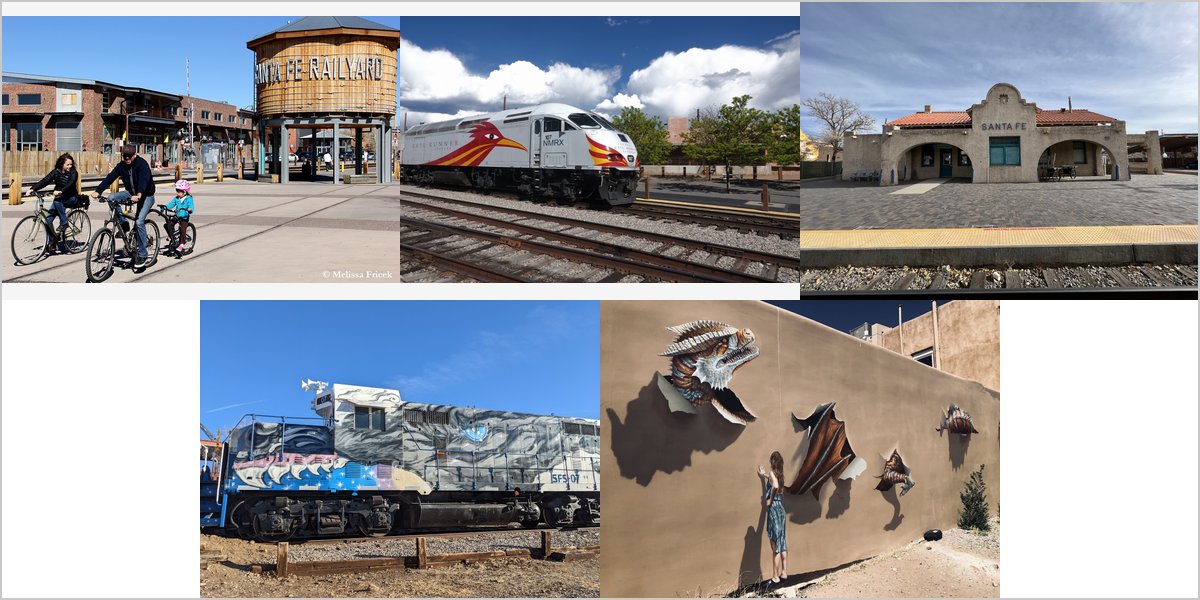
May 27, 2026
The Santa Fe Railyard: Field Notes on an Industrial District
The one part of Santa Fe that is not adobe. Steel, corrugated metal and rail track — which is exactly why it is worth photographing.
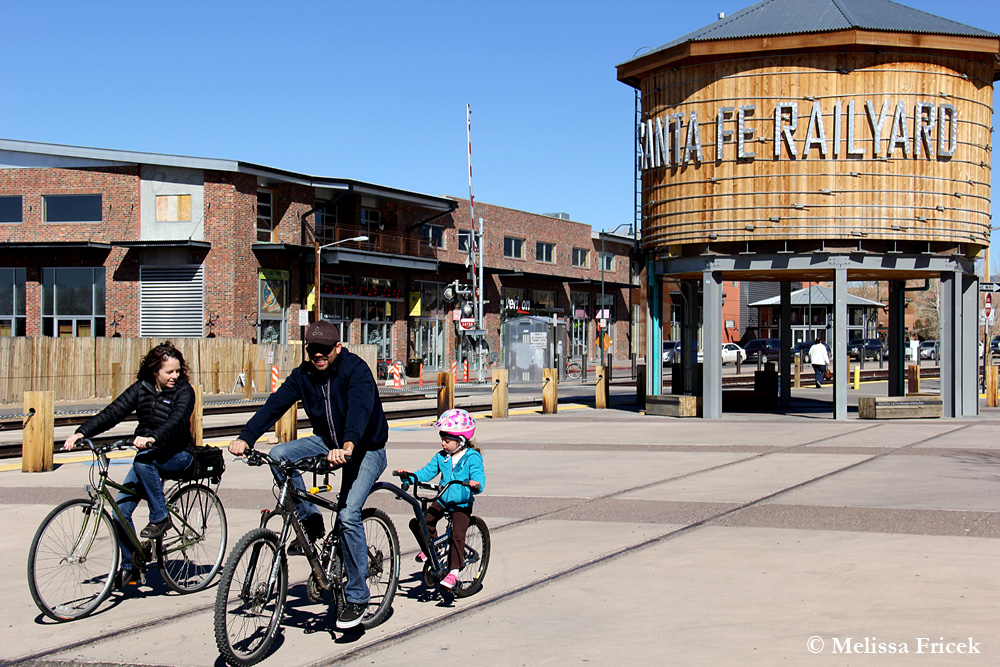
The Santa Fe Railyard is a redeveloped district south of the Plaza, built around the historic rail depot and the working Rail Runner line, with converted warehouse buildings, a public plaza, galleries and event spaces. It was redeveloped in the 2000s with a deliberate industrial character retained.
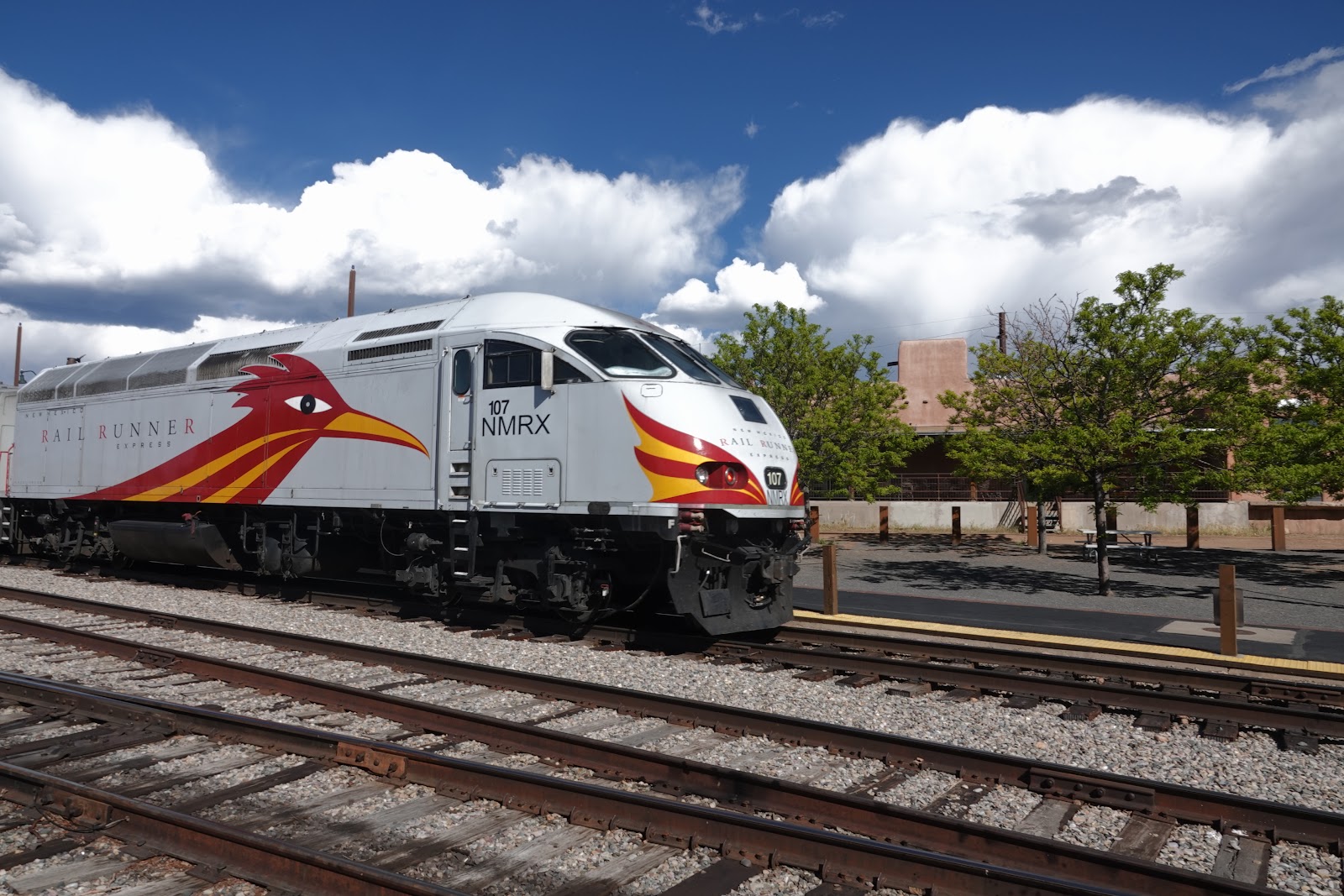
Photographically it is the counterweight to everything else in this city. Santa Fe’s building code keeps the historic centre uniformly adobe and earth-toned, which is beautiful and, across a whole wedding gallery, can become monotonous. The Railyard supplies steel, corrugated metal, concrete, rail track and hard edges — the visual register the rest of the city does not have.
These are field notes on three problems and how to use the district. We have not photographed a wedding here; industrial materials and high-desert light behave predictably. Which spaces are bookable, whether the plaza is public during your event and any rail-safety constraints are for the venue operators and should be confirmed.
Santa Fe Railyard at a glance
| Where | South of the Plaza, Santa Fe, New Mexico — the redeveloped rail district |
| Character | Converted warehouses, a public plaza, galleries, the historic depot and working rail line |
| Materials | Steel, corrugated metal, concrete and rail track — not adobe |
| Light | Hard high-desert sun with no adobe bounce to soften it |
| Ask first | Whether the plaza is public during your event, and rail-safety constraints |
Problem one: no adobe means no free warm bounce
Everywhere else in Santa Fe, the thing that rescues the harsh 7,000-foot light is adobe — warm earth-toned walls bouncing soft warm light into deep shade. In the Railyard those walls are largely absent. Steel is dark and neutral, corrugated metal is grey and specular, and concrete is a mid-grey that returns very little and adds no warmth at all.
The consequence is that the high-desert contrast problem arrives without its usual solution. Open sun at midday gives you hard shadows and blown highlights with nothing filling the shade, and faces in shade go cool and flat because there is no warm surface returning light to them.
So you supply what the architecture does not. A warm-gelled fill on faces is genuinely transformative here, far more so than at an adobe venue where the walls do it for free. And seek out the few warm surfaces that do exist — weathered timber, rusted steel, brick — because rust and old wood bounce warm light in a way galvanised metal never will.
Problem two: corrugated and galvanised metal is specular
Galvanised and corrugated metal behaves partly like a mirror, and unlike flat steel it is ribbed, so it throws long streaked specular highlights that follow the corrugations. A bare flash near a corrugated wall produces a hard bright stripe. Direct sun on it produces a row of them.
Used deliberately that is a strong graphic effect — a line of highlights running along a ribbed wall is genuinely attractive and reads unmistakably as industrial. Used carelessly it is a distraction that pulls the eye off the couple.
The control is angle and source size. Shoot obliquely to a corrugated surface rather than square-on, use a large modifier so the reflection is a soft band rather than a hot line, and keep your light well off axis so its reflection is not directly behind your subject. The same discipline as photographing brewing tanks or glazed tile.
Problem three: it is a working district, not a venue
The Railyard has a working rail line, a public plaza, galleries with their own trade, a farmers’ market on some days and ordinary pedestrian traffic. That means backgrounds need scouting and it means strangers in wide frames unless a space is genuinely exclusive to you.
Ask specifically whether the plaza is public during your event, and ask about rail safety — a live line has rules, and standing on or near track for a photograph is not something to improvise. Operators will have clear guidance and it should be followed rather than negotiated.
Practically, plan to work tighter than at a private venue: longer lenses, shallower depth of field, and frames composed to exclude rather than include the surroundings. Early morning is the only genuinely quiet time, and it is also when the light is best, so an early start solves two problems at once.
How to actually use the district
The value here is contrast, so use it as one part of a wider Santa Fe day rather than the whole thing. A gallery that pairs warm adobe courtyards with steel and rail track has visual range that neither environment produces alone, and the Railyard’s ten minutes may be the frames that make the set feel considered rather than uniform.
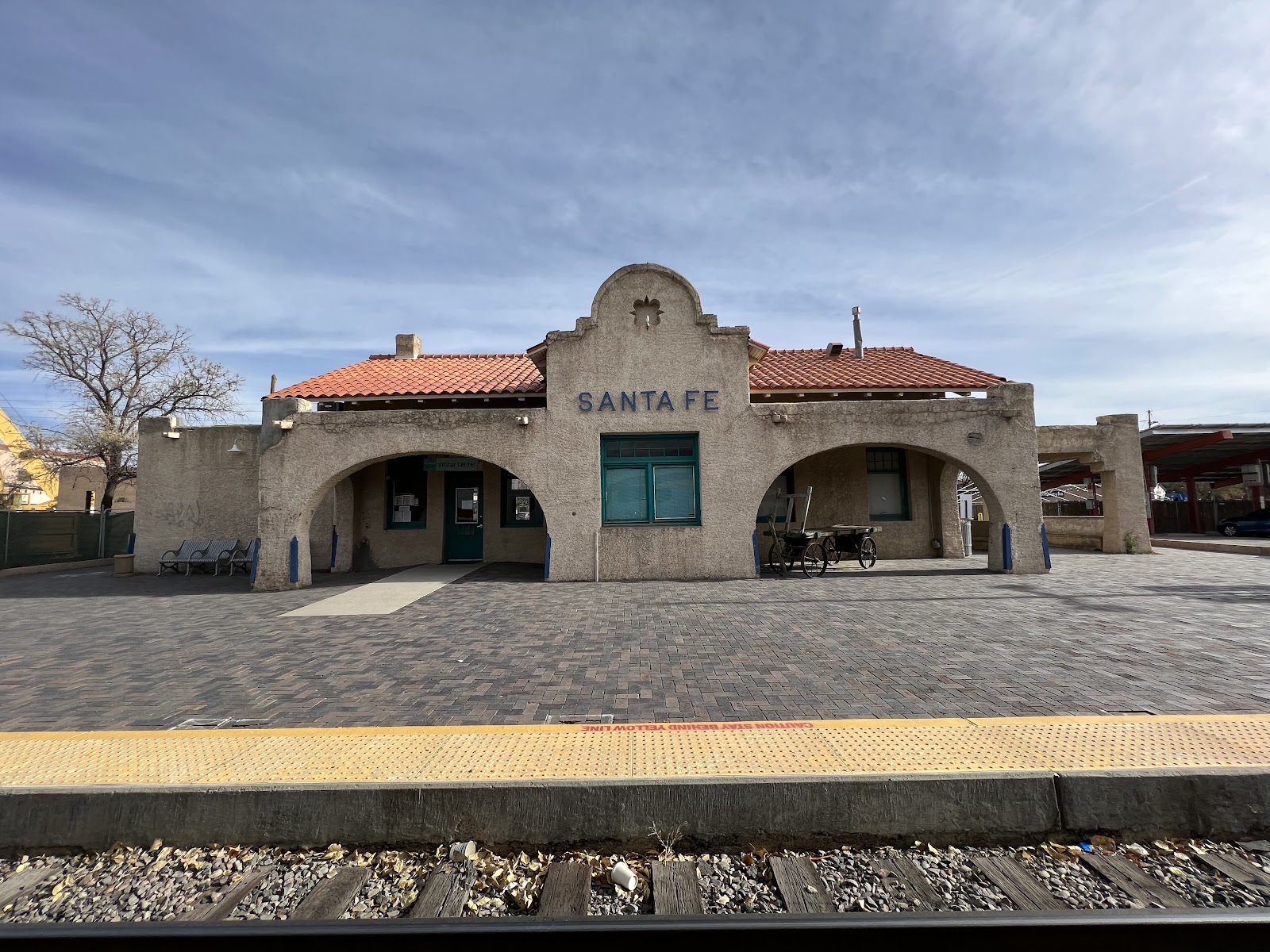
The strongest frames are the ones that could only be here: a couple against corrugated metal with the light raking along the ribs; rail track receding as a compositional line; the historic depot’s architecture; a warehouse door as a hard frame. Take those and do not try to make the district do soft and romantic, because it will not.
Light-wise, the last hour before sunset is when this district transforms. Low sun on steel and rusted metal is warm, raking and dramatic, and it gives you the warmth the materials cannot supply themselves. Before that, work in the shade of the buildings with a gelled fill.
And the twenty minutes after sunset is worth ten minutes: industrial districts photograph well at dusk, with any installed lighting coming up against a deep high-altitude sky that at this elevation holds colour longer and more intensely than it does at sea level.
What works in your favour
- The one visual register Santa Fe’s adobe centre does not offer — genuine contrast for a gallery
- Rail track, corrugated metal and warehouse doors give hard graphic compositional elements
- Low sun raking along ribbed metal is dramatic and supplies the warmth the materials lack
- Dusk works well, with intense long-lasting high-altitude sky colour
- A short distance from the Plaza, so it combines easily with an adobe venue
What to plan around
- No adobe bounce, so the harsh high-desert contrast arrives without its usual fix
- Faces in shade go cool and flat; a warm-gelled fill is close to essential
- Corrugated and galvanised metal throws streaked specular highlights
- A working district with a live rail line, public plaza and ordinary foot traffic
- Will not produce soft romantic imagery — it is hard-edged by nature
More frames from Santa Fe Railyard
Santa Fe Railyard wedding photography: common questions
Why is the light harder here than elsewhere in Santa Fe?
Because there is no adobe. Everywhere else in the city, warm earth-toned walls bounce soft warm light into the shade and rescue the harsh 7,000-foot sun. In the Railyard the surfaces are steel, galvanised metal and concrete — dark or grey, and adding no warmth at all — so the contrast problem arrives without its usual solution.
What should we bring that we would not need at an adobe venue?
A warm-gelled fill light. At an adobe venue the walls do that job for free; here nothing does, so faces in shade go cool and flat. A gelled fill is genuinely transformative in this district rather than merely useful.
How do you photograph corrugated metal?
Obliquely rather than square-on, with a large light source kept well off axis. Ribbed galvanised metal throws long streaked specular highlights that follow the corrugations — attractive as a deliberate graphic effect, distracting when accidental. A big modifier turns a hot line into a soft band.
Is it a private venue?
Not entirely — it is a working district with a live rail line, a public plaza, galleries and ordinary foot traffic. Ask specifically whether the plaza is exclusive during your event and what the rail-safety rules are. Early morning is the quietest time and also the best light, so an early start solves both.
Should the whole wedding be here?
We would use it as one part of a wider Santa Fe day rather than the whole thing. Its value is contrast: a gallery pairing warm adobe courtyards with steel and rail track has range that neither gives alone. Ten minutes here may be what makes the set feel considered rather than uniform.
More Santa Fe venue guides
We are writing a photographer’s guide to every venue we would happily shoot in Santa Fe. Here are three more, plus the full index:
- Bishop’s Lodge: A Season-by-Season Photography Guide
- The Eldorado Hotel: Working a Large Pueblo Revival Hotel
- The Georgia O’Keeffe Museum: Who This Venue Suits
Planning a wedding at Santa Fe Railyard?
This district is the contrast that stops a Santa Fe gallery looking uniform. Tell us your date and we will plan ten or fifteen minutes here at the hour when steel goes warm.