 The Rio Grande Zoo: Cottonwood Shade and the Enclosure Problem
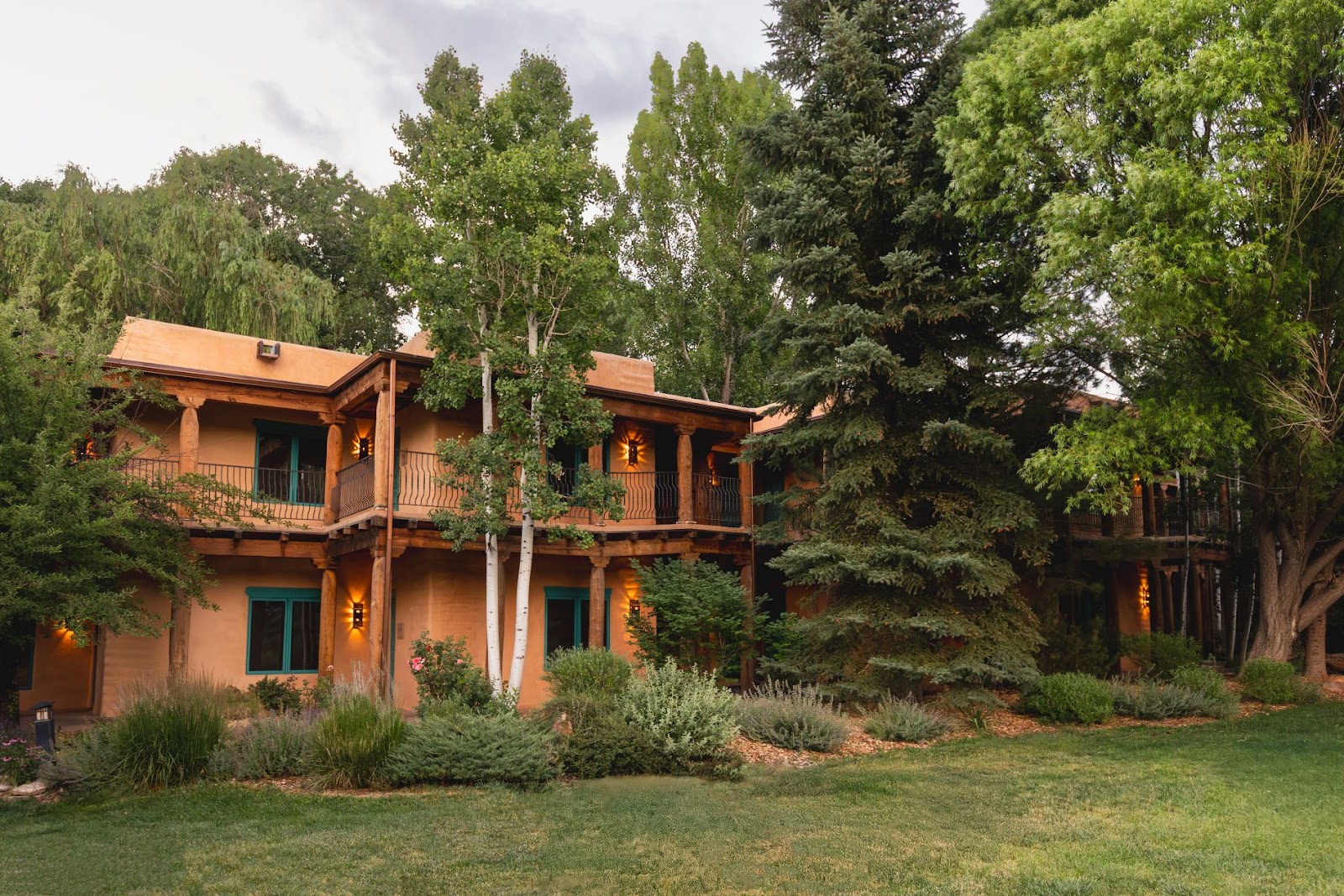
El Monte Sagrado, Taos: The Light Through a High-Desert Day
At seven thousand feet the good and bad hours are further apart than at sea level. The schedule matters more here.
At altitude the photographic day is more sharply divided than at sea level, and the reason is physical rather than aesthetic. Taos sits at close to seven thousand feet, where there is roughly a quarter less atmosphere overhead to scatter sunlight — so direct sun is harder, shadows go deeper, and the gap between a usable hour and an unusable one is wider than anywhere lower.
At a resort with planted grounds and water, that produces a clear timetable rather than a set of options. The shaded and planted areas carry the middle of the day; the water and the open ground carry the ends of it; and the ten minutes after the sun leaves the valley belong to the mountains to the east.
This is that day in order, with the altitude effects named where they arrive.
We have not photographed a wedding at El Monte Sagrado; planted grounds, water features and high-desert light behave predictably. Which areas are included, whether the grounds are available and whether the lighting is adjustable are questions for their team.
El Monte Sagrado at a glance
| Where | Taos, New Mexico, at about 7,000 feet |
| Morning | Open ground and water while the sun is still low and across |
| Midday | Planted shade and any courtyard — nothing in the open is usable |
| Evening | Water at low sun, then alpenglow on the mountains to the east |
| Ask first | Areas included, grounds access, lighting control, monsoon alternative |
Morning, and the unusable middle
The first hours after sunrise are better here than at sea level and almost nobody uses them. Low sun through very clear thin air is strong, directional and warm, and it comes across faces rather than down onto them; the air is at its stillest before the day’s heating begins, which matters if there is water to reflect; and the mountains to the east are lit directly, which they are not later.
That last point is worth dwelling on, because it is a genuine local advantage. The Sangre de Cristo range stands immediately east of Taos, so at sunrise it is frontlit and fully legible, while in the evening it is only lit by the last red light after the sun has gone. Both are good frames and they are completely different, and the morning one is available to anyone willing to be up.
Through mid-morning the sun climbs quickly and the open ground becomes progressively harder. The transition is faster than at lower altitude because there is less atmosphere to soften the climb, and by two hours after sunrise the difference between a lit and an unlit surface is already beyond what a single exposure comfortably holds.
The middle of the day is not usable in the open, and that should be stated plainly rather than worked around. At Taos’s latitude — about thirty-six degrees north — the June midday sun reaches roughly seventy-seven degrees above the horizon, near enough to straight down that eye sockets go black and every chin gets a hard shadow; and at this altitude the shadows are deeper and harder than the same angle gives at sea level.
There are two places to be instead, and both are architectural or planted rather than accidental.
The first is dense planted shade. Full shade under a mature canopy is excellent, and better in a high desert than elsewhere, because the pale ground bounces light up into the shadows a high sun carves. The rule is absolute: full shade only. Dappled light through a thin canopy puts bright patches and deep shadow on the same face, and at this altitude that ratio is further beyond rescue than anywhere lower.
Dense planting also throws green onto skin from whichever side it sits — localised, so global white balance cannot remove it. A custom white balance set on a face in the position being used, or one gelled source owning the faces, is the fix, and a metre further from the foliage roughly halves it.
The second is any courtyard or enclosed outdoor space, which in this climate is the primary outdoor venue rather than an amenity: sky above as the source, walls bouncing into the shadows, and the building blocking direct sun. It stops working only in the hour or two either side of solar noon in summer, when the sun clears the parapet — and never in winter, when it does not get high enough to get in at all.
Afternoon, evening, and the water
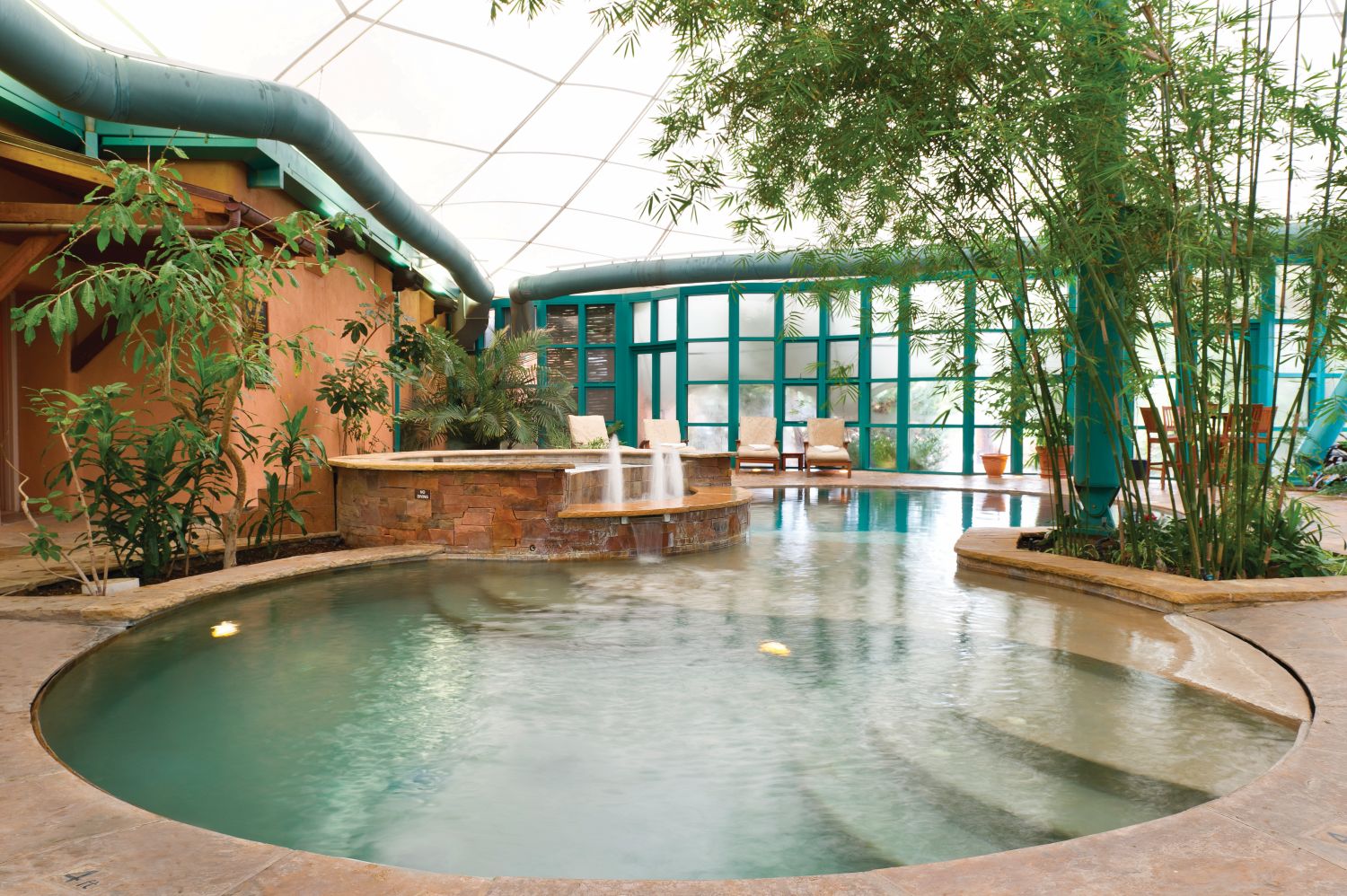
Through the afternoon the shade holds and the water becomes the main asset, because water does three separate things in a climate like this.
It bounces light upward, filling exactly the shadows a high sun carves under eyes and chins — which means standing in shade with water in front of you is materially better light than standing in shade with paving in front of you. At a venue built around water there are several such positions and they are worth identifying on arrival.
It reflects, which doubles anything lit and gives a second version of every structure and every planting mass for free. That follows one rule: camera height decides everything. A low camera looking across the surface sees a mirror that reflects the sky and whatever stands beyond it; a high camera looking down sees through to the bottom. Half a metre of camera height changes the frame completely, and the low position is usually the good one.
And it produces specular glare in direct sun — highlights several stops above everything else in the frame, which clip completely and fool any metering system into underexposing faces. A circular polariser cuts that substantially and simultaneously deepens the sky, which at this altitude it does more effectively than at sea level because the sky is already less hazy. It is the one filter genuinely worth carrying here, and its two-stop cost is irrelevant in this much light.
Movement is the fourth water variable and a deliberate one: a long exposure smooths the surface and strengthens reflections, a short one holds every ripple. In bright high-desert daylight the long version needs a neutral density filter, which is the second filter worth having.
The last ninety minutes are when the open ground becomes usable again and the resort is at its best. Low sun through clear thin air rakes every surface it touches, which is what makes adobe, stone and planting read; the water becomes a sheet of warm light; and the shadows lengthen across pale ground into a texture of their own.
Then the local reversal. Because the mountains are east of the town, the sun leaves the valley floor well before the published sunset time — so the golden hour on the ground is earlier and shorter than a table suggests, and it should be judged by looking rather than reading. And after the valley is in shadow, the west faces of the range light up strongly red, which is the frame Taos is known for and the reason the range is named as it is.
That alpenglow lasts a very short time and it happens after most photographers have stopped. Any position with a clear eastward view is worth walking to, and the water is the best of them, because the range appears twice.
The crossing after that — when the sky still holds colour at the brightness of the grounds’ own lighting — is shorter here than at sea level, because dry thin air gives less afterglow. It is a scheduled ten minutes.
- Use the first hour: the mountains are frontlit only in the morning
- Full shade only; at this altitude dappled light is further beyond rescue
- Camera low across water for the mirror; carry a polariser and an ND
- Judge the golden hour by looking — the range shadows the valley early
- Walk to an eastward view for alpenglow; the water gives it twice
The year, and the practicalities
The monsoon is the high desert’s defining season and for a photographer it is the best thing that happens here. From roughly July into September, afternoon moisture builds enormous cumulus towers over the mountains, and those clouds are the only reliable diffusion this climate offers. A monsoon afternoon gives soft directional light, saturated colour and the most dramatic skies of the year, and a monsoon sunset is the best light Taos produces.
It carries a real hazard rather than an inconvenience: these storms produce lightning, and a party on open ground or beside water under a building storm is at genuine risk. A named indoor or courtyard alternative is a requirement rather than a courtesy, and it should be respected rather than pushed for one more frame.
Outside the monsoon the sky is usually cloudless, which means waiting for diffusion is not a plan. Shade, planting, courtyards and water are the plan, and they are all reliable.
Winter is the other distinctive season and it is genuinely good. At this latitude the December midday sun reaches only about thirty degrees above the horizon, which means the whole short day is raking light rather than overhead light — so the grounds are usable from morning to evening instead of at the two ends, and any courtyard works all day because the sun never clears the parapet.
Snow is common at this altitude and it does two useful things. Outdoors it is the best natural fill available, lifting exactly the shadows a low sun carves while fooling a meter by about two stops. And snow against warm adobe and dark conifer is the strongest colour contrast the region offers — a genuinely distinctive frame rather than a seasonal compromise.
The diurnal swing is the altitude effect that most affects a wedding day, and it is larger than people expect. Thin dry air holds very little heat, so the temperature can drop twenty degrees Celsius between afternoon and evening. A party comfortable at four o’clock is cold at eight, an outdoor reception needs that anticipated rather than discovered, and equipment cooling rapidly can condense. A bag opened early, and coats available, are the whole fix.
Two other altitude practicalities. Ultraviolet is markedly higher here, so a party standing outdoors for an hour will burn faster than expected — worth mentioning in advance. And anyone arriving from sea level feels the altitude: a wedding party walking grounds and climbing stairs at seven thousand feet tires faster than they would at home, which is a reason to keep the portrait route short and close rather than ambitious.
The best months, taken together, are late September and October — the monsoon has passed, the air is at its clearest, the aspen and cottonwood colour arrives, and sunset falls at a civilised hour. Late May and June are the other window, with long days and reliable weather, at the cost of a completely cloudless sky and the hardest midday sun of the year.
More frames from El Monte Sagrado
El Monte Sagrado wedding photography: common questions
Why does the schedule matter more at altitude?
Because there is about a quarter less atmosphere overhead to scatter sunlight, so the gap between a usable hour and an unusable one is wider than anywhere lower.
When are the mountains best?
Morning for the frontlit version, and the few minutes after the sun leaves the valley for alpenglow. They are completely different frames.
What carries the middle of the day?
Dense planted shade and any courtyard. Nothing in the open is usable, and full shade only — dappled light at this altitude is beyond rescue.
What does the water do?
Three things: it bounces light upward to fill facial shadows, it reflects and doubles anything lit, and in direct sun it produces glare that clips and fools the meter.
Is the monsoon good or bad?
Photographically the best thing that happens here — those clouds are the only reliable diffusion in the region. The lightning is a genuine hazard needing an alternative.
What practical warning should a couple get?
The evening temperature drop, which can be twenty degrees, and the ultraviolet, which is markedly higher at this altitude than they will be used to.
More New Mexico venue guides
We are writing a photographer’s guide to every venue we would happily shoot in New Mexico. Here are three more, plus the full index:
- The Hotel Luna Mystica, Taos: What It Suits, and What It Does Not
- The Solar Center, Taos: The Problem, and Four Ways Out
- The Taos Inn, New Mexico: Field Notes on Adobe and Altitude
Planning a wedding at El Monte Sagrado?
A day with sharp edges. Tell us your date and we will time each part.