 The Hotel St. Francis: A Walk-Through of Santa Fe’s Oldest Hotel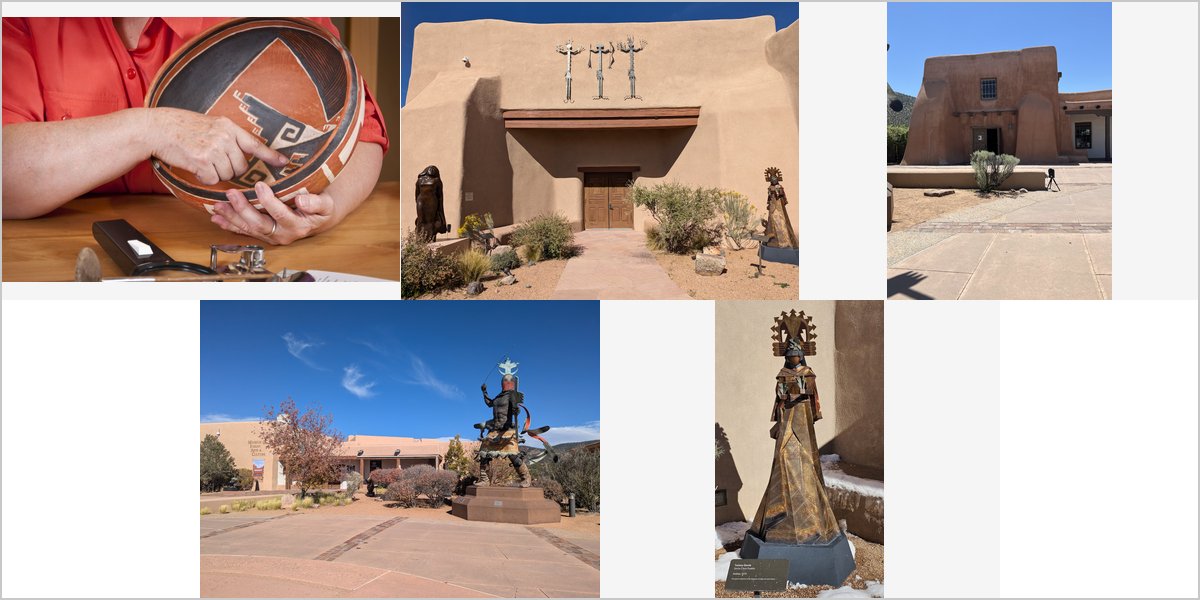
July 1, 2026
The Museum of Indian Arts and Culture: Building the Shot List
A hilltop museum with an outdoor amphitheatre and a basin view. The exterior does most of the work, and the collection deserves care rather than use as a backdrop.
The Museum of Indian Arts and Culture sits on Museum Hill, southeast of central Santa Fe, devoted to the arts, histories and living cultures of Native peoples of the Southwest. The site includes indoor galleries, an outdoor amphitheatre, and the hilltop’s long views across the Santa Fe basin toward the surrounding mountain ranges.
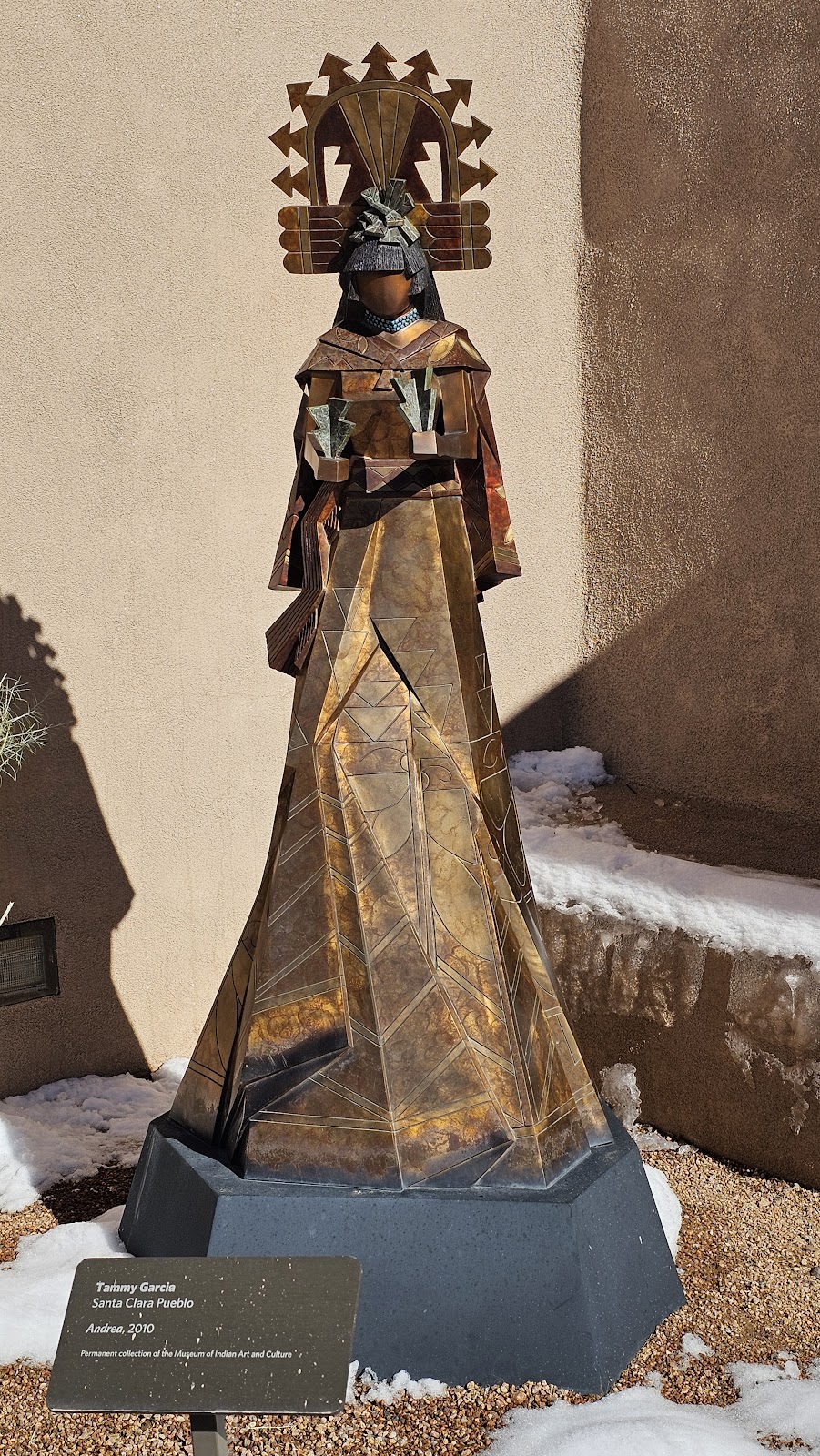
This guide is a shot list, and it starts with a point about approach rather than technique. A museum of living cultures is not a decorative backdrop. The material it holds carries religious and cultural significance for communities who are present and who did not consent to being scenery in someone’s wedding album. The respectful and also the better photographic decision is to build the day around the architecture and the landscape, and to treat the collection with restraint.
We have not photographed a wedding here. The behaviour of the hilltop light and the amphitheatre is predictable; which spaces are available, photography policy and any cultural protocols are entirely for the museum, and those protocols should be asked about specifically and followed without negotiation.
Museum of Indian Arts and Culture at a glance
| Where | Museum Hill, southeast of central Santa Fe, New Mexico |
| Devoted to | The arts, histories and living cultures of Southwest Native peoples |
| Spaces | Indoor galleries, an outdoor amphitheatre, hilltop grounds with long views |
| Light | Gallery lighting inside; open high-desert light and mountain horizon outside |
| Ask first | Photography policy and any cultural protocols — and follow them exactly |
Start with the protocols, not the shot list
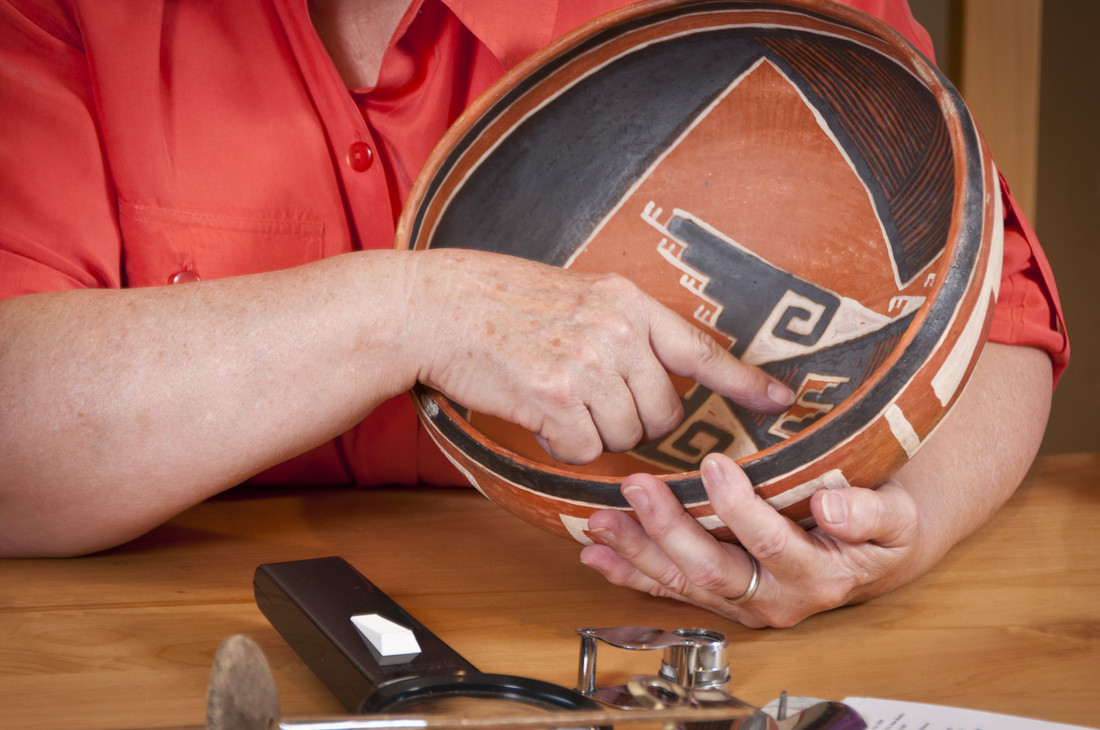
At most venues the first conversation is about access. Here it should be about protocol. Museums holding Native material culture commonly restrict photography of specific objects, categories of object, or whole galleries, for reasons that are cultural and religious rather than conservational — and those restrictions exist regardless of whether a camera would damage anything.
Ask directly what may and may not be photographed, and treat the answer as absolute. This is not a case where a persuasive request might unlock something; it is a case where the right response to a restriction is to accept it without asking twice.
Practically, that means planning a day whose photographs do not depend on the collection at all. If gallery frames turn out to be permitted, they are a bonus. If they are not, nothing in the plan breaks. That is both the respectful approach and the robust one.
The shot list, built on architecture and landscape
Six frames, none of which require access to the collection.
- The amphitheatre. Outdoor tiered seating gives levels, which arranges a group automatically and gives a ceremony a natural focus. The best built feature on the site.
- The basin view. A hilltop looking across Santa Fe toward the mountains, with thin dry air giving ranges real separation. Shot with a longer lens so the distance compresses into layers.
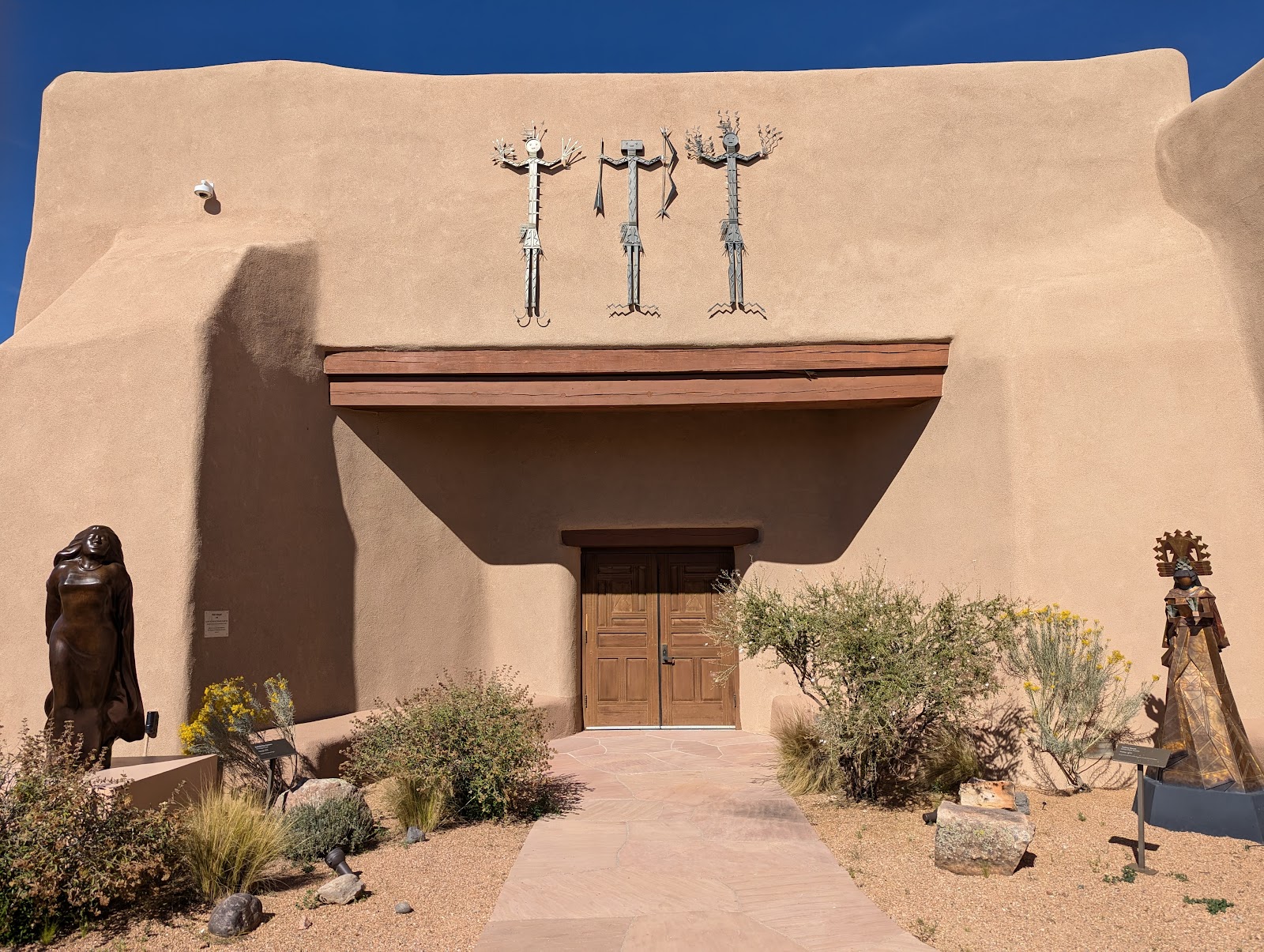
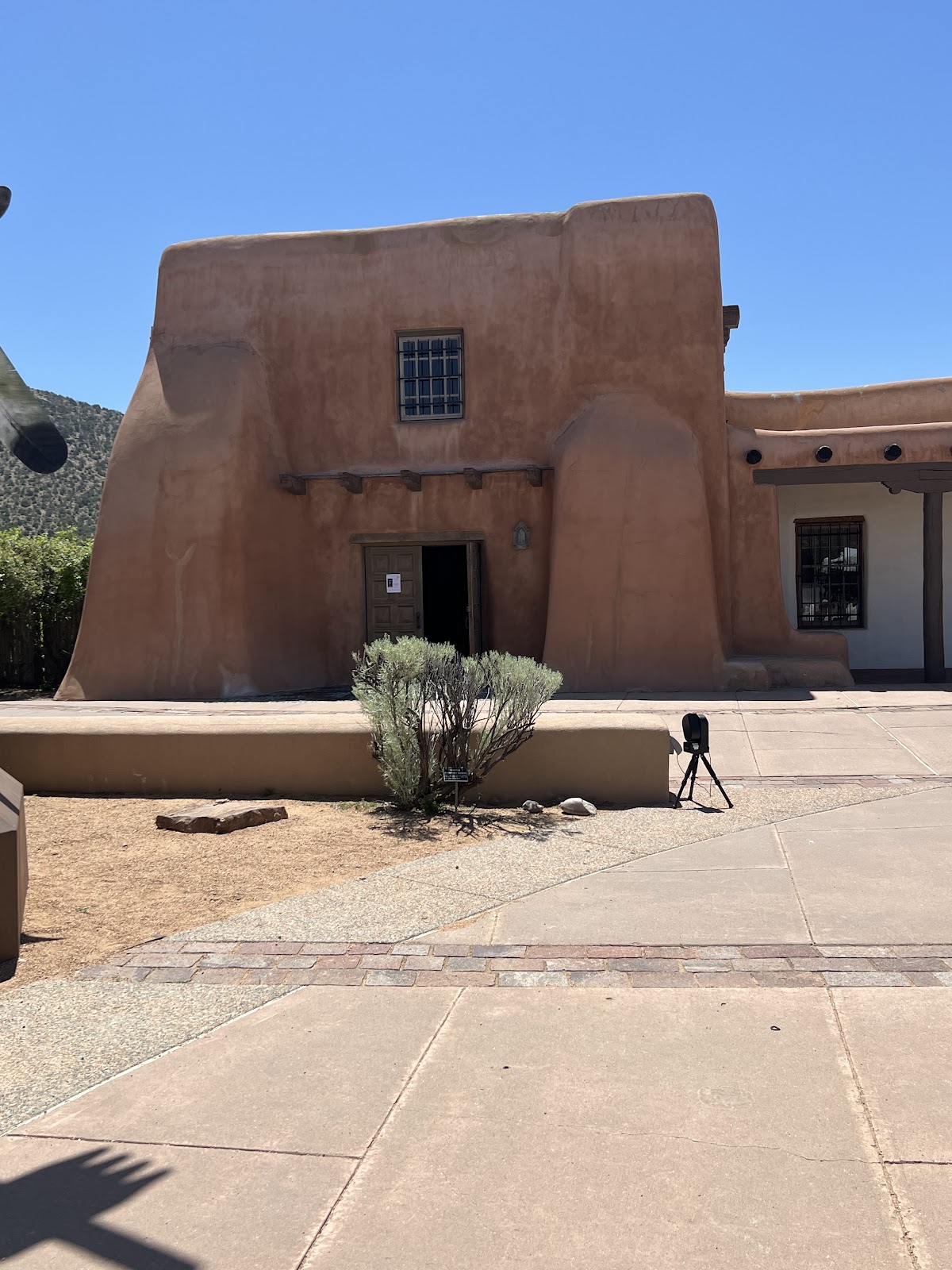
- Architectural shade. Adobe-form museum buildings give deep shade with warm bounce from sunlit walls — the characteristic good light of the region, and it works even at midday.
- A deep window reveal. Where the building has thick-walled openings, they act as natural softboxes with fast falloff. The best interior light available without touching a gallery.
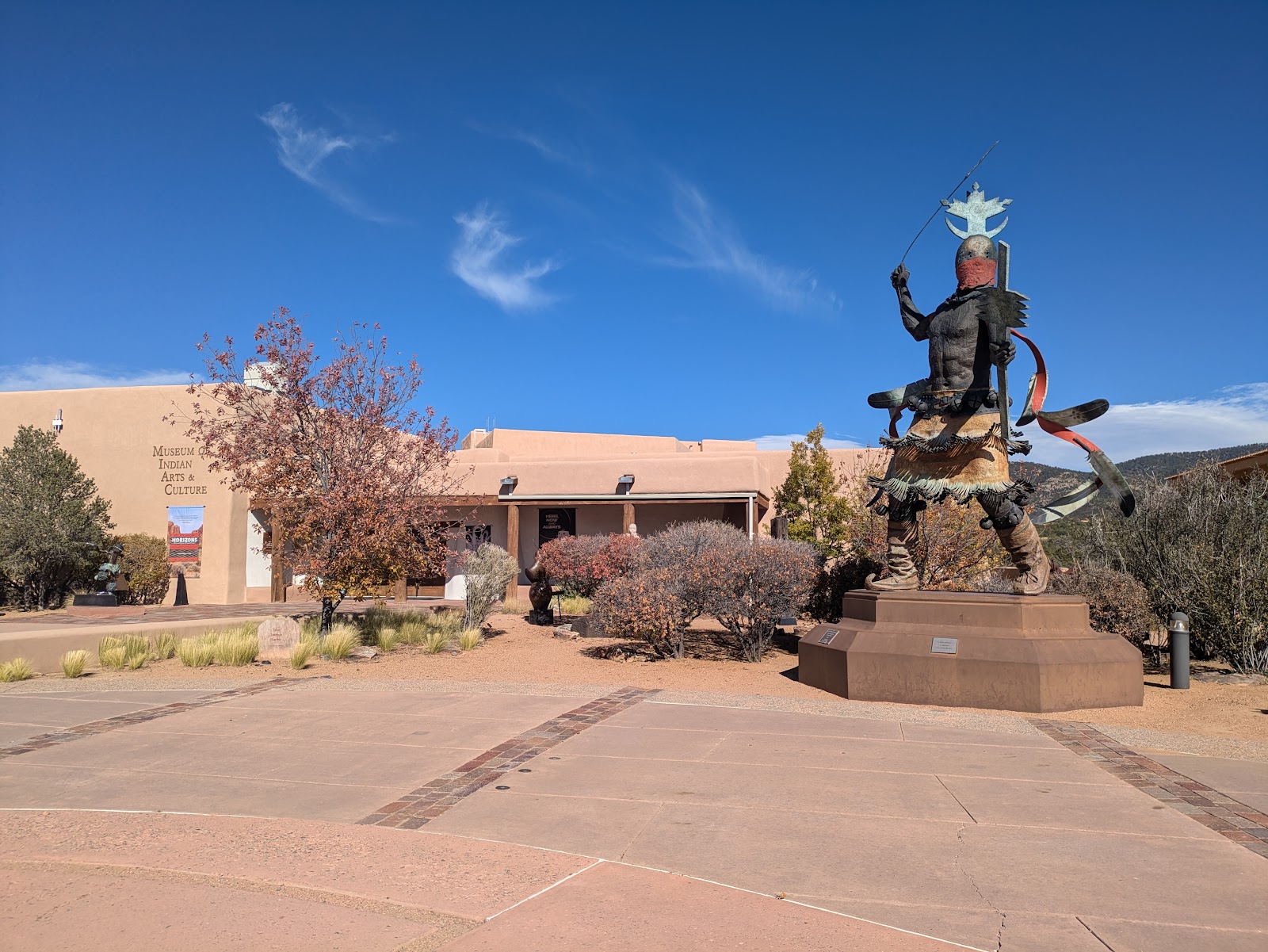
- The approach and grounds. Museum Hill’s planting is high-desert — piñon, juniper, native grasses — which is a distinct and honest landscape rather than an ornamental one.
- Dusk from the hilltop. At 7,000 feet the post-sunset sky is intense and long-lasting, and a hilltop with a mountain horizon is the ideal vantage. The best frame of the day.
The amphitheatre and the high-desert light
Tiered outdoor seating is genuinely useful and under-appreciated. It solves the hardest problem in group photography — arranging twenty or thirty people so everyone is visible and the composition is not a flat line — because the levels do it for you. It also gives a ceremony a built-in focal point and a natural place for guests to sit.
The light there is open high-desert light, which means it is excellent in the last ninety minutes and unusable in the middle of the day. At 7,000 feet, midday sun on open tiered seating gives squinting, hard shadows and blown highlights, and there is no shade. So the amphitheatre is an early-morning or late-afternoon proposition.
The adjacent architecture is the answer for the middle of the day. Adobe-form walls throw warm soft light into their own shade, which is the light that makes Santa Fe photograph well, and it is available on one side of a building or another at almost any hour.
Timing, monsoon and the practicalities
The timeline follows the light: architectural shade during the day, the amphitheatre and the basin view in the last ninety minutes, and the hilltop for the twenty minutes after sunset when the sky at altitude is at its most intense.
July and August bring the monsoon — near-daily afternoon thunderstorms on a consistent pattern of clear mornings, building cloud, storms mid-to-late afternoon and clearing evenings. On an exposed hilltop with an outdoor amphitheatre, that needs a real covered plan, and the museum’s interior is it. Ask what indoor space is available for a wet ceremony.
The compensation is that clearing monsoon storms produce the best skies of the year, and a hilltop is the best place to see them. A late-summer evening after a storm, from Museum Hill, is as good as high-desert light gets.
Two last practicalities: Museum Hill is a short drive from central Santa Fe rather than a walk, so travel time is real; and the post-sunset temperature drop at this elevation is substantial, which matters for an outdoor amphitheatre ceremony that runs late.
What works in your favour
- An outdoor amphitheatre whose tiers arrange a group automatically
- A hilltop basin view with mountain ranges reading clearly in thin dry air
- Adobe-form architecture giving warm-bounced shade that works even at midday
- Deep window reveals as natural softboxes where the building has them
- Intense long-lasting post-sunset sky from an ideal hilltop vantage
What to plan around
- Photography of the collection may be restricted for cultural reasons — plan without it
- Open amphitheatre is unusable in the middle of the day at 7,000 feet
- Monsoon thunderstorms in July and August need a genuine indoor fallback
- A short drive from central Santa Fe, so travel time is real
- Sharp post-sunset temperature drop matters for a late outdoor ceremony
More frames from Museum of Indian Arts and Culture
Museum of Indian Arts and Culture wedding photography: common questions
What should we ask the museum first?
What may and may not be photographed, and whether any cultural protocols apply. Museums holding Native material culture commonly restrict photography of particular objects or galleries for cultural and religious reasons rather than conservational ones. Treat the answer as absolute and plan a day that does not depend on the collection at all.
Is the amphitheatre useful?
Very. Tiered outdoor seating solves the hardest problem in group photography — arranging twenty or thirty people so everyone is visible — because the levels do it for you, and it gives a ceremony a natural focal point. It is unusable in the middle of the day, though: open tiers at 7,000 feet with no shade.
Where is the good light in the middle of the day?
In the architectural shade. Adobe-form walls throw warm soft light into their own shade, which is the characteristic good light of the region, and it is available on one side of a building or another at almost any hour. That is what makes Santa Fe workable when open ground is not.
What about the summer monsoon?
July and August bring near-daily afternoon thunderstorms on a consistent pattern — clear mornings, storms mid-to-late afternoon, clearing evenings. On an exposed hilltop that needs a real indoor fallback, so ask what interior space is available. The compensation is that clearing storms produce the best skies of the year.
When is the best frame of the day?
The twenty minutes after sunset from the hilltop. At 7,000 feet the post-sunset sky is more intense and lasts longer than at sea level, and a hilltop with a mountain horizon is the ideal vantage. Allow for the temperature, which drops fast and further than visitors expect.
More Santa Fe venue guides
We are writing a photographer’s guide to every venue we would happily shoot in Santa Fe. Here are three more, plus the full index:
- The Museum of International Folk Art: A Photographer Answers Your Questions
- The Rosewood Inn of the Anasazi: Who This Small Hotel Suits
- The Santa Fe Opera: Building the Shot List at an Open-Air Theatre
Planning a wedding at Museum of Indian Arts and Culture?
This is a venue to approach with the protocol conversation first and the shot list second. Tell us your date and we will plan a day built on the amphitheatre, the architecture and the hilltop light.