 Overhills Mansion: Who This Venue Suits, and Who It Doesn’t
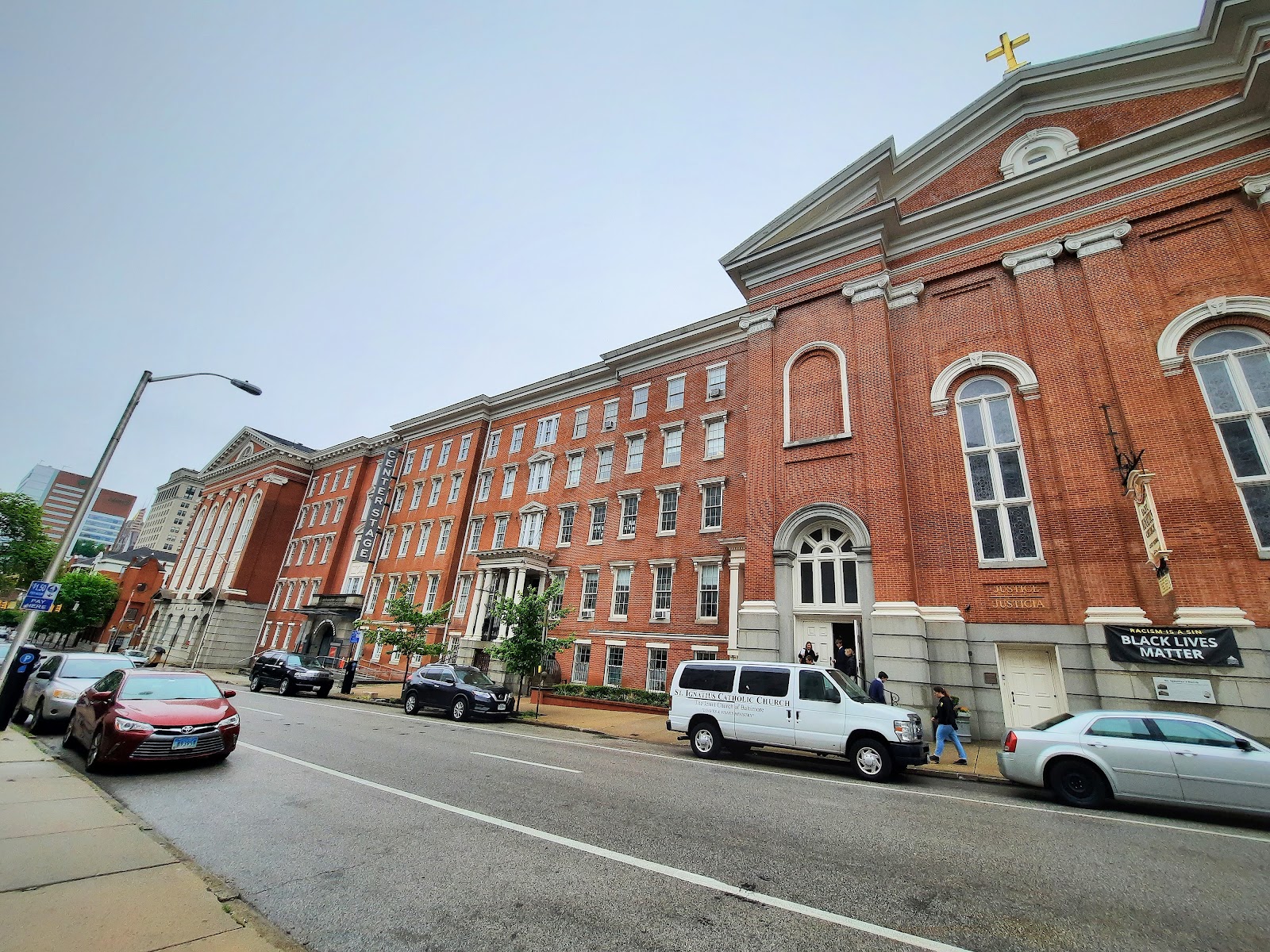
St. Ignatius Church, Baltimore: The One Decision That Governs Everything
Light through stained glass is beautiful in a room and unrecoverable on a face. That is the whole decision.
St. Ignatius Church in Baltimore is a historic church whose stained glass, as its own description notes, filters natural light into a spectrum of colour through the interior.
One decision governs every frame in the building, and it is about that colour. Light that has passed through stained glass is strongly and locally coloured — a red pane throws red, a blue one throws blue, and a figure standing in a patch of it has that colour across their skin. In a room it is one of the most beautiful effects in architecture. On a face it is unrecoverable, because white balance is a single global adjustment and cannot correct a red cast on one cheek and a blue cast on the other.
So the decision is this: coloured light is a background and a room effect, never a portrait key. Once that is settled, everything else in the building becomes straightforward. We have not photographed a wedding at St. Ignatius; historic churches behave consistently. What the parish permits — where a photographer may stand, whether flash is allowed during the ceremony, whether the sanctuary may be entered — is set by the church rather than negotiated, and it should be established before the day.
St. Ignatius Church at a glance
| Where | Baltimore, Maryland |
| Character | A historic church with significant stained glass |
| The decision | Coloured light is background and atmosphere, never a portrait key |
| Why | White balance is global; it cannot fix red on one cheek and blue on the other |
| Ask first | Where you may stand, whether flash is permitted, sanctuary access |
What coloured light does, and where it belongs
Being specific about the mechanism makes the decision obvious. A stained glass window transmits only the wavelengths its glass passes, so the light leaving a red pane is genuinely red rather than white light that looks red. When it lands on skin, skin reflects what it receives — so the affected area records as red, with no detail available in the other channels to recover from.
That is why it cannot be edited out. A global white balance shift corrects one cast and creates another; a local adjustment can reduce saturation but cannot invent the missing channel information. A face half in blue light and half in amber has two different problems at once and no single correction.
Where coloured light does belong is everywhere except faces, and there it is spectacular. Patches of colour on stone floors, on pale walls, across pews, along a pillar, on the aisle a couple is walking down — all of that reads as the effect it is, and it is one of the few things in photography that looks better in a picture than it does to the eye, because a camera records the saturation without the eye’s automatic correction.
The best use is a frame where the couple stands in white light with coloured patches behind or beside them. That reads as the church doing what it does, with faces that are recognisably faces, and it is achievable in almost any church by moving two or three metres.
Finding the white light is the practical skill. In any church, some windows are clear or lightly tinted, some areas are lit by reflected light from pale stone rather than directly, and the areas under a clerestory or near a west door are often close to neutral. One walk at roughly the ceremony hour, looking for where a hand held out reads as skin rather than as colour, locates the positions for the whole day.
The hour matters because the patches move. Coloured light from a stained glass window sweeps across a nave as the sun moves, at a rate that puts it somewhere different every twenty minutes — so a position checked at eleven is not the same position at two. The check needs doing at the hour that matters.
The rest of a church interior
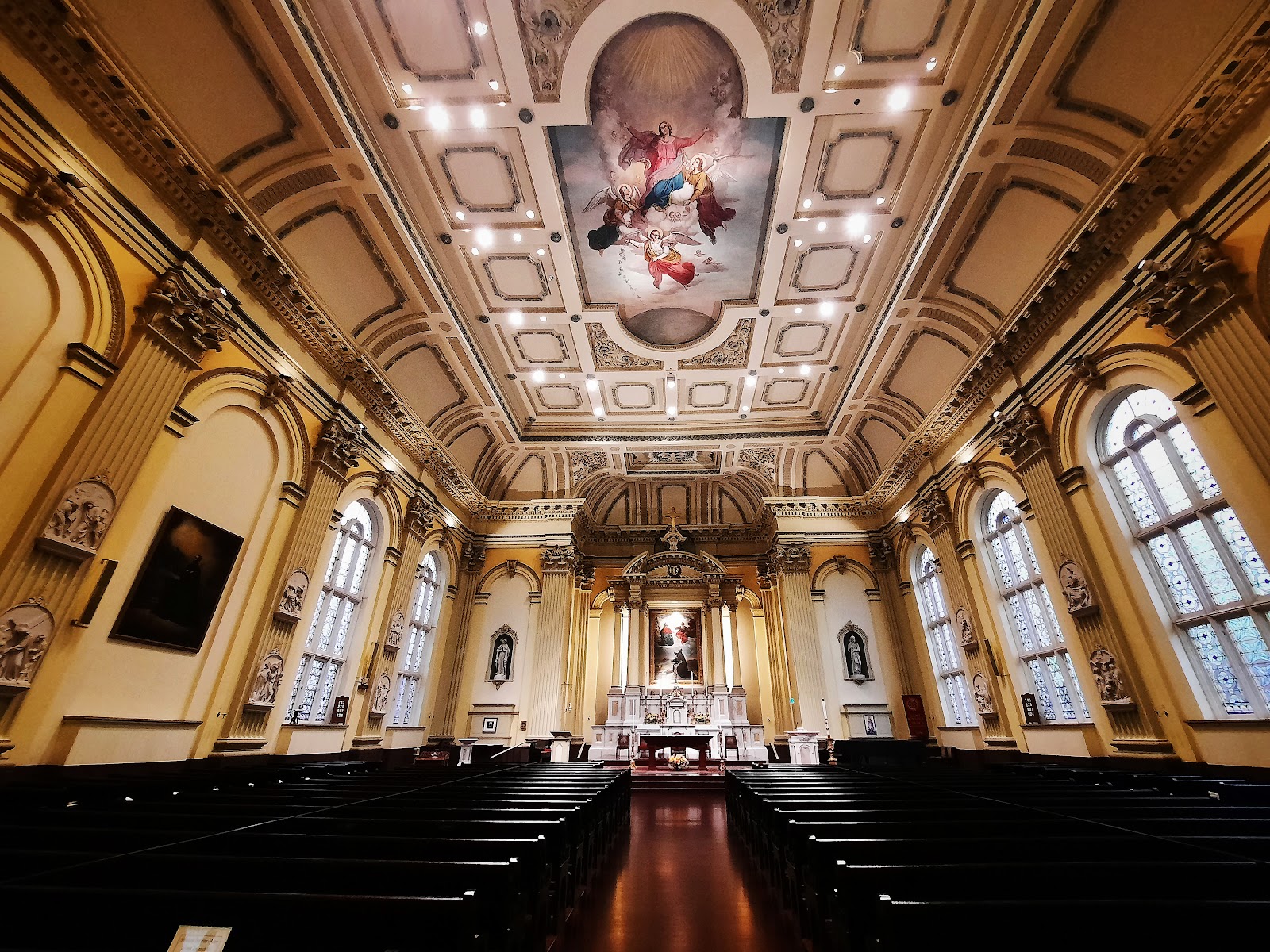
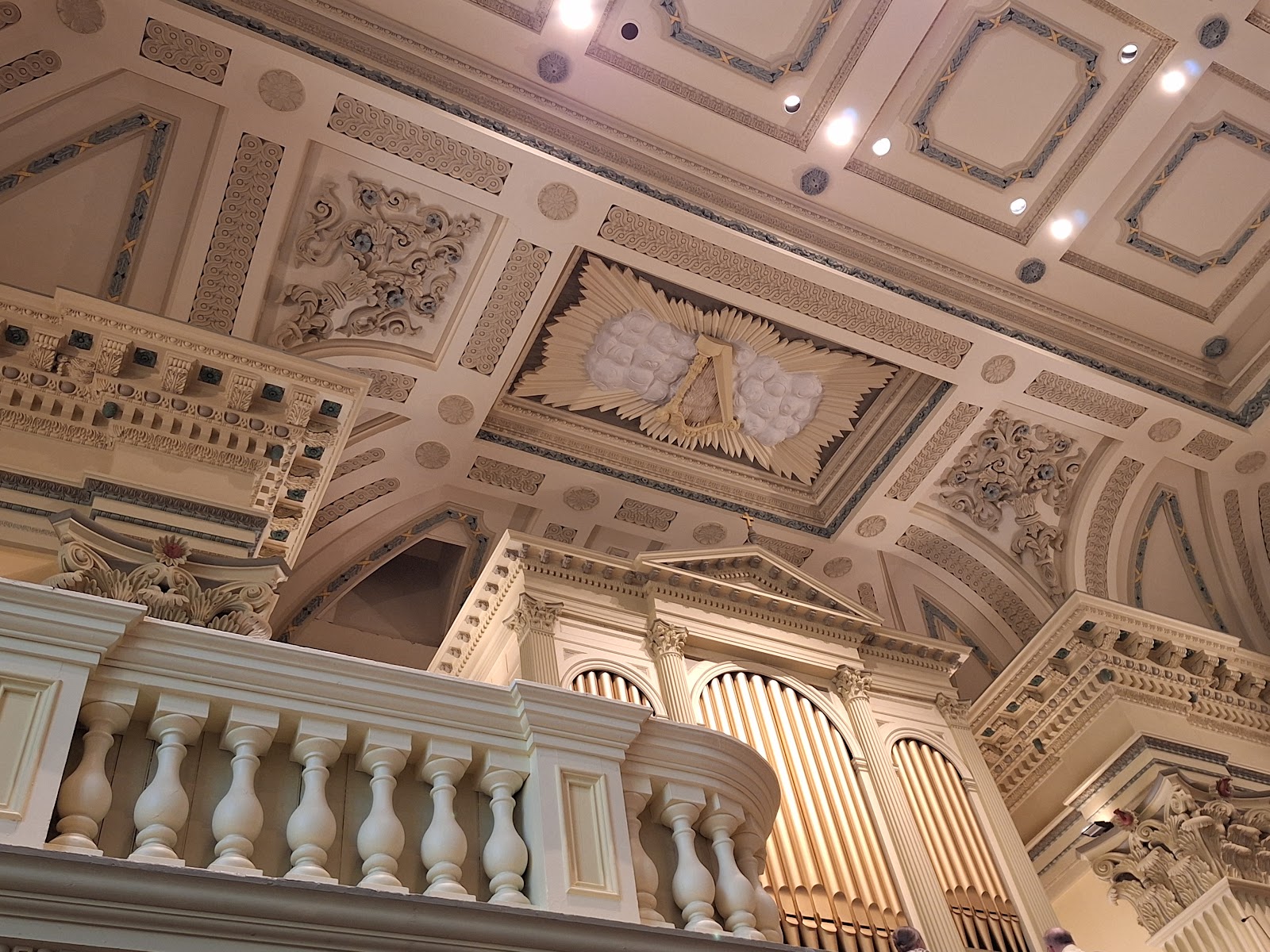
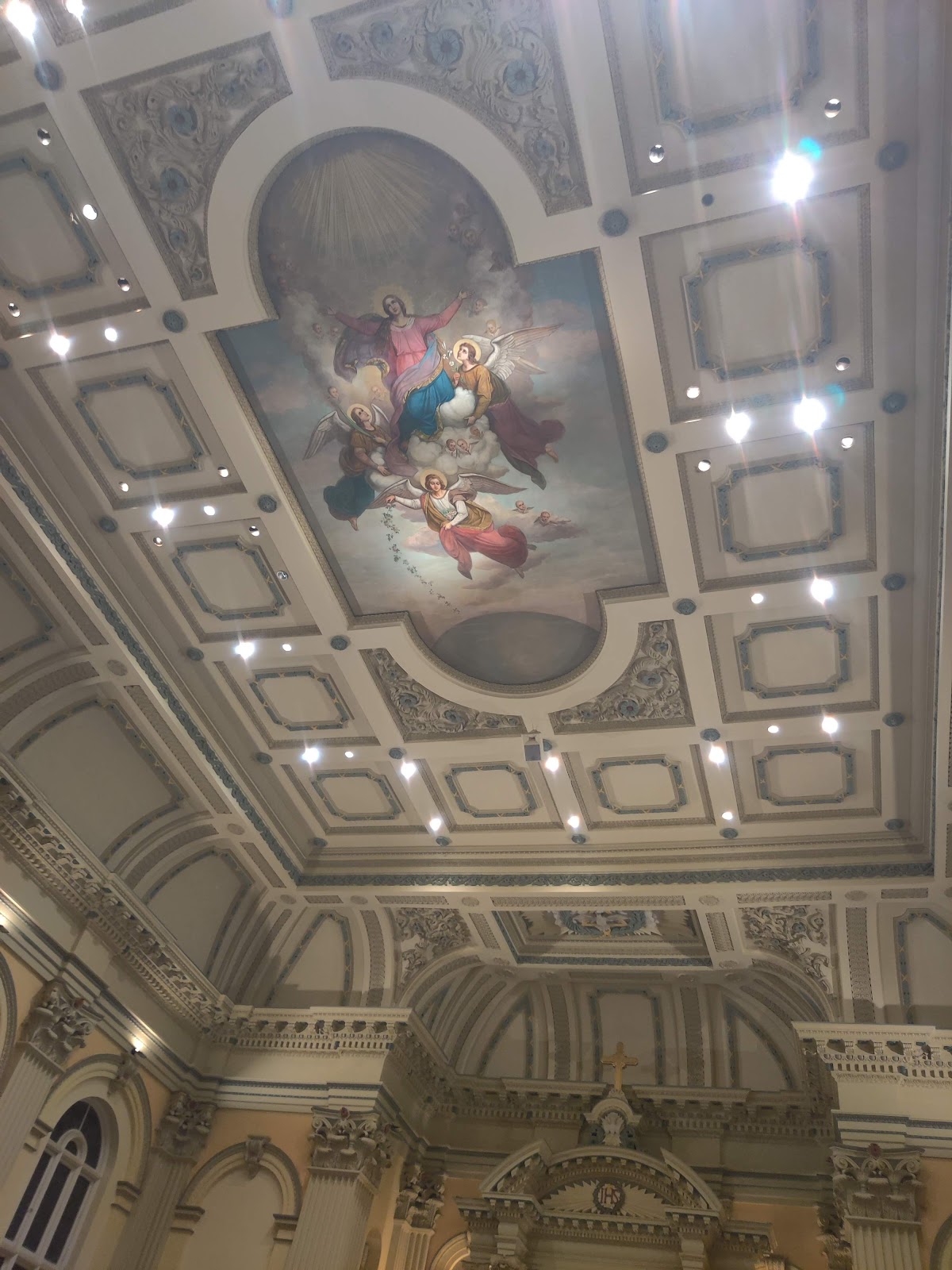
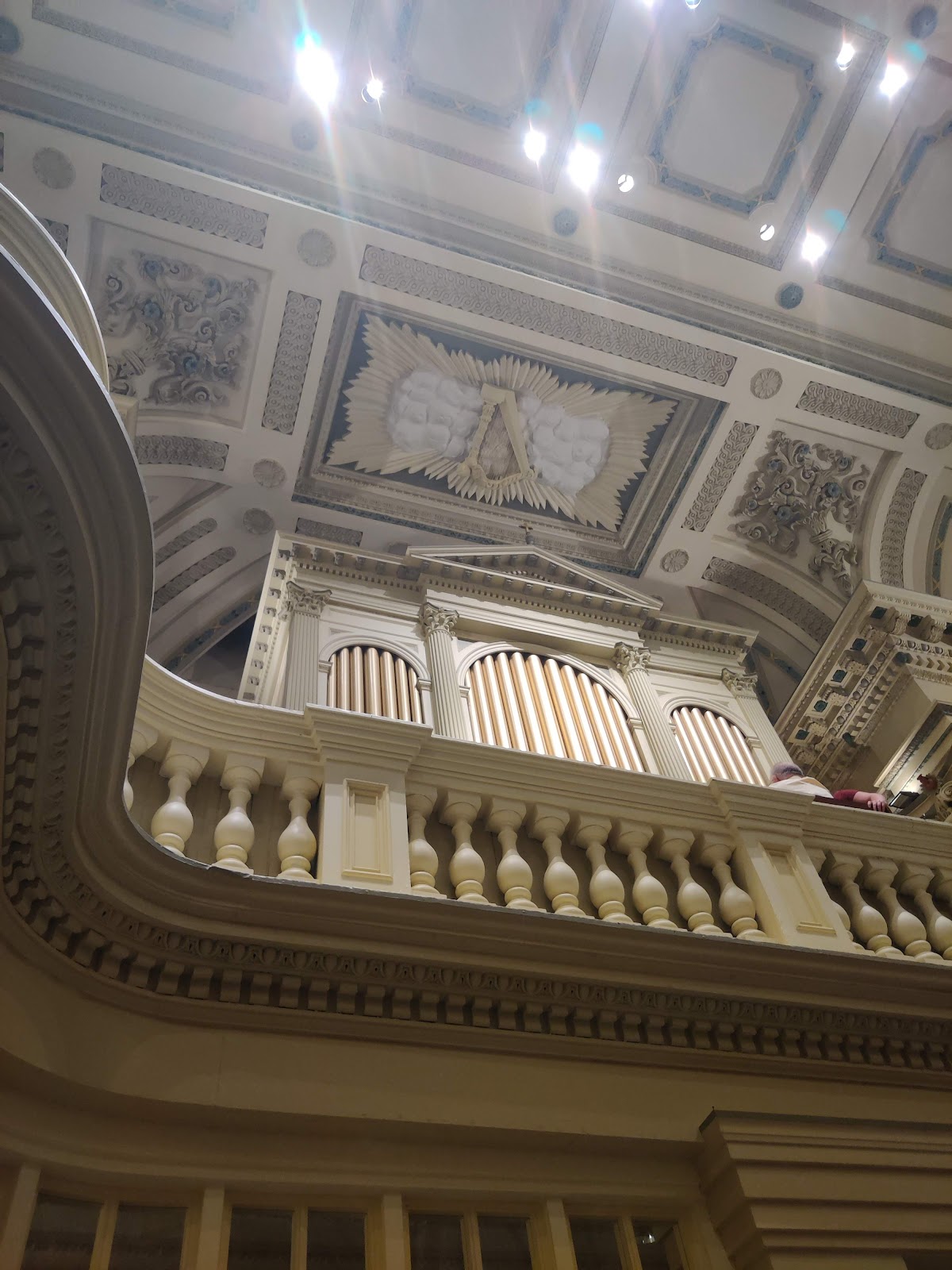
Once colour is decided, a church is a familiar low-light problem with three parts. The ambient is low, because the windows are small relative to the volume and the interior is usually dark stone or timber. The volume is tall, so bounce flash returns nothing and the reflex indoor move is unavailable. And the ornament — carving, tracery, mouldings, altarpieces — is three-dimensional, so it reads only when light crosses it at an angle.
The answer is a fast lens at a raised ISO for anything during the ceremony, and one carefully placed source for anything before or after it. Where flash is permitted at all, a single warm-gelled source at face height, off the camera axis, exposed so the church still reads as the dim resonant space it is, is the whole solution. A church lit to an even brightness stops being a church.
Ceremony coverage in a church is mostly a question of position and restraint rather than equipment, and the positions are usually prescribed. Establish before the day where a photographer may stand, whether movement during the ceremony is acceptable, whether the sanctuary may be entered, and whether flash is permitted — and then work within it without testing the boundaries, because a church is a place of worship first.
The long view down the nave is the frame a church reliably gives and it rewards precision. Aisles are symmetrical and axial, so a frame down the centre line collapses if the camera is off centre or a degree out of level — the near-miss is the only failure available. Level, centre exactly, and let the arcade converge on the couple.
Tall windows and any clerestory give the other useful thing: light entering high and from one side, which is close to a classical portrait position by the time it reaches head height. The position to find is where that light rakes across the space rather than falling straight down, and it is usually further from the wall than instinct suggests.
Steps at the sanctuary or at the west door are the practical group solution, as at any building with them: steps make rows automatically, which a flat floor never does.
- Coloured patches behind or beside the couple, white light on the faces
- Walk the nave at the ceremony hour and find where a hand reads as skin
- Assume no bounce; one warm-gelled source at face height, a stop under the room
- Level and centre the nave frame — the near-miss is the only failure
- Use the steps for groups; a flat floor will not make rows
Outside, the timing, and Baltimore weather
Church exteriors are best in the last ninety minutes for the same reason all masonry is: stone and brick show their texture only when light runs along them, and a facade that looks flat and chalky at noon separates into planes and detail in raking light. Which elevation receives it depends on orientation, so one walk around the building noting where the evening sun will land is worth more than any accessory.
The other exterior frame specific to a church is the silhouette after sunset. A tower, a spire or a gable against a sky that still holds colour reads instantly, and it needs the sky lit rather than the building — which puts it in the twenty minutes after sunset rather than during it.
Coloured glass reverses after dark, which is worth knowing and easy to miss. A lit church interior seen from outside at night turns the stained glass into a glowing coloured panel from the street — the effect that is inside during the day is outside at night. If the church will be lit in the evening, that is a frame nobody plans for and it takes two minutes.
Baltimore around a city church is good material and a short walk. Brick rowhouse streets are narrow and low-rise, which means low evening sun reaches street level and runs the whole length of a block. The white marble steps fronting so many Baltimore rowhouses behave as low reflectors, bouncing light up into a face and filling the shadow that overhead sun creates — a frame that is located and lit at the same time, which is rare at street level anywhere.
Mid-Atlantic conditions apply. Summer heat and humidity make long outdoor blocks difficult in formal clothes, so trips should be short and purposeful, and the church’s own shadow is the reliable midday shade. Afternoon thunderstorms are common rather than rare, and a church handles that well for the ceremony while offering nothing for anything outdoors — so the confetti, the group and the departure all need a wet-weather version.
Humidity produces the season’s equipment risk in both directions: kit chilled by air conditioning fogs on reaching warm damp air, and cold kit fogs on coming into a warm church, both taking many minutes to clear. Let equipment come towards the temperature of where it is going before it gets there — and in a church that means arriving early rather than walking in at the last moment with a cold camera.
More frames from St. Ignatius Church
St. Ignatius Church wedding photography: common questions
Why can't coloured light be corrected?
Because a stained glass window transmits only certain wavelengths, so the light really is red or blue rather than white light that looks it. Skin records only what it receives, and no correction invents the missing channel.
Where does coloured light belong?
Everywhere except faces. On stone floors, pale walls, pews, pillars and the aisle it is one of the most beautiful effects in architecture — and a camera records the saturation the eye corrects away.
What is the frame to aim for?
The couple standing in white light with coloured patches behind or beside them. That shows the church doing what it does while the faces stay recognisably faces, and it usually takes moving two or three metres.
How do you find the white light?
Walk the nave at roughly the ceremony hour and look for where a hand held out reads as skin rather than as colour. The patches sweep across the nave as the sun moves, so a check at eleven is not valid at two.
How do you light a church interior?
One warm-gelled source at face height, off the camera axis, exposed so the church still reads as the dim resonant space it is. Bounce will not work — the volume is too tall.
What is the frame nobody plans for?
The stained glass from outside at night. A lit interior turns the windows into glowing coloured panels seen from the street — the daytime effect, inverted, for two minutes of work.
More Baltimore, MD venue guides
We are writing a photographer’s guide to every venue we would happily shoot in Baltimore, MD. Here are three more, plus the full index:
- The Walters Art Museum, Baltimore: Four Ways Out of the Gallery Problem
- The American Visionary Art Museum: Who This Venue Suits
- The Baltimore Basilica: Field Notes on a Latrobe Interior
All Baltimore, MD Wedding Venues →
Planning a wedding at St. Ignatius Church?
One decision, made before the day, fixes every frame. Tell us your date.