 Overhills Mansion: Who This Venue Suits, and Who It Doesn’t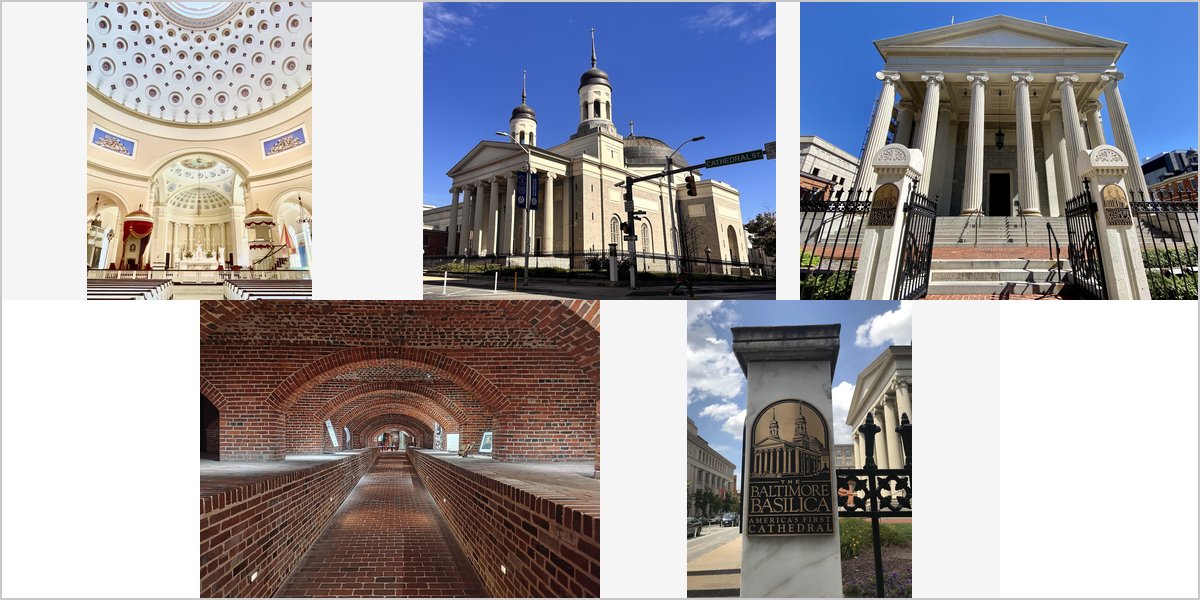
April 30, 2026
The Baltimore Basilica: Field Notes on a Latrobe Interior
Unusually for a cathedral, this one is bright. Latrobe lit his dome with hidden skylights, and that single decision makes it one of the easier great churches to photograph.
The Baltimore Basilica — formally the Basilica of the National Shrine of the Assumption of the Blessed Virgin Mary — was designed by Benjamin Henry Latrobe and completed in 1821. It was the first cathedral built in the United States, and Latrobe, who also worked on the United States Capitol, designed it in a restrained neoclassical idiom: pale plaster, clean geometry, and a great central dome.
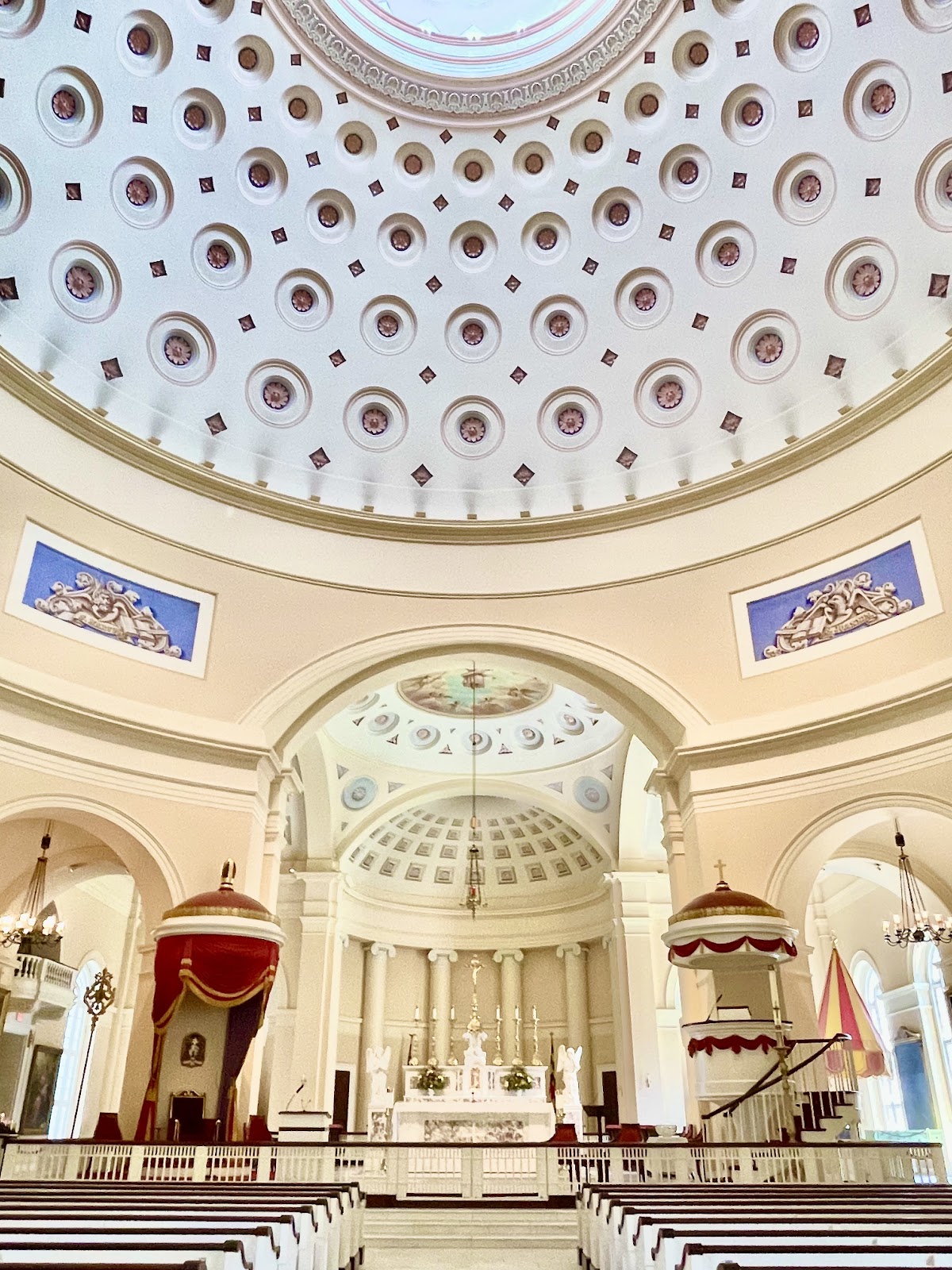
The detail that matters most to a photographer is how Latrobe lit that dome. Rather than relying on coloured windows at eye level, he brought daylight in through concealed skylights above, so the dome glows and the light spills down into a pale interior that reflects it. The result is a cathedral that is genuinely bright, with soft neutral light — almost the opposite of the dark stone-and-stained-glass churches that dominate most cities.
These are field notes on four problems. We have not photographed a wedding here, and the parish’s rules on flash, movement and photographer position are for the basilica to state — as at any active cathedral, assume they are firm and ask early, because they determine what your ceremony coverage can be.
Baltimore Basilica at a glance
| Where | Cathedral Street, Mount Vernon, Baltimore, Maryland |
| Completed | 1821, designed by Benjamin Henry Latrobe — the first US cathedral |
| Character | Restrained neoclassical: pale plaster, clean geometry, a great central dome |
| Light | Unusually bright for a cathedral — concealed skylights above the dome, pale reflective surfaces |
| Assume | Firm parish rules on flash, position and movement during the service |
Problem one: bright, but still top-down
The good news is genuine — this is a far easier exposure than a dark Gothic interior, and it is often possible to shoot a ceremony here at sensible ISO with a moderately fast lens, which is rarely true in churches. The pale plaster acts as an enormous reflector and fills the space evenly.
The catch is direction. Light entering above the dome comes down, so it still lands on foreheads and leaves eyes shadowed — the same geometry as any skylit space, just much brighter. In a dark church you fight for any light at all; here you have plenty of light arriving from an unhelpful angle.
The corrections are cheap. The pale floor and pale walls bounce a useful amount back upward, so positioning people where that bounce is strongest — in the open, away from dark pews and joinery — makes a visible difference. Lifting chins slightly does the rest. A reflector is rarely necessary, which is unusual for a church.
Problem two: pale neutral surfaces give you nothing warm
Most churches have a warm bias: timber, brass, tungsten fixtures, coloured glass. A pale neoclassical interior lit by daylight has almost none of that, which means the light is neutral to slightly cool and there is nothing in the room adding warmth to skin.
That produces a clean, formal, slightly austere look, which suits the architecture and reads as serious and timeless. If that is what you want, do nothing. If you want warmth, you have to introduce it — either by adding a warm-gelled fill, or by scheduling portraits for the end of the day when whatever daylight is entering has itself gone warm.
It is worth deciding in advance rather than discovering it in editing, because warming a neutral interior in post makes the plaster go cream and the shadows go muddy. Decide at the camera and the whole set holds together.
Problem three: clean geometry demands clean composition
Latrobe’s interior is built on simple shapes — arches, coffers, the circle of the dome, straight lines of pilasters. That is a gift and a discipline. Geometric architecture rewards symmetrical, square-on, carefully levelled frames and punishes casual ones, because a tilted horizon or an off-centre axis is immediately obvious against straight lines in a way it is not in a cluttered Gothic interior.
So work deliberately. Centre the aisle, level the camera, put the dome’s centre where it belongs. Use the coffering and the arches as framing devices. A wide frame straight up into the dome is the signature image of this building and it must be square, or it looks like a mistake rather than a composition.
It also means longer lenses behave well. Compressing the nave from the back, with arches receding, produces a clean layered frame that suits the architecture better than a wide-angle sweep.
Problem four: the ceremony rules, and Mount Vernon outside
As at any active cathedral, assume the photographer works from a fixed position without flash and does not move during the service. At a building of this historical significance, also assume there may be restrictions on access to particular areas.
The kit implication is the standard one for churches: a fast lens in the 85–135mm range for the ceremony, something wider on a second body, and the frames you most want taken before the service begins. The consolation here is that the building is bright, so a fixed position in available light is far less punishing than it would be elsewhere.
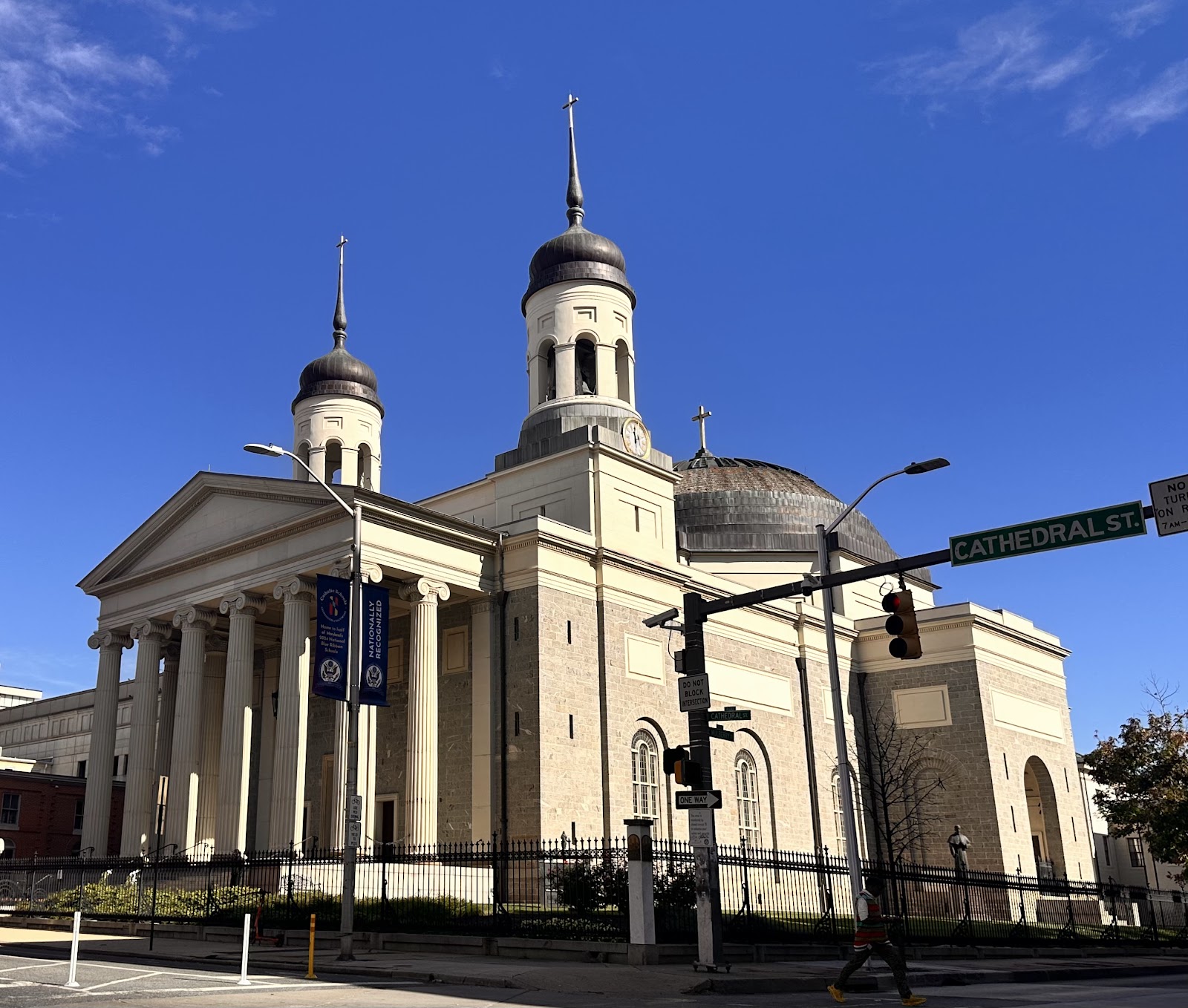
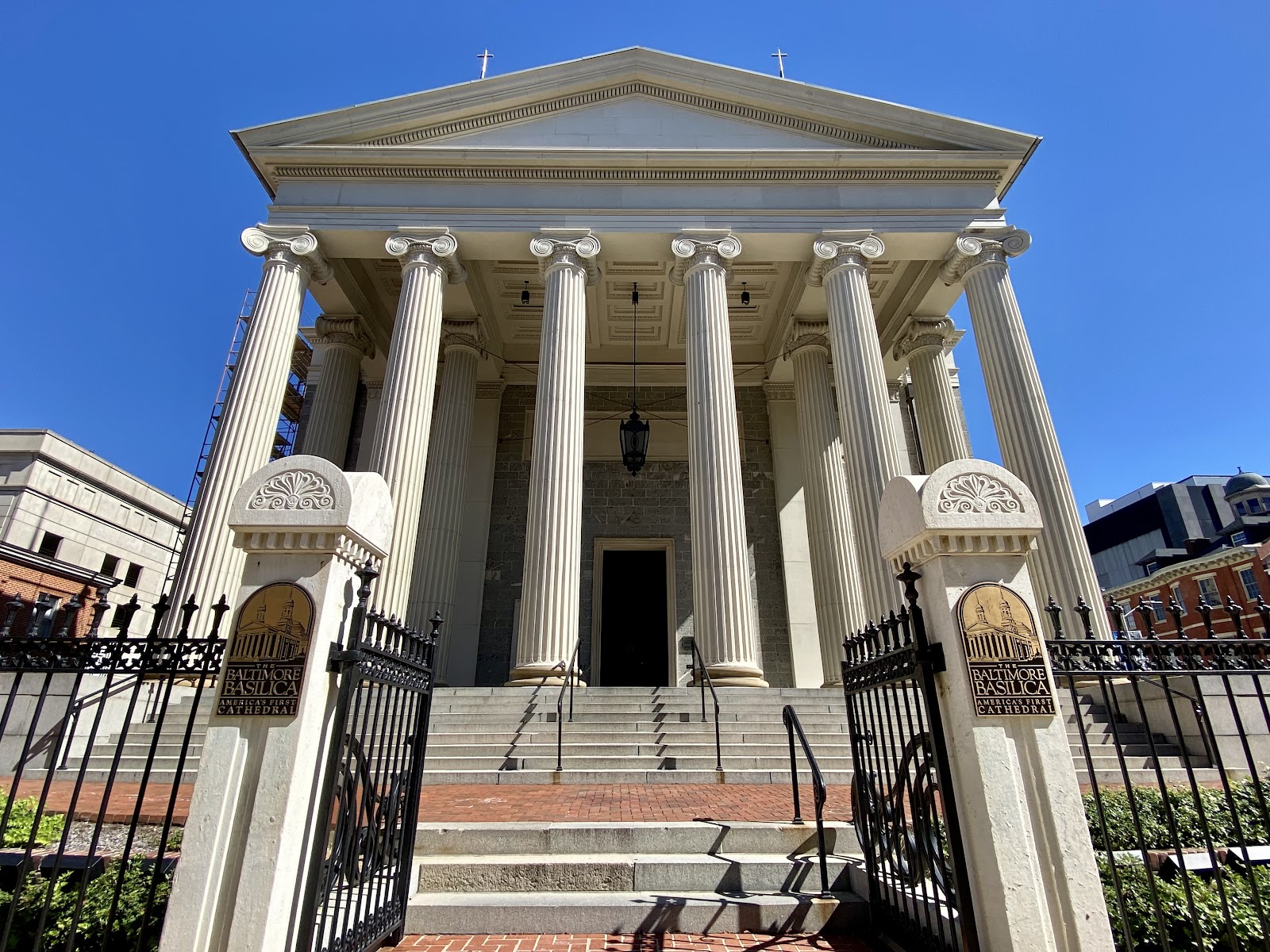
Outside, Mount Vernon is excellent. The Washington Monument and its square are close by, with nineteenth-century townhouses, formal planting and mature trees, and the basilica’s own neoclassical portico is a strong architectural frame. Late afternoon light on pale stone is particularly good — it warms the facade without the harshness that low sun brings to darker materials. Twenty minutes there, with groups done on the portico steps or in the square, completes the day.
What works in your favour
- Unusually bright for a cathedral — concealed skylights and pale plaster make exposure easy
- Latrobe’s neoclassical geometry gives clean, formal, timeless frames
- A dome frame straight up is a genuinely spectacular signature image
- Pale surfaces bounce light back upward, softening the top-down problem without a reflector
- Mount Vernon Place, the Washington Monument and townhouse streets close by
What to plan around
- Still top-down light, so eyes need lifting or bouncing even though the room is bright
- Neutral to cool palette with nothing warm in the room; warmth must be added deliberately
- Geometric architecture is unforgiving of tilted or off-axis composition
- Assume no flash and a fixed photographer position during the ceremony
- An active cathedral, not a venue — rules are set by the parish and are not negotiable
More frames from Baltimore Basilica
Baltimore Basilica wedding photography: common questions
Is the Baltimore Basilica dark like most churches?
No, and that is what makes it unusual. Latrobe lit the dome with concealed skylights rather than relying on coloured glass at eye level, and the pale plaster interior reflects that light around. It is often possible to shoot a ceremony here at sensible ISO, which is rare in a cathedral.
What is the main lighting problem then?
Direction rather than quantity. The light comes down from above the dome, so it lands on foreheads and shadows eyes. The pale floor and walls bounce a useful amount back up, so positioning people in the open away from dark pews, plus lifting chins slightly, is usually enough — no reflector required.
Why do the photographs look cool rather than warm?
Because a pale neoclassical interior lit by daylight has no warm materials in it — no timber, brass or tungsten adding amber to the light. It produces a clean, formal look that suits the architecture. If you want warmth, add a gelled fill or schedule portraits late, and decide at the camera rather than in editing.
What is the signature photograph?
Straight up into the dome, and it has to be square and level. Latrobe’s geometry is built on arches, coffers and circles, which means a tilted or off-axis frame reads as a mistake rather than a style. Centre it, level it, and the architecture does the rest.
Where do the portraits and groups happen?
Outside, in Mount Vernon. The basilica’s neoclassical portico is a strong frame and works well for groups, and the Washington Monument, the square and the townhouse streets are all close by. Late afternoon light on pale stone is especially good — it warms the facade without the harshness low sun brings to darker materials.
More Baltimore venue guides
We are writing a photographer’s guide to every venue we would happily shoot in Baltimore. Here are three more, plus the full index:
- Clifton Mansion: A Photographer Answers the Real Questions
- Cylburn Arboretum: A Season-by-Season Photography Guide
- The Engineers Club: Building the Shot List at the Garrett Mansion
All Baltimore Wedding Venues →
Planning a wedding at Baltimore Basilica?
A bright cathedral is a rare thing and it changes what is possible during a ceremony. Tell us your date and we will help you establish the parish’s rules early, then plan the dome frame and the Mount Vernon portraits around them.