 Overhills Mansion: Who This Venue Suits, and Who It Doesn’t
June 11, 2026
The Engineers Club: Building the Shot List at the Garrett Mansion
A marble hall, a grand stair and tall windows onto a formal square. Six frames cover this building properly — here they are, in the order we would shoot them.
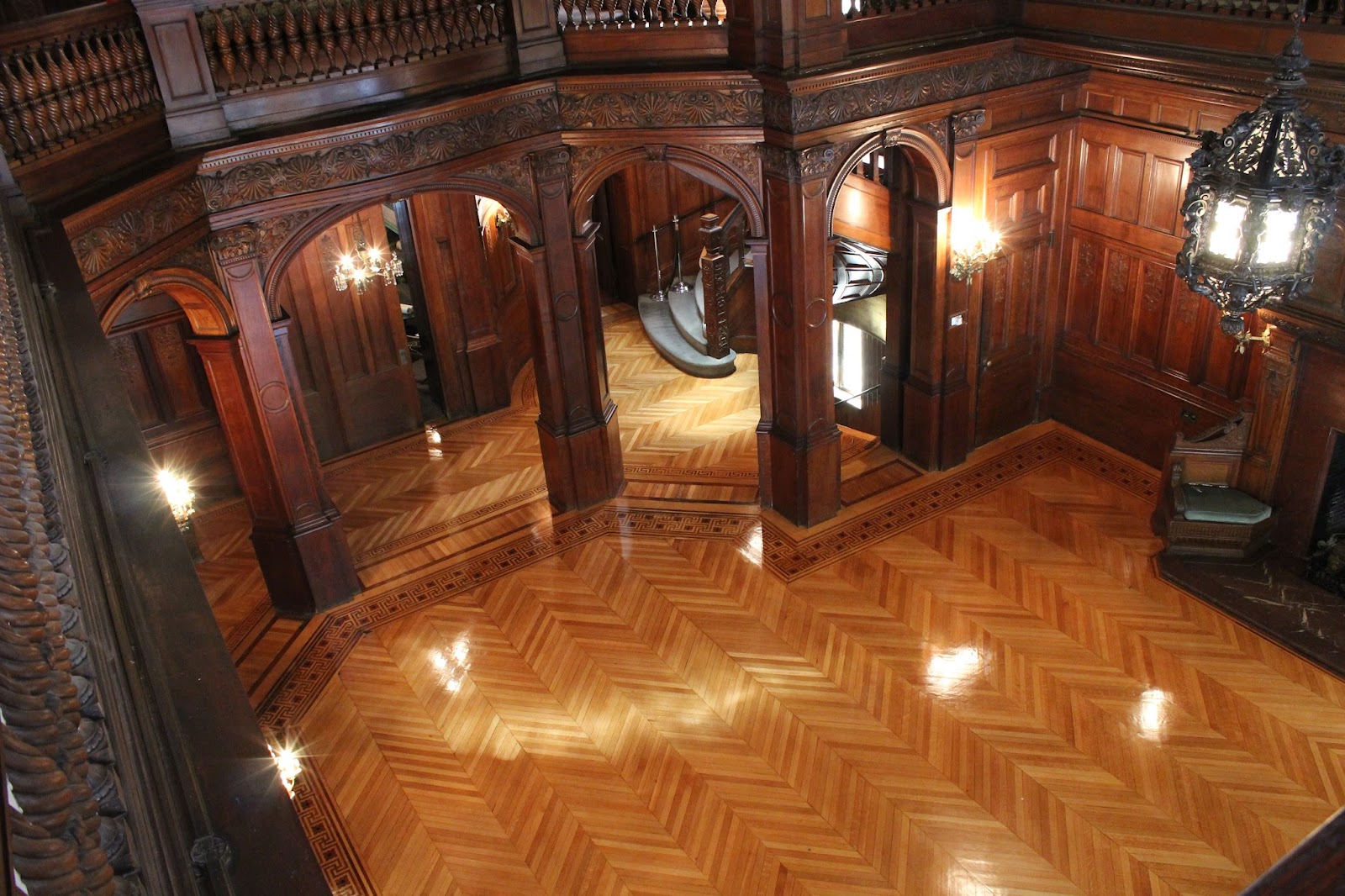
The Engineers Club occupies a historic mansion on Mount Vernon Place in Baltimore, part of the run of nineteenth-century townhouses around the Washington Monument. Like the Garrett-Jacobs Mansion nearby it is a large private residence adapted to club use, with a marble entrance hall, panelled reception rooms, a substantial staircase and tall windows looking onto the square.
Photographically it sits in the townhouse-club category, which is a favourable one. Tall windows in rooms of moderate depth give real daylight. A marble hall bounces light rather than absorbing it, which is unusual and welcome in a nineteenth-century interior. And a formal square outside supplies open sky, mature trees and room for groups.
Because a townhouse venue is a set of small linked spaces rather than one big room, the useful planning tool is a shot list. We have not photographed a wedding here; club rules on sponsorship, dress code and photography in member areas are for their office, and at private clubs those should be settled before anything else is planned.
Engineers Club at a glance
| Where | Mount Vernon Place, Baltimore, Maryland |
| Character | Historic mansion adapted as a private club; marble hall, panelled rooms, grand stair |
| Light | Tall windows onto a formal square; marble surfaces bounce rather than absorb |
| Advantage | A marble entrance hall is the brightest historic interior you will find |
| Ask first | Sponsorship, dress code for suppliers, photography rules in member areas |
Why a marble hall changes the usual advice
Most nineteenth-century grand interiors are dark because they are lined with timber, which absorbs light and returns it warm. Marble does the opposite: it is pale, hard and slightly reflective, so it bounces light around and returns it close to neutral. A marble entrance hall with a tall window or a skylight is often the brightest and most colour-neutral space in a historic building.
That makes it the most valuable room for photographs, and it is routinely overlooked because it is a circulation space rather than an event room. Put the couple in a marble hall and you get bright, wrapping, neutral light with no green or amber cast to correct — the easiest portrait conditions in the whole building.
It also means groups work there. Light bouncing off pale stone reaches further into the room than light in a panelled space, so a group of a dozen can be lit evenly by a window that would only cover three or four people in a timber-lined room.
The shot list, in shooting order
Six frames. In a building of linked small rooms, deciding these in advance is what stops the coverage becoming a series of near-identical pictures in near-identical reception rooms.
- The marble hall portrait. Bright, neutral, wrapping light. The best-lit and easiest frame in the building, and the first thing we would shoot.
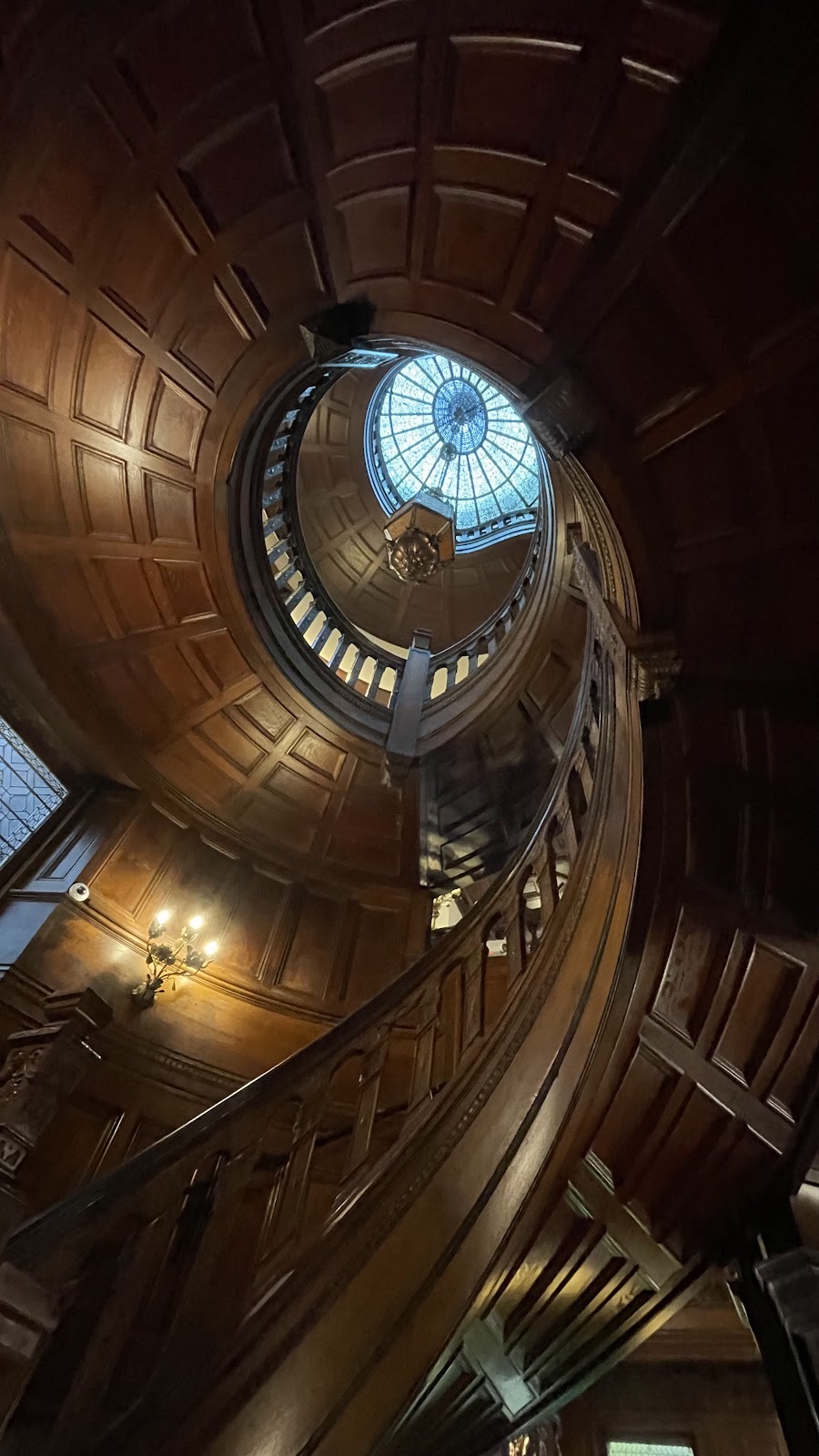
- The staircase, three ways. From below looking up for height, from the landing looking down so the dress falls on the steps, and tight on the balustrade with the couple soft behind.
- A window-room portrait. Tall windows onto Mount Vernon Place, the couple within two metres of the glass, turned into it. Softer and warmer than the marble hall, for contrast.
- Architectural detail. Panelling, plasterwork, a fireplace, the pattern of a floor. Quick, permission-free, and what gives a gallery breathing room.
- The reception room, lit. One deliberate frame of the dining or ballroom space with your own light establishing hierarchy, rather than a snapshot of a warm dim room.
- Mount Vernon Place. The Washington Monument, formal planting and open sky. Groups and golden hour belong out here.
Lighting the panelled rooms in the evening
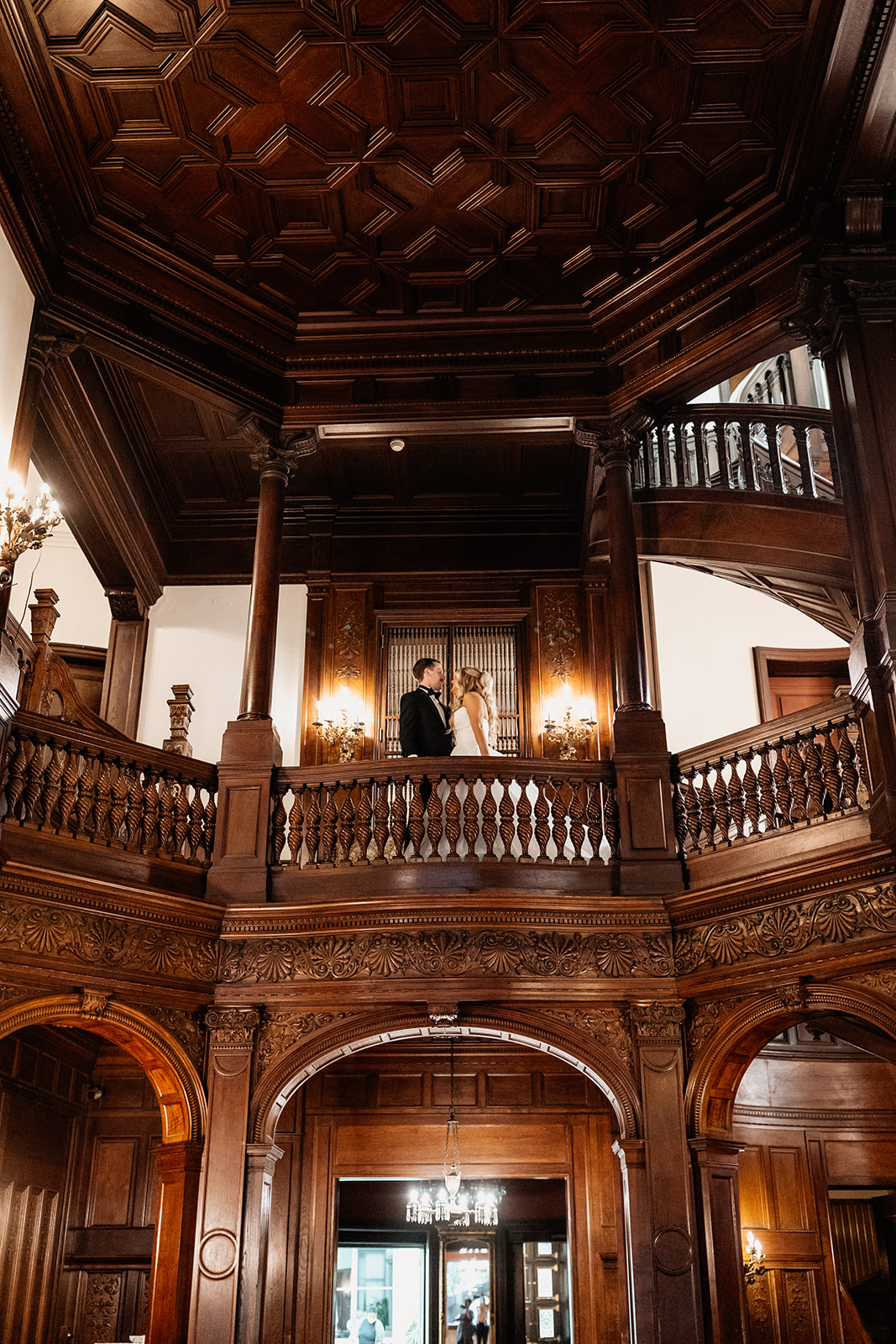
Once the daylight goes, the panelled rooms behave like every other dark timber interior: warm, dim, and unresponsive to bounce flash. The ceilings are high enough and the surfaces dark enough that light aimed upward largely does not come back.
The rooms are not enormous, though, which makes this a gentler problem than a ballroom. One small light on a stand, gelled warm, positioned off to one side and feathered, is usually sufficient to lift faces two stops while leaving the room’s own lamps and pooling intact. On-camera bounce off a pale wall behind you works for moving coverage in the marble hall, where there is actually something to bounce off.
Keep the differential in mind: room warm, faces slightly cooler. Everything in a club interior — timber, brass, lamps, carpet — adds amber, and skin with no neutral component in it looks artificial. That single decision does more for the photographs than any amount of extra power.
Mount Vernon Place, and the timeline
The square is the reason a Mount Vernon venue outperforms an equivalent building on a narrow street. Open sky means the interior windows get clean abundant light rather than light filtered past a facing building. Mature trees give high open shade. Formal planting, fountains and the Washington Monument give backgrounds with structure. And there is space to arrange a large group properly.
Late afternoon is the window, and twenty minutes is the budget. Groups should happen out there rather than in a panelled drawing room — better light, better backgrounds and no compression.
For the timeline overall: marble hall and staircase early while daylight is strong, window-room portraits next, the square in the last ninety minutes, and the lit reception frame once the room is dressed but before guests are seated. That order uses each space when it is at its best rather than when the schedule happens to arrive at it.
What works in your favour
- A marble hall gives bright, neutral, wrapping light — the easiest portrait conditions in any historic building
- Pale stone lets a single window light a group of a dozen evenly
- A substantial staircase with a landing window, good for three distinct frames
- Tall windows onto a formal square rather than a narrow street, so interior light is clean
- Mount Vernon Place outside for groups, golden hour and structured backgrounds
What to plan around
- Panelled reception rooms are dark and warm, and bounce flash performs poorly in them
- Linked small rooms risk near-identical frames unless the shot list is decided in advance
- No usable daylight for an evening wedding in winter
- Private club rules on sponsorship, dress code and member-area photography are typically strict
- Large groups do not fit comfortably in the reception rooms
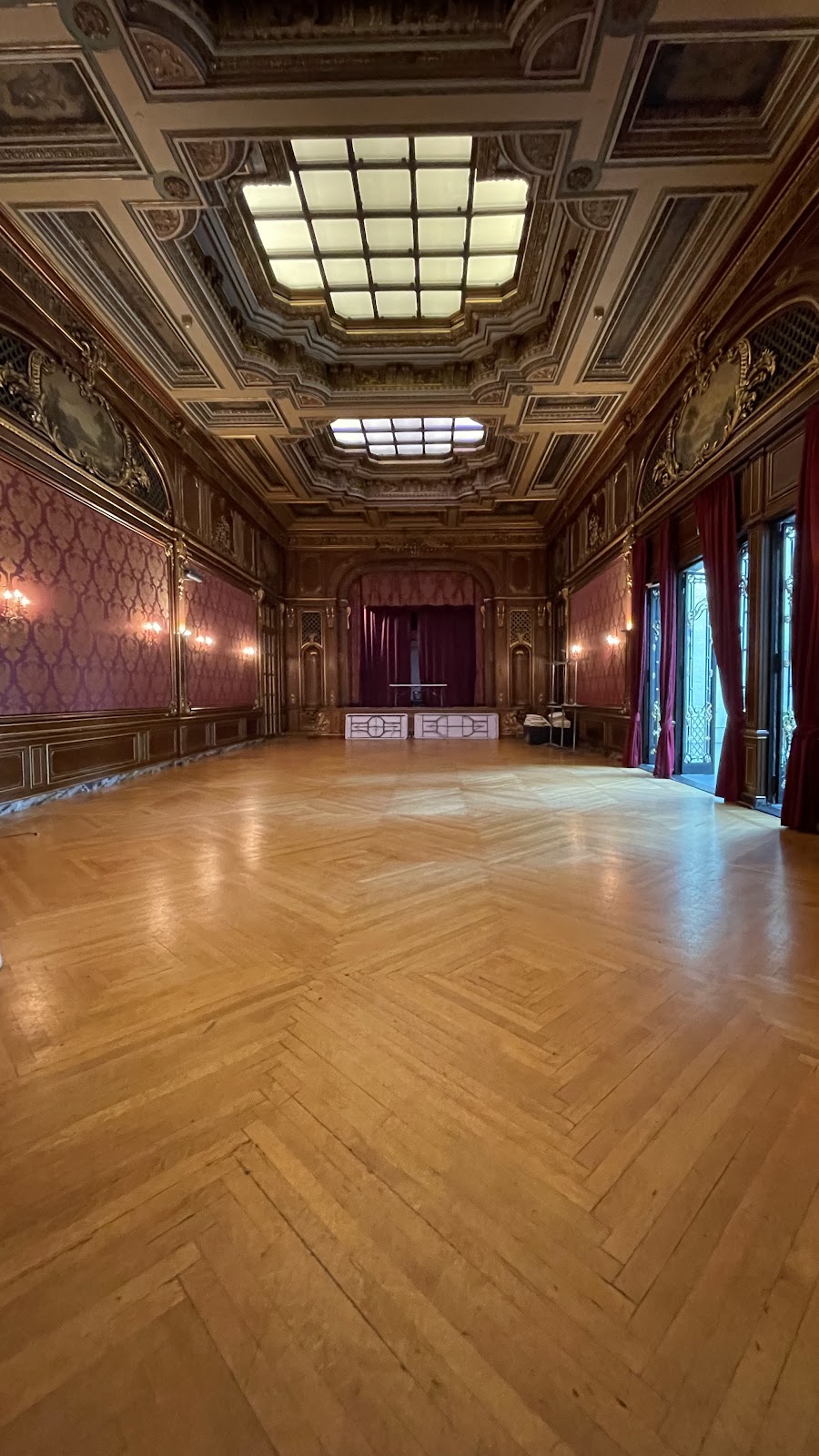
More frames from Engineers Club
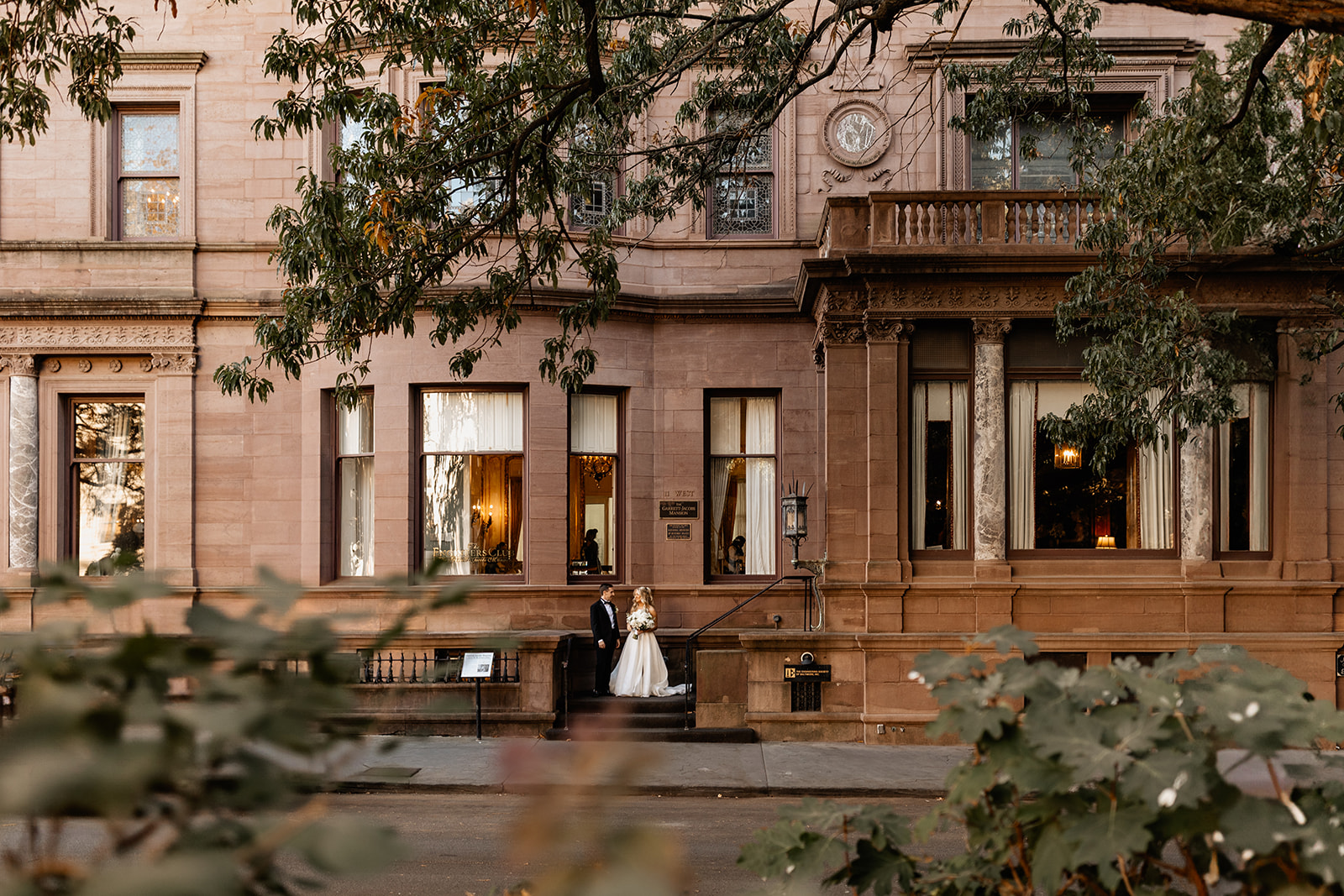
Engineers Club wedding photography: common questions
What is the best room to photograph in?
The marble entrance hall, and it is usually overlooked because it is circulation rather than an event room. Marble is pale and slightly reflective, so it bounces light around and returns it close to neutral — giving bright, wrapping, colour-neutral light that is far easier than any panelled room.
Can a group be photographed indoors here?
A dozen or so, in the marble hall, because pale stone spreads a single window’s light much further than timber panelling does. Larger groups belong outside on Mount Vernon Place, where there is room to arrange people properly and the light is better anyway.
How should the panelled rooms be lit in the evening?
With one small gelled light on a stand, off to one side and feathered, lifting faces about two stops while the room’s own lamps keep their warmth and pooling. Bounce flash performs poorly against dark timber and high ceilings. Keep the room warm and the faces slightly cooler.
Why does the Mount Vernon Place location matter?
Because the building faces open sky and a formal square rather than a facing wall across a narrow street. That means the interior windows receive clean, abundant light, and outside you get mature trees for open shade, structured planting for backgrounds, and space for large groups.
What should we ask the club first?
Whether a member must sponsor the event, what the dress code is and whether it applies to suppliers, and exactly where photography is permitted when members are present. Private clubs are stricter than hotels, and a restriction discovered on the day removes a location with no time to replace it.
More Baltimore venue guides
We are writing a photographer’s guide to every venue we would happily shoot in Baltimore. Here are three more, plus the full index:
- The Garrett-Jacobs Mansion: A Walk-Through of a Gilded Age House
- The George Peabody Library: Reading the Light in a Cathedral of Books
- Gramercy Mansion: Field Notes on a Country Estate
All Baltimore Wedding Venues →
Planning a wedding at Engineers Club?
Tell us your date and we will send a room-by-room plan that uses the marble hall while the light is strongest and protects twenty minutes on the square.