 The Omaha Children’s Museum: A Photographer Answers Your Questions
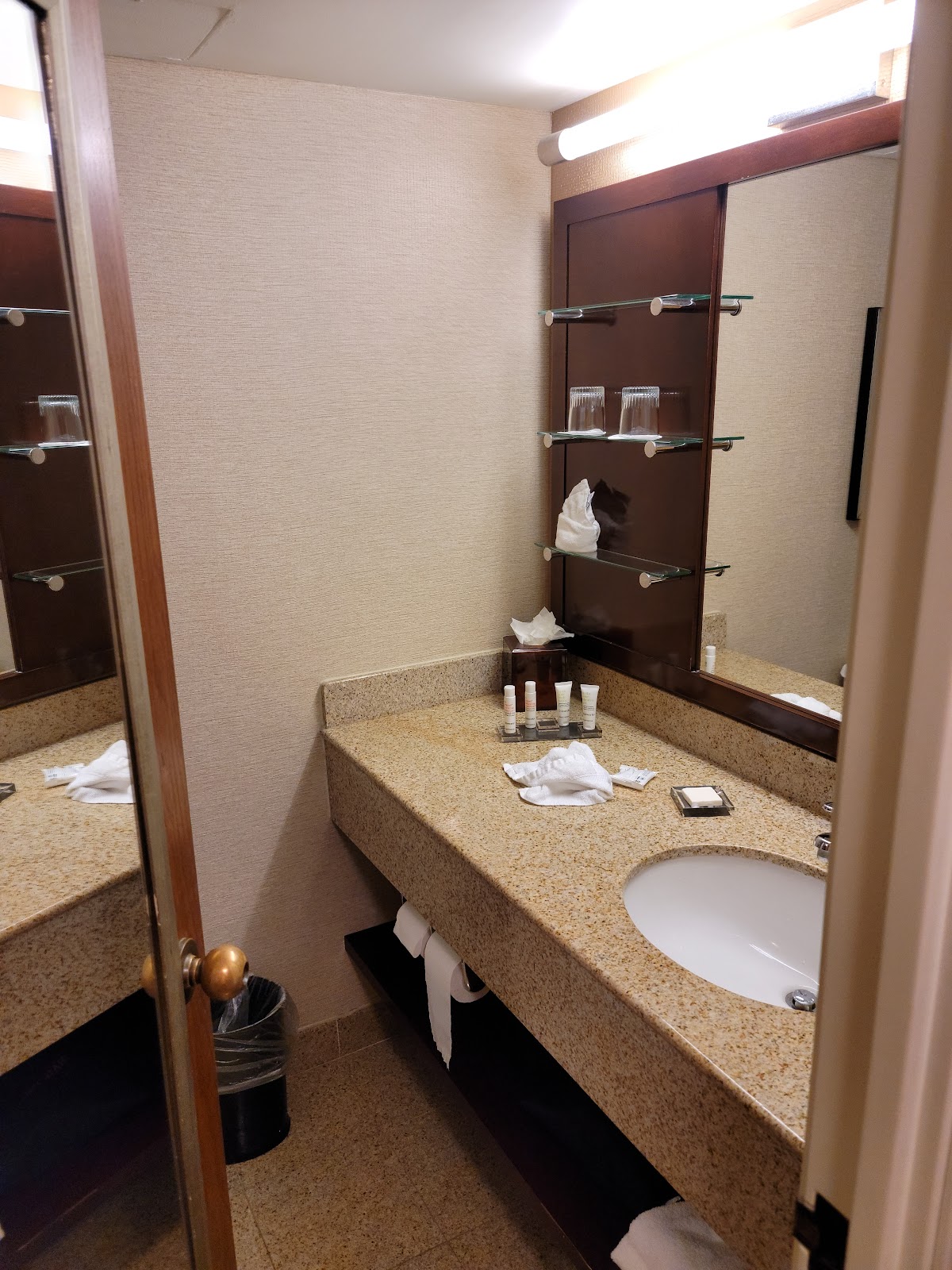
The Lincoln Marriott Cornhusker: Field Notes on a Large Hotel Ballroom
A large hotel ballroom is the most standardised venue in this series, which means the problems are known and so are the answers.
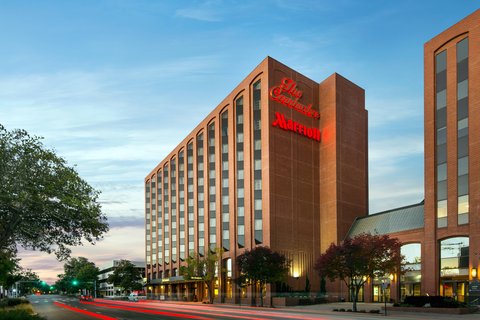
The Lincoln Marriott Cornhusker occupies a site in downtown Lincoln, Nebraska, a large full-service hotel with extensive ballroom and meeting space, guest floors and the infrastructure that comes with the type.
A large hotel ballroom is the most standardised environment in this whole series, and that is worth saying plainly rather than treating each one as a fresh puzzle. The room will have a neutral palette, patterned carpet, warm overhead lighting, no daylight and a ceiling too high for comfortable bounce. Those four conditions produce three specific problems, and all three have known answers that work in every hotel of this class.
What such a venue gives in exchange is reliability — power where you need it, staff who run weddings weekly, genuine weather independence and capacity for any guest count. These are field notes on the problems and the answers. We have not photographed a wedding at the Cornhusker; large hotel ballrooms behave the same everywhere, which is precisely the point. Which rooms are allocated and which face away from the sun are the useful questions for their events team.
The Lincoln Marriott Cornhusker at a glance
| Where | Downtown Lincoln, Nebraska |
| Character | A large full-service hotel with extensive ballroom space |
| Three problems | Overhead light, no separation, and a ceiling too high to bounce |
| The advantage | Total reliability — no clock, no weather, no capacity limit |
| Where the photographs are | Guest-floor windows and the streets outside |
Problem one: the light comes from directly overhead
Hotel ballroom house lighting is warm, dim and comes from above via downlights or chandeliers. Overhead light shadows the eye sockets, marks the lines under the nose and chin, and produces a top-lit look that flatters nobody — the room looks pleasant and the people in it do not. It is the single most consistent problem in the category.
The answer is one source at face height, gelled warm to match the room, at roughly forty-five degrees to the subject. That restores modelling, puts catchlights in the eyes, and leaves the ceiling fittings as glowing detail in the upper frame rather than as the key. A second light behind the couple as a rim separates them from the room and finishes the dance floor for the night.
Because a ballroom has no daylight, that setup holds all evening — the ambient never changes, so there is no convergence moment to catch, no window to balance, no weather dependency and no penalty for a delayed running order. Light it once, confirm it, and it is done.
That also identifies which block to move when the day slips: everything in the ballroom is time-independent, so it absorbs delay. Everything with a clock attached is at a guest-floor window or outside on the street.
Problem two: nothing separates from anything
A neutral palette under even lighting gives almost no separation between a subject and a background. Pale walls, restrained furnishing and diffused ceiling light mean a couple in formal clothes has no edge against the room behind them, and the frames look technically correct and visually inert.
Four tools fix it and they all have to be used deliberately. Sharpness separation: a long lens at a wide aperture, so the background goes genuinely soft and the subject is the only sharp thing — the most reliable single answer in any neutral room. Directional light: one source from the side rather than the room’s even ambient, which creates a shadow side and an edge. Framing: place the subject against a darker element such as an open doorway, a shaded corner or a dark piece of furniture. And negative fill: put something dark on the shadow side, which subtracts light where the room insists on adding it.
Negative fill is the free one and it is the least used. In an evenly lit neutral room, subtracting light is more effective than adding it — a dark panel, a jacket held out of frame, or simply standing people beside an open door into an unlit room manufactures the contrast the architecture refuses to provide.
Patterned carpet is the related background problem. It draws the eye in a wide frame and dates the image more reliably than anything else in a hotel. Shoot tighter, drop the camera lower so less floor is in shot, or compose so a table, the dance floor or people occupy the lower frame.
- One warm source at face height at forty-five degrees kills the top-light look
- Long lens wide open is the most reliable separation in a neutral room
- Use negative fill; in an even room, subtracting beats adding
- Keep patterned carpet out of wide frames
- Check the ceiling height before relying on bounce
Problem three: the ceiling is too high to bounce
Photographers arriving from small venues default to ceiling bounce and find it underpowered in a large ballroom, and the reason is distance. Bounce works when the surface is close enough that the light returns with useful strength; in a room with a ten-metre ceiling the flash travels up, spreads, and returns as a weak wash that does little more than lift the ambient slightly.
So a ballroom needs direct light with a modifier rather than bounce, and that means stands and a little setup — which is fine, because the condition never changes and the setup only happens once. Where bounce is wanted, a wall is usually the better surface than the ceiling, and an assistant holding a reflector or a light is better than either.
Coloured uplighting is near-universal in rooms like this and it needs the same treatment as any narrow-band source: let it be background. Saturated uplighters will not resolve to neutral, so if they are the only light on a face the skin goes with them. Once your own key owns the faces, coloured walls become atmosphere — which is usually exactly what the couple pictured when they chose the colour.
Shutter drag is worth using freely here. Because the ambient is low and fixed, a slow shutter with flash gives predictable results: the flash freezes the couple while the ambient trails the moving lights and the room. It works everywhere but in a sealed ballroom it repeats reliably rather than being a lottery.
And the empty-room frame belongs here — set, lit, symmetrical, before the doors open. It is in almost every gallery a couple keeps and it exists only in those twenty minutes, so ask the coordinator for access. A tripod and a couple of bracketed exposures gives a ceiling with detail and a floor that still reads.
Where the photographs that locate the gallery come from
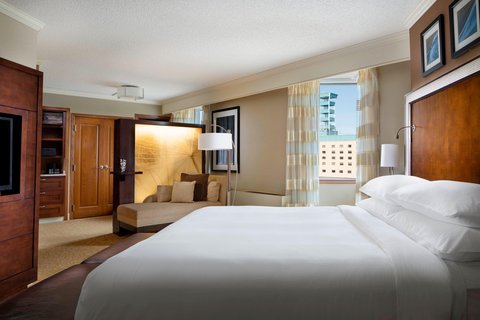
Since the ballroom supplies no daylight and nothing that says where it is, the guest floors and the street have to. A large window on the shaded side is a big soft directional key with a natural fall-off, better than anything in the public spaces and free — ask for that room specifically for preparation, then switch off the overheads and move the lamps out, because mixed tungsten and daylight is the commonest cause of skin tone drifting across a morning.
Higher floors are better, because nothing tall is immediately opposite to shadow the window or bounce colour into it. And a frame with the couple at a high window and the city below places the gallery in Lincoln, which a ballroom cannot do.
Downtown Lincoln outside is low-rise, which means low evening sun genuinely reaches street level and runs the length of a street rather than being cut off by towers — a frame a taller city cannot produce. Finding which streets run roughly east-west is a ten-minute site visit, and the Haymarket district nearby gives brick warehouse frontages as a coherent alternative register.
Nebraska plains conditions apply to any outdoor block: wind is a constant rather than an occasional event, so a veil is a held-or-removed decision and any stand needs weight; buildings give shelter, which makes a downtown street a better option than open ground; and the sun stays visible almost to the horizon, so the golden hour is genuinely long rather than brief. The plains sky is the compensation — an unobstructed horizon at the end of a street fills the frame with colour for twenty minutes after sunset.
More frames from The Lincoln Marriott Cornhusker
The Lincoln Marriott Cornhusker wedding photography: common questions
Why do ballroom photographs look unflattering?
Because house lighting is warm, dim and comes from directly overhead, which shadows the eye sockets and drags facial lines downward. One warm-gelled source at face height at about forty-five degrees fixes it entirely.
Why does nothing stand out in a neutral ballroom?
Because a neutral palette under even lighting gives no separation. Use a long lens wide open, one directional source, framing against a darker element, and negative fill — something dark on the shadow side to subtract light.
Why does ceiling bounce fail in a ballroom?
Distance. Bounce works when the surface is close enough to return useful light; with a ten-metre ceiling the flash spreads and comes back as a weak wash. Use direct light with a modifier, or bounce off a wall instead.
What about coloured uplighting?
Let it be background. Saturated uplighters are narrow-band and will not resolve to neutral, so if they are the only light on a face the skin goes with them. Once your key owns the faces, the walls become atmosphere.
Is a windowless ballroom a disadvantage?
It removes the timing pressure entirely — you light it once and it holds all evening, with no weather dependency and no penalty for delay. The cost is that nothing in it says where or when the wedding was.
Where do the locating frames come from?
Guest-floor windows and the street. A high window with the city below places the gallery in Lincoln, and downtown is low-rise enough that low evening sun reaches street level — which a city of towers cannot offer.
More Lincoln, NE venue guides
We are writing a photographer’s guide to every venue we would happily shoot in Lincoln, NE. Here are three more, plus the full index:
- The Nebraska Club: One Decision About a Club on a High Floor
- The Nebraska State Capitol: How the Rotunda Frame Is Actually Made
- The Rococo Theatre: Photographing an Ornate 1929 Auditorium
All Lincoln, NE Wedding Venues →
Planning a wedding at The Lincoln Marriott Cornhusker?
Standard problems have standard answers. Tell us your date and which guest rooms face away from the sun.